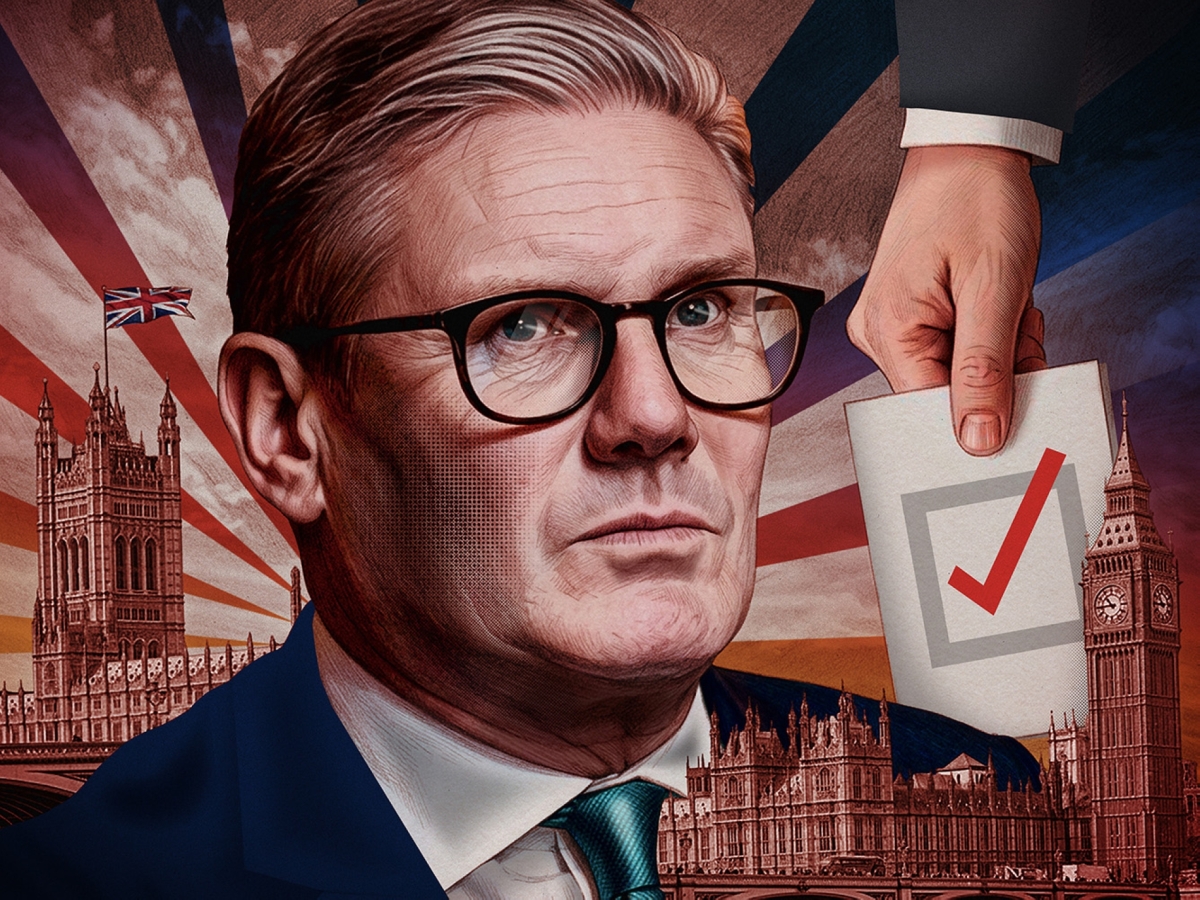
UK local elections: is Labour doomed?

Starmer's government has spectacularly failed on multiple counts

Axel Rangel Garcia

UK local elections: is Labour doomed?

A day of reckoning looms, and every political observer in Britain knows it, a day of what President Obama would call ‘a shellacking’. May's local elections promise to be more than a midterm shot across the bows for the Labour government. Polling suggests it will be closer to an extinction event.

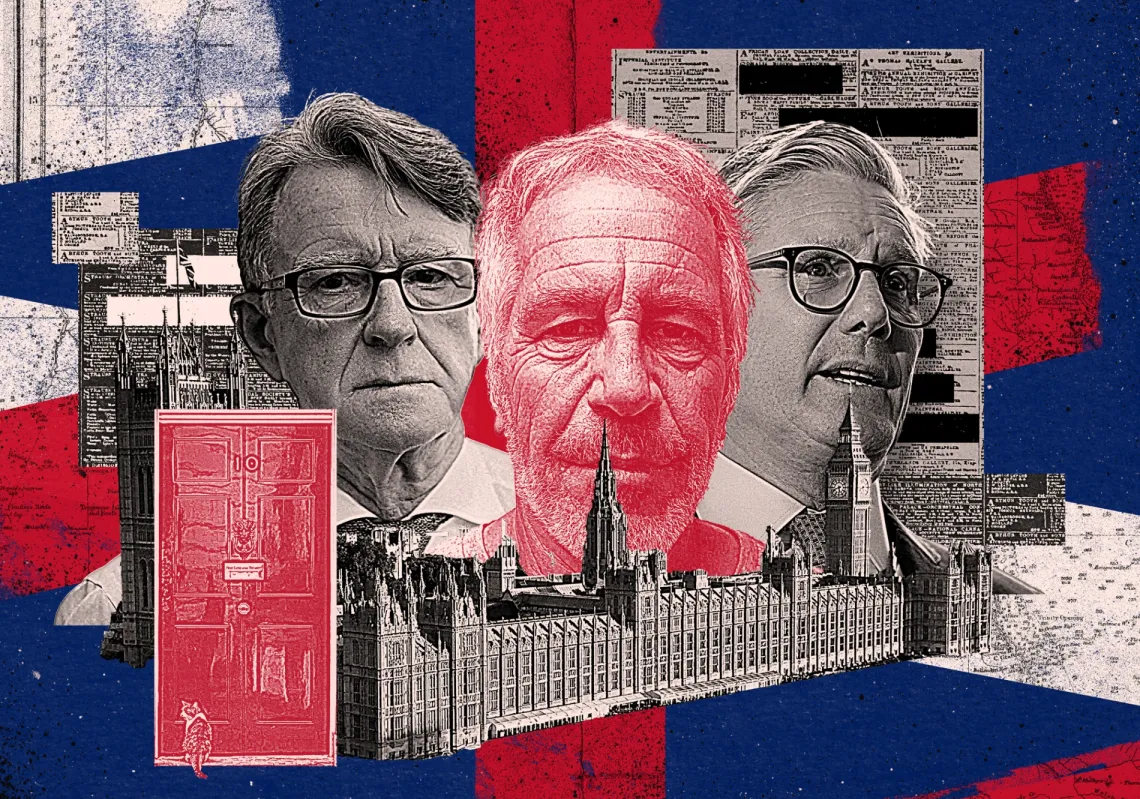
The great mystery of our times is how this could have happened to a party elected by a massive landslide less than two years ago. Is it all the fault of the government’s U-turns? Was it the appointment of Peter Mandelson as ambassador to Washington? Could it be the freebies received by cabinet members within weeks of their ascent to power? Or has the electorate simply lurched to the right under the malign influence of Nigel Farage, despite the draconian measures against immigration pioneered by an over-zealous Home Secretary?

The problem with any of these explanations is that each of them can be convincing until one considers the other explanations. They’re really symptoms. There is a more fundamental explanation (though perhaps verboten in present times) for the lacklustre PM and his underwhelming government, one that is based on a debate that has haunted the Labour party for most of its existence.

Back when Tony Blair first became the leader, an aspiration was enshrined in Clause Four of the party’s constitution. Dating back to 1918, the clause was drafted by Sidney and Beatrice Webb. In photographs, Sidney bears a passing resemblance to a Bolshevik intellectual, but facial hair wasn’t only fashionable among revolutionaries.

The Webbs spoke from a democratic socialist tradition. They wanted to secure ‘for the workers by hand or by brain the full fruits of their industry and the most equitable distribution thereof’. This redistribution would be achieved by common ownership of ‘the means of production, distribution and exchange’. The language may sound dry and ideological to some, but to those on the left of the party, it came close to lyrical.
JUSTIN TALLIS / AFP
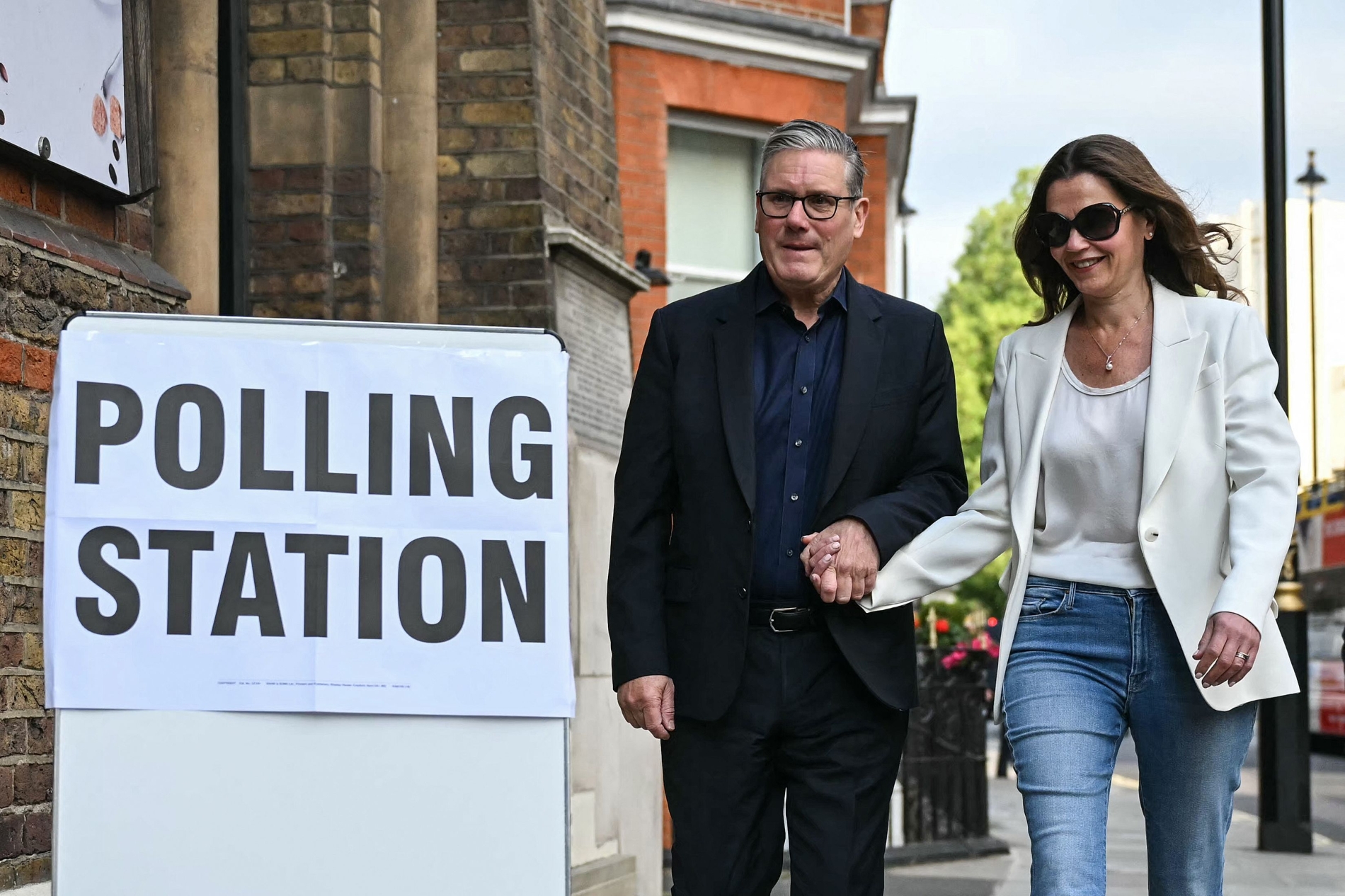
Britain's Prime Minister Keir Starmer (L) arrives with his wife Victoria Starmer (R) to cast their votes at a polling station in Westminster Chapel, central London, on 7 May 2026, as polls open for local elections.

Early in his career as leader, Tony Blair succeeded in replacing this working-class poetry with his own version. It lacked the lyrical flights, but then so did Tony Blair’s speeches. It talked instead of how, by the strength of our common endeavour, we achieved more than we achieved alone, and it set out ‘...to create for each of us the means to realise our true potential and a community in which power, wealth and opportunity are in the hands of the many, not the few, where the rights we enjoy reflect the duties we owe, and where we live together, freely, in a spirit of solidarity, tolerance and respect.’

The high-minded tone is beyond doubt, but there is no reference to the means by which any of this will be achieved. Instead, it is a statement of values. Sir Keir Starmer is very fond of invoking his values. In this, he mimics Tony’s rewritten clause.

Once again, the heirs of Blair have determined that the Labour Party simply manages capitalism, in preference to the Conservatives mismanaging it. Meanwhile, the ‘few’ continue to engross society’s wealth unimpeded, making more and more money, while the ‘many’ are kept busy making ends meet. But, despite appearances, history didn’t simply repeat. As Mark Twain would say, it rhymed.

Enter McSweeney

The latest Blairite takeover was consummated after Jeremy Corbyn’s massive defeat in 2019. In the lead-up to the party’s worst result since the Thirties, a row began to consume the ranks over antisemitism. The story of how Morgan McSweeney, an unelected fixer, was able to use this as a way of undermining Corbyn is told at length in Get In: The Inside Story of Labour under Starmer. Written by Gabriel Pogrund and Patrick Maguire, the book amply proves the use to which charges of antisemitism were put.

This may have seemed an arcane dispute at the time, not calculated to stir the imagination of the voting public. However, it is fair to say that in eliminating socialism under the guise of eliminating antisemitism, Mandelson and McSweeney were able to neuter radical policy.

AFP
Former Downing Street chief of staff Morgan McSweeney answers questions as part of the investigation looking into the vetting process over Peter Mandelson's appointment in 2024 as UK ambassador to the US on 28 April 2026.

They did this with the aid of one individual in particular, a Jewish man by the name of Trevor Chinn, who donated funds to Labour Together, McSweeney’s campaigning organisation. Chinn’s Jewishness is not incidental here, any more than his fervent Zionism. According to reports, he has bankrolled both Conservative and Labour Friends of Israel throughout his career. In early 2025, he was awarded the Israeli Presidential Medal of Honour by President Isaac Herzog for his services to Israel.

When pundits express their dismay at how directionless or blundering the government has been, they tend to overlook its origins in a strategy to purge the left. From being leader of the party, after all, Corbyn has been expelled altogether from its ranks. He has become the figurehead of a new and irrelevant outfit, one boasting the needy-sounding moniker of Your Party. Very few voters call the party their own.

The toppling of Jeremy Corbyn and the purging of ‘antisemitism’ by Peter Mandelson and Morgan McSweeney—for convenience, you could call them Mandy McSweeney—may be seen as a rerun of the victory of Blair’s New Labour over the socialism that still haunts Labour’s famously broad church, like the ghost of a puritanical preacher.
The question is constantly asked: Why has this government done things that were so unpopular? The obvious answer, that socialism was chucked out with the antisemitism, is rarely voiced.

But nowadays the church is also haunted by the Blairites. Lord Mandelson, a member of the original cast, has been a particularly spooky presence of late. This is why the May elections, and the weeks and months that follow, are likely to resemble a protracted exorcism.

The question is constantly asked: Why is this government so useless? Why has it done things that were so unpopular, like (taking just one example) threatening to withdraw winter fuel allowance? Why has it wasted time on screeching U-turns, like deciding to restore winter fuel allowance?

The obvious answer, that socialism was chucked out with the antisemitism, is rarely voiced. Instead, we are left with the constant chatter of pundits about Keir Starmer's inadequacies.

There's no doubt he has some. They might even account for his unpopularity. For proof of that, you only have to look at his personal ratings. Opinions may not always be as pungent as, say, those expressed by the Northern Irish band Kneecap in their song 'Liars Tale', but for a man as 'boring' as they claim, whose expression is 'a constant state of condolence', feelings run remarkably high.

Reuters
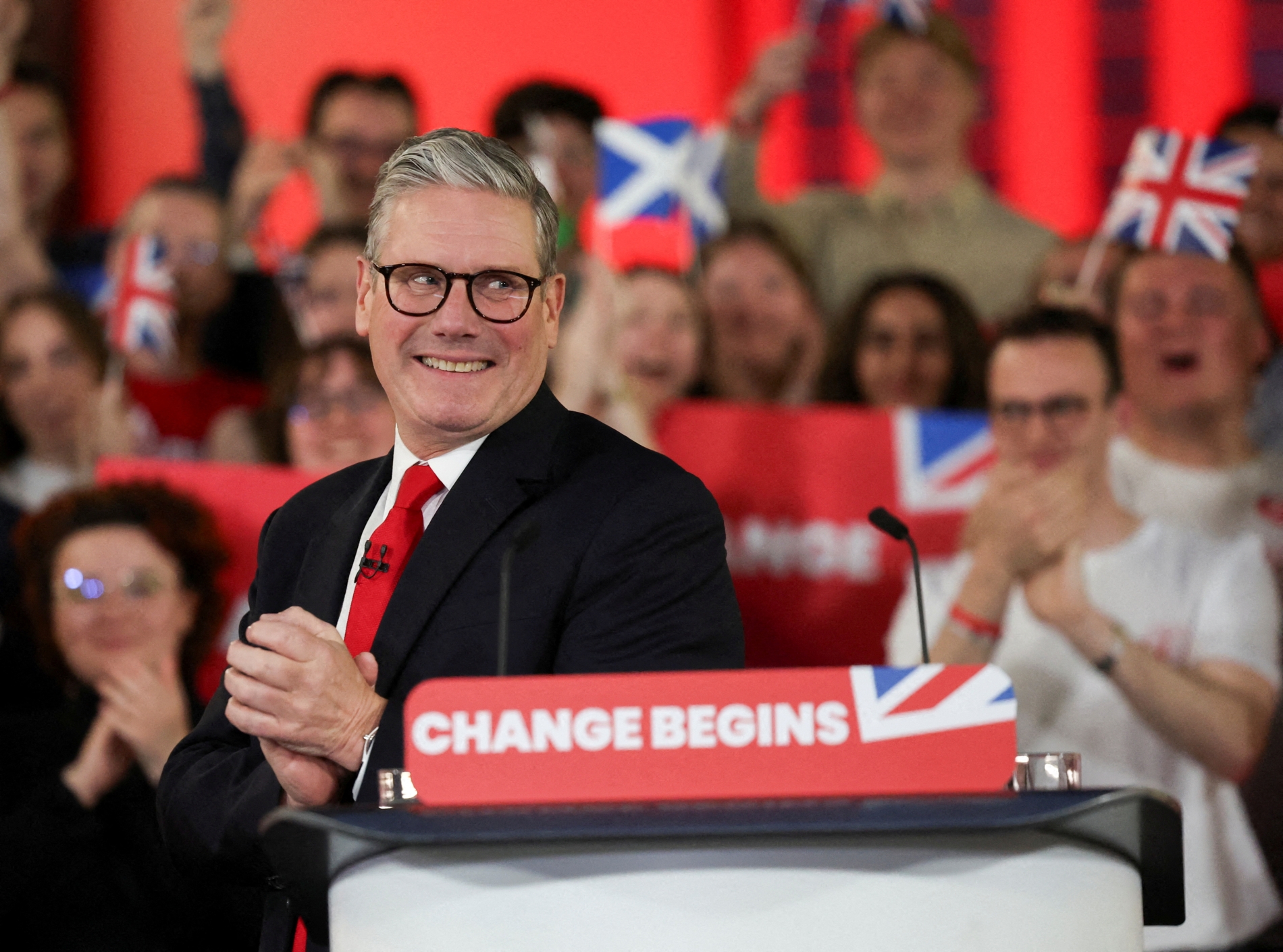
Keir Starmer, leader of the British Labour Party, giving a speech at a reception celebrating his election victory, at the Tate Modern Museum in London, Britain, on 5 July 2024.

Mysterious by design

Starmer is an inexplicable mystery, a man without qualities, hence the endless profiles lamenting his lack of judgment, or of principles, or of communication skills, and outlining how he doesn't understand politics (too much a human rights lawyer) or economics (leaves that to his Chancellor), and how he pays no attention to what's going on in his own cabinet, in order to ensure plausible deniability—if he didn't know what was happening, he can plausibly deny it was his fault.

I'm not saying this rings untrue. It's just that Starmer's very lack of qualities masks the agenda of his creators. You have to be prepared to see past the flaws. Yet right now, with attacks on defenceless Jews in Golders Green, plus the usual pettifogging debates over whether criticism of Israel is antisemitic, seeing what lies behind the stolid exterior of the man is nigh on impossible.     

There is an oddly naïve reading of Starmer's decision to appoint Lord Mandelson as ambassador to Washington. Writing in the New Statesman, John Elledge called the prime minister 'a man who seems to think that governing the country is someone else's job, preferably someone who can then take the blame for his failings.' In this instance, it was Olly Robbins, a top civil servant, summarily sacked for keeping the prime minister in the dark. Except, he really didn't. If anything, he himself had been kept in the dark and hassled to get things moving. He was only trying to be helpful.

There have been numerous other such patsies along the way. The culls have been so regular that Starmer is beginning to look lonelier at the top than any prime minister before him. 

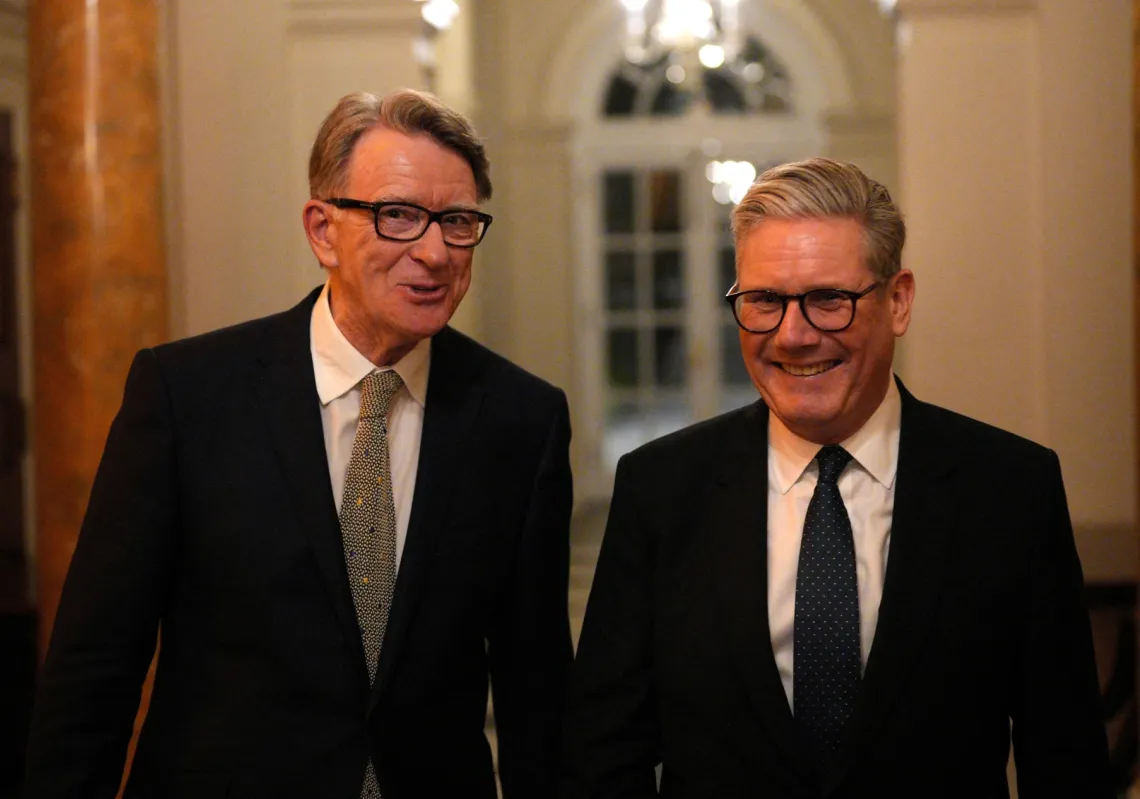
And yet, there may be some truth in the idea that he is an empty vessel. Critics of Starmer routinely observe that the Mandelson appointment was a failure in judgment. In fact, it might more properly be called a failure to judge. Before vetting had been carried out, Mandelson was already jetting over to Blair House, the ambassadorial residence (no relation). Why? Because he was Lord Mandelson, of course.

Reuters
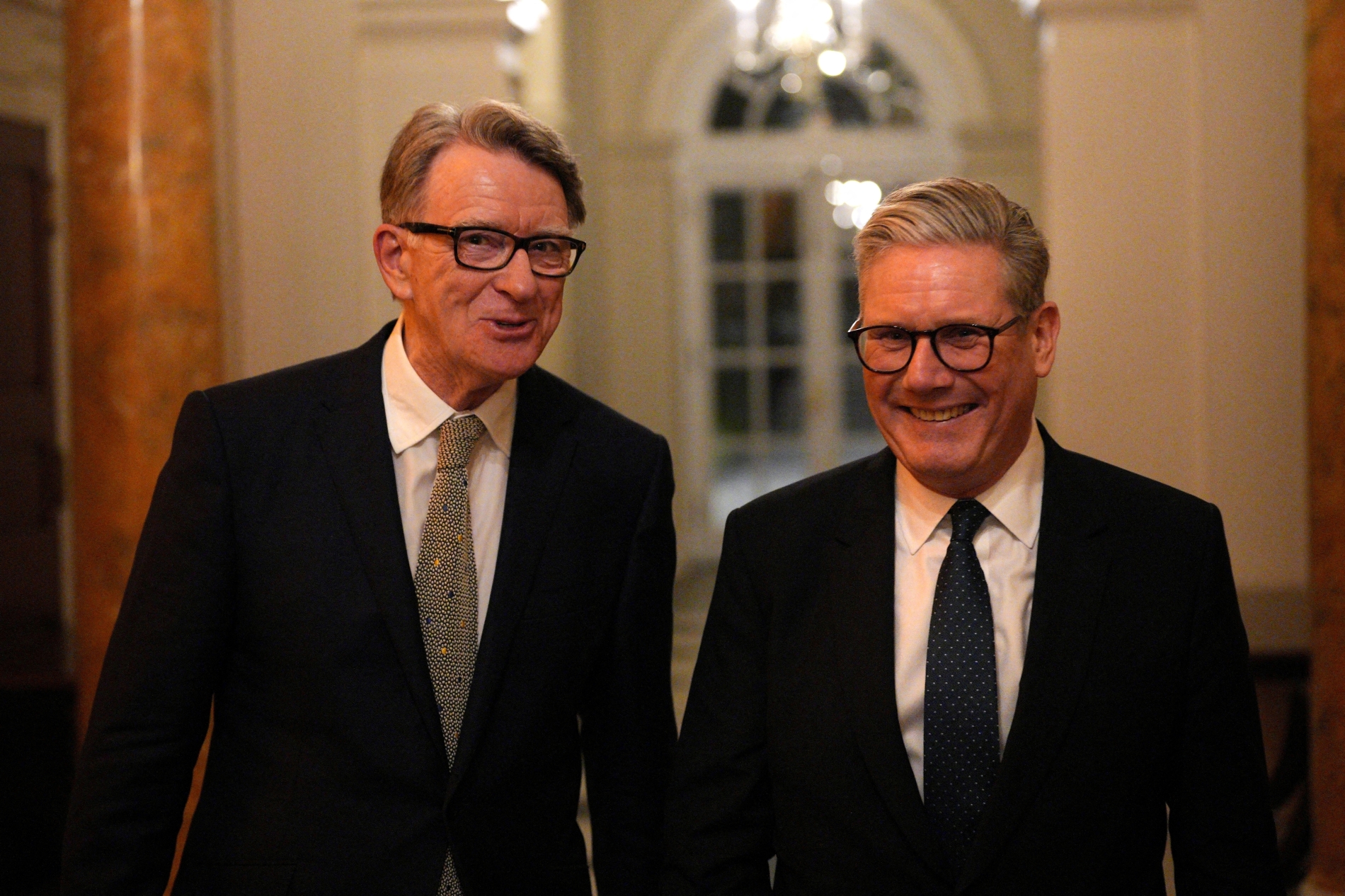
UK Prime Minister Keir Starmer talks with UK ambassador to the United States Peter Mandelson during a welcome reception at the ambassador's residence on 26 February 2025, in Washington, DC.

Follow the money

The consequences of Sir Keir, this wondrous creation of Mandy McSweeney's, reaching Number Ten are more than the quashing of the party's left wing. The origin story is in the money that funded it. In the wake of a successful assault on the perceived antisemitism of the left, it is hardly a surprise that the government has responded so impulsively to the flare-up of tensions following events in Gaza. The most notable of these was the response to Palestine Action, which has led to an ongoing farce.

Yet already, before becoming prime minister, Starmer's initial reaction to the events of October 7 was to support Israel's "right to self-defence". So far, so predictable. What shocked many at the time was that he also said Israel "had the right" to withhold power and water from Palestinian civilians, adding that "Obviously, everything should be done within international law." That afterthought did nothing to save him in the eyes of those who could see a humanitarian crisis looming.

Given a counterfactual alternative history in which the Hamas attack never occurred, we might never have witnessed the banning of Palestine Action. The recent wave of attacks on Jewish communities might never have happened. No one could have predicted any of this when Mandy McSweeney was covertly levelling the charge of antisemitism against the Corbynistas. It seemed like an internal squabble over a distant conflict.

But the attack happened, and a government born out of that particular squabble could hardly be expected to take an even-handed approach. Force of habit alone would account for why it had to prove it wasn't antisemitic.

Pundit hesitation

Maybe this is also why the pundits' analysis remains so superficial. There's understandable hesitation when it comes to explaining the government's inadequacies owing to two dirty words: antisemitism and socialism. The first is regularly conflated with criticism of a foreign country. The second is complete anathema to those 'realists' who consider it synonymous with unelectable.    

Already, before the May results come through, even before the polling stations open, political obituaries (like this one) are being prepared. Rival leaders are out on manoeuvres. It may well be the case that Keir Starmer's premiership is doomed, but if so, most of the obituarists will say it was the Mandelson appointment, and beyond that, the ghost of Jeffrey Epstein, that finished him off.

But what if the truth is more complicated than an individual who was a poor judge of character? We may be about to discover that the spectre haunting Labour as a whole is the socialism Starmer and his handlers thought they'd laid to rest.    

font change