China looks to boost North Korea ties with an eye on Russia
China understands that North Korea is no longer the besieged ally with no gateway other than Beijing, and that leaving the field entirely open to Russia carries a mounting strategic cost
AFP
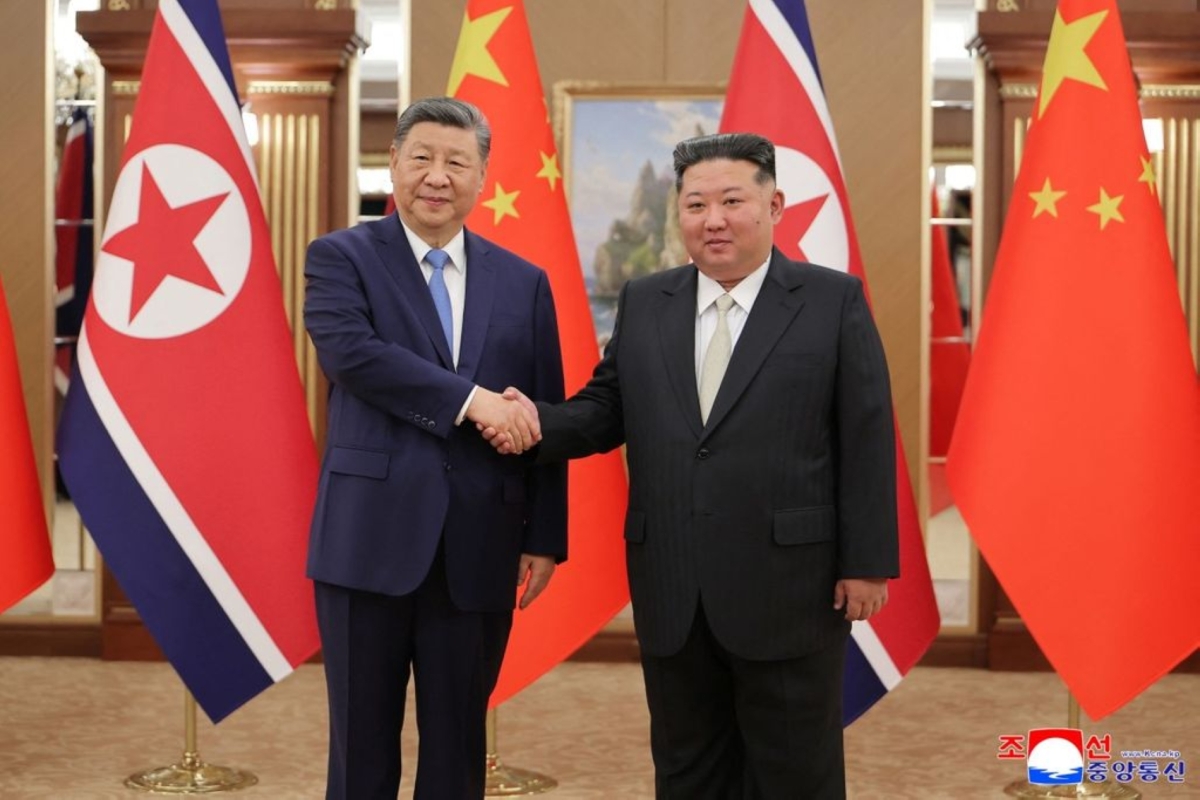
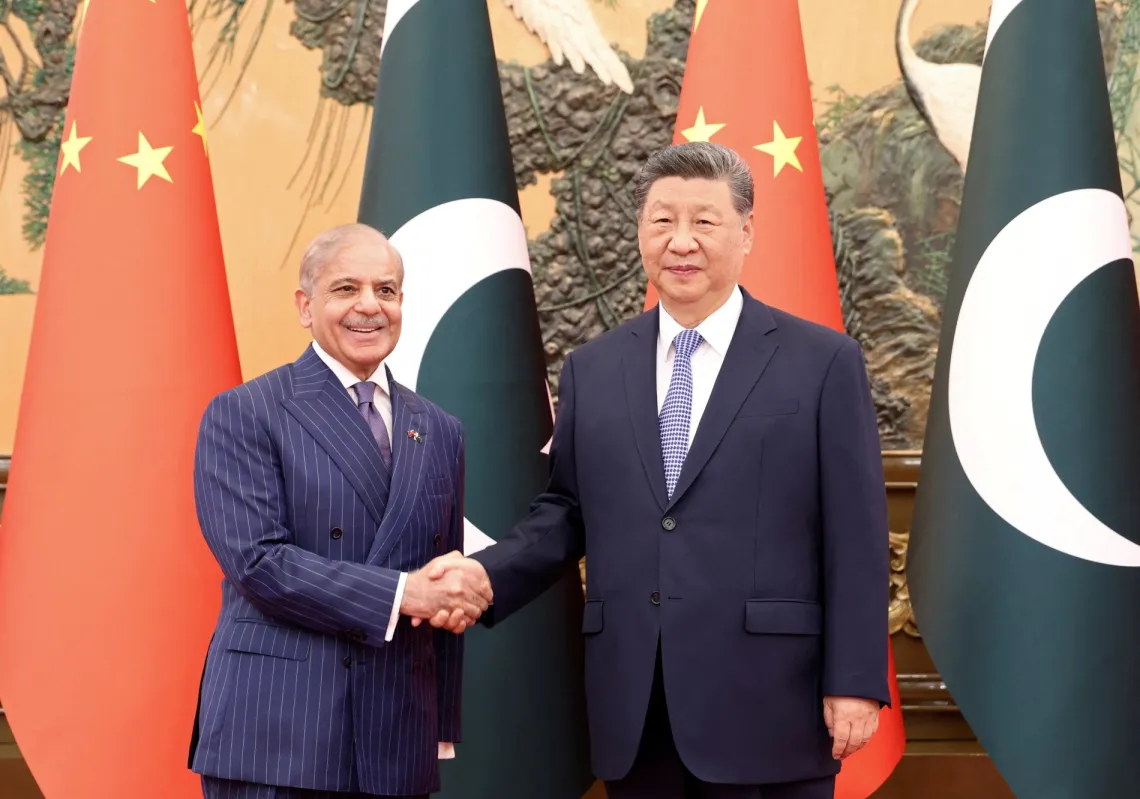
North Korean leader Kim Jong Un (right) and Chinese President Xi Jinping shake hands during a rare visit by the Chinese president to North Korea on 8 June, 2026.
China looks to boost North Korea ties with an eye on Russia
Xi Jinping stayed put in China for more than six months. During this period, presidents and key leaders travelled to Zhongnanhai, the compound at the heart of power in Beijing, to see him. The call list was as impressive as it was long: French President Emmanuel Macron, British Prime Minister Keir Starmer, US President Donald Trump and Russian President Vladimir Putin, as well as other leaders, including German Chancellor Friedrich Merz and South Korean President Lee Jae-myung.
Against this background, it is understandable that Xi’s visit to Pyongyang garnered considerable international attention. It was his first trip abroad in months and his first visit to North Korea since 2019. Chinese officialdom framed the visit as a reciprocal protocol visit to North Korea after its leader, Kim Jong Un, visited Beijing in September 2025, on the occasion of the 80th anniversary of Japan’s defeat in the Second World War.
Western observers and experts, however, viewed the visit through what is sometimes called the “high school dating effect”—a metaphor based on the idea that a girl at school suddenly becomes the focus of everyone’s attention once one person starts dating her. The implication is that China appeared to take a renewed interest in Pyongyang after years of relative coolness, against the backdrop of the Russian-North Korean rapprochement and Donald Trump’s renewed interest, during his election campaign, in reopening channels of communication with Kim Jong Un.
Given the powerful symbolism surrounding Xi’s movements, particularly as China’s geopolitical weight continues to grow, the visit was widely seen as a clear and forceful sign of Beijing’s desire to reshape its relationship with Pyongyang amid new geopolitical realities.
That relationship was once captured, especially before the 1970s, by Mao’s famous dictum: “If the lips are gone, the teeth will be cold.” The phrase placed North Korea at the heart of China’s national security equation. Today, however, the four axes that have historically defined the relationship between Pyongyang and Beijing, namely the nuclear question, economic interdependence, the China, North Korea and Russia triangle, and the regional calculations linked to Japan and South Korea, all appear to require redefinition and recalibration in keeping with the transformations of the moment.
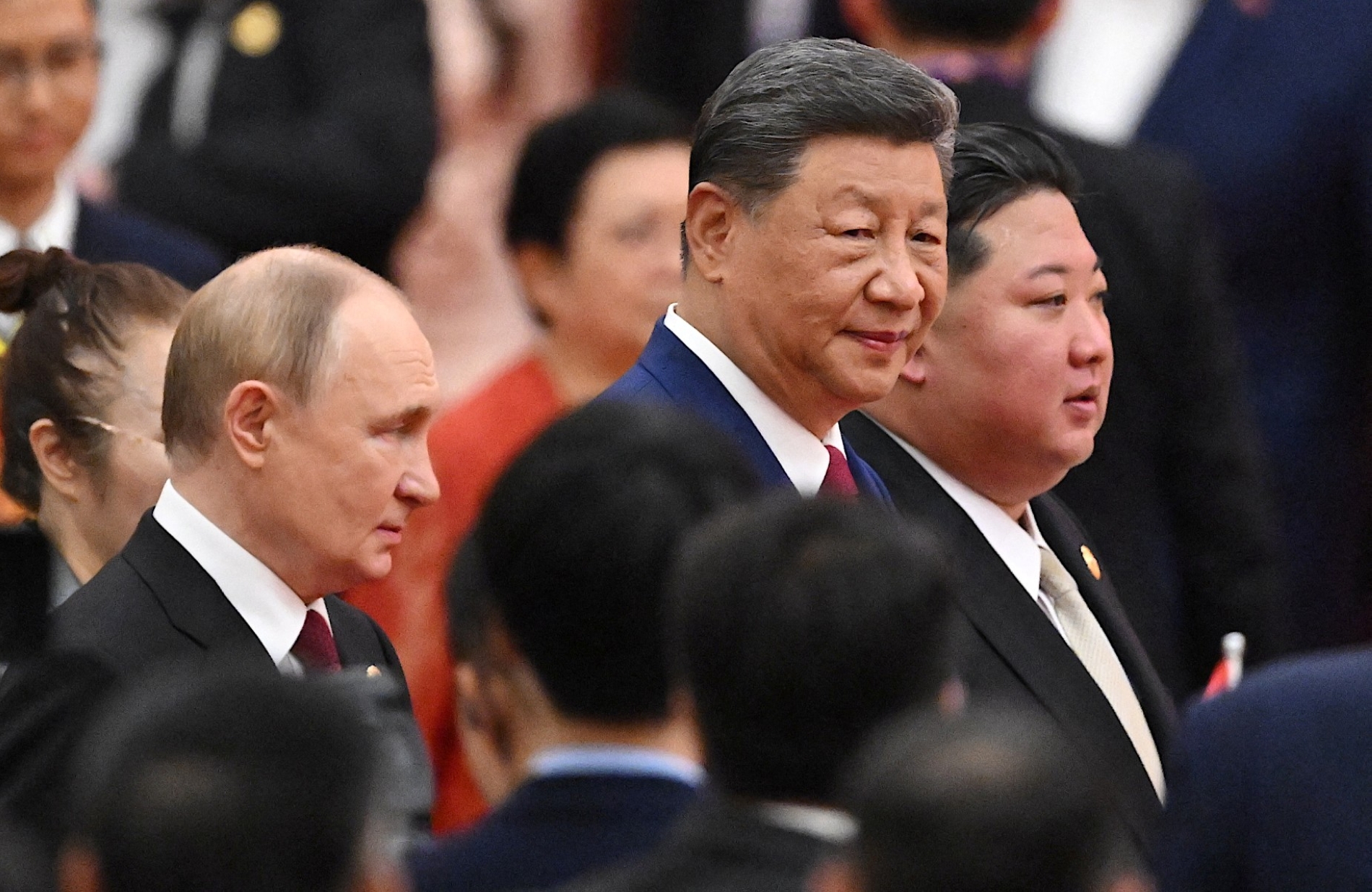
China’s President Xi Jinping (C), North Korea’s leader Kim Jong Un (R) and Russia’s President Vladimir Putin attend the 80th anniversary of victory over Japan and the end of World War II, in Beijing on 3 September 2025.
Conspicuous omission
Xi’s visit came less than a month after he received Trump in Beijing. It was striking that the Chinese statement issued after their summit was the first to mention discussion of the North Korean file, prompting a US clarification through a “fact sheet” published two days later. The document confirmed that the two leaders had discussed the denuclearisation of the Korean Peninsula—a point conspicuously omitted from China's account.
Since North Korea’s first nuclear test, China has officially supported the principle of denuclearisation. It took an active part in the Six Party Talks and approved the UN sanctions imposed on Pyongyang. This position, however, now faces mounting challenges, especially after North Korea entrenched itself as a nuclear power by increasing its production of nuclear fuel and radioactive materials, and by developing intercontinental ballistic missiles capable of carrying nuclear warheads. Pyongyang now links any future negotiations to recognition of its status as a de facto nuclear state, similar to India and Pakistan.
Growing trust between the two powers may lead Beijing to grant Moscow greater leeway in North Korea, where they could boost strategic cooperation.
In this context, the statement by Kim Yo Jong, the North Korean leader's sister, during Xi's visit was unmistakable: her country's nuclear programme is irreversible, and the development of its arsenal will continue.
The war in Ukraine—a country that relinquished its nuclear arsenal decades ago in exchange for security guarantees, followed by the current war on Iran after long years of negotiations over its nuclear programme— has further complicated China's position. Across many countries, the conviction has taken root that nuclear weapons, in a turbulent and unbalanced world, are the best guarantor of survival for threatened regimes and states. This has pushed China itself towards expanding its nuclear arsenal, thereby limiting its ability to use denuclearisation as a lever to regulate Pyongyang's conduct and keep it within manageable bounds.
In this context, Tong Zhao, a senior fellow in the Nuclear Policy and China programme at the Carnegie Endowment for International Peace, tells Al Majalla that the declining likelihood of meaningful progress towards North Korean denuclearisation, together with China's growing focus on strategic competition with the United States, has led Beijing to largely stop emphasising denuclearisation in official documents and public statements.
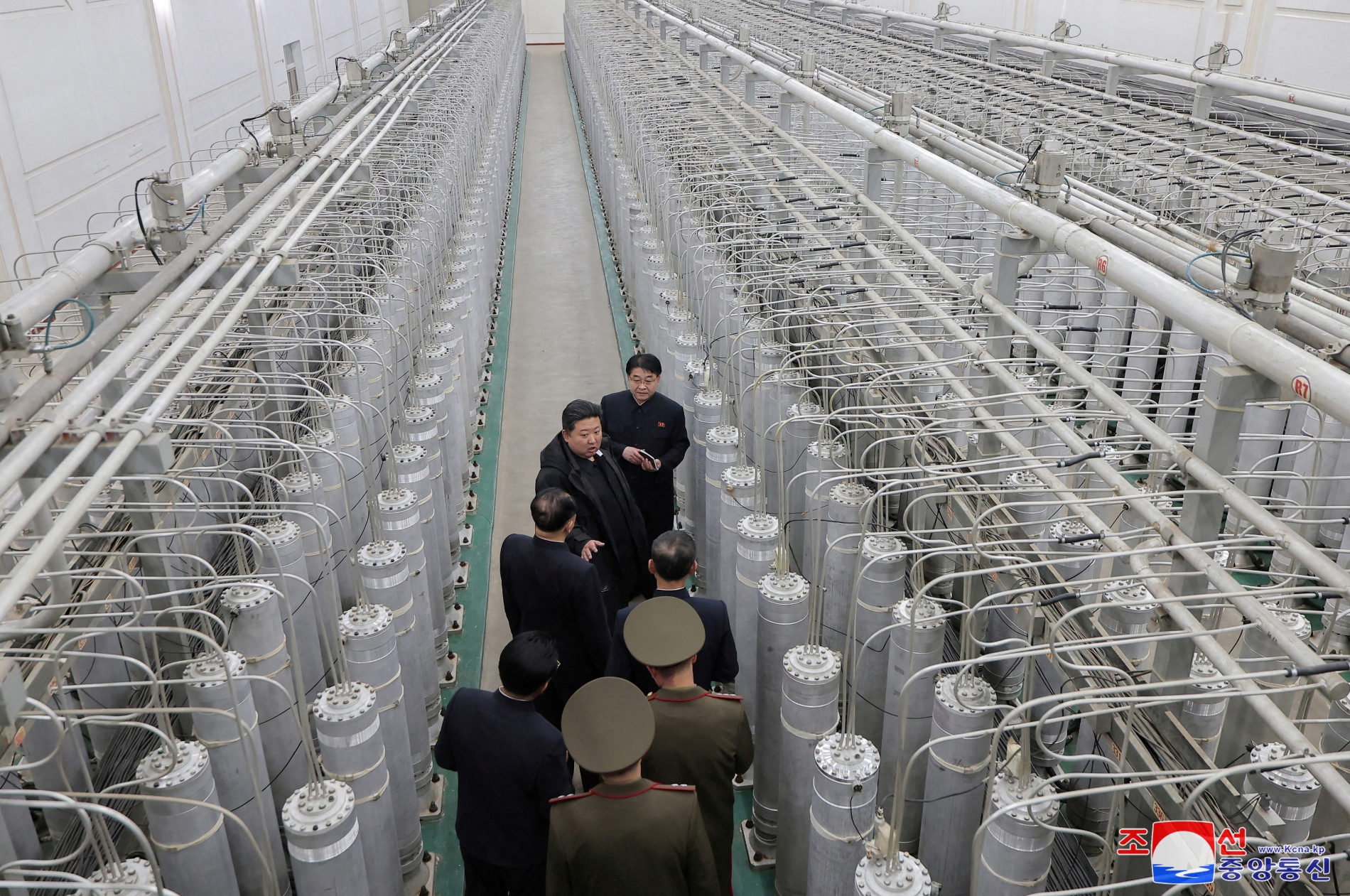
North Korean leader Kim Jong-Un visits the country's nuclear material production base at an undisclosed location on 29 January 2025.
Shifting priorities
Instead, it has prioritised strengthening its relations with North Korea to preserve and expand Chinese influence there. This, in turn, enhances Beijing's ability to manage its relations with both South Korea and the United States, while reinforcing China's role in shaping developments on the Korean Peninsula and beyond.
Zhao argues that preserving Beijing's influence in Pyongyang is essential if China is to balance Russia's growing role in North Korea, shape the course of the Russian-North Korean strategic partnership, and limit any negative repercussions that deeper cooperation between Moscow and Pyongyang might have for Chinese interests. For that reason, Zhao rules out the possibility that Xi, during his visit, would publicly recognise North Korea's right to possess nuclear weapons or exert serious pressure on Pyongyang over denuclearisation.
Andrew Korybko, an American political analyst based in Moscow who specialises in the global geopolitical shift towards multipolarity, takes a different view. Korybko expects Xi to reaffirm China's opposition to North Korean nuclear and missile tests. He tells Al Majalla that the more North Korea relies on Russia to reduce its dependence on China, the less sensitive it may become to Chinese reservations about its missile and nuclear tests. Beijing sees those tests as inadvertently accelerating the pace of US-led regional militarisation, to the detriment of China's security interests.
At the same time, Korybko notes that, from Russia's perspective, an escalation in North Korean testing could help divert American attention away from Europe. He adds that Moscow has an interest in strengthening North Korea's balancing policy between Russia and China as an indirect means of easing some American pressure.
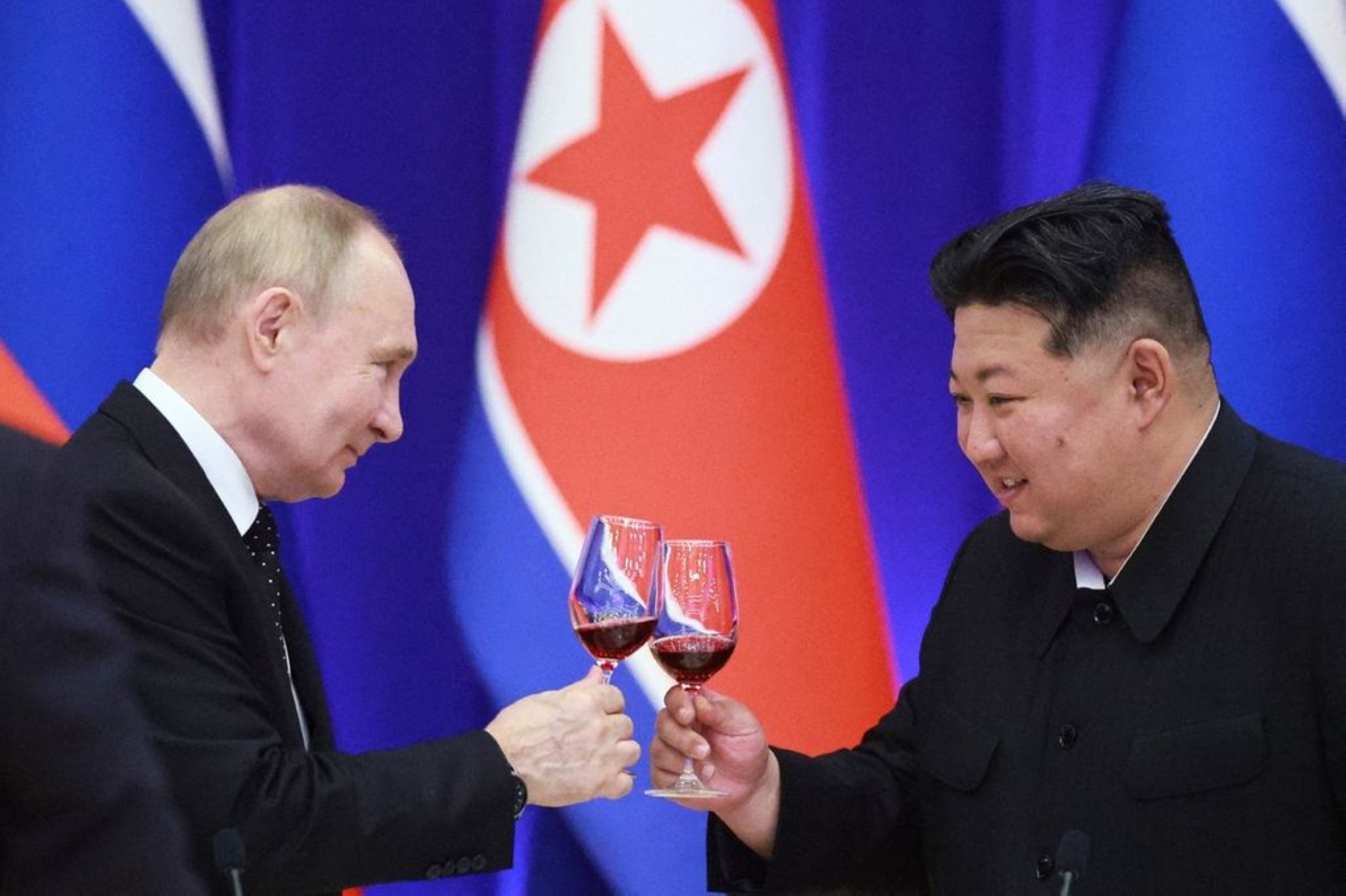
Russian President Vladimir Putin and North Korean leader Kim Jong Un exchange toasts during a reception in Pyongyang on 19 June 2024.
From the Arduous March to coastal resorts
On the economic front, North Korea's dependence on China has passed through two major junctures. The first was the Arduous March of the 1990s, following the collapse of the Soviet Union, the most important military and economic partner of the Pyongyang regime. China sought, as far as possible, to fill that vacuum while preserving a delicate political balance built on a dual equation: preventing the collapse of the regime without turning North Korea into a state held hostage to total dependence on Beijing or pushing it towards more escalatory behaviour in pursuit of additional support.
The second juncture came in 2007, when international sanctions on Pyongyang were tightened, sharply narrowing the scope of its foreign trade and effectively turning China into its almost sole economic lifeline, while maintaining the same equation: preventing collapse without offering a comprehensive rescue.
Yet beyond this historical trajectory, Xi Jinping's visit comes after Kim Jong Un moved, in the words of The New York Times, from "hell straight to paradise" in less than four years. North Korea's denial of the coronavirus, set against China's rigid lockdown policy, had nearly driven Pyongyang into a crisis approaching the gravity of the famine of the 1990s.
Then came Russia's invasion of Ukraine in 2022, and Moscow's need for ammunition and later for soldiers. This marked a turning point, cementing an accelerating rapprochement between Moscow and Pyongyang. Both were internationally isolated and weighed down by sanctions, at a moment when Beijing was consolidating its position as the foremost competitor to the United States.
This shift enabled Kim to secure Russian energy and financial support, along with military technology that strengthened his position. The North Korean leader's confidence reached the point of opening the country's first coastal tourist resort, in a double message addressed to Trump, whose instincts as a property developer are stirred by beach resorts, and to Xi, as a signal that Pyongyang possesses economic cards with which to reduce its dependence on Beijing.
Although these developments have not posed a direct threat to China's economic influence, Beijing has been keen to anchor its position. During Kim's visit to Beijing in September 2025, he signed a package of agreements to strengthen economic and defence cooperation, and the Friendship Bridge over the Yalu River was restored to full operation after its closure during the pandemic. This was reflected in a nearly 26% increase in trade with Pyongyang in 2025.
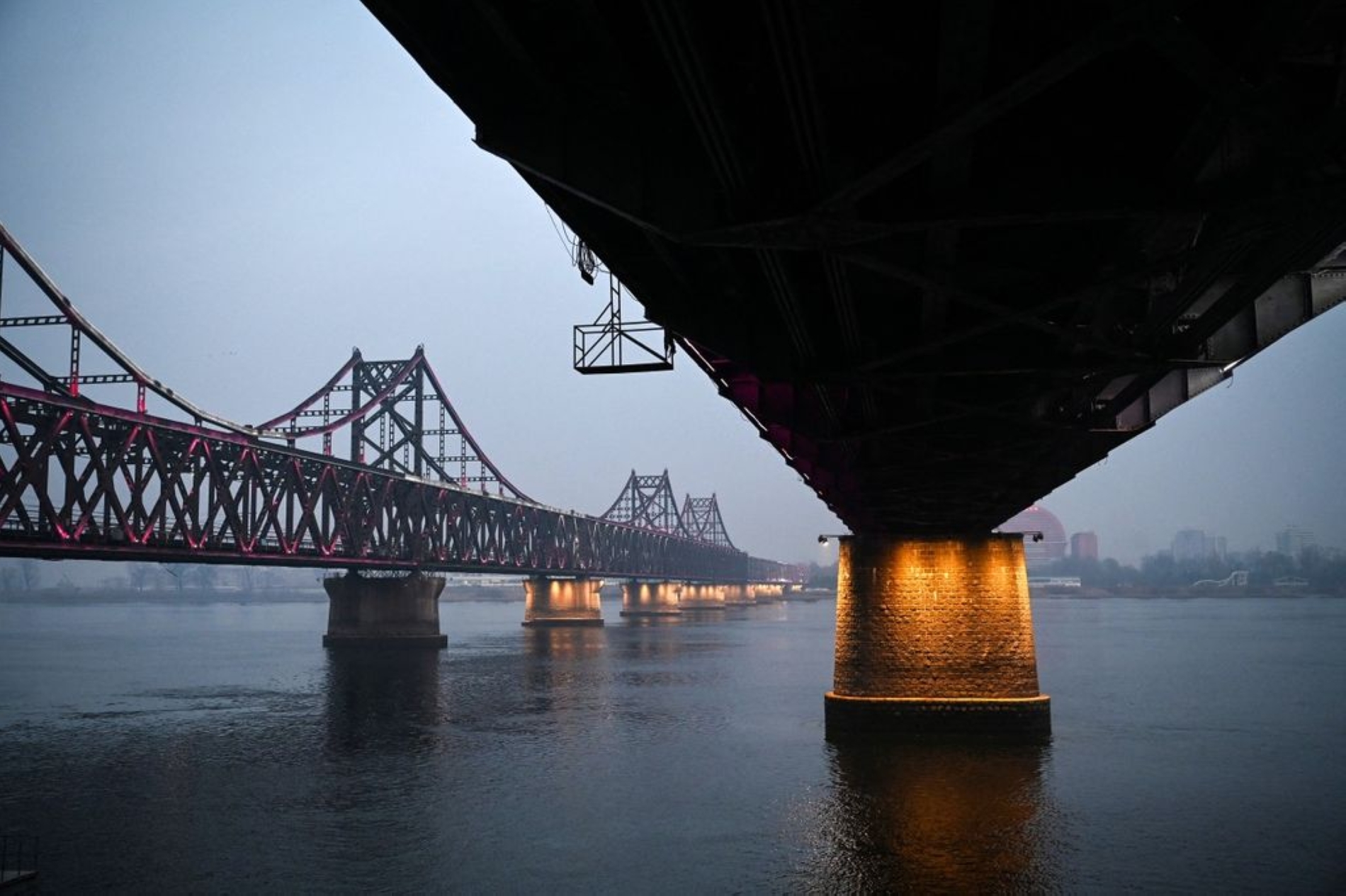
The broken Yalu River Bridge (right) and the China-Korea Friendship Bridge (left)stretch across the Yalu River, which forms the border between North Korea and China.
Chinese concerns
Despite the complexities of the relationship, China and North Korea still maintain the mutual defence treaty signed in 1961, which represents Beijing's only binding defence commitment to a foreign state. It was extended in 2021 for another two decades. From this standpoint, the 2024 military alliance between Russia and North Korea has raised concerns in Beijing, for fear of being dragged into confrontations whose tempo it cannot control due to overlapping military commitments among its allies.
At the same time, the development of North Korea's military capabilities gives Beijing an important balancing card in the face of rising regional militarisation, particularly amid its accusations that Japan's nationalist government, led by Sanae Takaichi, is reviving a militarist course, and as Washington continues to strengthen the armament of its allies. In this context, Trump's announcement, days before Xi's visit, that South Korea would be allowed to build a nuclear submarine was especially striking, an unprecedented step directed in practical terms against both Beijing and Pyongyang.
For all these reasons, Xi Jinping's visit may be seen as a serious Chinese attempt to reshape the relationship with North Korea in line with new realities and to gradually move away from the policy of punishment and containment that has governed dealings with Pyongyang since the 1990s.
Pyongyang's relationship with Moscow may have given it a boost, but it knows that Beijing is the one that ultimately holds the key to ending its global isolation
China holds the key
China understands that North Korea is no longer the besieged ally with no gateway other than Beijing. It also recognises that leaving the field entirely open to Russia carries a mounting strategic cost.
Although the relationship between Moscow and Beijing will always be governed by a measure of caution—not only because of history and geography, but also because China has effectively inherited the former Soviet Union's position as the international power competing with the United States—growing trust between the two powers may lead Beijing to grant Moscow greater leeway in North Korea, where they could boost strategic cooperation.
Seen from this angle, Xi's remarks in Pyongyang about improving relations and strengthening coordination on regional security issues carry far more weight. As for Kim Jong Un, the grand reception he staged for his Chinese guest carried an equally important message: Pyongyang's relationship with Moscow may have given it a boost, but it knows that Beijing is the one that ultimately holds the key to ending its global isolation