The UK-GCC trade deal is important, but the harder part begins now

The agreement creates clear opportunities for both sides, but implementation will be more challenging and projected economic gains will be modest

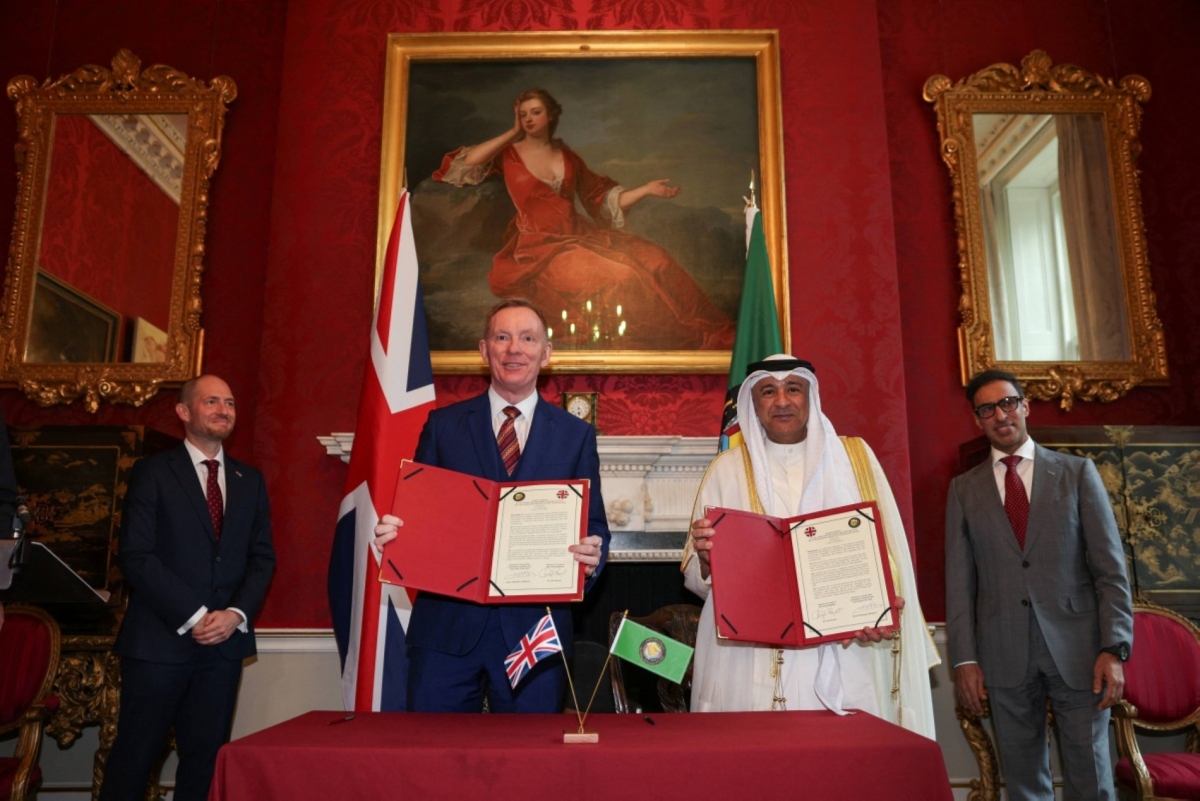
British Minister of State for Trade Chris Bryant and Secretary General of the Gulf Cooperation Council Jassem Mohammed Al-Budaiwi pose for a photo after participating in a signing ceremony in London on 20 May 2026.
AFP
British Minister of State for Trade Chris Bryant and Secretary General of the Gulf Cooperation Council Jassem Mohammed Al-Budaiwi pose for a photo after participating in a signing ceremony in London on 20 May 2026.

The UK-GCC trade deal is important, but the harder part begins now

Last month's UK-GCC free trade agreement has been presented as one of Britain’s most significant post-Brexit trade achievements. Politically, the symbolism is clear. Britain can point to a commercially important agreement with one of the world’s fastest-growing economic regions, even if the war has dented short-term confidence, while the Gulf states can demonstrate growing confidence and flexibility as global trade actors.

The agreement creates clear opportunities. British businesses are well placed in sectors that Gulf governments prioritise as part of their diversification agendas, including financial services, energy transition, artificial intelligence, cyber security, advanced manufacturing and digital infrastructure. London’s financial markets, legal system and regulatory expertise continue to appeal to Gulf investors, as states such as Saudi Arabia and the UAE pursue ambitious economic transformation programmes.

Much of the political enthusiasm surrounding the agreement risks obscuring a more difficult truth. Trade agreements are far easier to announce than to implement.

The projected economic gains are modest. The UK government has linked the GCC agreement with its recently concluded India trade deal, estimating that together the two agreements could add approximately £8.5bn annually to UK GDP by 2040. For an economy the size of Britain’s, this is politically useful but economically limited.

One reason for this is that tariffs were never the biggest barrier to UK-Gulf trade in the first place. Average tariffs across the Gulf are already low, typically around 5% for many goods. The more significant barriers sit elsewhere, in licensing systems, standards requirements, customs procedures, local content rules and the variation in national regulations across the six GCC states.

This is most evident for British services firms, which sit at the centre of the UK’s commercial interests in the Gulf. Financial services, consulting, legal advisory work, engineering and technology all depend heavily on regulatory access and local operating conditions. These areas remain politically sensitive across the Gulf because they touch directly on sovereignty, labour markets and domestic economic priorities.
AFP
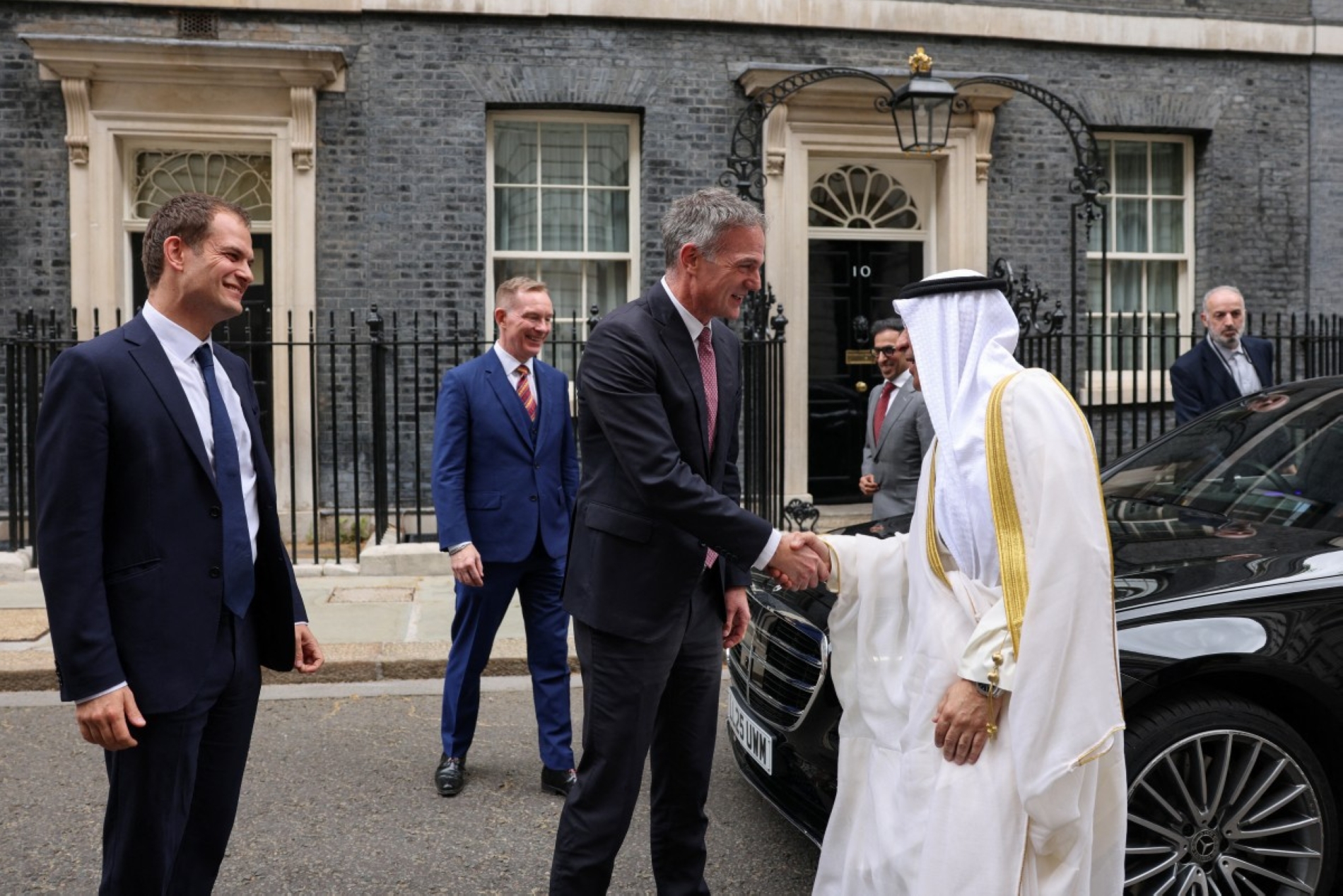
GCC Secretary General Jassem Al-Budaiwi meets with British officials including Peter Kyle, Chris Bryant and Hamish Falconer upon his arrival at Downing Street in London, on 20 May 2026.

Potential complications

The agreement may provide a GCC-level framework, but implementation will still depend heavily on national governments. That is where complications are likely to emerge. The GCC customs union is often presented as evidence of regional integration. Goods entering one GCC country can theoretically clear customs there before moving freely across the bloc. In practice, however, the system remains uneven and far from frictionless.

Moreover, VAT regimes still differ between member states, documentation requirements vary, and border enforcement is inconsistent. Sectors such as pharmaceuticals, food products and telecommunications equipment still require national approvals and inspections. Sensitive goods such as defence-related or dual-use goods, steel and aluminium, among others, continue to face restrictions, while administrative capacity differs across the region.

The deal shows that the GCC is increasingly willing to pursue flexible bilateral arrangements rather than wait for slower negotiations with larger blocs such as the EU

These practical issues become more pronounced given the agreement's ambitious implementation targets. The commitment to clear goods within 48 hours and perishable products within 6 hours may appear commercially attractive. Whether all six states can consistently meet those standards is less certain, especially under current regional conditions.

Inter-Gulf rivalries also complicate efforts to harmonise regulations fully across the bloc. The likely outcome is slower and messier implementation than current political messaging suggests.

Reuters
Ships waiting to cross the Hormuz Strait, off the coast of Oman, on 18 May 2026.

Tense backdrop

The agreement has been reached against a backdrop of renewed regional tensions involving Iran and continued concerns over maritime security in the Gulf. If the Strait of Hormuz remains vulnerable to disruption, tariff reductions alone will carry limited weight without reliable transport routes. Even if shipping lanes reopen, the risk of renewed escalation could keep freight costs and insurance premiums elevated for a prolonged period.

Multinational corporations may be able to absorb those costs. Smaller British exporters are far less likely to have that flexibility. For many SMEs considering entry into Gulf markets, logistical uncertainty and rising transport costs will prove more significant than tariff reductions themselves.

There is reason to question whether some politically difficult issues were fully resolved during negotiations or were set aside to secure agreement. Previous GCC trade talks with external partners such as the EU have often stalled over regulatory barriers, labour standards, climate policy tensions and human rights concerns, although UK negotiators argue this agreement goes further on some of these issues than any previous GCC trade deal. Negotiators also had to manage the technical challenge of aligning six distinct Gulf economies within a single framework.

The deal is part of a wider UK effort to build politically and commercially visible relationships beyond Europe.

None of this detracts from the importance of the deal. It shows that the GCC is increasingly willing to pursue flexible bilateral arrangements rather than wait for slower negotiations with larger blocs such as the EU. For the UK, it forms part of a wider effort to build commercially and politically visible relationships beyond Europe. The timing is also key, demonstrating that the UK is a dependable long-term partner to the Gulf, especially when it has been under attack.

A clear gap remains between signing an agreement and delivering its promised economic benefits. The outcome will depend less on headline tariff reductions and more on whether both sides can manage the harder work of regulatory alignment, phased implementation and regional stability over the coming decade.

font change