Why people flock to the dollar when local currencies collapse

An estimated 60% of all US banknotes in circulation are held outside the United States. In many parts of the world, the dollar is effectively the unofficial local currency. Al Majalla explains why.

Adrián Astorgano

Why people flock to the dollar when local currencies collapse

Across much of the world, national currencies are under strain. At street level, values evaporate, and confidence collapses, affecting vendors and sellers. Many desperately search for safer alternatives, and some refuse to accept the currency of the land. A national currency that no longer inspires the confidence of its nation erodes citizens' confidence in the state.

When money loses its meaning as a store of value and a source of stability, people typically turn to the world’s default currency—the US dollar—or gold and other assets that are sought to protect wealth. Yet currencies do not die suddenly. They perish in much the same way trust does: slowly at first, then all at once.

By now, this is a well-worn track, beginning with people quietly saving dollars by converting their salaries, which are typically still paid in the local currency. Later, traders start pricing goods in dollars, even if unofficially. Salaries steadily lose value, and the local currency becomes short-lived money, to be spent quickly before it loses even more purchasing power. This is where dollarisation emerges: the shift towards using the US dollar for savings, pricing, trade, and everyday transactions.

Some countries have officially adopted the dollar, such as Ecuador, Panama, and El Salvador. Elsewhere, dollarisation takes hold not by way of government decree but of state failure, as in Lebanon, Somalia, Venezuela, and Zimbabwe. The distinction matters. Official dollarisation may be an attempt to impose stability, whereas chaotic dollarisation can be an implicit declaration that citizens no longer trust either the currency or those issuing it.
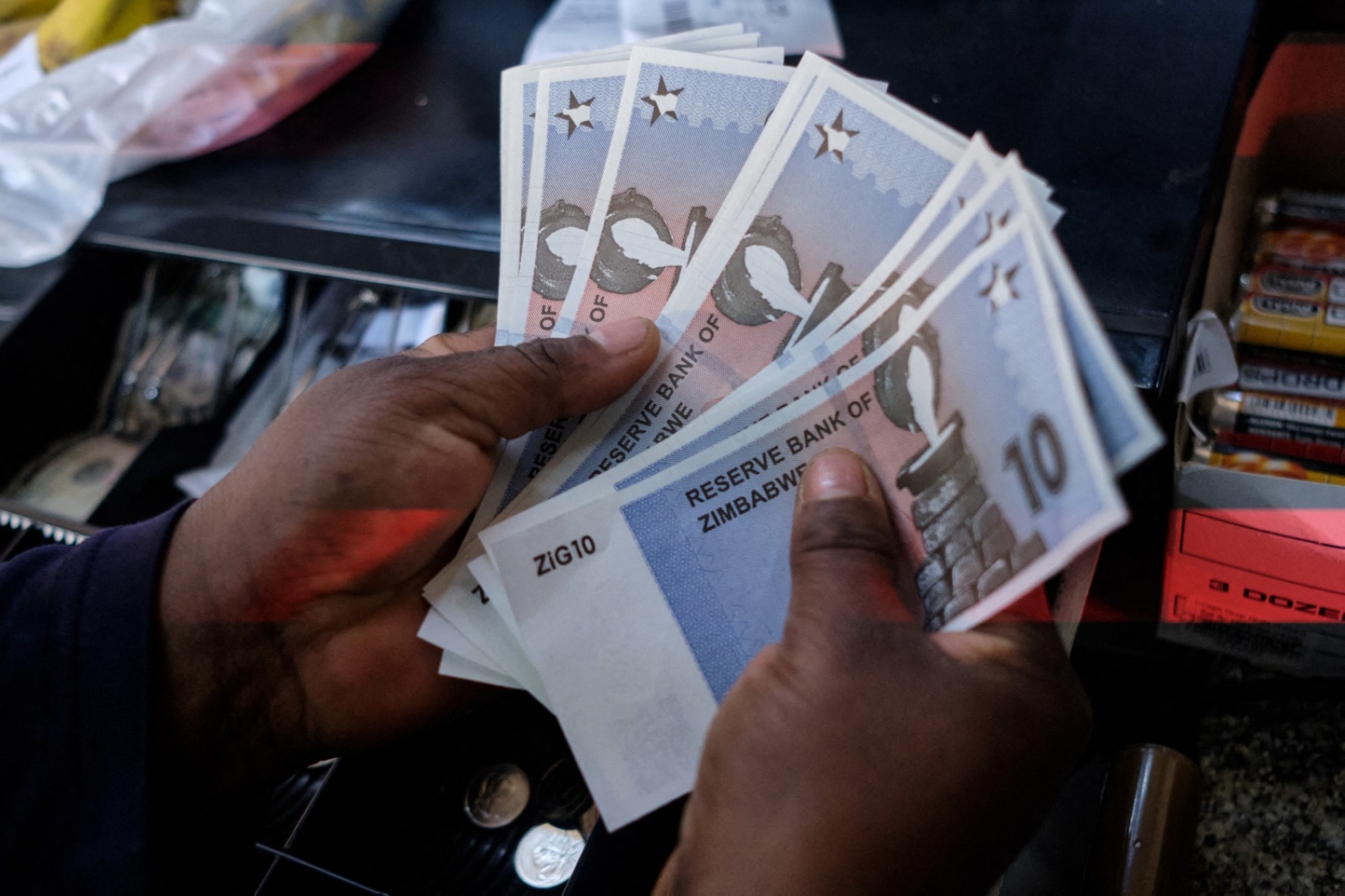
Jekesai NJIKIZANA / AFP
A cashier in a leading supermarket dispenses the new $10 ZiG, short for Zimbabwe Gold, note from a till as change in Harare on 30 April 2024.

Paradoxically, the dollar continues to strengthen even in countries whose governments publicly oppose American dominance. This happens not only because of the strength of the US economy, but because the dollar rests upon a vast global architecture of trust. It accounts for 58-59% of global foreign exchange reserves, appears in around 88-90% of foreign exchange transactions worldwide, and remains the principal currency used in pricing global trade and energy.

An estimated 60% of all US banknotes in circulation are held outside the United States. In many parts of the world, the dollar is effectively the unofficial local currency. Its strength comes from the institutions, policies, and capabilities behind it: the Federal Reserve, deep American financial markets, the legal system, freedom of capital movement, and the political and military power of the United States.

China, despite its immense economic strength, lacks many of these institutional advantages. This is one reason why the yuan has yet to emerge as a genuine global alternative to the dollar. Dollar dominance grants Washington extraordinary privileges. The world does not merely use dollars; it stores dollar reserves and buys US Treasury bonds with them, effectively financing America’s deficits.

This gives the United States financial and geopolitical leverage unmatched by any other power, and therein lies a striking irony: American sanctions intended to weaken Washington’s adversaries often end up boosting demand for the dollar itself. In countries such as Venezuela, Syria, and Iran, sanctions, instability, and restrictions mean people hoard dollars bought on black markets.
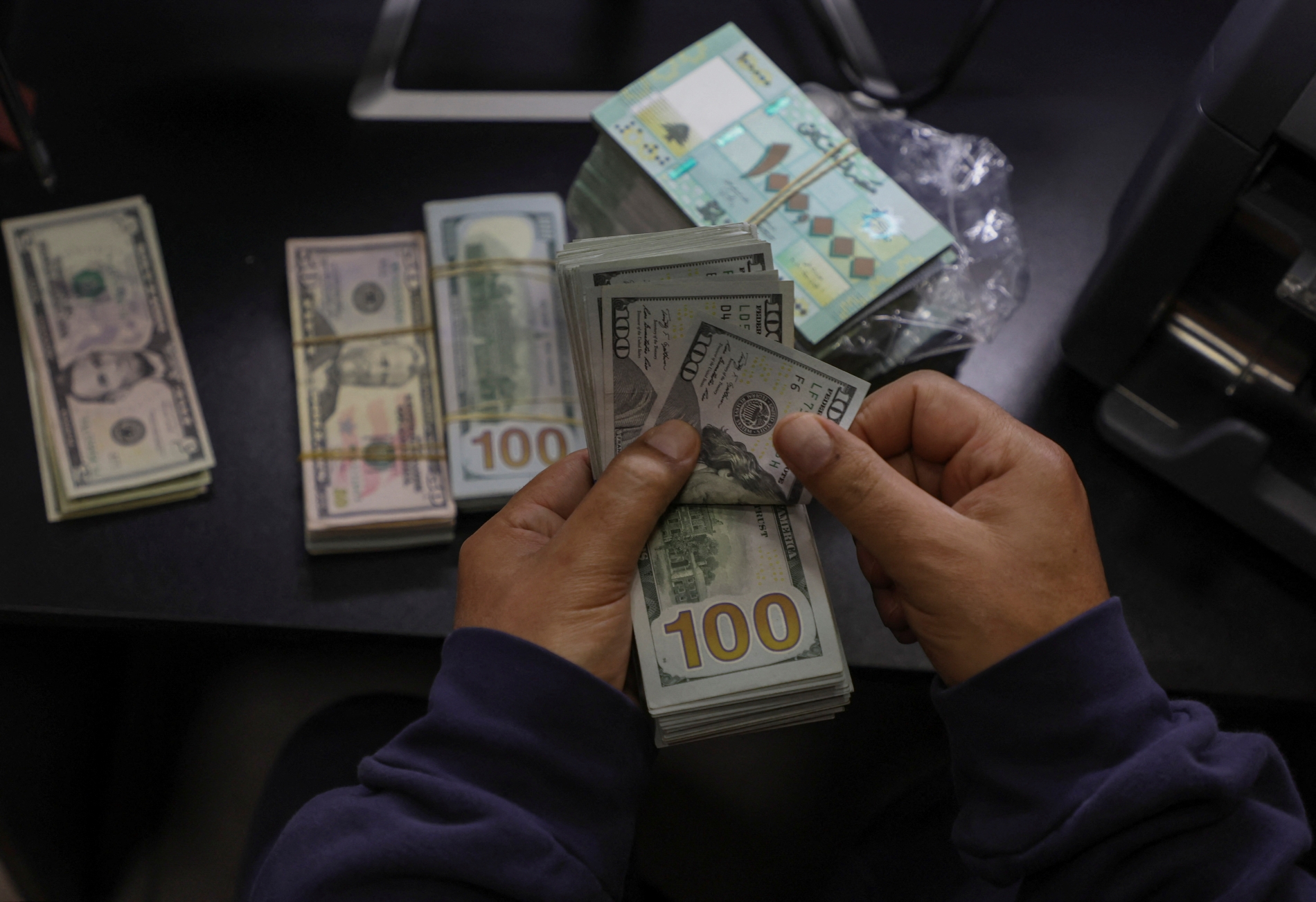
REUTERS/Mohamed Azakir
A money exchange vendor counts US dollar banknotes at his shop in Beirut, Lebanon, on 19 January 2023.

Dollar pegging

Lebanon may be the clearest Arab example of this phenomenon, but it is far from alone. Across the Arab world, economies exist to varying degrees within the dollar's orbit. Most Arab Gulf states have pegged their currencies to the dollar for decades, while Kuwait operates a currency basket in which the dollar carries significant weight. Iraq’s oil revenues, denominated in dollars, pass through American accounts before being channelled back into the Iraqi economy through Iraq’s central bank.

Egypt experiences repeated waves of dollar hoarding whenever the Egyptian pound comes under pressure. Syria and Libya, meanwhile, operate multi-currency economies in which local currencies coexist with the dollar and other foreign currencies. This is not merely psychological; many Arab economies are rentier or semi-rentier systems dependent on oil, remittances, tourism, foreign aid, or imports, all of which are deeply tied to the dollar. In such economies, the dollar becomes embedded in the economic structure long before any crisis erupts. During crises, it then becomes a refuge.
Ultimately, currencies survive not on gold, paper, or reserves alone, but on something far more fragile: collective belief in the future

Since the collapse of Somalia's central government in 1991, the country has not experienced a regular or credible renewal of its national currency. Torn, counterfeit, and inconsistent banknotes circulate widely, while trust in the Somali shilling has deteriorated to the point where some traders simply refuse to accept it. Alternatives have included the dollar and mobile money.

According to the World Bank, around 87% of Somalis use mobile payment services, while only 15.5% have bank accounts. Mobile money transactions accounted for roughly 40% of GDP (gross domestic product) in 2020. For many Somalis, the mobile phone has effectively become a person's bank, yet this has not spared the poor. The UN estimates that 6.5 million Somalis face severe food insecurity in 2026.

Those without dollars or digital access can become trapped at the margins; their currency is unwanted by the market, but dollars remain beyond their reach. Remittances are important. Somali expatriates send home between $1.3 bn and $1.7bn annually, an enormous sum relative to the size of the Somali economy. The emigrant is therefore more important than the central bank, and dollars sent from abroad become more influential than the national currency itself.

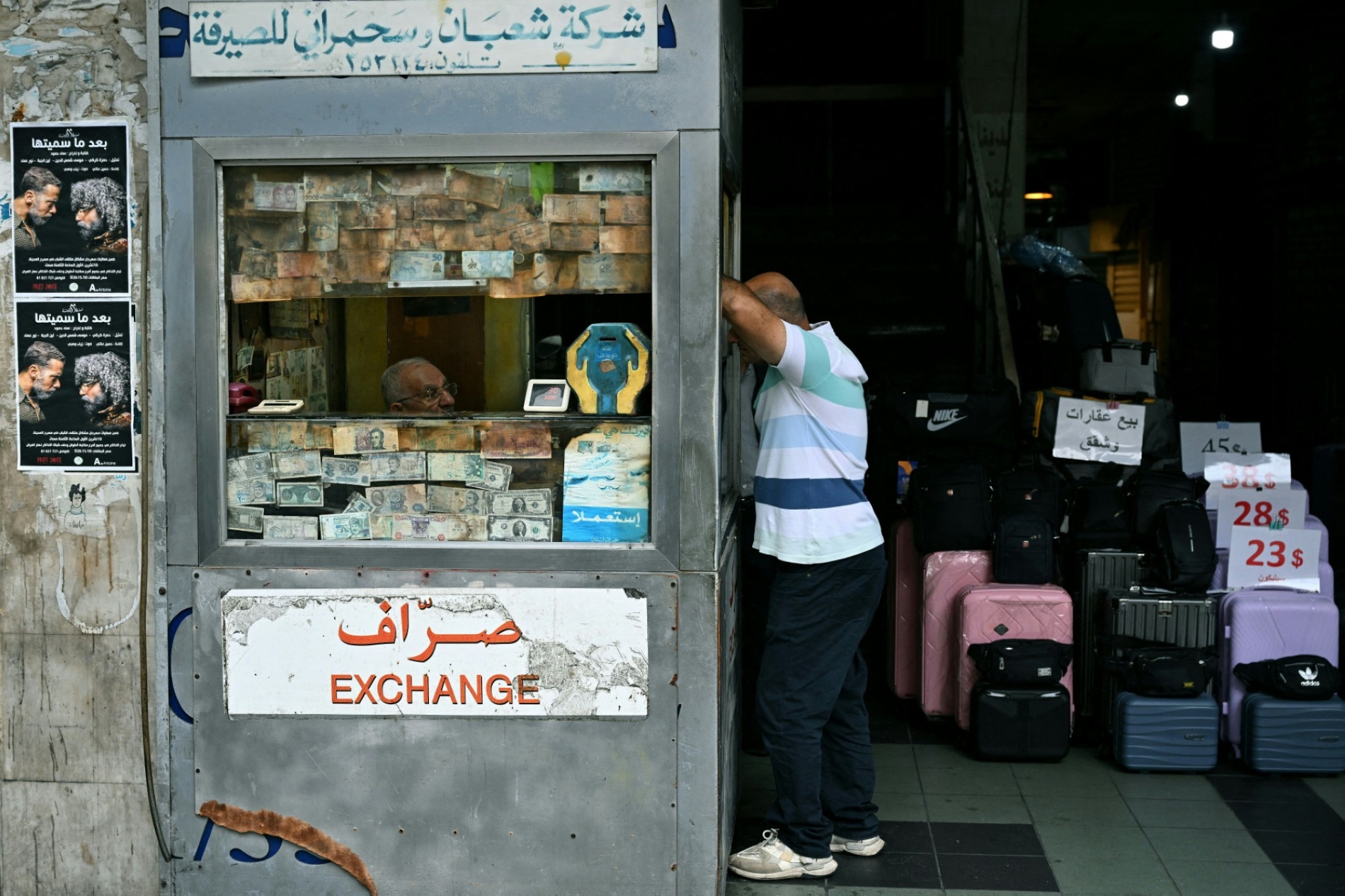
JOSEPH EID / AFP
A client stands at a money exchange office in Beirut on 14 November 2025.

The case of Lebanon

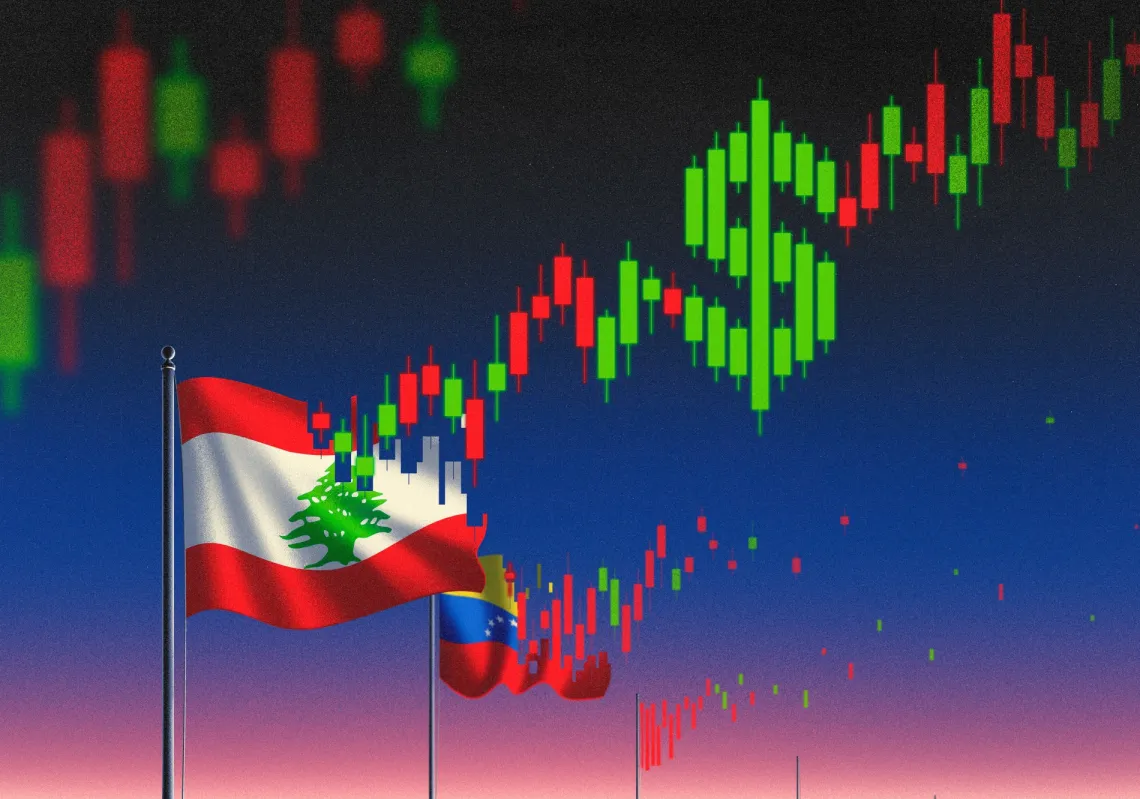
Lebanon's story is different. The state never fully disappeared, and dollarisation was already deeply embedded within the economy long before the economic crisis of 2019. Before this, the Lebanese used dollars to buy houses and cars, and to pay for education. The financial collapse transformed dollarisation from a habit to a way of life.

Officially, one dollar had long been pegged at LBP 1,507, but eventually the black-market rate surpassed LBP 100,000, reaching more than LBP 120,000 at the height of the crisis. From 2019-23, the Lebanese pound lost around 98% of its value. According to the World Bank, the cash dollar economy expanded from 26% of GDP in 2021 to around 46% in 2022.

Statistics alone cannot capture what happened in Lebanon, where life split into two realities. While some were paid in dollars or received dollar remittances, others still earned salaries in Lebanese pounds. Both lived in the same country but not in the same economy. As a result, a new form of monetary class division emerged. This shows how the dollar does not protect everyone equally. Those who have it can buy time and security; those who do not live at the mercy of exchange-rate fluctuations.

Even the dollar itself fragmented in Lebanon. There is 'fresh dollar' cash, and there is the infamous 'lollar' trapped inside the banking system. In this sense, the collapse distorted not only the Lebanese pound, but also the meaning of the dollar itself. The middle class became the principal casualty. Traditionally dependent upon salaries, savings, education, and stability, they watched decades of accumulated wealth vanish. Doctors', teachers', civil servants', and pensioners' savings evaporated, while formerly adequate salaries became insufficient to cover more than a few days' living expenses.

At certain stages of the crisis, the minimum wage collapsed to the equivalent of only a few dollars per month. Meanwhile, remittances from the Lebanese diaspora amount to billions of dollars annually (with banking-sector estimates of $5.8bn in 2024), effectively turning money sent from abroad into Lebanon's primary economic safety net.

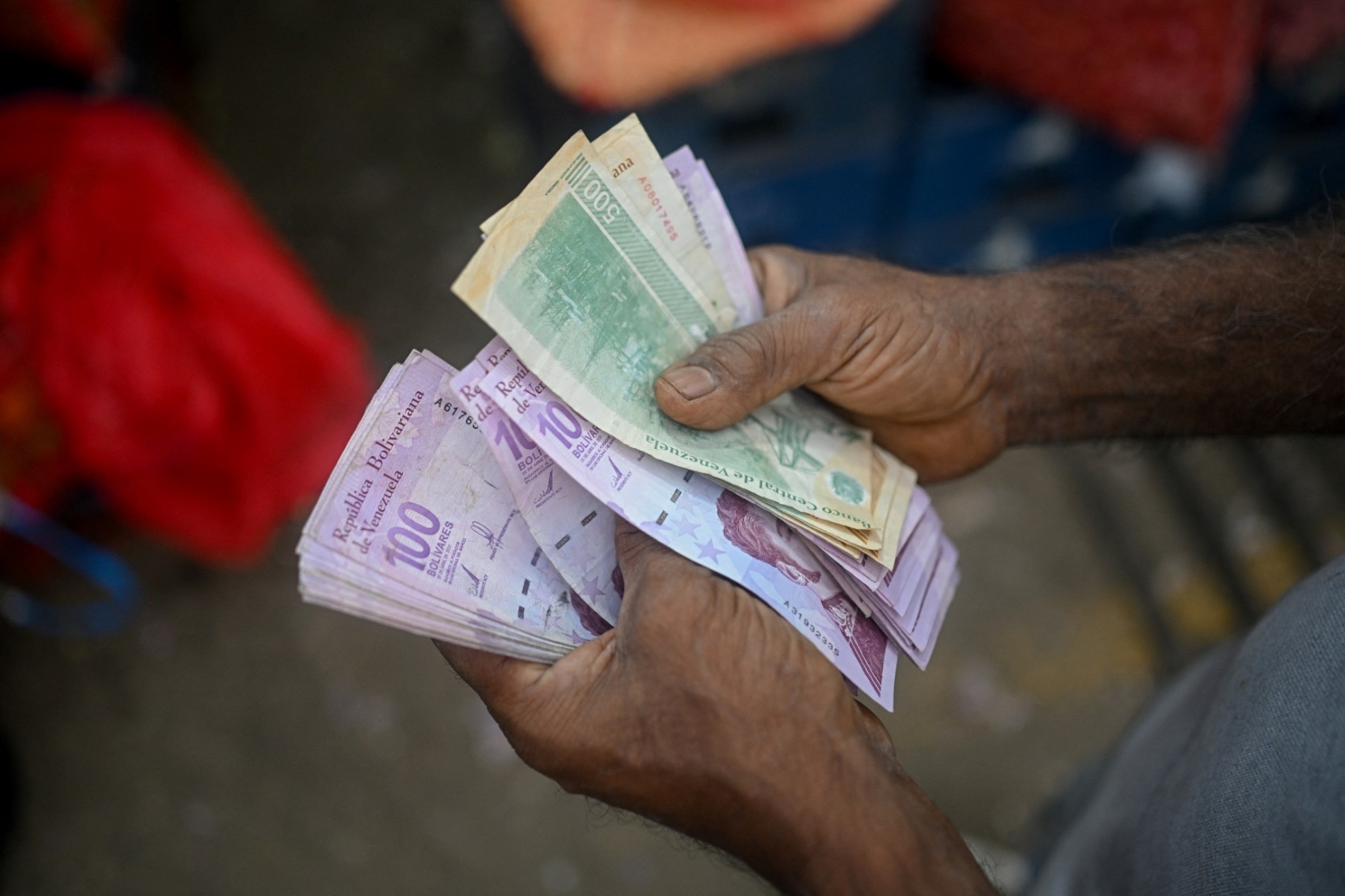
Federico PARRA / AFP
A vendor counts Venezuelan bolivar banknotes at the Coche wholesale market in Caracas on 27 January 2026.

Other cases

In Venezuela, hyperinflation consumed not only the bolívar, but everyday life. Hyperinflation is defined as prices rising by more than 50% per month, yet Venezuela's inflationary percentage was in the millions, with prices changing repeatedly within a single day. People carried bags of cash just to buy groceries. Over time, the dollar became the true pricing mechanism, while official exchange rates were not believed. Despite some recent improvement, the IMF still has inflation at 387% for 2026.

In 2008, Zimbabwe became a global symbol of currency death when the state issued a ZWD 100 trillion banknote. Despite being enormous, the note was worthless. Later, the country effectively adopted the US dollar and other foreign currencies before repeatedly attempting to relaunch a national currency. In 2024, Zimbabwe introduced the gold-backed ZiG currency, yet the problem was never simply the name or appearance; it was the memory. Those who live through hyperinflation rarely forget it.

Argentina presents a different model. The state did not collapse, and institutions remain intact, but after decades of inflation, devaluations, and currency restrictions, people continued buying dollars, even as the economy improved. Argentinians are thought to hold up to $200bn outside the formal financial system, making them one of the world's largest holders of physical US dollars outside America itself. Although annual inflation fell from more than 211% at the end of 2023 to around 43.5% in May 2025, the peso still lives under the shadow of the dollar.

No lasting monetary stability exists without a minimum level of political, legal, and social trust.

History shows that rebuilding confidence in a currency is possible, but slow. Germany restored monetary stability after the catastrophe of Weimar hyperinflation. Brazil tamed inflation in the 1990s. Türkiye rebuilt a degree of confidence following the 2001 crisis. None of this was achieved by printing new banknotes or issuing administrative decrees; it required deep financial, banking, and political reforms.

Trust is key

Strong currencies are not merely the cause of strong states; they are also their consequence. No respectable currency exists without credible institutions, and no lasting monetary stability exists without a minimum level of political, legal, and social trust. Ultimately, currencies survive not on gold, paper, or reserves alone, but on something far more fragile: collective belief in the future.

Currencies do not collapse merely when they lose value, but when people cease to believe that the future itself can still be measured in them. And once that belief disappears, it is not only money that collapses—the relationship between citizens and the state begins to erode as well.

font change