Are India and Pakistan heading for renewed war?

Since last May’s brief yet dangerous military confrontation between two nuclear-armed powers, a tenuous calm has held. But should a new war erupt, the margin of error this time will be far slimmer.

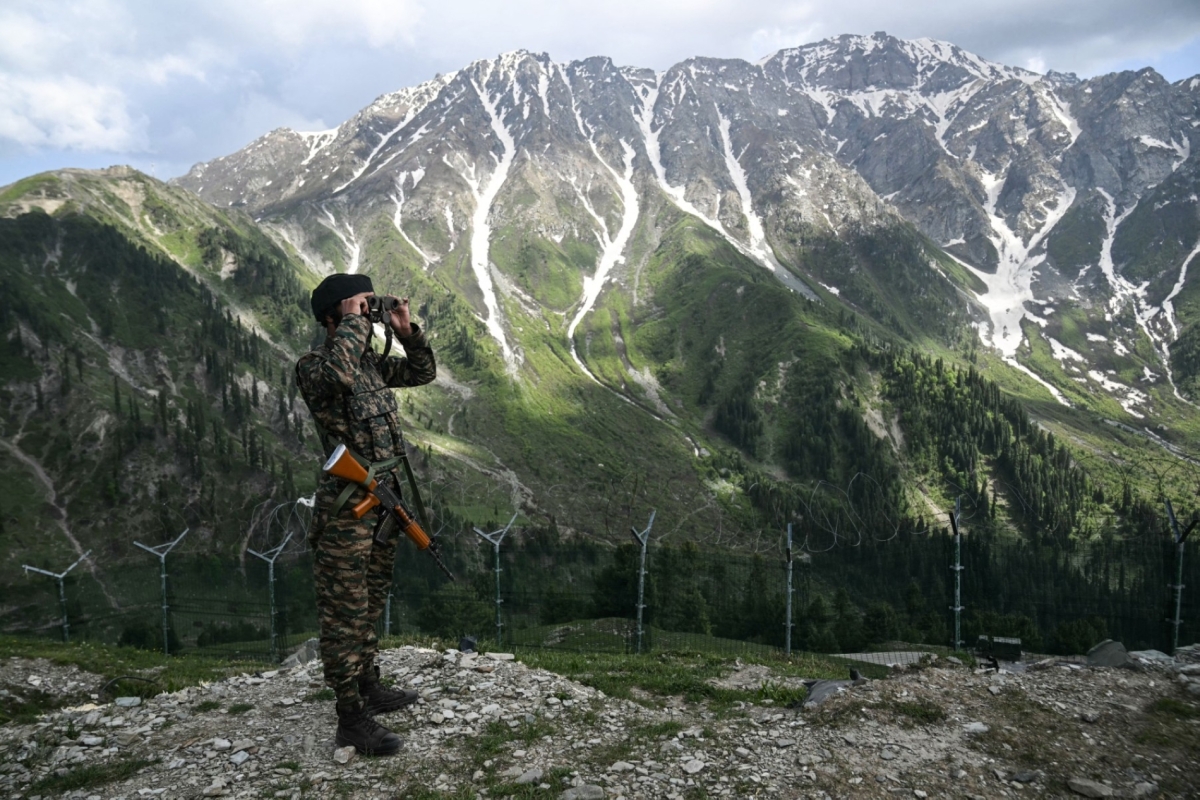
An Indian army soldier stands guard near the Line of Control (LoC) in India's Kashmir region on 19 May 2025.
TAUSEEF MUSTAFA / AFP
An Indian army soldier stands guard near the Line of Control (LoC) in India's Kashmir region on 19 May 2025.

Are India and Pakistan heading for renewed war?

A year after the brief but ferocious four-day conflict between Pakistan and India pushed South Asia to the edge of a nuclear precipice, the silence along the Line of Control feels less like peace and more like a pause—tense, brittle, and deeply uncertain. But beneath the quiet, the subcontinent’s two nuclear-armed adversaries are once again hardening their respective positions, sharpening their rhetoric, and testing the limits of their deterrence in ways that suggest the next crisis may not be so easily contained.

And while fighting did not reignite over the past year, the political and strategic environment has changed drastically. Trust has eroded sharply, leaving little room for diplomacy, and both sides have adopted a sharper, more confrontational tone—one that increasingly blurs the line between signalling and provocation.

The latest flashpoint came in the form of remarks by India’s Army Chief, General Upendra Dwivedi, who warned in mid-May that Pakistan must decide whether it wishes to remain part of “geography or history.” The statement—remarkable not only for its bluntness but for its implicit existential threat—triggered an unusually direct and forceful rebuttal from Pakistan’s military media wing, the Inter-Services Public Relations (ISPR).

In a sharply worded response, the ISPR dismissed the remarks as “warmongering,” describing them as reflective of a “hubristic, jingoistic and myopic mindset” that has historically driven the region toward conflict. More strikingly, it warned that any attempt to target Pakistan would unleash consequences “neither geographically confined nor strategically or politically palatable for India.”

The language, laden with nuclear undertones, underscored how far the discourse has shifted from conventional military signalling into something more dangerous and volatile.

This rhetorical escalation is unfolding against the backdrop of the May 2025 conflict, a four-day military confrontation triggered by a deadly militant attack in Indian-administered Kashmir that killed 26 civilians, most of them tourists. India blamed Pakistan, launched cross-border strikes under “Operation Sindoor,” and Pakistan responded with its own operation, “Bunyan-un-Marsoos.” Fighter jets clashed, missiles and drones were exchanged, and artillery fire lit up the Line of Control.

The war lasted less than 90 hours, but its implications were profound. It marked one of the rare instances in which both countries crossed multiple military thresholds—deploying advanced air power, cruise missiles, and short-range ballistic systems—without escalating into full-scale war. The crisis was ultimately defused through last-minute diplomatic intervention, with former US President Donald Trump claiming a central role in brokering the ceasefire announced on 10 May.
Ghulam Rasool / AFP
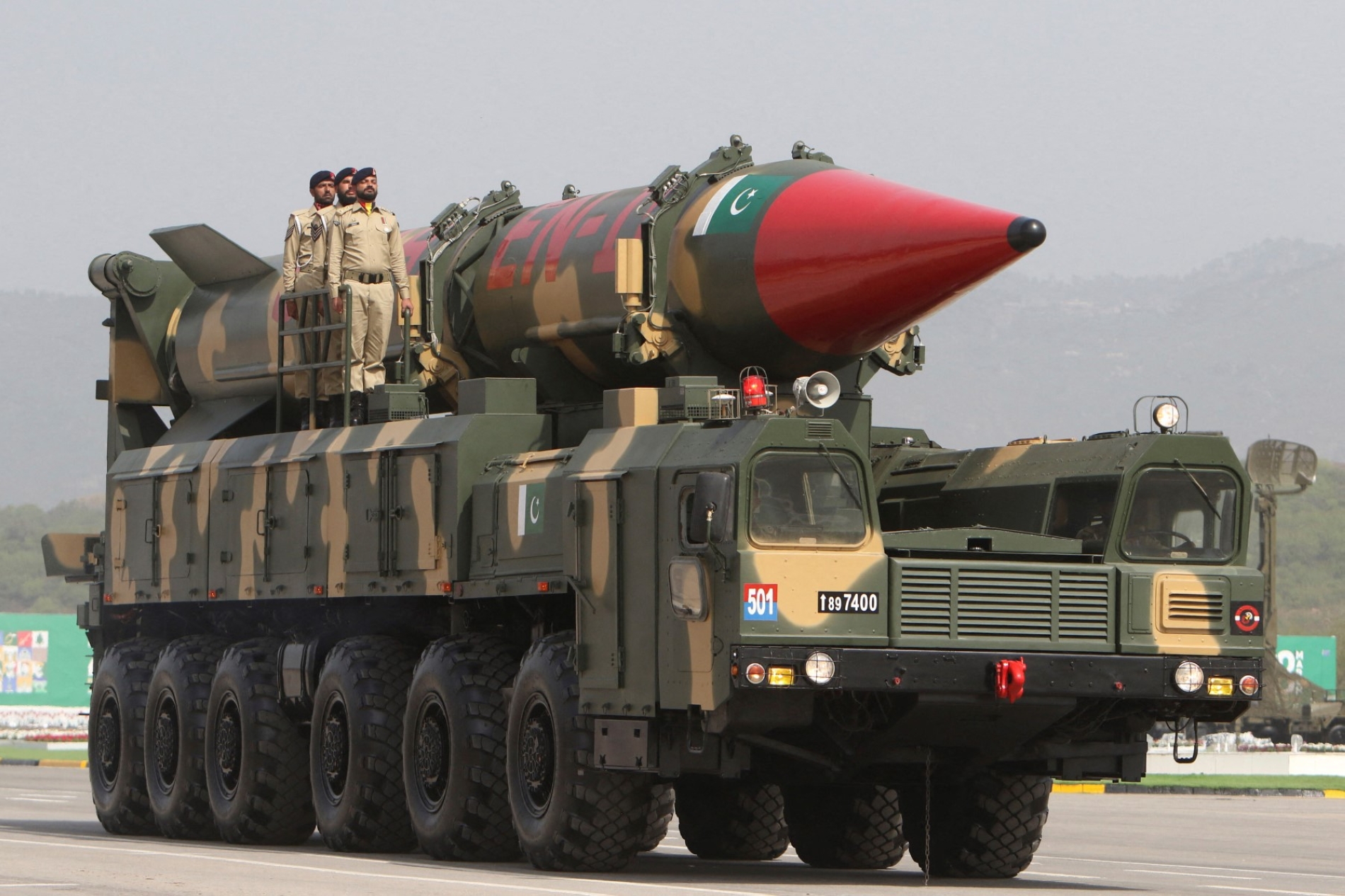
A Pakistan's military vehicle carries a long-range ballistic missile Shaheen during the Pakistan Day parade in Islamabad on 23 March 2022.

Dangerous assumptions

But if the conflict demonstrated the resilience of deterrence, it also exposed its fragility. Analysts now argue that the very lesson both sides may have drawn—that limited conventional war between nuclear powers is manageable—could prove dangerously misleading.

“The takeaway from last year’s conflict appears to be that escalation can be controlled,” says Jennylyn Gleave, a senior South Asia security analyst based in Washington. “But that assumption rests on a series of variables—timing, leadership decisions, international intervention—that cannot be guaranteed in the next crisis.”

Indeed, the strategic environment today appears more precarious than it did a year ago. Diplomatic channels between Islamabad and New Delhi are virtually non-existent. Trade remains suspended. Airspace restrictions continue to impose economic costs. Cricket diplomacy—a traditional icebreaker—remains frozen. Even the Indus Waters Treaty—a cornerstone of bilateral stability since 1960—hangs in abeyance, raising fears of a new and potentially destabilising front in the rivalry.
Escalating rhetoric between India and Pakistan, laden with nuclear undertones, shows how dangerous the discourse has become

"Relations remain in deep freeze," former Pakistani diplomat Husain Haqqani recently noted, adding that neither side currently sees any incentive—domestic or international—to initiate dialogue. It is one of the longest sustained periods of diplomatic paralysis in recent history.

This freeze is not merely institutional; it is ideological. In India, the rise of assertive nationalism under Prime Minister Narendra Modi has reinforced a hardline posture toward Pakistan, framing engagement as weakness and military assertiveness as strength. Since the 2025 conflict, the military has played a more central role in Pakistan's national security decision-making, reinforcing a doctrine of calibrated but firm response. The result is a feedback loop of hostility in which each side's domestic political calculus reinforces the other's strategic suspicion.

Aamir QURESHI / AFP
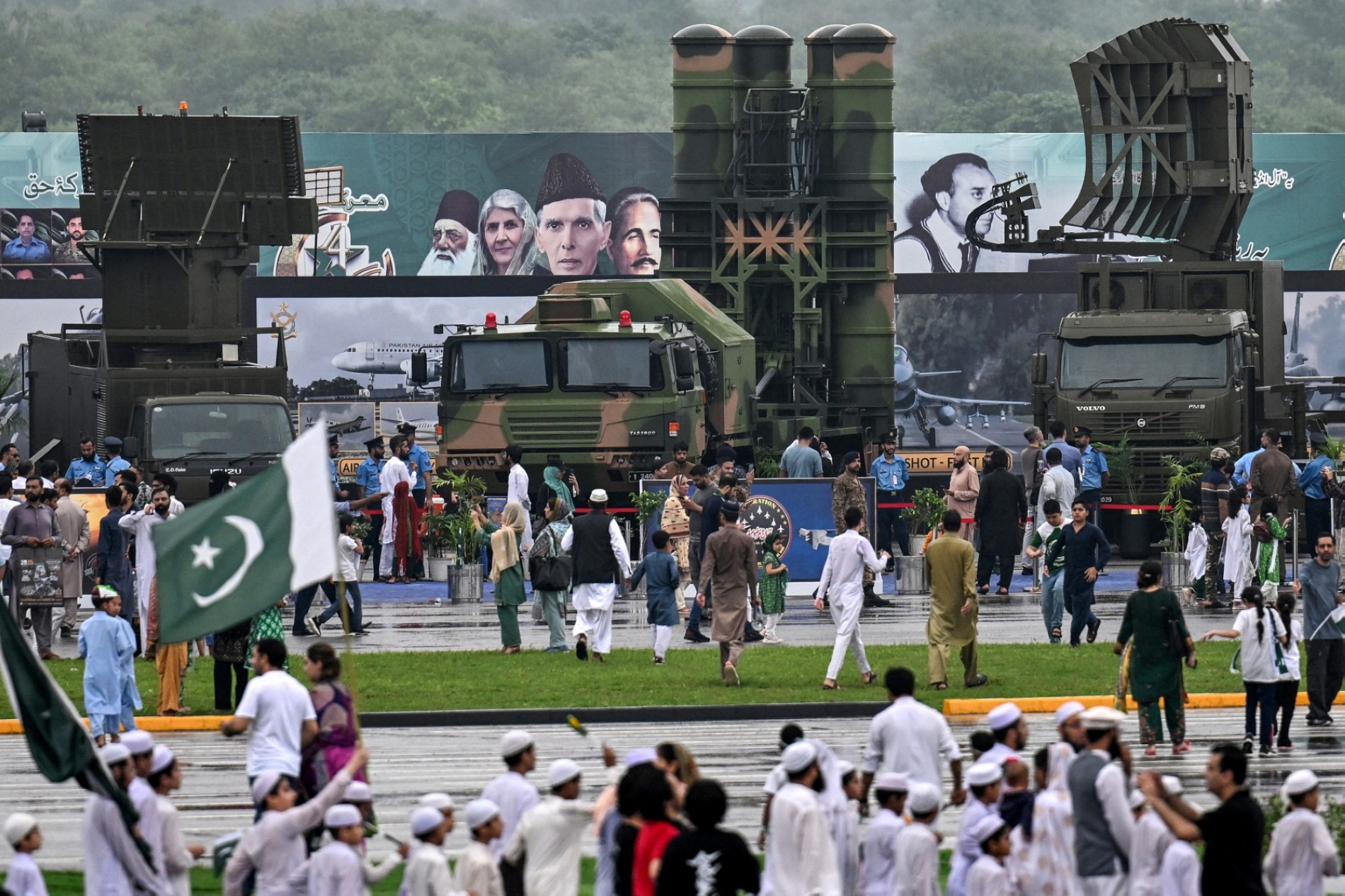
People gather around an army air defence system on display at a military exhibition during Independence Day celebrations in Islamabad on 14 August 2025.

Compounding this dynamic is the shifting global context. During last year's crisis, the United States—despite its evolving geopolitical priorities—retained enough influence with both capitals to help de-escalate tensions. However, that leverage appears less certain today. Washington's relations with New Delhi have been strained over trade and strategic autonomy, while its renewed engagement with Islamabad—particularly amid the Iran conflict—has reshaped regional perceptions.

In April 2026, Pakistan emerged as an unlikely diplomatic intermediary in the US-Iran war, hosting talks and facilitating a temporary ceasefire. The episode elevated Islamabad's international profile, with Trump publicly acknowledging Pakistan's leadership role. For India, however, the optics were less favourable, reinforcing concerns about shifting US alignments and Pakistan's growing strategic relevance.

At the same time, the military balance in South Asia continues to evolve. Pakistan's deepening defence cooperation with China—accelerated by the performance of Chinese-origin systems during the 2025 conflict—has added a new dimension to the rivalry. Analysts note that the conflict served as a real-world demonstration of Chinese military technology, boosting its appeal among developing countries and potentially altering regional arms dynamics. India, too, seems to have drawn lessons. It has since sought to diversify its defence partnerships and reduce its dependence on any single partner.

Fewer safeguards

Yet, beneath these shifts lies a more fundamental concern: the erosion of crisis management mechanisms. Unlike previous decades, when back-channel diplomacy and international mediation provided off-ramps during moments of escalation, the current environment offers fewer such safeguards.

"Third-party leverage is diminishing," warns an academic at Jawaharlal Nehru University. "If the stalemate continues, we risk normalising a state of permanent hostility—one in which escalation becomes more likely, not less."

The humanitarian stakes of this dynamic are often overshadowed by strategic calculations. But they remain profound. Despite its brevity, more than 70 people were killed during the 2025 confrontation, including civilians caught in cross-border fire. In any future confrontation, the scale of destruction could be exponentially greater—particularly if miscalculation leads to escalation beyond conventional limits.

REUTERS/Sharafat Ali
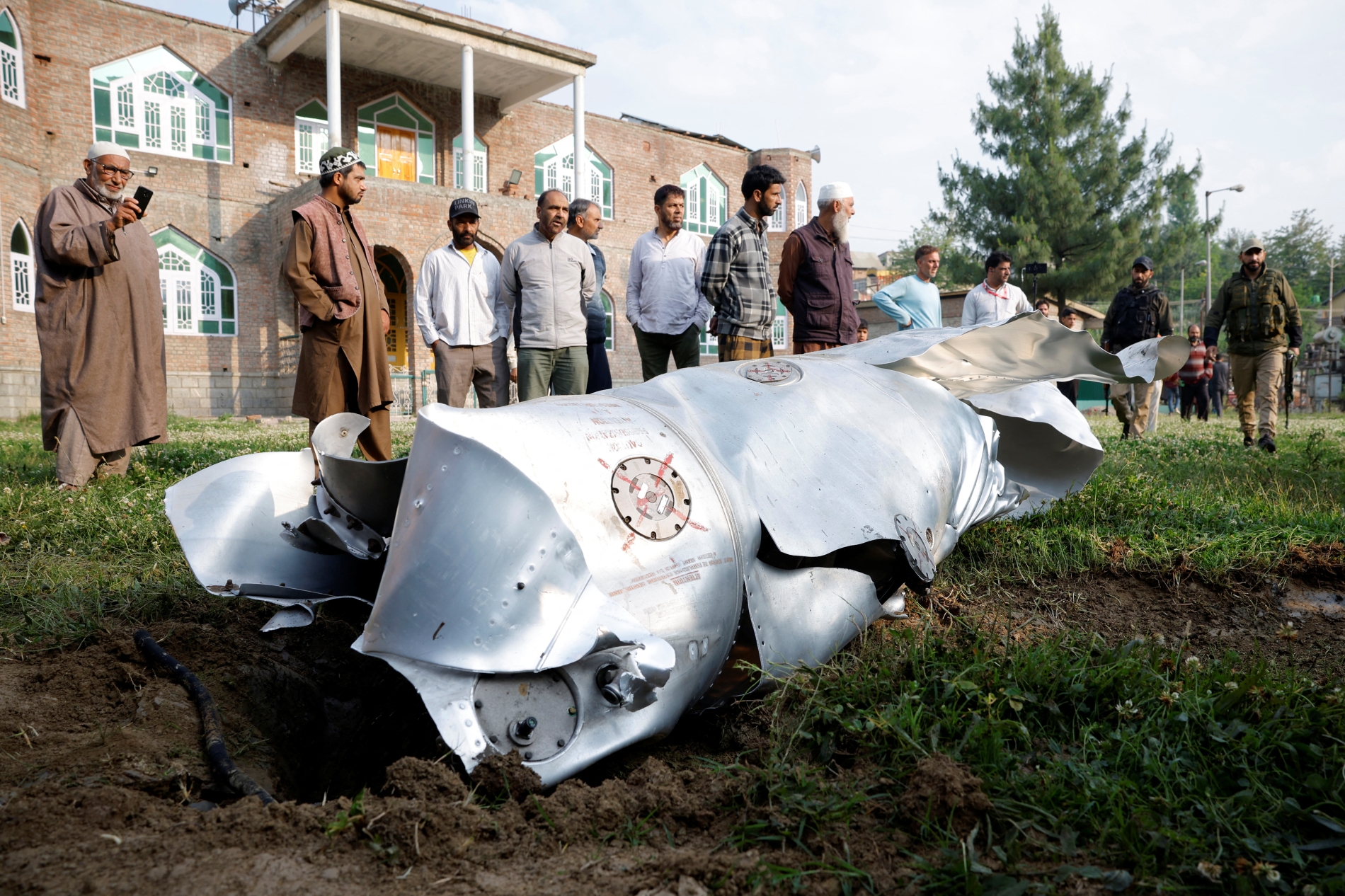
Metal debris lies on the ground in Wuyan in south Kashmir's Pulwama district on 7 May 2025.

And experts increasingly caution that the triggers for the next confrontation could be more unpredictable, and the pace of escalation could be faster, driven by advanced technologies and compressed decision-making timelines, ultimately producing a more deadly and destructive outcome.

For now, South Asia is in a state of tenuous calm—a region technically at peace, yet psychologically and strategically on edge. The rhetoric is sharper. The margins for error are narrower. And the consequences of miscalculation are more severe than ever.

In this environment, the recent exchange between General Dwivedi and the ISPR is more than a war of words. It is a signal—a warning that the rivalry between Pakistan and India is entering a new, more dangerous phase. One in which the familiar patterns of deterrence and restraint may no longer hold, and where the line between stability and catastrophe grows ever thinner.

The world, preoccupied with crises elsewhere, may not yet be paying close attention. But for those watching closely, the signs are unmistakable. South Asia's nuclear fault line is shifting again—and this time, the tremors may be harder to contain.

font change