Can collections alone define an exhibition’s identity and meaning?https://en.majalla.com/node/331315/culture-social-affairs/can-collections-alone-define-exhibition%E2%80%99s-identity-and-meaning
Can collections alone define an exhibition’s identity and meaning?
It is difficult to accept the idea of Jeff Koons and Salvador Dalí being gathered under one roof, yet exhibition organisers appear to hold a different view
Getty Images via AFP
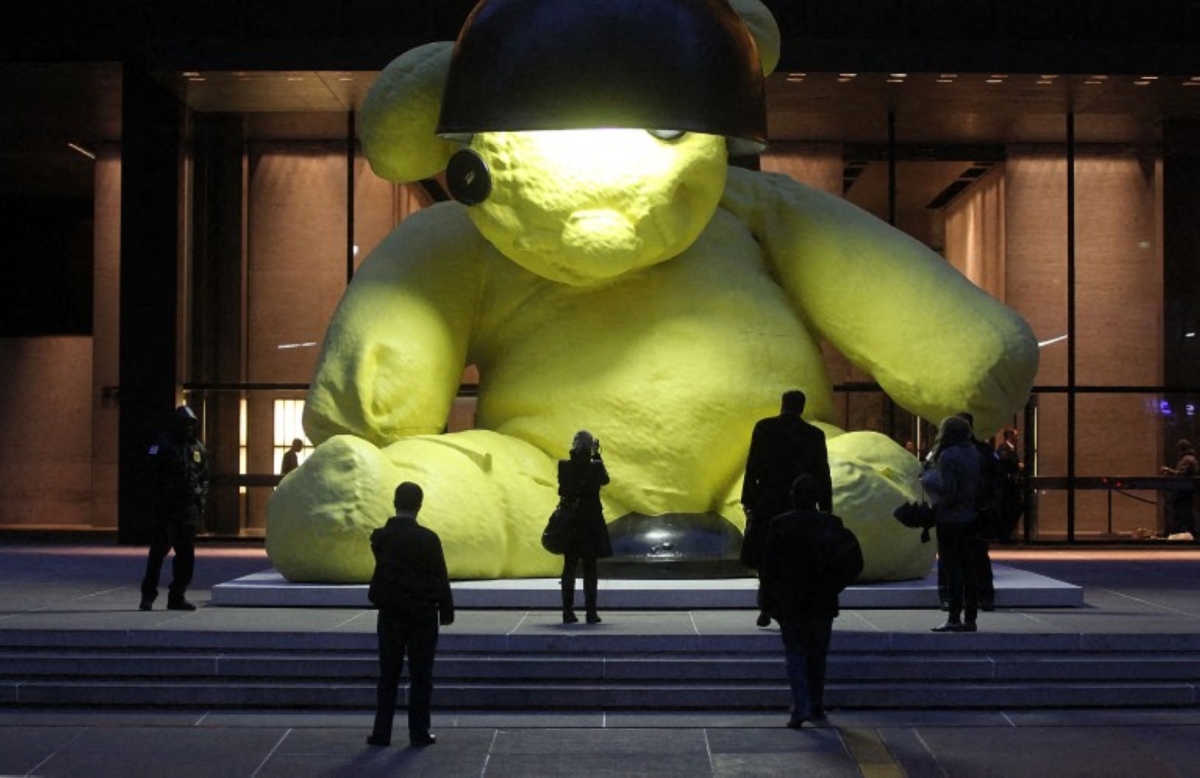
People view the 23-foot Lamp Bear outdoor sculpture of a teddy bear by artist Urs Fischer on 8 April 2011 in New York City.
Can collections alone define an exhibition’s identity and meaning?
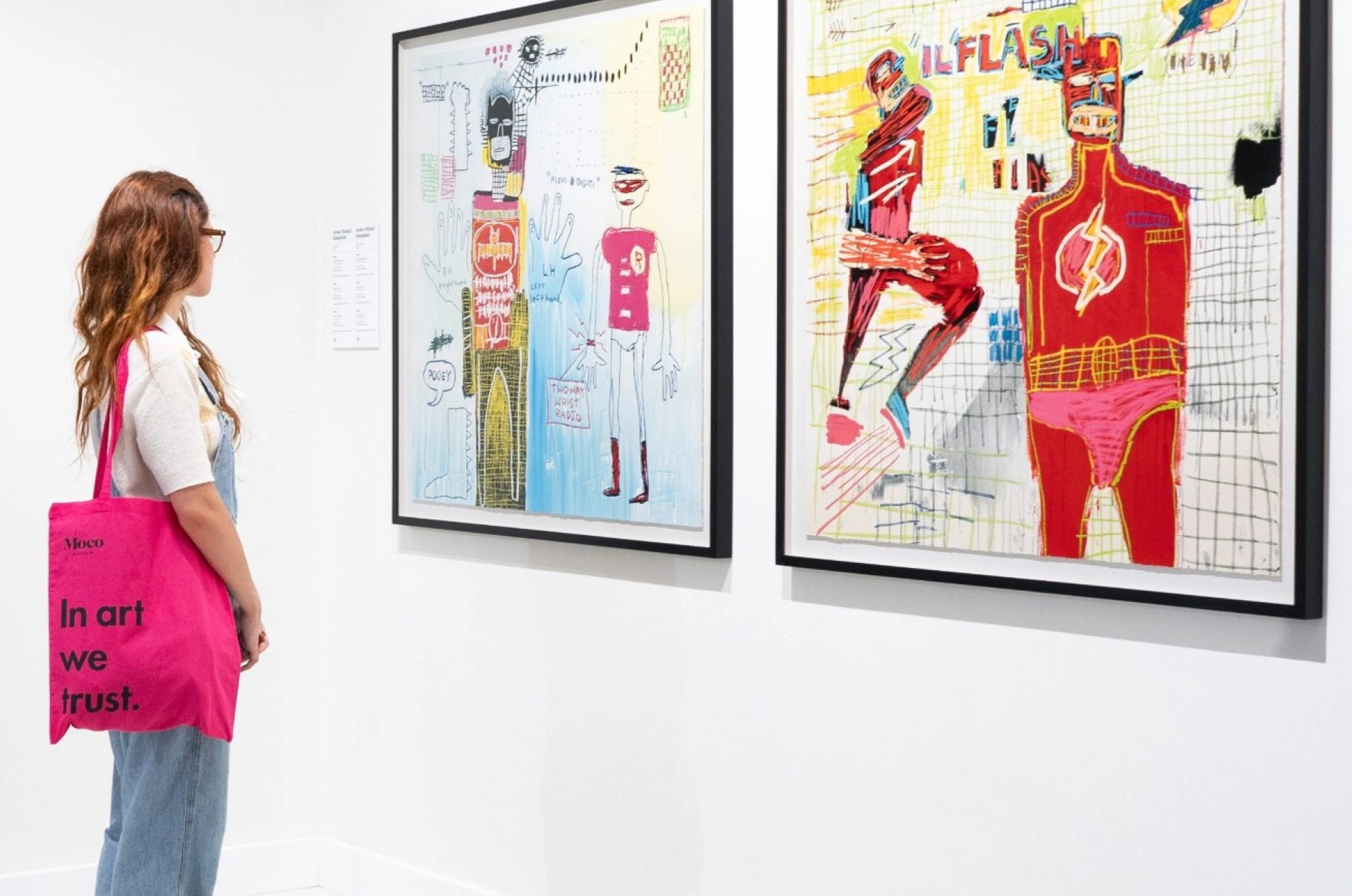
Placing the works of Keith Haring and Jean-Michel Basquiat beside those of Andy Warhol, a figure of immense influence in New York’s art scene and a formative presence in both their lives, is already a complicated proposition. It is shaped first by the terms of personal relationships, and only afterwards by pressing artistic or historical considerations.
The styles of the two artists, both of whom died young, bear little formal resemblance to that of Warhol, whose work came to define an age through the seductive surfaces of celebrity, commerce, and repetition. Yet, placing him alongside artists such as Jeff Koons, Damien Hirst, Marina Abramović, and other contemporary artists invites a more sceptical reading of influence, legacy, and artistic inheritance.
What, then, are the organisers of the ‘Contemporary Masters’ exhibition at Moco Museum Barcelona, thinking? Within the exhibition sits a substantial presentation devoted to the elusive British artist Banksy, spread across several rooms, despite the city already hosting dedicated Banksy exhibitions. What kind of curatorial logic is at work here?
Banksy emerged from street art, his practice shaped less by Pop Art than by urban intervention, anonymity, and dissent. Yet here he is folded into a broader genealogy of contemporary art, as though institutional inclusion were explanation enough. Should we avoid falling into the trap, or yield to what has become a mode of thought, as though everything exhibition organisers say is necessarily true?
Should we avoid falling into the trap, or yield to what has become a mode of thought, as though everything exhibition organisers say is necessarily true?
Some of that ambiguity begins to clear when we encounter a painting by the Spanish artist Salvador Dalí. What may be understood from the inclusion of this painting, whose creator once declared, "I am Surrealism", is that the organisers appeared to care little for the distances separating one artistic movement or genre from another. Their concern seemed instead to lie in the museum's works and in making them fit their idea of contemporaneity.
This is contemporaneity in a narrow Catalan mould. It cannot, therefore, serve as the basis for a critical reading through which history might be reconsidered. It is difficult, for instance, to accept Koons and Dalí being gathered under one roof. Nor do I believe that the storerooms of any museum are always a source of inspiration. Exhibition organisers, however, have another point of view, one marked by a palpable measure of condescension, as though to evade critical scrutiny.
A borrowed doll
The order in which the exhibits have been arranged is neither important nor instructive. I begin with 'Jojo', a children's doll enlarged by CJ Hendry, the Australian artist based in New York. Many contemporary artists now do this. The giant lamp bear standing at the centre of Hamad International Airport in Doha is perhaps the most famous example. That work is by the Swiss artist Urs Fischer. In reality, Fischer did not sculpt it. He submitted a small version, perhaps the original doll, perhaps something he had bought from the market, to a workshop so that it could be enlarged in a manner suited to an airport that rivals the world's largest in terms of capacity and abundance of services.
Work by Jean-Michel Basquiat in Moco Museum, Barcelona.
The exhibition organisers say that Hendry "transforms familiar objects into playful visual experiences that explore value and the emotional pull of material culture", and that "her soft, rounded form recalls the visual language of contemporary character design, from figures such as Labubu to animated worlds such as Disney". As becomes clear, verbal play has not prevented the world of childhood from being presented as a source of inspiration, although there is none here. Early copies have become substitutes for innovative works of art. In our age, with its loosened ethical standards, the search for originals is of little use. There are sculptors, some of them Arab, whose works are executed in China, while the sculptor's role is confined to producing miniatures. It is even said that some provide no more than small illustrative drawings or clay maquettes.
In the 1980s, an Iraqi artist travelled to South Korea and spent around three months there supervising the production of a bust of the late president Saddam Hussein. Clearly, that journey formed part of a broader operation of corruption, one that would later be marketed within the framework of contemporary art.
Banksy: from the street to the museum
Asking whether the British artist Banksy is modern or contemporary does not explain his inclusion in an exhibition already troubled by the question of its own identity. The elusive artist, who may in fact be a group of artists bound by a professional partnership, produces work that bears many of the marks of street art: directness, broad outlines with little interest in detail, a predominance of mischievous, provocative, and satirical ideas, and a deliberate sidelining of the aesthetic dimension.
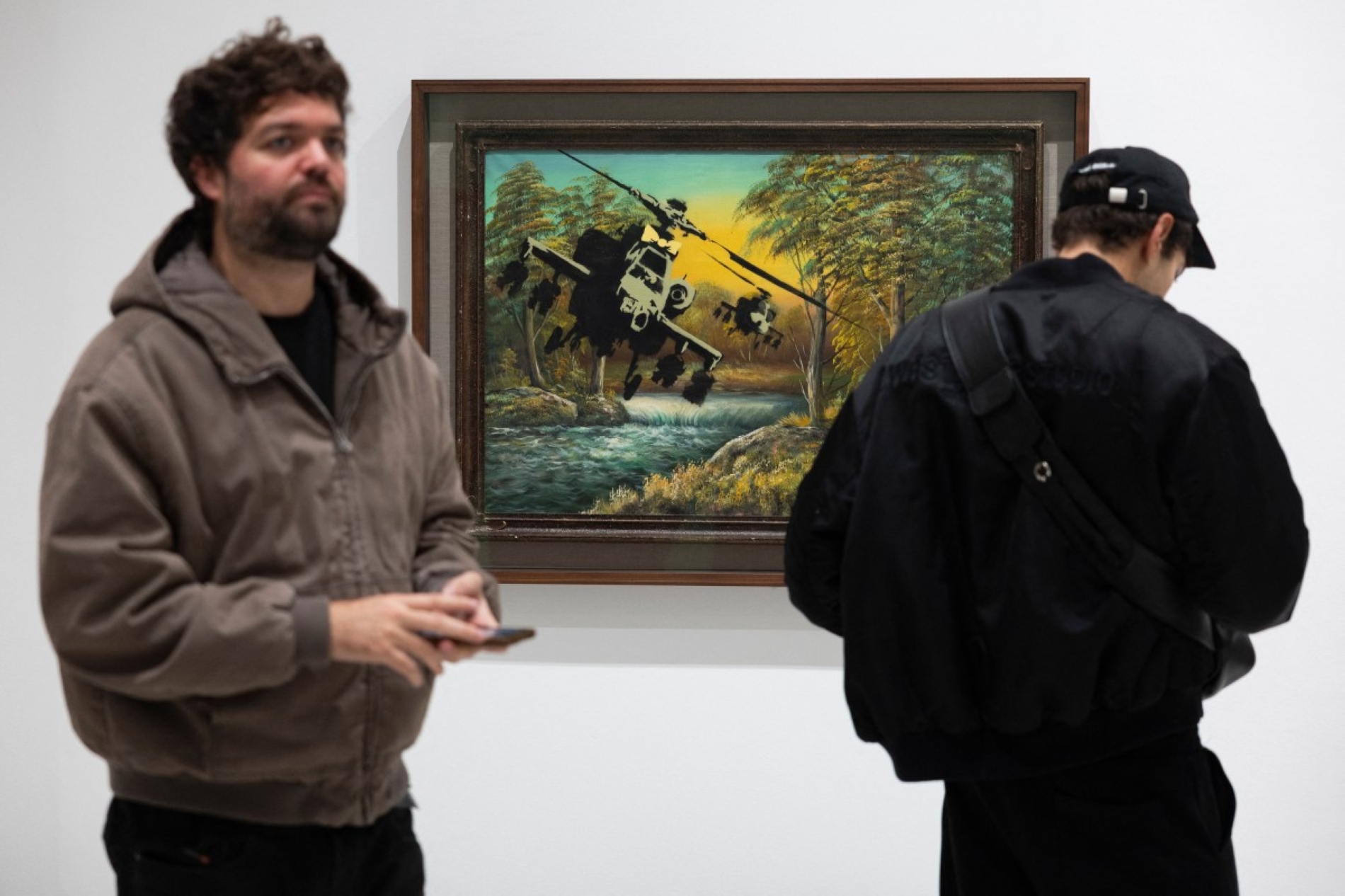
People view Happy Choppers (Crude Oil) in the Bansky street art exhibition Disrupted Power, part of the Contemporary Masters collection at the Moco Museum in Barcelona on 16 December 2025.
From this standpoint, such art seems ill-suited for display in galleries. What galleries and museums present amounts to little more than exhibiting reduced versions of works Banksy had previously executed on walls in various cities. These miniatures have stripped the original works of their force, leaving them to resemble postcards rather than works of art.
Banksy's populism is the foundation of his art. It is an art built on the immediacy of its effect and on its attachment to transient political events. Banksy is certainly no modern painter. The man, assuming he is one man, paints with a simplified realist vision and shows no direct or indirect interest in the principles of modern painting. His elevation of the conceptual dimension at the expense of the aesthetic does not grant him legitimacy to join the ranks of contemporary artists. Banksy is a traditional painter, and he has invented no working mechanism capable of freeing painting from its illustrative frame. What, then, is the meaning of including him in this exhibition? I am convinced that Banksy's fame blinded the organisers to the possibility that Banksy may have no real connection to art at all.
A modernist painter of an anxious kind
"What matters to me is that a brushstroke should occur in a single movement. Every brushstroke is a reflection of the moment in which it was painted. For this reason, all my paintings are personal diaries," says Barcelona-born Yago Hortal, in an attempt to clarify his double relationship with time: the time of painting and his own personal time.
The exhibition includes two works by the artist, whose paintings reflect a troubled and shifting modernity and offer a freer, more varied vision of reality. His use of bright, powerful colours, applied to the surface of the canvas with an electric stroke that is vibrant, precise, and carefully considered, gives the work a vitality, as though the artist had shaken matter itself in order to begin a dialogue with it. In doing so, he reformulates the historical concept of pictorial abstraction and discovers a new language that seeks to recreate colour's face and temperament.
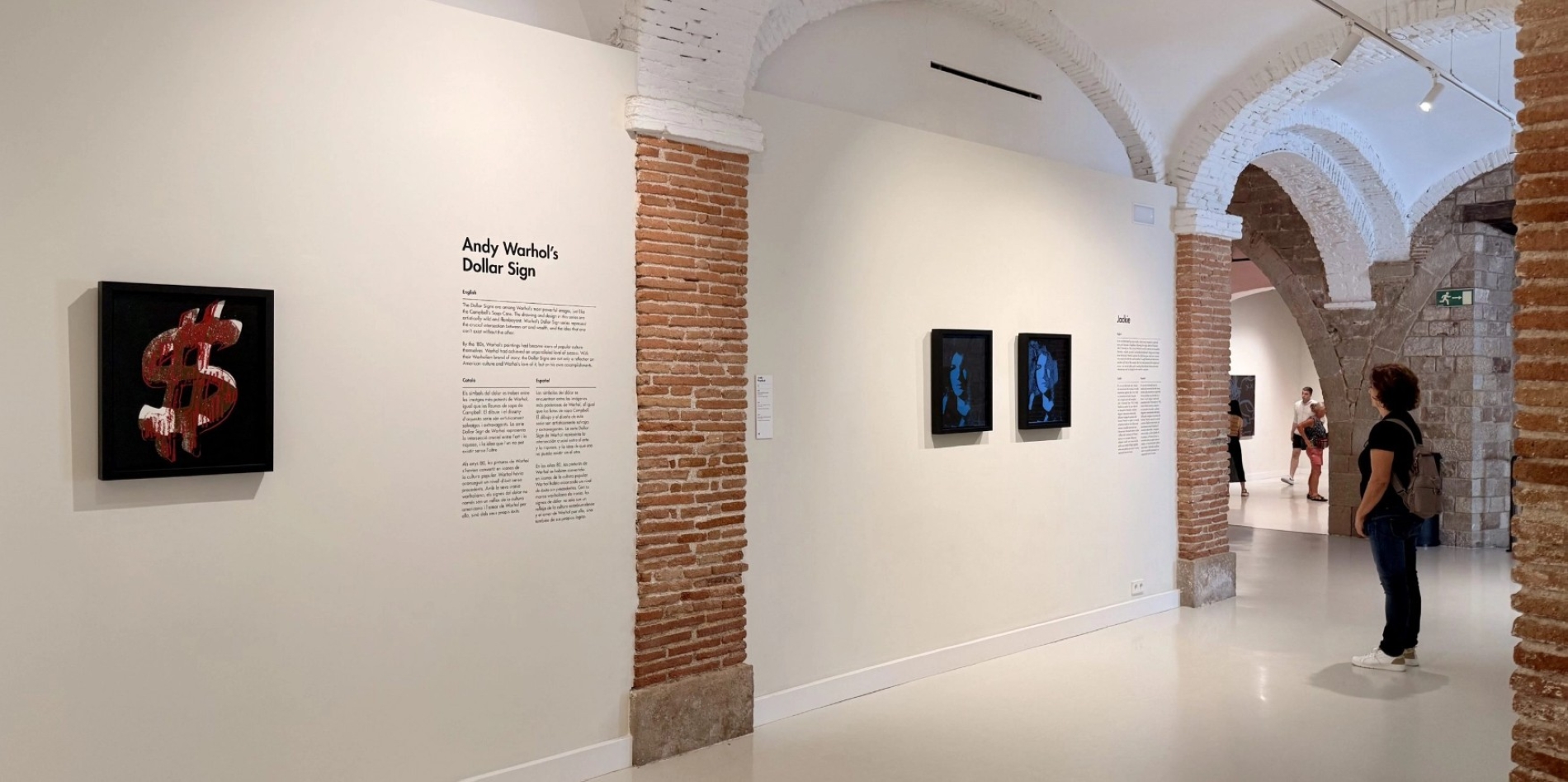
Work by Andy Warhol in Moco Museum, Barcelona.
The model proposed by Hortal's art does not draw a dividing line between modernity and contemporaneity by returning to their prevailing definitions. His art is abstract, yet its presentation within a contemporary vision remains possible and acceptable in light of the artist's own pictorial experience. Hortal, whose works seem not to have been made with traditional materials, insists on giving the surfaces of his paintings the character of a gleaming electric flash. Although that gleam is the product of a technical device rooted in a secret formula for mixing materials, it has opened the doors of contemporaneity to Hortal's works, since they constitute an attempt to use new materials unfamiliar to the making of the artwork.
Perhaps the matter is more complex than that. We must look at his paintings with our present eyes, the very eyes on which the exhibition organisers are betting, rather than through our prior knowledge. Hortal is the one who embodies the spirit of contemporaneity, not Warhol, whose silkscreen work is displayed here and offers yet another repeated image of Joseph Beuys, one of the most important figures in the history of contemporary art.