How inflation and politics drove up Eid sacrifices costs in Egypt

Rising prices, dollar pressures, and Red Sea disruption are making Eid al-Adha increasingly unaffordable, exposing Egypt’s dependence on imports and deepening concerns over food security

The crisis of expensive Eid sacrifices requires different public spending priorities to support agricultural and livestock production as a matter of national security.
Lina Jaradat
The crisis of expensive Eid sacrifices requires different public spending priorities to support agricultural and livestock production as a matter of national security.

How inflation and politics drove up Eid sacrifices costs in Egypt

With Eid al-Adha approaching, Egypt’s livestock markets are quieter than usual. For many families, the Eid sacrifice has shifted from a familiar seasonal ritual to a heavy financial burden. Rising prices for live animals and meat, together with inflation, exchange-rate volatility, and geopolitical tensions, are forcing large segments of Egyptian society to scale back their purchases or pool resources for shared sacrifices, while some households are settling for cheaper alternatives.

The crisis reaches well beyond the Eid season. It reflects deeper imbalances in the Egyptian economy: heavy reliance on imports, limited self-sufficiency, rising feed costs, and the impact of global supply chain disruptions and regional tensions on transport and shipping. These pressures have driven successive increases in meat prices, even as citizens’ purchasing power is visibly eroding.

Despite state efforts to intervene through government outlets, consumer cooperatives, and temporary livestock stalls offering sacrificial animals on instalment plans, the Egyptian market remains closely tied to fluctuations in the dollar and broader inflationary pressures. These pressures directly affect the cost of transport, imported meat, and production inputs, particularly animal feed. Foreign trade data indicate that Egypt’s imports of food products of animal origin reached around $1.1bn during the first 10 months of 2025, accounting for 1.3% of total imports of $84.4bn, underscoring the domestic market’s reliance on external sources in this vital sector.

This reality is reshaping meat consumption across Egypt. Meat is appearing less often on the tables of growing numbers of Egyptians, as the gap widens between high-income groups and low-income families, and between urban and rural areas.

What is driving up prices?

Analysts trace the roots of the crisis to the persistent gap between local production and rising demand, along with continued reliance on imports to meet the market’s demand for meat and feed. Experts add that Egypt’s livestock sector is under increasing strain as veterinary care costs rise and productive breeds remain weak. The feed industry, meanwhile, depends almost entirely on imported maize and soybeans, making any disruption to supply chains or fluctuation in the exchange rate immediately visible in livestock prices. Egypt still imports between 14 and 17 million tonnes of feed annually.
Reuters
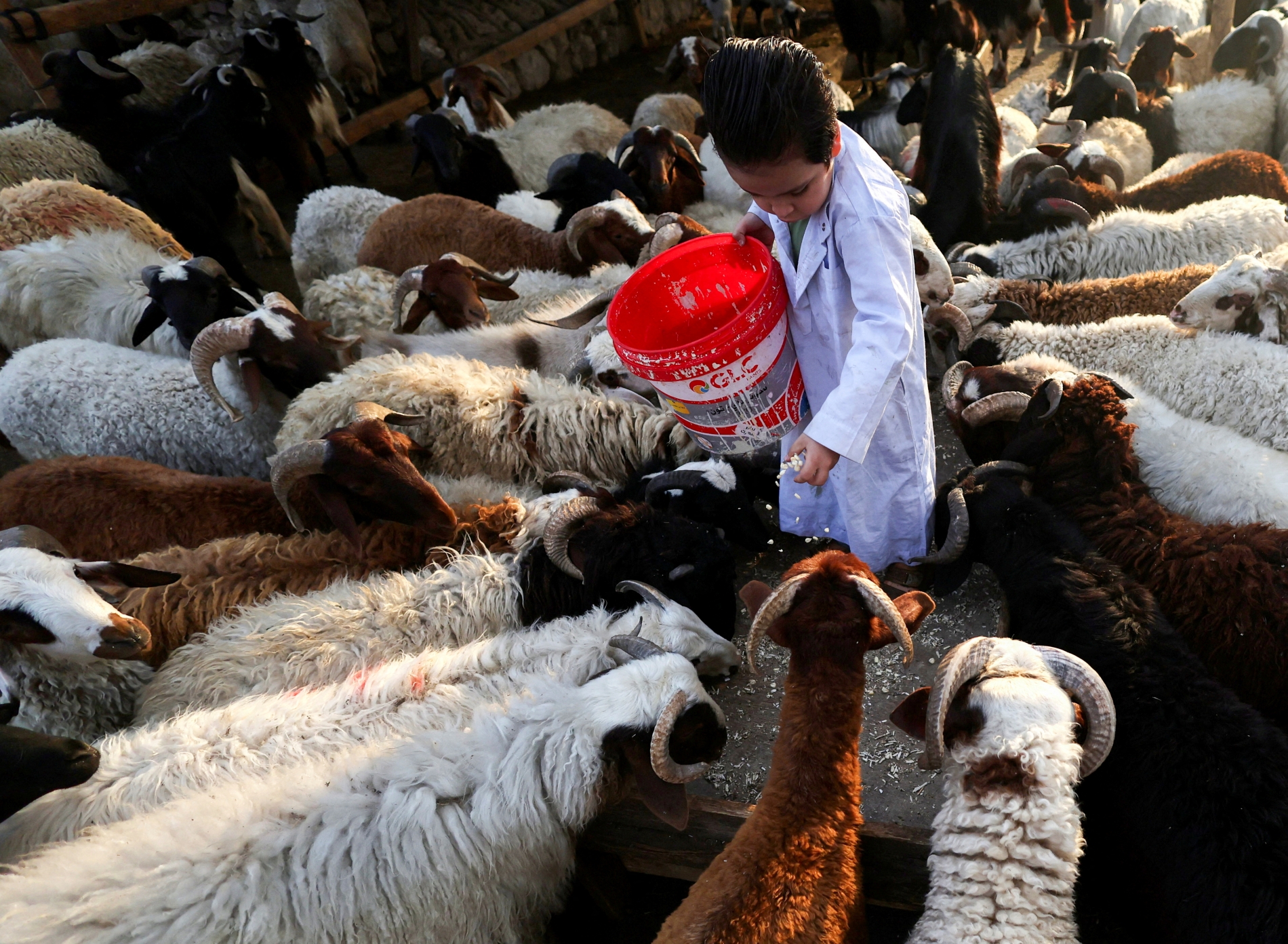
An Egyptian child feeds sheep in Cairo on 3 June 2025.

One revealing paradox now stands out in the market: some imported animals offered by charities for Eid sacrifice are cheaper than local ones. This points to the depth of the crisis facing the domestic feed industry, especially given that Egypt lacks extensive natural pastures that could reduce breeding and production costs.

Seasonal donations linked to Eid sacrifices have also declined due to weakened purchasing power, a trend clearly reflected in the spread of advertisements promoting sacrifices by instalment. According to the Ministry of Awqaf, the voucher for imported meat costs EGP 7,000 (about $133), while the voucher for local meat costs EGP 9,500 (around $181). Payment can be made through the Digital Egypt application in instalments over six months. Consumer finance companies have also expanded heavily into this field.

Economists who spoke to Al Majalla say the crisis also exposes a distortion in government spending priorities. Vast investments are being channelled into long-term infrastructure projects, while agriculture and livestock production suffer from a lack of direct support, limited concessional financing for small-scale breeders, and a lack of serious expansion in fodder crop cultivation. The result is that Egypt’s food security remains hostage to fluctuations in hard currency and to decisions made by foreign suppliers.
Egypt's food security remains hostage to fluctuations in hard currency and to decisions made by foreign suppliers

According to Samira al-Gazzar, the current crisis reveals "weak government anticipation in dealing with regional shifts and disruptions". Imports of live cattle, she noted, "have been directly affected by conditions in neighbouring countries, especially Sudan, which is one of the main sources of affordable meat". She added that government policy lacks "dedicated crisis-management mechanisms capable of preparing alternative scenarios before crises occur, as it often relies on temporary fixes such as government livestock markets, which cover only a limited share of actual demand, rather than building a sustainable strategic reserve."

Al-Gazzar also stressed that the meat crisis is linked to the erosion of Egypt's agricultural base. Urban encroachment on farmland and the fragmentation of agricultural holdings "have made it difficult to establish integrated livestock production projects," she said. "The absence of a serious contractual farming system for fodder has also driven many farmers away from raising livestock, turning them from producers into consumers, increasing pressure on the market and weakening social balance."

On 17 May, President Abdel Fattah El-Sisi inaugurated the New Delta Project west of the Nile Delta, aiming to expand cultivated land and strengthen food security by adding some 2.2 million new feddans (a traditional unit of land) at a cost of about $15bn. This equates to around 9,200sq.km—an area comparable to about 15% of Egypt's existing agricultural land. Based on desert land reclamation, the project is among the largest agricultural expansion schemes Egypt has undertaken in recent years.

Geopolitical tensions and the Red Sea

The crisis is closely linked to regional geopolitical tensions, particularly in the Red Sea and the Bab el-Mandeb strait between Yemen and Djibouti. Disruptions to shipping routes have forced transport companies to use longer sea lanes, including routes around Africa, extending journey times and increasing freight and insurance costs. These pressures are passed through the supply chain, from importer to trader and ultimately to consumer. Uncertainty has also encouraged some traders to adopt precautionary pricing policies, combining legitimate cost increases with higher margins at a time when demand is visibly weakening.

Reuters
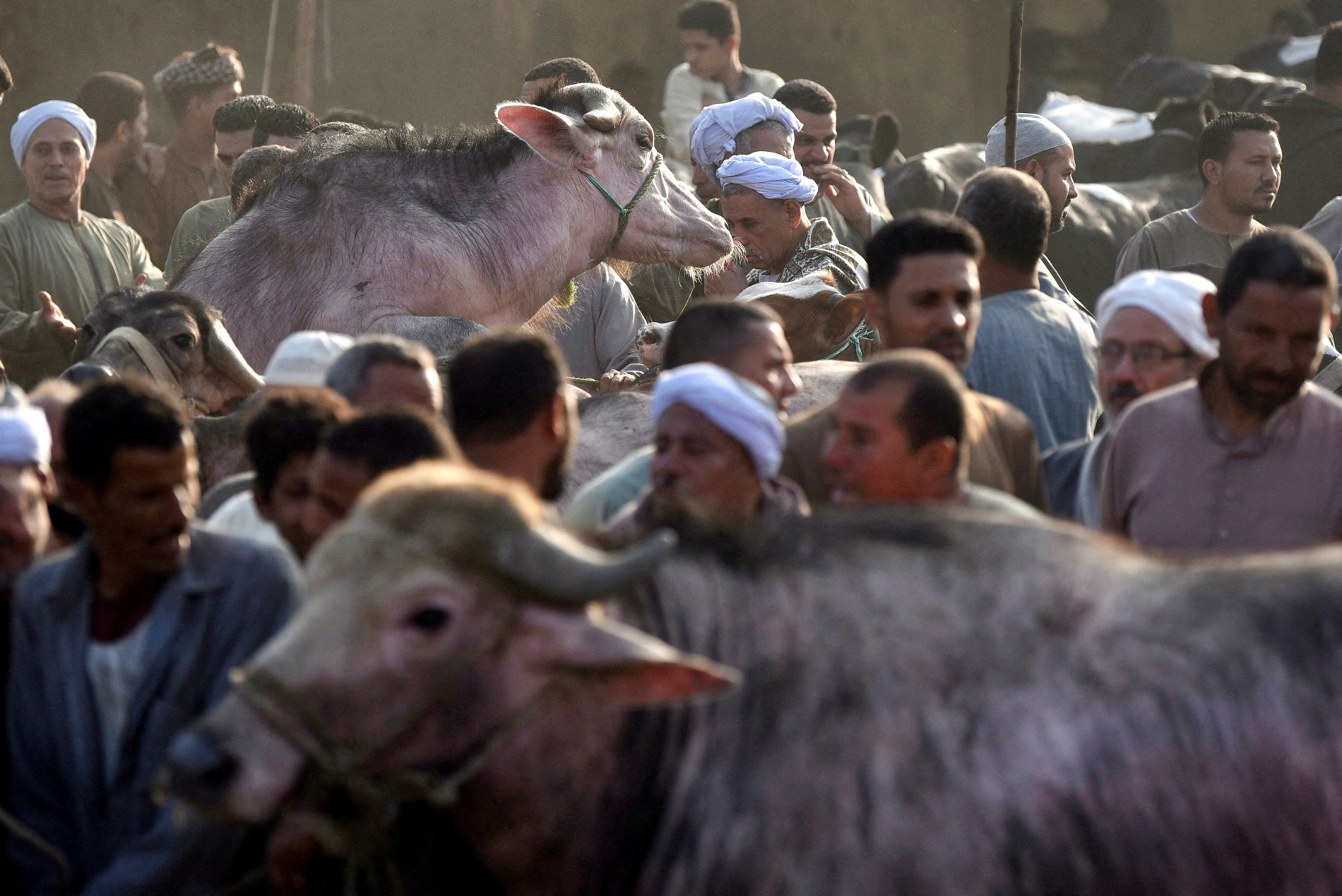
Central Livestock Market in Qalyubia Governorate, Egypt, on 2 June 2025.

According to economist Mohamed Anis, "no one can ignore the importance of Bab el-Mandeb in light of threats to close it if Iran pushes the Houthis towards that option". He stressed that passage via the Cape of Good Hope and Gibraltar would substantially increase costs. He added that "the Egyptian market cannot withstand such an increase," arguing that halting imports or shifting to overland imports may prove less costly.

Egypt, he explained, "already imports live and slaughtered livestock and red meat from Sudan and Chad through land routes," noting that any closure of the Bab el-Mandeb "would make overland corridors the only available alternative." He also expected the number of Eid sacrifices this year to decline relative to the population, owing to the rise in the dollar, inflation, and declining purchasing power.

Mahmoud al-Asqalani, head of the Citizens Against High Prices Association, told Al Majalla that the real crisis begins "when the principle of fairness collapses, and producers feel that deterrent penalties against monopoly and price manipulation are absent". He said the market is currently suffering from stagflation, marked by sharp price increases and weakening demand, but predicted that prices could fall in the days before Eid as more families, under economic pressure, turn to sharing a single sacrificial animal. He noted that the price per kilogram of live weight (the weight of livestock before slaughter) has risen from around EGP 170, or $3.2, before the US-Israeli war on Iran to EGP 230, or $4.4, at present.

Can Egypt become self-sufficient in meat?

Khaled Shafei, an economic and financial expert, said the market is witnessing "a clear reluctance among consumers to buy". He called for a clear roadmap for meat imports, whether through the government or the private sector, alongside urgent measures to develop livestock production and strengthen self-sufficiency. This, he said, would require support from commercial banks operating in Egypt and the Agricultural Bank of Egypt for initiatives that encourage citizens to raise calves and expand local production. He also urged easier licensing for livestock projects and practical solutions for breeders and farm owners to ensure market needs are met fairly while limiting monopoly practices.

Reuters
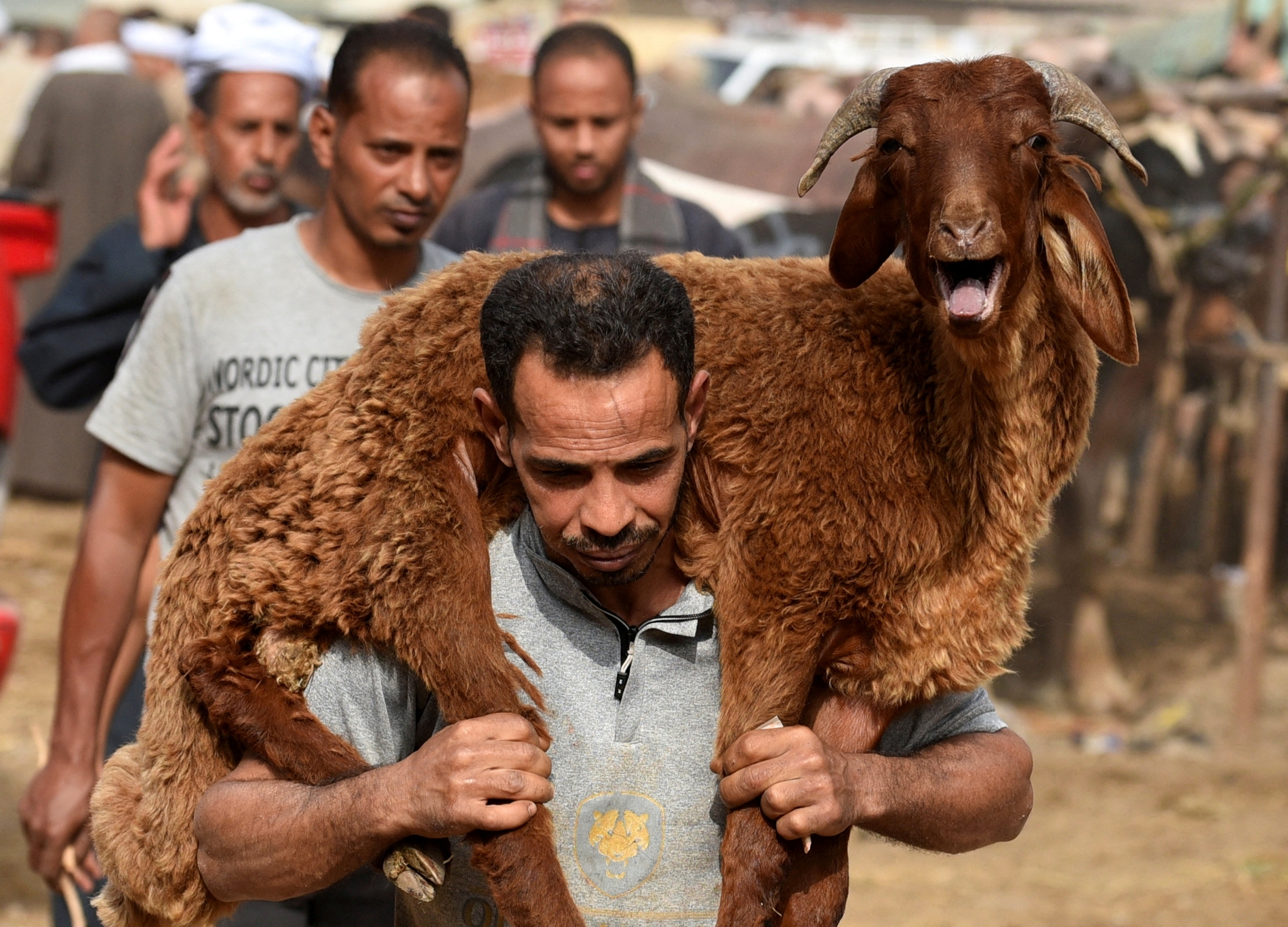
An Egyptian man carries a sheep in the middle of the central market in Qalyubia Governorate on 10 June 2024.

By contrast, Mostafa Wahba, head of the Butchers Division at the Cairo Chamber of Commerce, described the current price increases as "slight", not exceeding 3%. He argued that supply exceeds demand and predicted prices would soften before Eid because of "abundant supply and diversified sources of production".

Financial expert Mohamed Abdel Aal, meanwhile, told Al Majalla that while some butchers may be taking advantage of conditions, most price increases reflect genuine cost pressures linked to imports, feed, transport, and energy. Yet despite weakening demand, he said consumption had not collapsed entirely because the Eid sacrifice retains a strong religious and social significance, prompting many households to adapt by buying smaller animals, sharing sacrifices or seeking cheaper alternatives.

Experts broadly agree that confronting the crisis of expensive Eid sacrifices cannot be limited to market monitoring during the holiday season. It requires a reordering of public spending priorities, directing support towards agricultural and livestock production as a matter of national security, and moving from a policy of 'bridging the gap through imports' towards food sovereignty and the localisation of domestic production.

font change