How much is Donald Trump costing America’s economy? 

We calculate the drag on growth from fitful presidential policymaking

Al Majalla

How much is Donald Trump costing America’s economy? 

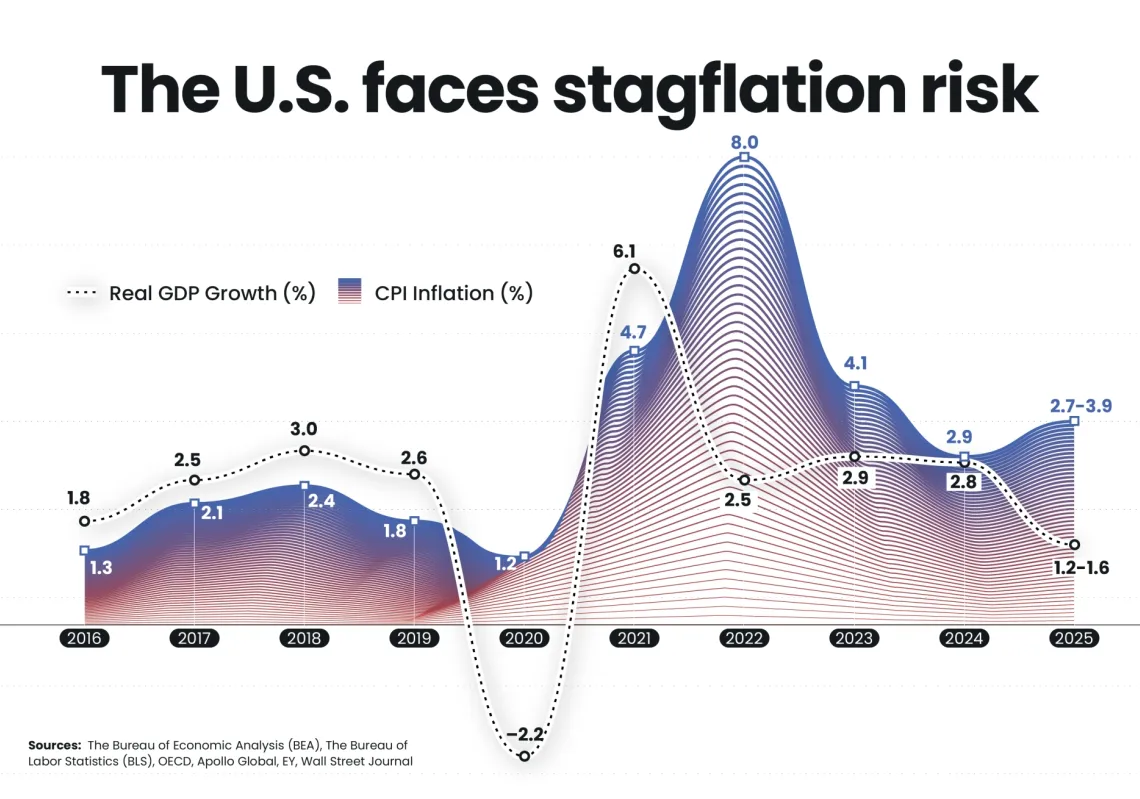
Since Donald Trump took office in January last year, America’s economy has continued to be the envy of the world. In 2025, while Britain, France and Japan eked out annual GDP growth of around 1%, and Germany all but stood still, American output grew by 2.1%. In the past 15 months, American stock markets have broken record after record. And all this even as the president has unleashed seemingly anti-growth policies like mass deportations of migrant workers and chaotic trade wars.

Observers who had predicted economic disaster are left scratching their heads. Perhaps, some now whisper, the policies are not as destructive as economists had assumed. Others wonder what might have been. For all its strength, America’s economy could, on this interpretation, be doing even better. But how much better? Put another way: how big is the “MAGA tax”?

One way to arrive at a figure is to imagine what America’s economy would look like in this levy’s absence. Mr Trump inherited an economy that was growing strongly. It has since had three boosts, which The Economist has roughly quantified.

First, the artificial-intelligence boom. Capital expenditure by just four AI-giants—Alphabet, Amazon, Meta and Microsoft—topped $350bn in 2025 and should hit roughly $700bn in 2026.

The binge has unleashed a wave of spending on data centres, chips, cooling systems and software. In 2025, real investment in information-processing equipment, software and data centres grew by more than 15%. In gross terms, this surge contributed nearly one percentage point to annualised GDP growth, accounting for about half of the economy’s expansion.
Reuters
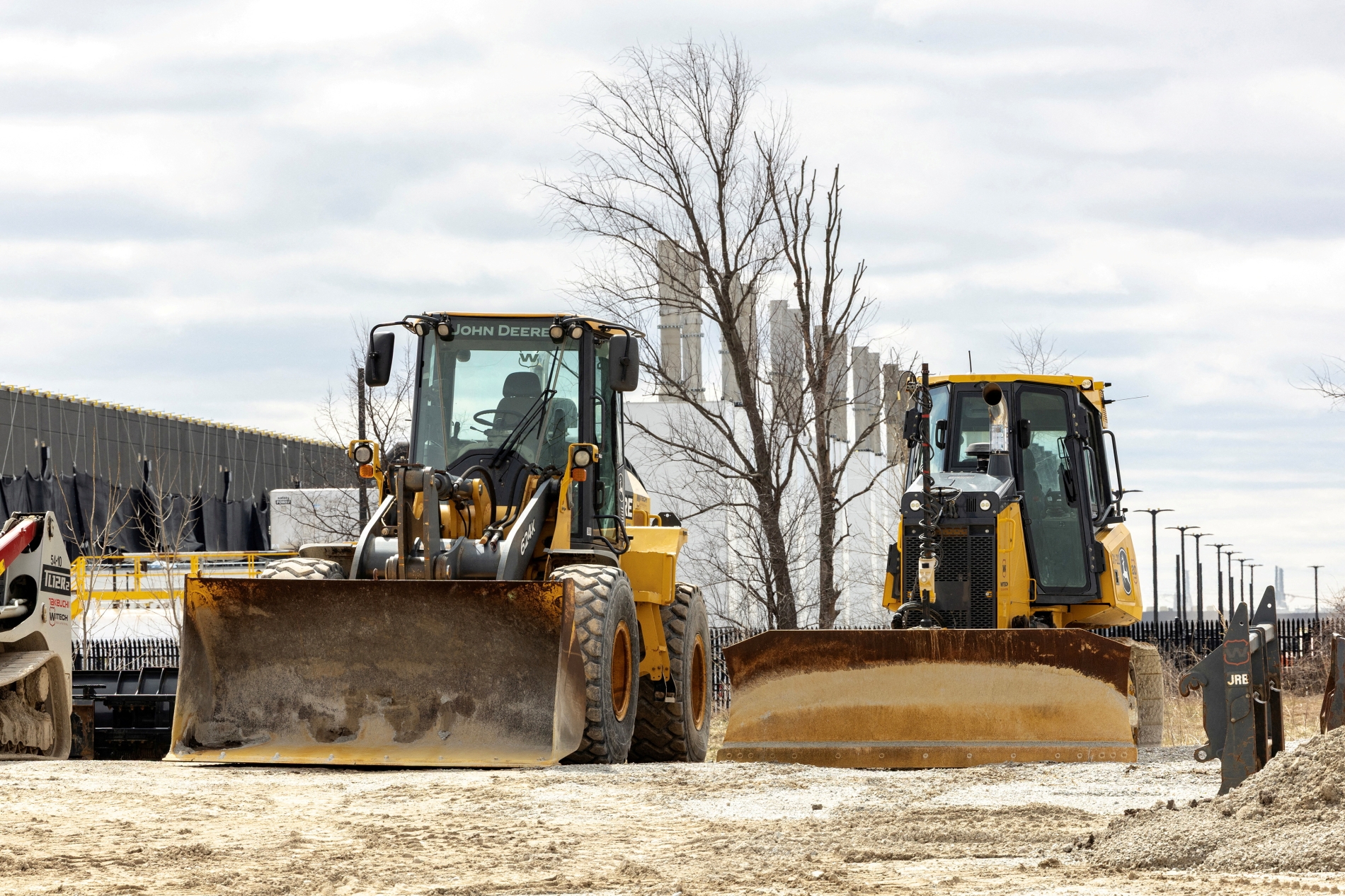
Bulldozers work near an Amazon data centre under construction in Indiana, on March 23, 2026.

This figure, though, overstates AI’s true contribution to growth. Roughly two-thirds of data-centre spending is on equipment, much of it imported from Asian manufacturers like South Korea and Taiwan. When American firms buy this, most of the economic activity occurs abroad. To estimate how much the spending contributes to American GDP, we subtracted the rise in imports of real equipment from the surge in AI investment. By our reckoning, around $50bn of the AI-investment boom in 2025 reflected additional domestic production, adding 0.2 percentage points to annualised GDP growth.

The AI frenzy has also fuelled America's stockmarket, the source of the second boost to growth. Between Mr Trump’s election and the end of 2025, the S&P 500 index of large American firms rocketed by 15% in real terms—unusually fast by historical standards. That added $5tn more to household wealth than would have accrued in a typical year. Americans tend to spend a small share of such windfalls. Still, using a conservative rule of thumb that each dollar of equity wealth raises spending by two cents in the first year, this probably raised consumption by $100bn in 2025, or 0.5% of total consumer spending. Given shoppers’ central role in America’s economy, the wealth effect may have added 0.3 percentage points to growth.

In 2025, AI investment grew by more than 15%, contributing nearly one percentage point to the GDP

The third boost to America's economy has come from Mr Trump's growth-promoting policies. His administration has eased corporate mergers, ordered federal agencies to cut red tape and loosened constraints on private credit. The tax-cutting bill passed in 2025 injected trillions of dollars' worth of stimulus into the economy. It also probably improved the economy's rate of long-term growth by making pre-existing tax cuts permanent, restoring firms' ability to fully expense spending on research and development, and allowing them to depreciate assets more rapidly.

All of this encourages investment. On average, the independent forecasts we reviewed—including those by the Congressional Budget Office, Tax Foundation, the Tax Policy Centre and the Yale Budget Lab—estimated that the legislation would add 0.2 percentage points to GDP growth in its first year and 0.4 percentage points in 2026.

Combine all three boosts, and America's economy ought to be breaking the decibel-meter. Before the presidential election—and before economists were able to size up Mr Trump's ideas— the consensus forecast was for 2% growth in 2025. Adding in AI investment, soaring stock markets, and tax cuts might have got America to 2.7%. That is more than half a percentage point faster than reported growth.

REUTERS/Brendan McDermid
A trader works on the floor at the New York Stock Exchange (NYSE) in New York City, US, on April 3, 2025.

Another way to calculate the MAGA tax is to try to capture its economic drag directly. Economists have done this for some of Mr Trump's policies. According to the Peterson Institute, a think-tank, his tariffs reduced real GDP growth by about 0.2 percentage points in 2025, by squeezing household purchasing power and compressing firms' profit margins. The Brookings Institution, another think-tank, estimates that in 2025 the president's deportations and border shutdown turned net migration negative for the first time in at least half a century. This reduced labour supply and, since migrant workers spend money, consumer demand. All this may have slowed growth by 0.2 percentage points.

Such figures are instructive, but they do not capture the full cost of uncertainty stemming from Mr Trump's erratic policymaking. Tariffs are announced, delayed, revised and revived. Immigration agents are deployed, recalled and redeployed elsewhere. Wars are waged. An index of economic-policy uncertainty developed by Scott Baker of Northwestern University and colleagues rose by over 100 points from before Mr Trump's election to the end of 2025. Swings of that magnitude are typically followed by growth in business investment slowing by five to ten percentage points, as firms postpone capital spending and supply-chain adjustments.

Indeed, strip out the splurge on information-processing gear and software—the categories most closely tied to AI—and the picture looks grim. Over the past four quarters, non-residential fixed investment, excluding AI-related categories, has contracted at an annualised rate of roughly 3%. It grew by over 5% per year during the previous decade. Investment in industrial and transport equipment has fallen by more than 2% over the past year. Manufacturing and construction are down by 20%. In total, non-AI investment is running about $130bn below its trend from the last decade. This capex recession is reducing GDP growth by 0.4 percentage points.

The AI frenzy has also fuelled the US stockmarket, the source of the second boost to growth

Could AI itself explain the weakness? The contraction in non-AI investment is too large and broad to be down to firms merely reallocating capital from other sectors towards data centres. It spans oil and gas, carmaking and factory construction. Trade-policy uncertainty probably played a large role. In a survey a year ago, the Federal Reserve Bank of Atlanta found that 45% of executives planned to cut capital spending owing to policy uncertainty.

Another potential explanation—that strong demand and heavy government borrowing have pushed up interest rates and crowded out private investment—is also unpersuasive.  Credit remains plentiful. Investment-grade corporate borrowing has seldom been so cheap, compared with Treasury yields, since the 1990s. It is therefore a good bet that presidential policymaking is to blame for sour sentiment.

Together, the squeeze from tariffs on real incomes, reduced labour supply and capex-shy companies adds up to 0.8 percentage points. That is in line with the earlier figure we arrived at by comparison with a counterfactual American economy. Looking ahead, there is little sign of relief. Tariffs remain in flux, sustaining high uncertainty for businesses and households.

AFP
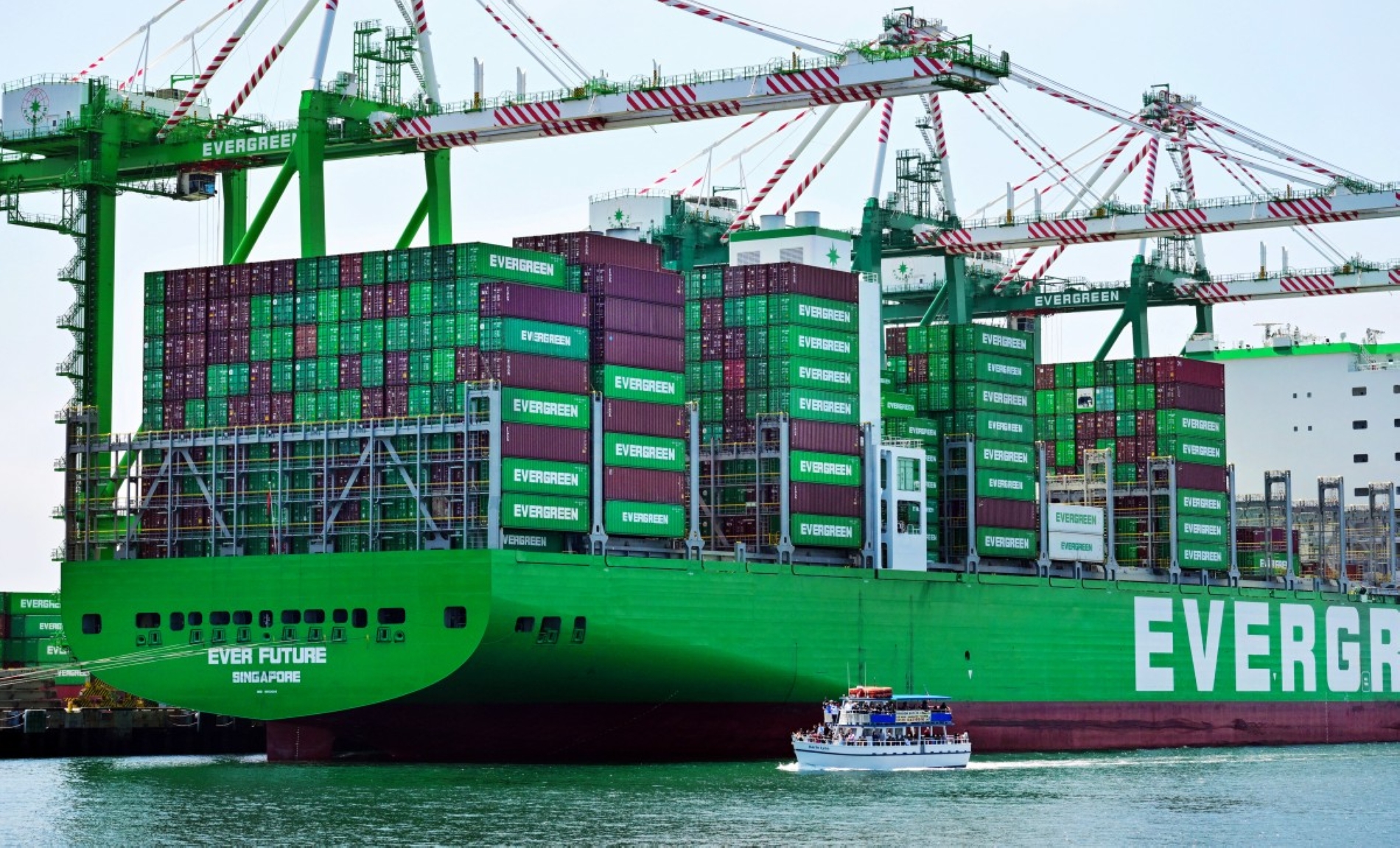
Shipping containers piled up at the Port of Los Angeles following a court ruling against tariffs imposed by Donald Trump, on 9 May 2026.

The war in Iran and the closure of the Strait of Hormuz have triggered an energy shock that will further compress real incomes and corporate margins, dampening investment even more.

A natural reaction to such figures is to despair at how much damage bad policies can cause. Another, though, is to marvel at the awesome power of America's economic engine. Despite everything Mr Trump has put in its way, GDP may grow at an annualised rate of 4% in the current quarter, if you believe the latest real-time forecast by the Federal Reserve's Atlanta branch.

Without the deadweight of the MAGA tax, in other words, America might be rocketing ahead with annualised growth of nearly 5%. It has notched up such performance in just nine quarters this century, and only five if you exclude the recovery after the Covid-19 pandemic. If only the president would let it, it could be doing so again. 

font change