Vanishing horizon: why Sudan’s civil war is getting harder to solve

There are fears that a divided country could yet splinter into a patchwork of overlapping fiefdoms led by warlords and terrorists, with neither a military nor diplomatic solution looking likely

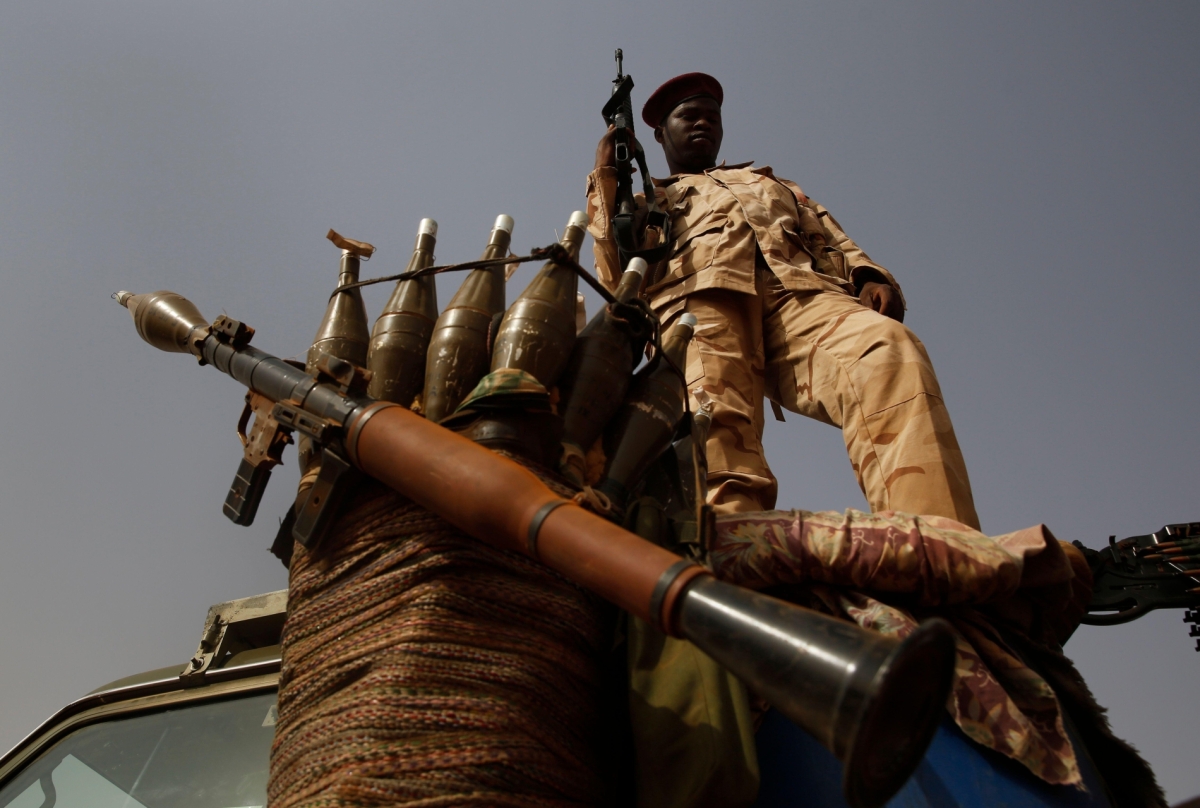
An RSF fighter stands on a vehicle during a military-backed tribe's rally, in the East Nile province, Sudan, on 22 June 2019.
AP/Hussein Malla
An RSF fighter stands on a vehicle during a military-backed tribe's rally, in the East Nile province, Sudan, on 22 June 2019.

Vanishing horizon: why Sudan’s civil war is getting harder to solve

For three years, Sudan’s civil war has defied every attempt at resolution. Mediators, concerned actors, and all others seeking to end the conflict have been caught in an unproductive void, moving from one failed initiative to another. These repeated failures have deepened the sense of a horizon closing in on Sudan’s war. That impasse now casts its shadow over the conflict itself and over the forces waging it.

One of the warring sides, the Rapid Support Forces (RSF), offers the clearest example. It has been worn down by defections and shaken by internal fractures, reflecting the war’s prolonged duration and the commanders’ fading hope of any imminent end.

On the other side, the Sudanese Armed Forces’ (SAF) reservoir of public support is nearly depleted after its failure to defeat the RSF, despite repeated promises that “decisive victory is near”. The army has also failed to provide services and security in the areas under its control. Corruption is rampant in a country where poverty now affects more than half the population.

Among the most prominent efforts to find a solution is the Quad initiative, launched seven months ago and led by the United States, with the participation of Saudi Arabia, the United Arab Emirates, and Egypt. The Quintet initiative, comprising the African Union, the Arab League, the Intergovernmental Authority on Development (IGAD) in Eastern Africa, the United Nations, and the European Union, has also failed to secure a ceasefire, or even direct negotiations between the army and the RSF. Other initiatives by European, Arab, and African states have all fallen flat.

The first stage of warlordism is often defections. On 11 April 2026, Al-Nour al-Gubba, a field commander in the RSF, was confirmed as having joined the armed forces. Al-Gubba commanded the RSF as it seized El Fasher, Darfur’s largest city. Just weeks later, another RSF commander defected. This time it was Ali Rizqallah, known as al-Safana. Both men carry weight and influence on the battlefield. In October 2024, Maj. Gen. Abu Aqla Keikal also defected from the RSF. With army backing, he extends his influence across parts of Gezira State and the Butana region in central Sudan.

Information from field sources this year points to exhaustion among fighters across all armed factions, along with a marked erosion of loyalty to commanders and fighting units. Most soldiers were drawn into battle on the basis that the war would be short and easy—a claim that time has exposed as false. Another factor is money, which is no longer as readily available as it was at the start of the war.
AFP
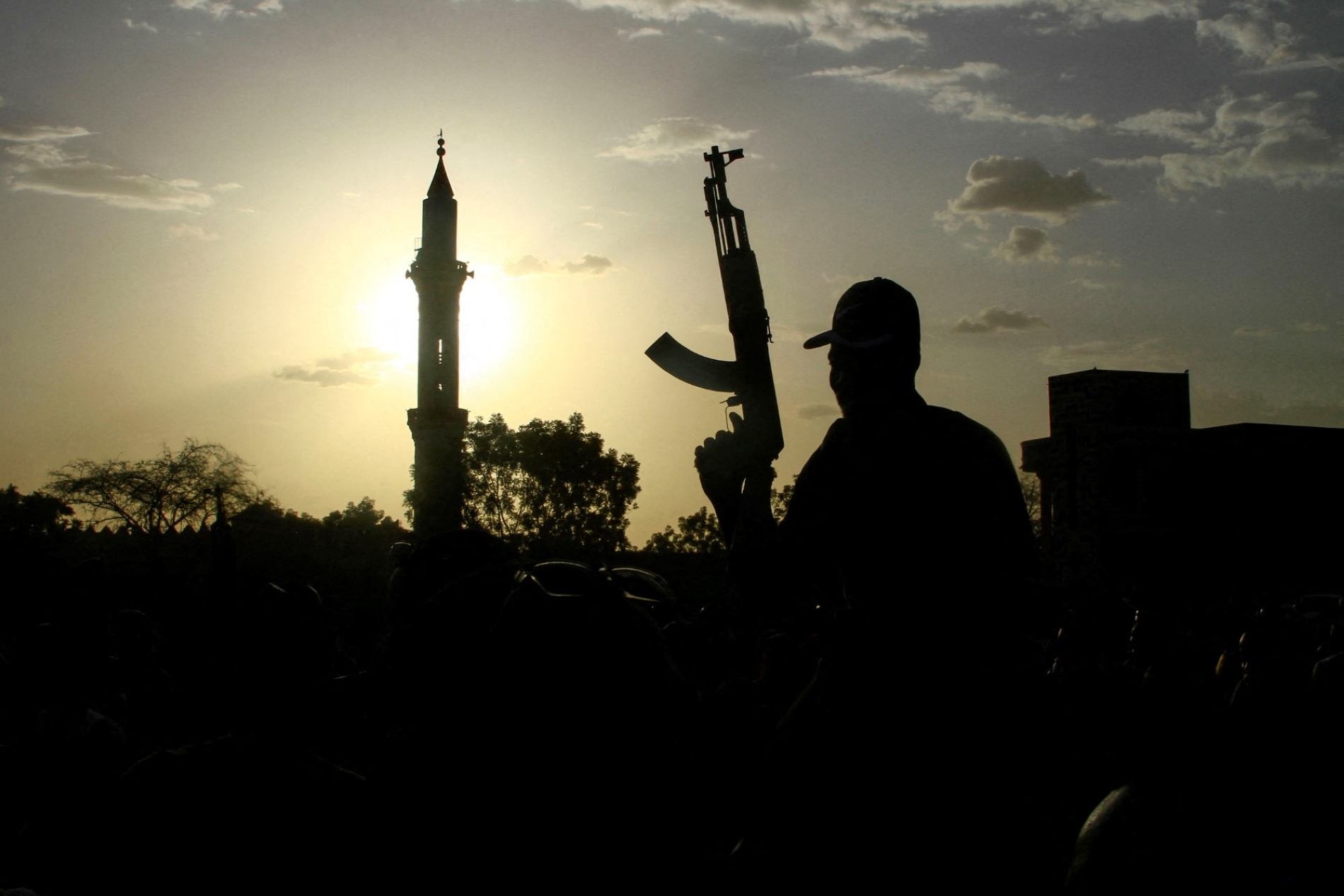
A fighter loyal to Sudan's army chief Abdel Fattah al-Burhan holds up a weapon backdropped by the minaret of a mosque, during a graduation ceremony in the southeastern Gedaref state on 27 May 2024.

Wider pattern

The developments inside the RSF are one sign of this wider pattern. Defections of RSF field commanders suggest that the Sudan army sees the erosion of RSF fighters’ loyalty and the factors driving it, and is turning this to its advantage. Yet the SAF is also in a poor state, with tensions between the army and its allies, especially with the Joint Force, a Darfuri militia formed under the Juba Peace Agreement. They remain the largest organised military force allied with the army.

The RSF’s control over Darfur and parts of Kordofan has placed these forces in an acutely embarrassing position, creating tension. Defectors from enemy ranks, especially Darfuris, have deepened that tension and intensified the feeling that the people of Darfur have been abandoned. Some have come to believe that the army used them in its war, then failed to support them or stand by them in recovering their areas. Clashes between the two sides occur frequently, while grievances are overheard from commanders within the Joint Force.
There is exhaustion and erosion of loyalty among RSF fighters, especially because money is no longer as readily available as it was at the start of the war

The danger of relying on defected military commanders, or on commanders aligned with the army, is that they themselves can become warlords. Each commander may be backed separately to impose control over his tribal sphere of influence and protect it from enemies. Should the warring parties become accustomed to this pattern, Sudan will move beyond partition and instead face fragmentation, threatening the state of Sudan as it is currently known, within its recognised borders.

Participants of this war now worry that they may not get their share of post-war power, so all eyes are on the division of shares and quotas. The leaders of supporting battalions and militias claim to be fighters with a cause, who say they will lay down their weapons upon victory (as al-Misbah Abu Zeid, commander of the Islamist brigade known as the al-Baraa ibn Malik Brigades, and some of the brigade's commanders have repeatedly stated).

AFP
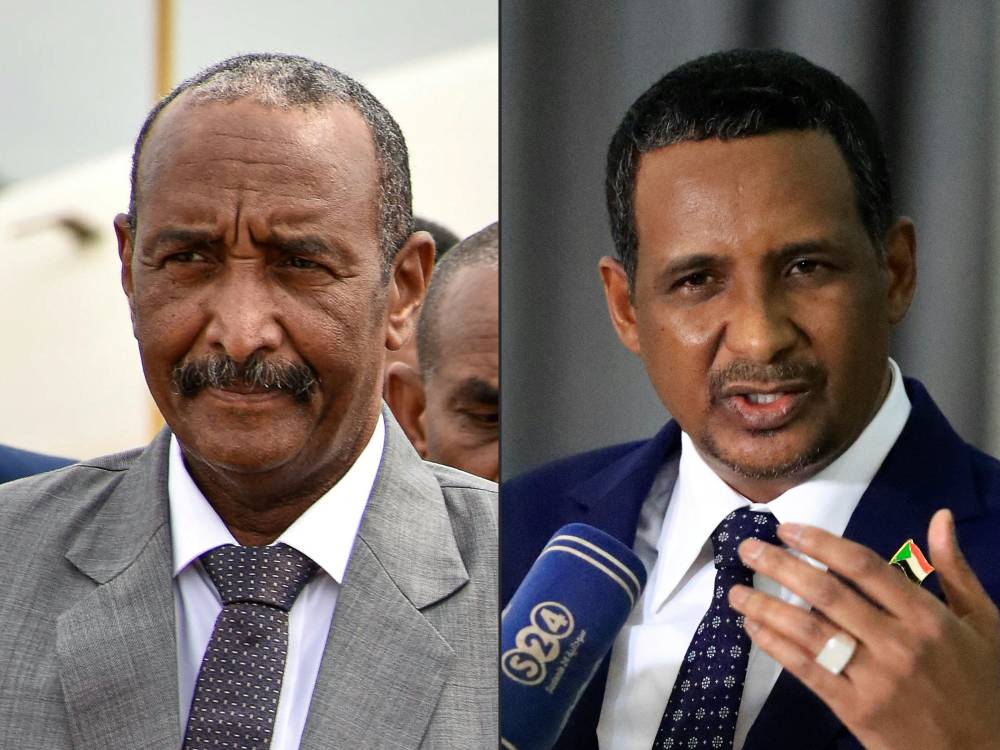
SAF General Abdel Fattah al-Burhan (L) and RSF chief Mohamed Hamdan Dagalo (Hemedti) (R).

Growing difficulty

The leaders of both the SAF and the RSF must either meet these factional demands or face a broader, more violent war than at present. Battalions, militias, and individuals on the hunt for the spoils of war are among the most visible consequences of the conflict's prolongation. Those who may seek a resolution have a grave responsibility, and their task becomes harder with every passing day.

On 4 May, an RSF drone struck Khartoum airport, which had only recently begun receiving international flights. The Sudanese army said it was launched from Ethiopian territory. In response, Ethiopia expelled the Sudanese ambassador from the country. Around the same time, the United States presented a new negotiating paper to the two parties, setting out a new arrangement for the Quad plan.

Instead of a humanitarian truce combining a ceasefire with the delivery of aid and the protection of civilians, the new idea is for an agreed plan among the parties, centred on delivering relief and assistance while protecting civilians, but without being tied to a ceasefire.

The decision to bypass the ceasefire stems from the fact that it has become an obstacle to a settlement, compounded by the intransigence of both sides. Ceasefires are now bound up with the propaganda of war, especially for the army, which tells the public that the battle will end only with the elimination of the last RSF member. A ceasefire also requires relatively complex arrangements.

This time, the Quad is trying to make the entry point purely humanitarian, something on which they hope that both parties can agree, before moving on to a ceasefire and the cessation of hostilities. In parallel, the United States—through Trump's advisor for Middle East and African affairs, Massad Boulos—passed its Quad partners a new vision containing consensual ideas for resolving the conflict in Sudan.

FABRICE COFFRINI / AFP
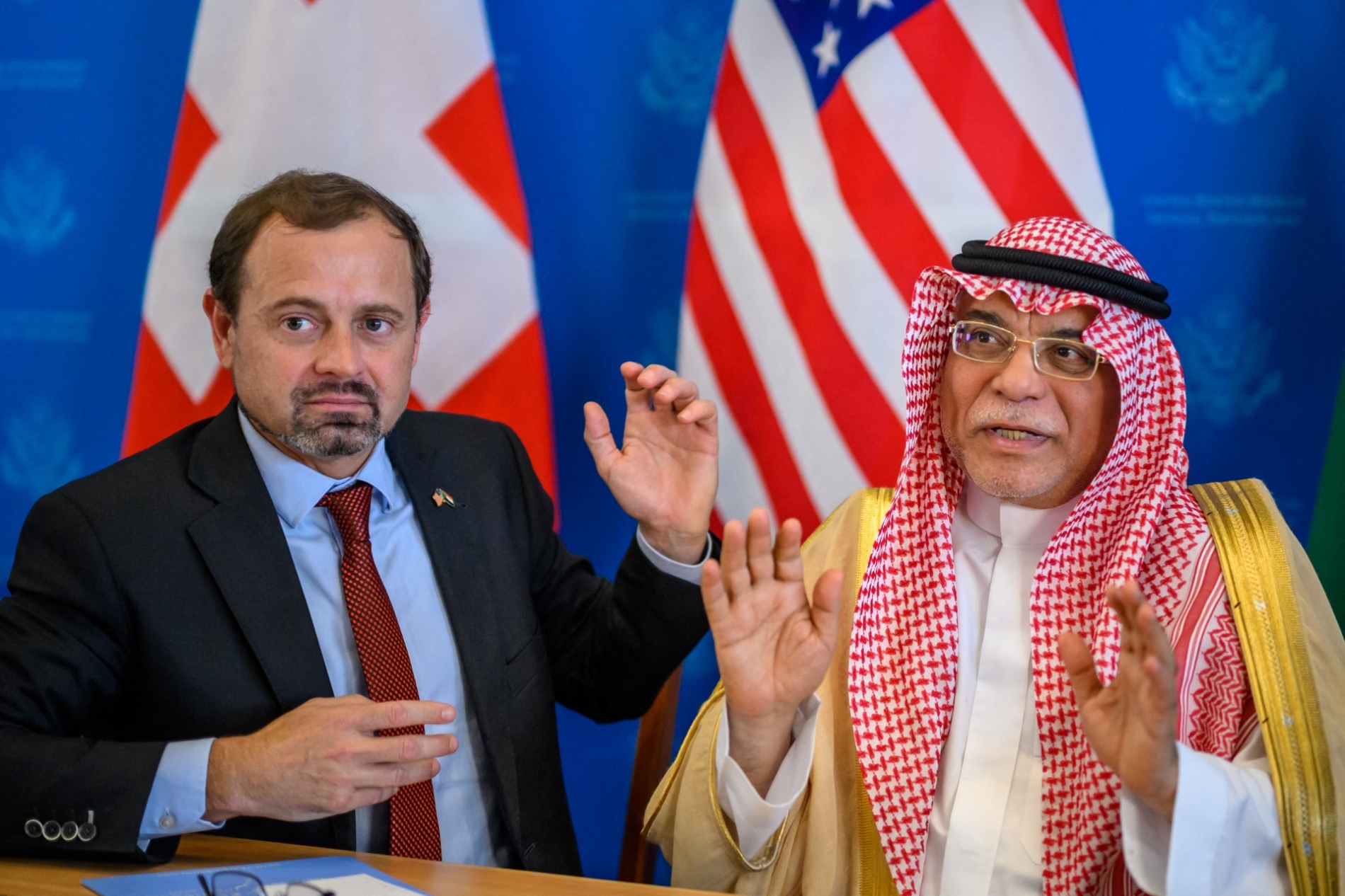
US special envoy for Sudan Tom Perriello (L) and Head of the Saudi Arabian delegation Ali bin Hassan Jafar attend a press conference at the end of Sudan ceasefire talks, in Geneva on 23 August 2024.

Problematic composition

These ideas address the interests and concerns of Saudi Arabia, the UAE, and Egypt, returning to the initial framework to break the deadlock and end the country's 'closed horizon'. Yet the ideas remain limited and modest, while the Quad's composition itself is proving an obstacle, with each party reluctant to do anything other than defend its own interests.

It feels as if everyone is sat waiting for something from US President Donald Trump that will end the game of declared and hidden interests to break the deadlock, but the way to resolve the crisis has not changed since it was set out in the Jeddah platform in the first weeks of the war, that is: end the fighting, distribute aid, protect civilians, put in place security and military arrangements, and initiate a civilian democratic transition. 

Boulos has complained of 'competition' among the Quad's members and urged them to stop supporting the two warring parties. Sources have told Al Majalla that the US warnings were accompanied by precise intelligence briefings indicating renewed terrorist activity in the Red Sea region, including movement by senior Houthi commanders between Bab el-Mandeb and Port Sudan, and a high level of coordination between Iran and Sudan's Islamic Movement and Muslim Brotherhood circles.

Among the evidence cited was Washington's disclosure of details related to arms deals between Iran and the army, carried out by the Iranian Shamin Mafi, who is detained and standing trial in California. Washington is concerned that extremist religious groups in West Africa are now able to move with greater freedom in RSF-controlled areas of western Sudan, a region that links several African countries, and that terrorist groups are exploiting the war in Sudan to hide.

Mohamed Nureldin Abdallah / Reuters
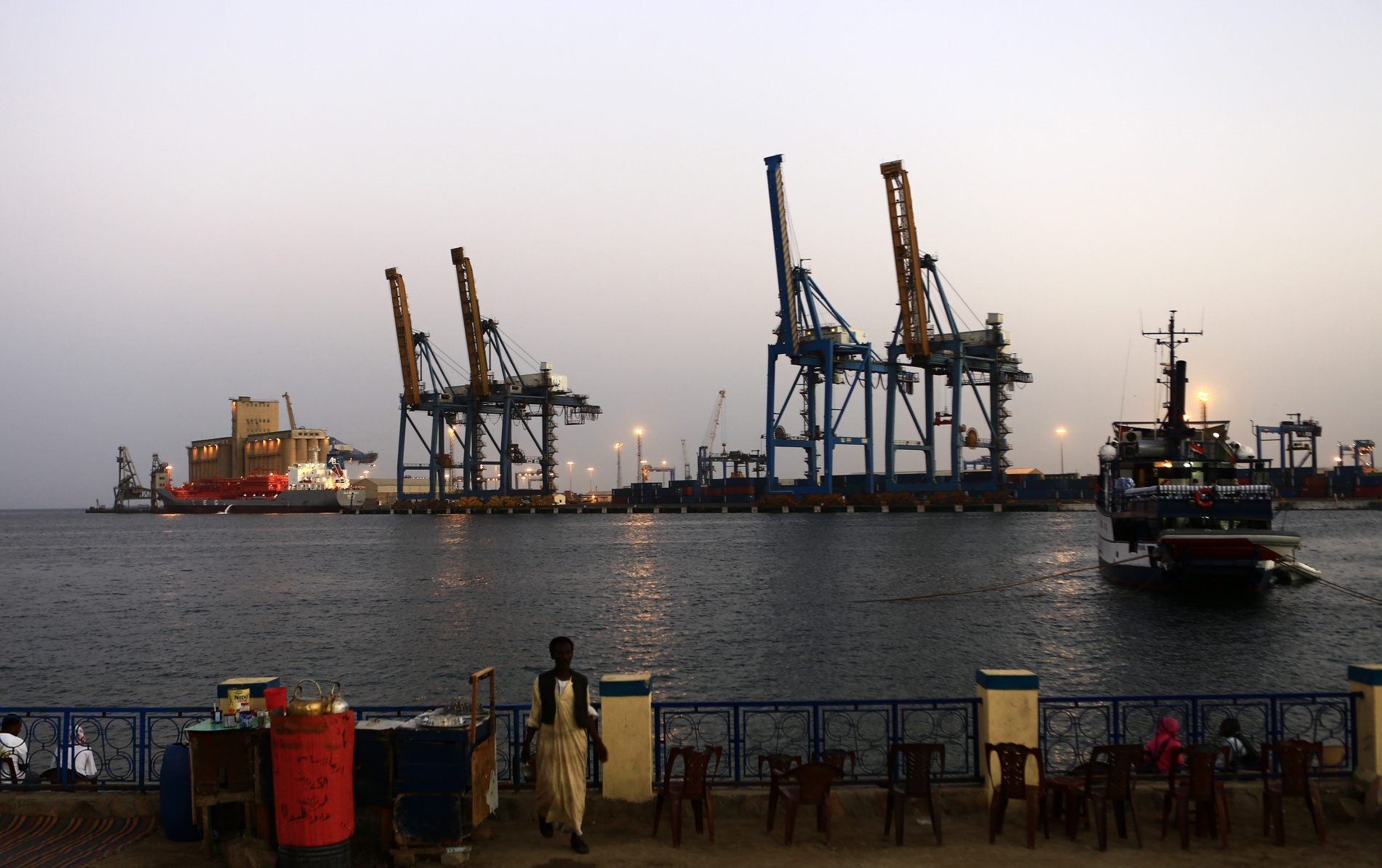
The harbour of Port Sudan on the Red Sea on 24 February 2014. It is Sudan's main seaport and source of 90% of its international trade.

Islamist gains

This threat is likely to grow in line with the convictions of the Islamists now effectively controlling the battle, several of whose leaders have openly declared support for Iran in its war against America and Israel. Some think the Islamists will intensify their leverage around the Red Sea, particularly after the impact of Iran's actions in the Strait of Hormuz.

Optimists are few and far between. A UN Security Council report issued on 1 February noted that "the United States has sought to intensify its efforts to revive peace talks on Sudan" but that "a near-term breakthrough appears unlikely". Other reports highlight how each side still wants to fight to expand its sphere of influence and seize vital cities. The RSF controls Darfur, parts of Kordofan, and areas of Blue Nile, while the army controls the central, northern, and eastern states.

After three years, a military resolution seems all but impossible. Only a negotiated diplomatic settlement remains viable. Or, at least, it would be were the warring parties not so entrenched in their intransigence. Boulos has tried, but his other files include the Democratic Republic of Congo, Ethiopia, Eritrea, and Western Sahara—more than enough to keep him busy. Sudan's war shows no signs of ending any time soon, its external sponsors are hunkered down, and the humanitarian crisis is already the world's worst. In this torn and battered country, hope—like everything else—is in short supply.

font change