The many faces of Alexandria

Nestled on the southern Mediterranean coast, Egypt's quaint coastal metropolis marked its inception as an ancient city that wore many hats across civilisations

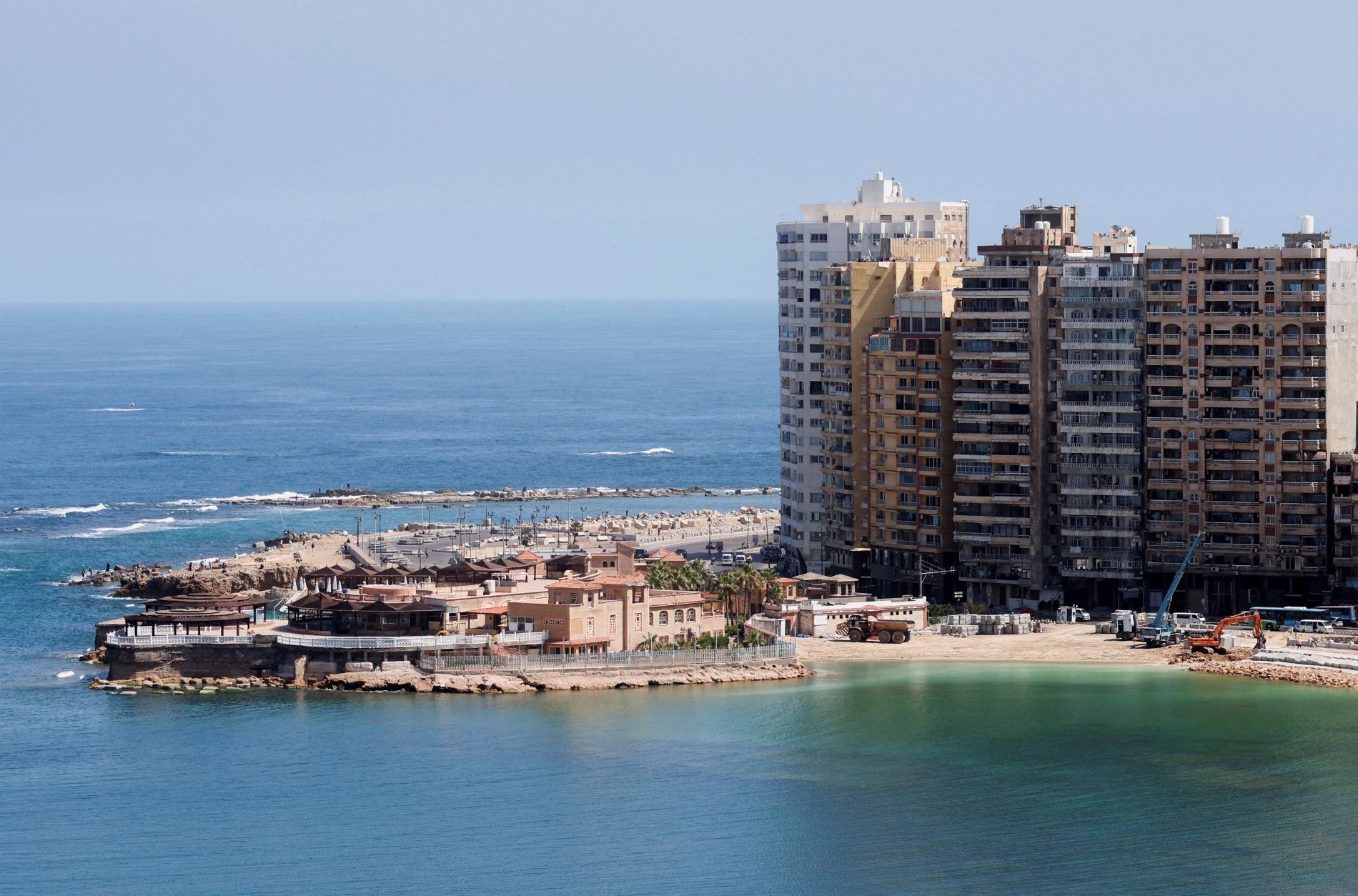
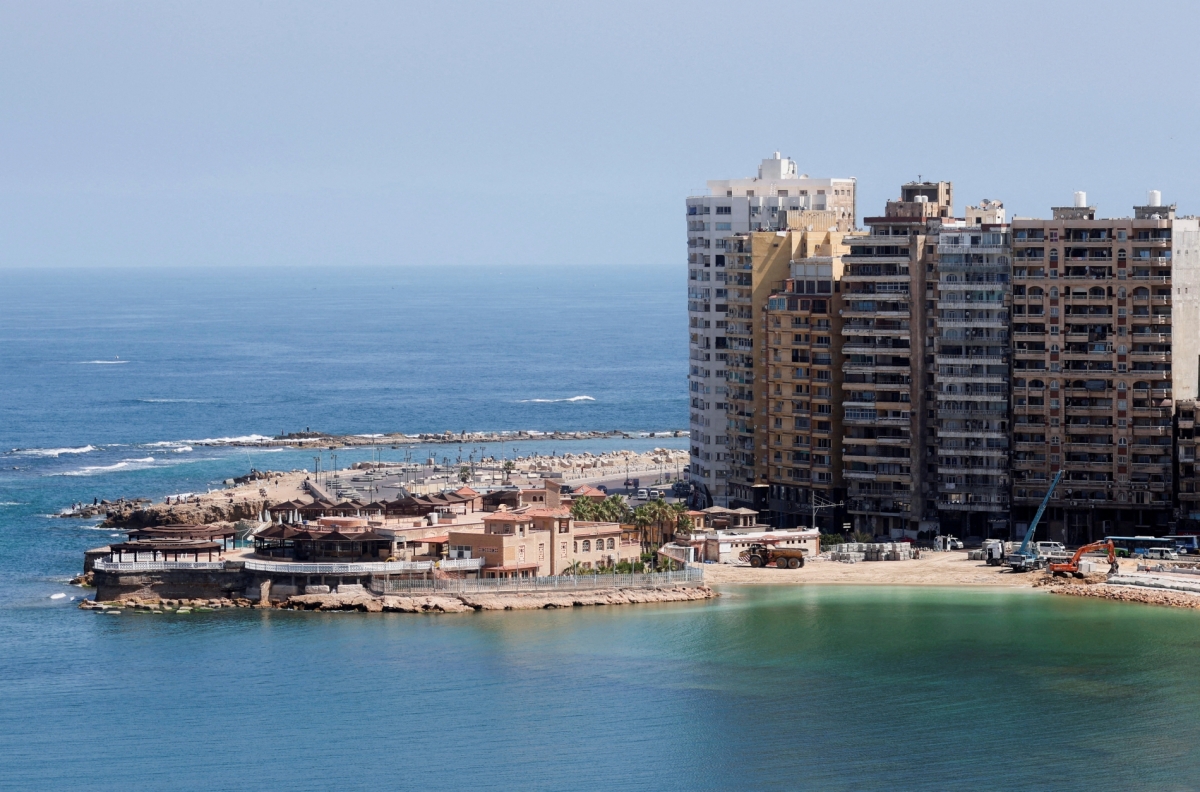
A view of buildings on the Alexandria Corniche.
REUTERS/Mohamed Abd El Ghany
A view of buildings on the Alexandria Corniche.

The many faces of Alexandria

Alexandria, nestled on Egypt's Mediterranean coast, has changed hats throughout human history. Interestingly, the quaint city, known as the Bride of the Mediterranean, has been damaged and destroyed several times, only to rise again with a new face, leading observers to conclude that Alexandria’s destiny is transformation. It is a metropolis that refuses to settle into a single, fixed form.

Legend has it that the idea of Alexandria came to Alexander the Great—the king of the ancient Greek kingdom of Macedon—in a dream. However, the historical record suggests that the city’s birth also lay inside a golden casket placed beside the bed of Darius III, where Alexander slept. In that casket was Alexander’s own copy of Homer’s Iliad, revised and adapted especially for him by his teacher, the philosopher Aristotle. Accounts have long told of Homer visiting Alexander in his dreams and guiding him to an island in the Mediterranean called Pharos, inspiring the Macedonian commander to lay the foundation stone of his city.

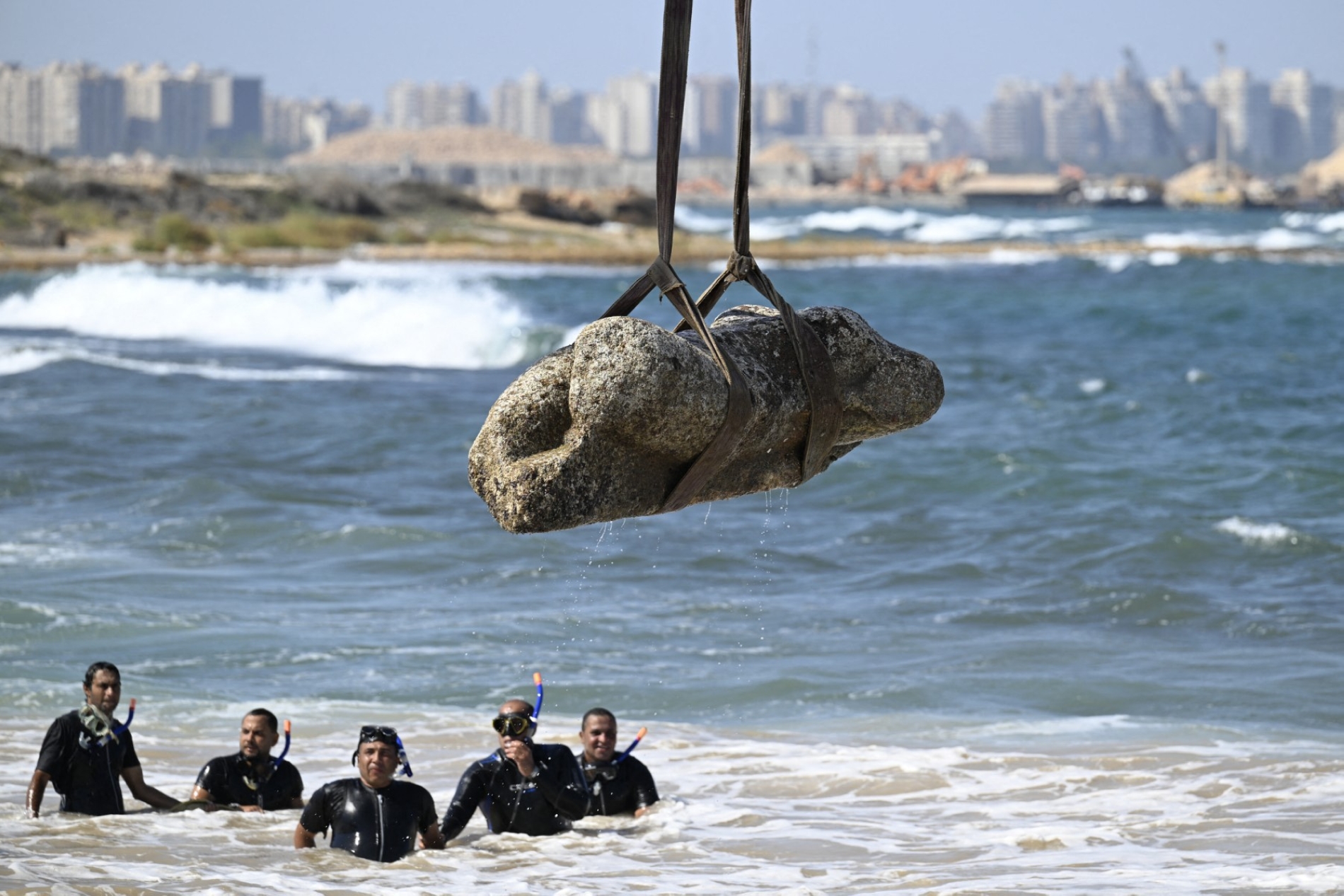
Greek presence in Egypt, however, preceded Alexander and his dream, particularly in Canopus and Heracleion, in what is now the Abu Qir district, and the island of Pharos itself is explicitly mentioned in the Homeric epic.
AFP
Divers monitor the recovery of an artefact from Abu Qir Bay in Alexandria.

Therefore, it is likely that Alexander had already decided to create the city, and that the story of divine inspiration was either something he invented—or a story later fashioned around him—to consolidate his image as a visionary hero.

Ancient historians often portrayed the choice of the city’s site as a sudden flash of inspiration, drawing on Alexander’s charisma, which made even the most fanciful stories seem plausible. Yet the essential fact remains: Alexandria came from Alexander's mind and took tangible form. From the moment of its birth, its fate was bound to myth.

The birth of a city

Thus, in 331 BC, Alexandria came into being. As Alexander made his way to the Siwa Oasis, his attention was drawn to the site of Rhacotis, overlooking the Mediterranean, then a settlement inhabited by Egyptian fishermen. He decided to build a city there that would immortalise his name, directing that it be linked to Pharos—the island that had visited him in his dream. He ordered work to begin before continuing his journey to Siwa, where the priests proclaimed him son of Amun and Pharaoh of Egypt. Fate, however, didn't allow him to return and see his dream of a city take shape. He left it in the hands of his deputy Cleomenes, who oversaw its planning with the help of the architect Dinocrates.

Guided by Alexander’s vision, Dinocrates began planning the city on a rectangular grid, following the Hippodamian model, with a design resembling a chessboard. A main longitudinal avenue intersected with a transverse one, and from these two great axes the city’s streets branched out.

The city was divided into five main districts, named after the first five letters of the Greek alphabet: Alpha, Beta, Gamma, Delta and Epsilon. Its street plan was designed to facilitate easy movement. Two broad avenues stood out, stretching across the city and lined with marble columns on both sides. One ran from north to south, while the other cut through the city from east to west. This was the Canopic Way, linking the Gate of the Sun at the far eastern edge with the Gate of the Moon at the western end. These streets would reach their highest degree of order and refinement in the Roman period.

It is said that the lime used to mark the city’s outlines ran out while the architect was drawing the plan before Cleomenes, so he used flour instead to trace the streets. As he worked, flocks of birds descended to feed on the flour. This, too, became one of the legends attached to Alexandria’s birth, and was later considered as a good omen: the city would become a destination for seekers of fortune and a refuge for the peoples of the ancient world.
 Amir MAKAR / AFP
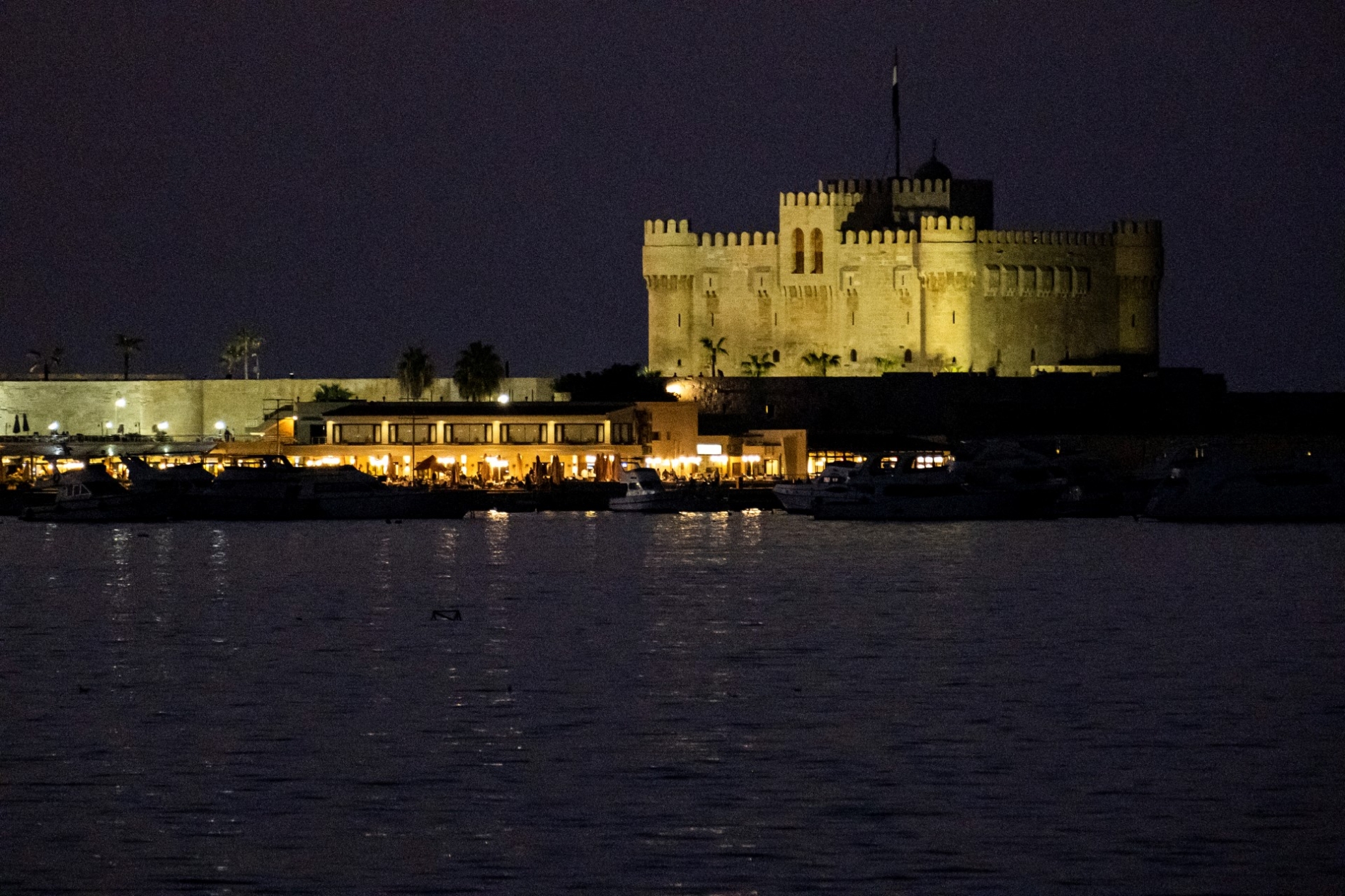
Qaitbay Citadel in Alexandria, built on the site of the ancient Lighthouse of Alexandria, illuminated at night, 2023.

Marvellous architecture

Ancient Alexandria possessed the attributes of the Greek city in their fullest form. It was a metropolis crowned by a lighthouse—a marvel of engineering and technology of its age—and it housed the world's first public state library. Its architectural fabric had elements of Greek urban space: an acropolis, public squares, theatres, courts of justice, sports facilities, arsenals and temples. It also had an intricate network for supplying fresh water through channels drawn from the Nile, running beneath its main streets and reaching its homes. The same water fed the fountains that lent the palace gardens refreshment.

To the city's east, the promontory of Cape Lochias stood out, embracing the royal palaces. Another promontory followed, later crowned, towards the end of the Ptolemaic era, by the Timonium Palace of the Roman commander Mark Antony. The city’s most vital link, however, was the great Heptastadion causeway, which joined the heart of Alexandria to the island of Pharos.

A radiant whiteness dominated the city and suffused its spaces. The façades of its buildings were clad in polished marble, giving them an air of elegance and grace. When evening fell, the broad Canopic Way drew its light from oil lamps arranged along both sides, allowing the pulse of life to continue after sunset. While public buildings gleamed with marble façades, private houses retained the colour of their red brick, reducing the danger of fires that haunted the great cities of the ancient world.

By the second century BC, Alexandria had become a global metropolis, where many tongues were spoken. Its majestic lighthouse, built by Sostratus, was the first sight to greet those arriving in the city, dazzling them with its unique engineering and securing its place among the wonders of the world. It became an enduring symbol in humankind's memory, forever enshrining Alexandria's greatness.
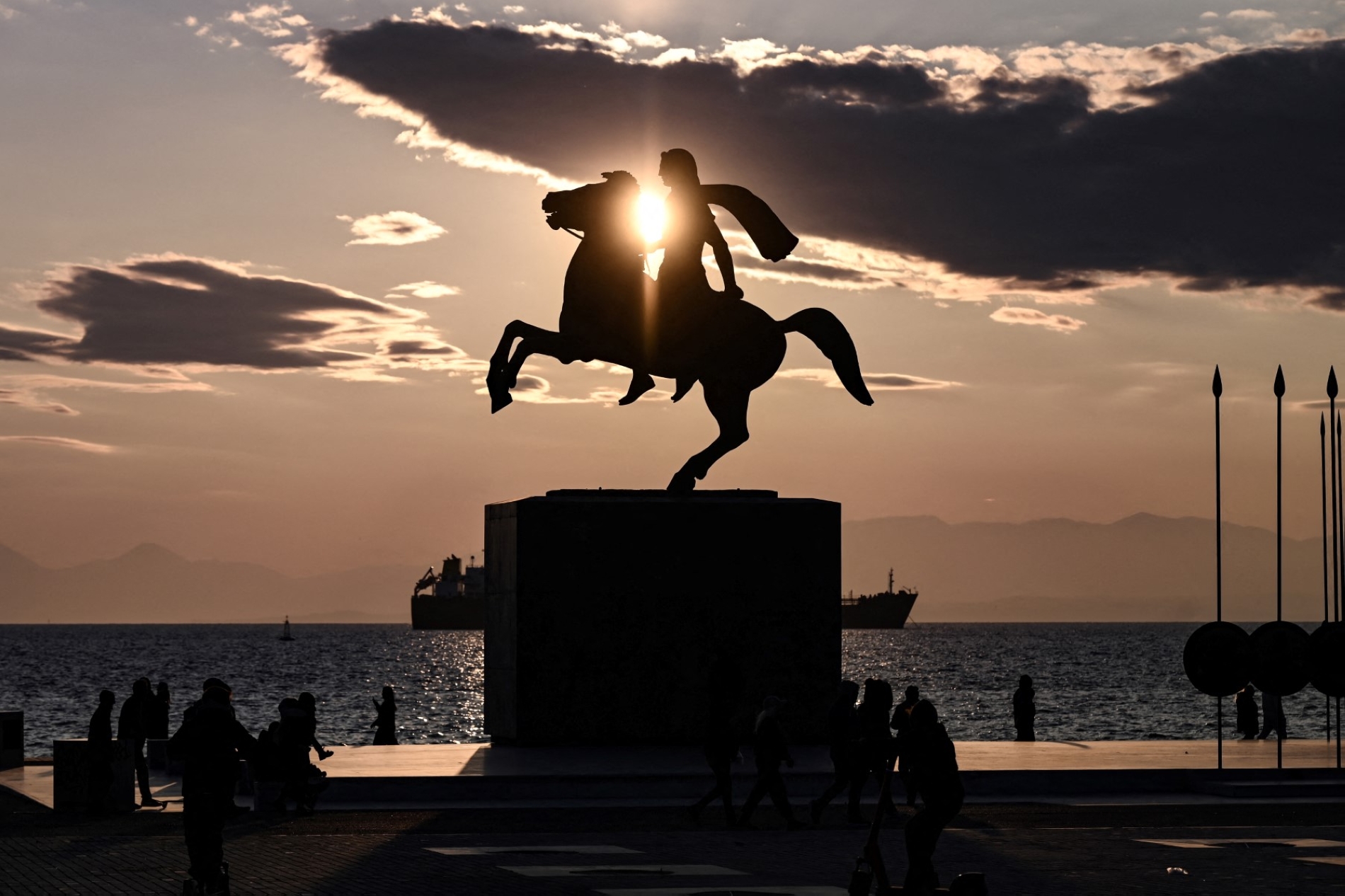
Sakis Mitrolidis / AFP
Passersby alongside a statue of Alexander the Great on the waterfront of Thessaloniki, Greece, 2024.

The Macedonians and Greeks remained at the forefront of Alexandrian life under the Ptolemaic dynasty. Egyptians who began settling in the old quarter of Rhakotis weren't afforded the same rights of Alexandrians citizens. However, as they assimilated into Hellenistic culture and mastered its language, they were able to socially advance.

Largest ancient Jewish community

Within this city, the largest Jewish community of the ancient world also took shape, enjoying the patronage of the Ptolemies, who granted it a form of self-government known as the ethnarchy to administer its affairs and laws, alongside a Beth Din to adjudicate disputes. The Jews of Alexandria played a central role in shaping Hellenistic Jewish thought, and this wider world produced or influenced major Jewish thinkers, above all Philo of Alexandria. Its most enduring achievement was the Septuagint translation of the Torah.

This coexistence, however, began to wane in the Roman era as local hostility intensified. It erupted in the violence of 38 AD and 40 AD, after the Jews refused to place a statue of the emperor in their temple, and reached a tragic peak in 66 AD during the Jewish-Roman War, when unrest is said to have led to the killing of tens of thousands of Jews in the city’s streets. The violence unleashed a wide wave of migration towards Rome and other Mediterranean cities, and the community’s presence gradually dwindled, especially after the end of the Diaspora Revolt in 117 AD.

As the Ptolemies weakened, the Roman Empire set its sights on the city. After the Battle of Actium, it fell under Roman imperial rule and became a vital commercial centre supplying the capital with grain. Although emperors such as Domitian and Hadrian showed concern for its scientific legacy, the third century AD brought sharp decline. Aurelian’s campaigns against Zenobia’s forces, followed by Diocletian’s siege of the city, contributed to the destruction or disappearance of what remained of the Mouseion and the library. Under the weight of political and military turmoil, the features of Alexandria's unique scholarly reputation gradually faded.
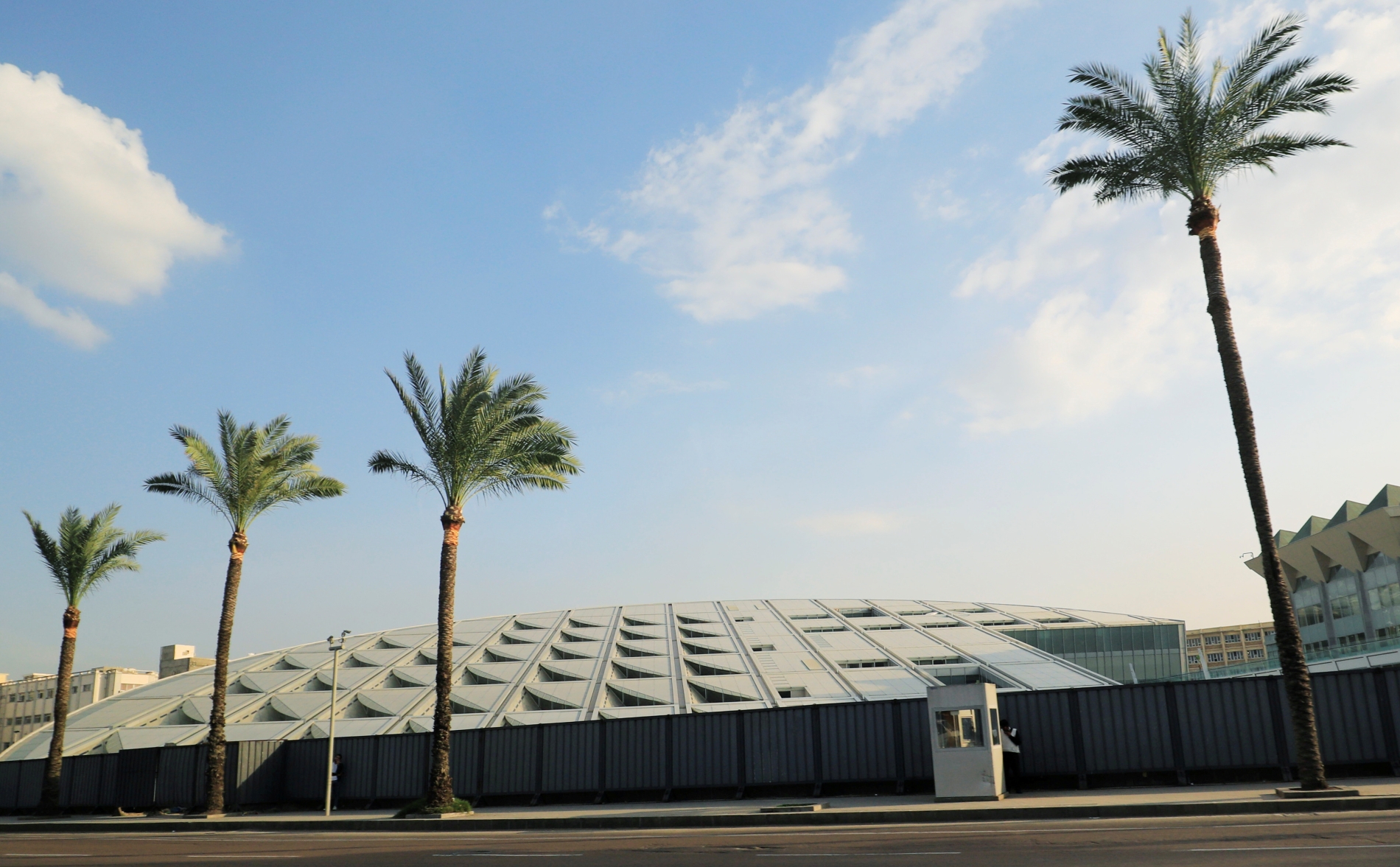
REUTERS/Amr Abdallah Dalsh
A general view of the Library of Alexandria.

Deepening decline

The city’s decline deepened with the rise of Constantinople and the intensification of religious conflict, which led to the destruction of much of the Serapeum and the killing of the philosopher Hypatia. That episode came to symbolise the triumph of zealotry over the Alexandrian enlightenment that had once flourished there.

One of the most devastating blows then came from nature: the earthquake of 365 AD, followed by a tsunami that inundated the royal quarter and damaged agricultural lands. As Roman maritime supremacy waned, Alexandria’s trade fizzled, and its global importance waned, sending the city on a new journey with a completely new face.

Islamic conquest

The Islamic conquest of Egypt in 641 AD brought to a close its first face—a Hellenistic one that had endured for nearly a thousand years. When the Arabs entered the city, the remnants of ancient Alexandria left a profound impression on them. Amr ibn al-As wrote to Caliph Umar ibn al-Khattab describing its grandeur: "God has granted us the conquest of a city said to contain 4,000 palaces and 4,000 baths..." Although these figures are a clear exaggeration, they convey the majesty of what the conquerors saw.
This emotional distance between Alexandria and the rest of Egypt was born of the feeling that the city's rulers and inhabitants were strangers

Al-Suyuti described Alexandria as "a city built upon a city," in reference to the remarkable underground cisterns they found there. The surviving places of leisure amazed them as well: the city's great entertainment venue and its spacious race course, whose ingenious design, according to Al-Maqrizi, allowed thousands to see and hear with complete clarity.

Historians also recorded their astonishment at the city's marble buildings and marble-paved roads, exuding a whiteness that was said to glow even at night under moonlight. They were equally struck by the city's intersecting plan, organised around a broad square with gardens at its centre and surrounding palaces. 

Defensive frontier

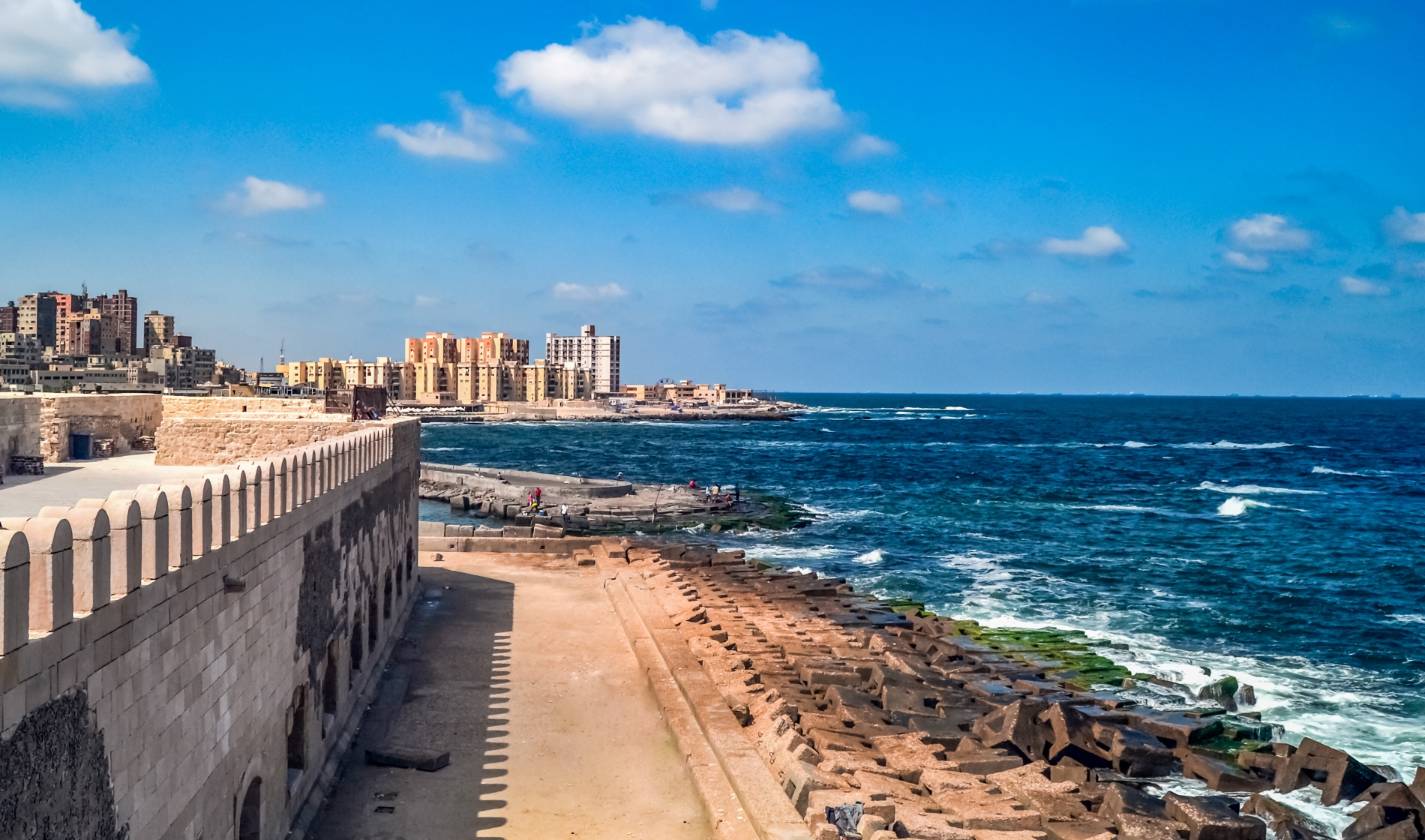
After the Islamic conquest, however, Alexandria's role changed profoundly. The centre of political and administrative gravity moved to the new capital, Fustat, and the Alexandrian metropolis became, in Umayyad and Abbasid eyes, a defensive frontier and a garrison city. This military function was reflected in its name, Al-Thaghr Al-Mahrous, the Guarded Frontier, because of the many watch posts, citadels and forts erected along its coast, their high walls struck by the waves of the sea.

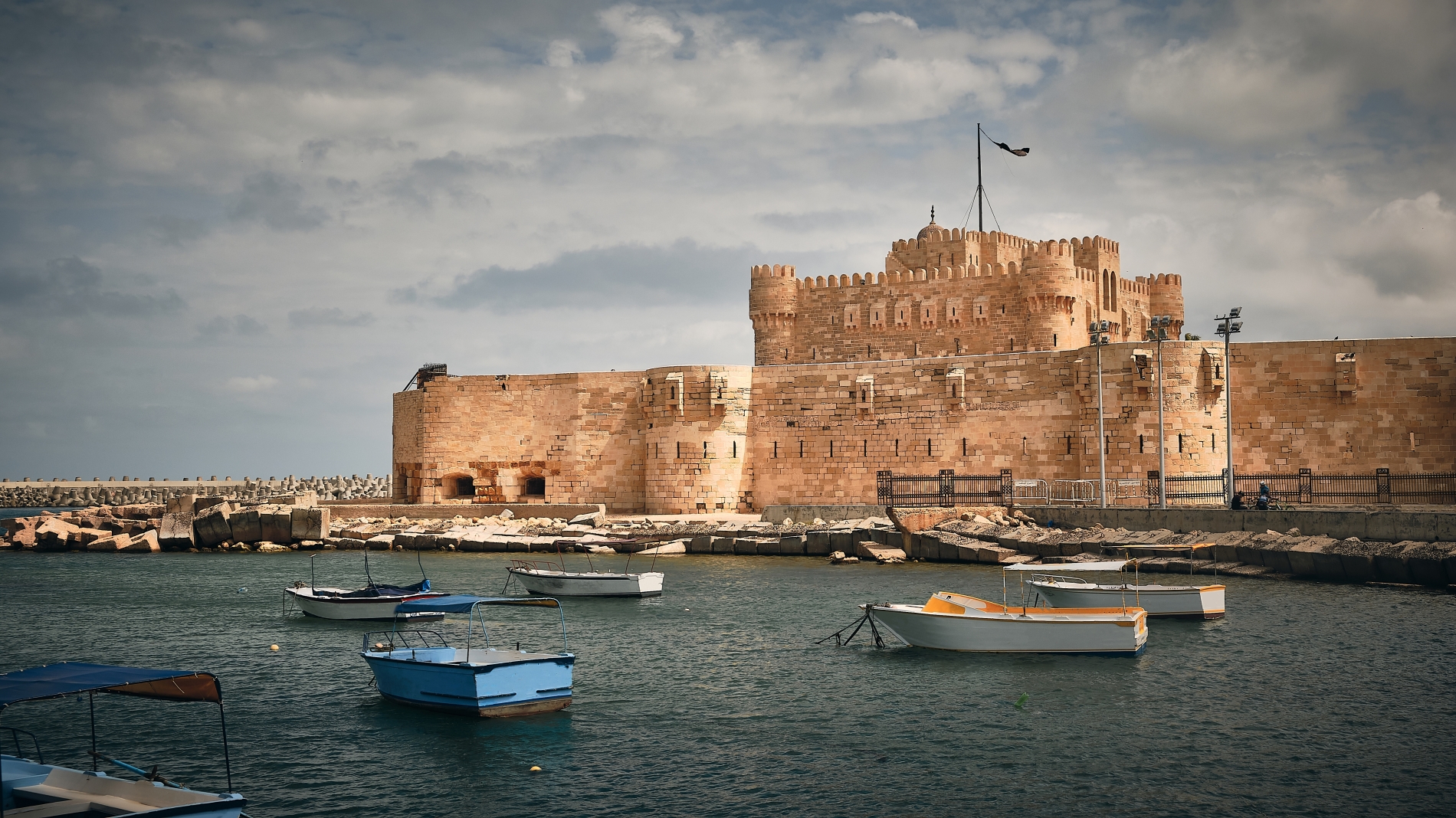
Shutterstock
Boats in a harbor in front of Qaitbay fort. Citadel of Qaitbay, Alexandria, Egypt

As its role as a centre of learning declined, the city's boundaries contracted and its population fell to the point that its walls were rebuilt to enclose a smaller area. This contraction is evident in the emergence of a new suburb on the causeway, formed by silt accumulation around the Heptastadion, now known as Manshiya. It can also be seen in the episode in which Andalusian rebels exploited the turmoil within the Abbasid ruling house and seized the city, only to be expelled by the governor Abdullah ibn Tahir in AH 212. They later established their emirate on the island of Crete.

In the Fatimid, Ayyubid and Mamluk periods, Alexandria witnessed a striking urban and scholarly revival. It was adorned with lavish palaces and schools that became a refuge for seekers of knowledge. Its mosques were renovated, and Al-Zahir Baybars had the old Alexandrian canal re-excavated, allowing orchards to flourish along its banks. The splendour of this era appeared in the beauty of its architecture and the vitality of its commercial life, as well as in the courage of its people in repelling the Sicilian attack of 1147 AD, and in their skill, during the Mamluk period, in the military arts and majestic celebrations in which fireworks were launched, embodying the greatness of the Islamic state in one of its most brilliant forms.

With the beginning of the 16th century, Alexandria's star began to wane following the discovery of the Cape of Good Hope (in modern-day South Africa) route and the spread of epidemics. Its population contracted yet again, even more than the first time, and its orchards withered.

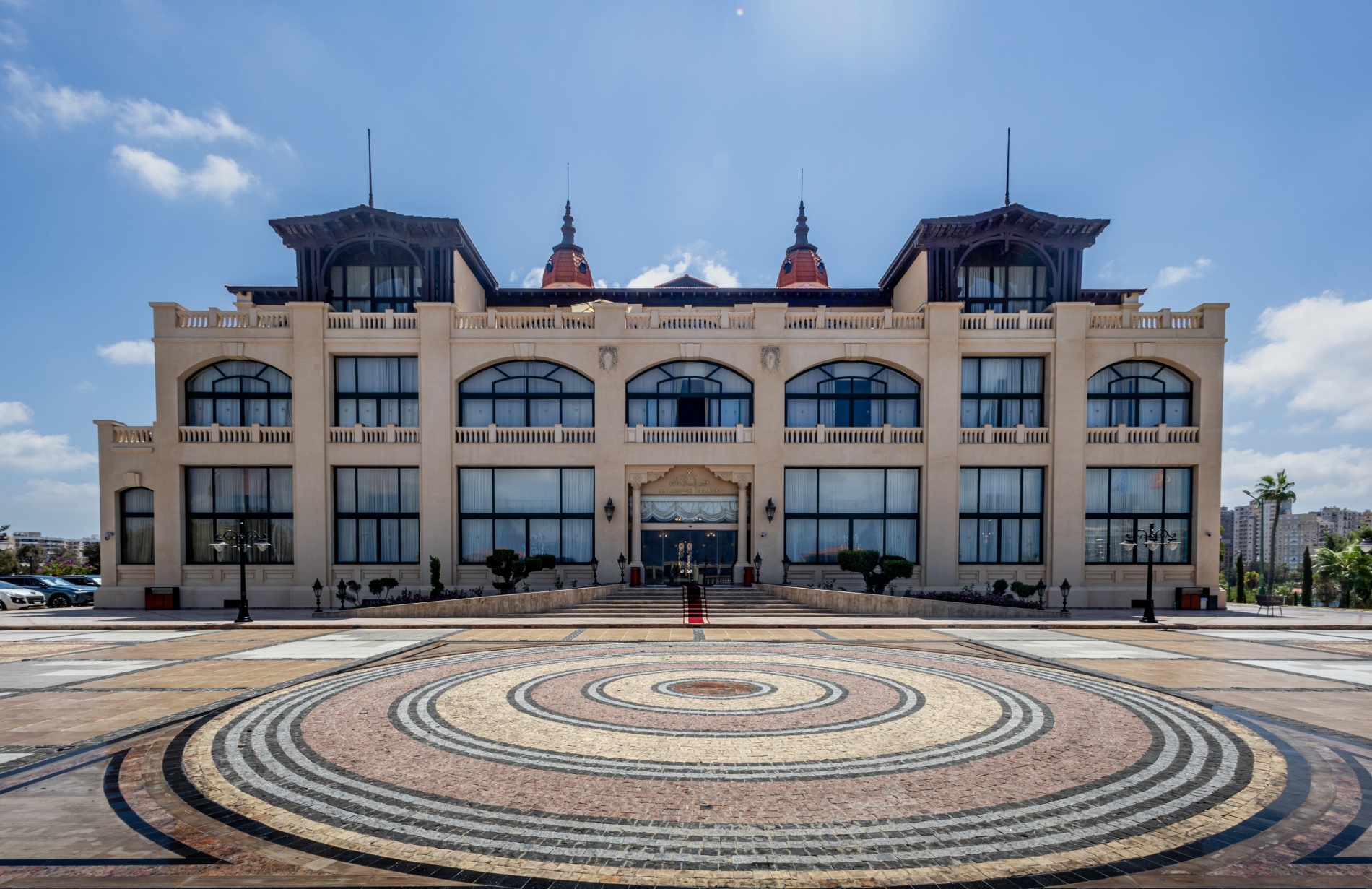
Shutterstock
Historic Salamlek Royal Palace, an exquisite blend of Turkish and Florentine architecture, Montazah, Alexandria, Egypt, on 30 August 2025.

Ottoman hues

Outside the city's old walls, a new, smaller Ottoman city began to take shape. Migrants built houses from the remains of the ancient city, giving rise to a new city with narrow streets, enclosing within its walls the memories of a thousand years of civilisation and transformation.

In the 19th century, Alexandria recovered something of its former vitality through the vision of Muhammad Ali Pasha, who breathed life back into the city by re-excavating the old Alexandrian canal, now known as the Mahmoudiyah Canal, and by building a modern arsenal, a harbour, and stately palaces such as Ras El Tin. His bold decision to open the western harbour to foreign vessels, after it had long been restricted to Muslim ships as a defensive measure against possible Crusader attacks, marked a historic turning point.

The distant traces of foreign citizenship are what make Alexandrians feel that their city is different from the rest of Egypt's cities

Once again, Alexandria became a global trade hub. Waves of migrants arrived: Europeans, Rum Greeks, Armenians, Levantines and Maghrebis. They built districts in a European style, bestowing an air of elegance and architectural distinction on the city.

Within this openness, a distinctive cosmopolitan character took shape. Communities established their own schools, hospitals and clubs, and organised their affairs under the supervision of communal leaders who protected their interests. Under the Ottoman Grand Vizier Khedive Ismail, its population rose into the hundreds of thousands, and Alexandria became Egypt's gateway to the world—a vibrant cultural centre that combined modern planning with the aura of its ancient renown.

REUTERS/Mohamed Abd El Ghany
A view of buildings on the Alexandria Corniche.

'Alexandria near Egypt'

In classical literature, Alexandria was known as Alexandria ad Aegyptum, meaning "Alexandria near Egypt". The name has its own roots and history. It was first used to distinguish Egyptian Alexandria from the other Alexandrias of the ancient world. The original Greek form was Alexandreia he kat' Aigypton, meaning "Alexandria in Egypt", though it was sometimes rendered as "Alexandria near Egypt". Perhaps that translation seemed plausible at the time, given that the newly founded city stood on Egypt's northern edge. In its beginnings, it was also a city founded and inhabited by foreigners, and thus possessed a spirit somewhat distinct from the Egyptian fabric around it.

This emotional distance between the city and the rest of Egypt deepened with the repeated revolts in Upper Egypt and the attempts by Egyptians to install a ruler of their own, born of the feeling that Alexandria's rulers and inhabitants were strangers. This encouraged the Greeks to favour the expression Alexandreia he pros Aigypton, which became common in Latin as Alexandria ad Aegyptum.

Although the name was meant to distinguish the city from its many namesakes across the ancient world, it later stirred debate among classicists, especially after Alexandria returned to life under Muhammad Ali Pasha and his dynasty, and after foreigners began migrating to the city. Some saw in the phrase an oblique expression that had crossed the centuries, hinting at a real spatial distance and an emotional rupture between Alexandria and the mother country, Egypt. Their studies began to present the city as though it were geographically adjacent to Egypt, yet spiritually and culturally separate from it.

This notion appeared in the writings of foreigners who lived in Alexandria during its golden age, most famously Lawrence Durrell. It was later answered by Mohamed Gebril's Alexandrian, which sought to portray the Egyptian Alexandria of the Bahri district through protagonists who were Alexandrians and native sons of the city.

Shutterstock
A scenic view of the Bahri coast in Alexandria, Egypt.

Distinct identity

This old idea, travelling across the ages, remains present in the consciousness of Alexandrians today. The late Nour El-Sherif expressed it with simple brilliance in one of his films, when he was asked whether he was Egyptian and spontaneously replied that he was Alexandrian. Perhaps the distant traces of foreign rule are what make Alexandrians feel that their city is different from the rest of Egypt's cities.

They also deepen their nostalgia for Alexandria in its flourishing age, when its harbours welcomed ships carrying Greeks, Armenians, Italians, English, French, Maghrebis, and Levantines, and when the city seemed to belong to both Egypt and the wider Mediterranean. They also sharpen the lament for its condition today, so far removed from what it once was.

Celebrations marking the anniversary of Alexandria's founding were recently held in April with processional and musical parades moving through the city's streets, and with the participation of the Ministry of Culture, the Bibliotheca Alexandrina, Alexandria Governorate, the Embassy of Greece, and associations devoted to archaeology and Hellenistic studies.

Some felt it wasn't appropriate to celebrate the city at a time when ongoing development is changing its face entirely, while others were happy to mark the endurance of the global metropolis, once a home to the Hellenic, Roman, Arab and Ottoman peoples, and today a mix of Egyptian-Arabs, with foreign traces of its past empires.

font change