Alexandria bids farewell to its historic tram

More than 160 years after the first tram was inaugurated in the Egyptian city, the pace of life has forced change, replacing the much-loved old carriages holding memories of a bygone age

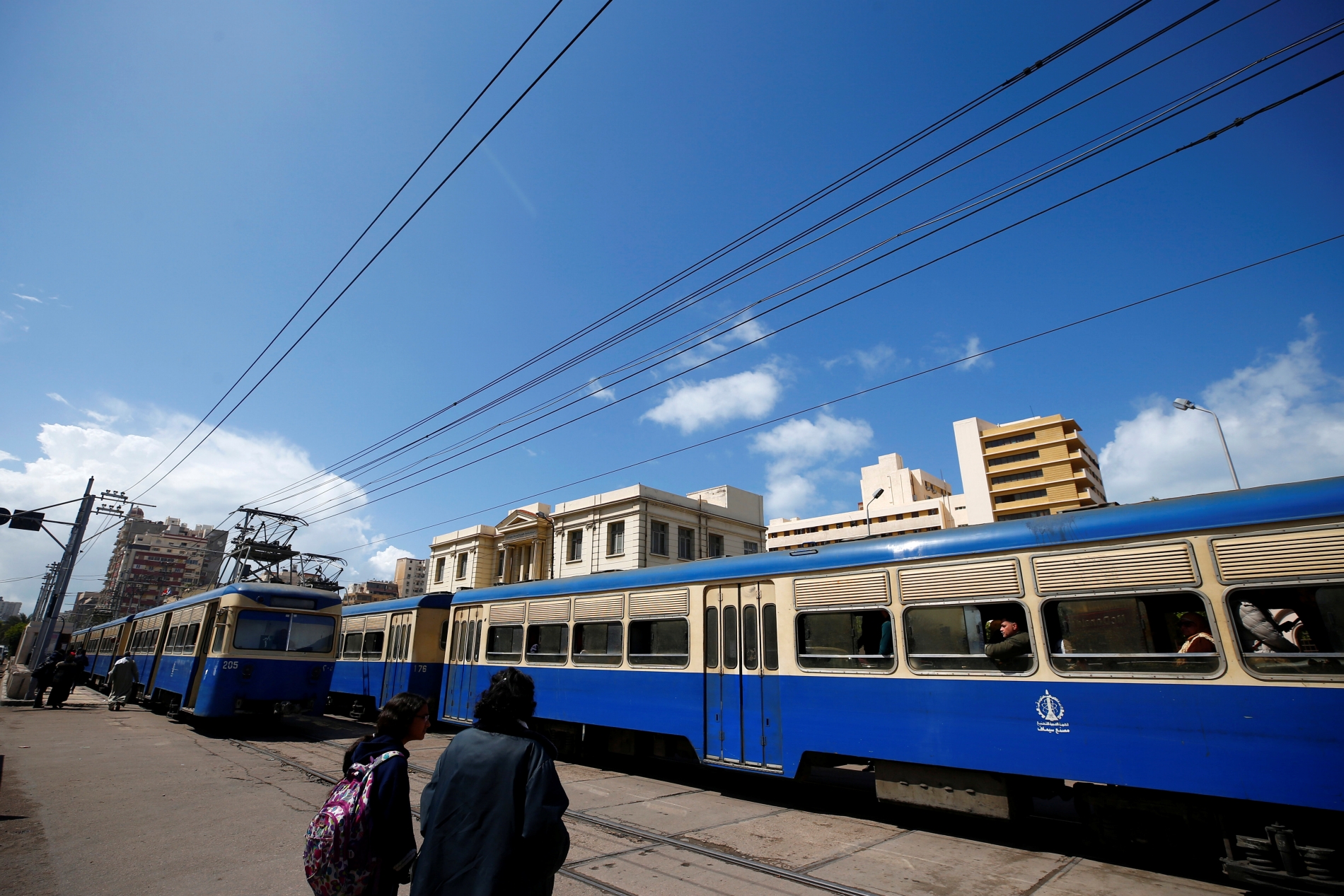
People ride in an old electric tram in Alexandria, Egypt, on 3 August 2017.
REUTERS/Amr Abdallah Dalsh
People ride in an old electric tram in Alexandria, Egypt, on 3 August 2017.

Alexandria bids farewell to its historic tram

For its people, Alexandria is not merely a city; it is a state of being in which history intersects with the present, creating something akin to an unfinished painting, still awaiting an artist’s final touch. The residents of this ancient city may feel caught between nostalgia and a longing for rejuvenation. Despite this, some Alexandrian scenes feel uniquely complete, and those who live here are happy to keep them so.

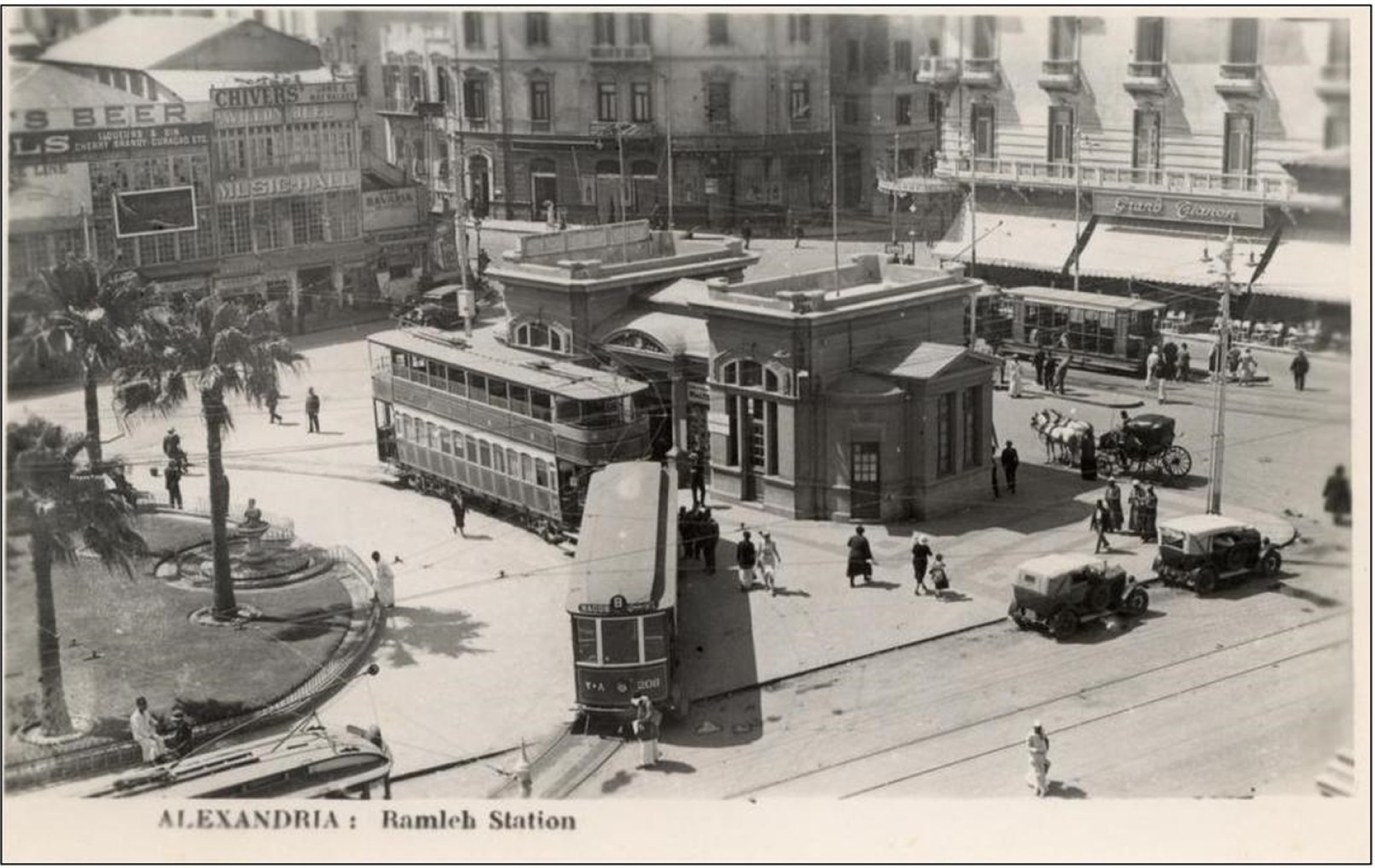
Trams stand at the start of the line at Raml Station in front of the small ‘Venice’ building (as it is commonly known) or the Miramar Building, designed by Italian-Egyptian architect Giacomo Alessandro Luria in 1926. To its right stands the Haikal Building, designed by the architect Riccardo Smith in 1929. They are among the oldest buildings in Raml district and are unmistakably Alexandrian, especially with the old red tram carriage nearby, recently restored and returned to service after decades of absence, looking like a scene from an old film.

The Alexandria tram has long been more than just a means of transport. It is a city guide, one of its most distinctive landmarks, and a silent witness. In 1800, Alexandria’s eastern coast, known as al-Raml (the Sand), was little more than an empty stretch of desert. Over time, wealthy Alexandrian families began to revive the area by building summer retreats there, until it became a beautiful, tranquil city suburb.
Supplied

Permission to build

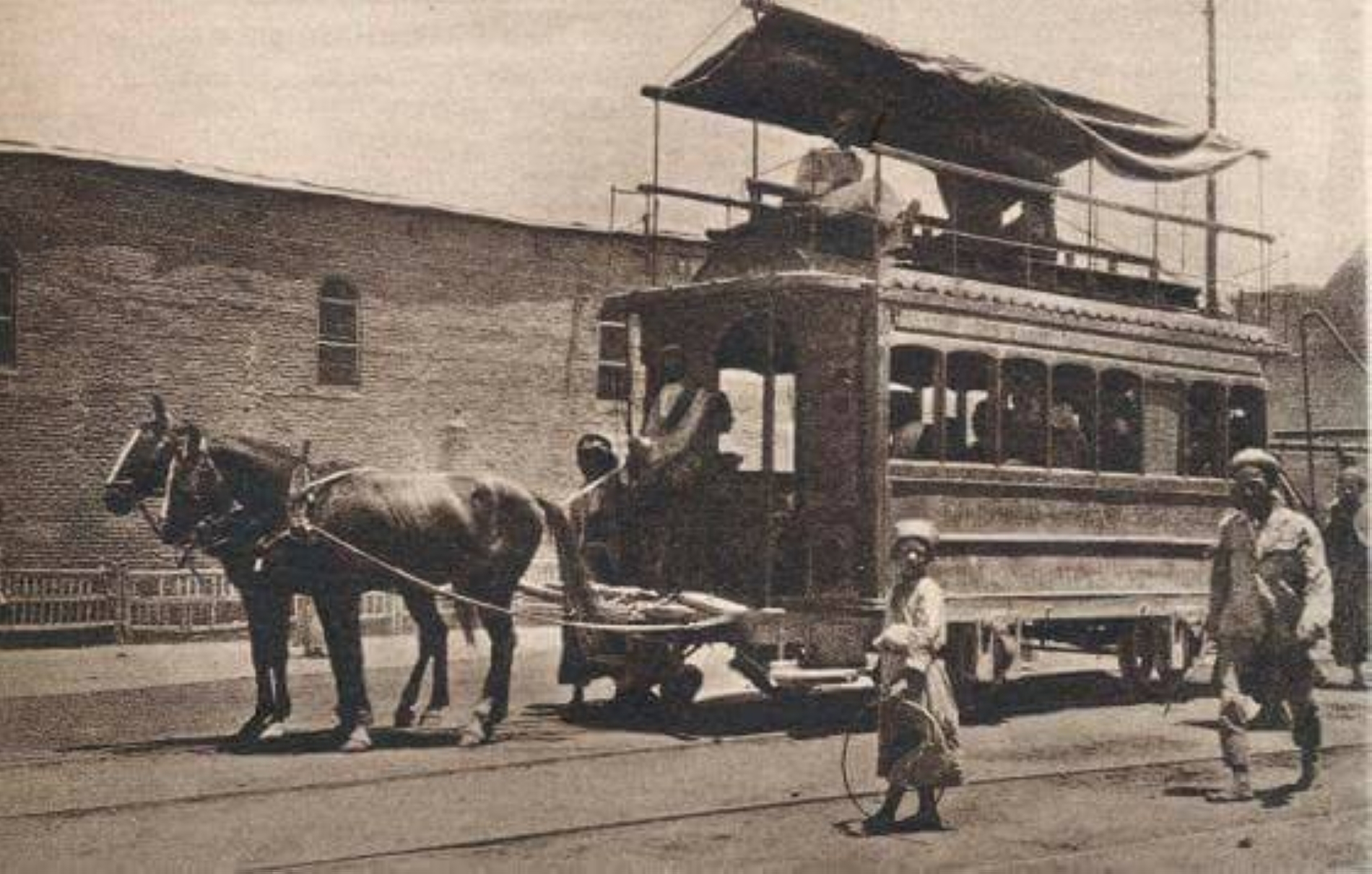
In August 1860, the Egyptian government granted the British engineer Sir Edward St John Firman a concession to build a railway connecting Alexandria to al-Raml. In October 1860, it granted him permission to build a tram line, although Cairo retained the right to withdraw it at any time. The city’s tram became the first means of mass public transport not just in Alexandria but in Africa. After Liverpool (in England) and Hong Kong, it was only the third tram network to employ double-decker tram carriages.

The creation of the Raml Tram coincided with the development of Raml Station Square, designed by the Italian architect Antonio Lasciac in 1887. The station was planned as a central point, reflecting both its functional importance and its aesthetics. The railway company connecting Alexandria and al-Raml was known as Strada Ferrata Tra Alessandria e Ramleh and was founded on 16 April 1862 as a joint-stock company with £12,000, divided into 1,200 shares priced at £10 each. The Egyptian government owned most of the shares. Firman relinquished the concession in return for 30% of net profits over the first three years.

In September 1862, the first iron rails were laid in the city near Cleopatra’s Obelisk. On 8 January 1863, the first tram was inaugurated. Four carriages were drawn by four horses, one first-class, two second-class, and one third-class, transporting passengers between Alexandria Station and Customs Station. Despite their novelty, the horses were soon replaced by a steam locomotive in August 1863 to expedite transport. In October 1865, the company signed an agreement with the postal authority to carry letters to post offices built alongside the new stations.
Supplied

Expanding the lines

From March 1883, the line was managed by the Alexandria and Ramleh Railway Company Ltd, founded with £110,000. It included representatives of the city’s leading families, including Greeks, Armenians, and other foreign residents. It undertook the completion of the rail extension from Sporting to Mustafa Pasha. In 1897, the company said it would build a double track, replacing the single line. This produced the two lines that exist to this day: the Bakos Line and the Victory Line.

The company continued extending the tram line eastward. By 1901, it had expanded to 12 additional stations, in addition to the main station. These stops became a recurring subject on postcards, preserving fragments of a past, a visualisation of days and scenes that no longer exist on the city’s streets.

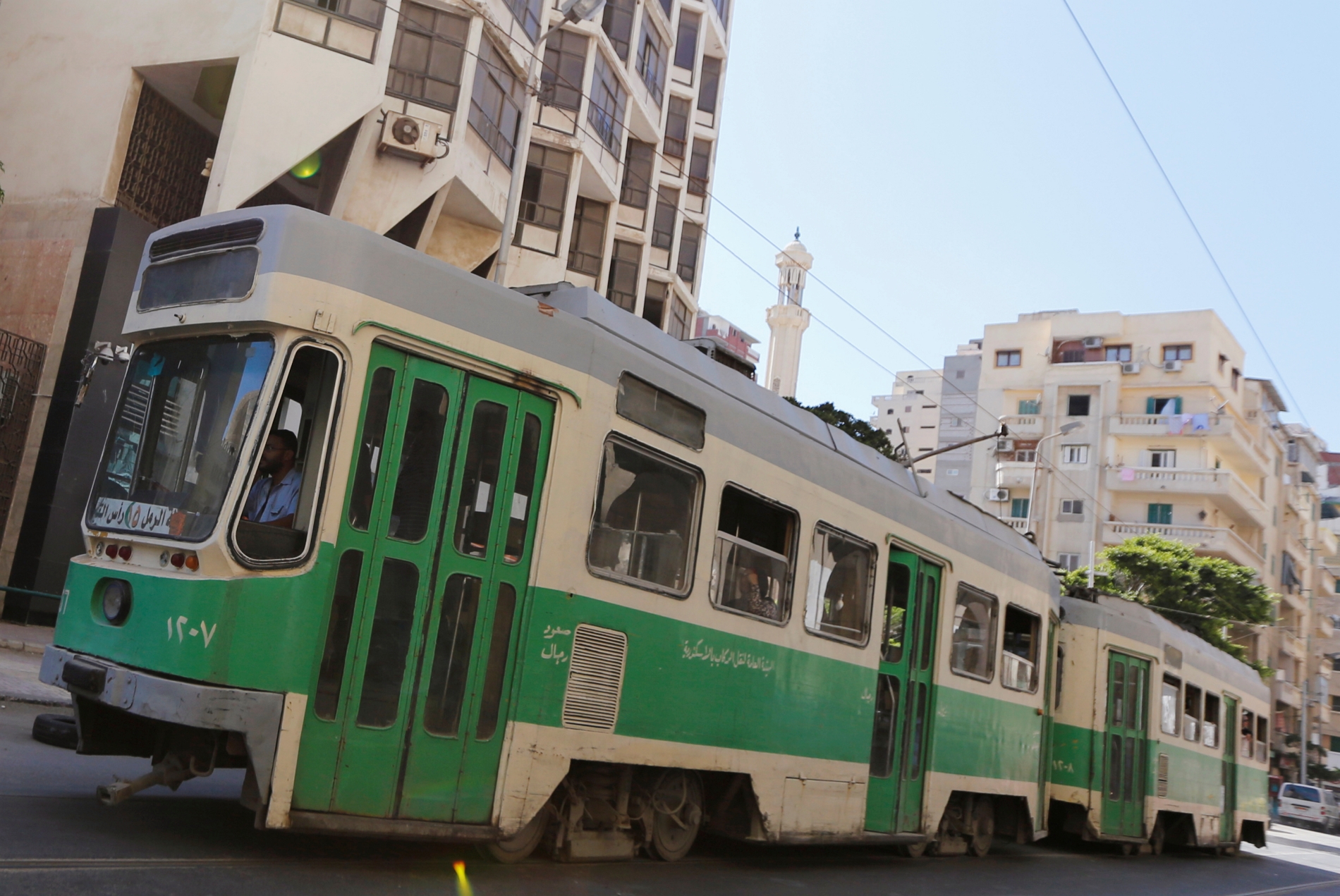
Alexandria's tram has long been more than a means of transport. It is a city guide, a distinctive landmark, and a silent witness.

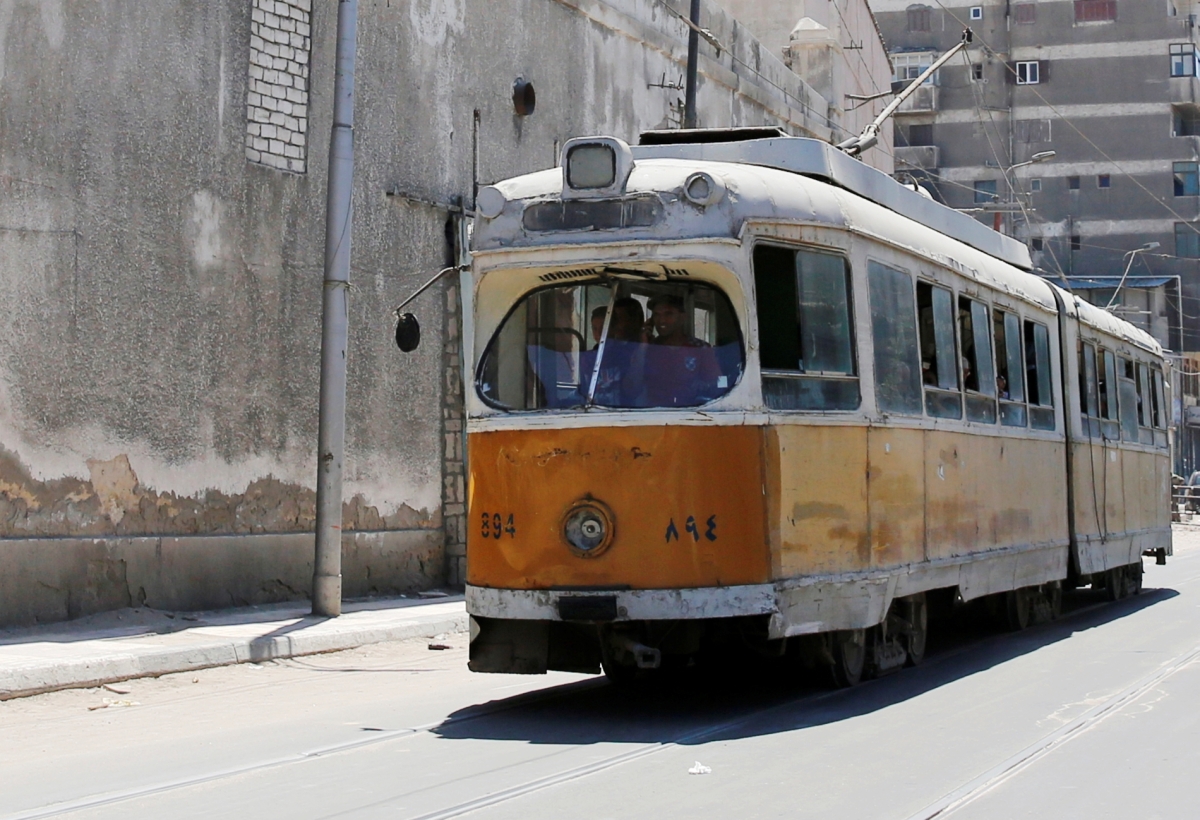
Alongside the Raml line serving Alexandria's eastern suburbs, the need arose for one that serves the heart of the old city in its western portion, and later, for connecting it to the suburban Raml tram network. It would link the city's older core to its emerging districts. Thus began the story of the city tram—the 'Yellow Tram,' as Alexandrians affectionately call it.

In 1897, the Belgian tramway company was commissioned to operate it under the name Alexandria Tramway Company. It was an early adopter of electric trams. From 1896 to 1897, it laid the electrical wiring. In September 1897, during the reign of Khedive Abbas Helmy II, the first yellow trams were inaugurated. The main station was at Minet al-Bassal, in front of the historic Cotton Exchange building. From here, it branched into several main routes: one to Lesser Manshiyya Square (now St Catherine's Square), one to the al-Max area, a third departing from al-Meydan Street in Manshiyya Square, and a fourth splitting off to reach the Customs area (now Anfoushi and Ras al-Tin).

REUTERS/Amr Abdallah Dalsh
A boy looks through the window of an old electric tram in Alexandria, Egypt, on 16 March 2019.

The inauguration drew a dense crowd of Alexandrians along Manshiyya al-Sughra Street, where the new electric line was launched. A carriage decorated with flowers was prepared especially for Khedive Abbas Helmy II. Preceding him was the Turkish commander Ahmed Pasha Mukhtar (al-Ghazi), who at the time served as the Ottoman High Commissioner in Egypt, alongside senior Egyptian statesmen. After the inaugural journey to al-Max, the guests returned to the general Alexandria tram warehouse in Karmooz, where the Khedive hosted a luncheon.

New introductions

On 11 June 1912, a decision was issued to unify Alexandria's tram management, whereby the Alexandria Tramway Company (the Yellow Tram) relinquished the management of its lines to The Alexandria–Ramleh Railway Company Ltd, which then became responsible for transporting passengers across both yellow and blue networks until it was nationalised after the July 1952 Revolution.

In 1898, it was decided to replace the steam locomotives still serving the suburban Raml line with electric cars. The first electric car finally entered service on 31 December 1903, and the network was fully electrified by January 1904. Older post offices located between the stations were transferred into modern buildings, typically constructed adjacent to the tram stops.

Initially, electric cars were limited to the old city tram, transporting passengers between Raml Station Square and Ras al-Tin Palace. The suburban Raml tram extending to Mohammadiya Station (Victoria, or al-Nasr today) remained reserved for Khedive Abbas Helmy II's movements to that part of the city, and it was not opened to the public until 1909.

REUTERS/Amr Abdallah Dalsh
People ride in an old electric tram in Alexandria, Egypt, on 3 August 2017.

A curious story links Alexandria and Copenhagen, with the Yellow Tram at its centre. It began in 1959, when Copenhagen bought 100 yellow trams from Germany. They remained in service until 1972, when Copenhagen decided to shift to buses and shut down its tram network entirely. The Danish carriages were then sold and made their way to Alexandria, becoming an integral part of the city's coastal fabric by 1971 (in 2015, Copenhagen reclaimed two carriages for display at the city's tram museum).

The city's throwback

The trams in Alexandria remain a living, moving icon, still roaming the streets of the old city. The blue Raml tram became known for serving Alexandria's affluent neighbourhoods, including Rushdi, Zezenia, and Gianaclis. There is still a women's carriage, a men's carriage, and a mixed one. The blue line intersects the yellow line at Raml Station, the first departure point for eastbound and westbound services from 4am until 1am.

Even before the July 1952 Revolution, the tram reflected Alexandria's cosmopolitan fabric, woven from many threads. It may have had an Italian tram driver and a Greek or Maltese ticket collector (the komsari). In fact, most of those who worked on the tram were foreigners. It was not simply a way of traversing the city's streets. It is the city's spiritual artery, a companion on daily journeys, and a living inheritance, more akin to a moving theatre where passengers can watch the city's panorama.

Alendrians learned the tram ticket colours, which vary by line and season pass type, and some Alexandrians preferred these passes, especially students who relied on the tram to get to school. The bond extends to the tracks and stations, historical witnesses whose forms have changed over time. At Mustafa Kamel Station stands the Great Tram House, which shelters the blue Raml trams.

REUTERS/Amr Abdallah Dalsh
Commuters travel in an old electric tram in Alexandria, Egypt, on 16 March 2019.

The city tram, meanwhile, was housed at the tram workshop at the terminus in Karmooz, built in 1896 alongside the operation of the yellow city tram to serve as the network's home and maintenance centre. This historic site, once known as Alexandria Tram Wabur, is today a set of vital workshops that repair and manufacture spare parts for public transport vehicles, including casting, turning, and forging sections, where traditional metal casting is still practised by hand.

Sound and speed

Along the tram routes, architectural markers stand as reminders of Alexandria's history: the venerable Victoria College, St Mark's School, the Greek Consulate and the Greek School. Residents have often grown accustomed to the sound of the tram's distinctive whistle as it passes by, carving its way and carrying passengers with an unhurried grace. Yet perhaps the lack of speed became its challenge.

It is famous for moving slowly due to congestion, traffic lights, and cars that often crowd around it. This meant the tram repeatedly missed scheduled departure and arrival times. It raised questions (that have only intensified) about the tram's merit today. Some argue for upgrading it, others call for its replacement (with a metro or monorail), while yet others say it should be removed altogether.

Today, in a world that needs to get to places fast, Alexandria is saying farewell to the tram known for its old carriages. Redevelopment is about to begin, but efforts are underway to preserve the tram as a landmark and symbol of the old city, and as a bridge between two eras and two worlds. It preserves the memory of conversations, laughter, drifting thoughts while looking out of the windows, and the dreams of successive generations, engraved into its metal frame. It holds symbolic value and a quiet, hidden bond that brings the city's people together, regardless of class or distance.

font change