Call to arms: carmakers pivot to weapons manufacturing

After the US-Iran war drastically depleted American munitions, there is a scramble to restock, prompting several companies in both the US and Europe to change tack to meet the growing demand

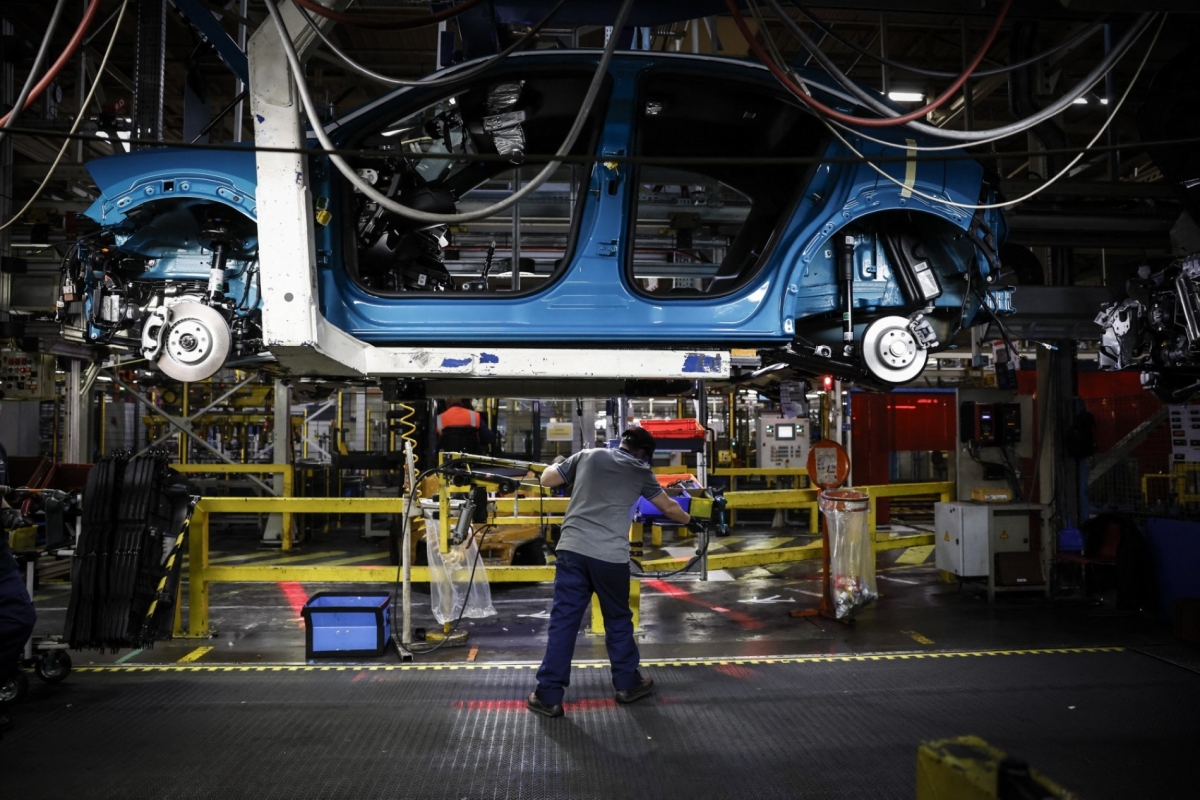
A worker on a production line at a car factory in Poissy, west of Paris, on 15 April 2026.
AFP
A worker on a production line at a car factory in Poissy, west of Paris, on 15 April 2026.

Call to arms: carmakers pivot to weapons manufacturing

“And so, our country is going to be what our people have proclaimed it must be: the arsenal of democracy.” So said President Franklin D. Roosevelt in March 1941, when the United States ramped up military production to supply the Allies during World War II. America’s motor industry was among those to pivot.

General Motors made M1 Carbines and M18 Hellcat tank destroyers, Ford made B-24 Liberator bombers, while Cadillac made M5 and M24 Chaffee light tanks. Fast forward 85 years, and history seems to be repeating itself; The Wall Street Journal reported that army bigwigs had recently spoken to the top executives of General Motors and Ford about using some of their industrial capacity for military manufacturing.

Last month, the Centre for Strategic and International Studies estimated that the United States had spent more than 40% of its munitions stocks during the 39 days of the war with Iran that began on 28 February, with a ceasefire declared in April. Many of these munitions can take 40 or more weeks to be resupplied. New orders are unlikely to arrive in 2026. As a result, US President Donald Trump is seeking to expand the Pentagon’s manufacturing capacity.

Increased spending

The United States is not alone in its need for weapons; the Europeans also want to work with their car manufacturers to increase military capacity. Their starting point is much less favourable, however. World Bank data suggests that European Union countries’ military spending dropped from 3.9% of gross domestic product (GDP) in the 1960s to 1.3% in 2018, before Trump’s return to the White House, which prompted the EU to ramp up its military spending.

The ReArm Europe Plan, or Readiness 2030, targets $940bn in additional defence spending and proposes that EU states use an escape clause in the Stability and Growth Pact to achieve this, unlocking an additional 1.5% of GDP in financing. Finding the money is one thing, but finding the manufacturing capacity is another. The logical option is to involve industries that can reorient towards defence.

This could be good news for the European automotive industry, which is increasingly struggling to compete with Chinese electric car manufacturers. The European Automobile Manufacturers’ Association (ACEA) reported that exports of EU-made cars fell by 43% in 2025, while Chinese imports grew (more than 1 million Chinese-made cars were imported to Europe last year). Meanwhile, White House tariffs in 2025 led to a 21.4% decline in European car exports to the US.
Reuters
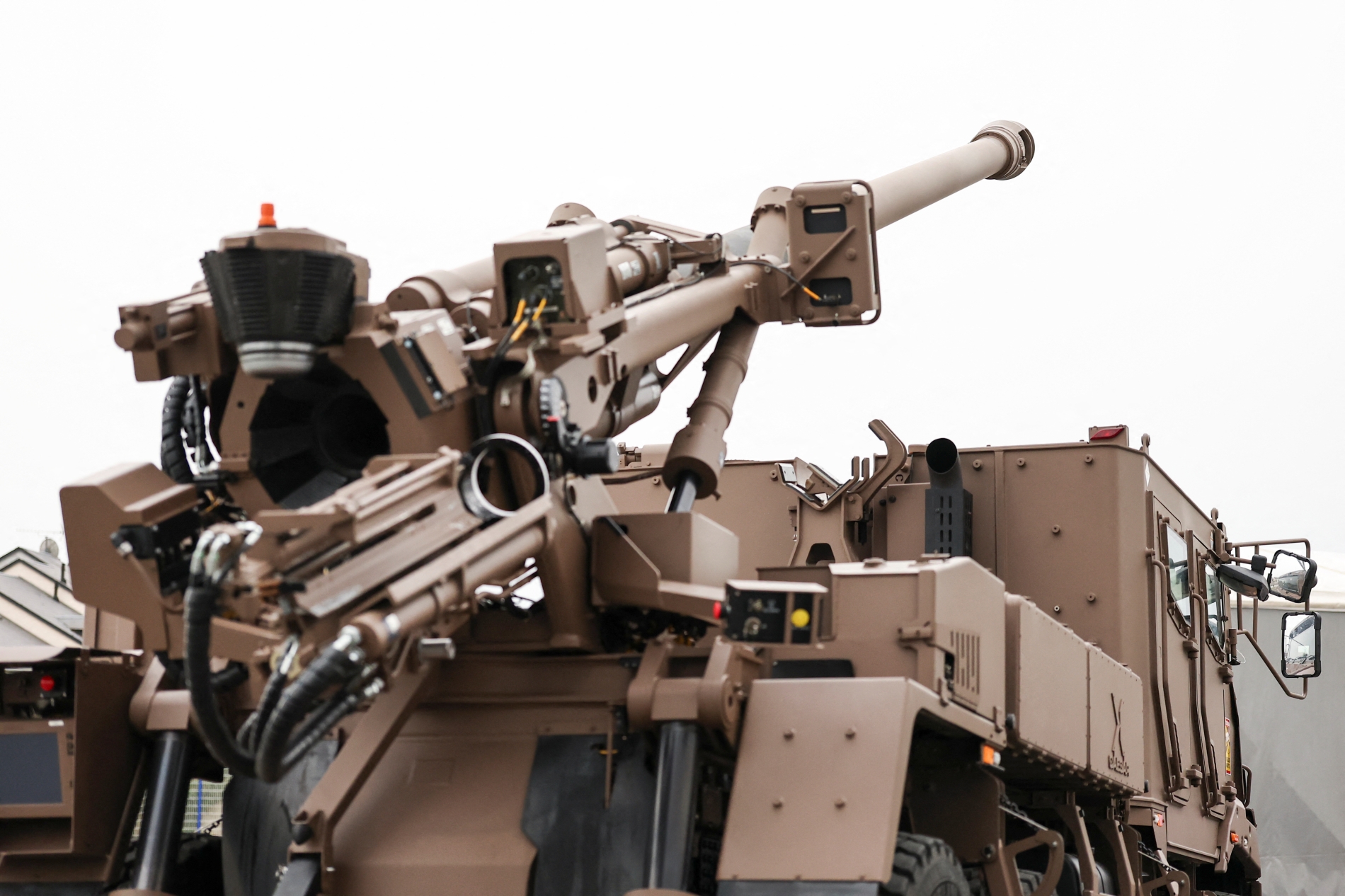
A German- and French-made Caesar cannon in the French city of Bourges, on 21 March 2025.

A shifting focus

Some European manufacturers are already moving towards defence production. In January, Renault said it was collaborating with Turgis Gaillard to develop military drones. According to French newspaper La Tribune, the partnership could produce 600 tactical drones in the first year. If all goes well, this could lead to a big 10-year contract, with 600 drones produced per month. In March, Renault announced another venture, this time with the Belgian group John Cockerill to develop the prototype for a ground-based drone or robot designed for reconnaissance.

Germany has led the European defence expenditure boost, increasing its military budget by 24% year-on-year to $114bn, which is 2.3% of the GDP, the highest level in decades. The country can afford to borrow for this, whereas borrowing capacity is tighter for other European powers like France.
Germany has led Europe's defence expenditure boost, increasing its military budget by 24% year-on-year to $114bn

Last year, for instance, German manufacturer Rheinmetall said it would repurpose two of its automotive plants for military manufacturing. Reports suggested that the firm's operating profit in defence nearly doubled to almost $400mn in the first nine months of 2024, while profits in its automotive division fell 3.8%.

In April 2026, the company announced a much larger $1.5bn deal with the German government for drones and modernised platoon systems, among other things. This seems to be good for shareholders: Rheinmetall shares traded around $125 when Russia invaded Ukraine in 2022. Last month, they were worth around $1,550.

Reuters
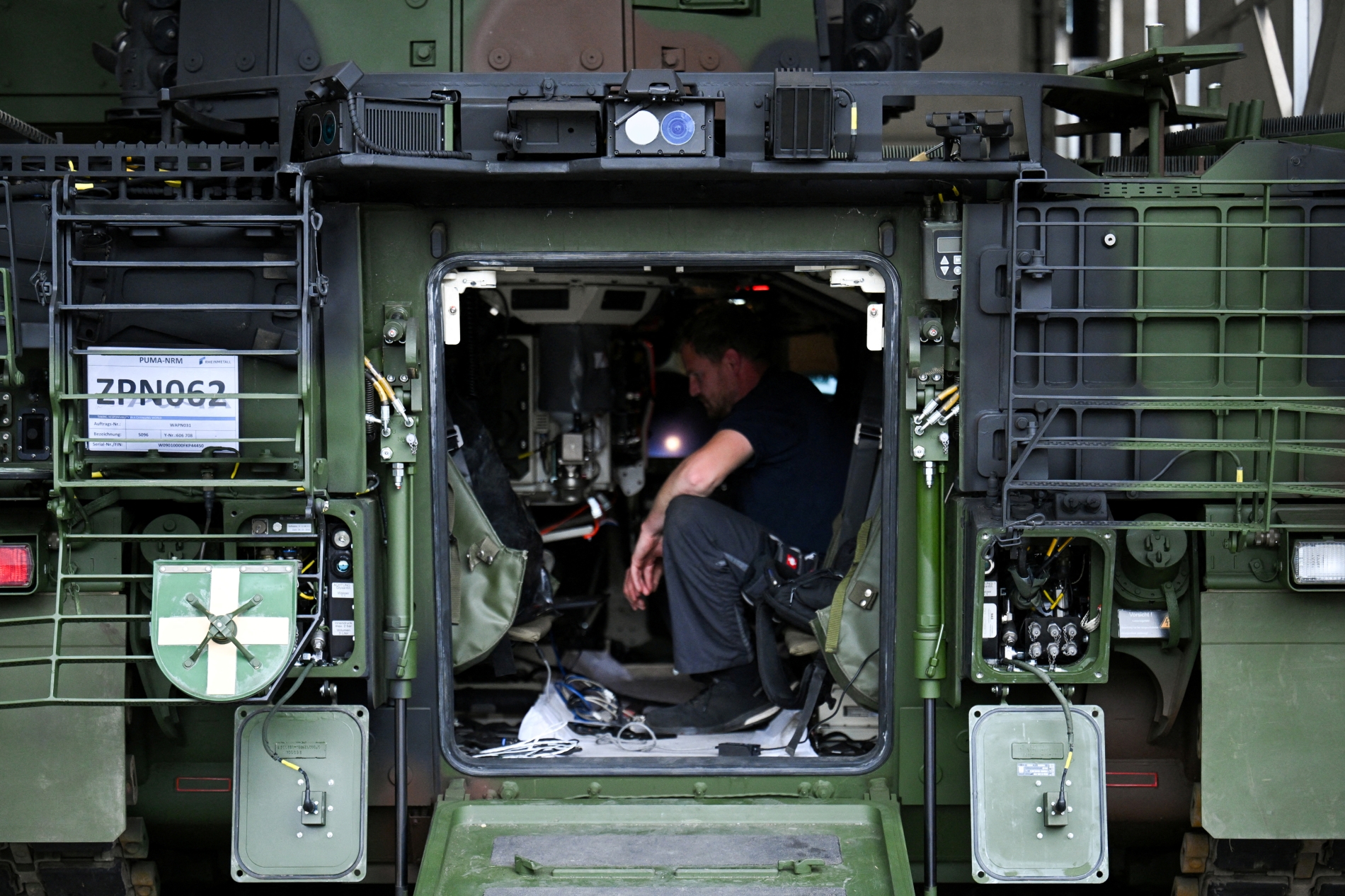
A worker inside a military vehicle at an ammunition factory in Ollentries, Germany, on 24 July 2025.

Impact on industry

One potential negative impact is on employment. The knowledge and skills of workers at automobile plants do not automatically translate to producing military equipment. Volkswagen's factory in Osnabrück, for example, employs 2,500 people whose future is now uncertain, as the company considers moving into military manufacturing as vehicle production volumes drop.

Plant director Jurgen Plaque thinks decisions need to be made relatively quickly. "We need to know soon which direction we can take, where we can invest, and send people signals that this is not over, that there will be changes," he said. "Yes, I hope there's no need to be afraid. If we manage that, I think the atmosphere will improve relatively quickly, but right now there's a lot of anxiety."

A 2025 study by EY and DekaBank optimistically estimated that investments in armaments and defence equipment in Europe would lead to production and services in the value chain that exceed those investments. For every Euro invested in defence by European NATO states, it said, production worth almost twice as much is triggered along various parts of the value chain within Europe. Up to 665,000 jobs could be created, which would be timely given that European auto suppliers have warned that 350,000 may be lost due to competition from China.

The German office of the US consulting firm Kearney thinks a jobs boom is on Europe's horizon, with 163,000 skilled workers needed by 2030 if defence spending stays at 2% of GDP and up to 760,000 if it goes up to 3% (NATO's target for 2035). In some cases, workers are already emigrating to defence, with Rheinmetall having moved 100 staff from its civilian units to military manufacturing last year.

DANIEL KARMANN / AFP
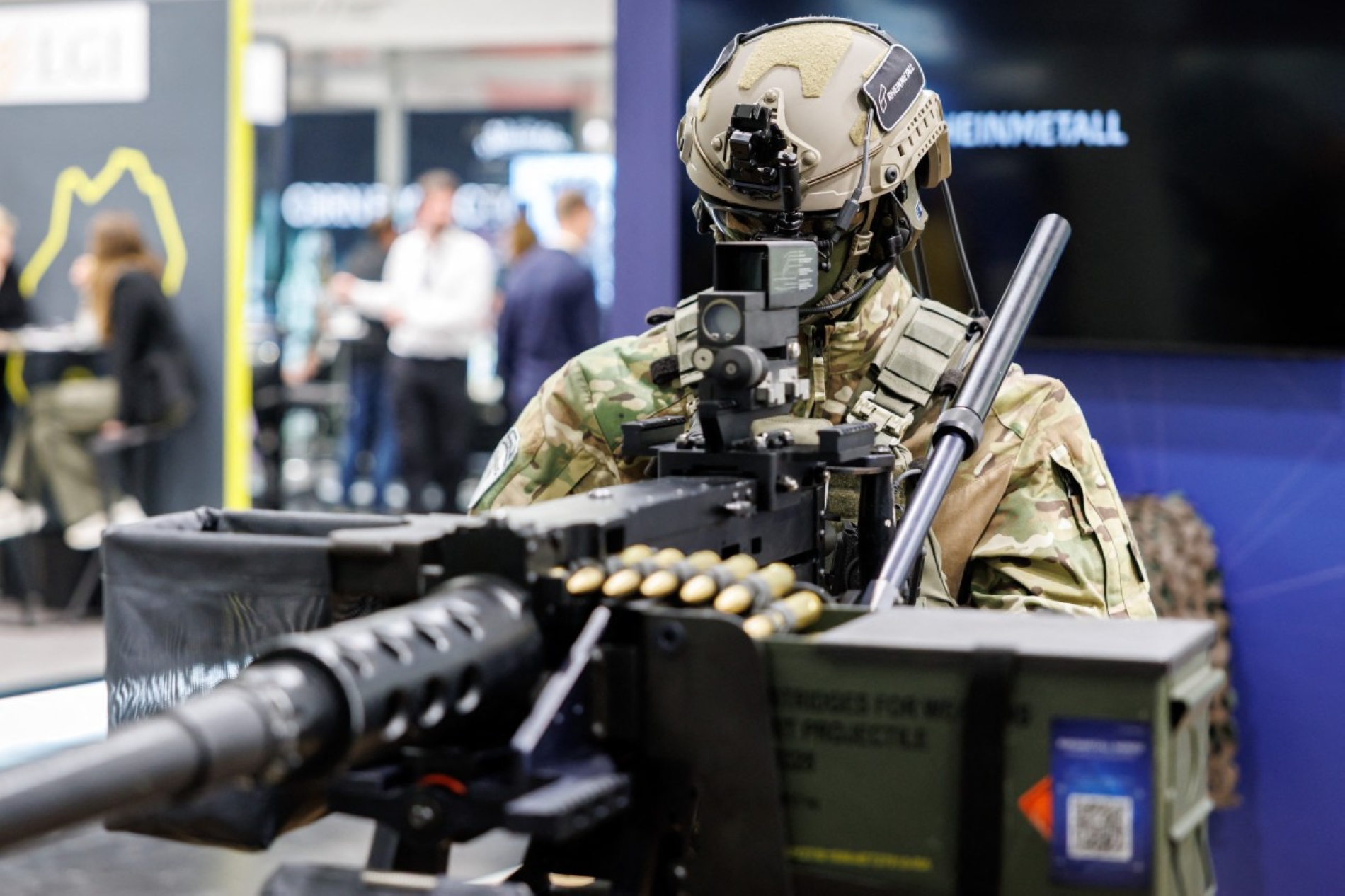
A mannequin equipped with the Gladius 2.0 soldier system is on display at the Rheinmetall defence company's stand during the "Enforce Tac" trade defence fair in Nuremberg, Germany, on 25 February 2026.

In other cases, companies are taking over factories and workers from other manufacturers. KNDS, which makes tanks and other military vehicles, is planning to buy a plant from train manufacturer Alstom in east Germany that was due to end operations this year. The deal could save the jobs of the factory's 700 workers.

Strategic outlook

There are some success stories from this transition that point to the strategic implications of the shift. FWM, a German metal construction company, has been manufacturing vehicle body shells for two decades, but several years ago it began working on smaller defence contracts before, more recently, plunging into defence manufacturing with greater confidence. Defence technology now accounts for 80% of its sales, and new employees (from other automotive manufacturers) have been hired to meet demand.

Managing director Thomas Fuchs told DW News that there were advantages to serving the defence sector, because national suppliers are given priority. "You basically only have competition from German companies," he said. "In the automotive industry, the competition is global." He added that there was a longer planning horizon in defence, which led to greater predictability. "They talk in decades. We have orders through 2030 and are talking about contracts being placed that extend to 2040."

The automotive sector in many European countries is far larger than the defence industry. This is the case in Germany by a factor of ten, so even with increased spending, defence manufacturing will not cure all carmakers' worries. Whether this higher defence spending outlasts the Trump administration of the Ukraine war remains a point of interest for the car manufacturers considering their future.

font change