Over the course of nearly eight decades since its establishment in 1948, Israel has fought more wars than any other state in the world, but the one it has waged since October 2023 has profoundly recast its military strategy. Its previous doctrine was to fight and win swift, decisive wars, but the state now finds itself engaged in a long, protracted, multi-theatre conflict—one that Israeli leaders seem happy to continue.
Israel was once known for its acute sensitivity to human losses, but in recent years, it appears able to bear a far heavier human toll than it was prepared to endure before. Yet perhaps the most striking feature of Israeli military strategy in its war against the Palestinians, Lebanon, and Iran since 2023 lies in its willingness to be savage, indifferent to the destruction of civilian infrastructure and the killing of civilians.
Long marketed as a ‘warrior state,’ Israel is heavily armed, with military, economic, technological, and intelligence superiority over its neighbours. It sees itself as a fortress in the region and lives under the shadow of existential anxiety in what it regards as a hostile environment. Even so, Israel's turn towards savagery can only be explained in one of several ways, the first being the losses it suffered on 7 October 2023, after Hamas attacked it.
With endless political, military, intelligence, financial, and technological support from the United States, Israel has been determined to rid itself once and for all of the danger posed by Iran, which has armed and trained a range of allied forces on Israel’s doorstep, including Hamas in Gaza and Hezbollah in Lebanon. Israel has sought to exploit the tension generated across the region by Iranian intervention, establish itself as the dominant regional power, eliminate its enemies, and impose its own formula of ‘peace through strength’ in line with its interests and calculations.
Yet there is also another, internal factor. Israel’s current government is comprised of extremists, nationalists, and the religious right, who seek more than a renewed assertion of its dominance over the Palestinians and the Middle East. They want to change the very character of Israel, transforming it from a democratic state into a Jewish state, from a liberal state into a religious one. In this way, external and internal factors are converging to propel this war and shape how it is waged.
In Israel, war strengthens and entrenches the nationalist and religious right, since confrontation with an enemy is a unifier for Israelis, stiffening their resolve. Benjamin Netanyahu’s government likened the attack of 7 October 2023 to the Holocaust, presenting it as an attempt to destroy Israel. This gave him carte blanche, securing the backing of most Western states,to wage a crushing war, which was later deemed a plausible genocide by the International Court of Justice.
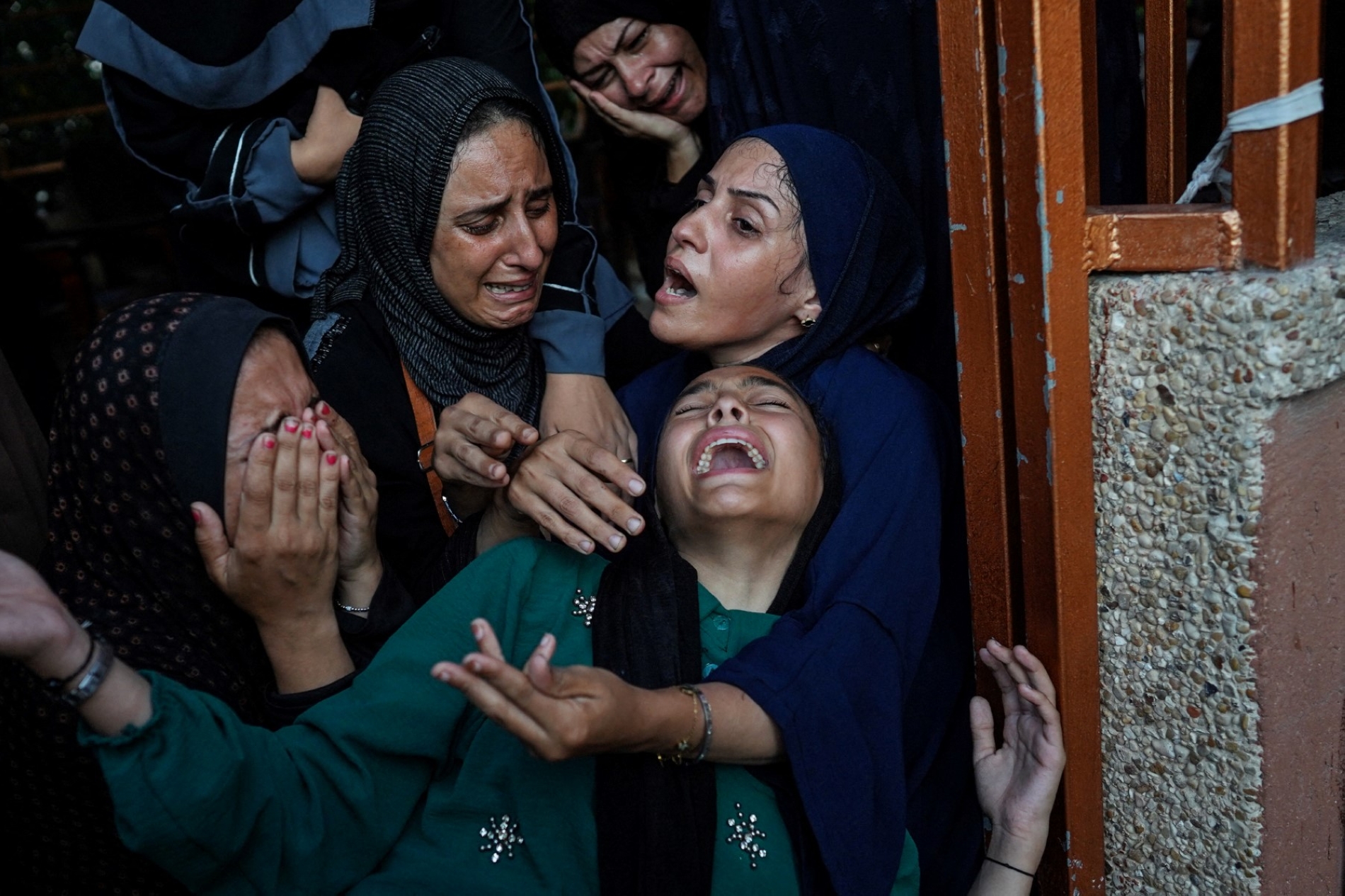
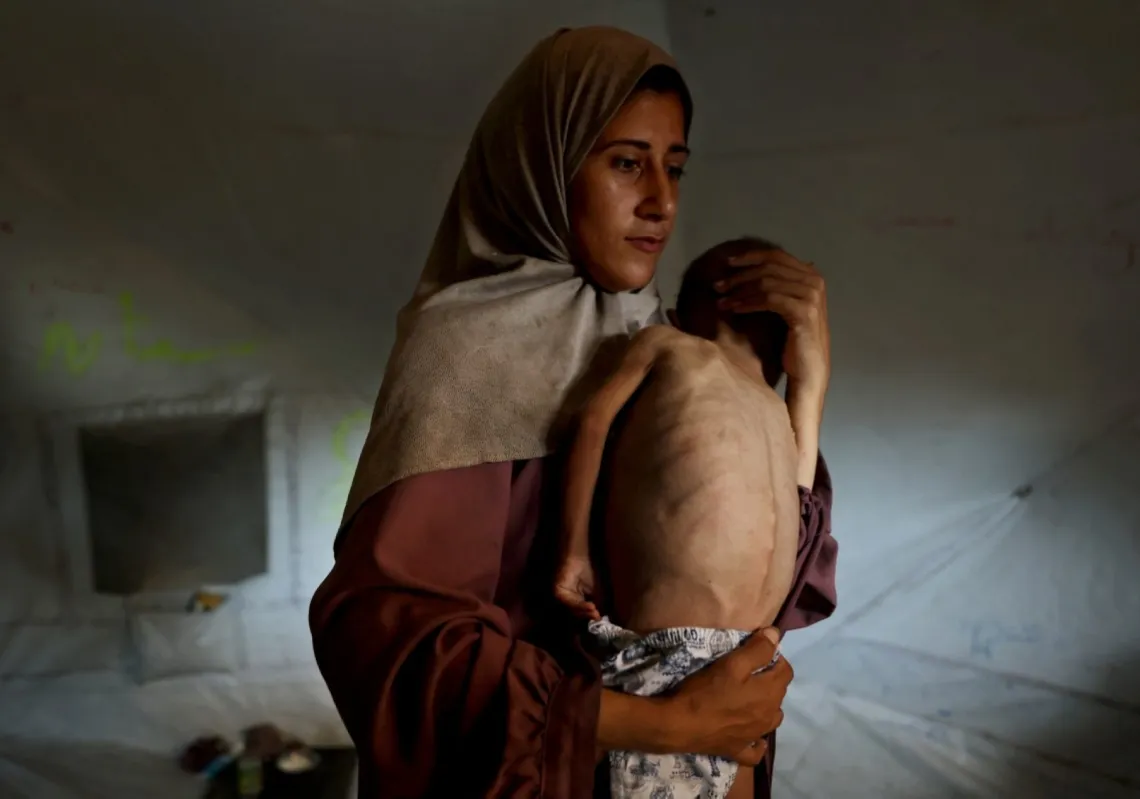
Palestinian women cry as killed members of the Abu Taha family are brought for burial outside Nasser Hospital in Khan Yunis following Israeli bombardment east of the city in the southern Gaza Strip on 22 July 2024.
Deep roots
But its savagery didn't emerge out of the blue. It is deeply rooted in Zionist and Israeli military thought. Its origins can be traced back a century to Ze’ev Jabotinsky’s well-known concept of the ‘Iron Wall’, which envisaged the construction of an armed barrier around the then hypothetical Jewish state to deter enemies who rejected its existence. The idea was to impose ‘peace through strength,’ an idea that Netanyahu continues to invoke.
We must strike with such cruelty that a second blow won't be needed. We can kill 5,000 or 10,000 of them; if that is not enough, then we must kill more.
Professor Martin van Creveld at the Hebrew University
During the Second Intifada 25 years ago, Professor Martin van Creveld at the Hebrew University—one of Israel's foremost specialists in military strategy—advanced an argument that openly theorised the option of a war of extermination. "For many years, we managed our affairs with the Arabs... outside the State of Israel," he said. "Every ten years, whenever they stirred up some problem, we would take our big hammer and strike them violently, which would then produce ten years of calm, until in the end they despaired of the matter."
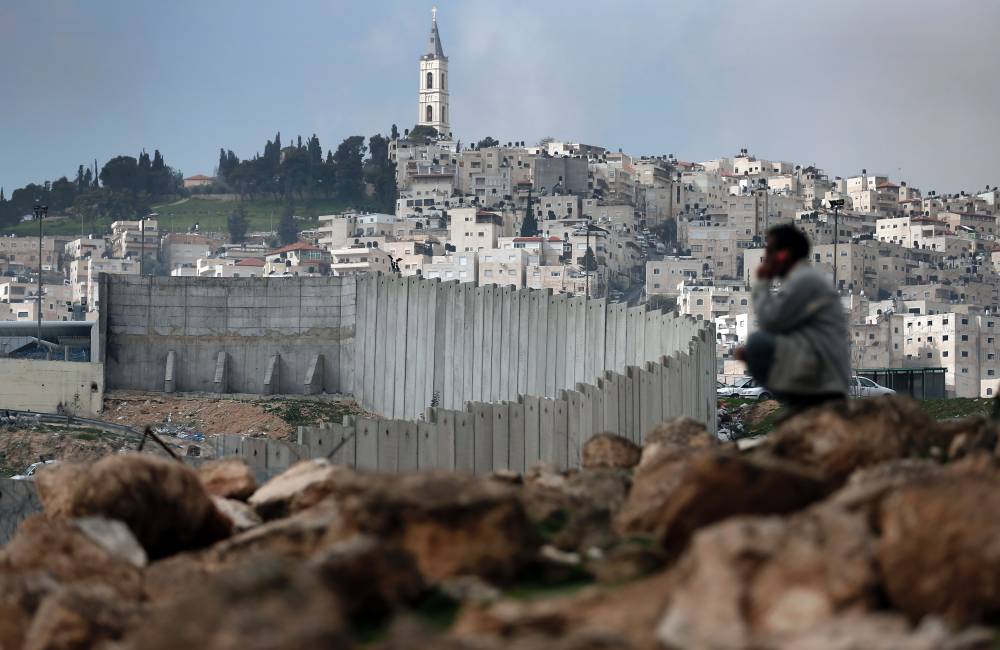
He continued: "There must be total separation between them and us. No open bridges, no economic relations, no political relations. Absolute separation for a generation or two, or for as long as necessary... We are talking about a wall like the Berlin Wall, and if possible, larger still, so high that even birds could not fly over it."
Israel's separation wall.
Creveld spoke of "a need to restore the balance of deterrence between us," adding: "We must strike them with all the harshness at our disposal so that we do not have to return to this again, and so that they do not attack us from behind when we withdraw... We must strike with such force and cruelty that a second blow will not be needed. We can kill 5,000 or 10,000 of them, and if that is not enough, then we must kill more. Better one grave crime, after which we leave and close the doors behind us."
For some, Israel's savagery is rooted in its earliest doctrines and stems from the very nature of its formation as a settler state. Yet in its earlier military strategy during the conventional wars it fought against Arab states during the 20th century, Israel didn't pursue the same degree of savagery as now. Its primary concern back then was to degrade the Arab states' military capacities.
Towards the latter decades of the 20th century, Israel found itself confronting non-state actors in irregular wars against factions and militias, in what became known as asymmetric warfare. This led to changes in Israel's military strategy, as evidenced when Israel invaded Lebanon in 1982, laying siege to Beirut for three months to compel the city's Palestinian fighters to leave the country.
During the Second Intifada from 2000, Israel launched two military campaigns that crushed the uprising. Those campaigns resulted in the West Bank being studded with settlements and military points, the construction of the separation wall around Palestinian population centres, villages, towns, camps, and cities, and Israel's unilateral withdrawal from Gaza, followed by its decades-long siege of the territory.
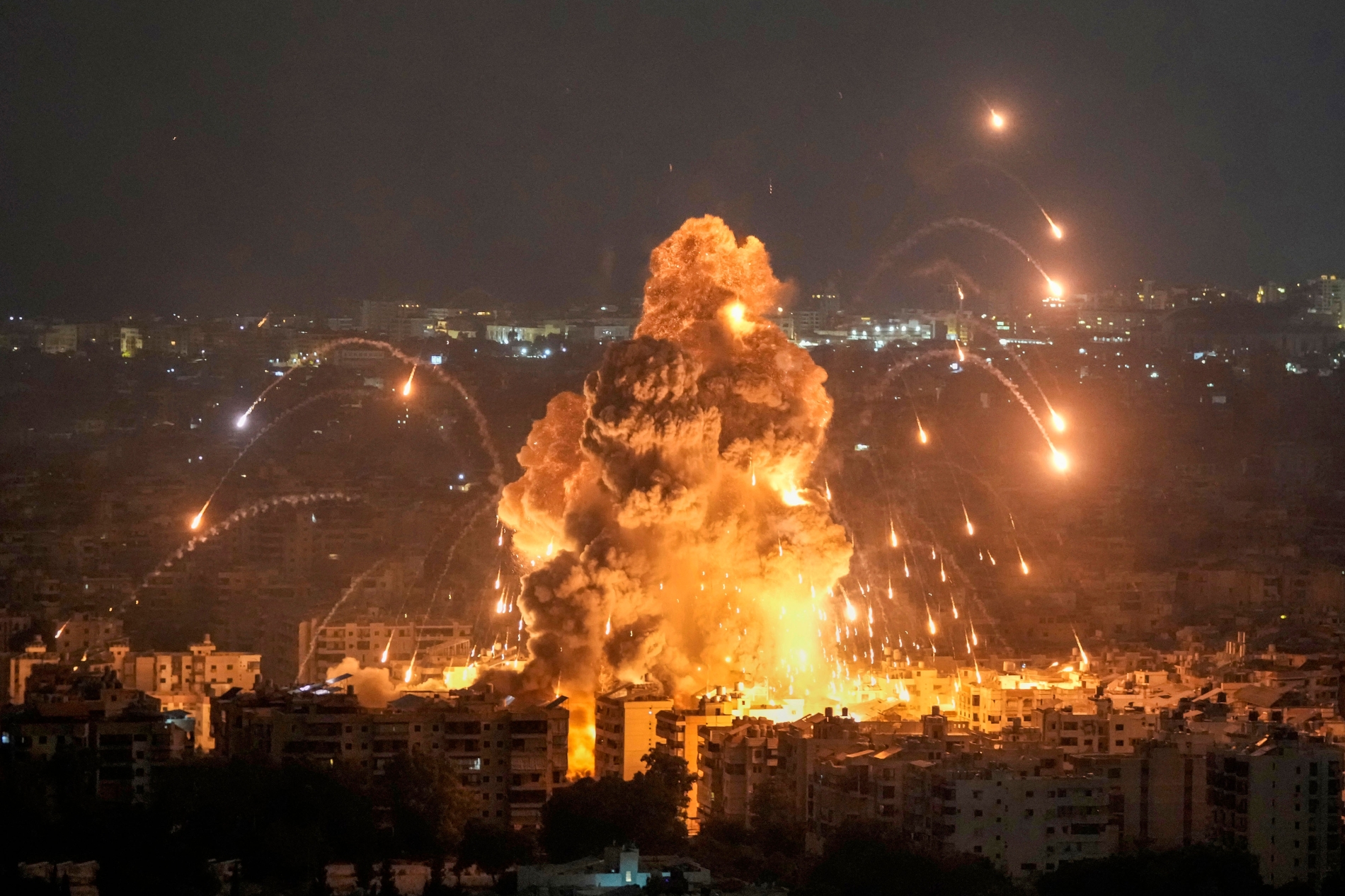
Flames and smoke rise from an Israeli airstrike in Dahiyeh, Beirut, Lebanon, on 6 October 2024.
The Dahiyeh Doctrine
The clearest manifestation of Israeli savagery stemmed from the so-called Dahiyeh Doctrine (in reference to a southern suburb of Beirut known to be a Hezbollah stronghold) and was most visibly exemplified in the 2006 Lebanon war, through Israel's destruction of civilian property and infrastructure, its targeting of civilians, and the mass displacement that followed, a pattern repeated in Gaza in 2008, 2012, 2014, and 2021. In each intervention, the aim was to raise the human and material cost of resistance to the utmost limit, in the hope of creating discord between Hamas and the Palestinians of Gaza.
Since 2023, Israel has shown extreme brutality, indifference to civilian life, and a disregard for international law and humanitarian norms. Its confrontation with Iran is, in many ways, a conventional war, unlike its battles against Iran-backed factions in Gaza, Lebanon, Yemen, and Iraq. Accordingly, Israel has fought without relent or compromise. In its view, it is fighting to be the region's military hegemon. In Gaza, Lebanon, and Iran, Israel's aim is to inflict the greatest possible destruction on the built environment and on infrastructure, making life there a living hell, to alter the political, demographic, and security realities in these lands.
Israeli journalist Ron Ben-Yishai explained the Dahiyeh Principle, saying: "It entails the pre-emptive evacuation of civilian populations from neighbourhoods and districts in the enemy capital through prior warnings broadcast across all media outlets. Once civilians have been evacuated, the neighbourhood or district is completely destroyed through aerial bombardment," He said this "proved successful" in Dahiyeh during the Second Lebanon War. "There are good reasons to believe that this will also happen in Tehran, particularly if the multi-level intersections and bridges are destroyed, in addition to the bombing of neighbourhoods."
The journalist Eyal Zisser urges the Israeli army to "occupy Lebanon as though no state exists there," adding: "Lebanon is not a state, and never has been throughout its existence. It is nothing more than a collection of sects and notable families, each beholden to none but itself, while concepts such as sovereignty and nationhood are, in any case, very far removed, especially in a country where loyalty to family and sect takes precedence over loyalty to the state."
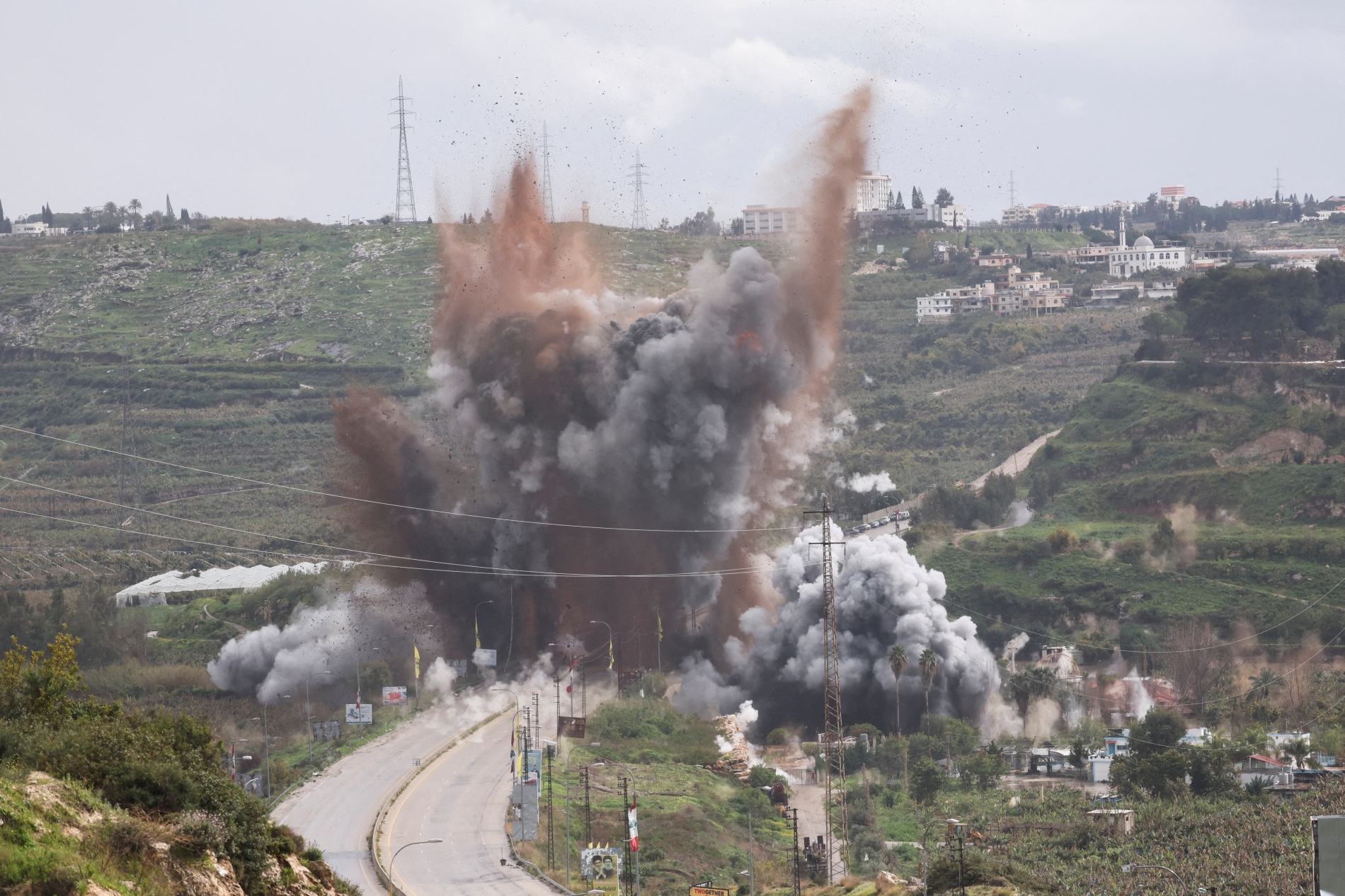
Smoke rises after an Israeli airstrike on the Qasmiyeh bridge in Lebanon on 22 March 2026.
Broader targeting
Maj. Gen. (ret) Dr Yaakov Benjo and Dr Tal Tovy, both researchers in strategic affairs, have called on Israel to target every link in the chain of the parties that oppose it, from the leadership to industrial infrastructure and population centres. They argue that this would cause strategic paralysis at a relatively low cost in terms of military and economic resources. This includes striking "all vital production and distribution systems... including energy, water, food distribution, and other essential inputs… An army without fuel cannot manoeuvre, an economy without electricity cannot produce, and a population without food cannot sustain the war effort".
That makes transport and communications networks legitimate targets, according to this logic. These networks include roads, bridges, railways, ports, airports, and communications centres. Israel's military planners contend that disrupting transport and communications will isolate military forces from the resources they require for operations and deprive the leadership of its control over subordinates.
In the years that followed the Holocaust, there was international sympathy for the nascent State of Israel, as a form of protection for the world's remaining Jews. Having been attacked repeatedly since 1948, Israelis have long felt that they remain persecuted, a lone democracy isolated in the face of a hostile Middle East environment. That image has now been shattered, as it continues to wage a brutal war of genocide in Gaza and beyond. A victim no longer, Jabotinsky's envisaged 'fortress' is now a racist, colonial, and religious state imposing its own version of 'peace through strength'.