Palestinian executions are now official Israel policy
Israel’s parliament approved a draconian death penalty law last week that only applies to Palestinian prisoners, in a move that the UN says "would constitute a war crime"
Reuters
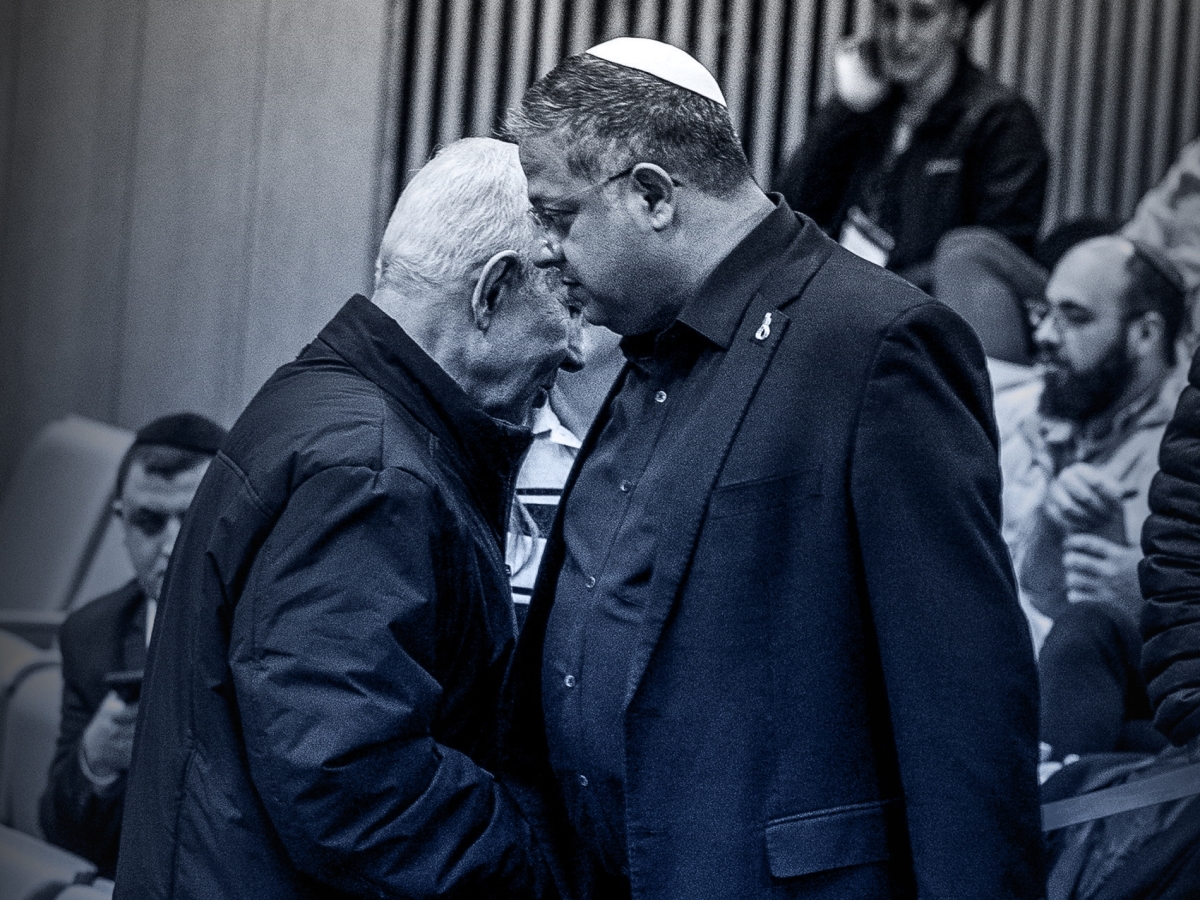
Israeli Prime Minister Benjamin Netanyahu and Israeli National Security Minister Itamar Ben-Gvir shake hands during a session at the Knesset in Jerusalem, on 29 March 2026.
Palestinian executions are now official Israel policy
Israel’s parliament approved a draconian death penalty law last week that only applies to Palestinian prisoners. The Death Penalty for Terrorists Law, which introduces death by hanging for offences classified as “terrorist crimes”, was met with sweeping global outrage for its discriminatory nature.
According to the UN High Commissioner for Human Rights, such executions "would constitute a war crime". The law “raises serious concerns about due process violations, is deeply discriminatory, and must be promptly repealed,” Volker Türk, said, adding that its “application in a discriminatory manner would constitute an additional, particularly egregious violation of international law.” He also stated that “its application to residents of the occupied Palestinian territory would constitute a war crime”.
Israel's National Security Minister, Itamar Ben-Gvir, has been wearing a noose pin in recent months as he lobbied in favour of the legislation put forth by his far-right Jewish Power party. After the vote passed, he celebrated with a bottle of champagne.
Approved by 62 votes to 47, with one abstention, the new law creates the conditions for an unjust legal divide between Palestinians and Israelis. It is also the first of its kind to broaden the reach of capital punishment in so direct and unprecedented a manner.
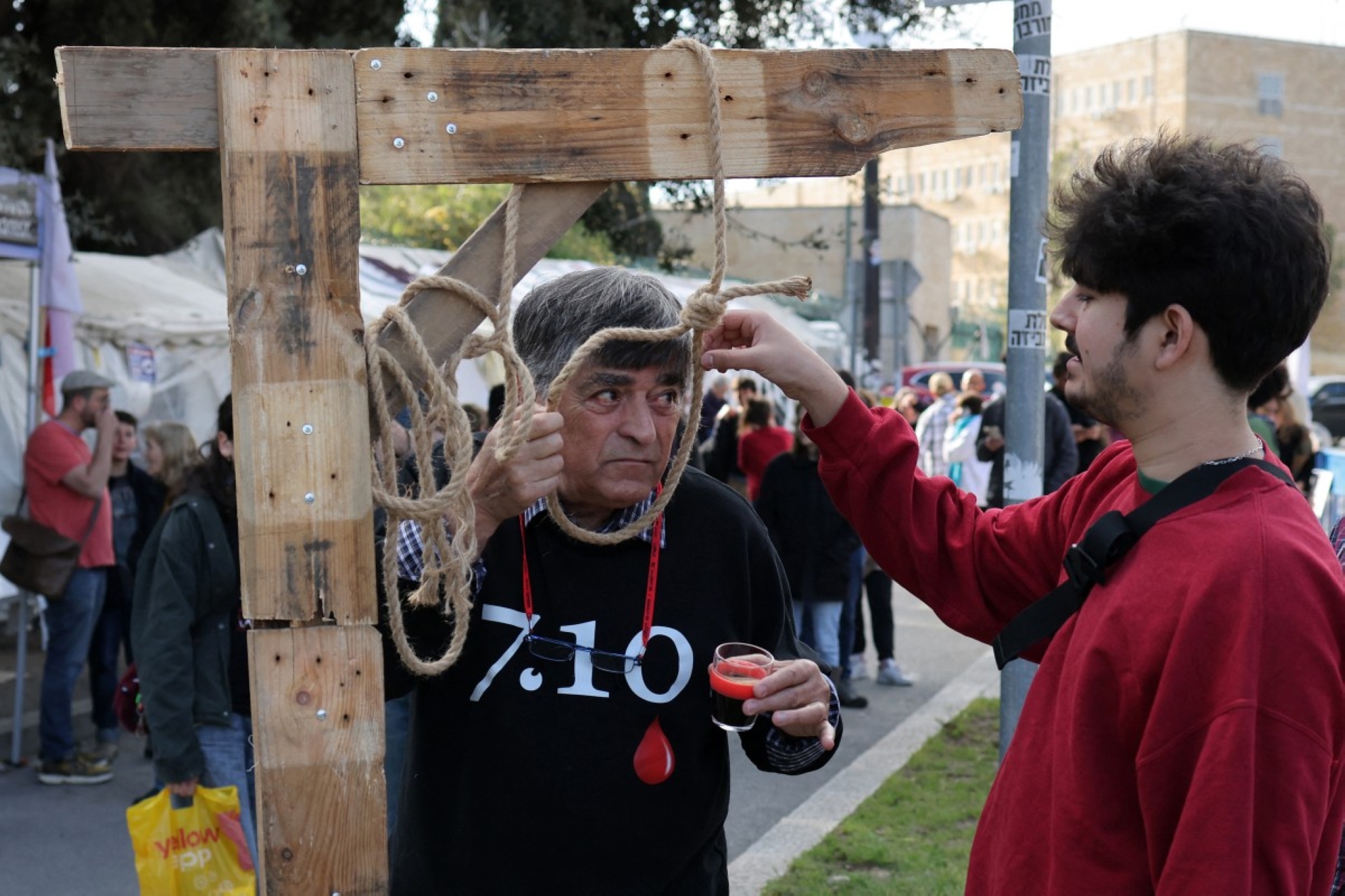
Protesters opposed to a death penalty law gather outside the Knesset, the Israeli parliament, in Jerusalem on 31 March 2026.
The law amends the 2016 Counter-Terrorism Law No. 5775, and its definition of terrorism remains tied to that earlier legislation. Under its provisions, military courts in the occupied West Bank and Gaza may impose death by hanging on “residents of the area”—meaning Palestinians alone, while excluding Israeli citizens and residents—if they are convicted of premeditated murder committed in the course of a “terrorist act”.
The death sentence may be commuted to life imprisonment in “special circumstances and cases”, though the law neither specifies nor clearly defines what such circumstances might entail. This may be done by submitting a written request directly to the judicial panel, without the need for a public prosecution application.
The law violates the Geneva Conventions, given that Israel remains an occupying power in the West Bank and Gaza.
Under the terms of this law, a death sentence may be issued by a simple majority of the judges, 50% plus one, rather than by unanimous agreement. The sentence must be carried out within 90 days, with the option to extend it to 180 days with the prime minister's approval. The law further shields such rulings from appeal before any court. It also prohibits the release of anyone sentenced under its provisions on any guarantee or financial bail, and bars the granting of clemency in such cases.
As for the civilian courts inside Israel, the law authorises the court to impose either the death penalty or life imprisonment on Palestinians and Israelis alike if they are convicted of offences that intentionally cause the death of a person with the aim of "denying or refusing to recognise the right of the State of Israel to exist".
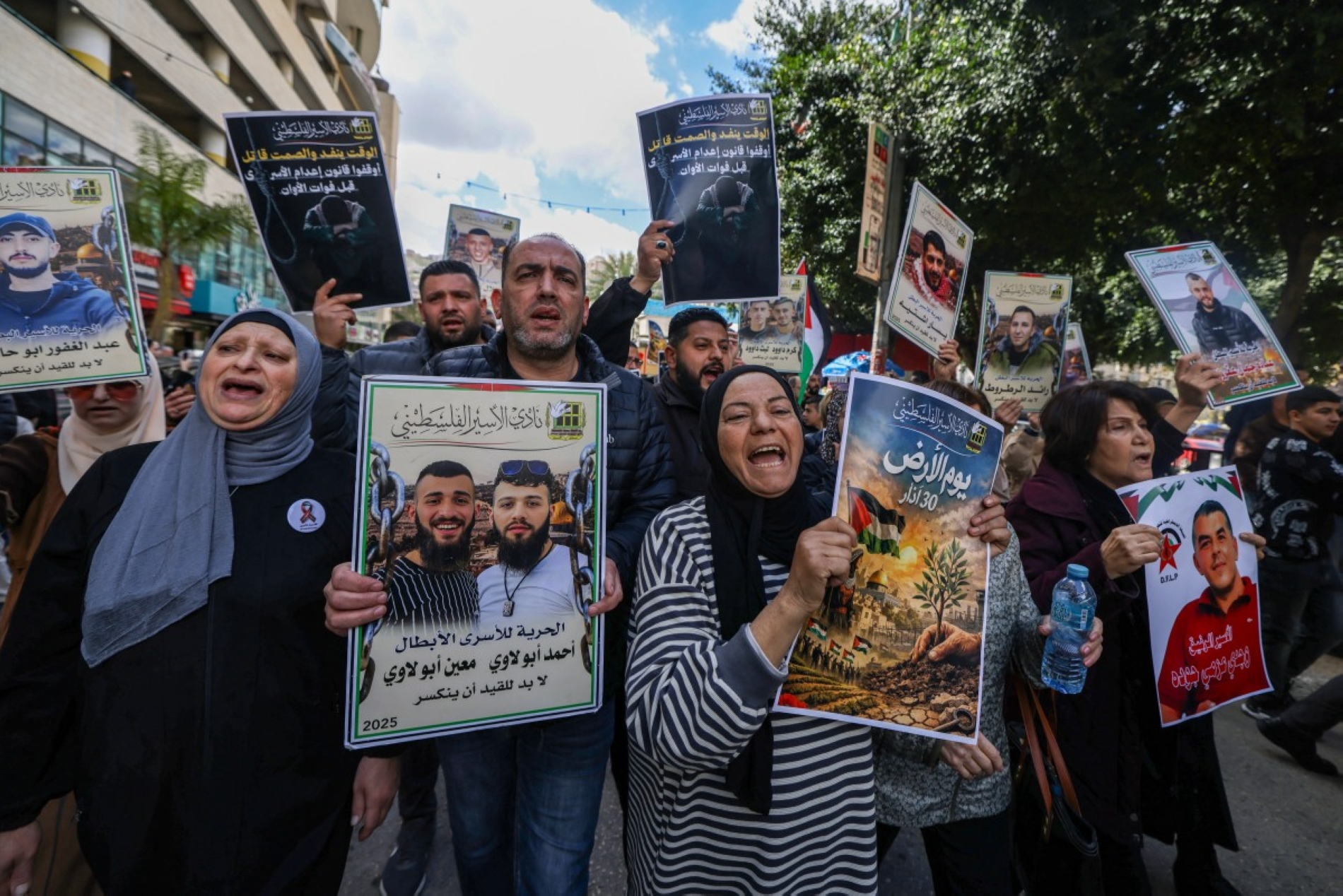
Relatives of Palestinian prisoners hold up their pictures during a march in the occupied West Bank city of Nablus, protesting against an Israeli law that allows the execution of Palestinian prisoners, on 31 March 2026.
Deliberately vague
This is a legally vague formulation, and it appears to have been deliberately drafted so that, in practice, its application will remain confined almost exclusively to Palestinians. In this way, crimes associated with what is termed "Jewish terrorism" may fall outside its reach, given the difficulty of proving the required ideological intent in such cases. A number of Israeli legal experts argue that wording of this kind helps entrench a dual judicial order and reinforces what they describe as "codified apartheid".
The law doesn't appear to apply retroactively. This accords with the ordinary principle of non-retroactivity in criminal law, under which legislation cannot apply to conduct that predates its enactment unless expressly provided for. The principle is protected under Israeli constitutional law, particularly the 1992 Basic Law: Human Dignity and Liberty.
Yet, during the Knesset's deliberations on the bill, which lasted 12 hours, some members proposed giving the law retroactive effect by extending its temporal scope to cover the period from 7 October 2023 to the date of its enactment, in view of what they considered the gravity and exceptional significance of that period. However, that proposal was ultimately rejected.
Even so, although the law applies only prospectively, the present regional climate, together with the continuing military and security tensions in the West Bank and Gaza, may well lead to an increase in convictions, above all before the military courts. This danger is amplified by the erosion of safeguards governing the imposition of the death penalty, including the abandonment of judicial unanimity in favour of a simple majority and the exclusion of any right of appeal.
For that reason, many criminal law experts argue that the law's true purpose lies less in punishing past acts than in constructing a machinery of future deterrence, to stifle Palestinian resistance. The law also violates the Geneva Conventions—particularly the Fourth Geneva Convention relative to the Protection of Civilian Persons in Time of War—given that Israel remains an occupying power in the West Bank and Gaza. Their inhabitants therefore fall within the protection of Article 68 of the convention, which prohibits the imposition of the death penalty on protected civilians except in exceedingly narrow and exceptional circumstances, and only subject to strict procedural guarantees.
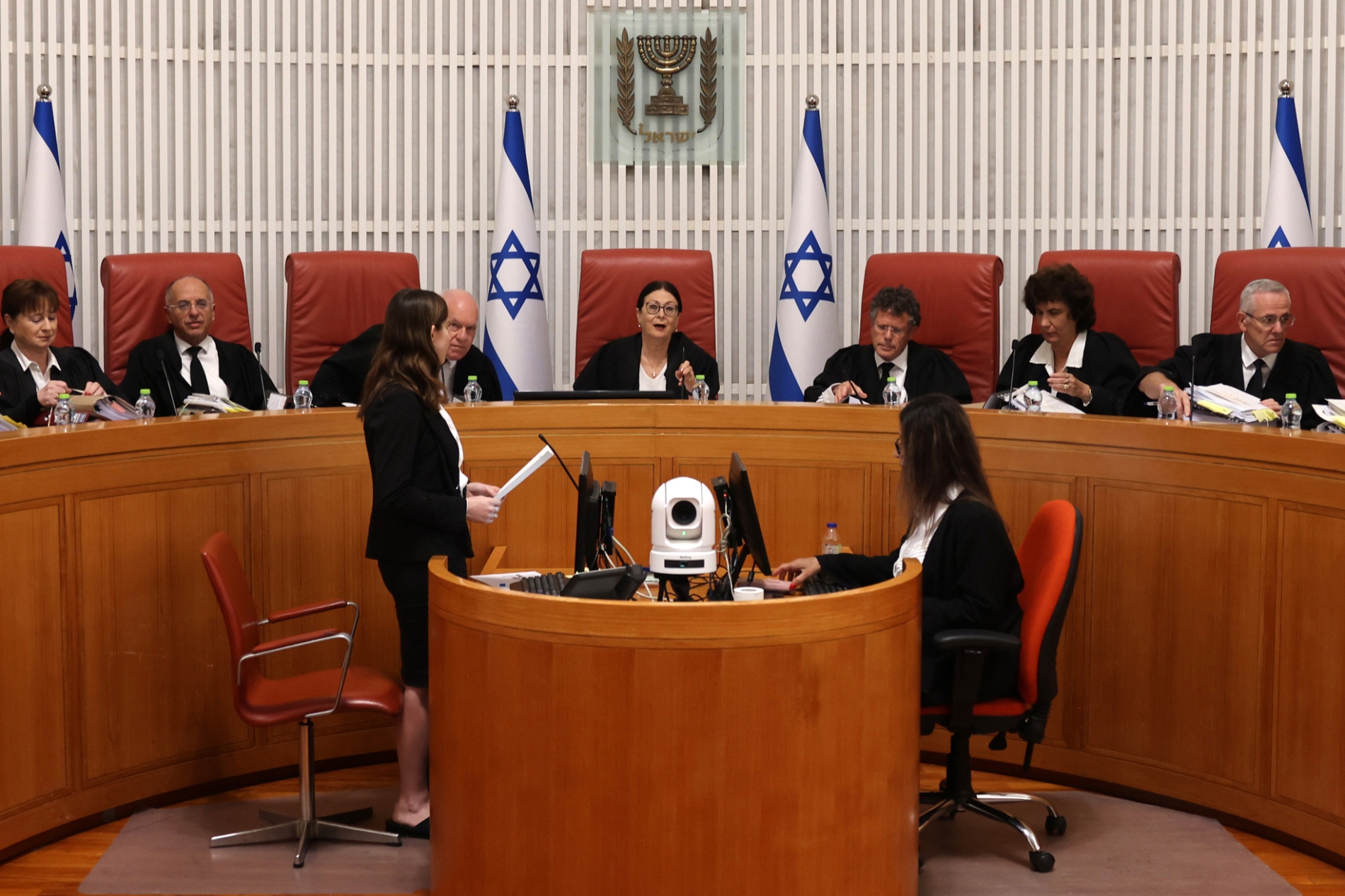
Israeli Supreme Court President Esther Hayut is pictured with judges at the court headquarters in Jerusalem on 28 September 2023.
Appeals filed
The Israeli Supreme Court is the sole constitutional authority entitled to review the constitutionality of laws enacted by the Knesset and to strike them down where they contravene the Basic Laws. Within hours of the passage of the Death Penalty for Terrorists Law, several legal and human rights bodies had already filed Supreme Court appeals.
Among the most prominent was Adalah, the Legal Centre for Arab Minority Rights in Israel, alongside several other human rights organisations, as well as a group of Arab Knesset members representing the Palestinians of 1948, all of whom submitted petitions and legal challenges seeking the annulment of the law on the grounds that it violated the Basic Laws. On 31 March, the court ordered the state to respond to these petitions by 24 May and issued a temporary precautionary order.
At the international level, the law may be challenged through several avenues. Although recourse to the International Court of Justice under its contentious jurisdiction remains unavailable, since that jurisdiction over legal disputes between UN member states requires the consent of the parties, something Israel would plainly withhold, it remains possible to approach the court through its advisory jurisdiction. In that context, the State of Palestine, or any UN member state such as South Africa or Spain, could seek an advisory opinion from the court through the UN General Assembly.
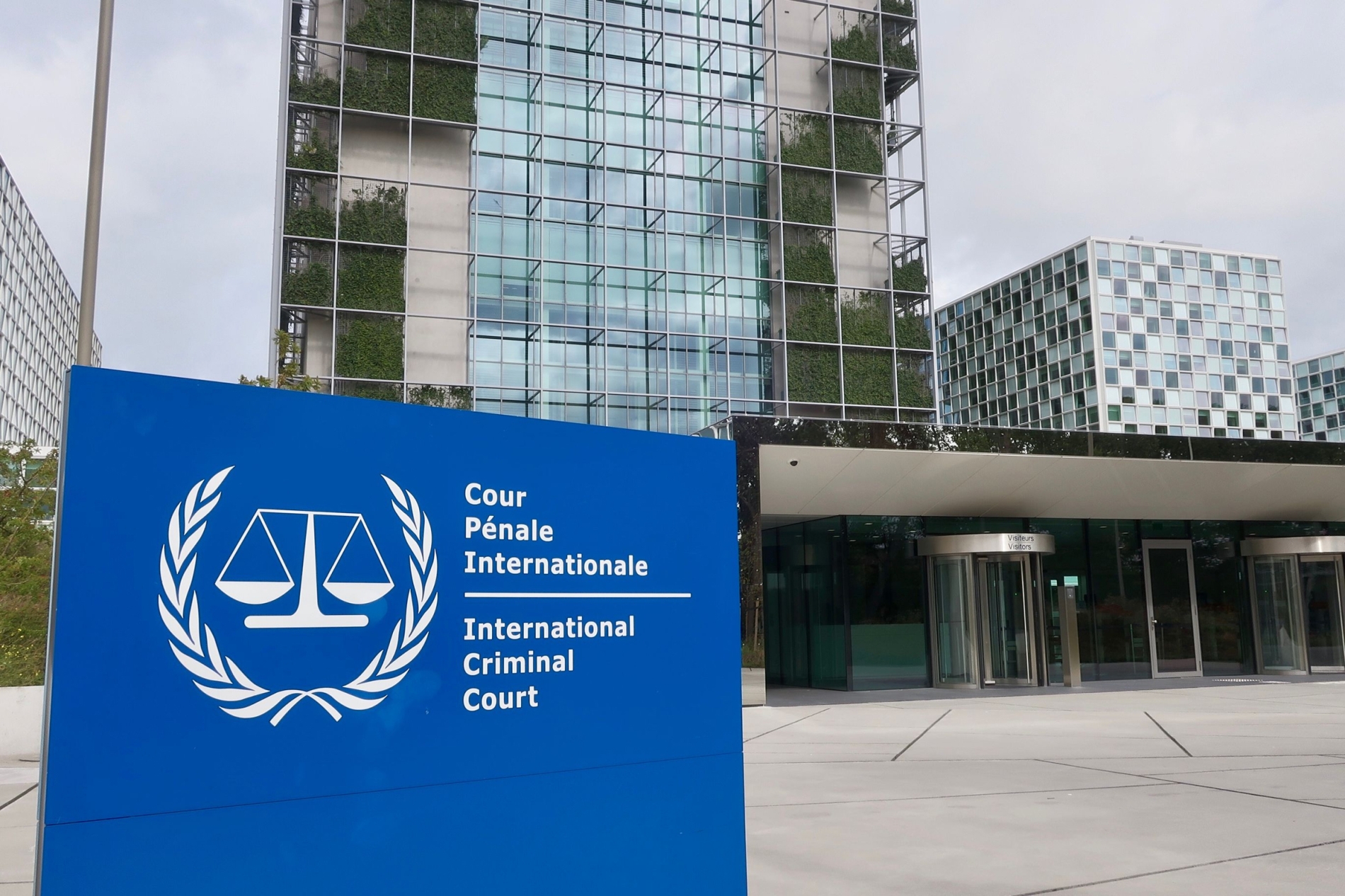
The headquarters of the International Criminal Court in The Hague.
Other legal recourse
The matter could also be brought before the International Criminal Court if the law were found to fall within the category of war crimes under Article 8 of the Rome Statute and the Geneva Conventions, thereby exposing Israeli officials to potential criminal responsibility. In addition, communications may be submitted to the UN Special Rapporteur on the situation of human rights in the occupied Palestinian territories, to the Human Rights Council, or to the United Nations Human Rights Committee.
These international avenues, coupled with domestic legal challenges, could pile pressure on Israel to repeal the law, but it is unlikely, given the fact that an ICC arrest warrant issued for Israeli Prime Minister Benjamin Netanyahu and his former Defence Minister Yoav Gallant over a year ago has yet to be implemented. Also, Israel has ignored ICJ rulings calling on it to stop committing a plausible genocide in Gaza and end its occupation of the West Bank.