Israel's casual expression of its violent occupationhttps://en.majalla.com/node/330752/culture-social-affairs/israels-casual-expression-its-violent-occupation
Israel's casual expression of its violent occupation
Photos of Israeli soldiers cooking, celebrating, and looting inside homes in Gaza and southern Lebanon reveal how the occupied home is treated as a natural right
Lina Jaradat
Israel's casual expression of its violent occupation
On 22 April, Israeli drones closed in on the journalist Amal Khalil as she reported on attacks in southern Lebanon. She took refuge in a nearby house, only for it to be shelled and Khalil killed beneath the rubble.
A few days earlier, a photograph had begun to circulate of an Israeli soldier cooking with calm assurance inside an occupied home in the town of Bint Jbeil, her face lit with a disquieting pleasure. Elsewhere, Israeli soldiers were seen stealing whatever they could from occupied homes in the south, loading intimate household belongings onto military trucks.
None of these scenes were documented by the other side—the side subjected to looting and killing—but by the Israeli soldiers themselves. They have turned what armies usually try to deny into something openly displayed. Their repetition and brazenness suggest that these are not isolated acts of impulse, but signs of a culture in which occupation has become normalised, including within the intimate space of the home.
The attitudes visible in these images did not emerge in a vacuum. They draw on older narratives that framed occupied homes as abandoned ones. For decades, Israeli literature has repeatedly accused Palestinians of simply leaving their houses, presenting homes and land as empty or forsaken, leaving Israelis with nothing to do but fill the void.
Returning to Haifa
The Palestinian writer Ghassan Kanafani understood this dynamic. In his foundational text, Returning to Haifa, he showed how the meaning of home—and the consciousness of its loss—took shape within the conflict with Israel. When Said and his wife, Safiyya, visit their confiscated home in Haifa 20 years after the Nakba, a Polish settler opens the door to them, and they immediately ask, “Can we come in?” Kanafani’s description of her reception anticipates the contours of an Israeli sense of familiarity with dispossession. “The old woman’s questioning face brightened, and she made room in the passage until they entered.”
Said was unable to recognise his personal belongings or to touch them. They were gathered in a funereal silence, set out in the house with a jarring sense of dissonance. Kanafani draws out the relationship between the owner and the home through minute details that speak to possession. After many years, Said remembers something that seems marginal, yet, in that moment, takes on a broad, concentrated significance. “The peacock feathers were seven feathers, and now they are only five.”
The female soldier does not behave as though she were in her own home. She behaves as though this home had always been hers.
The sense of loss extends beyond the missing feathers to the house itself, which can no longer be made whole. The settler tells Said and Safiyya: "You are the owners of this house, and I know that." This knowledge does not become a moral stance. It remains a piece of information. Yet Kanafani shows how this psychological and moral normalisation of occupation rests on treating dispossession as fate, or as an unintended outcome shaped by agentless historical forces. The settler's explanation is blunt: "I am sorry, but that is what happened."
At that time, the systematic uprooting and occupation of homes was cloaked in a poisonous language of apology and the evasion of responsibility. But Kanafani foresaw the homeowners' sharp, wounding awareness as the seedbed for later settler-colonial visions of domestic life within uprooted houses. Safiyya—Said's wife and the owner of the home—could not miss the settler's brazenness and its exterminatory edge, which took shape right then and there. It is laid bare in the fact that the settler was "as if she were in her own home, behaving as if she were in her own home."
An Israeli Soldier Just Cooked a Meal in Someone Else's Home in Lebanon
An Israeli soldier posted photos of herself picking vegetables from a Lebanese family's garden and cooking in their kitchen, while the family is BANNED from returning.
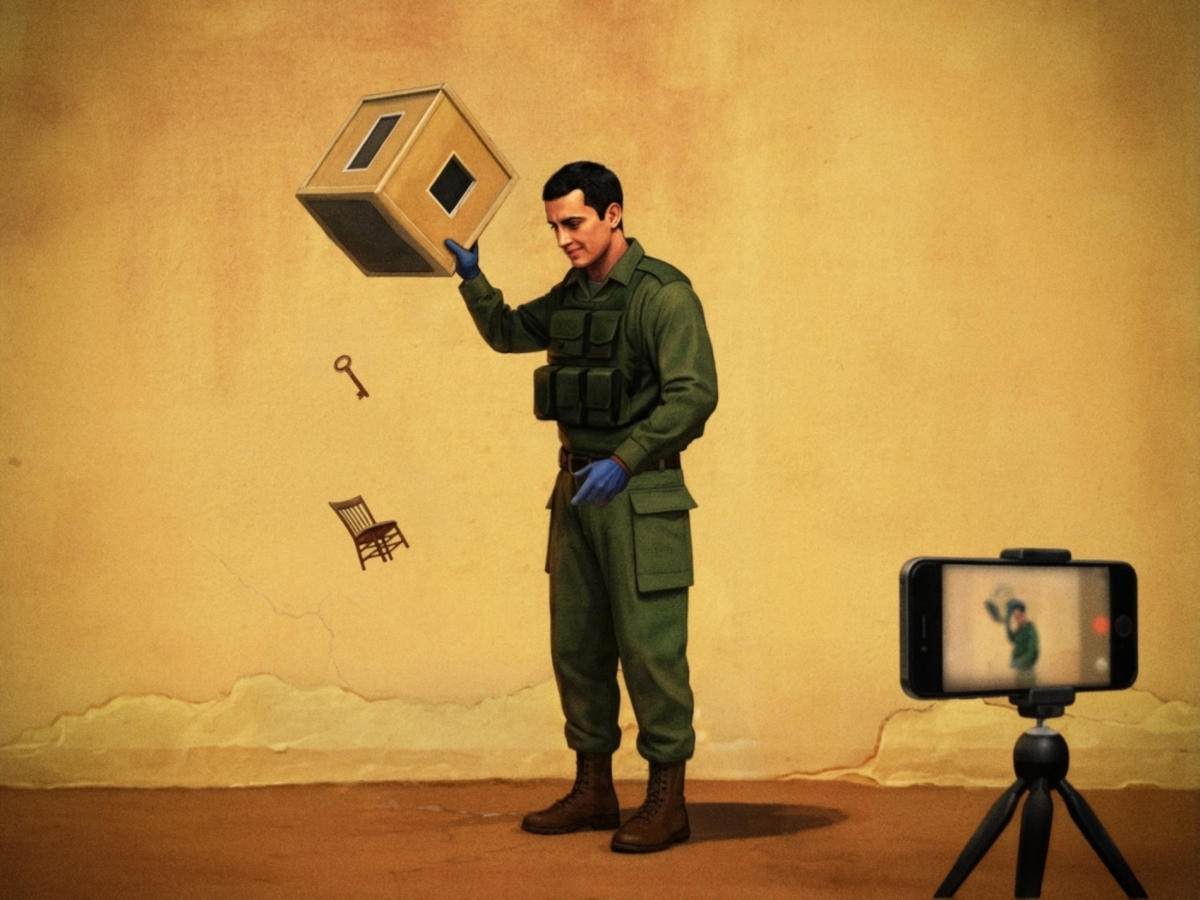
The image of the Israeli soldier cooking in an occupied home in Bint Jbeil bears all the marks of a deliberate, organised, and premeditated act. Baskets filled with vegetables and produce look as though they have just been picked. The preparations for cooking, the joy and familiarity on the soldier's face, and the sense of ease all convey permanence and stability. Behind the scenes stands an unseen party, organising, controlling, and directing. Together, they photograph, archive, and document with precision and skill, driven by an impulse to occupy the microscopic and the minuscule and to assemble them into a complete scene of occupation.
Everything in the image suggests integration with a superior technology of killing. The photo's high quality signals technical expertise, photographic know-how, and meticulous staging, as well as a determination to project military and technological superiority, all channelled through a medium as resonant as the home.
In the image of the soldier-turned-cook, the message is that overwhelming superiority renders the occupied home a natural right, one whose occupation requires no justification or rationalisation. The evident familiarity and intimacy in the relationship to the occupied home can be seen as a decisive escalation of what Kanafani had earlier captured in Returning to Haifa, namely, the settler behaving as though she were in her own home. That comparison has now been killed off. The female soldier does not behave as though she were in her own home. She behaves as though this home had always been hers. This scene goes beyond the normalisation of violence and entrenches its transformation into an existential condition.
In The Colonising Self: Home and Homeless in Israel Palestine, Israeli researcher Hagar Kotef observes that the making of the Israeli home has become bound up with the making of no home. She argues that attachment to place can be produced through violence, without the need for memory or history. No home is not an incidental component of the colonising self. It is essential and decisive.
Israeli soldiers eagerly document their actions in Gaza and southern Lebanon. This excessive practice predates the current war.
Yet scenes of Israeli ways of dealing with homes in Gaza and southern Lebanon suggest Kotef's analysis marks an early stage in grasping a drive toward the total eradication of the home as an idea, concept, place, and identity.
Kotef argues that attachment to a place can be forged through violence. In that sense, the Israeli soldier cooking in an occupied home inhabits a house first seized by force, and only then develops a sense of ease within it. Yet the repeated appearance of such scenes suggests something deeper. Violence is not merely the means through which attachment is later formed; it appears bound up from the outset with a conception of home that depends on possession and displacement.
No home is possible for the Israeli except through occupation and uprooting. This relationship expresses a decisive form of existence that cannot generate a non-violent, non-possessive relationship to the very idea of home.
The familiarity produced by control, which Kotef argues can turn occupation into an everyday practice, cannot explain the direct, instantaneous familiarity coinciding precisely with the moment of occupation. The soldier in the occupied southern home appears fused to the act of occupying it. Her familiarity seems to precede the moment of occupation, making her physical presence on the confiscated property merely the on-the-ground realisation of a deeper, prior existential habituation to occupation.
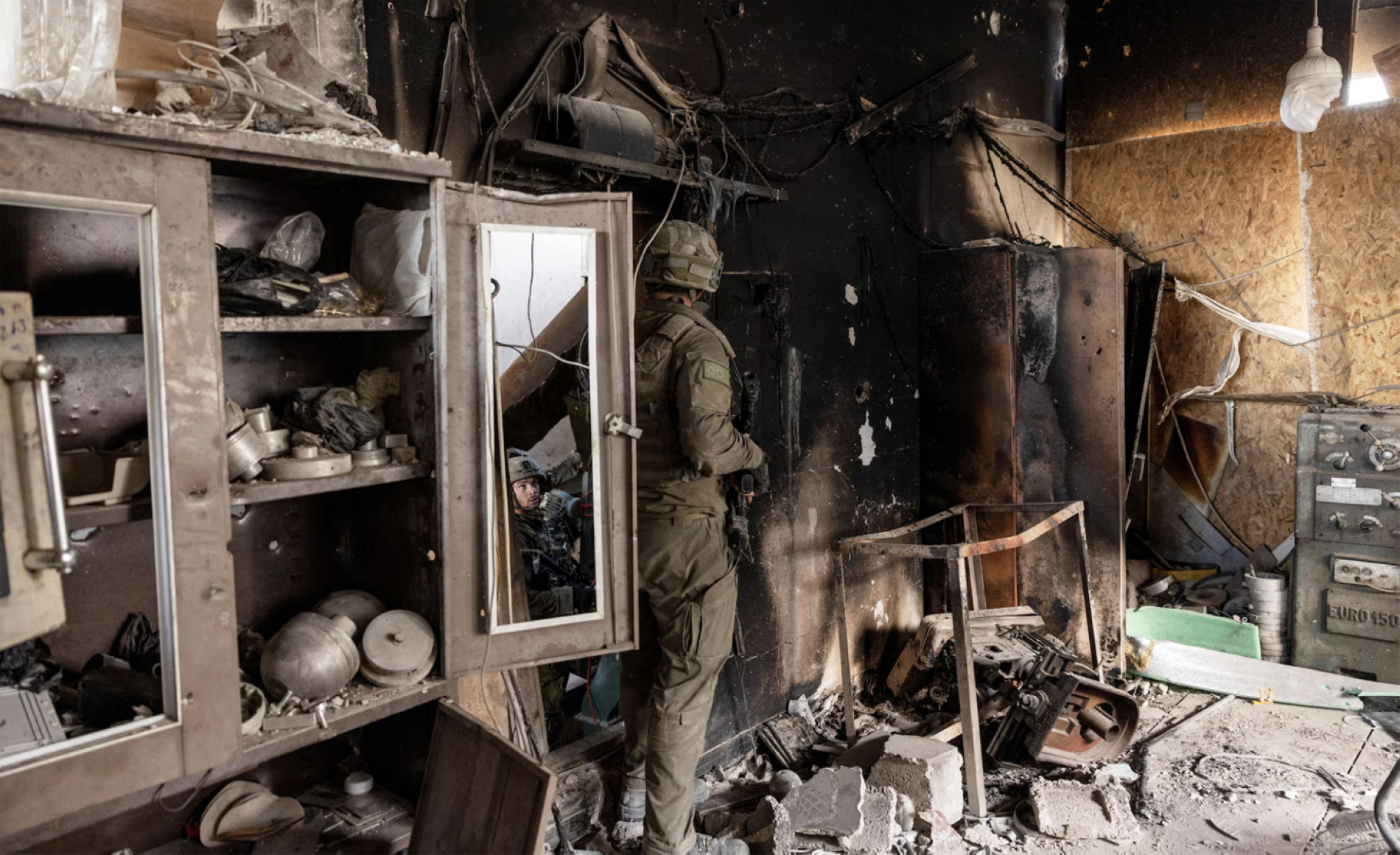
Israeli soldiers inside a workshop in northern Gaza, on 8 November 2024.
Social media's occupation 'trend'
Israeli soldiers eagerly document their actions in Gaza and southern Lebanon. This excessive practice predates the current war. Yet it now permeates every aspect of Israeli military operations to the extent that it is an intrinsic part of war itself.
Even if such acts appear unorganised and non-institutional (to avoid embarrassment or international lawsuits), the broader context of Israeli army field conduct reveals soldiers deliberately documenting and publishing violations, having shed political and moral restraints. The feasts in occupied homes, the behaviour that insists on displaying absolute ownership of occupied places, bring into view a logic that believes this visual regime can be normalised through repetition, density, and sheer abundance.
This logic resembles—in a literal sense—the logic of weapons and massacres. In its warfare, the Israeli army relies on ever-expanding destructive force and continuous, larger-scale atrocities, so each new crime eclipses the last, making effective condemnation impossible by erasing memory.
Israel's mode of operation runs counter to social media's general effect, which opens the door to uncontrolled information and opinions by exploiting the logic of trends which thrive on constant, unbroken replenishment. Waves of condemnation, fuelled by the soldiers' own material, end up reinforcing the trend. Their sheer extremity undercuts any possibility of discussion or opinion.
In this way, the trend system serves Israel's logic of showcasing home violations, looting campaigns, and other abuses, because their real-world horror moves along two dimensions at once. The first paralyses the recipient's capacity for debate, forcing little more than grief or powerless condemnation. The second perfectly aligns with the trend's demands for excitement and voyeuristic disaster-watching. The Israeli soldier as thief, rapist, and home occupier thus becomes impossible to condemn in morally or politically effective ways. At best, they shrink to a cinematic villain.
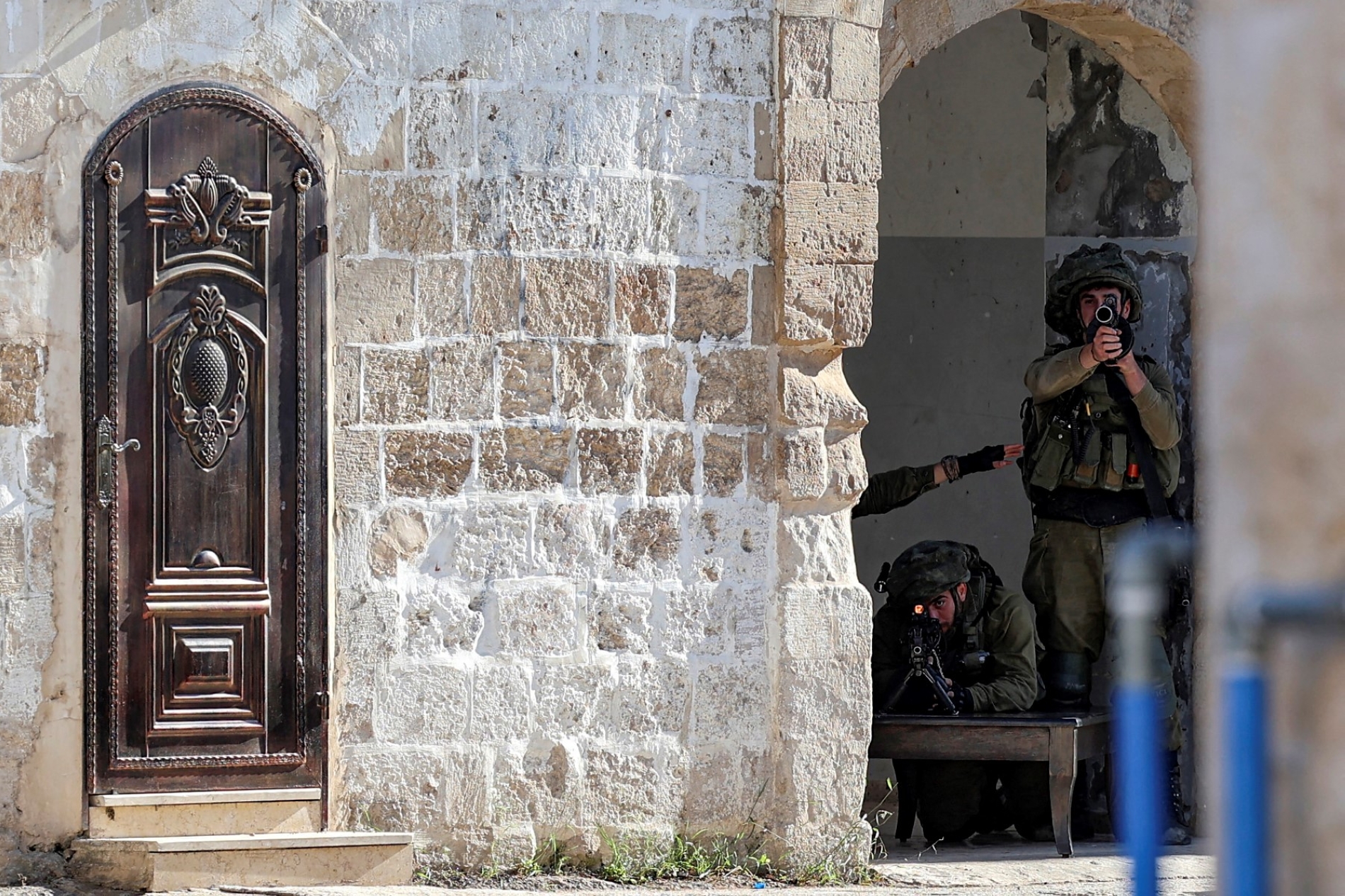
Israeli soldiers position themselves in a Palestinian home during a raid in the town of Rummanah, near the flashpoint town of Jenin in the occupied West Bank on 8 May 2022.
Strategies of uprooting
All of this reveals a broader strategy: stripping victims in Gaza, in southern Lebanon, and in every place Israel targets, of the possibility of dwelling. As the German philosopher Martin Heidegger argued, only if we can truly dwell can we build anything. Without a home, building is impossible. It is precisely in this dimension that Israeli strategies of uprooting can be understood. They target not only the home's past and present but also its future, the relationship between its existence and possession, and the possibilities of life, development, continuity, and endurance.
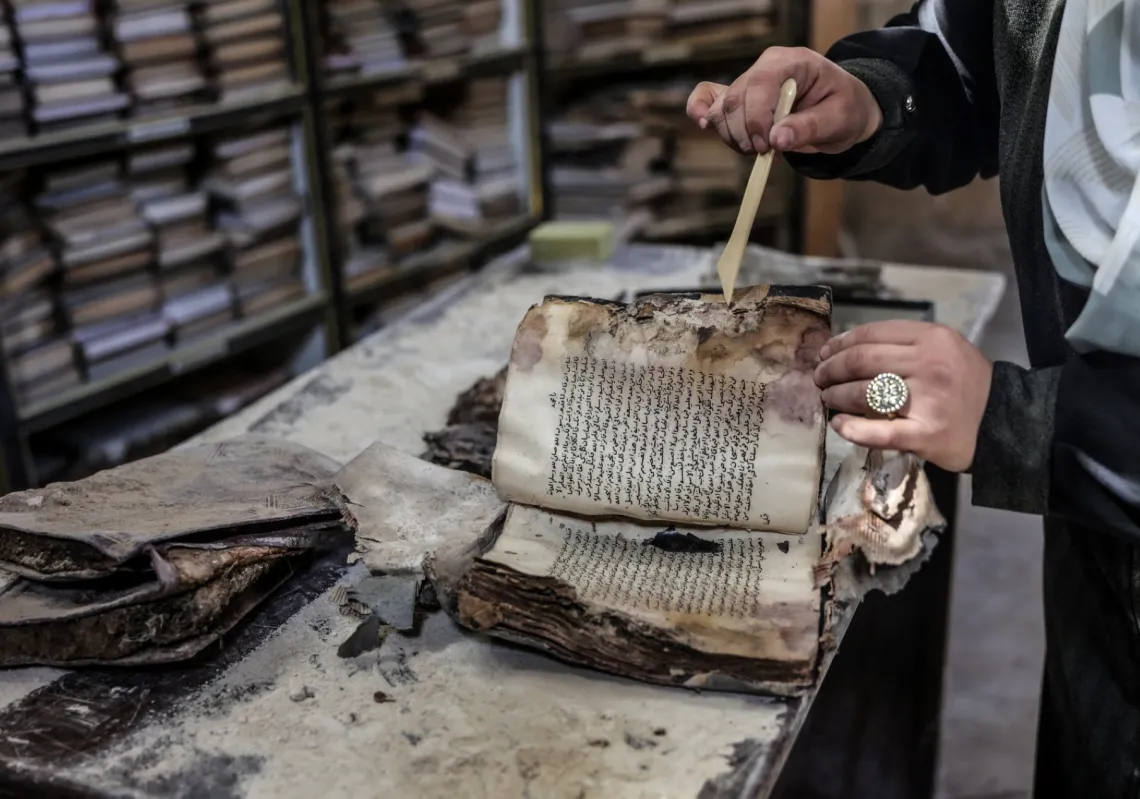
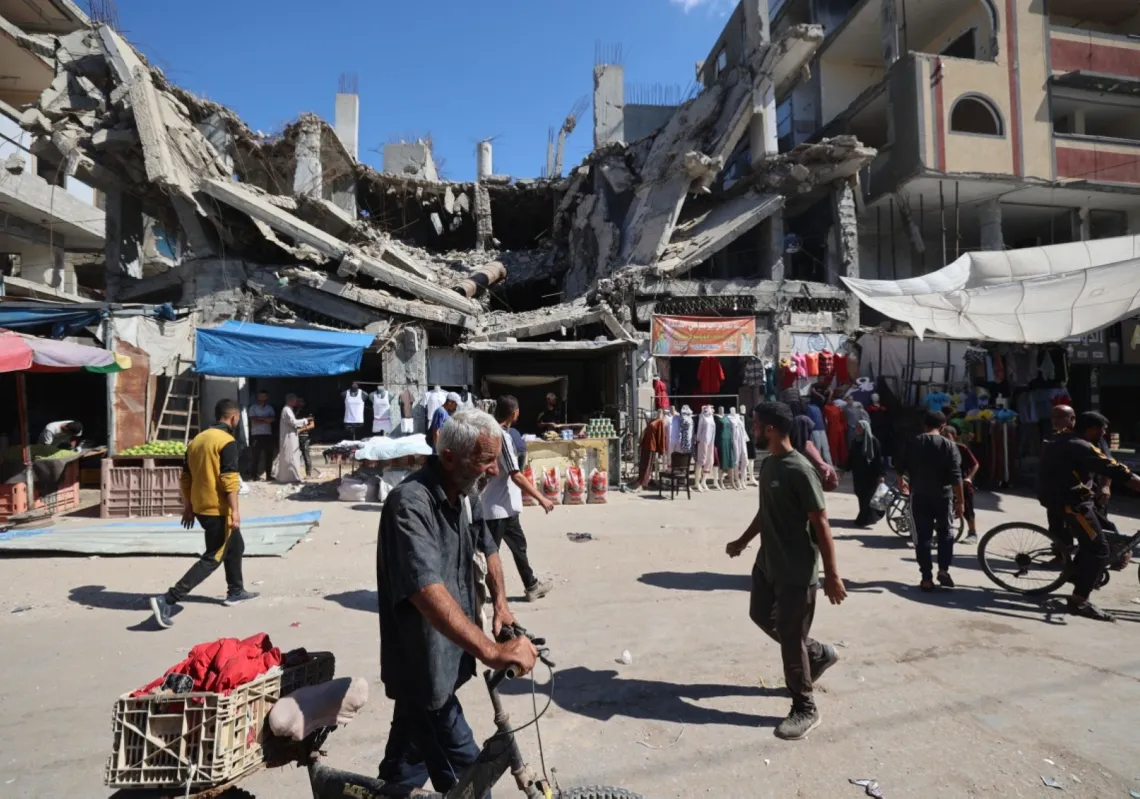
By destroying the home, extermination is carried to its furthest edge. The home is a single word with many meanings, perhaps most clearly embodied in local journalists: people of the place who stand in for its owners, defending their claim to it by pursuing the truth and bringing it into public view. Documented figures suggest that Israel is the greatest killer of journalists in the modern era. In this sense, the home is protected by facts, and facts make rebuilding possible, because erasure, as the Algerian-Palestinian author and theorist Ariella Azoulay argues, does not always mean disappearance.
Israel seeks to manufacture an erasure that permanently effaces its victims. This cannot be achieved except by killing those who embody homes, and those who defend truth's standing in the struggle over ownership of home and story.