After 16 years of Viktor Orbán's rule, Hungary finally has a new prime minister who has promised to steer the country back towards Europe
REUTERS/Marton Monus
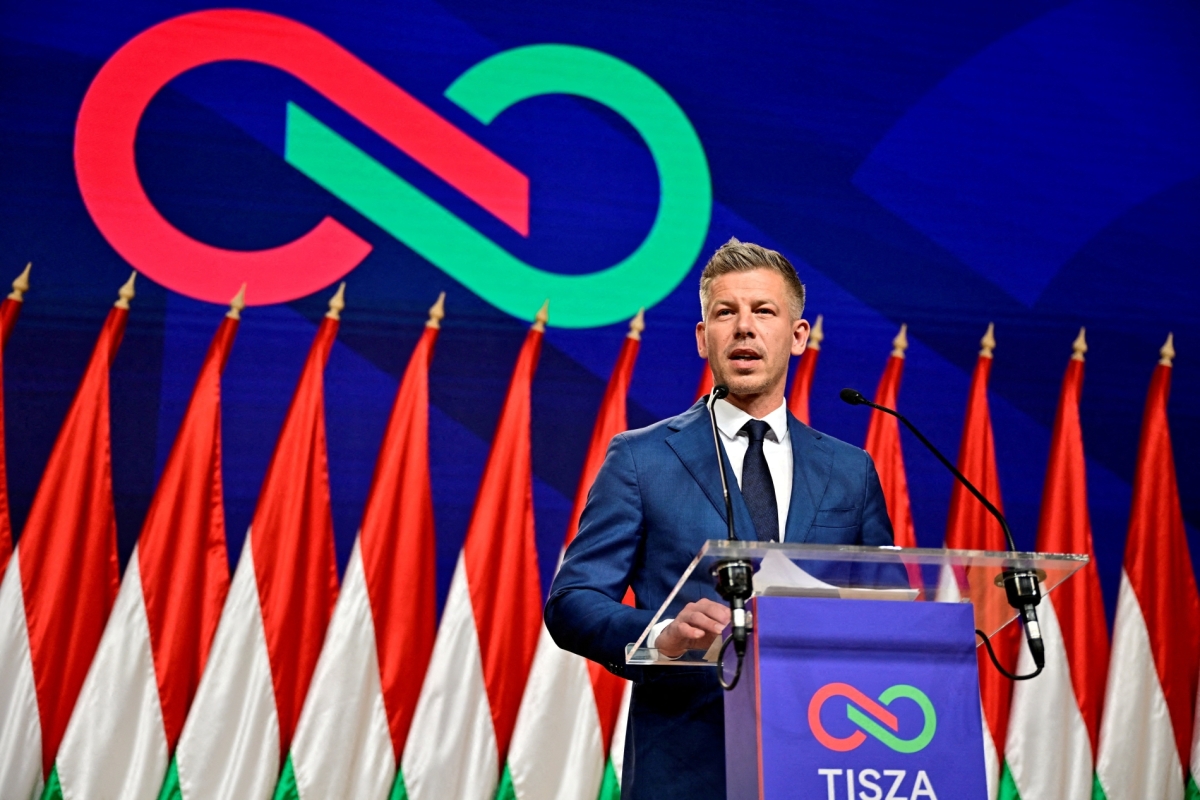
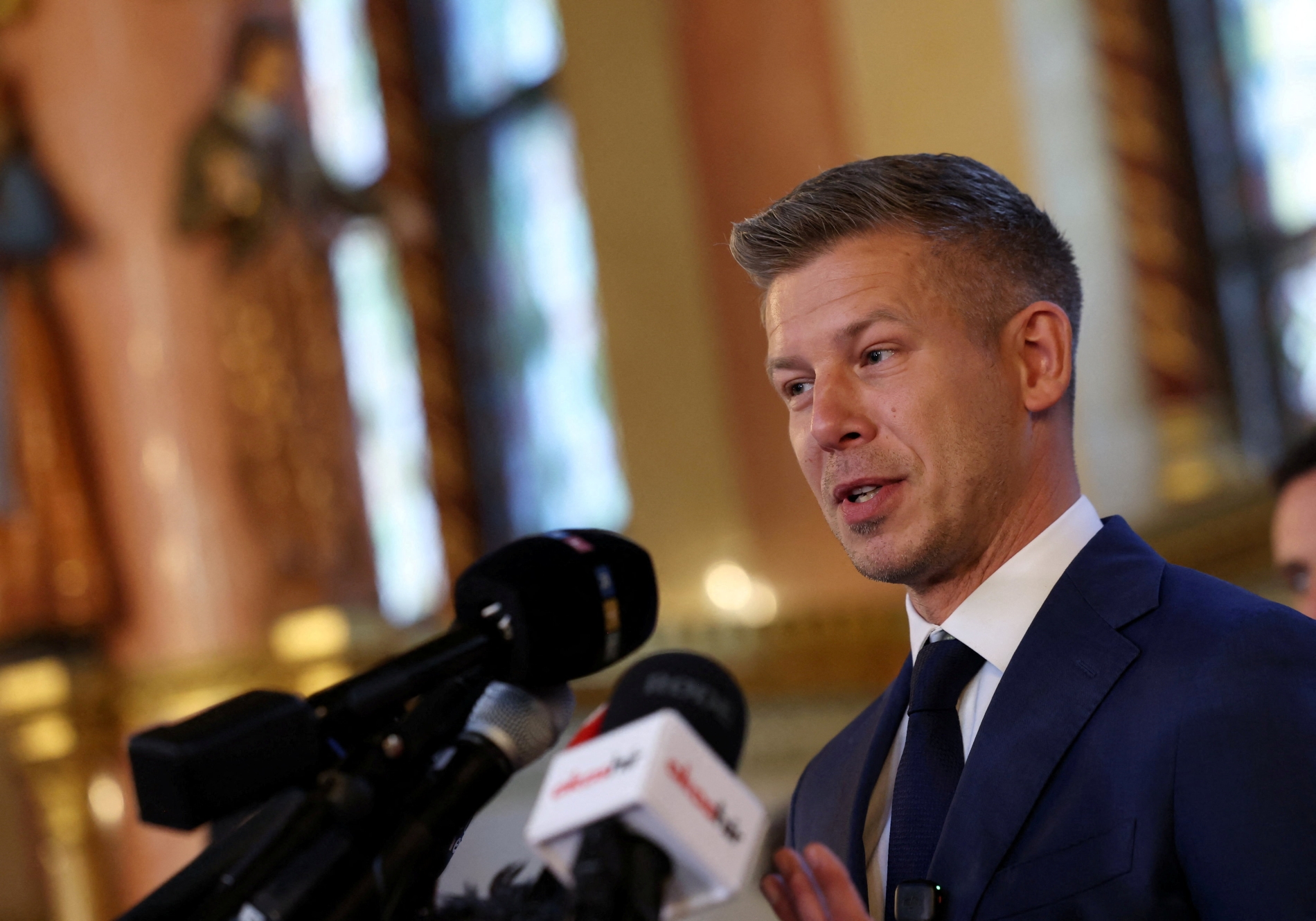
Magyar, leader of the opposition Tisza Party, speaks during a press conference a day after the parliamentary election, in which Hungarian Prime Minister Viktor Orban conceded defeat, Budapest, Hungary, on 13 April 2026.
The stunning victory achieved by Péter Magyar in Hungary’s general election may have prompted widespread rejoicing both in his own country and across Europe. But it is an open question whether the man who was once a close ally of Viktor Orbán, the country’s long-serving prime minister, will undertake the radical changes required to restore Budapest’s status as a trusted member of the Western alliance.
Orbán’s 16 years in power led Hungary to be viewed with deep suspicion by many European leaders, not least because of his close ties with Russian President Vladimir Putin. His pursuit of an aggressive nationalist policy, especially regarding the vexed issue of migration, often put him at loggerheads with the political establishment running the European Union (EU), which favoured adopting a more lenient approach towards dealing with the waves of migrants making their way to European shores.
Tensions between Orbán and the EU came to a head over his unapologetic support for Russia following Moscow’s 2022 invasion of Ukraine, which resulted in Hungary imposing a unilateral blockade on the EU’s plan to provide Ukraine with a vital €90bn aid package.
With Orbán’s premiership having been brought to an abrupt end following Magyar’s decisive victory on 12 April, there is now a growing expectation that Budapest’s ban on the proposed EU loan will be lifted as Hungary seeks to repair relations with the EU and the rest of the Western alliance under its new leader.
Return to Europe
Magyar, who previously served as an official in Orbán's party, certainly made all the right noises as he addressed a rally, having secured an overwhelming victory in the elections. “Today is a celebration of democracy,” the 45-year-old told thousands of supporters gathered on the banks of the Danube after his victory had been confirmed. “Hungary will be a European country again.”
Hungarians said yes to Europe again today. Our place has been in Europe for 1,000 years and will remain so.
Péter Magyar, prime minister of Hungary
As the crowd chanted "Hungary, Hungary", he added, "Hungarians said yes to Europe again today. Our place has been in Europe for 1,000 years and will remain so. My first journey will be to Poland to restore a 1,000-year-old friendship. My second will be to Vienna, and third to Brussels, to bring back EU funds that belong to Hungarians. Hungary will once again be a strong ally of Europe and NATO."
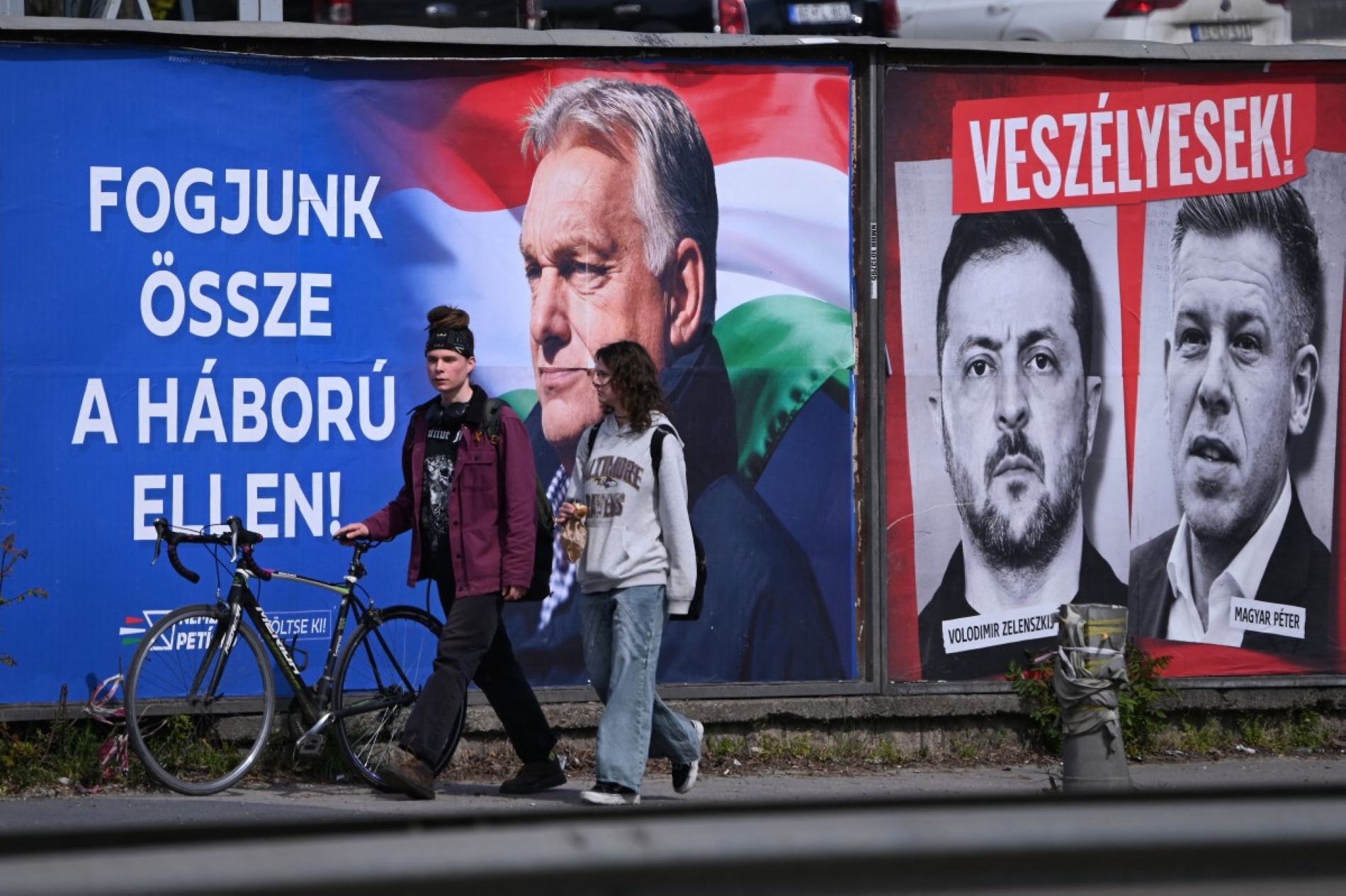
A record turnout of nearly 80% provided Magyar's Tisza party with its overwhelming victory, which was achieved due to growing discontent with Orbán's Fidesz administration, which had claimed that Ukrainian President Volodymyr Zelensky was plotting with the EU to drag Hungary into a war against Russia.
A campaign poster showing Ukraine's President Volodymyr Zelensky and Hungarian opposition leader Peter Magyar with the text reading, 'They are dangerous' in Budapest's 11th district on 10 April 2026.
The result was warmly received by European leaders. Ursula von der Leyen, head of the EU, declared on X, in English and in Hungarian: "Europe's heart is beating stronger in Hungary tonight. Hungary has chosen Europe. Europe has always chosen Hungary. A country reclaims its European path. The Union grows stronger." In London, British Prime Minister Keir Starmer hailed Magyar's victory as a "historic moment for European democracy."
Loyalist-turned-nemesis
By contrast, Hungary's change of government was a bitter blow for the Trump administration, which had openly campaigned in favour of Orbán, whom the White House had come to regard as a MAGA bridgehead in Europe. But while Trump openly declared his support for Orbán and promised investment for Hungary if he won, Hungary's long-serving prime minister was undone at home by complaints about underfunded hospitals and poor roads while whistleblowers claimed that his ruling Fidesz party had been involved in corrupt deals involving his friends and family.
Magyar's victory certainly represents a major turnaround in his political outlook, given that, as a child growing up in Budapest, he had a poster of Orbán—at the time a leading figure in the country's pro-democracy movement—hanging above his bed.
Orbán was one of several political figures who adorned his bedroom, Magyar told a podcast last year, hinting at his excitement over the changes sweeping the country after the collapse of communism. Magyar now regards his one-time hero as the architect of Hungary's modern-day status as a pariah state in Europe, accusing Orbán of having used his 16 years in power to transform the country into a "petri dish for illiberalism".
Unlike Orbán, who grew up poor, Magyar can count a judge and a former president in his family and was raised in the hilly Buda section of Budapest. Magyar—whose last name means 'Hungarian'—comes from a well-to-do family in Budapest. His relatives include lawyers and the former president Ferenc Mádl, who served as president of Hungary from 2000 until 2005, during Orbán's first term as prime minister.
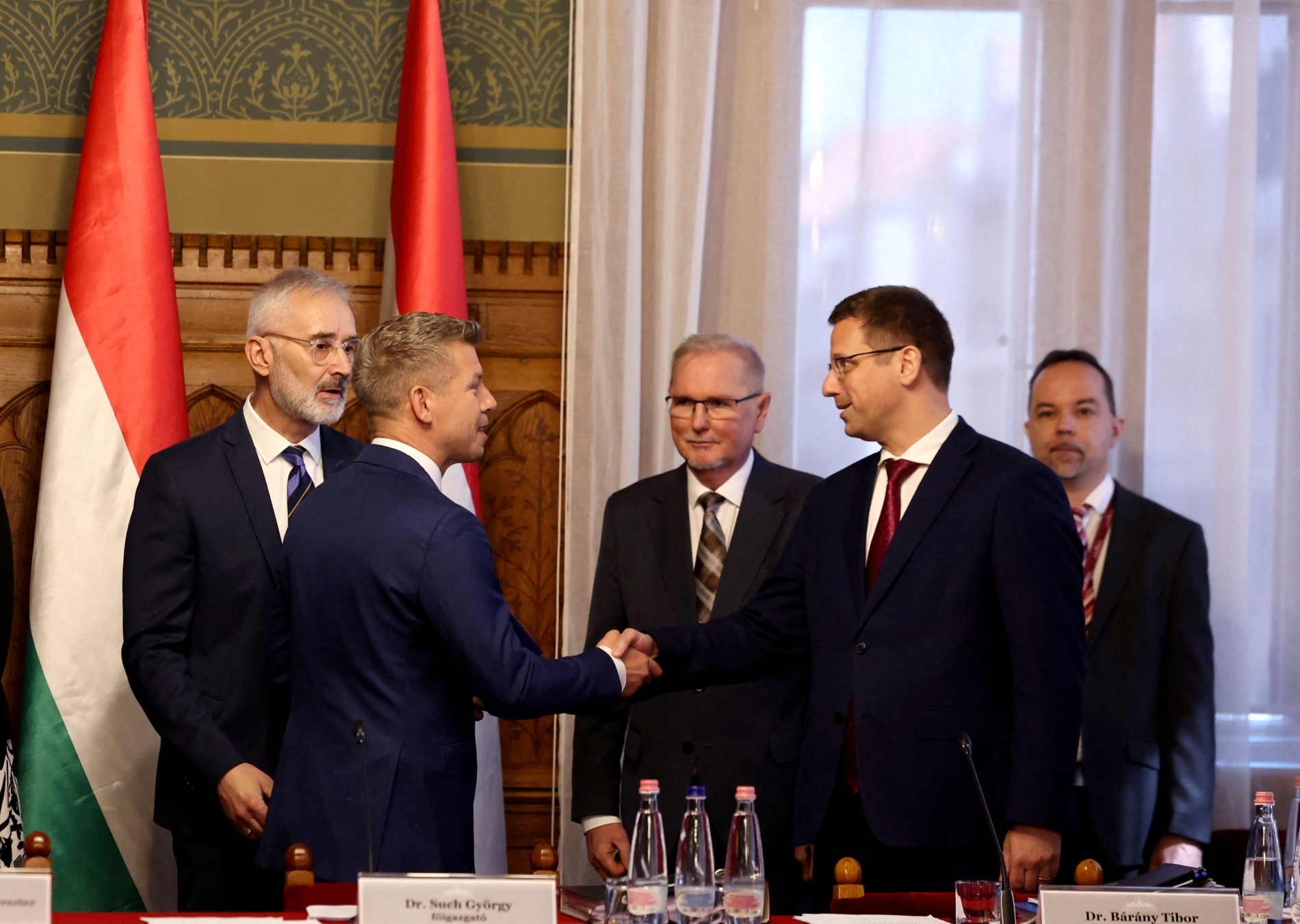
Hungary's election winner Peter Magyar shakes hands with Gergely Gulyas, Hungarian PM Viktor Orban's chief of staff, before talks on preparations for the first session of the Parliament in Budapest, Hungary, on 17 April 2026.
Magyar's journey from being an Orbán loyalist to his most effective political opponent has been remarkable, given that, just two years ago, he was a member of the governing Fidesz party and had previously been married to Judit Varga, once one of the party's rising stars. The couple lived for about a decade in Brussels, where Magyar was a diplomat, and Varga worked for a Fidesz Member of the European Parliament (MEP). They moved back to Budapest with their three sons in 2018. The following year, Varga was appointed Orbán's justice minister—a role she left in 2023 to lead Fidesz into the 2024 European Parliament elections.
The couple's marriage ended in 2023, just before she was forced to resign, together with Hungary's president, Katalin Novák, following a scandal involving an alleged child abuse cover-up.
Magyar soon found himself catapulted into the limelight in 2024 over the scandal following explosive comments he made in an interview after it emerged that Orbán's government—which for years had built its brand on defending Christian families and protecting children—had pardoned a man convicted of helping to cover up a sex abuse scandal at a children's home.
In an explosive video interview with Partizan, a Hungarian media outlet, Magyar accused Orbán and his allies of "hiding behind women's skirts" in the pardon scandal. He also used the interview to share information he had gleaned from his time in government. "A few families own half the country," he said in the interview, which has now been viewed nearly three million times, in a country of fewer than 10 million people.
Later that year, Magyar joined the Tisza party and quickly rose up the ranks to become its leader. Under his leadership, Tisza unexpectedly won almost 30% of the Hungarian votes in the European Parliament election in June 2024, making Magyar an MEP.
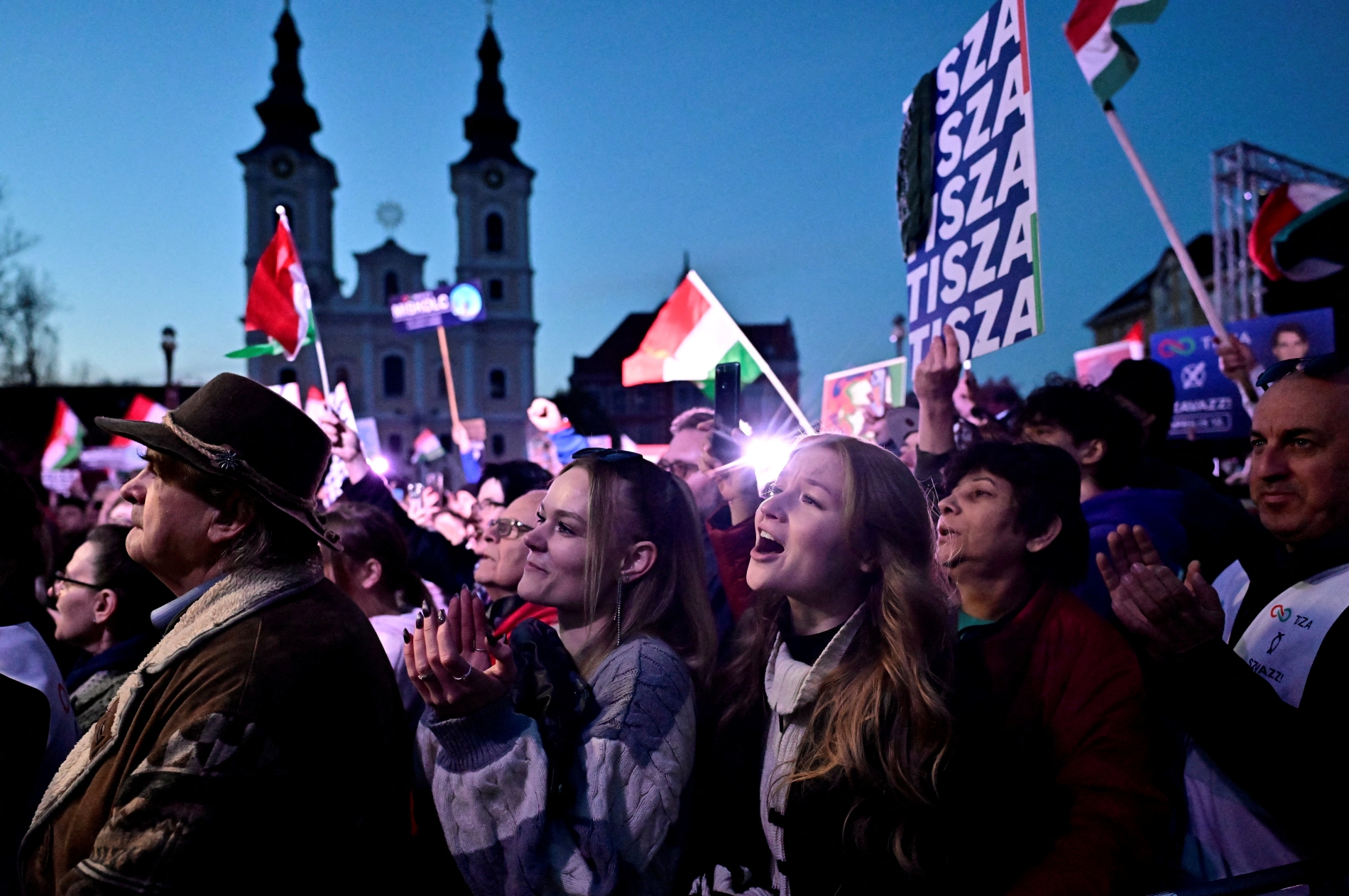
People attend a election campaign rally for Peter Magyar, leader of the opposition Tisza Party, in Miskolc, Hungary, on 10 April 2026.
Controlled campaign
From that moment on, Magyar ran a highly controlled, one-man campaign aimed at exposing the weaknesses in Orbán's administration, attracting praise for the nationwide movement he built and the discipline he showed as he crisscrossed the country, delivering up to six speeches a day.
Another key to Magyar's success has been his ability to work with alternative and independent media, which has helped him to unify much of the democratic opposition behind him.
But expectations that Magyar's administration will oversee a radical overhaul of Hungary's political outlook need to be tempered by the fact that Magyar is a social conservative whose key domestic agenda is to increase financial incentives to have children, cut taxes, and double the defence budget—an outlook that positions him firmly on the right of European politics.
One of his first priorities will be to address what is regarded as the corruption of the outgoing Orbán administration, with Magyar indicating that he expects many pro-Orbán officials to tender their resignations in the coming weeks.
With Magyar having secured a crucial two-thirds majority in parliament, he is in a strong position to oust Orbán appointees packing the courts and prosecutors' office, who could block future law-making and corruption investigations. He has already called on Orbán appointees to top state jobs to step down: "They should not wait for us to fire them, which we will. The puppets of the regime must leave public life. This regime is over."
Hungary's election winner Peter Magyar talks to the media after talks between parties on preparations for the first session of the Parliament in Budapest, Hungary, on 17 April 2026.
As István Kapitány, who is likely to be Magyar's economy minister, said in an interview with The Times: "This is a real system-change." He likened the election win to Hungary's 1848 revolution and its 1956 revolt against communist rule.
But questions remain about how Magyar will address key foreign policy issues, not least the vexed issue of the war in Ukraine.
While Magyar has pledged to strengthen ties with Europe that Orbán damaged by vetoing support for Ukraine, he carefully avoided discussing controversial subjects during the election campaign, such as Ukraine joining the EU.
Magyar's near-silence on Ukraine has certainly raised concerns that, while there might be a change of regime in Budapest, there are no guarantees that the new Magyar administration will be any more supportive towards Ukraine than its predecessor.