Jens-Frederik Nielsen: the Greenlandic premier standing up to Trump

Trump made no secret of his desire for the US to 'own' Greenland and has threatened to take over the frigid Arctic island 'the easy way or the hard way', but its people do not want to become American

Greenland's Head of Government Jens-Frederik Nielsen addresses Members of European Parliament (MEP) during a formal sitting at the European Parliament in Strasbourg, eastern France, on 8 October 2025.
FREDERICK FLORIN / AFP
Greenland's Head of Government Jens-Frederik Nielsen addresses Members of European Parliament (MEP) during a formal sitting at the European Parliament in Strasbourg, eastern France, on 8 October 2025.

Jens-Frederik Nielsen: the Greenlandic premier standing up to Trump

At a time of deepening tensions with Washington over US President Donald Trump’s desire to seize control of Greenland, the ancestry of the country’s youthful prime minister, Jens-Frederik Nielsen, makes him the ideal candidate to defend his country's national interests.

Nielsen was born and raised in Greenland after his Danish father moved there as a child, while his mother is a native of the country, making his hometown  Greenland’s capital, Nuuk.

A proud Greenlander, Nielsen’s entire political outlook is based on his long-term desire to achieve independence for a country with a population of around 57,000 people.

While Nielsen concedes it will take years for Greenland to achieve the level of economic self-sufficiency that will enable the country to end its long-standing affiliation with Denmark, his entire political philosophy is based on his determination to achieve self-determination for Greenland's people. Stretching over 800,000 square miles, Greenland currently enjoys semi-autonomous status from Denmark, with ties between the two countries dating back many centuries.

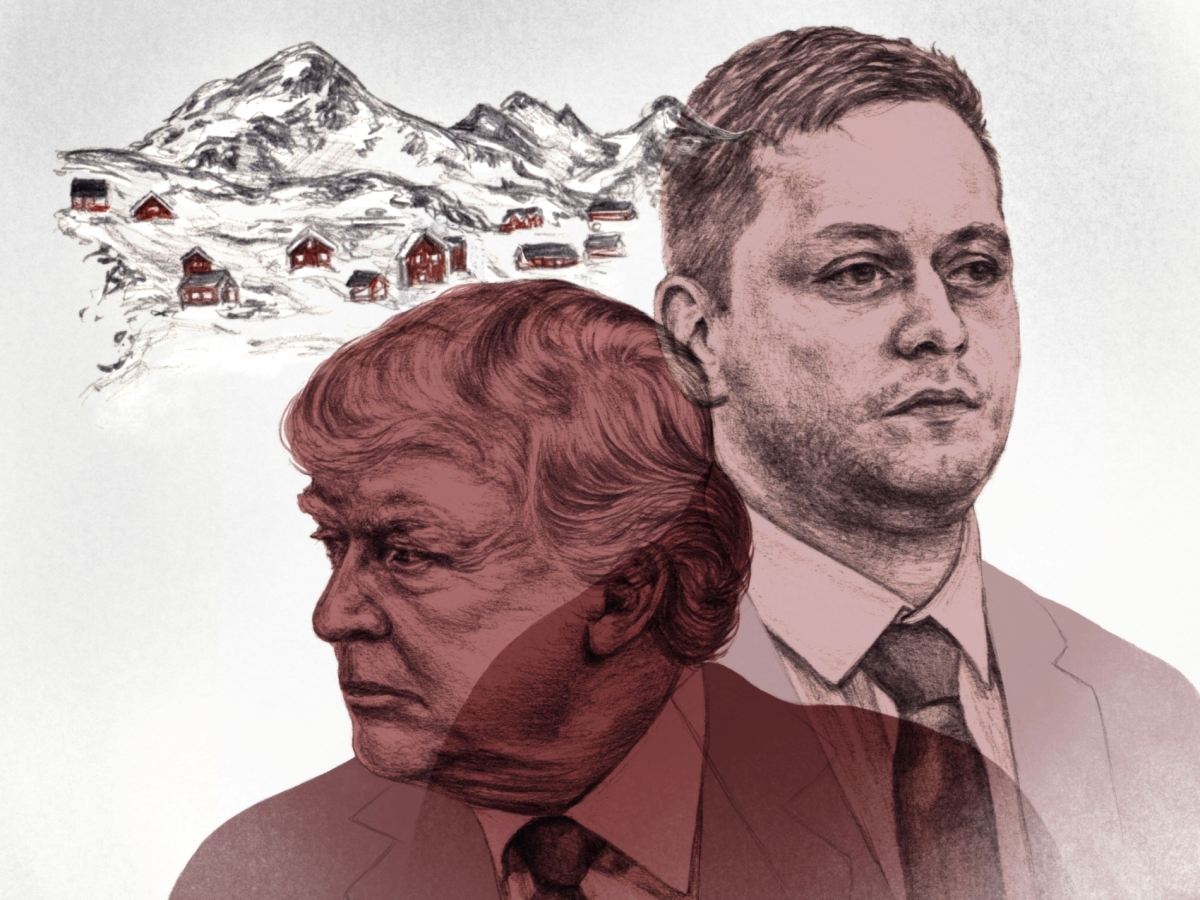
Nielsen’s nationalist agenda, therefore, makes him ideally suited to represent Greenland’s interests at a time when Trump has openly declared his intention to place the country under American control by the end of his second term in three years’ time.
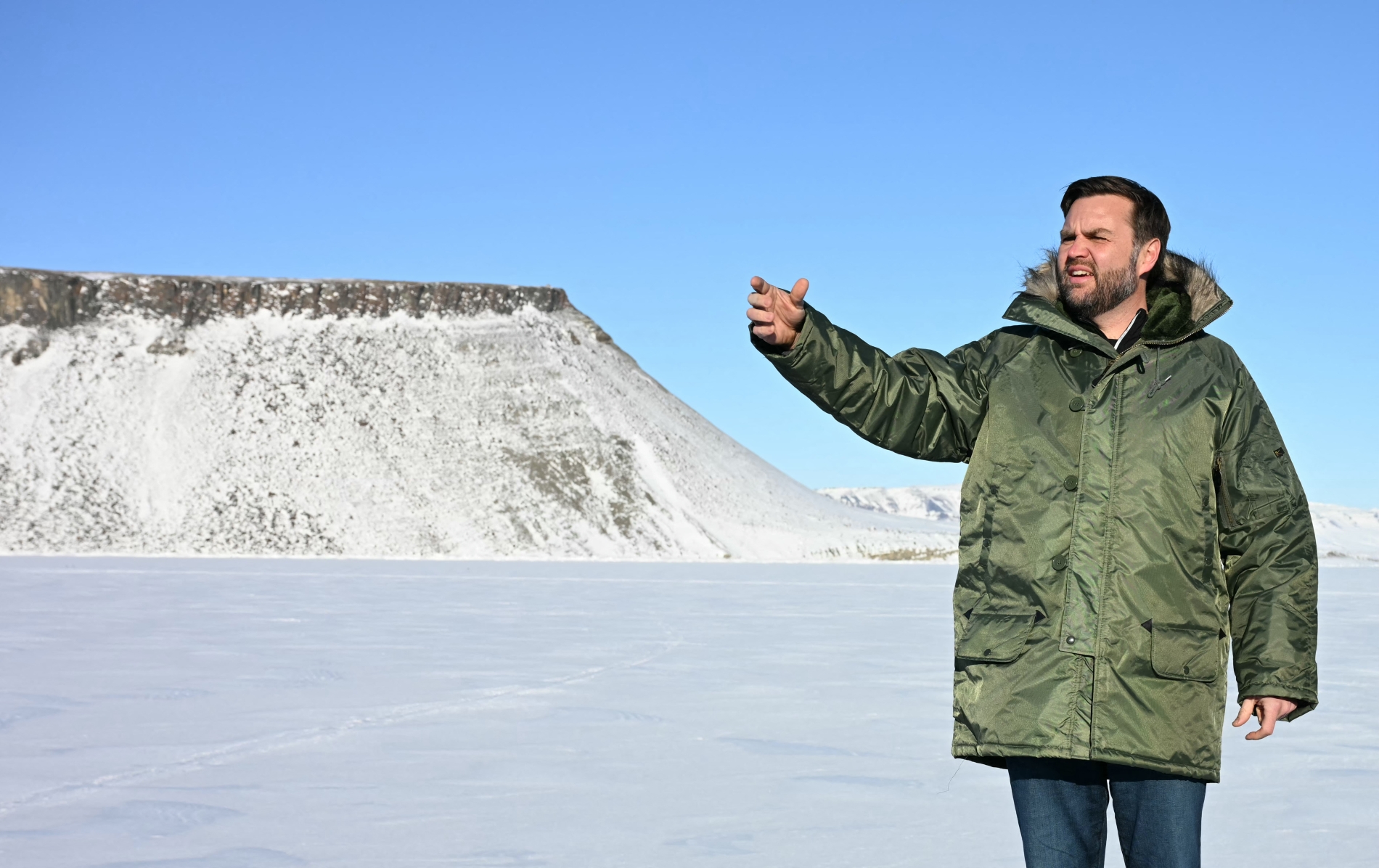
Jim WATSON / POOL / AFP
US Vice President JD Vance tours the USmilitary's Pituffik Space Base in Greenland on 28 March 2025.

Rich in rare earths

In recent years, there has been increased interest in Greenland's natural resources—including rare earth minerals, uranium and iron—which are becoming easier to access as its ice melts due to climate change. Scientists think it could also have significant oil and gas reserves.

The US and its allies have also been concerned that, in the absence of proper security guarnatees, Greenland could come under the influence of rival powers, such as Russia and China, which have intensified their interest in the Arctic region in recent years.

This prompted Trump to offer to buy the island from Denmark in 2019, during his first presidential term, only to be told it was not for sale.

More recently, concerns over the future of the territory resurfaced after Trump's use of military force against Venezuela to seize its president, Nicolás Maduro.

Speaking shortly after America’s military intervention in Venezuela, Trump indicated that he might be prepared to use military force to seize control of Greenland if a deal could not be reached that enabled the US to “own” the country to prevent Russia and China from doing so.

'Absolute necessity'

At the time, Trump said he regarded taking control of the territory as an “absolute necessity” for the economic security of the US and its Western allies.

“We are going to do something on Greenland, whether they like it or not, because if we don’t do it, Russia or China will take over Greenland, and we’re not going to have Russia or China as a neighbour,” Trump told reporters earlier this month.

The US will do it "the easy way" or "the hard way", the president added. The White House also floated the idea of buying the semi-autonomous territory of fellow NATO member Denmark, but it would not rule out annexing it by force.

Denmark and Greenland say the territory is not for sale. Denmark has said military action would spell the end of the trans-Atlantic NATO defence alliance.

Trump’s comments prompted a swift and firm response from Nielsen, who assumed office in April 2025 and has since seen his early months shaped by escalating pressure from Washington.

“The current and repeated rhetoric from the United States is completely unacceptable, " Nielsen responded. “When the US president talks about ‘needing Greenland’ and links us to Venezuela and military intervention, it is not just wrong. It is disrespectful,” he posted on social media.
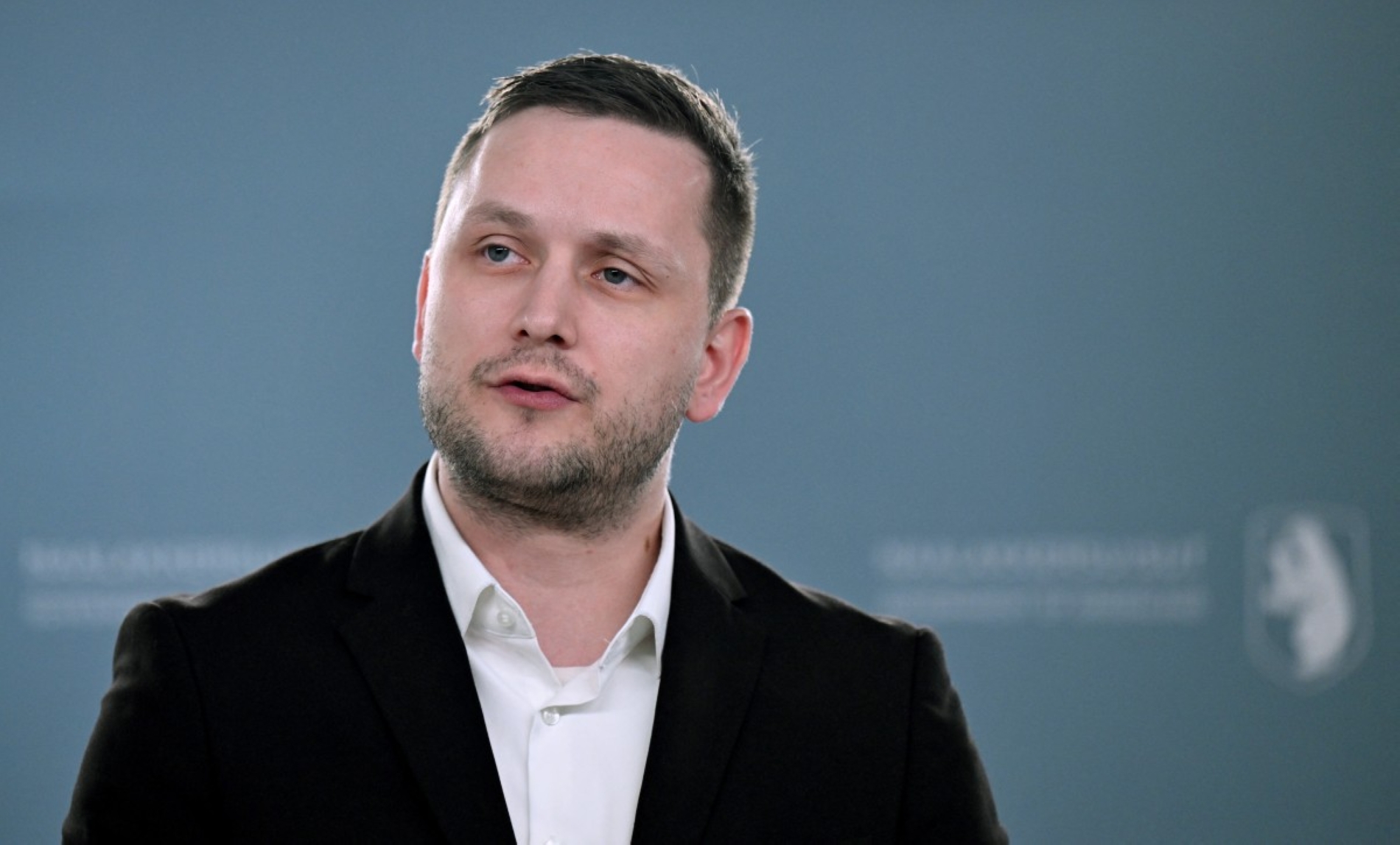
JONATHAN NACKSTRAND / AFP
Greenland's Prime Minister Jens-Frederik Nielsen addresses a press conference on 20 January 2026 in Greenland's capital Nuuk.

Resolute tone

Although he has signalled his willingness to establish a dialogue with Trump, Nielsen struck a resolute tone. “Enough is enough. No more pressure. No more insinuations. No more fantasies of annexation,” he said.

“We are a democratic society that makes our own decisions ... Greenland does not want to be owned by the United States, and Greenland will not be governed from Washington.”

Nielsen’s firm stance has been backed by Greenland’s party leaders, including the opposition, who reiterated their call for the "US's disregard for our country to end" in a joint statement.
Greenland does not want to be owned by the United States, and Greenland will not be governed from Washington

Greenlandic Prime Minister Jens-Frederik Nielsen

"We do not want to be Americans, we do not want to be Danes, we want to be Greenlanders," they said. "The future of Greenland must be decided by the Greenlandic people."

Danish backing

Nielsen's determination to defend Greenland's interests was very much in evidence when he joined Danish leader Mette Frederiksen for trilateral talks with American officials to discuss the territory's future status. Frederiksen gave his backing to Nielsen's position, insisting that "Greenland is not for sale."

"We come together, we stay together, and we leave together," Frederiksen said of Denmark and Greenland. "We, of course, have a will to also continue investing in the Greenlandic society."

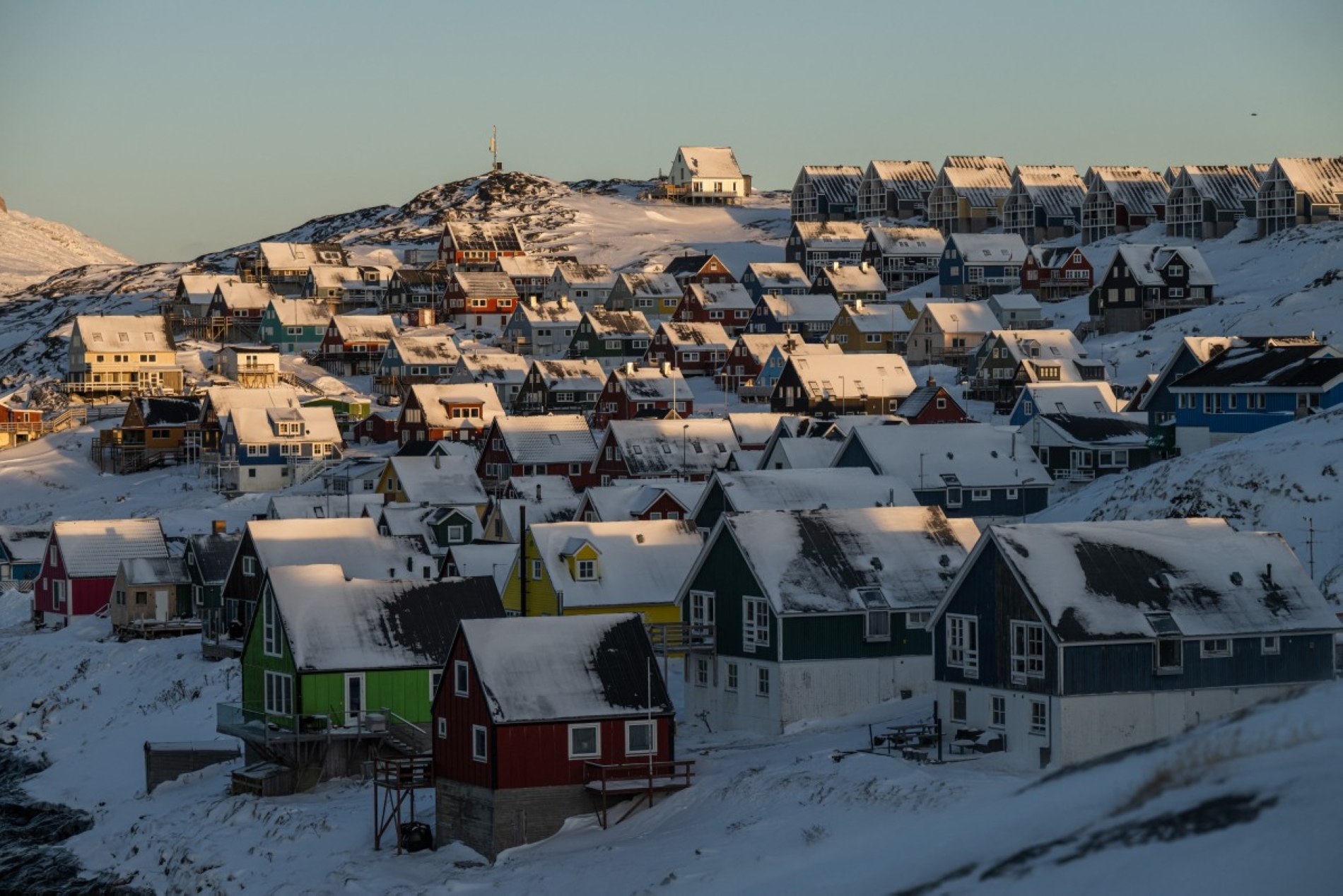
AFP
Snow-covered houses on a hillside in Nuuk, Greenland, as the evening light floods the area.

Since then, Trump has announced that he reached a deal over Greenland during his visit to Davos earlier this week. However, details over what was exactly agreed remain scant, and Trump's confrontational approach may have caused irreparable damage to transatlantic relations, regardless.

Youngest premier

Nielsen was sworn in as the country's youngest prime minister in 2025 to face the challenges posed by Trump's ambitions to control the Arctic island. His political career began in earnest in 2020, when he was elected chair of the right-of-centre Demokraatit party, which is committed to achieving  Greenland's independence. Before becoming prime minister, he served as Minister for Industry and Mineral Resources.

A social science graduate from the University of Greenland and a member of the Greenland national badminton team since 2009, Nielsen has been involved in politics since his high school years, according to IT consultant Hans Brummerstedt, who has known Nielsen since childhood. Nielsen's charisma, sense of humour, and social intelligence set him apart, he said. 

"He carries an infectious energy, and he's well-liked no matter where he goes," Brummerstedt said. "In general, he's just a decent person who is always extremely well-prepared in everything he does."

In his first press conference as prime minister in Nuuk, Nielsen called for political unity to combat external pressures. His message was clear: "At a time when we as a people are under pressure, we must stand together." 

After denouncing Trump's statements about Greenland as "disrespectful", Nielsen stressed the importance of his country's long-standing ties with Denmark.

"Denmark has the will to invest in the Greenlandic society, and we don't just have that for historical reasons. We also have that because we are part of (the Danish) commonwealth with each other," he added. 

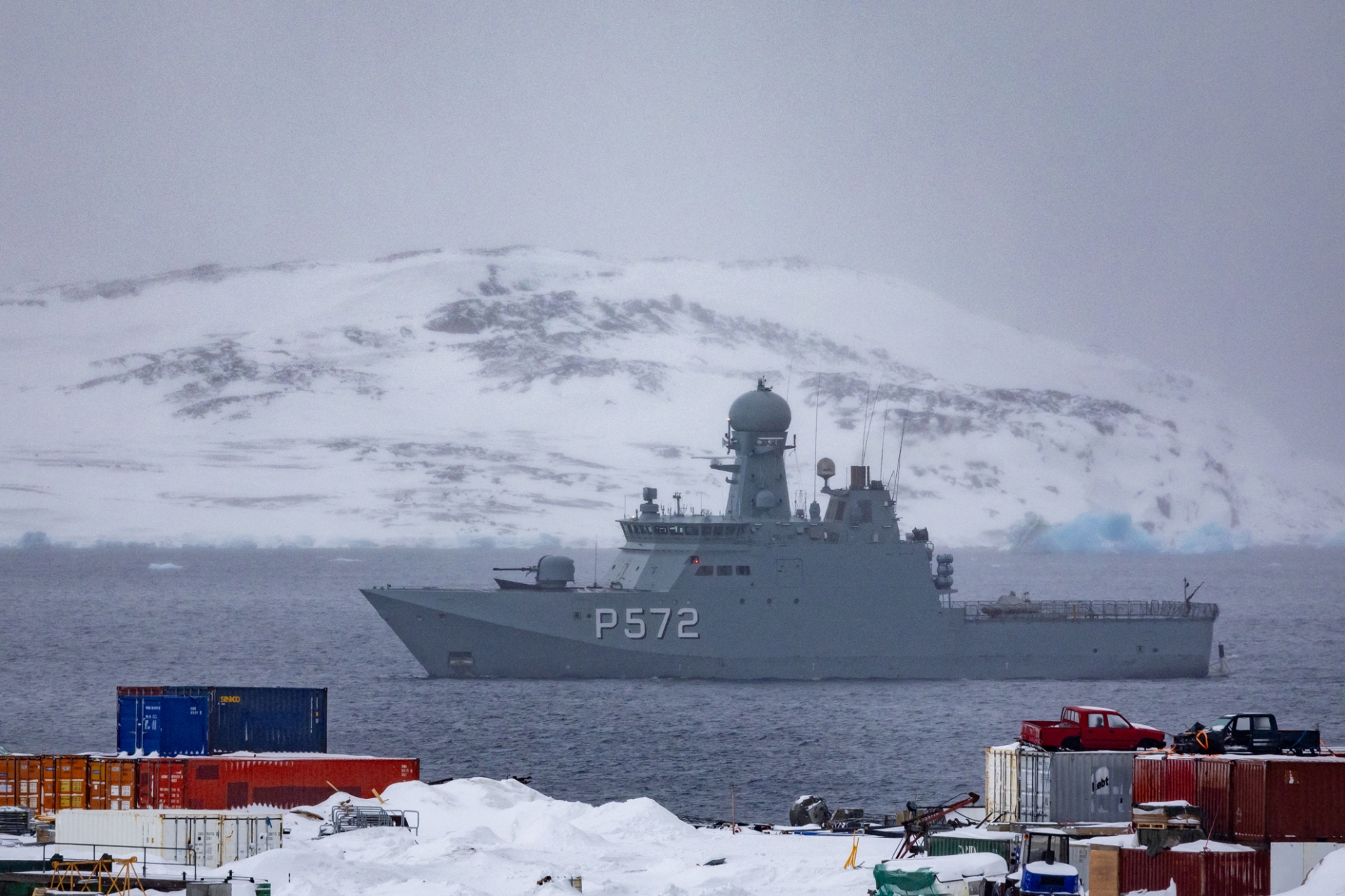
AFP
A Danish naval warship near Nuuk, the capital of Greenland, on 8 March.

Ambitious vision

Nielsen's economic vision for Greenland is ambitious. He aims to shift the focus from discussions about Denmark's block grant—a little less than $1bn each year that keeps the economy afloat—to business development and the creation of a self-sustaining economy. His goal is for Greenland to achieve independence through economic self-reliance, and he believes a "gradualist" approach is the best way to achieve it, rather than seeking an immediate split with Denmark. A key element of his strategy for making Greenland economically self-sufficient is his drive to attract investment from the US—a policy that could make Greenland vulnerable to Trump's territorial designs.

The investment issue was one of many raised during trilateral talks held in Washington earlier this month between Danish Foreign Minister Lars Løkke Rasmussen, Greenland's Foreign Minister Vivian Motzfeldt, Vice President JD Vance and Secretary of State Marco Rubio.

The talks were described as "positive" and "frank" by an EU diplomat briefed on the negotiations, but the substance of the dispute remained unchanged, with Denmark and Greenland still having a "fundamental disagreement" with the US over Trump's ambition to control the territory.  

"We didn't manage to change the American position," Rasmussen said after the talks. "It's clear the president has this wish of conquering … Greenland. We made it very clear this is not in the interest of the kingdom."  

LUDOVIC MARIN / AFP
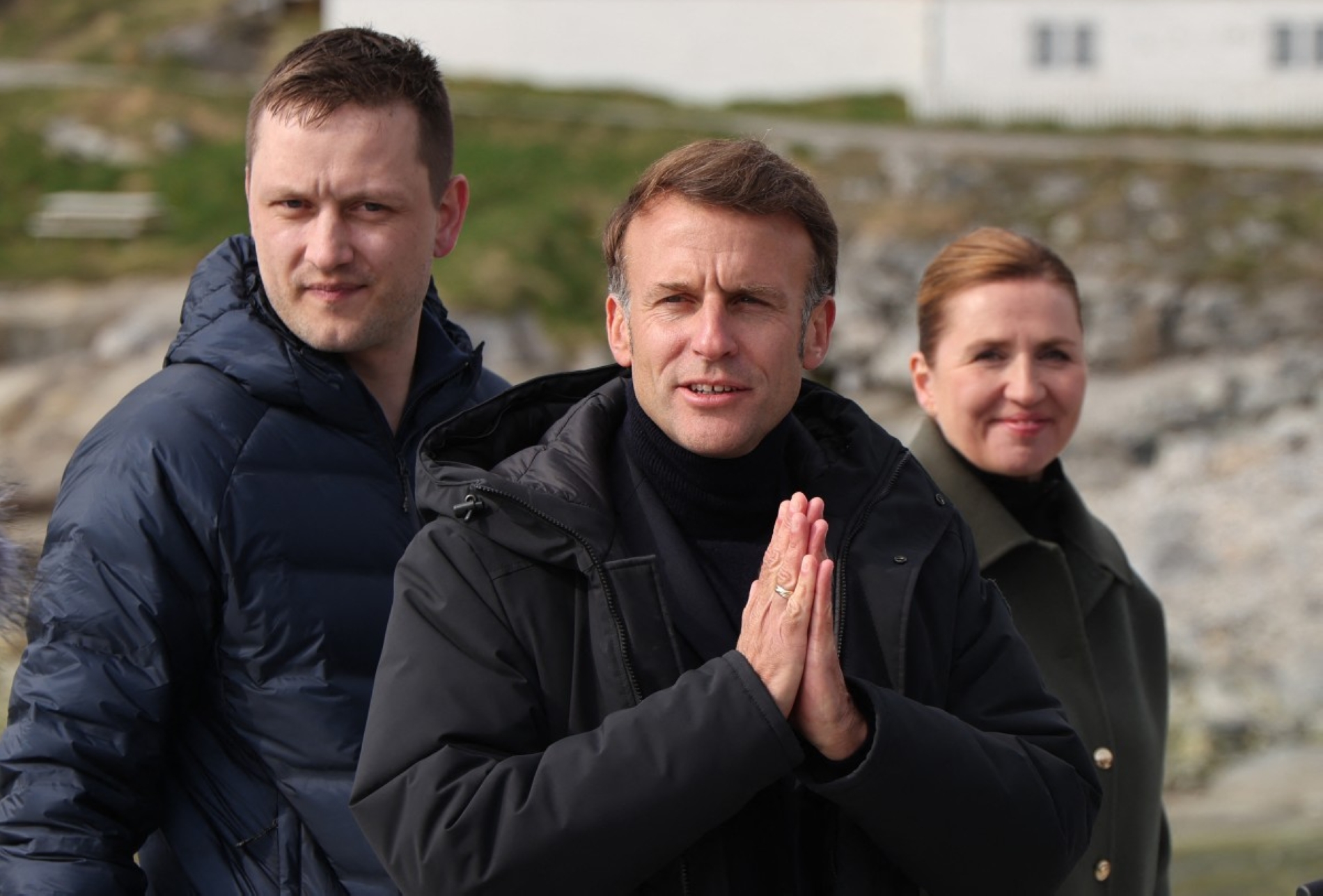
French President Emmanuel Macron gestures next to Greenland's Prime Minister Jens-Frederik Nielsen and Danish Prime Minister Mette Frederiksen at the end of a joint press conference in Nuuk, Greenland, on 15 June 2025.

NATO presence requested

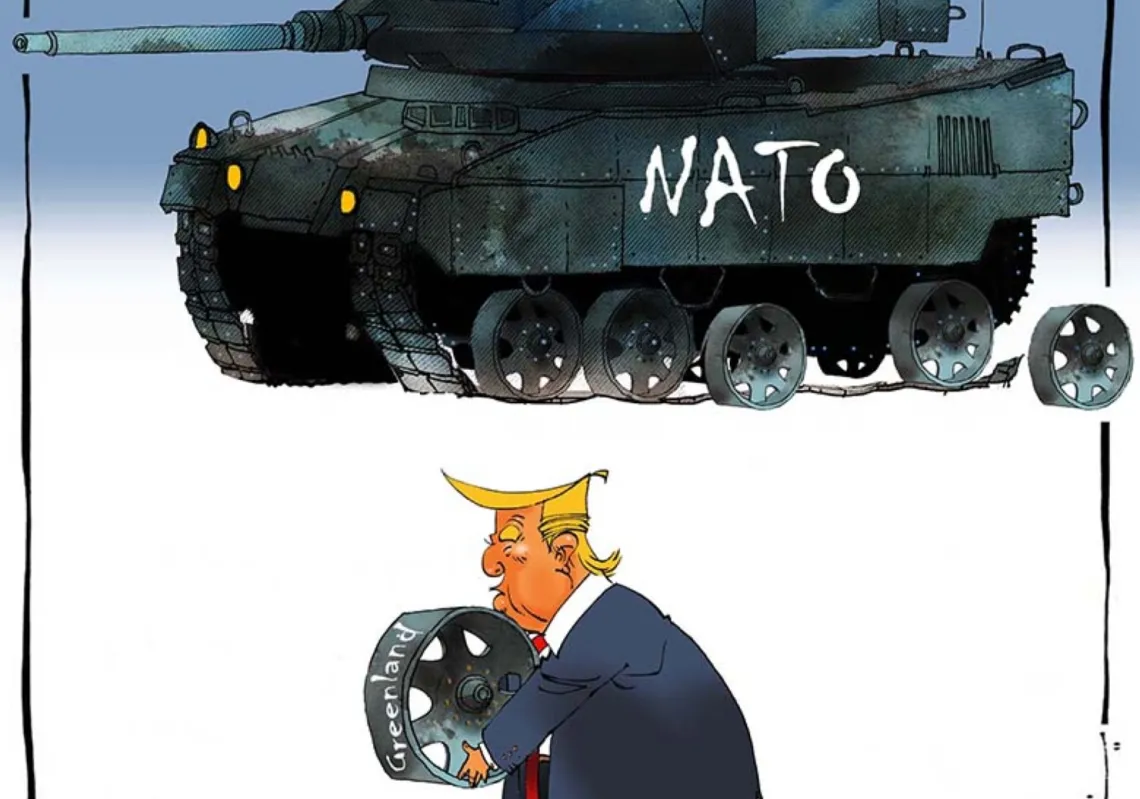
Copenhagen has now asked its NATO allies to increase their presence around Greenland, leading to the deployment of troops from Sweden, the Netherlands, France and Germany to the island in recent days.  

Trump is not the first American leader to be interested in securing Greenland, the world's largest island. During the Second World War, the US occupied  Greenland when Denmark was occupied by Germany, but at the end of the war, the US was reluctant to leave. In 1949, both the US and Denmark joined NATO, and in 1951, they signed a treaty that legally obligated the US to defend Greenland. This was followed in 1953 by the US building Thule Air Base, which has subsequently been renamed Pituffik Space Base. 

The shortest distance between Russia and the US tracks over Greenland. Tracking and potentially destroying ballistic missiles bound for the US requires tracking and missile capability in Greenland territory. 

AFP
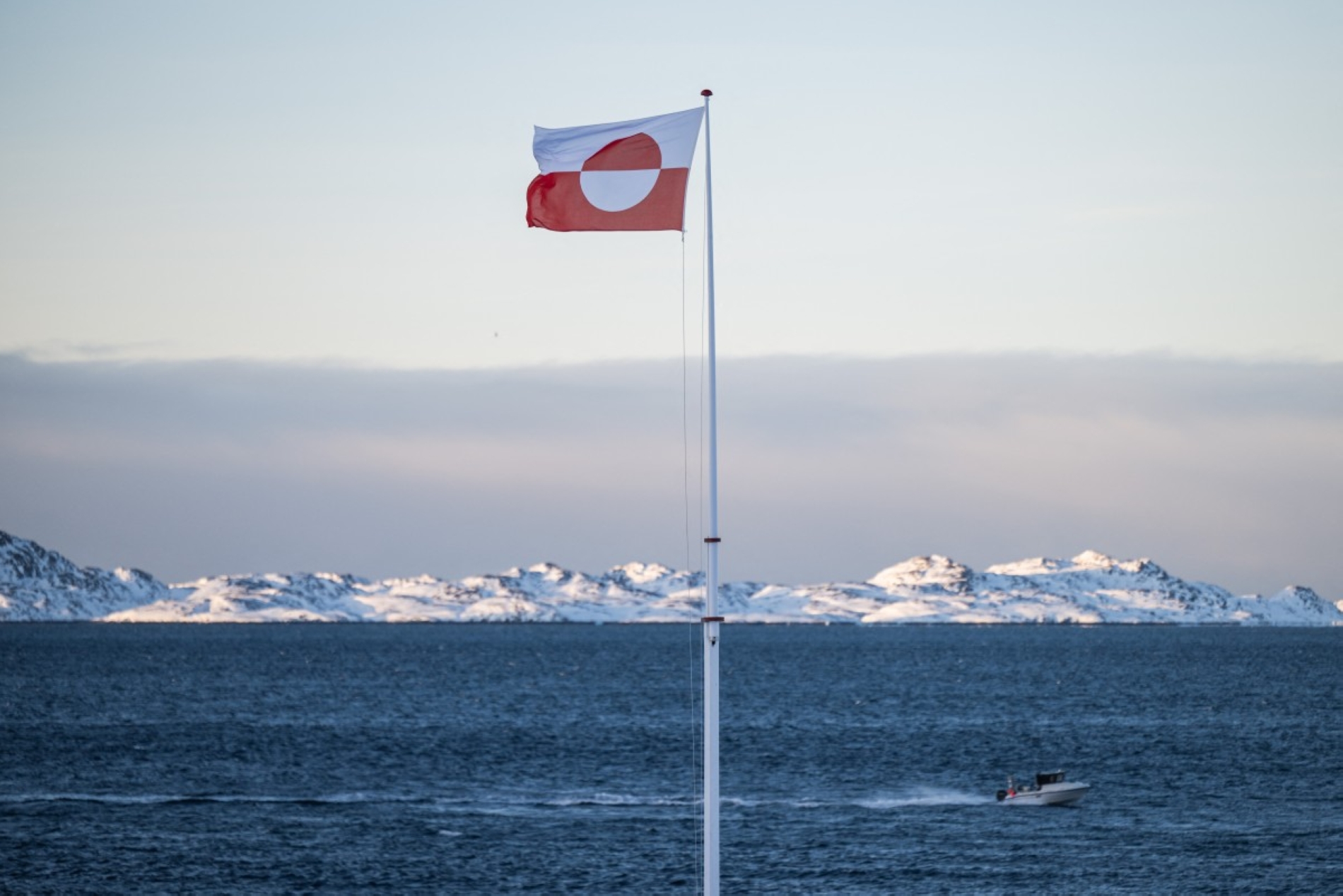
The Greenland flag flies on the coast of the Nuuk region.

Key chokepoint

The coastline is particularly important. There is a maritime chokepoint in the waters between Greenland, Iceland and the UK—the so-called GIUK gap—that is viewed as crucial to keep an eye on Russian and Chinese ships, and especially submarines moving between the Arctic and Atlantic. 

There are different methods the US might use to expedite its appropriation of Greenland. The US has attempted to buy Greenland many times before. In 1946, the US offered $100mn to buy the island (around $1.3bn in today's money) but was told "Greenland is not for sale". 

As regards military action, the US already has a military presence in Greenland, and the Greenlanders themselves have no national military capability. Denmark is responsible for Greenland's defence and security, but it would be no match to counter US military aggression should Trump decide on that course of action. However, attacking a fellow NATO member would almost certainly mark the end of NATO in its current form and plunge many European countries into a security crisis.

The challenge for Nielsen, therefore, is to forge a policy that gradually steers Greenland towards his goal of achieving full independence while maintaining cordial relations with both the US and the country's long-standing allies in Denmark.

font change