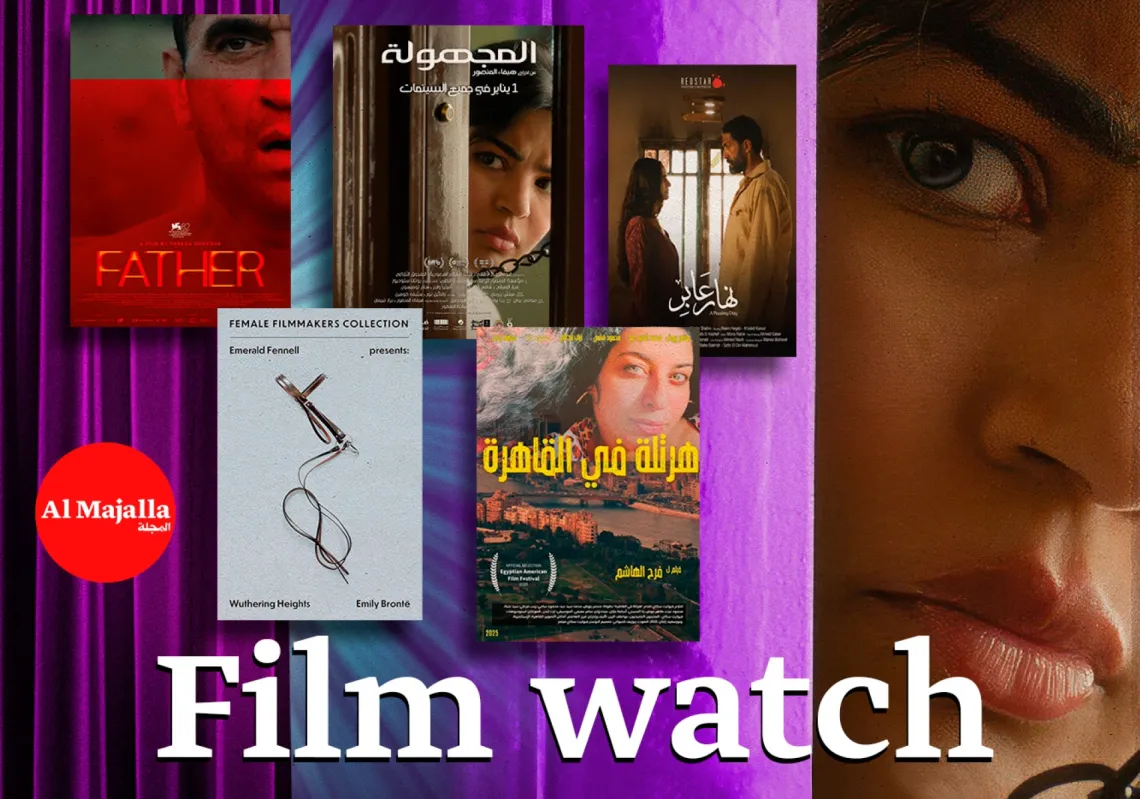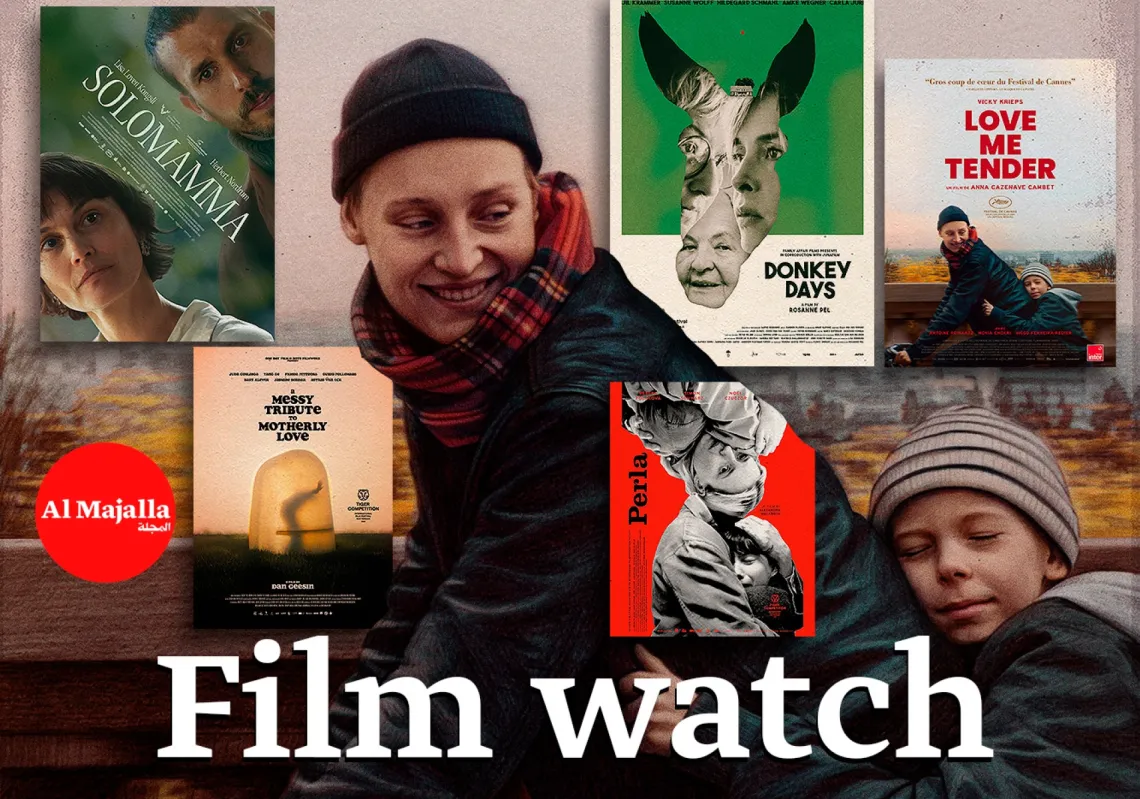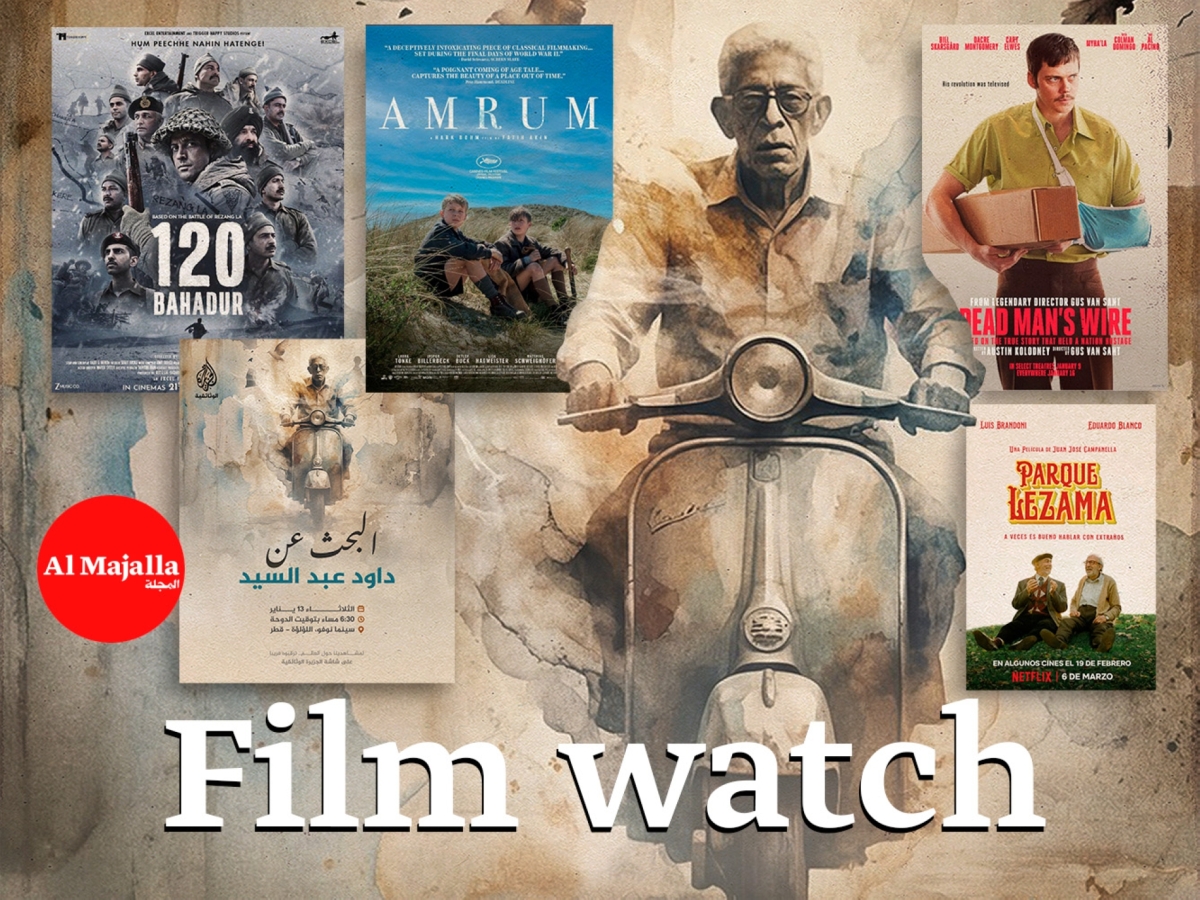

In this feature, we offer an overview of what’s new on the big screen, spanning both mainstream and arthouse films across all genres, while also revisiting titles from the archive of classic cinema.
Dead Man’s Wire
Screenplay by: Austin Kolodney
Directed by: Gus Van Sant
Country of production: United States
Dead Man’s Wire is a film inspired by a true incident from 1977, when struggling businessman Tony Kiritsis took Richard Hall hostage. Hall was a mortgage broker who refused to give Kiritsis additional time to make payments on a piece of commercial real estate on which he had fallen behind.
Kiritsis went to Hall’s office, brandishing a sawn-off shotgun and wired the muzzle of the gun to Hall’s head. The wire was connected to the trigger at one end and to Hall’s neck at the other. This ‘dead man’s wire’ meant that if the police shot Kiritsis, the gun would go off, killing Hall.
This film dramatises those events and stars screen legend Al Pacino alongside Bill Skarsgård in the lead role, who delivers a combustible performance brimming with fury and vulnerability. It premiered at the Venice Film Festival, where it was well received by audiences, but failed to gain much momentum. Skarsgård is the standout, his portrayal evoking the likes of Travis Bickle in Taxi Driver, giving a sense of inner strain seething just beneath the skin.
The screenplay is no straightforward reconstruction of real events. Somewhat of a black comedy, it weaves journalistic narration—through archival material and wide-frame footage—into a heightened emotional drama that invites broader interpretation, veering towards the surreal.
The film examines masculinity and anger in society, with Tony caught in a psychological and social crisis, both victim and threat, leaving the viewer suspended between sympathy and reproach. Gus Van Sant said shooting began around two years ago, but that striking parallels began to appear between the story being told on screen and realities unfolding elsewhere, lending the project an unusual immediacy and making it feel uncannily apt.
There are hints of Martin Scorsese’s The King of Comedy, in which the protagonist presents his captive on air while reading out his demands, while also evoking the atmosphere of Sidney Lumet’s Dog Day Afternoon, especially in those passages where crime collides with the public sphere and the cameras become a tacit accomplice in escalating events, rather than a neutral observer of them.
Turning 85 this month, Al Pacino shows he can still grace the screen with assurance and that he remains entirely capable of commanding viewers’ attention, even though his part is brief.
Amrum
Screenplay by: Hark Bohm
Directed by: Fatih Akin
Country of production: Germany
Throughout his career, Fatih Akin has been preoccupied with dual identity, treating it as one of the chief forces shaping character, alongside the dramatic tensions that drive his films. This was on display in works such as In the Fade, Head-On, and The Edge of Heaven, but his latest film, Amrum, marks a notable shift. Here, the German director of Turkish origin steps gently away from his familiar terrain of migration and estrangement, gravitating instead towards a quieter, more contemplative historical drama, while preserving his enduring preoccupation with identity and belonging.
The film unfolds on a German island that appears at first secluded and tranquil. As time goes by, the historical strain hidden beneath its stillness is revealed, a strain that sharpens as the end of the Second World War draws near. Here, the innocence of childhood collides with the lingering burden of an ideological inheritance not yet exhausted, in a world that may force the individual to grow up too soon to confront what lies beyond his grasp.
Drawing on a lyrical screenplay by Hark Bohm, one of the most distinguished figures in German cinema, written in collaboration with the director, Fatih Akin, reconstructs a story inspired by Bohm’s own childhood when, aged 12, he worked to help his family survive the war. In doing so, he is drawn into a world far older than his years. Whether labouring on the farm by day or fishing by night, his tasks take on the weight of existential trials.
Even so, he remains unable to relinquish the Nazi salute, despite the mounting hostility towards those who still bear that allegiance. Poised between autobiography and dramatic fiction, the film turns an individual experience into a mirror reflecting one of the most turbulent chapters in modern history.
The film premiered in the Première section of the latest Cannes Film Festival, marking Fatih Akin’s fifth appearance there. Visually, the film succeeds in creating a striking artistic tension between the beauty of nature and the cruelty of reality. The island’s panoramic landscapes gradually reveal that they embody no true serenity and instead lay bare the fragility of the Nazi order, along with ideas that once seemed as fixed and unquestionable as doctrine.
This emerges forcefully in the figure of the mother, who exemplifies how political discourse imprints itself on collective consciousness, until ideology becomes a lingering shadow, difficult to cast off even after its symbols have fallen.
Strangers in the Park
Screenplay by: Herb Gardner
Directed by: Juan José Campanella
Country of production: Argentina
Set within a comic frame, Strangers in the Park centres on two elderly men who have long sought a daily refuge against loneliness. In time, an unexpected friendship begins to take shape between them, after the initial light skirmishes over a Buenos Aires park bench that one has claimed as ‘his’ for years.
Gradually, through mutual confession, we come to know the very different lives each has led. León is a former communist activist who still clings to revolutionary ideals, while Cardoza follows a simpler creed: live and let live. They are two figures who distil two sharply divergent human experiences.
The film is adapted from Herb Gardner’s play I’m Not Rappaport, reworking the theatrical text within an almost static cinematic setting that relies on the density of the dialogue and on the singular chemistry between its two leads, Luis Brandoni and Eduardo Blanco. It also illuminates the marginalisation of old age through intelligent touches that avoid melodrama. Telling moments crystallise the depth of loss.
One of the men speaks of still dreaming in colours whose brilliance age has since dimmed. The other recoils from the emotional coldness of children who consigned him to a nursing home with a casualness he never thought possible. Out of this open space, Juan José Campanella weaves a network of fleeting relationships as other characters enter the story, each carrying a private history of their own.
At first glance, these stories may seem ordinary. Before long, however, they disclose deeper strata of solitude, along with a buried desire, shared by all, to find some meaning in life and perhaps discover a form of mutual recognition among strangers gathered in one place by chance alone.
120 Bahadur
Screenplay by: Rajiv Menon and Sumit Arora
Directed by: Razneesh Ghai
Country of production: India
In his latest film, 120 Bahadur, Razneesh Ghai offers far more than a conventional war picture drawn from a big moment in Indian national memory. His ambition is to draw the viewer into the emotional core of the experience through a visual and psychological re-creation of one of the fiercest battles in modern military history, the 1962 Battle of Rezang La, in which 120 Indian soldiers stood against a sweeping Chinese assault.
Rather than treating war as an historical event, the filmmakers approach it instead as an anatomy of sacrifice, or of a near-suicidal steadfastness, when the body becomes the final line of defence for land and identity. The screenplay tries to balance the gradual revelation of the individual as an ordinary human being with his forcible transformation into a soldier within the machinery of military conscription.
In the first half, we follow the daily but uncomfortable lives of the men in the company in plain simplicity, with their modest dreams and joy at letters from home. This gives the viewer an emotional stake in the characters before all hell breaks loose, when the film moves to the frontline. It makes the fate of each all the more severe and affecting.
With the rhythm changed, the narrative opens onto an escalating spectacle of war, almost like a symphony of successive explosions high in the mountains. There, the harsh landscape swallows the soldiers’ movements and recasts them within a suffocating visual field broken only by intervals of silence or by the trapped breathing of the doomed. The endurance through brutality grows larger than the battle itself and lingers longer in memory than the particulars of victory or defeat.
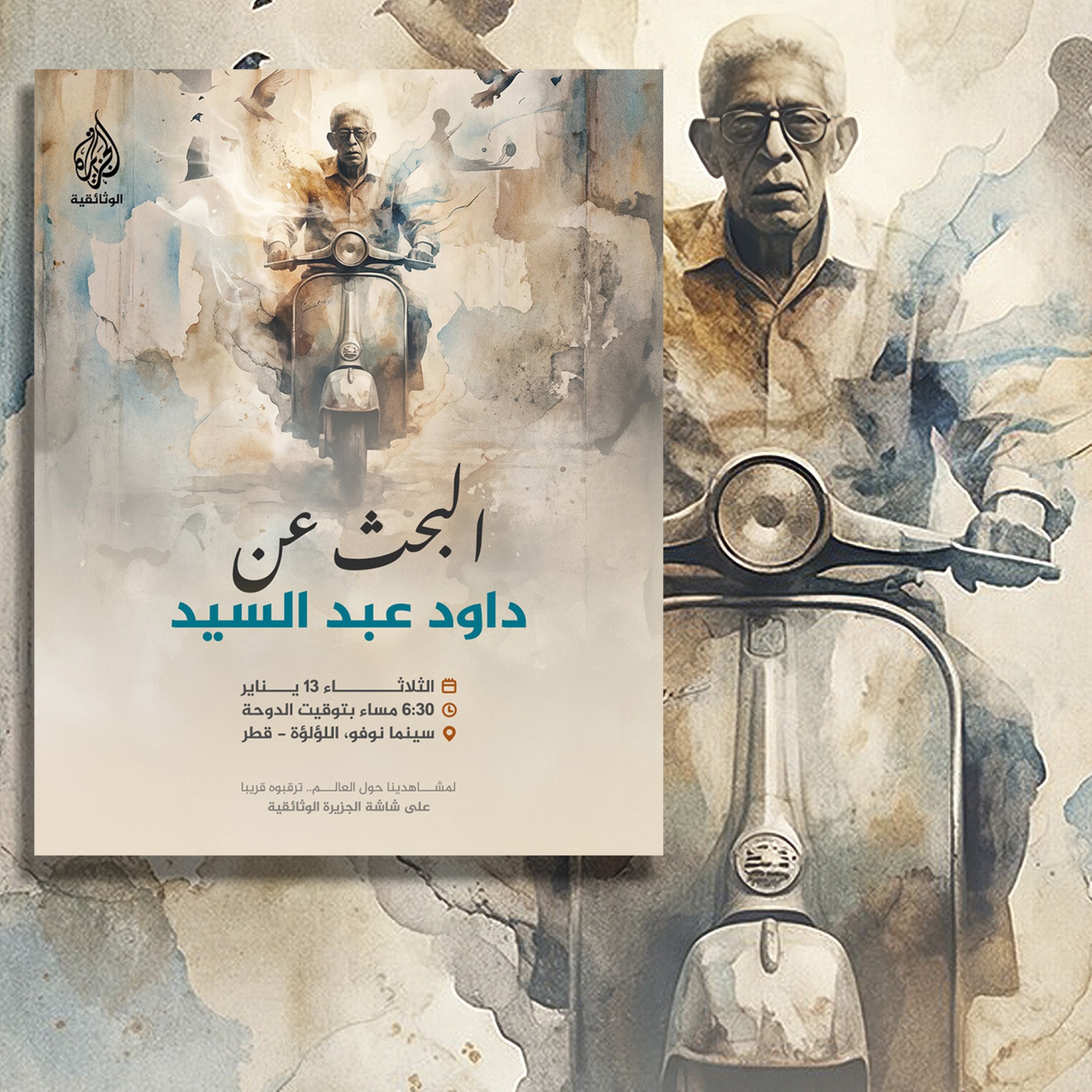
Searching for Daoud Abdel Sayed
Written and directed by: Osama El-Abd
Country of production: Qatar, Egypt
Only days after his death, Doha hosted the premiere of the documentary Searching for Daoud Abdel Sayed, written and directed by Osama El-Abd, who had spent years working as Abdel Sayed’s assistant director on several of his films. For all the mystery and evasiveness that define Abdel Sayed’s cinematic world, the documentary opts for effective simplicity.
It approaches the career of one of Egypt’s most important filmmakers through a lucid and accessible lens, illuminating Abdel Sayad’s artistic and human sides. The film relies on a limited circle of interviewees, though without any especially persuasive artistic or dramatic rationale.
As expected, foremost among them are his two closest long-time companions, the production designer Onsi Abou Seif and the composer Rageh Daoud. Also appearing are the director Ali Badrakhan, his classmate and old friend; the critic Essam Zakaria; and the journalist and writer Karima Kamal, his companion over many years.
The film moves briskly through Daoud Abdel Sayed's life, the narration closer to survey than excavation. Even so, it manages to trace the outline of a childhood touched by artistic impulses within the family. His bank worker father was devoted to theatre, acting, and singing, and could recite the Qur'an despite being Christian (a paradox that may have shaped the spiritual, faintly Sufi sensibility that later marked Abdel Sayed's work).
A cousin obsessed with animation takes the young Abdel Sayed to Galal Studio. Through him, he saw Orpheus for the first time, became enthralled by both the film and its director, and returned to it more than once before deciding that he, too, would become one of those magicians who made cinema.
Searching for Daoud Abdel Sayed preserves the final screen appearance of a filmmaker who was sparing in every sense: the number of films he made and the rarity of his public interviews, avoiding publicity with an ascetic's reserve. For him, true cinema should resemble beautiful music.
Most of his films remained largely confined to a rarefied circle, with only a few exceptions, chief among them Kit Kat. Yet he never stopped writing, leaving behind dozens of cinematic projects, some unfinished, others complete but unpublished, among them Love Letters and Love, as his wife recounts. They remained provisional titles for visual dramas held in abeyance, works that departed with him before they could take shape on screen.