Food supplies reel as Iran war rattles fertiliser markets

Disruptions to Gulf energy and shipping routes are tightening supplies of chemical fertilisers, raising costs from Europe to South Asia and heightening fears of a widening global food crisis

Scarlett Yang

Food supplies reel as Iran war rattles fertiliser markets

Will the US-Israeli war on Iran disrupt global food supplies and send the prices of grains and other staples soaring? This is a question on the lips of many as concerns intensify over possible interruptions to the supply of chemical fertilisers. Such disruptions could depress agricultural output in food-producing nations, weakening their ability to meet global consumer demand.

This prospect revives memories of the turmoil that followed the Ukraine war, which disrupted grain shipments from the then fifth-largest exporter and tightened global supplies, with the impact felt most keenly in Asia and Africa, particularly in Egypt, one of the world’s largest wheat importers.

According to Philipp Schiebe, executive director of the German Federation of Agricultural and Food Industries, conditions strikingly similar to those of February 2022 are re-emerging, as nitrogen fertiliser prices on the global market draw ever closer to the highs recorded at the outset of the Russia-Ukraine war.

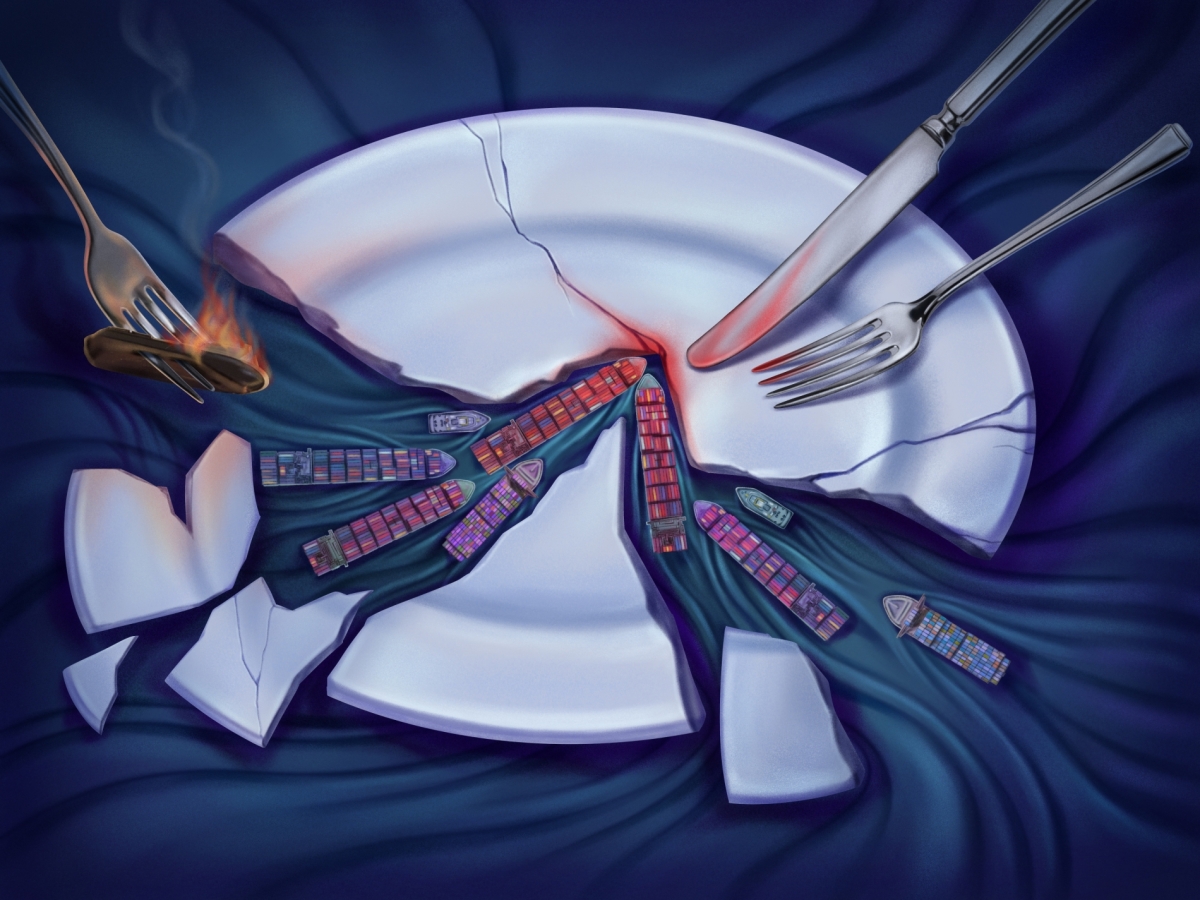
The current war involving the US, Israel, and Iran has already had a profound effect on oil and gas supplies. Around 20 to 25% of global crude oil flows (about 20 million barrels) pass through the vulnerable Strait of Hormuz, along with one-fifth of global liquefied natural gas trade. The conflict has also shaken the fertiliser trade, nearly 30% of which moves through the same narrow passage.

Gas is a core input in the production of nitrogen-based fertilisers such as urea and ammonia. A report published by the British energy agency Argus Media in June 2025 noted that any closure of the Strait of Hormuz could disrupt global trade in fertilisers and their raw materials by 20 to 50%, exposing importing countries to the gravest risks.

The Gulf states remain a key source of these materials, supplying around half of the global seaborne sulphur trade, one-third of the global urea trade, and one-fifth of the global ammonia trade.
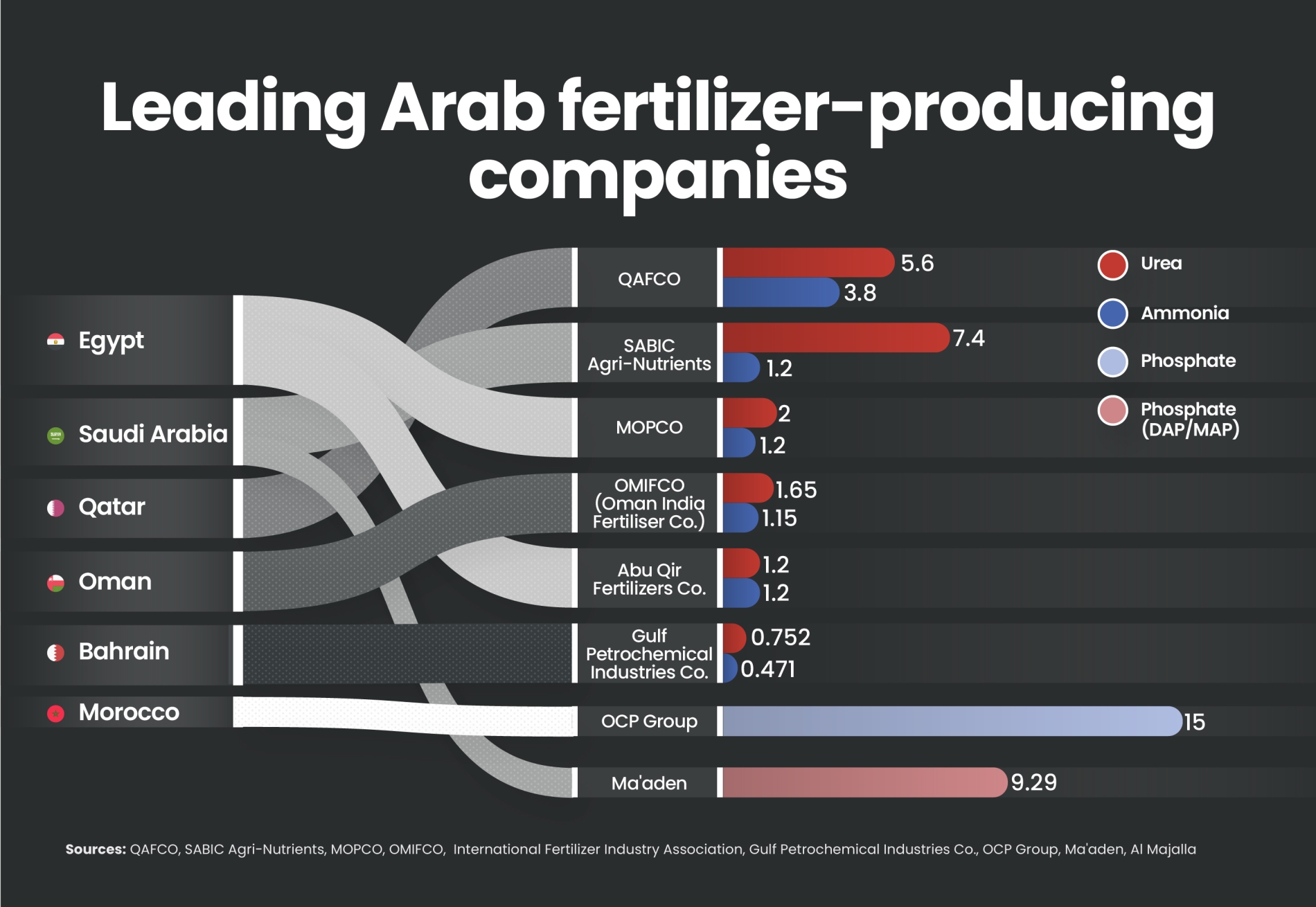
Al Majalla

Major markets such as China, India, and Brazil depend heavily on these supplies, leaving them vulnerable to any disruption. The danger extends to phosphates—especially Saudi exports—while the sulphuric acid market remains fragile and already burdened by scarcity. The report also notes that any interruption to Gulf flows could create severe bottlenecks in global supply chains and trigger sharp price rises, with immediate consequences for global food security.

Surging prices

Since the outbreak of war, prices for key fertiliser products have surged. Urea prices in the Middle East climbed above $590 per metric tonne, a 19% rise in less than a week, reaching $690 on 27 March. Diammonium phosphate prices on the US Gulf Coast also rose to $655 per tonne, gaining more than $30 per tonne, or about 5%. Bank of America has warned that the US-Israeli war on Iran threatens between 65 and 70% of global urea supplies, while prices have climbed by between 30 and 40%.

Although fertiliser prices remain well below the record highs seen in late 2021 and early 2022, these increases come at a moment when farmers across the world are already grappling with weaker prices for grains, oilseeds, and other field crops. Higher fertiliser costs shrink producers' profit margins and may prompt some to scale back fertiliser use, with unavoidable repercussions for both yield and quality.

The immediate effect may remain relatively contained, since many farmers have already secured agricultural inputs for the spring season in the northern hemisphere. However, if the conflict persists, it could begin to shape planting decisions and productivity in the southern hemisphere, while also affecting fertiliser use in rice cultivation across South and Southeast Asia.

Unlike fuel, fertilisers are not supported by global strategic stockpiles, leaving some countries more vulnerable than others. Latin America—more distant from the direct fallout of the war and home to Brazil and Argentina, major powers in both energy and agriculture—appears to be in a relatively safer position. Even so, Brazil's agriculture minister, Carlos Fávaro, has warned that the country could face difficulties in fertiliser supplies.

Following attacks on liquefied natural gas facilities in Ras Laffan and the suspension of gas output, QatarEnergy has halted production at the world's largest urea plant. Egypt, which accounts for about 8% of global urea trade, may face difficulties producing nitrogen fertilisers after Israel declared force majeure on gas supplies to the country.
REUTERS/Sodiq Adelakun
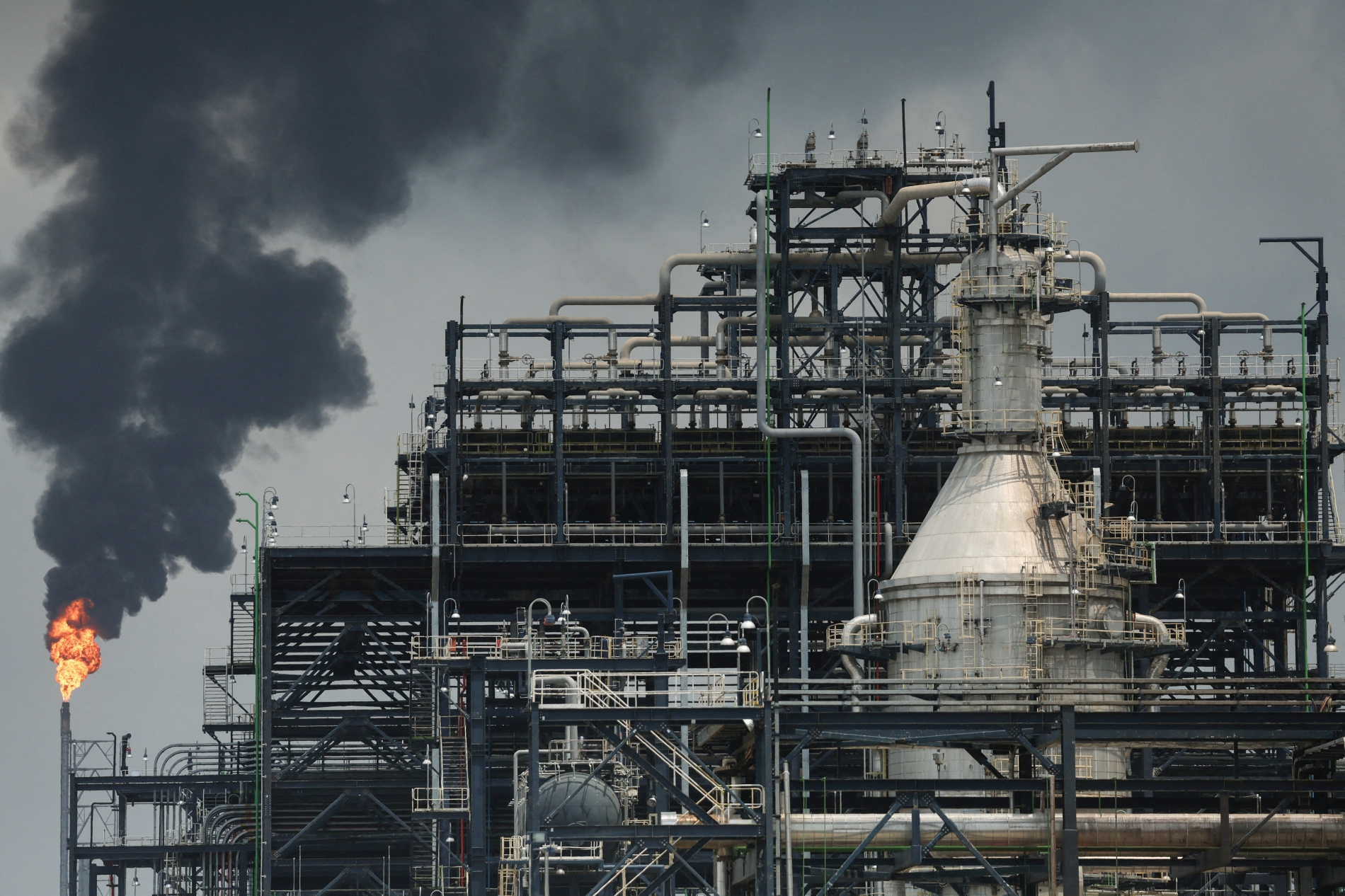
A flame rises from a gas flare at the Dangote Industries oil refinery and fertilizer plant site in the Ibeju Lekki district of Lagos, Nigeria on 2 March 2026.

In India, three urea plants have cut production following a sharp drop in liquefied natural gas supplies from Qatar. India, home to nearly one-fifth of the world's population, depends on the Middle East for more than 40% of its urea and phosphate fertiliser requirements. Bangladesh, meanwhile, has shut down four of its five fertiliser plants, while the Australian company Wesfarmers has warned of possible delays to shipments, including urea. Farmers in the US are also confronting supply shortages, with the country facing an estimated 25% deficit in fertiliser supplies.
Higher fertiliser costs shrink producers' profit margins and may prompt some to scale back fertiliser use, which would affect both yield and quality

Globally, urea exports were expected to fall to around 1.5 million metric tonnes in March. Without Chinese supplies, exports would total about 3.5 million tonnes, rising to between 4.5 and 5 million tonnes were those supplies available, according to estimates by Scotiabank.

With no clear end to the crisis in sight, China swiftly tightened restrictions on fertiliser exports in order to shield its domestic market. It has banned the export of nitrogen-potassium fertiliser blends and certain types of phosphate. Alongside the pre-existing restrictions and quotas imposed on urea, this leaves only a narrow range of fertilisers, most notably ammonium sulphate, available for export. As a result, between one-half and three-quarters of China's exports last year, estimated at 40 million tonnes, are now subject to restriction. 

LUIS TATO / AFP
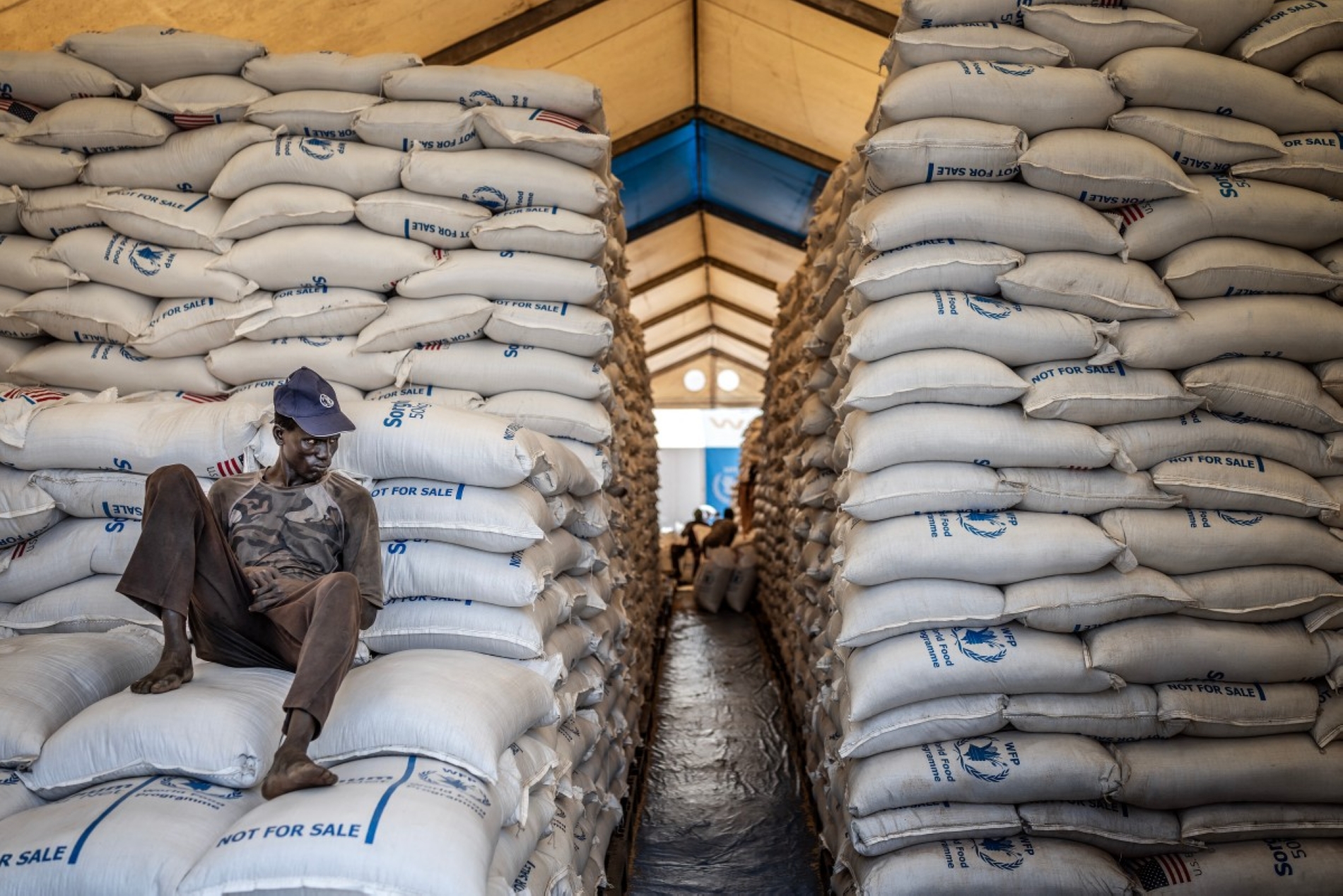
A worker sits atop sacks of food aid in a hangar where supplies are piling up because deliveries are halted due to insecurity from the conflict, at a World Food Programme (WFP) warehouse in Bor, Jonglei State, on 13 February 2026.

Food supplies at risk

Nearly half of the world's food is produced with the aid of fertilisers, notes Marina Simonova, an analyst at Argus Media. Any prolonged disruption to supply would therefore carry grave consequences for food availability. The UN's Food and Agriculture Organisation (FAO) has also warned that many low-income countries were already grappling with food insecurity before the war erupted.

Nitrogen fertilisers, such as urea, are the most critical in the short term, since the failure to apply them for even a single season would in all likelihood result in lower yields. The effect is less immediate with other types of fertilisers, including those based on phosphate and potash.

Compounding the problem, higher prices for nitrogen, phosphate, and potash will inevitably drive up production costs, a burden that will ultimately be passed on to the final consumer. Rising prices for maize and soybeans will also increase feed costs, leading in turn to higher livestock prices. Among the countries most likely to feel the impact are Brazil, India, and Pakistan.

If a solution is reached soon, markets could stabilise within roughly three months, states Máximo Torero, the FAO's chief economist. The picture will darken, however, should disruptions persist. "A medium-term blockade scenario lasting three months will affect all farmers globally, and at that point different factors will begin to emerge, with greater repercussions for the following agricultural season," said Torero, pointing to falling crop yields and the turn towards substitutes.

According to Torero, priority in the short term should be given to countries such as Sri Lanka and Bangladesh, where rice harvest seasons are currently underway. African states dependent on imported fertilisers are also more exposed to risk, he added. As for Iran, Torero noted that food prices there are "rising sharply." Although the country produces around 70% of its food requirements, it still relies on imports to meet the remaining 30%. By contrast, major food-importing states such as Qatar and the UAE would face difficulties of their own were navigation in the region to grind to a halt. 

FADEL SENNA / AFP
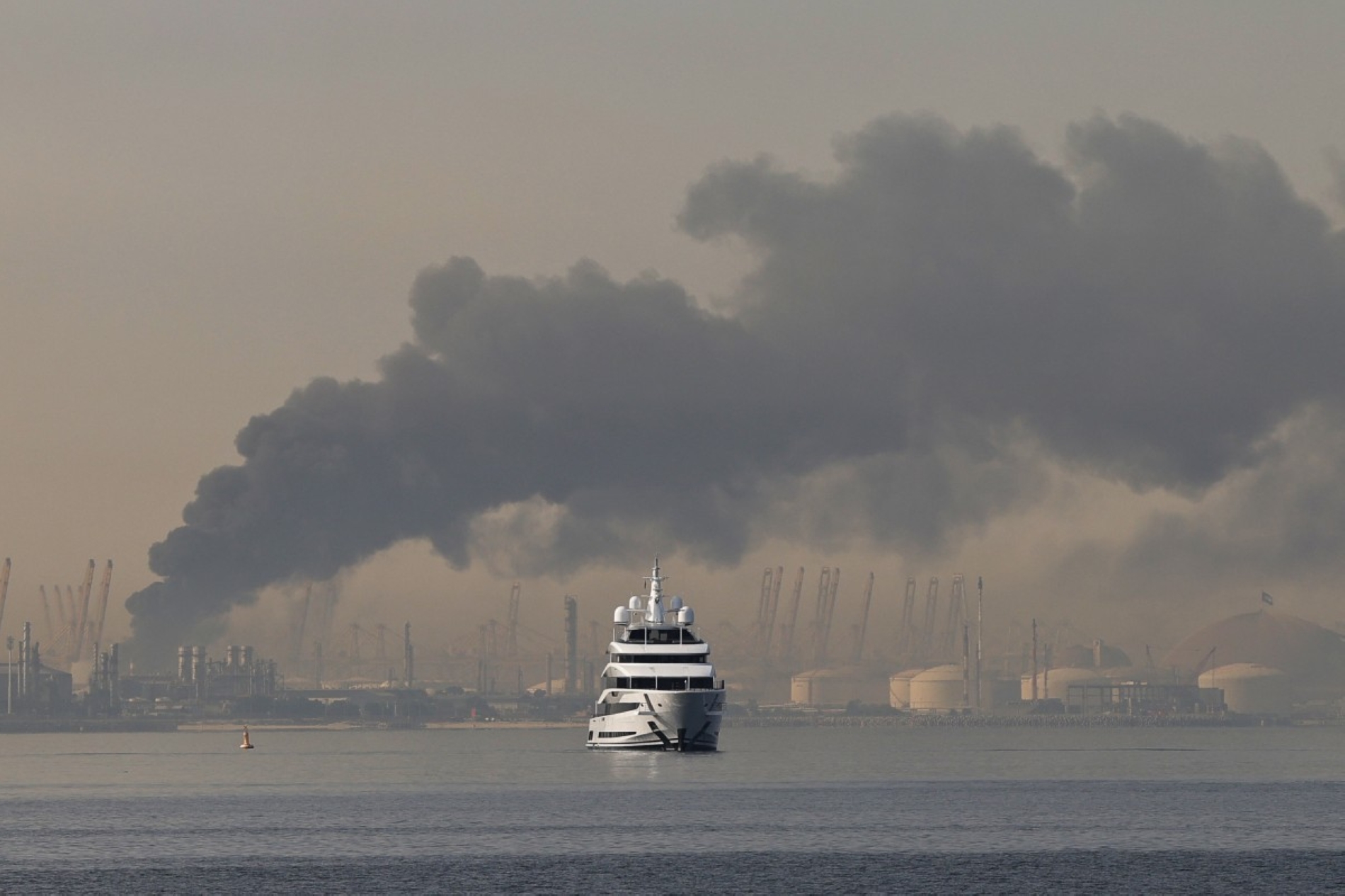
A yacht sails past a plume of smoke rising from the port of Jebel Ali following a reported Iranian strike in Dubai on 1 March 2026.

Building resilience 

To lessen the severity of the crisis, alternative maritime routes must be identified in the short term, stresses Torero. "We need to provide emergency balance-of-payments support to import-dependent countries ahead of planting seasons," he states. Over the medium term, states should diversify their sources of fertiliser imports, strengthen regional reserve-sharing mechanisms, and refrain from imposing export restrictions. Over the longer term, building resilience will be decisive. "Food systems must be treated with the same strategic importance accorded to the energy and transport sectors, and investment must reflect that in order to reduce these shocks," added Torero.

Should the escalation continue and fuel prices remain high, the global hunger crisis could deteriorate dramatically. Estimates by the World Food Programme suggest that around 45 million more people could be pushed into acute hunger due to higher food and energy costs and disrupted supply chains, bringing the total to a record 363 million.

Amid mounting fears of rising prices, preliminary estimates suggest the war could push US inflation to around 4% if it drags on. According to projections by the Organisation for Economic Cooperation and Development, inflation across the G20 states could also reach 4% this year.

In the final reckoning, the fertiliser crisis lies not only in supply shortages, but also in the fragility of the global agricultural model itself. Every shock to energy or trade lays bare how deeply food depends on narrow and highly concentrated supply chains. Organic food is less directly exposed to synthetic fertiliser shocks, for example. With green fertilisers, biotechnology, and a broader rethinking of agricultural patterns in play, this crisis may yet become the foundation for a new agricultural model, whether one that restores balance or ushers in another wave of food insecurity.

font change