Since October 7, 2023, Israel's systemic unwillingness or inability to plan long-term has pushed it into a state of perpetual war
ABIR SULTAN / AFP
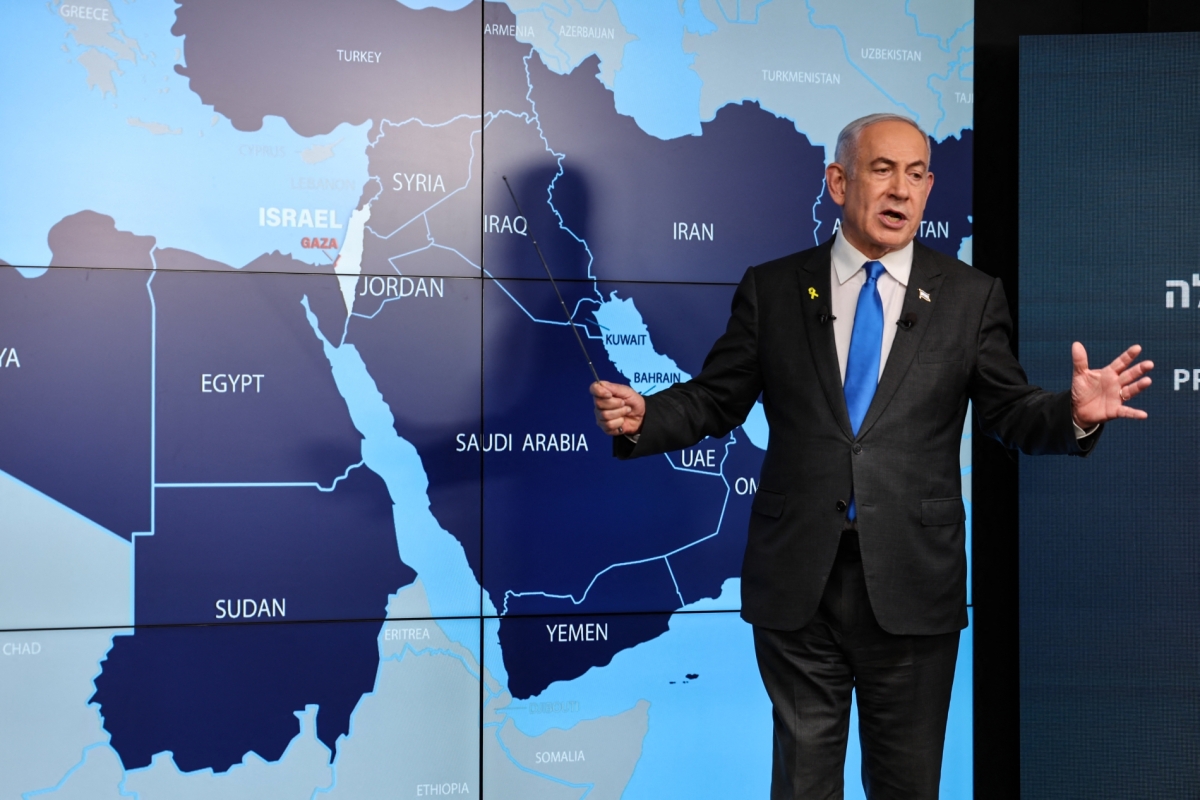
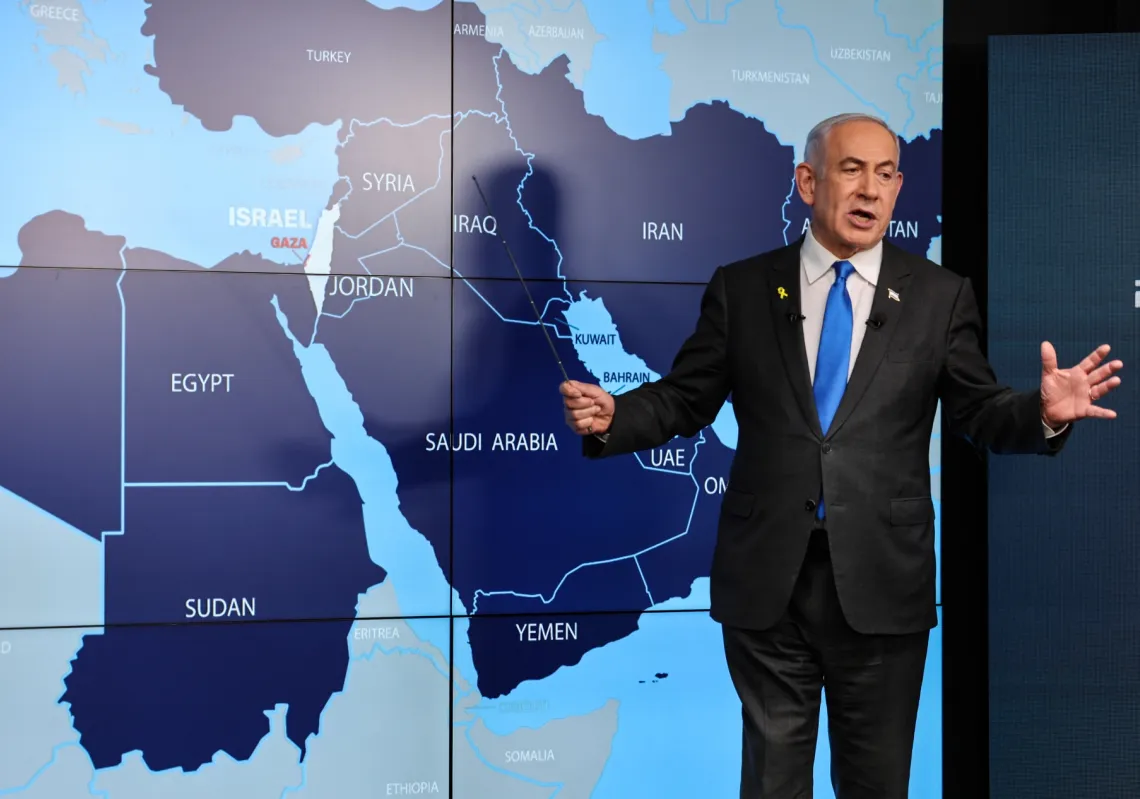
Israel's Prime Minister Benjamin Netanyahu speaks in front of a map of the Middle East during a press conference at the Government Press Office (GPO) on 4 September 2024.
Both opponents of Israel and its supporters in the Middle East and beyond share a common misconception: that Israel has an overall strategy guiding its national security policy. Critics accuse Israel of pursuing some nefarious plan, while supporters say it is trying to destroy Iran's so-called 'axis of resistance' and expand the Abraham Accords.
But while Israel's military and intelligence operations are usually well thought-out, it has consistently failed to develop an overall political strategy and thus translate its military gains to strategic political ones.
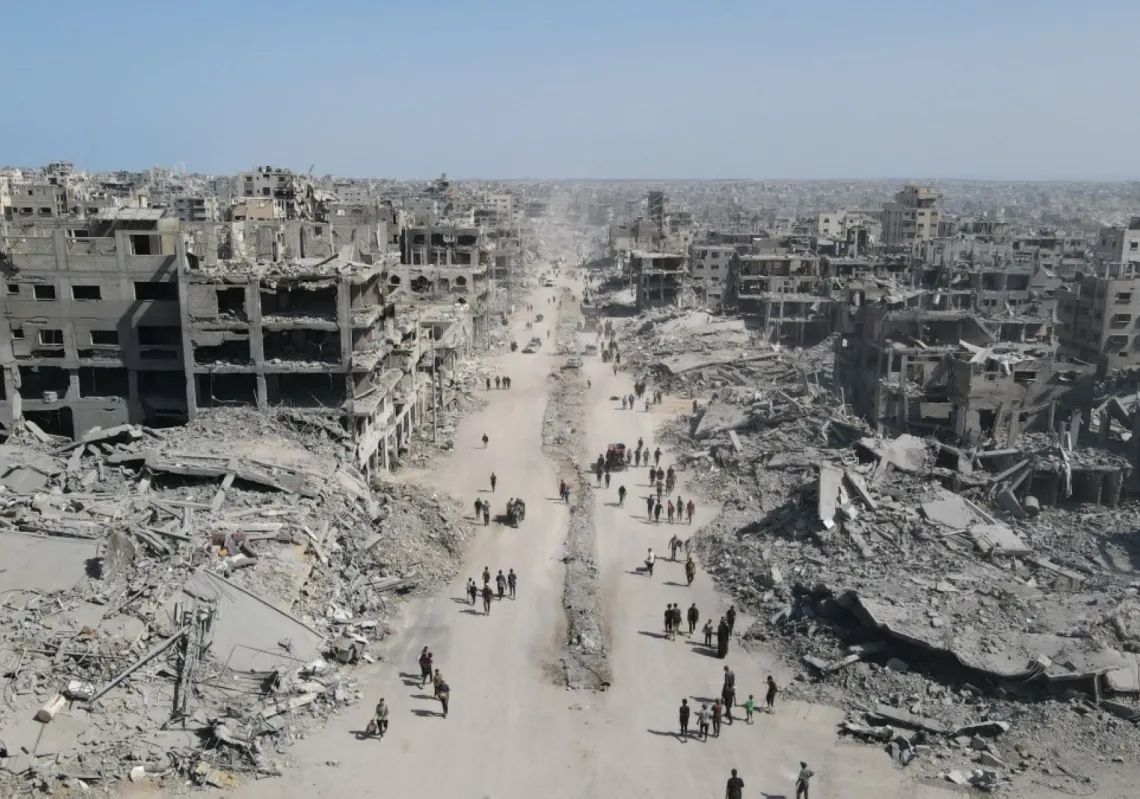
This failure manifested clearly since October 7, 2023, as Israel achieved military success in Gaza, Lebanon and Iran, and helped collapse the Assad regime, yet failed to translate them into strategic gains. Israel’s ongoing wars in Iran and Lebanon are proof of this, as is the stalemate in Gaza with Hamas remaining in control over 47% of the Gaza Strip. In Syria, too, Israel continues to prioritise tactical gains in the form of control over newly occupied areas in Quneitra and Jabal al-Sheikh, at the expense of a security agreement that would allow for cooperation against Iran’s proxies and pave the way to normalisation with the new Syrian authorities.
Israel's failure to develop a clear strategy was not born in the trauma and confusion post October 7, 2023, but has existed since its establishment as a state. Israeli scholars and journalists, multiple Israeli State Comptroller reports, and the Winograd Commission—the official Commission of Inquiry established by the Israeli government following the 2006 Lebanon War—have all noted this.
The causes of these consistent failures are structural. Chief among them is the primacy of the Israeli army over national security policy planning. Because of Israel’s history of operating in a highly hostile region, the Israeli security establishment is usually the body executing national security policy, with civilian bodies such as the Ministry of Foreign Affairs playing only a marginal role.
Cabinet ministers are poorly informed about national security policy and make decisions based on ideological and political considerations
The Israeli army is the most well-resourced body in Israel, with a large intelligence service and planning directorate. Its planning directorate is tasked with designing military operations, not the diplomatic and civilian components.
The Israeli National Security Staff (NSS) was established in 1999 and was set to become the main policy planning body in Israel, but it never did, due to the dominance of the Israeli army, under-resourcing and the political preferences of Israeli prime ministers. Thus, all Israeli wars over the past two years, and prior ones as well, were designed by the planning directorate, with minimal or no input from civilian agencies.
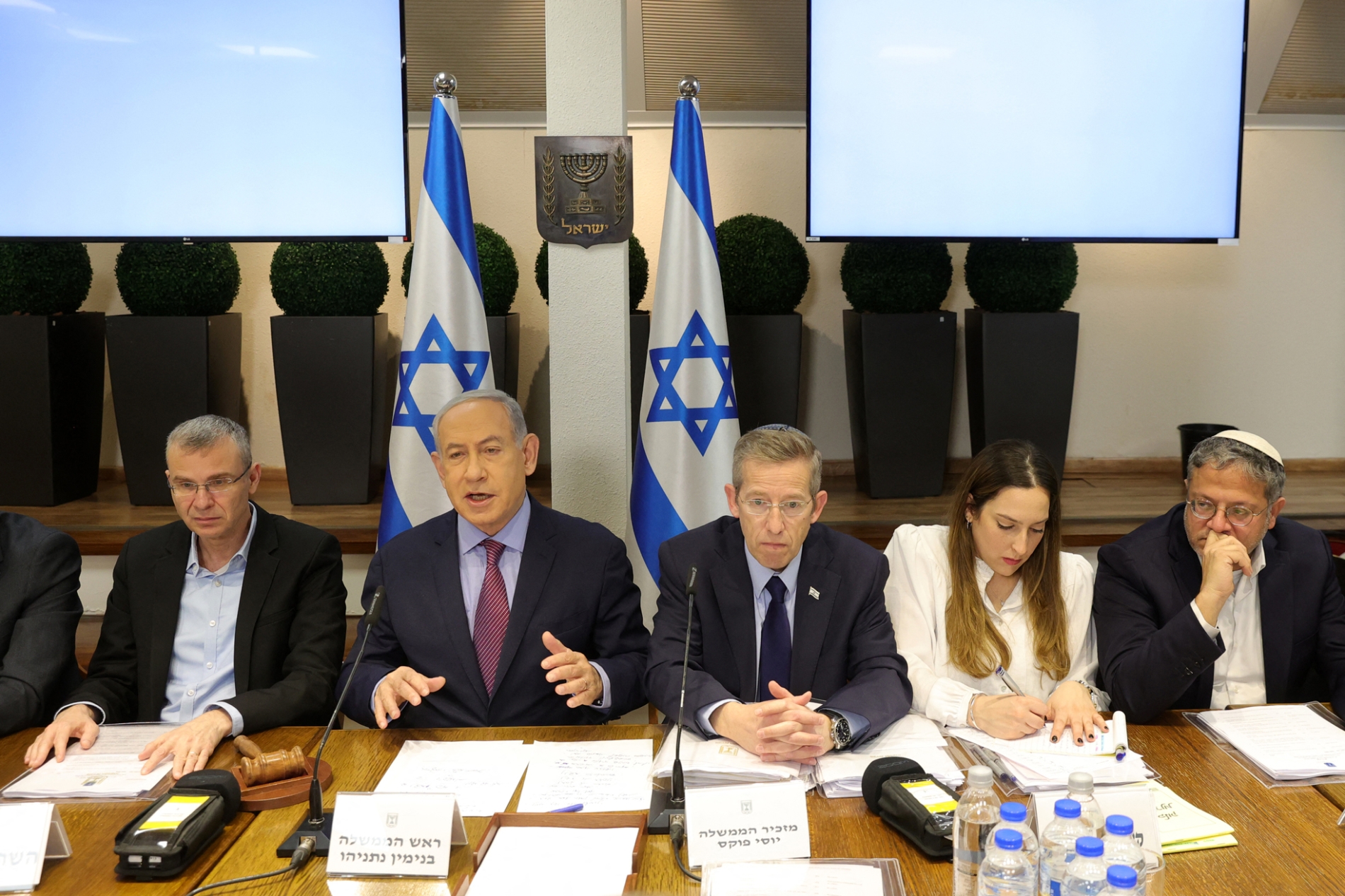
Israeli Prime Minister Benjamin Netanyahu chairs a Cabinet meeting, attended by National Security Minister Itamar Ben Gvir (2ndR) in Tel Aviv on 31 December 2023.
A dysfunctional cabinet
The cabinet—the civilian oversight of military planning that should provide strategic direction—is itself dysfunctional. In Israel's parliamentary system, the cabinet is made up of politicians, not technocrats. Israeli politicians get re-elected based on their popularity with their base, which is largely disconnected from the quality of their performance as ministers, let alone their national security policy-making. Ministers are poorly informed about national security policy, don't invest time in studying NSS materials, and make decisions based on ideological and political considerations.
The structural problems are further exacerbated by the growing extremism of Israel's right wing. The rise of the Israeli populist far-right, epitomised by Itamar Ben Gvir and the far-right ministers introduced into the Israeli cabinet, has brought in individuals who are dangerously unqualified and ideologically driven.
Netanyahu's personal quest to remain in power further degraded the quality of the Israeli cabinet. For years, Netanyahu engaged in a concerted effort to remove from positions of power any serious individuals who could serve as challengers to him, such as Yaacov Galant, Moshe Kahlon and Moshe Yaalon.
Instead, the ranks of the Likud Party and cabinet swelled with populist bootlickers. This second process, introduced into the cabinet yes-men and women, who are poorly informed, intellectually lazy and do not challenge Netanyahu. In cabinet meetings, instead of engaging in policy planning, ministers argue and issue statements that they immediately leak to the media for public consumption.
In the 1970s, US Secretary of State Henry Kissinger quipped that "Israel has no foreign policy, only a domestic political system." This dynamic hasn't changed since he made that remark. Because Israeli ministers are politicians who seek re-election, their decision-making on all matters, including national security policy, is driven by domestic political considerations.
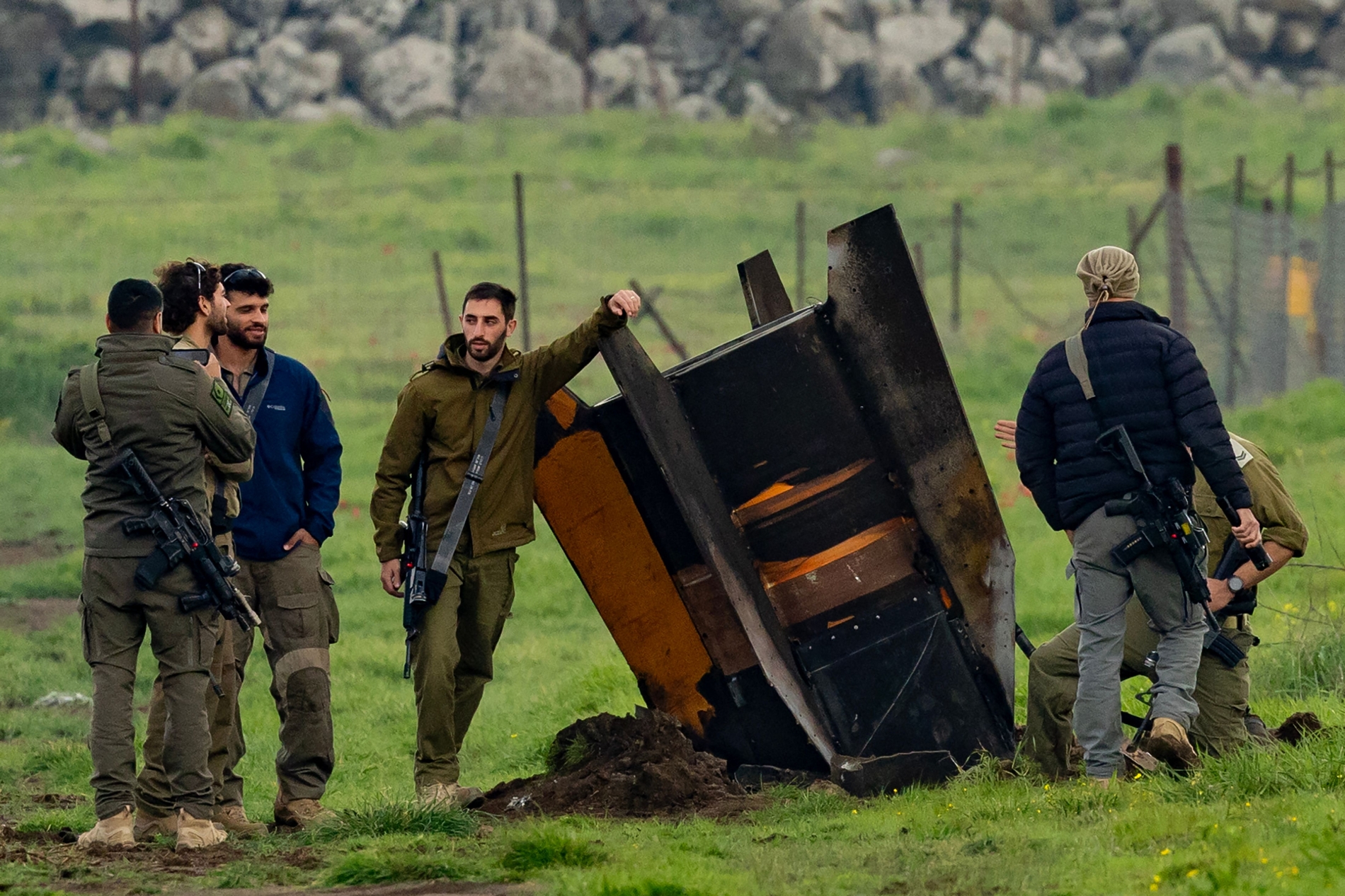
Israeli security personnel secure an area around a rocket partly buried in a field in the Israeli-annexed Golan Heights bordering Lebanon, on 19 March 2026.
Creeping occupation
This dynamic played out clearly in the Israeli decision to occupy five hills inside Lebanon, following the conclusion of the 2024 War, in violation of the ceasefire agreement. Netanyahu made the decision under pressure from the mayors of Israeli border towns (many of them local Likud leaders) and the Minister of Finance, Smotrich, who served in the Israeli army for less than two years.
Israel's insistence on remaining in these spots doesn't appear to stem from military considerations. In the era of drone warfare, soldiers beyond the border can observe and strike from a shorter distance than a drone can. Israeli intransigence, however, served as an excuse for Hezbollah to remain armed and refuse cooperation with the plan of the Lebanese army to hand over its arms to the state north of the Litani.
The Israeli invasion and occupation of southern Syria, without Syria firing a single shot at it, further reinforced the perception in Lebanon and regionally that Israel seeks to expand its territory, regardless of security threats posed from said territory. Thus, Israeli actions in Syria buttressed the position of the Lebanese who argued that Hezbollah disarmament would lead to Israel's permanent occupation of southern Lebanon.
Finally, avoiding clearly defined policy objectives serves the Israeli prime minister. A clear policy would invite backlash from coalition members opposed to it and also allow the premier to be measured by his ability to advance it. Therefore, ambiguity serves the prime minister politically.
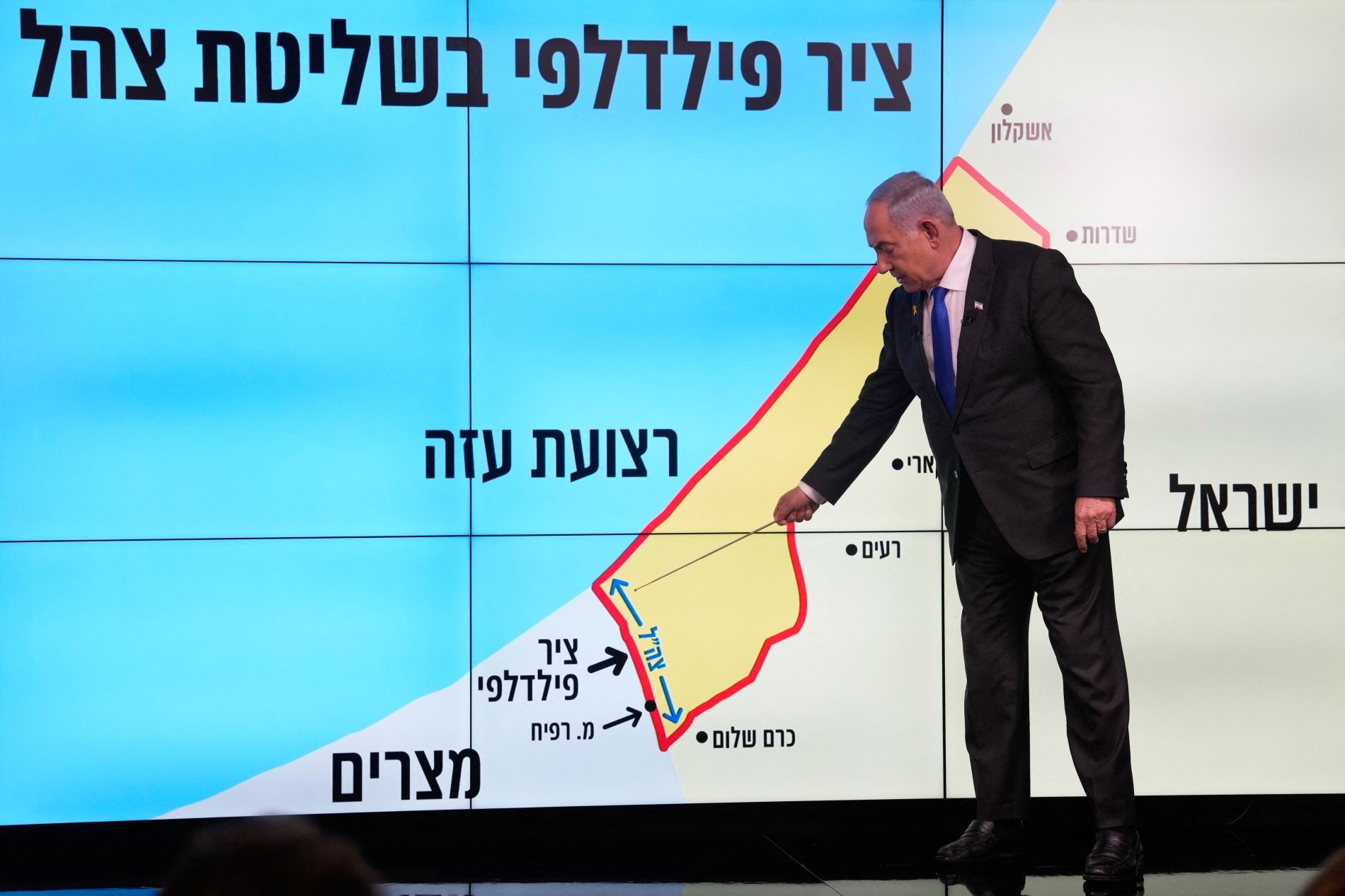
Israeli Prime Minister Benjamin Netanyahu stands before a map of the Gaza Strip, telling viewers that Israel must retain control over the "Philadelphi corridor," a strategic area along Gaza's border with Egypt, on 2 September 2024.
Preference for ambiguity
This preference for ambiguity was evident in Netanyahu's stubborn avoidance of setting any clear vision for the day after the war in Gaza. The most logical alternative to Hamas, the Palestinian Authority, was rejected immediately by the government due to political considerations. Due to the opposition of the Israeli government to the establishment of a Palestinian state, Israel's right-wing governments worked to maintain a policy separating the West Bank from Gaza, which meant keeping Gaza under Hamas rule.
Even now, after Trump brought an end to the war in Gaza, the Israeli government has yet to develop a vision for the Strip. Instead, Israel hopes that it will be able to exploit Hamas's refusal to disarm to resume the war there, as if killing more Hamas members and enacting more destruction would somehow conjure alternative rulers in Gaza. The pattern repeats across all fronts: military action without a political endgame.
Israel's systemic inability and avoidance of long-term policy planning, in addition to the ideological extremism of the current government, pushed it into a state of perpetual war since October 7, 2023. The military establishment performs well when planning military operations, but it cannot compensate for the absence of long-term strategic planning. As a result, although Israel has won several wars against its rivals, it has failed to translate them to strategic gains in Gaza, Lebanon, Syria or Iran, or to advance normalisation with Arab countries.
Israeli officials appear to believe that the mere display of Israel's intelligence and military superiority will drive countries into its embrace. But a destabilising power, which overwhelmingly relies on military force to try to solve all problems, is hardly an attractive partner.