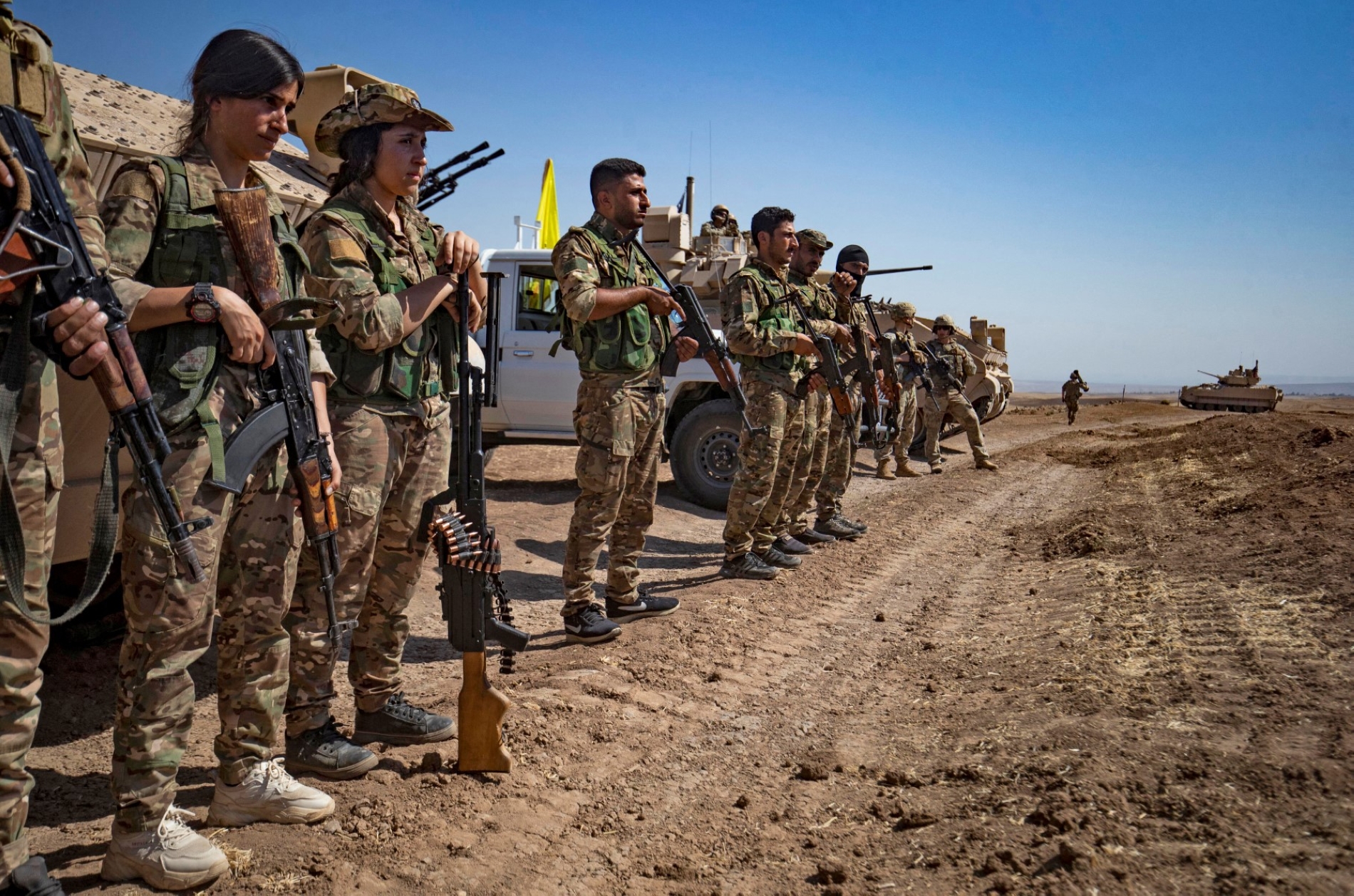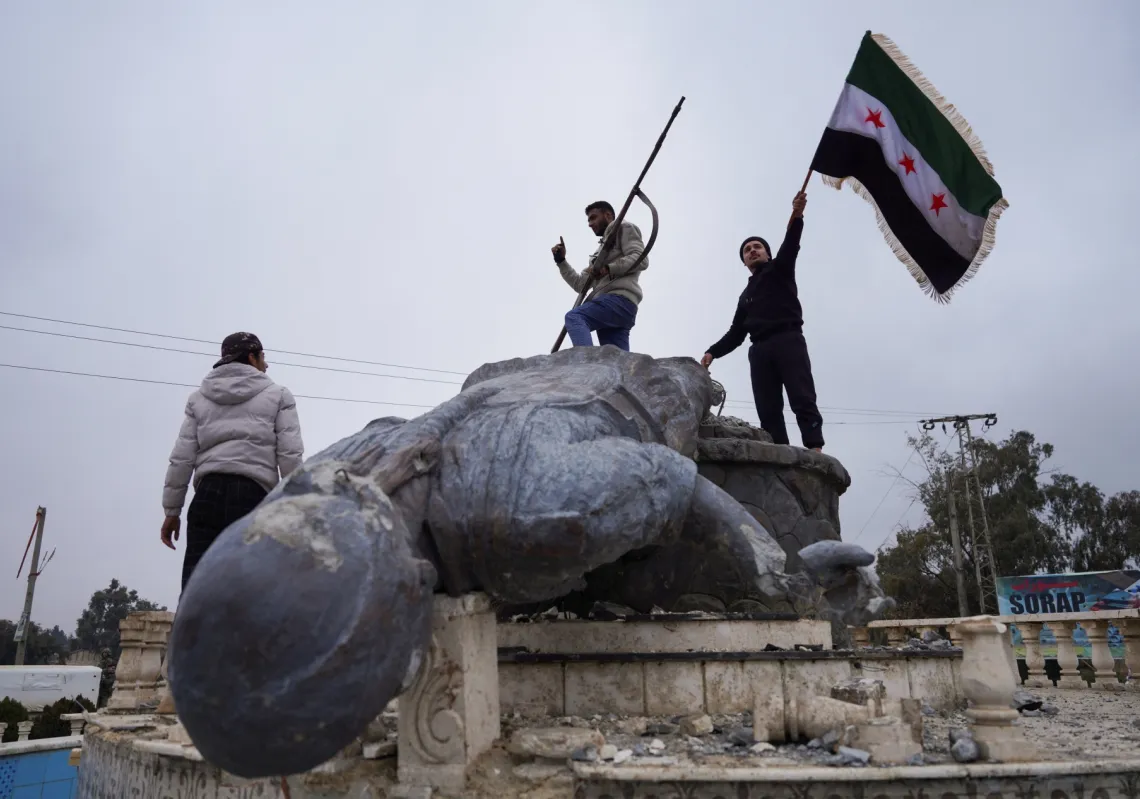

Syria has managed to stay out of the limelight in the current regional conflict with Iran, another sign of its savvy diplomacy. Developments in Syria over the past six weeks give rise to hope that the country can further stabilise, but also concern about a possible waning of American attention. The rapid shift in power and limited fighting between the Kurdish-led Syrian Democratic Forces (SDF) and the central government resulted in a compromise agreement that is still holding.
That agreement could help calm relations between them and serve as a model for integrating other minorities. But the announcement that the US would withdraw all troops from Syria fuels concern about overall US engagement, seen as crucial for integrating the Kurds, as well as for continued suppression of the Islamic State (IS), Iran and proxies.
The US has several options for security cooperation beyond combat presence. Pursuing any one of these options could strengthen Syrian forces against IS and possibly Iran, enhancing overall American diplomacy.
A stable Syria integrated into the region and serving as a deterrent to renewed IS or Iranian proxy activity is central to long-term success in the region as a whole. The two crucial elements for such a Syria are, first, a unified state with buy-in from religious and ethnic minorities, and, second, an international approach to Syrian integration, development, and security.
Those elements are mutually supporting; a Syria that advances internal unity and tolerance will more likely garner international support and avoid outside states' “cherry picking” favourite Syrian groups, as seen during the 2011-24 war. Conversely, a common international position with the Syrian government, linked to development assistance and diplomatic support, can incentivise responsible behaviour by both Damascus and the various minority groups.
Good foundation
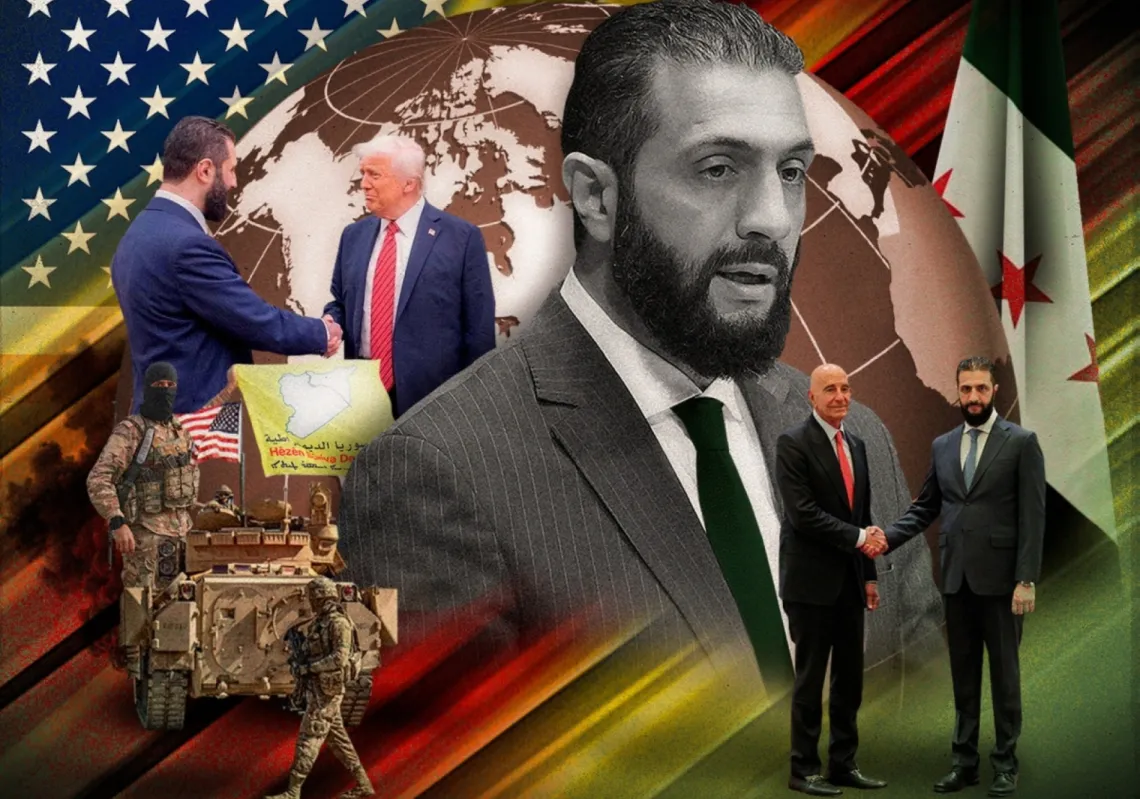
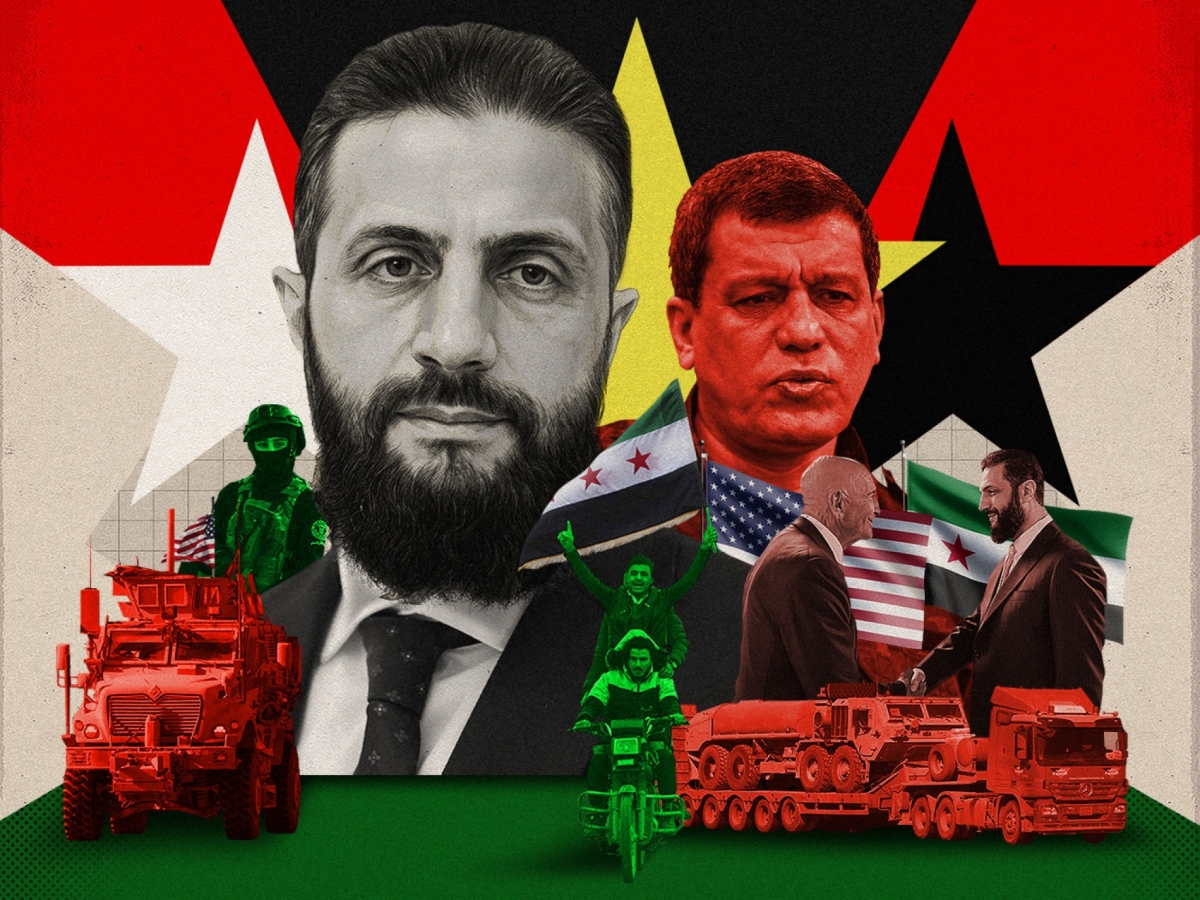
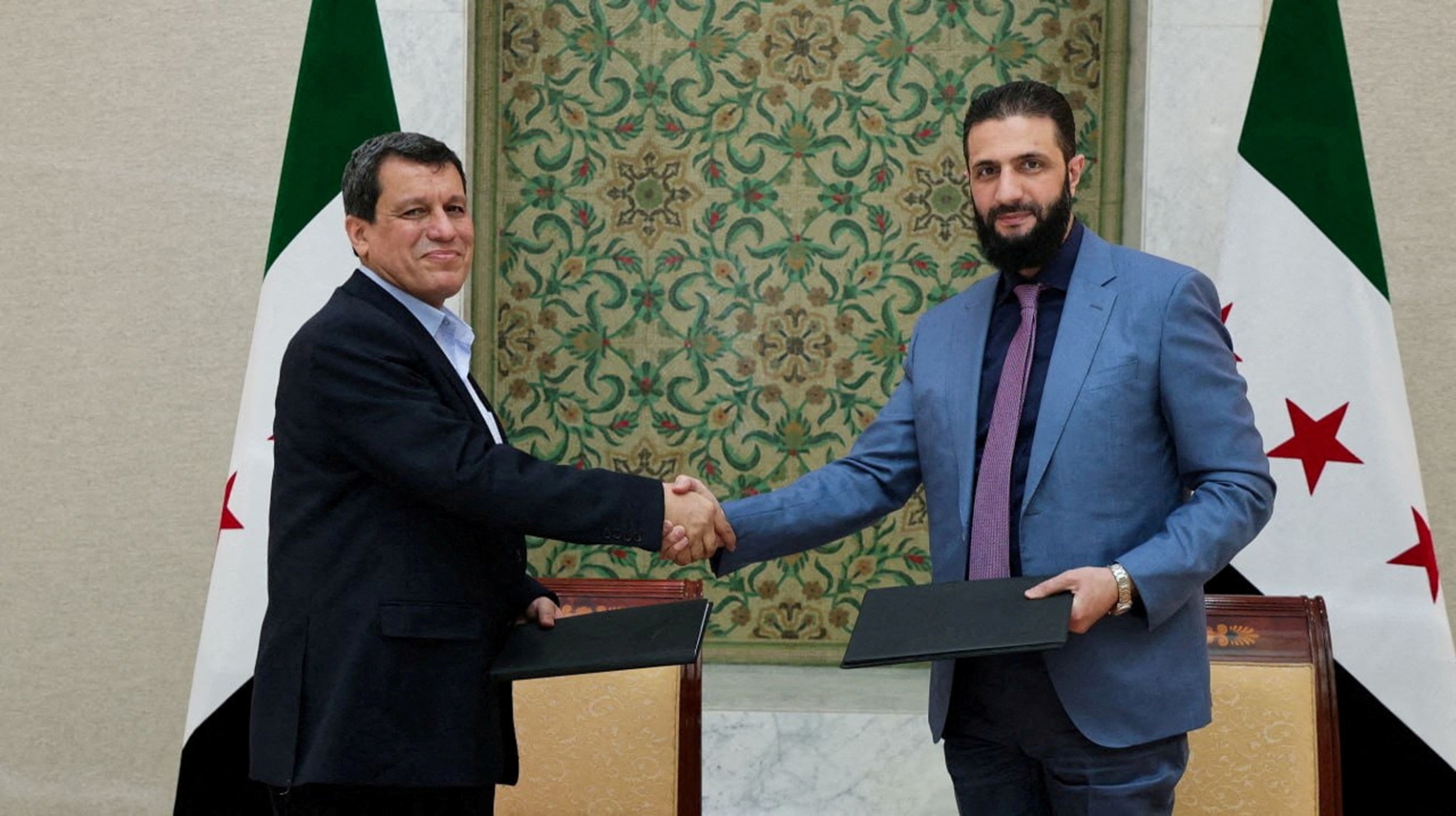
At present, the most robust effort to integrate minorities while protecting local governance and cultural rights has been the 29 January agreement between Syrian President Ahmed al-Sharaa and Syrian Democratic Forces leader Mazloum Abdi. The success or failure of that agreement will likely shape the integration of other minorities and, in turn, Syria’s overall unity and stability.
Notably, the 29 January agreement was reached only after extensive intervention by American officials, both political and military, to quell fighting between them, remove some of the most dangerous imprisoned IS fighters, and, notably, improve a prior agreement between the two. (That agreement, signed on 18 January, tilted too far towards Damascus, allowing integration of SDF forces into the Syrian army only at the individual level.)
So far, implementation of the 29 January agreement, while far from complete, has been proceeding with little or no violence reported after the ceasefire. Ministry of Interior troops entered Kurdish areas of Hasakah Governorate and Kobani City as agreed at the end of January, with no notable friction with the SDF. Moreover, SDF leaders have met with Syrian army leaders to discuss the agreed-upon integration of brigades into the Syrian army, and President Sharaa appointed a high-level SDF official, Nour al-din Ahmad Issa, as governor of Hasakah.
On 22 February, the Ministry of Interior issued a decree outlining the criteria for citizenship for Kurdish Syrians, as stipulated in the agreement. And a senior Ministry of Interior official, Brigadier General Ziad al-Ayesh, has been appointed as the Damascus envoy tasked with implementing the January agreement.
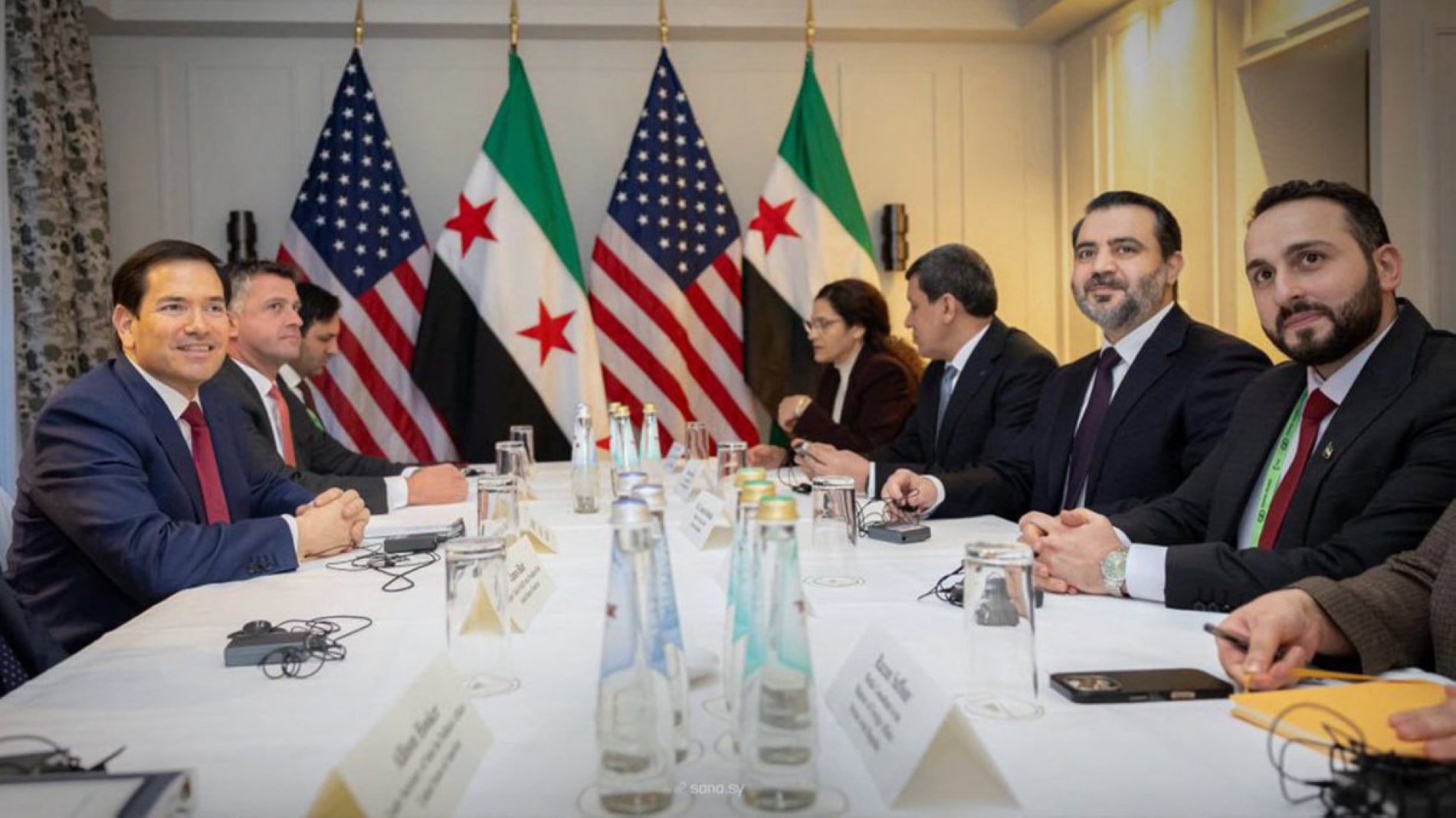
Meanwhile, SDF leader Mazloum Abdi, with varying degrees of coordination with Damascus, the US, and the Iraqi Kurdish KDP, travelled to the Munich Security Conference to meet, among others, Secretary Rubio. Turkey, deeply involved in its own ceasefire with the PKK, has been quietly supportive of the January agreement. Despite earlier demands for no unit-by-unit integration of the SDF into the Syrian army, it appears to have turned a blind eye to that provision, and may have—accounts differ—tolerated Mazloum’s visit to Germany.
Read more: SDF presence in Munich raises eyebrows in Ankara
But perhaps most importantly, the so-far successful integration between Damascus and the Kurds could serve as an example to encourage the Druze—and potentially the Alawite Arab population—to follow suit.
The withdrawal of US troops could heighten the perception of a waning US commitment to Syria, which could stifle efforts to unify the country and undercut military cooperation against IS and any Iranian proxy presence. Continued, intense, high-level US diplomacy, as seen in Syria since December 2024, can help make up for some of the difference, but a military/security component to US diplomacy would be welcome by all sides.
Several options
Here, Washington has several options to continue military and security cooperation, ranging from intelligence sharing and training to joint planning and operations, and potentially unilateral American missions, based on the experience of the anti-IS coalition and with Iraq when US troops withdrew in 2011.
Such cooperation begins with the anti-IS coalition, both the military side coordinated by CENTCOM, and the political alliance. On the military side, now that Syria is a coalition member, it has access to a range of intelligence-sharing and operational capabilities, including training and ISR assets. The coalition is also effective in coordinating international responses to terrorist recruiting, IS members’ international movement, fundraising and transfer, and IS disinformation. To be sure, the coalition's capabilities are designed directly for the fight against IS forces in Iraq and especially Syria, but cooperation with the coalition offers Damascus greater security benefits.
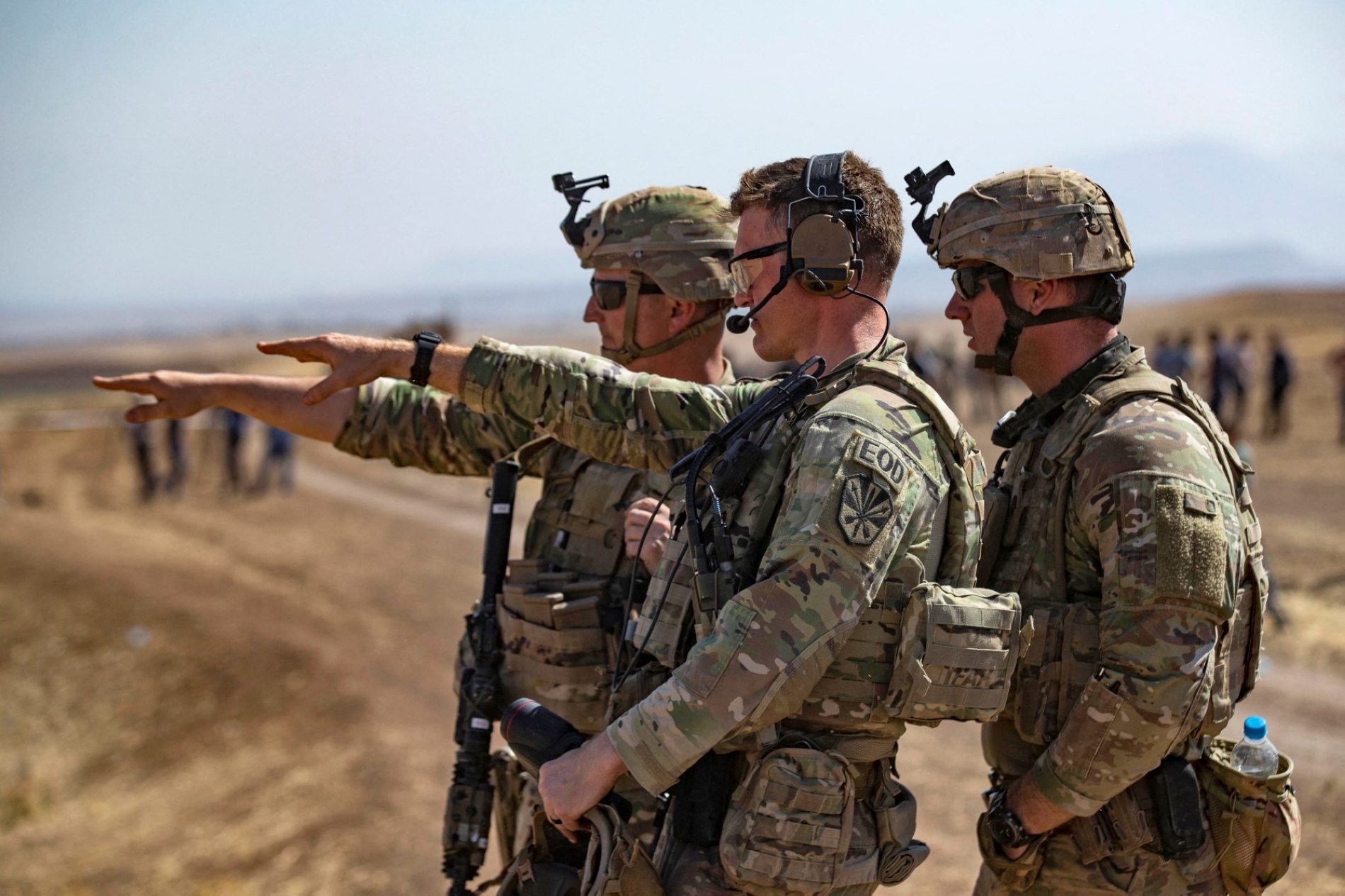
If both Washington and Damascus are willing, the US could also assign significant numbers of military personnel to the US embassy once it opens, in either the Attache Office or the Office of Security Cooperation (OSC), similar to the office attached to the US embassy in Baghdad. One key advantage of that arrangement is that military personnel do not need a Status of Forces Agreement, as they would have diplomatic immunity of one of several varieties. Given the difficulties in negotiating Status of Forces Agreements (SOFA) in the region, this is a major plus.
The Baghdad Office of Security Cooperation (OSC), established in 2011, had significant capabilities. Led by a lieutenant general, the office had significant intelligence-sharing and other coordination functions embedded within the Iraqi security forces. It not only ran the Foreign Military Sales (FMS) programme, but, in agreement with the Iraqi government, placed military personnel at Iraqi bases throughout the country with a significant American Foreign Military Sales (FMS) contractor presence. Those military personnel not only performed traditional FMS functions but also served as a “command and control” and security oversight headquarters for each FMS location, reporting to the ambassador through the OSC Chief.
As initially established, the Baghdad OCS had additional semi-operational functions. These included coordinating US Coast Guard vessels securing in international waters (thus no SOFA needed), Iraqi offshore oil terminals, and running a slimmed-down oversight of Iraqi Kurdish Peshmerga and Iraqi army units along the border of the Kurdistan Region.