Opposing the Iranian regime and welcoming the bombs aren't the same thing

Trump's message to the Iranians

Opposing the Iranian regime and welcoming the bombs aren't the same thing

Donald Trump’s direct plea to the Iranian people that ‘the hour of your freedom is at hand’ at the start of the major military campaign reveals more about the American president’s assumptions about the Iranian people more than how they will respond to his zero hour statement.

Trump said: “When we are finished, take over your government, it will be yours to take. This will probably be your only chance for generations.” He must be addressing an imagined people whom he expects to be welcoming and grateful for the US-Israeli attack on their country.

If recent and distant history is any indication, most Iranians can oppose the Iranian regime, mourn what their country has become, and wish it removed, but they are united when a foreign country bombs their soil and tells them when and how to be free. These are not contradictory positions. They are the entirely rational product of a nation proud of being one of the oldest civilisations in the world.

Turn on any major American news channel on the first day of the war and the political commentary from the ‘Iran experts’ and some opposition voices in the diaspora reveals the ‘selectivity’ problem immediately on how the Iranian response should be framed.
Most Iranians can oppose the Iranian regime, mourn what their country has become, and wish it removed, but they are united when a foreign country bombs their soil and tells them when and how to be free. 

The analytical framework is built around American strategic interests, either from former American officials or Iranian-Americans who left Iran decades ago, some were even born after the Islamic Revolution in 1979. The commentary reveals the disconnection from political reality that has been shaped over the past 47 years, during which the regime has consolidated its power, let alone  history has taught the Iranians repeatedly that no foreign power has ever intervened in their affairs without primarily serving its own interests.

In 1907, Britain and Russia, without consulting Iran, divided the country into spheres of influence; Britain controlling the south, Russia the north. This was executed purely to resolve Anglo-Russian imperial competition in Central Asia, with Iran treated as a geographical object rather than a sovereign state.

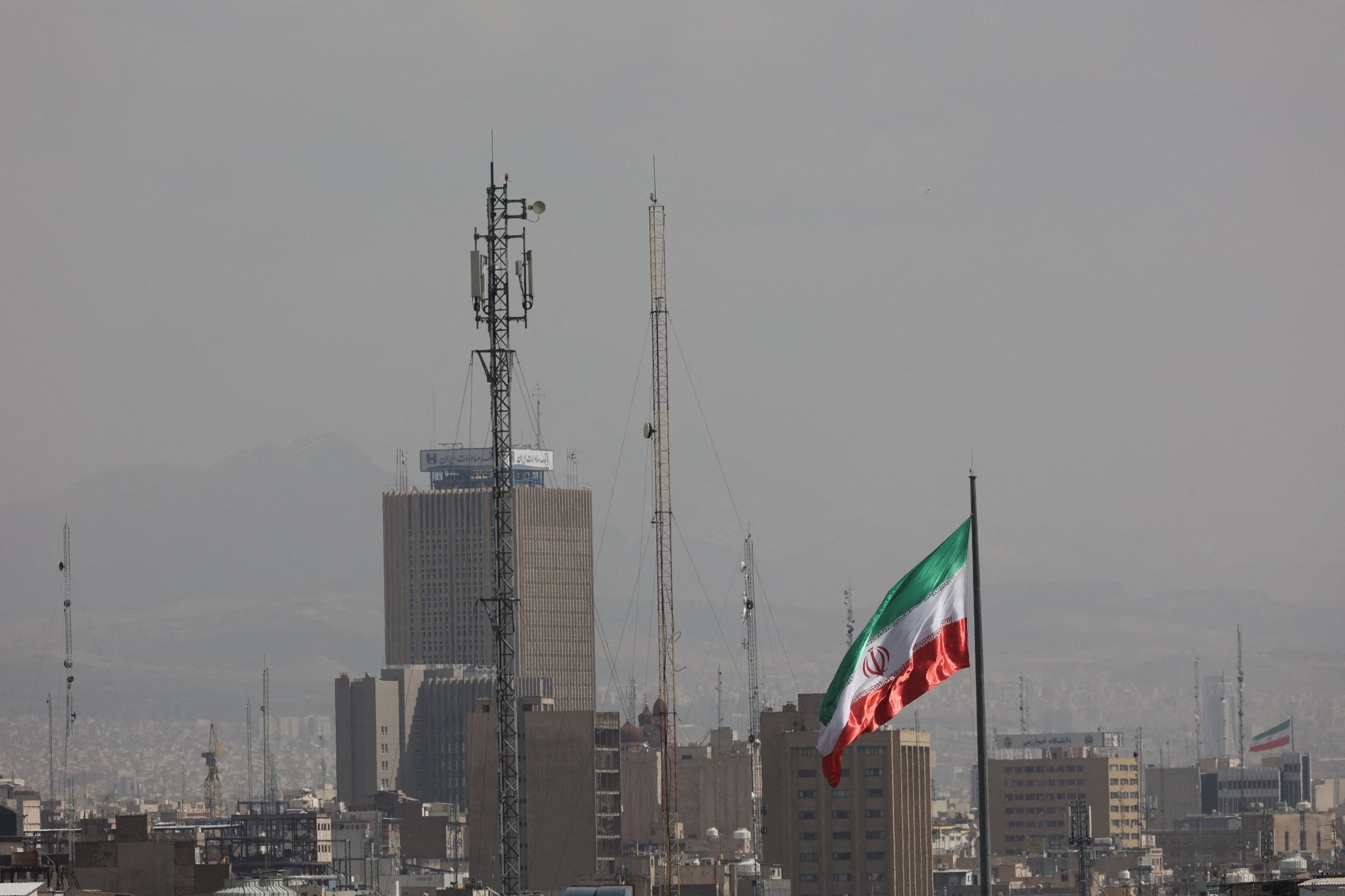
Reuters
An Iranian flag flutters, as Israel and the U.S. launched strikes on Iran, in Tehran, Iran, February 28, 2026.

When Reza Shah declared Iran neutral at the outbreak of World War Two in 1941, Britain and the Soviet Union invaded anyway, Britain from the south, Soviets from the north because they needed Iranian territory for supplies in their fight against Germany. The real interest was logistics and oil security.

More recently in 1951, Mohammad Mosaddegh, Iran's democratically elected Prime Minister, nationalised the Anglo-Iranian Oil Company in 1951, a decision supported by the majority of Iranians as a sovereign decision. Britain, having lost its oil concession, lobbied Washington by framing Mosaddegh as a communist threat. Two years later, the CIA and MI6 jointly engineered his overthrow through Operation Ajax to restore the Shah's rule in the person of Mohammad Reza Shah Pahlavi, the son of Reza Shah, who had himself been forced off the throne by the Anglo-Soviet invasion of 1941.

The analytical framework is built around American strategic interests, either from former American officials or Iranian-Americans who left Iran decades ago, some were even born after the Islamic Revolution in 1979.

And the recent history of the regional framework is stark. The Iraqis were told liberation was at hand in 2003. The Libyans were told the same in 2011. Neither country found what Washington promised on the other side. The Iranians know this pretty well.

The recent protest waves across Iran are not just historical events, they are evidence that directly dismantles the central assumption embedded in Trump's messaging and in American media analysis more broadly.

Every single protest movement Iran has produced in 2009, 2019, 2022, and 2026 was generated entirely from within Iranian society and based on Iranian grievances. The different waves of anti-regime protests were sparked by a wide range of local frustrations from accusations of rigging elections to economic crises to the death of a young woman in police custody. None of these waves of protests needed an American president to tell Iranians their freedom was at hand.

The political irony lies in the fact that in each case the regime's repression strategy – manifested in summary executions and imprisonment of activists -- relied heavily on the foreign interference narrative, either in official statements or state-run media analysis and commentary.

Economically, when Washington says it cares about the Iranian people while simultaneously operating economic sanctions for decades that are visibly impoverishing them, Iranians are not reading a political argument here, they are living a contradiction.

The World Bank and IMF have documented sustained deterioration of Iranian living standards under maximum pressure sanctions. Towering inflation, currency collapse, medicine and medical equipment shortages affecting ordinary citizens. The gap between Washington's stated concern for the Iranian people and the lived experience of those people under sanctions is not lost on Iranians themselves.

Trump's messaging rests on a simple transactional logic: you hate the regime, we are destroying the regime, therefore you should be grateful. But the strong opposition from many Iranians at home and abroad to foreign intervention to overthrow the regime demonstrates that national identity is not a transaction.

font change

Related Articles