China, Russia set to make a big splash in the Arctic Sea

Analysts say Europe-Asia trade could become faster and cheaper if cargo ships use the North-East Arctic Passage as an alternative to the Red Sea, but there are problems to overcome.

A container ship, docked beside container cranes at the UK's largest freight port, in Felixstowe on the East coast of England.
BEN STANSALL / AFP
A container ship, docked beside container cranes at the UK's largest freight port, in Felixstowe on the East coast of England.

China, Russia set to make a big splash in the Arctic Sea

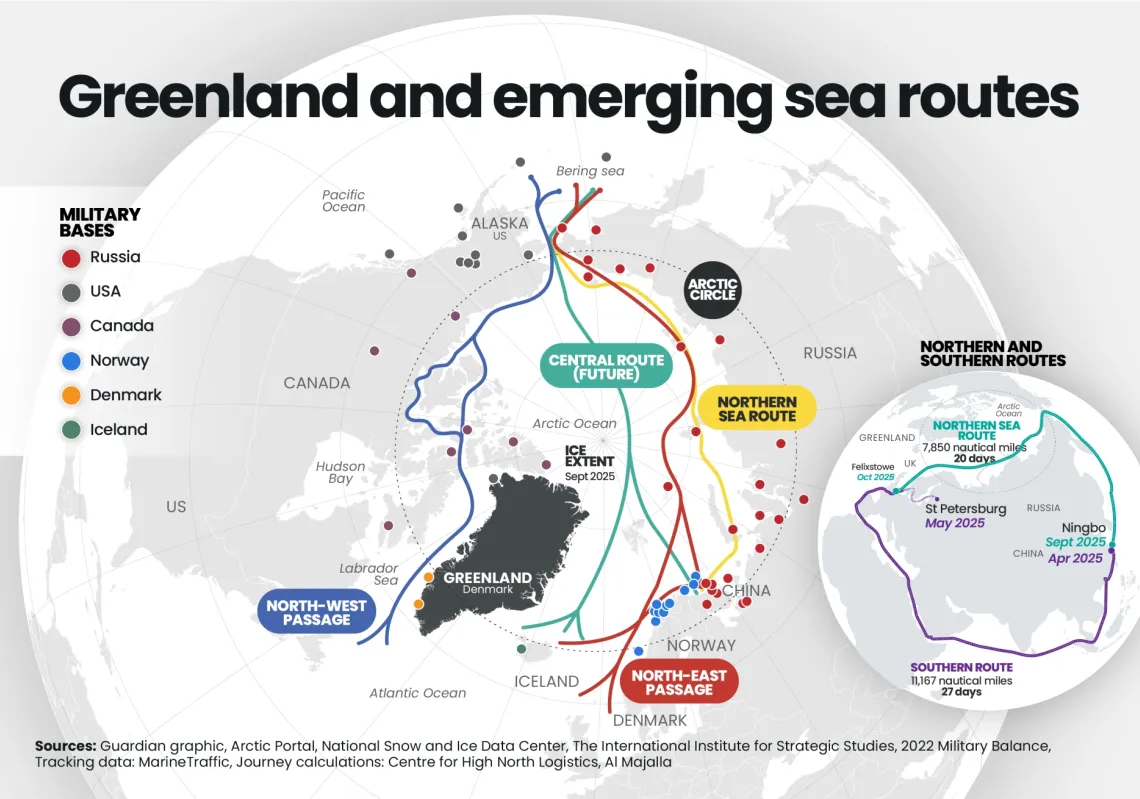
When a container ship called Istanbul Bridge docked at Felixstowe in the UK on 13 October 2025, it made headlines for its 21-day journey time from Ningbo in China. Had it taken the Suez Canal, it would have arrived towards the end of October, but it took the North-East Arctic Passage instead. Melting Arctic sea ice could make this an increasingly important global maritime transit route. No wonder US President Donald Trump wants ownership of Greenland for “national security”.

For a long time, the Arctic Sea has not been a viable supply route, being covered by ice for most of the year, but climate change and global warming is changing that, opening up new possibilities for shipping to bypass traditional maritime choke points such as the Strait of Malacca, Strait of Hormuz, Suez, and the Panama Canal. These are all narrow spaces that handle large volumes of trade.

Problems and delays can occur, such as in March 2021 when Ever Given, one of the world’s largest container ships, ran aground in the Suez Canal, causing a six-day blockage. The Strait of Hormuz, off the coast of Iran, and the Bab el-Mandeb Strait, off the coast of Yemen, both lie in geopolitically tense areas, meaning that ships passing through run the risk of being targeted by hostile state or non-state actors.

The North-East Arctic Passage avoids all these hotspots but cuts largely through Russian national waters. It offers quicker transit times from northern China to northern Europe. A ship travelling from Shanghai to Rotterdam could cut ten days off its journey by taking the Arctic route, because this is around 2,500 nautical miles shorter. It would also reduce carbon emissions.
KIRILL KUDRYAVTSEV / AFP
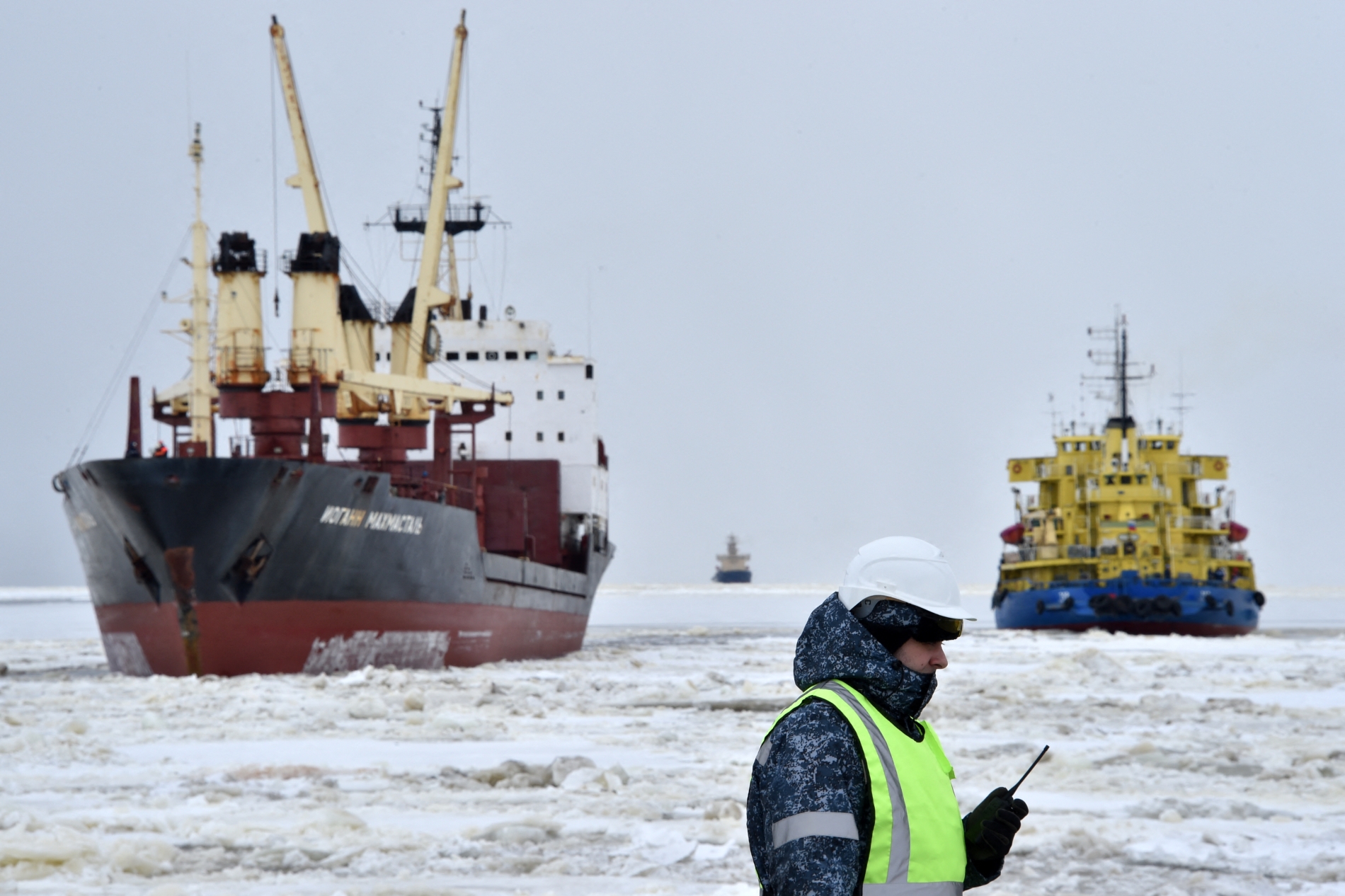
A picture taken on 5 May 2016, shows the icebreaker Tor‬ (R) at the port of Sabetta in the Kara Sea shoreline on the Yamal Peninsula in‬ the Arctic Circle, some 2450 km from Moscow.

Breaking the ice

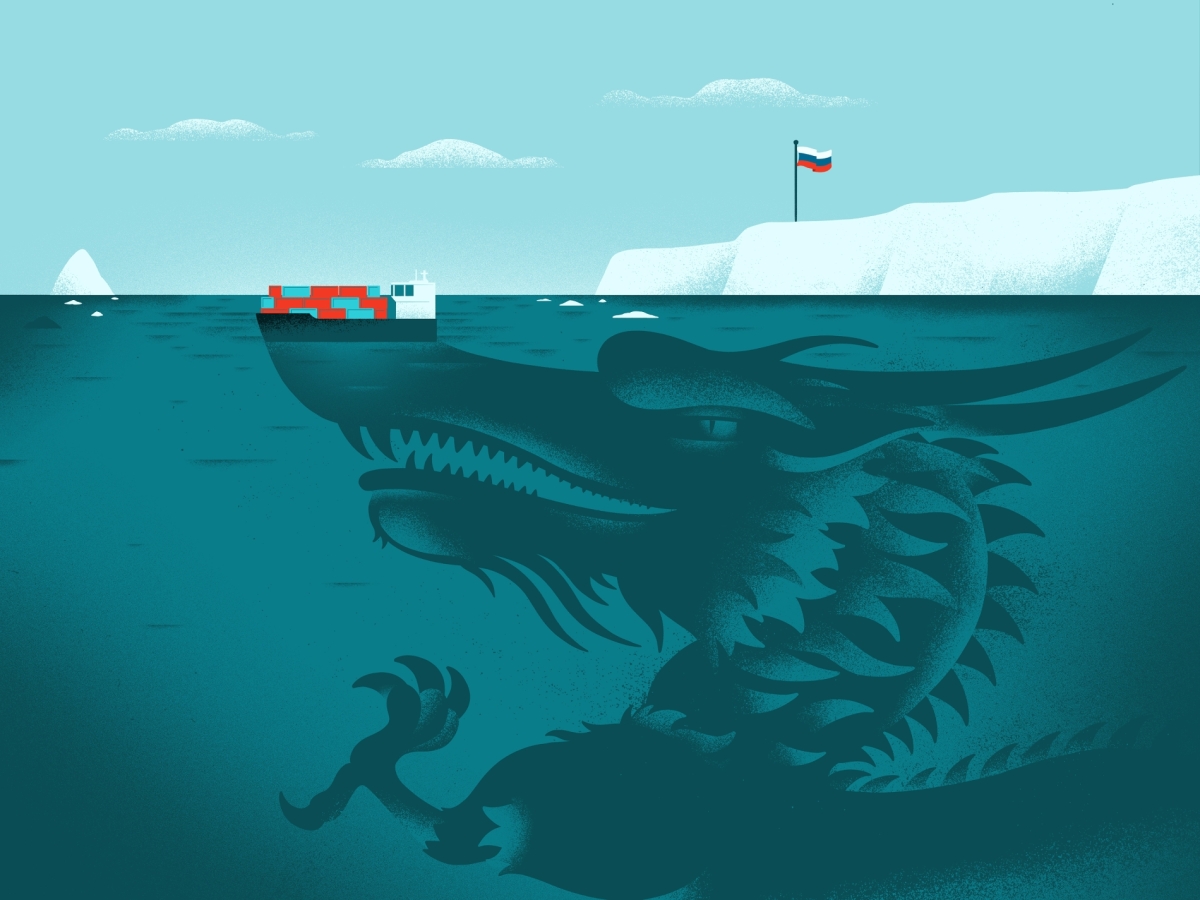
Two countries in particular are very interested in making this shipping route work—Russia and China. In Harbin, China, on 14 October 2025, Alexey Likhachev, head of Russia’s state atomic energy company Rosatom, and Liu Wei, China’s transport minister, approved a plan to develop shipping along the North-East Arctic Passage. Rosatom described it as “a key transport artery of the 21st century, capable of providing faster, more efficient, and safer connections between continents”.
A ship travelling from Shanghai to Rotterdam could cut ten days and 2,500 nautical miles off its journey by taking the Arctic route

Given that 90% of China's exports still travel by sea, the North-East Arctic Passage is important to Beijing's global ambitions. China's 2018 Arctic Policy called the country a "near-Arctic state" and mentioned the "Polar Silk Road," as part of its Belt and Road initiative. Five years earlier, China joined the Arctic Council and wants to work with European Arctic nations on 'research projects'.

Within the last five years, China has built several icebreakers that are currently classed as research vessels, but the country will soon ramp up its icebreaking capability. The US Coast Guard was taken by surprise in July 2024 when four Chinese ships showed up in the Bering Sea, claiming to be involved in Arctic research.

Any country using the North-East Arctic Passage will have to pay Russia transit fees and cover the cost of its icebreaking and security services. Russia's nuclear-powered icebreakers currently allow for Arctic transit from July to October, but a warming change may increase this further.

TAMARA KLINK / AFP
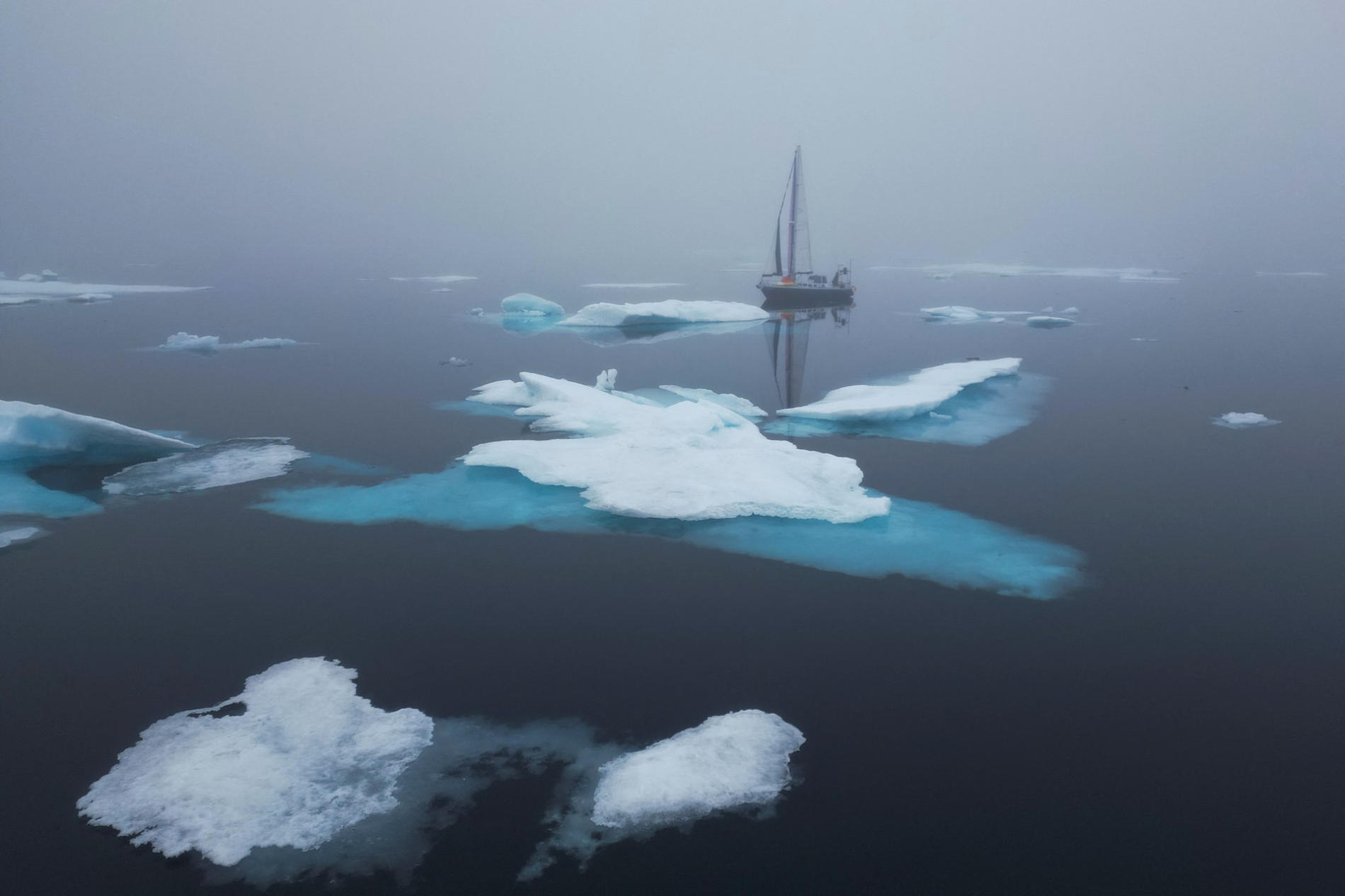
Brazilian sailor Tamara Klink during her Arctic voyage through the Northwest Passage on 28 August 2025.

Reviewing options

The United States does not yet have a major presence along the North-East Arctic Passage, which explains Trump's interest in Greenland, a country also thought to possess important minerals used in 21st-century technologies. Owning Greenland would give the US control of waters much closer to the North-East Arctic Passage.

While his rhetoric and threats over Greenland drew an angry response from Europe, most NATO allies agree that China's Arctic ambitions are a cause for concern. Citing intelligence sources in February, Kaja Kallas, the European Union's head of foreign affairs, said China's interest in Arctic supply routes created "security risks". The EU is now updating its Arctic Policy, which was last written in 2021.

Commercially and practically, the route is not a viable option year-round, and while there are savings in terms of time and fuel, shipping companies that opt to pass through the Arctic will need to invest in suitable container ships with reinforced hulls, protected propellers, and systems that still work in extreme temperatures.

China's Arctic interest may have forced India's hand. New Delhi and Moscow are now developing the Chennai-Vladivostok maritime corridor.

Beyond Russia and China, another important global player is watching developments closely. India launched its vision of 'port-led prosperity' through its Sagar Mala Initiative in 2015, and traffic through the Indian Ocean, to and from the Suez Canal, is an important part of this picture.

China's Arctic interest may have forced India's hand. New Delhi and Moscow are now developing the Chennai-Vladivostok maritime corridor. At 5,647 nautical miles, this gives India better sea connectivity to Russia (the current Mumbai-St Petersburg route is 8,675 nautical miles). The Chennai-Vladivostok corridor could then connect with the North-East Arctic Passage.

With China and Russia poised to make a big splash in international shipping, the economic benefits that come with the North-East Arctic Passage are inexorably linked to political considerations as well as climate unpredictability, but the cracks in the ice are there for all to see.

font change