Is Russia’s ‘war economy’ finally feeling the pinch?https://en.majalla.com/node/329667/business-economy/russia%E2%80%99s-%E2%80%98war-economy%E2%80%99-finally-feeling-pinch
Is Russia’s ‘war economy’ finally feeling the pinch?
Unsustainable defence spending is causing problems beyond the industry itself. As the war in Ukraine rages on, growth has slowed sharply, and few good options remain, as recession and stagnation loom.
Al Majalla
Is Russia’s ‘war economy’ finally feeling the pinch?
Boosted by the war in Ukraine, Russia’s defence industry has had a productive period in recent years. Amid declining state revenues, the boom has spurred a sector that had been contracting in disarray in the 1990s.
Under peacetime circumstances, the producers of Russian military equipment might not be considered globally competitive, as they rely on foreign technological components and employ hundreds of thousands of Russians, but they supply the warring frontlines with the weapons and equipment on which the Russian armed forces depend.
Hit by Western sanctions since the invasion in 2022, the Russian economy showed an early dynamism, but this has recently begun to ebb, particularly since the second half of last year, when previous growth capacities appeared to reach their limit. State oil and gas revenues have declined, constraining once swollen defence budgets. Declining foreign exports have further eroded profitability for firms now heavily focused on wartime production, even though order books seem healthy.
The withdrawal of Western companies in 2022 affected the sector’s competitiveness, exacerbated by sanctions on the supply of dual-use materials. Together, this makes it difficult to see how Russia’s defence industry will act as an engine of economic growth once the war finally concludes.
Soviet legacy
Russia inherited its military-industrial complex from the Soviet era, when it formed a vast and multifaceted pillar of the national economy. Comprising more than 6,000 enterprises, most from the Soviet period, it remains huge, with firms that provide both primary and secondary inputs for weapons systems, as well as automotive and truck manufacturers and civilian production sectors such as electronics and chemicals.
According to an October 2021 report by the US Congressional Research Service, the Russian defence sector employed 3.5 million people and accounted for around 7.5% of the country’s gross domestic product (GDP). On 11 January this year, First Deputy Prime Minister Denis Manturov said the sector now employed 3.8 million, with 800,000 new employees added since the invasion. Wages in the sector can be double the national average, so the pay often draws workers from other fields.
In the years after the Cold War, the industry suffered from chronic underinvestment, but after the first and second Chechen wars (1994-96 and 1999-2009), this began to change. Reforms modernised the army’s structure and equipment, and extra investment was made in military production after the Russian army’s weak performance in the 2008 conflict with Georgia.
To bypass sanctions on technological components required for its missile systems and aircraft, Russia relies on re-export channels through third countries.
Ambitious plans to overhaul Russia's armed forces collided with economic reality after sanctions were imposed following the 2014 annexation of Crimea, a strategic Ukrainian peninsula on which Russia had a naval base. Sanctions restricted Russia's access to critical technological components required for its missile systems and aircraft. To bypass sanctions, Moscow has relied on re-export channels through third countries.
Most precision components are produced by firms headquartered in the US, Japan, Taiwan, and Europe, all of which formally adhere to the sanctions regime. Establishing illicit import routes is therefore expensive and risky. It requires a chain of intermediaries to secure parts and facilitate payments. Shipments can be confiscated, and transactions can be cancelled at short notice, often without compensation.
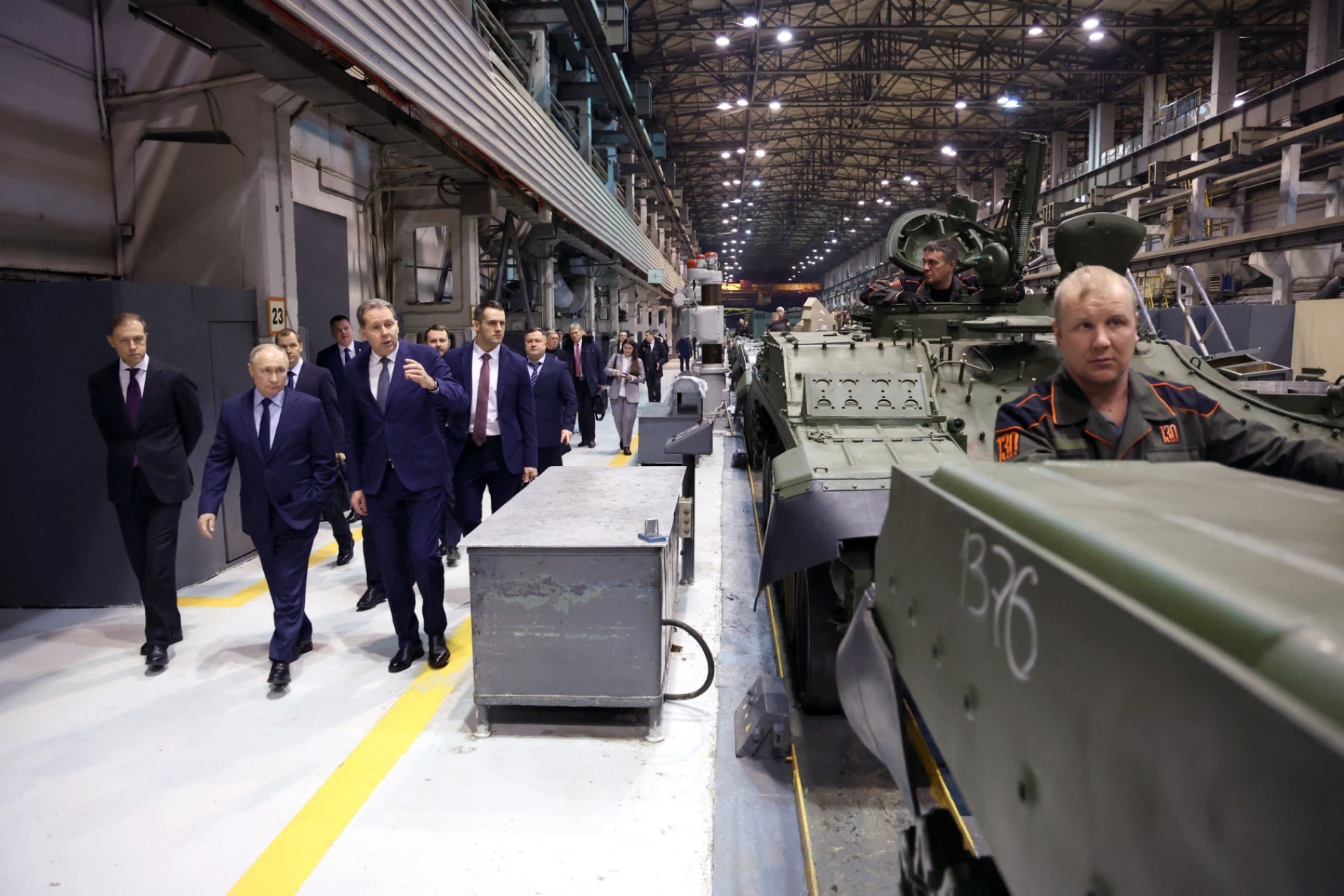
Russian President Vladimir Putin visits Uralvagonzavod, the country's main tank factory in the Ural region, on 15 February 2024.
Spending more
Russia's overall military output has increased owing to the mass production of less sophisticated munitions and the refurbishment and modernisation of older weapons. Glide bombs are a prime example of adapting legacy platforms.
Among those benefiting is Rostec, a vast Russian defence corporation established in 2007. It grew by absorbing the United Aircraft Corporation, acquiring Uralvagonzavod (the country's main tank manufacturer), and incorporating hundreds of smaller factories. Today, its portfolio encompasses around 800 companies, including pharmaceutical facilities and the Kaliningrad Amber Complex.
Prior to the war in Ukraine, Rostec presented itself as modern and market-oriented, exporting advanced weaponry and working with global peers in the automotive and aviation sectors. Since Russia invaded Ukraine, Rostec has benefited from enhanced state financing and substantial new defence contracts funded by the federal budget, but incurred significant losses in international markets after Western partners severed ties and sanctions restricted its access to markets.
Sanctions also led the aviation sector to lose access to those aero engines that had previously delayed the entry into service of some aircraft, including the MC-21, and necessitated the development of domestically sourced versions. In the automotive sector, Renault-Nissan's withdrawal from Russia deprived AvtoVAZ of access to modern technologies. As a result, its vehicles have struggled to regain consumer confidence following concerns about product quality.
After three years of war, Russian military expenditure has reached levels not seen since the Soviet era. Defence spending since the invasion has risen by around 300%, from $47bn in 2021. Preliminary estimates announced by Economy Minister Maxim Reshetnikov indicate that Russia's war-related expenditure in Ukraine last year was roughly 5.1% of GDP, reflecting its burden on the state's finances. Based on the government's projected GDP of $2.8tn, war spending would be $140bn in 2025.
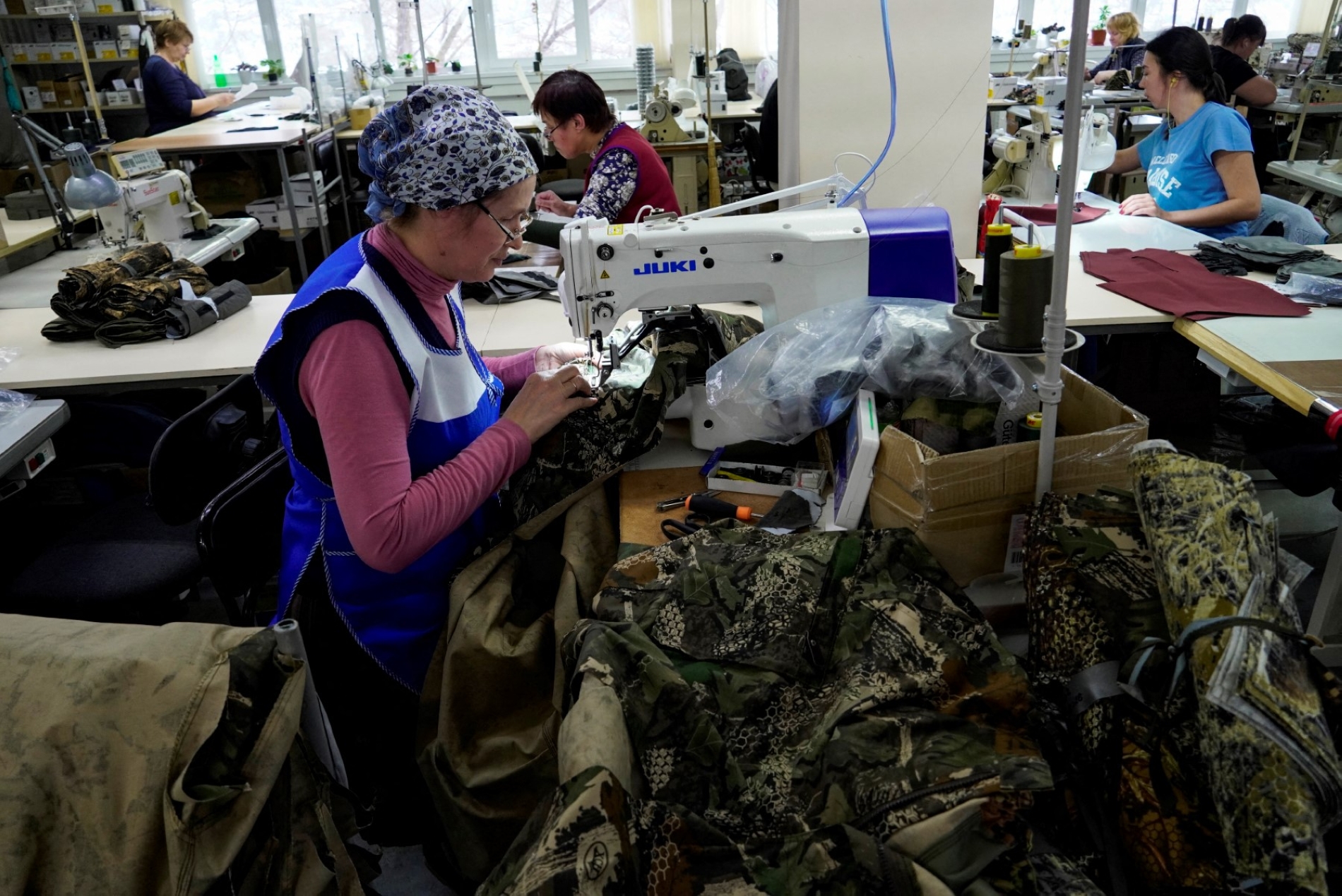
Employees at a local factory producing military uniforms and footwear in Cheboksary, on 15 February 2023.
Impact on budgets
Although defence industries underpinned industrial and economic expansion in 2023 and 2024, signs of deceleration have emerged. The government projects industrial output growth of just 1% in 2025, compared with 5.6% in 2024. The defence sector is still expanding, but momentum is slowing. Output of metal products (used in artillery and munitions) rose by 15.9% between January and October 2025, down from a high of 31.6% in 2024. Likewise, production of electronic and optical equipment increased by 13.6%, compared with 27.9% the year before.
On 23 May 2025, President Vladimir Putin said Russia must strengthen its position in the global arms market by increasing weapons exports, pledging state support. Yet data from the Stockholm International Peace Research Institute show there is a problem. Russia's share of global arms exports fell to 7.8% between 2020-24, compared with 21% in the preceding four-year period.
Russian arms sales were once one of the biggest sources of export income for the economy, but between 2021 and 2024, revenues fell by approximately 92%. This represents losses of more than $13bn in sales, depriving Russia's treasury of a vital source of hard currency, not to mention funding for research and development. This collapse in international sales has weakened Russia's standing as a global player in the arms market.
The marked increase in military production since 2022 has relied heavily on state spending, with output directed primarily to the war effort. Deputy Prime Minister Denis Manturov said that more than 1,000 types of new and modernised military equipment were undergoing field tests in 2025.
He added that prior to 2022, Russia's export order book was valued at $55bn, whereas today there are $70bn of contracts, and expressed confidence in the future, arguing that technology tested during the war in Ukraine has proven to be effective. Still, it seems that 2025 marks the end of the war-driven growth surge.
Expenses and revenue
Government expenditure reached $550bn in 2025 and is set to rise to about $570bn under the 2026 budget. Adjusted for inflation, overall spending has been steady. Officially, national defence allocations were set at roughly $180bn in 2025 and around $170bn in 2026, but actual outlays—including classified expenditure—are widely believed to exceed these published figures, given that Russia does not disclose the full scope of its military spending in the federal budget.
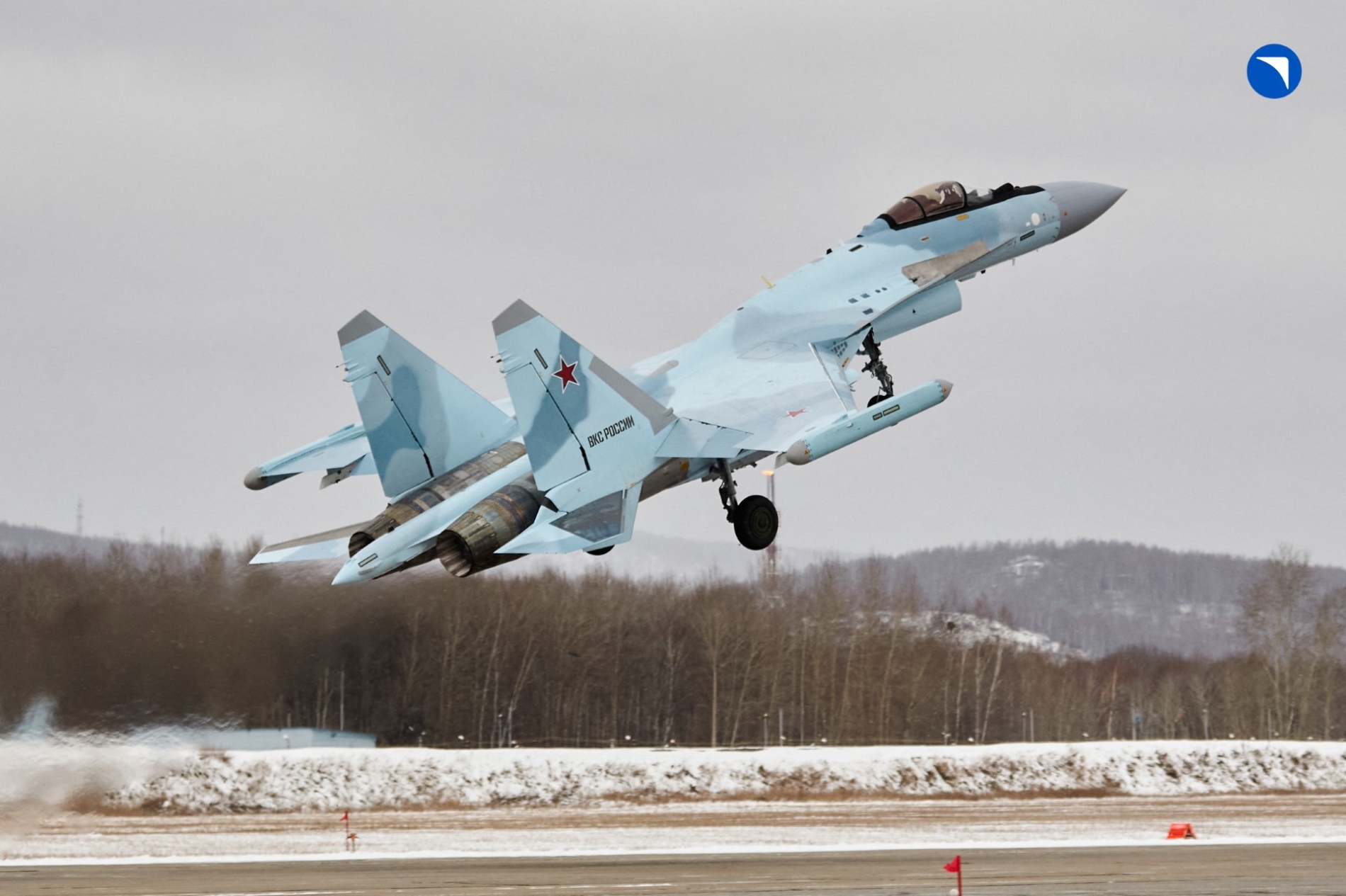
A photo of a Sukhoi Su-35S fighter jet distributed by the Russian defense corporation Rostec on 24 November 2023.
On 17 December, Defence Minister Andrei Belousov said defence expenditure amounted to 7.3% of GDP in 2025, which would equate to $210bn, a level well above the figures formally recorded in the budget.
As the war grinds on, military expenditure is burdening the economy, denting its prospects for recovery, and draining resources that would otherwise be used for civilian development. At the same time, taxes may need to increase to bridge the widening gap between revenue and spending. Since 2022, the Russian budget has allocated a cumulative $550bn to the armed forces, weapons procurement, and security.
If the government keeps spending at current levels, problems could quickly mount. The share of social spending has fallen to 25.1% of the budget, compared with 38.1% before the war, while allocations to support the national economy have declined to 10.9%, down from 17.6% prior to the conflict. According to available Ministry of Finance data, these figures represent their lowest levels in nearly two decades.
Authorities now face a structural impasse. A rapid reduction in defence spending risks triggering a recession, but maintaining current levels risks stagnation. Moscow cannot sustain open-ended military commitments. A safe transition from a war economy to a civilian economy will require troop demobilisation and some sanctions relief. A safe landing will also require good fortune.