Russia keeps a wary eye on US-backed Caucasus corridorhttps://en.majalla.com/node/329580/business-economy/russia-keeps-wary-eye-us-backed-caucasus-corridor
Russia keeps a wary eye on US-backed Caucasus corridor
While the Armenian government is hailing the developments around TRIPP and JD Vance's upcoming visit, many wonder whether Moscow will acquiesce so easily as its hold on the region weakens
SAUL LOEB / AFP
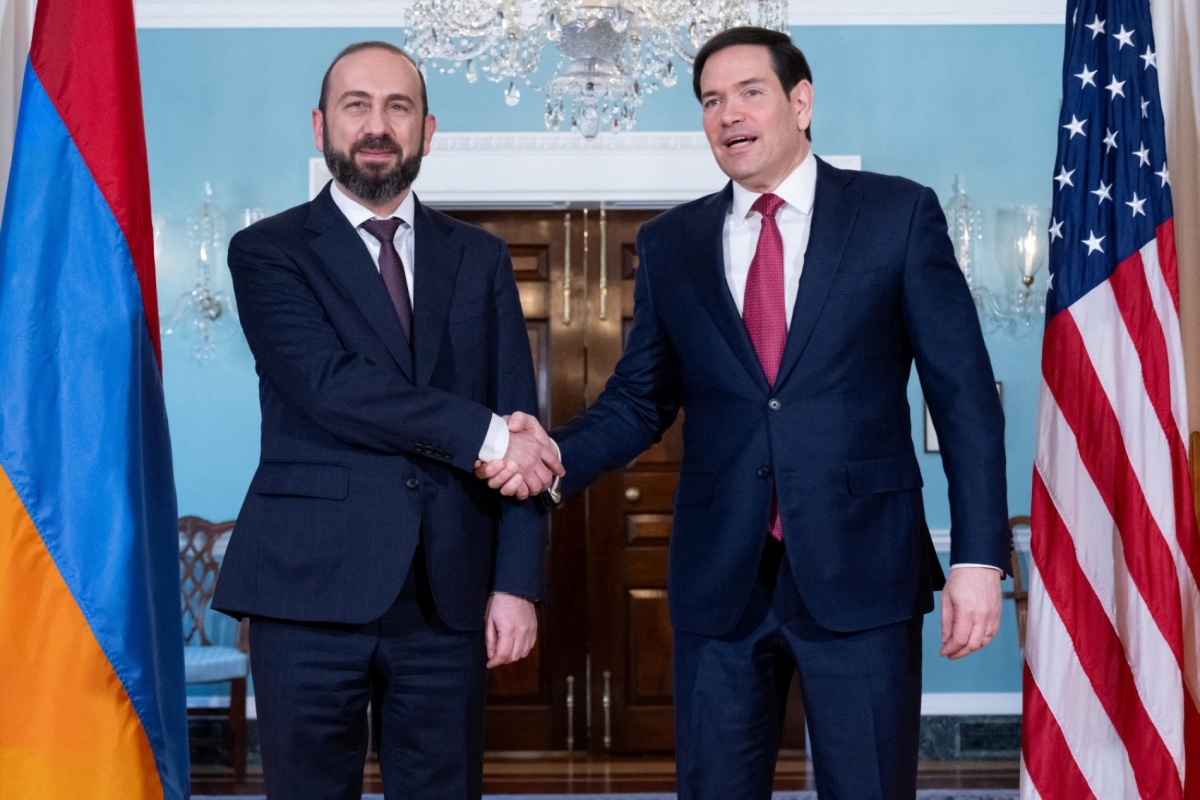
US Secretary of State Marco Rubio greets Armenian Foreign Minister Ararat Mirzoyan (L) prior to meetings at the State Department in Washington, DC, on 13 January 2026.
Russia keeps a wary eye on US-backed Caucasus corridor
It is possible to carry goods to and from China overland through the Caucasus, from the Caspian Sea to Türkiye, without having to pass through Iran or Russia, but it involves going through Armenia and Azerbaijan, which have spent decades at loggerheads. Last year, however, there was a breakthrough when the two sides shook hands in Washington, DC. Championed by US President Donald Trump, a new trade route through thorny territory has been agreed. For the states involved, this is good news and could help cement peace.
“It’s going to be a model for the world,” US Secretary of State Marco Rubio said repeatedly during an official visit by Armenian Foreign Minister Ararat Mirzoyan to Washington on 13 January. Rubio was referring to the Trump Route for International Peace and Prosperity (TRIPP), which is set to be a key part of the so-called Middle Corridor. He and Mirzoyan were there to sign an agreement on the management of the transit route.
Although analysts are still trying to determine how it could impact global trade, TRIPP seems central to ending a long-standing conflict between Armenia and Azerbaijan. They have been in a frozen conflict over the territory of Nagorno-Karabakh since the 1990s, with thousands killed and hundreds of thousands displaced. Azerbaijan wrested control of the territory after launching a war in 2020 and another escalation in 2023, when more than 100,000 Armenians living there were expelled.
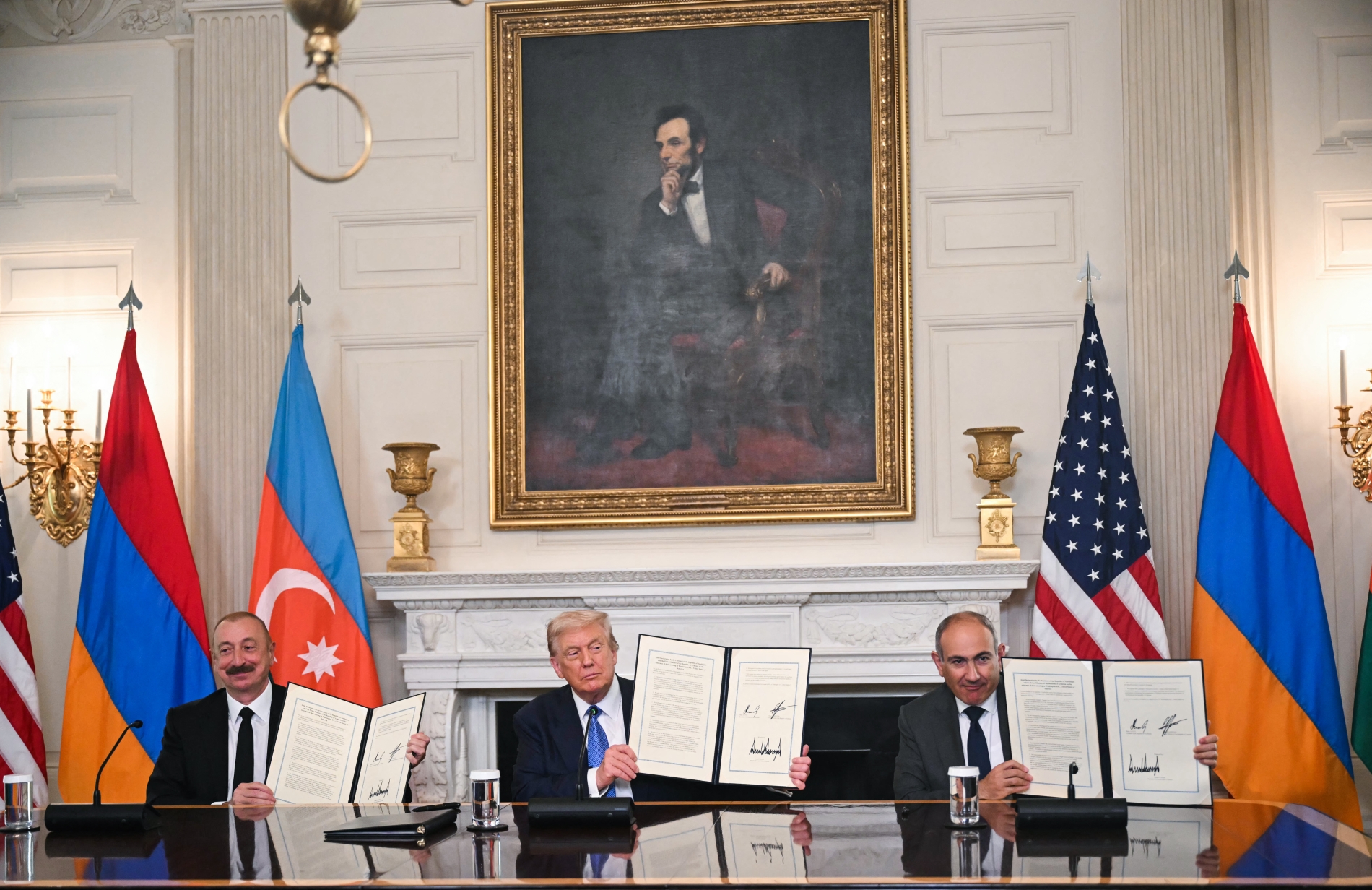
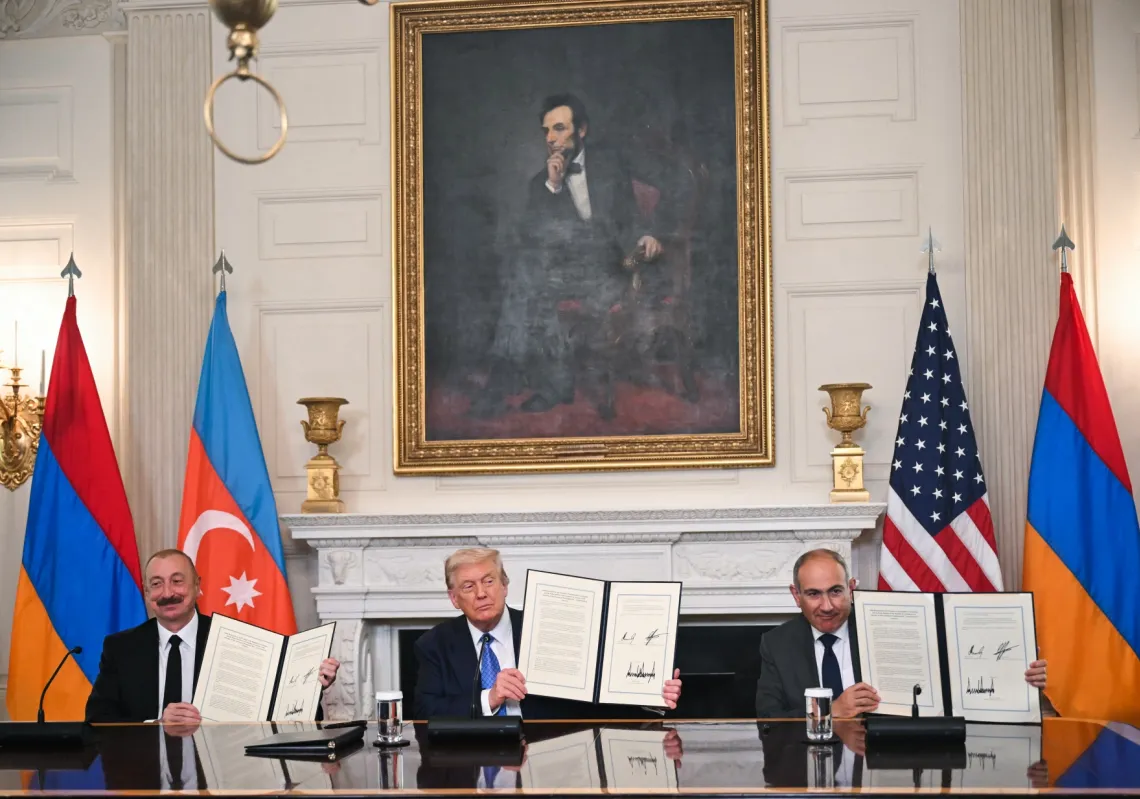
US President Donald Trump (C), Azerbaijani President Ilham Aliyev (L) and Armenian Prime Minister Nikol Pashinyan display the agreement they signed in the State Dining Room of the White House in Washington, DC, on 8 August 2025.
Paving the way
On 8 August 2025, Armenian Prime Minister Pashinyan and Azerbaijan President Aliyev met Trump in Washington and signed an agreement that paves the way for a peace deal featuring TRIPP, which would connect Azerbaijan with its exclave of Nakhchivan through a 43km long corridor on Armenian territory. Since then, tensions have eased. Azerbaijan even shipped some oil to Armenia. Commodity trading of any kind between these two was unheard of just a year ago.
The TRIPP Implementation Framework, signed last month, paves the way for the TRIPP Development Company, in which the US and Armenia will initially hold 74% and 26% of the shares, respectively, for the first 49 years. The development and management rights of the company can then be extended for a further 50 years, during which Armenia would raise its ownership to 49%.
These development rights will cover roads, railways, energy, digital infrastructure, and administration. The company has the right to generate revenue from commercial activities and services, while the territory covered by TRIPP remains under Armenian sovereignty, including for tax and customs purposes.
For the first 49 years, the US and Armenia will hold 74% and 26% stakes respectively in the TRIPP development company
The Middle Corridor
The TRIPP Implementation Framework says that this road will create "a vital link in the Trans-Caspian Trade Route", also called the Middle Corridor. This route stretches from the eastern coast of China through Kazakhstan, crossing the Caspian Sea, then travelling through Azerbaijan and Georgia before arriving in Eastern Europe through the Black Sea or Türkiye.
Ever since Russia invaded Ukraine in 2022, the Middle Corridor has grown in importance, giving an alternative to the Northern Route through Russia and the longer, more complicated option through the Suez Canal. This matters because it cuts transportation times and costs. In 2022, the OECD estimated that a 40ft container from Chengdu in China would take around 14 days to the get to the Balkans through the Middle Corridor, compared to 20 days through the Northern Route and up to 40 days through the Suez Canal.
The Atlantic Council suggested that more than 86% of transport between China and Europe used to go through Russia before 2022, with less than 1% going through the Middle Corridor. Since then, the total volume of goods passing through the Middle Corridor has tripled, from 1.48 million in 2022 to around 5 million tonnes in 2025. The World Bank estimates that it could be 11 million tonnes by 2030.
A road along the Zangezur Mountains near Noravank Monastery in Armenia.
In 2024, the Caspian Policy Centre estimated that a direct route through the south of Armenia would reduce the connection between Azerbaijan and Türkiye by 343km. Armenian and Azeri officials cite this difference as key to the route's economic viability, along with greater proximity to Middle Eastern states like Syria and Iraq.
The development of TRIPP is therefore expected to further enhance the importance of the Middle Corridor at a time when there is no end in sight to the war in Ukraine and no understanding of Russia's future standing once it is over. Considering this, together with increasing tensions in Iran, the Middle Corridor will be a vital route for years to come. As if to emphasise the point, US Vice President JD Vance is expected to visit both Armenia and Azerbaijan later this month.
Armenian Prime Minister Pashinyan said the US had allocated $140mn for "the preparatory phase" of the project, with investments of "hundreds of millions" to follow, but significant infrastructure work remains to be done on the ground in Armenia, likely involving new roads and railway lines.
With investment in mind, Azerbaijan's President Aliyev met investors such as BlackRock's Larry Fink and Global Infrastructure Partners (GIP) chief executive Adebayo Ogunlesi at Davos last month. As part of that meeting, the Azerbaijani State Oil Fund said it would place up to $1.5bn under GIP management. Armenian media noted that this could, in fact, be a way to reroute Azerbaijani investment into the TRIPP project, disguised as American funding.
Cold-shouldered
While the Armenian government is hailing the developments around TRIPP and JD Vance's upcoming visit, many wonder whether Russia will acquiesce so easily as its hold on the region weakens. Armenia needs Russia to make TRIPP work, because since 2008, the Armenian railway network has been operated by South Caucasus Railways, a subsidiary of Russian Railways.
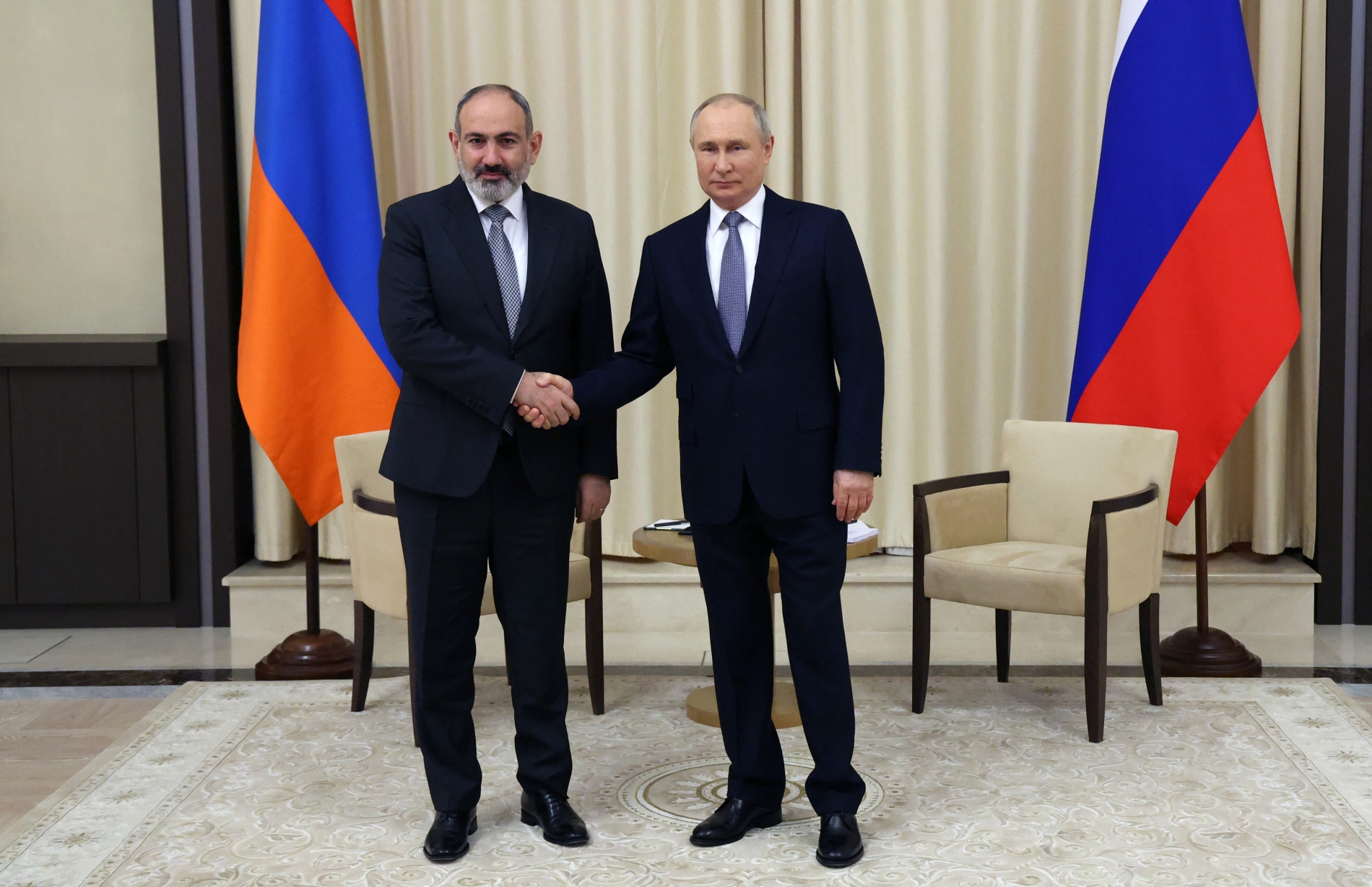
Russian President Vladimir Putin (R) shakes hands with Armenian Prime Minister Nikol Pashinyan ahead of their meeting at the Novo-Ogaryovo residence, outside Moscow, on 19 April 2022.
While the Russian company has a 30-year concession on the network, it is obligated to invest in its modernisation, which has not been carried out for almost two decades. "We would like to work together with our Russian partners to deepen cooperation on the unblocking of regional transport routes," Pashinyan said in January.
Russia seems in no rush to act quickly. Armenian politician Arman Babajanyan recently pointed out that "Russian Railways is going through a deep financial crisis". In 2025, its debt exceeded $50bn, and the company cut its budget by around 20%. He added that South Caucasus Railways has seen declining revenues. As a result, it now pays two-thirds less tax in Armenia than it did four years ago.
Cementing peace
The local political landscape may soon shift, with Armenian elections in June 2026. Most think the current government will retain power, but there are reports of a misinformation campaign of the kind that clouded recent elections in Moldova. TRIPP is an election issue.
Robert Kocharyan, the country's second president and now a major opposition figure, recently warned that TRIPP will not benefit Armenia at all. A staunch Russian ally, Kocharyan said TRIPP meant that Armenia risked being caught in the middle, "at the point where the interest of great powers collide". Critics say he is simply parroting Kremlin propaganda, because the current government seeks closer ties to the West.
The significance of TRIPP should not be simply seen as part of a peace deal. Its connection to the Middle Corridor means that Russia and China are both interested in how things develop, while the US openly seeks control. The coming weeks and months will provide some clarity, with the TRIPP Development Company due to be set up soon. The actual construction work will take more than a year. Until then, expect Russia to keep its cards close to its chest.