The fight against IS will determine whether post-war Syria can confront the consequences of mass violence without recreating the conditions that allowed it to endure
AFO
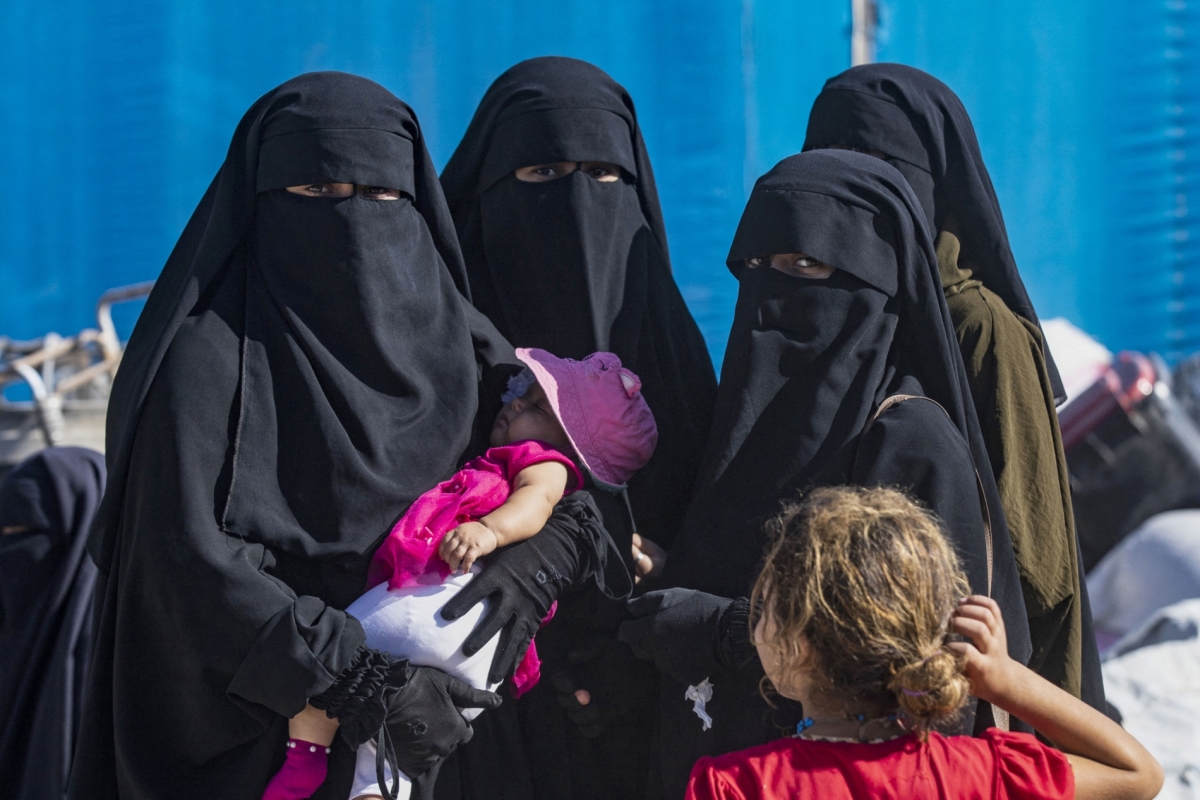
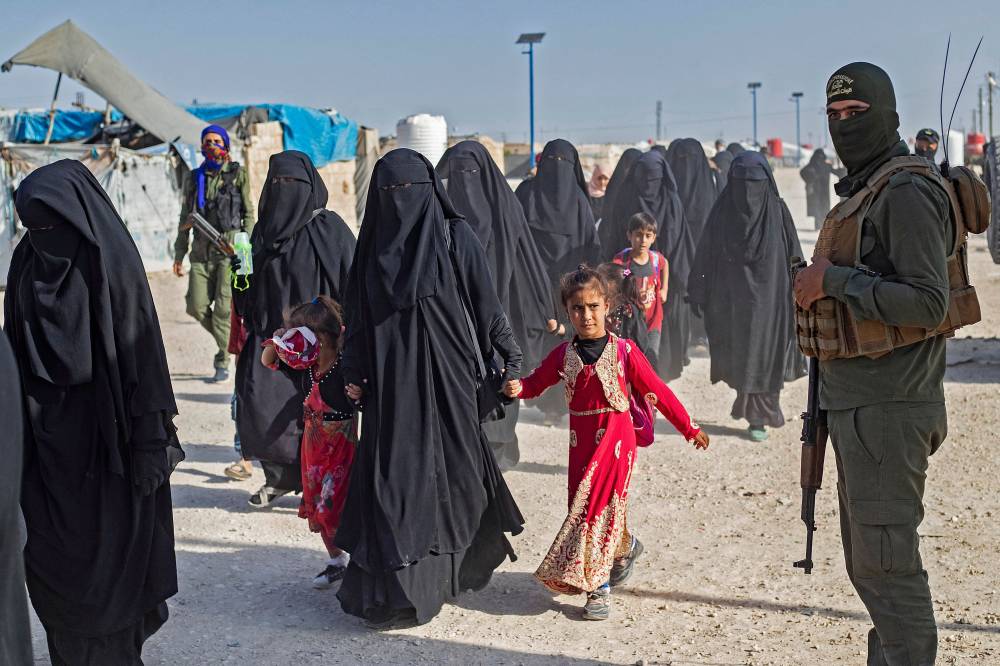
Released detainees prepare to leave the Kurdish-run al-Hol camp, which holds relatives of suspected Islamic State (IS) group fighters in Syria's northeastern Hasakeh governorate on 3 September 2023.
As the future of the Kurdish-led Syrian Democratic Forces (SDF) remains uncertain, one outcome of the ongoing escalation in northeast Syria appears increasingly settled: responsibility for managing the Islamic State (IS) file is shifting to the Syrian state. What is being transferred, however, is not a prize, but a deeply entrenched problem—one that years of containment have compounded rather than resolved.
Managing IS fighters is a burden without straightforward solutions. Tens of thousands of detainees, family members, and affiliates remain held in prisons and camps designed for indefinite containment rather than legal resolution. Foreign nationals, stateless children, and hardened fighters are concentrated in facilities never intended to be permanent, sustained by a system driven less by strategy than by global reluctance to assume responsibility.
What now confronts Damascus is not simply a security challenge, but a test of governance. The question is whether transferring control of the IS file will disrupt the conditions that allowed the group to endure, or merely repackage them under state authority. Without sustained international engagement and credible state-led efforts to address the legal, political, and socio-economic drivers of IS’s persistence – including pathways for repatriation – the handover risks reproducing the very instability it is meant to contain.
Shifting partnership
The decade-long partnership between Washington and the SDF in the fight against IS began to shift after the fall of the Syrian regime in December 2024, as US cooperation with Syria’s transitional authorities expanded. That cooperation was formalised in November, when Damascus joined the international coalition against IS. Even then, however, the US continued to rely on the SDF as its primary partner for securing the prisons and camps holding IS fighters and civilians linked to the group.
That arrangement unravelled abruptly in January. The SDF recently abandoned al-Hol camp in Hasakeh province—long home to tens of thousands of family members of IS fighters, including foreign nationals— without coordination with either Washington or Damascus. This came shortly after around 120 IS prisoners escaped from an SDF-controlled detention facility in al-Shaddadi when guards fled the area, exposing the fragility of the existing system.
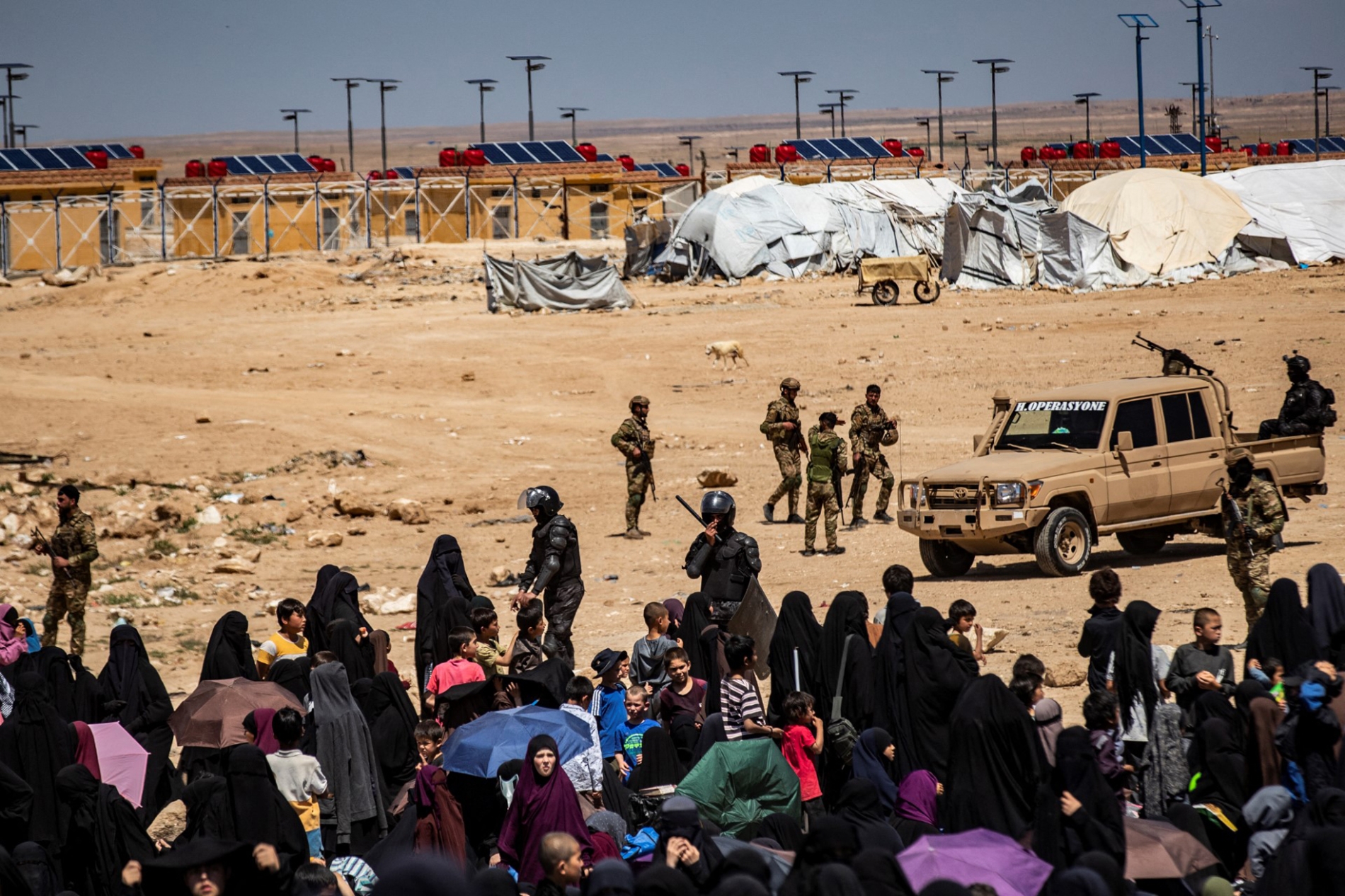
Syrian Kurdish Asayish security forces at the Kurdish-run al-Hol camp, which holds relatives of suspected Islamic State (IS) group fighters in the north-eastern Hasakeh governorate.
Together, the incidents shattered confidence in the SDF-led model. For US officials, the conclusion was clear: divided authority and contested territory created dangerous openings for IS to exploit. Damascus moved quickly to fill the gap. Syrian government forces coordinated with US forces to recapture escapees from Shaddadi, while forces were deployed to secure the al-Hol camp.
Beyond these immediate steps, Washington is reportedly preparing to transfer hundreds of IS detainees from SDF-run prisons in Hasakeh to Iraq, aiming to reduce the risk of further prison breaks should fighting between the SDF and Damascus resume.
By reclaiming the file, Damascus positions itself to coordinate handovers with other states and press foreign governments to repatriate their nationals
A new managment model
To accelerate this shift and cement its position as Washington's primary partner in the fight against IS, the Syrian government has made clear that it does not intend merely to inherit the file, but to fundamentally redefine how it is managed. At the core of Damascus's argument is the idea that indefinite containment under a non-state actor was never sustainable.
Bringing prisons and camps under state control, officials argue, would enable a transition from ad hoc containment to state-led resolution. Government officials say they plan to centralise authority over detention facilities, integrate the handling of IS suspects into formal state institutions, and replace open-ended detention with a coherent legal and security framework. In practice, this would involve moving detainees into judicial processes to assess individual culpability. Fighters and supporters found to have committed crimes would face prosecution, while those whose involvement cannot be established would be rehabilitated and resettled in their home areas inside Syria.
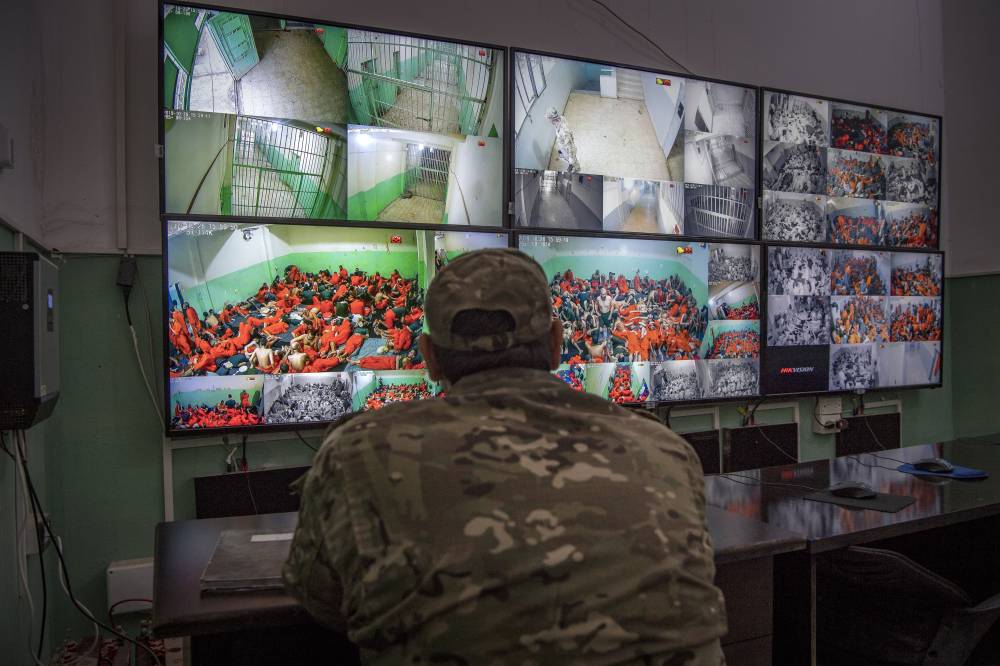
An SDF fighter monitors on Surveillance screens, prisoners who are accused of being affiliated with the Islamic State (IS) group, at a prison in the northeastern Syrian city of Hasakeh on 26 October 2019.
State control, Damascus argues, would also open diplomatic avenues that were unavailable under SDF management. By reclaiming the file, the government positions itself to transfer detainees to other jurisdictions, coordinate handovers with other states, and press foreign governments to repatriate their nationals, using diplomatic engagement, rather than indefinite detention, as the default approach.
Lingering risks
While transferring management of the IS file to Damascus could offer advantages, it also introduces significant risks. The most immediate challenge is prison management. Hayat Tahrir al-Sham's (HTS) general security apparatus—the backbone of the post-transition security system—previously handled IS detainees in north-western Syria, but under far more limited conditions.
There, detention facilities operated within a tightly controlled framework that prioritised intelligence gathering and repression over rehabilitation or due process. Prisoners were routinely interrogated and regularly reshuffled to disrupt networks, with informant systems used to identify organisers and ideological leaders.
Even setting aside concerns about effectiveness and abuse, that model is not easily transferable to north-eastern Syria, where the scale of detention is vastly larger. While the US has sought to move the most dangerous IS detainees to Iraq, hundreds—and potentially thousands—are likely to remain in Syria, presenting a challenge unlike anything Damascus's security forces have previously faced.
Besides, the earlier system depended on a highly disciplined force, and the absence of external scrutiny —conditions Damascus does not currently possess. Its security apparatus is already overstretched, and extending control over the north-east will require rapid recruitment, likely without sufficient vetting or training.
This hasty expansion increases the risk of radicalisation inside prisons, turning them into potential incubators for a new generation of militants. The threat extends beyond detainees to guards themselves, who may be vulnerable to ideological influence. The killing of a US patrol near Palmyra last year by a member of a Syrian security force underscored the danger of infiltration by IS sympathisers—a risk that will only grow as pressure and scale increase.
during a security operation by the Kurdish Asayish security forces and the special forces of the Syrian Democratic Forces,in the Kurdisspecial forces of the Syrian Democratic Forces,in the Kurdish-run al-Hol camp on 26 August 2022.
Managing the camps presents an even more intractable challenge. Sites such as al-Hol are deeply degraded spaces shaped by coercion, suffering, and grievance. Tens of thousands of civilians—mostly women and children, including foreign nationals and stateless individuals—remain concentrated in conditions that have fostered radicalisation. Bringing these camps under Damascus's authority will not, in itself, dismantle those dynamics.
While UN agencies and aid organisations are likely to continue operating in al-Hol, their presence may help ease the immediate burden on the state. It does not, however, offer a solution—just as external assistance failed to resolve the problem when the camps were under SDF control.
Experience from north-western Syria offers only limited guidance. HTS never operated camps on a scale comparable to al-Hol, nor did it confront a similarly internationalised population linked to foreign fighters. Where it encountered IS-affiliated families outside formal detention, its approach was overwhelmingly security-driven, relying on surveillance, movement restrictions, and intelligence monitoring to limit contact with IS networks.
HTS pursued no meaningful rehabilitation. Individuals who were released or allowed to return to their communities did so following security assessments, not through any reintegration process. Damascus has recently indicated that Syrians who did not commit crimes would be rehabilitated and resettled in their home areas, but it has offered little clarity on how this would be implemented, over what timeframe, or according to which criteria.
The state lacks the experience, resources, and institutional capacity to facilitate the large-scale return of civilians in a safe and sustainable manner while mitigating security risks. The challenge is even greater for foreign nationals, whose governments are unlikely to agree to repatriation at scale.
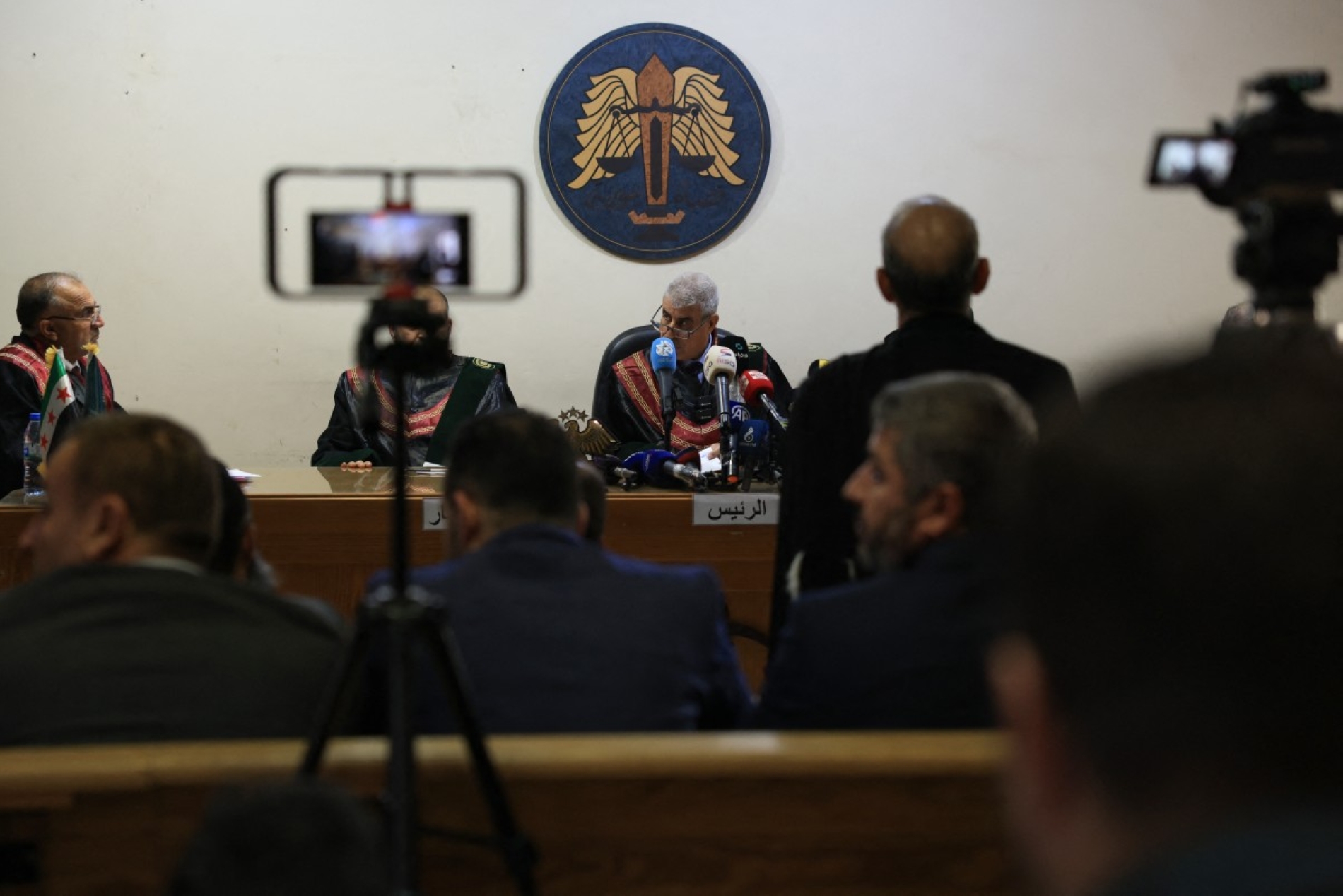
People follow the proceedings of the first trial of more than a dozen suspects linked to massacres that left hundreds dead in Syria's Alawite coastal heartland earlier this year, at the Justice Palace in Aleppo on 18 November 2025.
Judicial shortcomings
These challenges are compounded by the weakness of Syria's judicial system. Courts remain understaffed and overwhelmed by backlogs of ordinary criminal cases, let alone the complex task of processing large numbers of IS detainees in a credible and consistent manner. Judges, prosecutors, and defence lawyers alike lack the training, resources, and institutional protections required to adjudicate mass terrorism cases while meeting even minimal standards of due process.
The legal framework inherited from the former regime remains ill-suited to the scale and sensitivity of the IS file. Safeguards to prevent abuse in detention or to ensure interrogations are conducted without torture are weak or absent. Without credible judicial mechanisms, the shift from containment to prosecution risks replicating the same dynamics of abuse, exclusion, and injustice that have long fuelled radicalisation.
Taken together, these constraints point to a fundamental risk at the heart of the transition. The transfer of the IS file is dangerous not only because the group may seek to exploit it, but because a poorly executed handover risks institutionalising the same failures under a different authority.
At its core, the fight against IS is a test of governance and legitimacy—of whether post-war Syria can confront the consequences of mass violence without recreating the conditions that allowed it to endure.
The outcome of this transition will hinge on whether it is treated as an endpoint or a beginning—not only by Damascus, but by the international community and states with direct obligations to the detainees they left behind. Without sustained engagement on legal pathways, repatriation, rehabilitation, and accountability, the transfer of responsibility to Damascus is unlikely to close the IS chapter in any meaningful or lasting way.