Following an intensive round of negotiations in Damascus led by Mazloum Abdi, commander of the Syrian Democratic Forces, and conducted under close US supervision, a comprehensive agreement between the SDF and the Syrian government was announced on Friday, 30 January.
The accord serves as the executive framework for the 18 January understanding, consolidating a sustained ceasefire, setting out a phased integration of SDF forces and the Autonomous Administration, and authorising the deployment of Interior Ministry security units to the cities of Al-Hasakah and Qamishli to secure the presence of local police. The agreement also provides for the formation of a military division composed of three SDF brigades, alongside an additional brigade in Ayn al-Arab, known as Kobani, attached to the Aleppo command. It further stipulates the withdrawal of military forces from all contact lines.
The agreement supersedes earlier drafts that had envisaged three full divisions and two independent brigades drawn from the SDF, coupled with a decentralised administrative model for the Autonomous Administration.
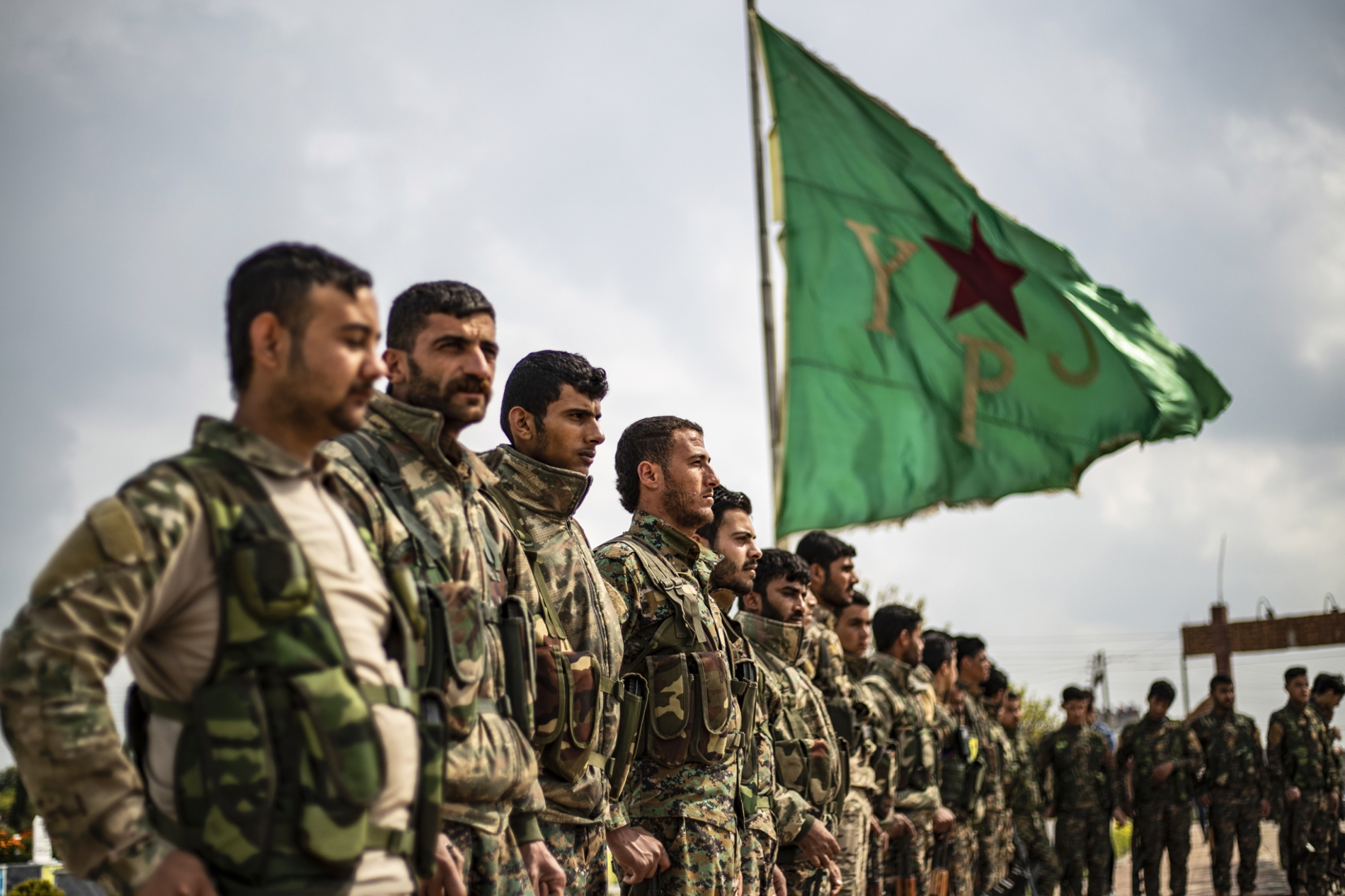
According to an official closely acquainted with the talks, the integration process will commence in early February and proceed in stages not exceeding two months. The plan entails restructuring three brigades into a division, numbering approximately 16,000 fighters from the Kurdish People’s Protection Units who had served within the SDF prior to the departure of large contingents of Arab fighters. It also calls for the establishment of a brigade of roughly 6,000 fighters in Ayn al-Arab and the deployment of police forces across predominantly Kurdish areas.
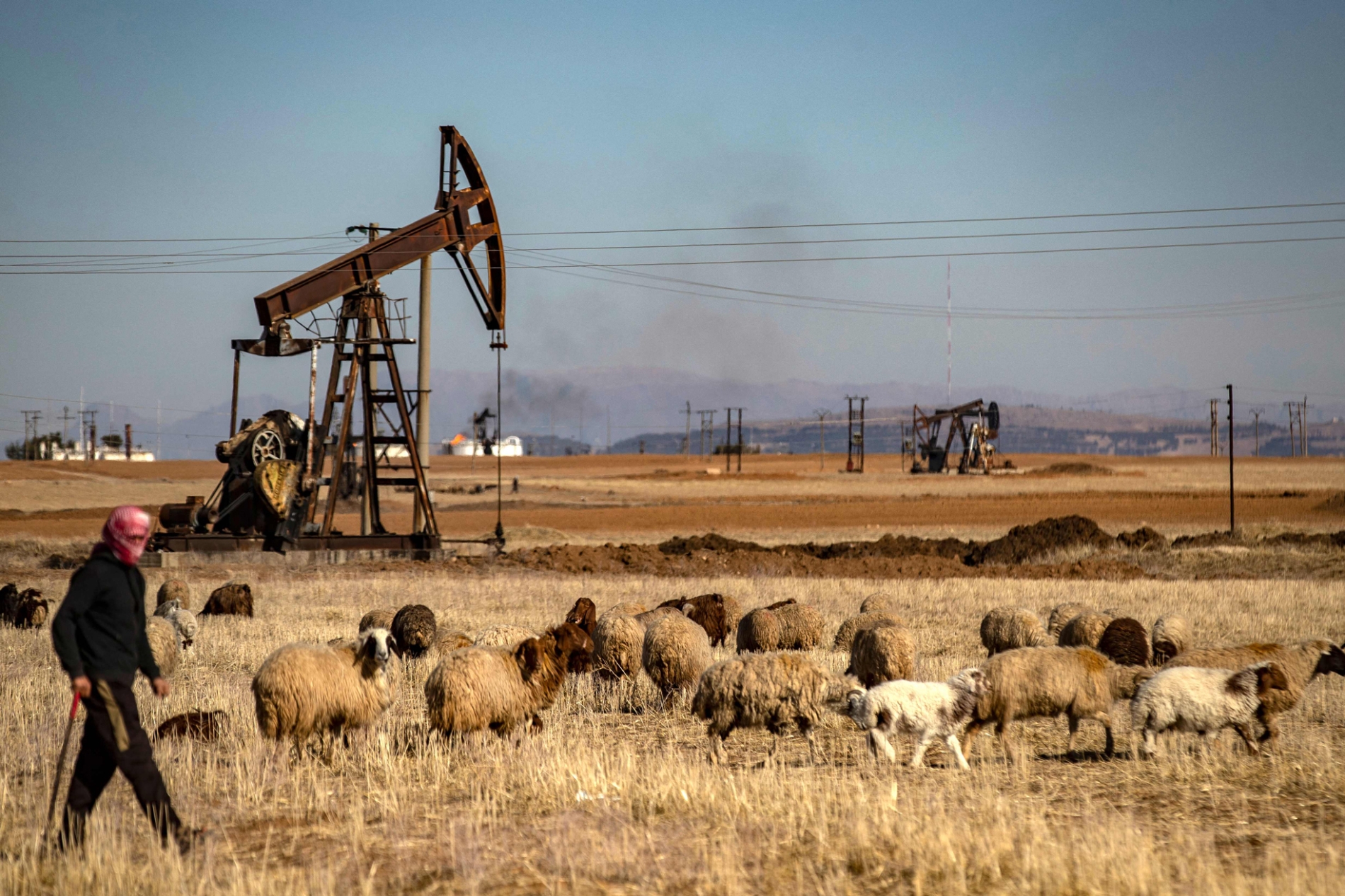
The second phase addresses senior civilian and security appointments, including the governor of Al-Hasakah, an assistant to the minister of defence, and deputy security directors in the relevant regions. Upon settlement of these posts, the two parties will advance toward administrative integration, restoring the operation of principal state institutions and returning border crossings and strategic assets such as the Rumaylan and Suwaydiyah oil fields to government authority.
A sheep herder near the Rumaylan military site in northeastern Syria, January 8, 2025
In practical terms, the agreement positions the army outside urban centres at a distance of five to ten kilometres, while local security forces remain within cities and towns with Kurdish majorities. It also commits both sides to regularising the civil and educational rights of the Kurdish community and to incorporating the presidential decree issued by President Ahmed al-Sharaa on 16 January regarding Kurdish rights into the institutions and official instruments of the state.
As soon as Damascus and the SDF made the agreement public, US envoy Tom Barrack, who had overseen the negotiations since the 10 March accord between al-Sharaa and Abdi, welcomed the development, describing it as “a profound and historic milestone in Syria’s trajectory.”
Within less than two weeks, the January negotiations were transformed. The discussions moved from the expansive framework of the Autonomous Administration to finely calibrated local arrangements; from proposed constitutional revisions to the specific rights of Kurds in particular districts; from the aspiration to participate in shaping Syria’s future to deliberations over the immediate fate of Al-Hasakah and Qamishli; from grand national questions to the most intricate operational details.
To convey the magnitude of this shift in the SDF’s demands and objectives, this article concludes by publishing the substance of two documents: a draft plan submitted on 4 January outlining the integration of the SDF into the Syrian army, and a draft of constitutional amendments the SDF proposed for inclusion in the Constitutional Declaration announced by President Sharaa in mid-March of the previous year.
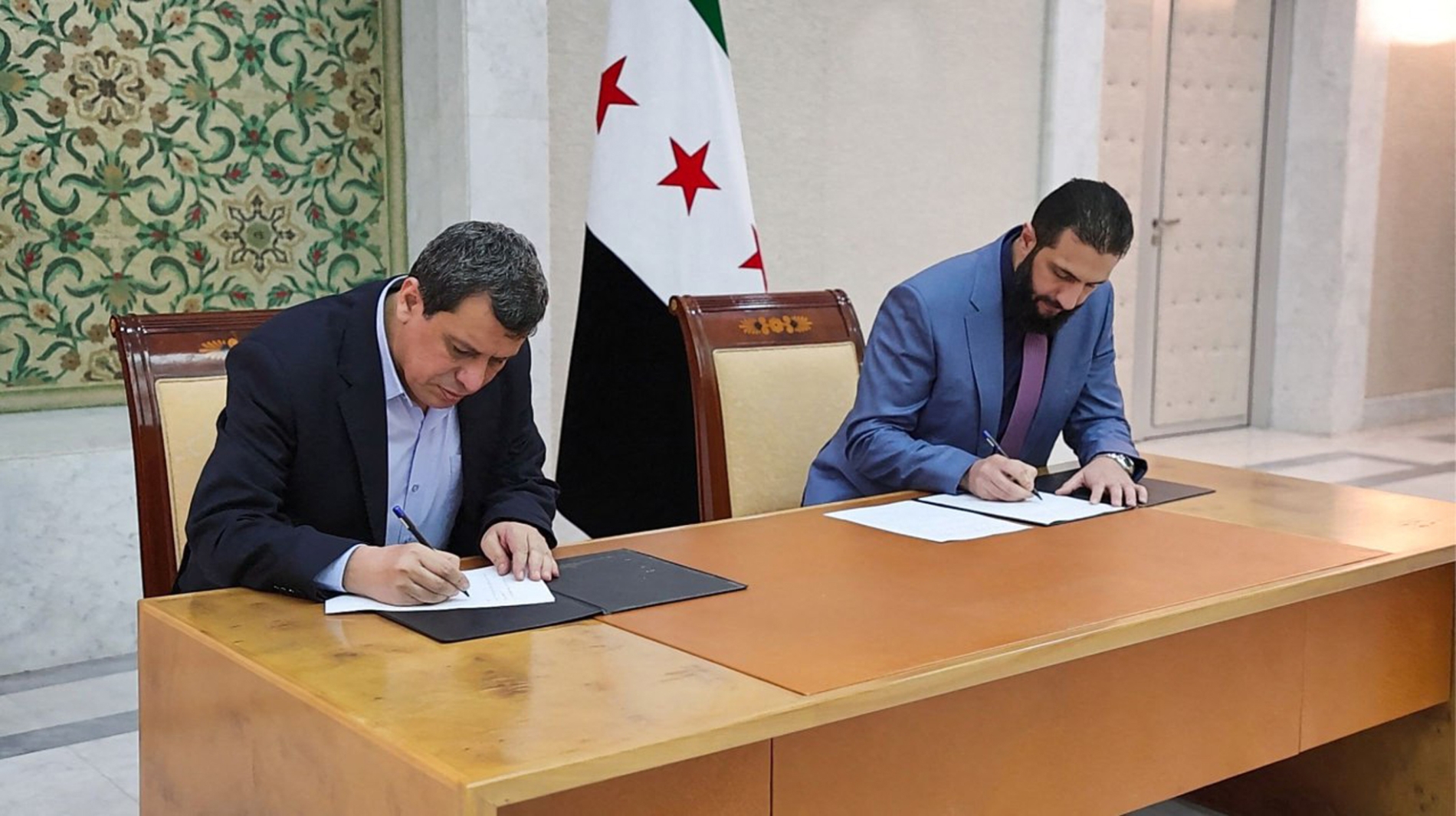
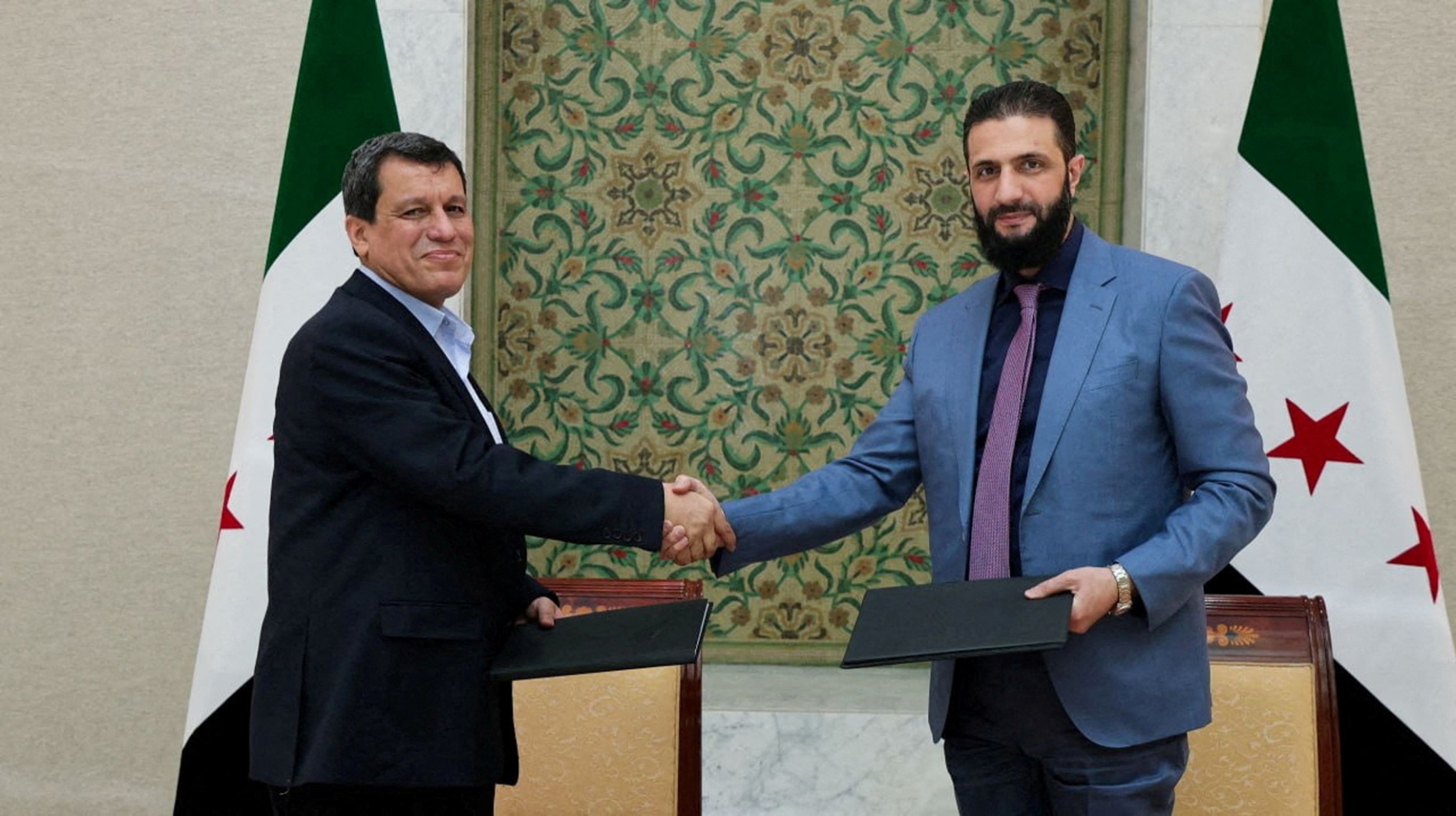
Ahmed al-Sharaa and SDF leader Mazloum Abdi during the signing of the agreement to integrate the SDF into state institutions on 10 March 2025.
A calculated bid for time
Following the accord signed on 10 March by President Sharaa and Abdi to integrate SDF institutions into the Syrian state, a series of public and confidential meetings was convened to implement it. To this end, negotiations between the Syrian government and the SDF leadership took place from the fall of the former regime on 8 December 2024 through 4 January 2026, and continued through 30 January. The process went through alternating rounds of open sessions and discreet channels linking the SDF, Damascus, and Turkish authorities, with American participation in most instances and occasional French involvement.
Moments of progress gave way to sudden bursts of regression. Invitations were spurned only hours before they were due to begin. Lengthy sessions ended in abrupt departures, prompting noticeable US irritation. Barrack would appear at the table, then step away, as occurred in July when he met Abdi in Amman after withdrawing from an earlier session in Damascus.
Damascus rejected power-sharing formulas and wanted full incorporation into the new state, while the SDF sought a defined role in Syria
These oscillations were a microcosm of the overall dispute. The SDF sought a defined role in shaping Syria's future, while Damascus rejected power-sharing and quota-based formulas, proposing full incorporation into the new state in line with the priorities of its emerging leadership instead. An official close to the negotiations summarised the issue perfectly when he said: the SDF maintained that those who liberate are entitled to help determine the political course ahead. It had fought and contributed to liberation, entitling it to a place at the decision-making table.
Damascus viewed matters differently. It regarded the leadership in Qandil of the Kurdistan Workers' Party as having appropriated the SDF's decision-making, and the SDF as having appropriated the Kurdish voice. Furthermore, it viewed the SDF as a former partner of the Assad regime, with nearly 7,000 of its members drawn from the previous security apparatus. With the regime's collapse and the emergence of a state cultivating broad Arab and international ties, Damascus concluded that the rationale for the SDF's autonomous military structure was no longer justified.
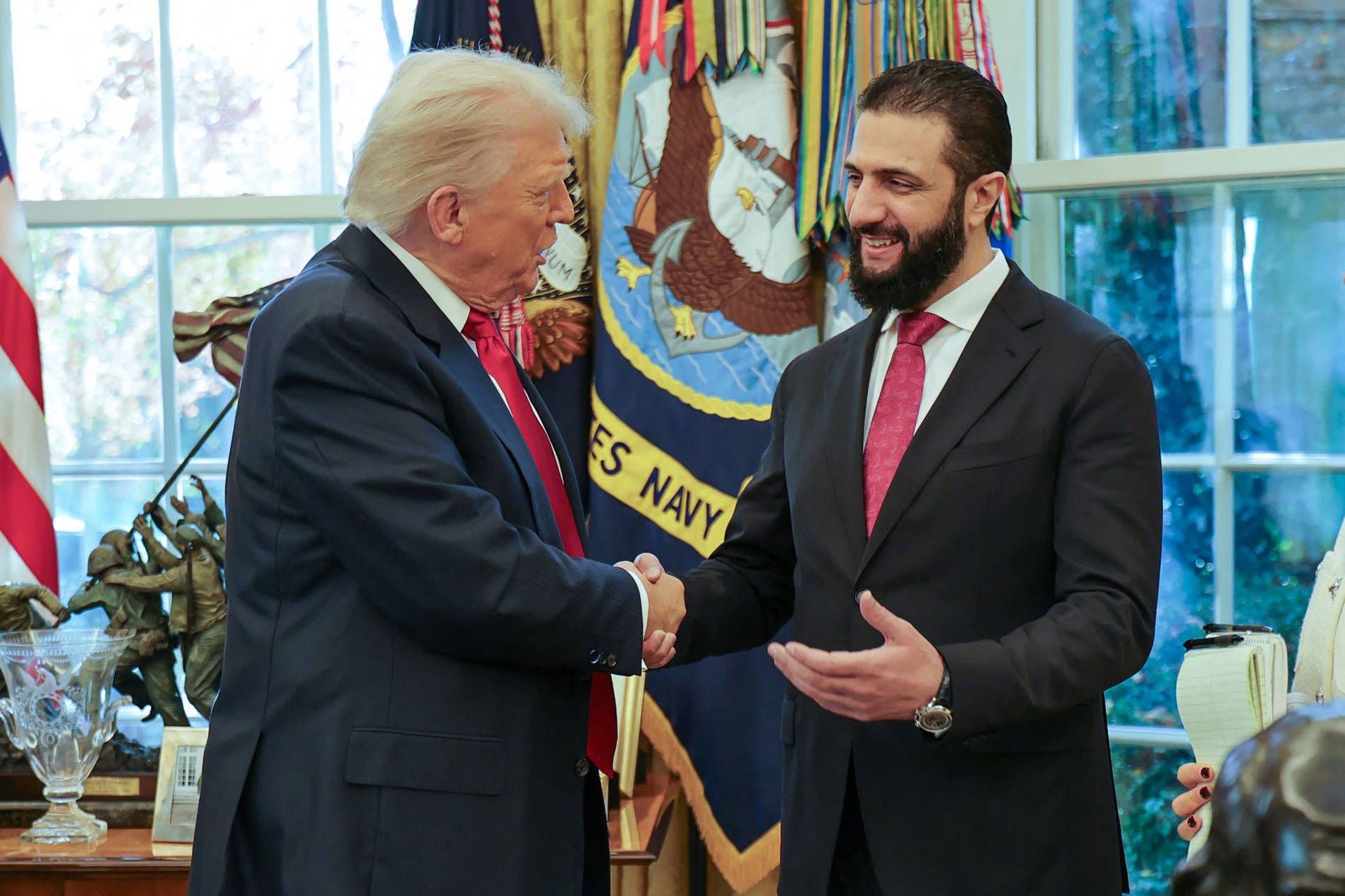
This handout photograph released by the official Syrian Arab News Agency (SANA) on 10 November 2025, shows US President Donald Trump (L) shaking hands with Syria's President Ahmed al-Sharaa at the White House in Washington DC.
In practice, from 8 December 2024 onward, both sides were playing for time. For its part, Damascus believed it had the stronger hand. The Sharaa government had ended Syria's international isolation, secured the lifting of sanctions, and cultivated a diverse web of global ties, including the United States, Russia, China, Britain, and France, as well as influential regional powers such as Saudi Arabia, Türkiye, Qatar, Jordan, and Egypt. It had developed strong relationships with US President Donald Trump and the leadership of Saudi Arabia and Türkiye.
Damascus was confident that Washington would gradually distance itself from the SDF once the new government consolidated authority and joined the international coalition against the Islamic State (IS), thereby signalling Syria's renewed alignment with the West.
For its part, the SDF believed time was on its side, banking on the expectation that Damascus would get bogged down in factional fighting across the country. They were wrong. The second mistake was placing too much stock in its partnership with Israel and in assurances from the US War Department. Their confidence was such that some SDF officials even publicly acknowledged communication channels with Tel Aviv.
Decisive shift
The decisive shift in President Sharaa's external positioning emerged in May, when Riyadh hosted his meeting with President Donald Trump. From that moment, relations between Washington and Damascus shifted from a timid engagement to an expansive political opening. The high point came on 10 November, when Trump received al-Sharaa at the White House and announced Damascus's accession to the international coalition against IS.
According to an official familiar with the discussions, Trump pledged during that meeting to resolve three outstanding issues before the end of 2025: the integration of the SDF, a task entrusted to Tom Barrack; the repeal of the Caesar Act; and progress on a security arrangement between Syria and Israel.
And this is exactly what happened. In the following months, US involvement grew increasingly visible. The Caesar Act was lifted, and momentum gathered to disentangle the SDF question and advance the withdrawal file within the Syrian–Israeli negotiations framework.
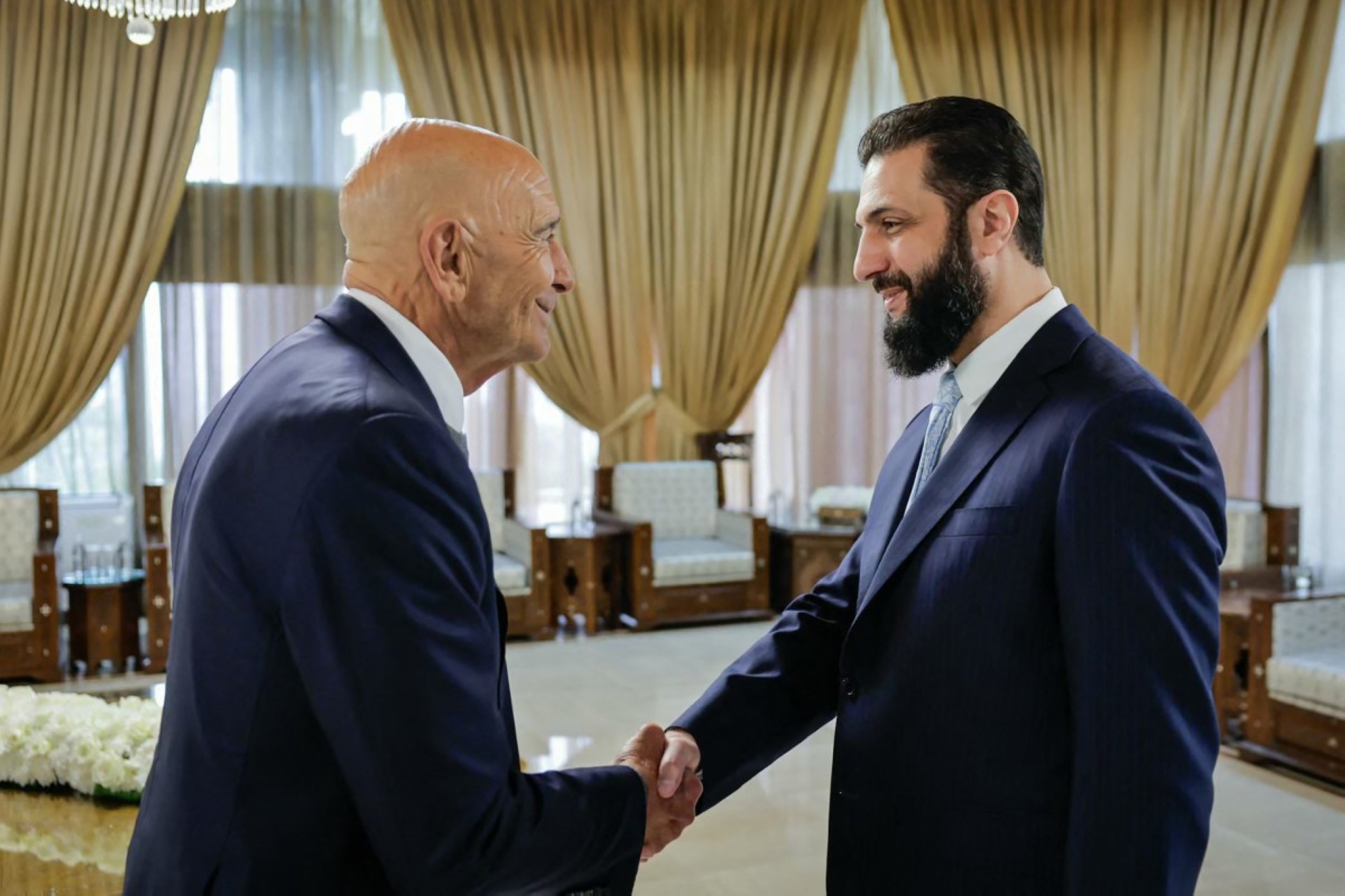
Syria's President Ahmed al-Sharaa shakes hands with US envoy Tom Barrack at the Presidential Palacein Damascus on 18 January 2026.
After the White House encounter, Barrack stepped up his role. He attended negotiation sessions in person, while members of his team, particularly Zahra Bell, shuttled documents between the two sides. At the SDF's request, the dialogue shifted from verbal exchanges to formal written correspondence. Abdi submitted a paper outlining the SDF's vision for integration into the Syrian army, structured around the preservation of three divisions and two brigades under its own organisational framework.
In December, Defence Minister Major General Murhaf Abu Qasra replied in writing, his letter delivered by an American diplomat on 7 December. It marked the first official Syrian document in the process. US officials regarded it as a significant breakthrough. Abdi replied in kind on 20 December. Parallel meetings among civilian and administrative representatives addressed the absorption of non-military institutions.
While this written diplomacy unfolded, a senior Turkish delegation arrived in Damascus on 22 December, comprising Foreign Minister Hakan Fidan, Defence Minister Yashar Güler, and intelligence chief İbrahim Kalın. According to a diplomat briefed on the visit, Ankara's position was unequivocal: it opposed the emergence of any Kurdish political entity and rejected the integration of the SDF as a cohesive military bloc. It called for disarmament and the departure of all PKK fighters from Syrian territory.
By the close of 2025, the broader regional and international climate had shifted. Trump launched a swift operation against Venezuelan President Nicolás Maduro. Across the region, new Arab alignments coalesced around support for strong central states, the consolidation of arms under state authority, and resistance to militia rule and secessionist ventures in Yemen, Sudan, and Somalia.
Contacts between Damascus and the SDF resumed. A pivotal meeting took place on 4 January, when Abdi and his delegation met with Foreign Minister Asaad al-Shaibani, Defence Minister Abu Qasra, and other officials to examine a proposed "roadmap" based on the exchanged documents. The plan envisaged three divisions and two specialised brigades, including the Women's Protection Units and Counter-Terrorism Units, and defined their relationship with the national army. It also addressed senior posts, such as the position of assistant to the minister of defence, and incorporated proposed constitutional amendments. Full implementation was projected for 1 August 2026.
The meeting opened with a structured review of the roadmap, then unravelled midway. Damascus accused the SDF of stalling tactics, of failing to implement the 10 March accord, and of breaching the 1 April arrangement concerning the Aleppo neighbourhoods of Ashrafieh, Sheikh Maqsoud, and Bani Zaid.
Within official circles in Damascus, a conclusion was reached: the diplomatic window had narrowed without producing tangible results, and a military response to the violations was necessary. Aleppo, the country's economic capital, could not remain exposed to rocket fire from SDF-held positions.
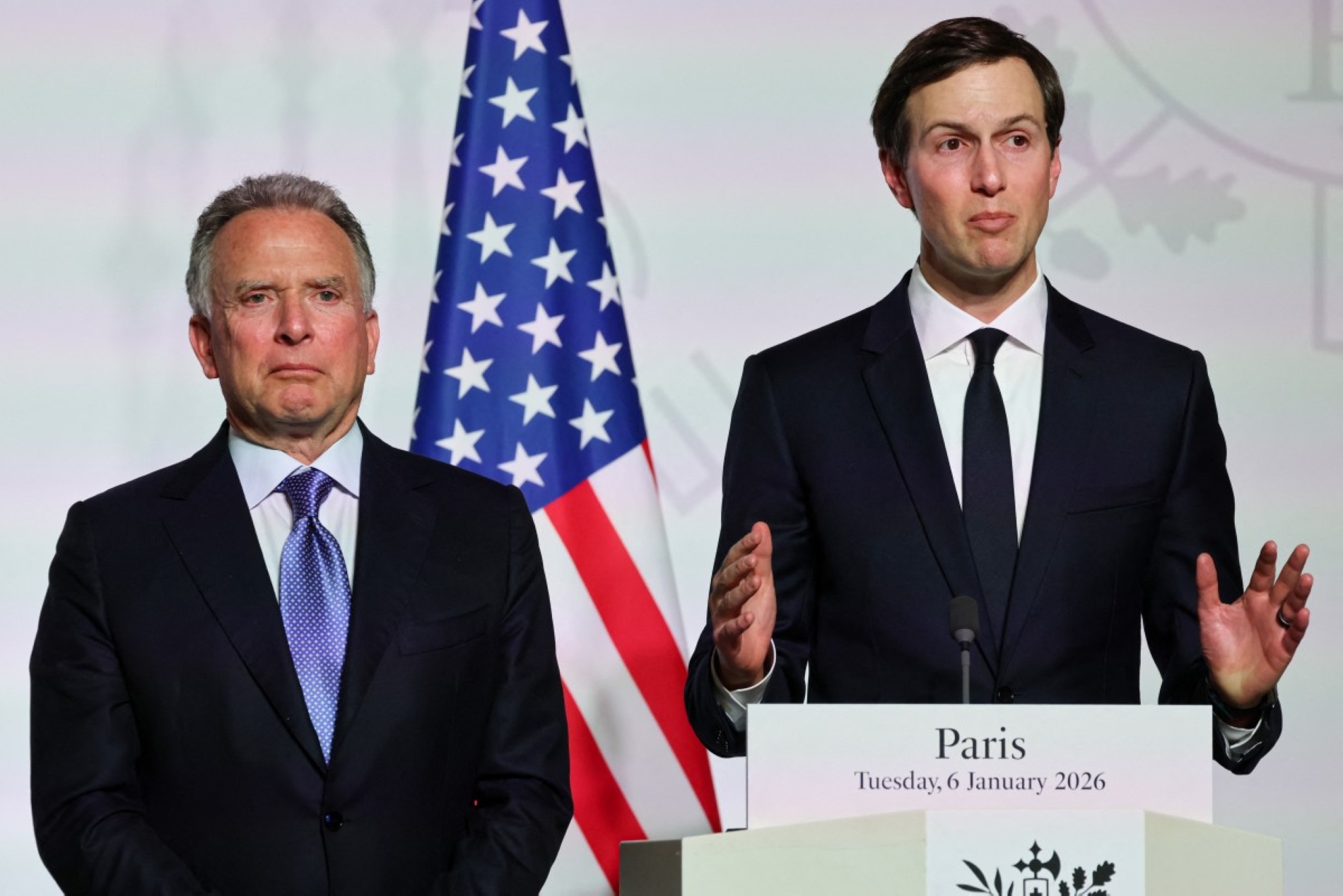
US Special Envoy Steve Witkoff and Jared Kushner deliver remarks upon the signing of the declaration on deploying post-ceasefire force in Ukraine during the Coalition of the Willing summit in Paris on 6 January 2026.
On 5 January, a Syrian–Israeli negotiating session convened in Paris under American mediation with Jared Kushner and US Envoy Steve Witkoff in attendance, reflecting Trump's understanding with Netanyahu during their 29 December meeting. An American statement said the talks yielded agreement to establish a security coordination cell to prevent escalation.
By 2026, the winds had decisively shifted in Damascus's favour. Al-Sharaa had consolidated his authority. Quiet channels opened between Damascus and Arab tribal leaders, and many tribes began distancing themselves from the SDF. Arabs made up 70% of the SDF fighting force, comprising between 70,000 and 100,000 fighters.
At the same time, Israel was engaged in negotiations with Damascus. Washington had already made it clear that the Syrian government was its preferred partner, and Damascus had secured its entry into the anti-IS global coalition.
Just as al-Sharaa had astutely read the Syrian, regional, and international landscape in late 2024 and launched his Aleppo campaign on 27 November under the banner of "Deterrence of Aggression," reaching Damascus 11 days later and toppling the Assad regime, he made the same correct calculation on 6 January when his forces launched a "surgical operation" to secure Aleppo's districts. In 14 days, his forces had reached Al-Hasakah.
Syrian army units advanced east of Aleppo toward the Euphrates. In predominantly Arab cities, tribal groups rose against the SDF, depriving it of nearly half its fighters. As during the earlier campaign, the military push was accompanied by coordinated movement across state institutions: government departments mobilised, civil associations and media outlets amplified the message, and a presidential decree affirmed Kurdish rights within Syria. In a detailed interview, al-Sharaa elaborated his position on negotiations with the SDF, drawing a careful distinction between the organisation itself and the Kurdish people as an integral component of the Syrian nation.
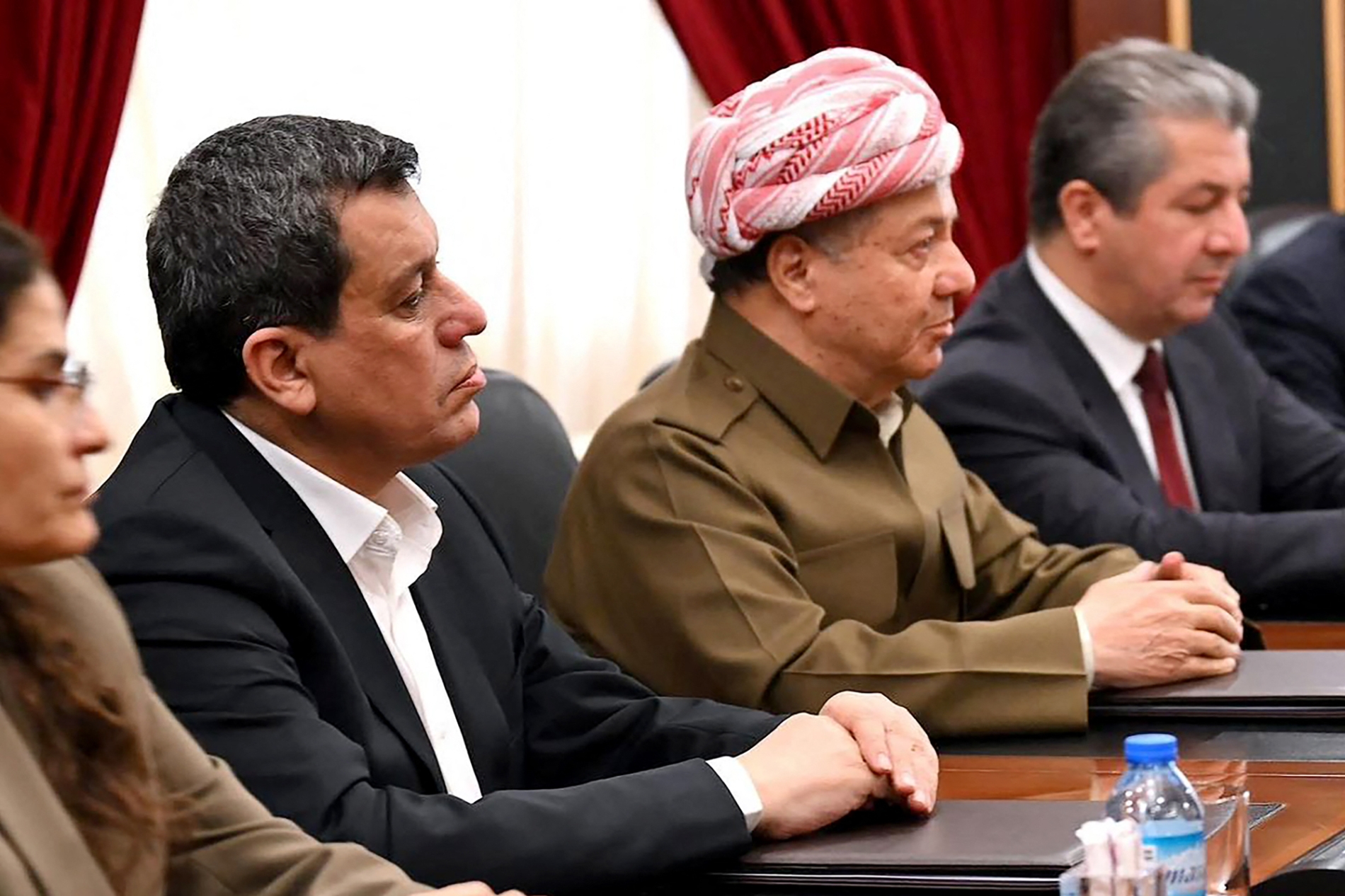
Kurdish political leader Masoud Barzani (second from left) sits next to the commander of the Syrian Democratic Forces, Mazloum Abdi (left), during their meeting with the US Special Envoy to Syria in Erbil.
'We will not fire a single bullet for you'
From 6 January onward, the battlefield shifted with disquieting speed. SDF formations faltered, the Arab component withdrew from predominantly Arab cities, and Syrian army units advanced with momentum few had anticipated. The scale of the reversal prompted an urgent meeting in Erbil on 17 January between Barrack and Kurdish leader Masoud Barzani. Before them lay a 12-point document that introduced substantial concessions, lowered the ceiling of political expectations, and acknowledged the transformed military balance.
Mazloum Abdi and AANES Foreign Affairs Chief Ilham Ahmed, who had placed considerable weight on the prospect of Israeli intervention and sustained American backing, were floored by the clarity of Barrack's message. Washington wouldn't support an Israeli–Turkish confrontation in northeastern Syria on behalf of the SDF. He point-blank told them: "We will not fire a single bullet for you." During the meeting, Abdi unfolded his maps and delineated the Kurdish-majority areas as a "red line," explaining that his forces had withdrawn into those zones and would defend them. In Erbil, Abdi gave his verbal approval for the revised document while seeking limited adjustments, particularly regarding arrangements in Kurdish-majority areas.
From 8 December 2024 on, both sides were playing for time. For its part, Damascus believed it had the stronger hand, while the SDF miscalculated.
He then travelled to Damascus for a meeting with President Sharaa. The encounter was tense and concluded without agreement. Damascus rejected Abdi's request for a five-day grace period to implement the terms, transfer IS detention facilities, including 900 detainees in Aqtan prison, 120 in al-Shaddadi, 20,000 family members in al-Hol camp, and thousands more in Al-Hasakah, and submit nominees for senior posts.
Damascus sought a public declaration dissolving the SDF in accordance with the "Victory Day" decisions of 29 January 2025, which mandated the dissolution of all civil, military, and political structures predating the regime's fall. In effect, northeastern Syria would revert to its relationship with the central state in a manner comparable to Idlib, previously administered by Hay'at Tahrir al-Sham and later reintegrated into state structures following the regime's collapse on 8 December 2024. Abdi refused, maintaining that he had already given maximum concessions by withdrawing to Kurdish-majority areas, again defining them as a red line.
The collapse of the Sharaa–Abdi meeting was followed by intense fighting east of the Euphrates. Syrian army units advanced to the outskirts of Al-Hasakah and pressed toward the border with the aim of severing supply lines. As the clashes escalated, Russian forces withdrew from Qamishli airport. At the same time, US Central Command intensified its contacts with all parties to secure the transfer of IS detainees from northeastern Syria, including 7,000 slated for relocation to Iraq.
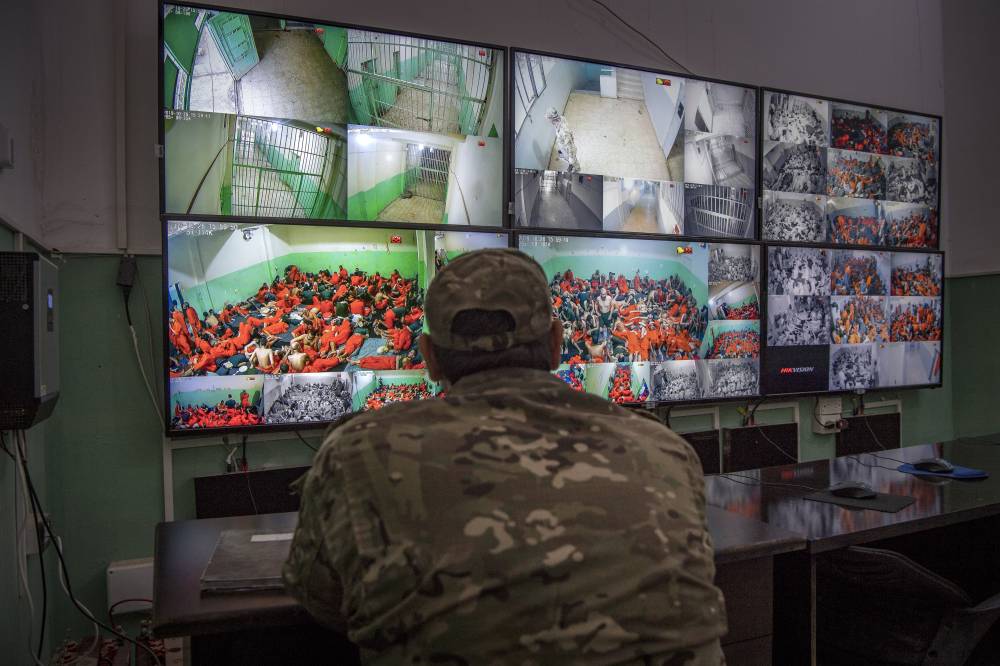
An SDF fighter monitors surveillance screens, prisoners who are accused of being affiliated with the Islamic State (IS) group, at a prison in the northeastern Syrian city of Hasakeh on 26 October 2019.
On 18 January, the Syrian presidency announced an agreement with the SDF based on the document discussed in Erbil. Its provisions were extensive: an immediate and comprehensive ceasefire on all fronts; the full administrative and military transfer of Deir ez-Zor and Raqqa to the Syrian government; the integration of all civil institutions in Al-Hasakah into the state's administrative framework; the restoration of government control over border crossings and oil and gas fields in the region; and the incorporation of all SDF military and security personnel into the structures of the Ministries of Defence and Interior on an individual basis following security vetting. The SDF also undertook to remove all non-Syrian PKK commanders and fighters from Syrian territory.
'Your services are no longer needed'
On 20 January, Barrack issued a statement that clearly outlined the Trump administration's position on the SDF. He affirmed that the most promising path before the Kurds lay in "full integration" into the new Syrian state, and that the SDF's services were no longer needed in the fight against IS now that a central government in Damascus was in control.
The weight of this declaration lay in its precision: Washington saw no strategic value in a prolonged military presence, it did not support separation or federal arrangements, and wanted the SDF to integrate into Syrian government institutions and transfer control of the IS detention facilities, camps and key installations to Damascus. The space once occupied by American strategic ambiguity narrowed considerably, as the political horizon became plainly defined.
On 22 January, Abdi met in Erbil with Nechirvan Barzani and Barrack to review the implementation of the 18 January agreement. Abdi presented proposals for Barrack to relay to Damascus. These included his preferred candidate for assistant minister of defence rather than deputy, his nominee for governor of Al-Hasakah, the formation of one division and three brigades in place of three full divisions, and an extension of the ceasefire in northeastern Syria, along with other detailed provisions. He then travelled to Damascus to negotiate the operational mechanics of the 18 January accord, with particular attention to arrangements in Kurdish-majority areas and the individual incorporation of SDF fighters into the Syrian army.
As the 24 January deadline neared, communication intensified over extending the ceasefire. Some wanted it to last a month; others, a week. A two-week extension emerged as a compromise, intended to provide space for implementation.
During this period, Congress reconvened. Lobbying groups aligned with Kurdish interests mobilised, and pressure mounted within the White House against Barack and against the Syrian army's advance toward Kurdish districts and the border.
On 26 January, Mazloum Abdi and Ilham Ahmed returned to Damascus, and mediation efforts accelerated. That same day, President Trump called President Sharaa, reaffirming commitment to the ceasefire and to the agreed implementation framework. On the ground, Syrian army units had encircled SDF positions and disrupted supply lines in Kurdish-majority areas, prompting a flurry of appeals to Washington and a warning from Senator Lindsey Graham regarding potential legislation under the title of a "Kurdish Protection Act."
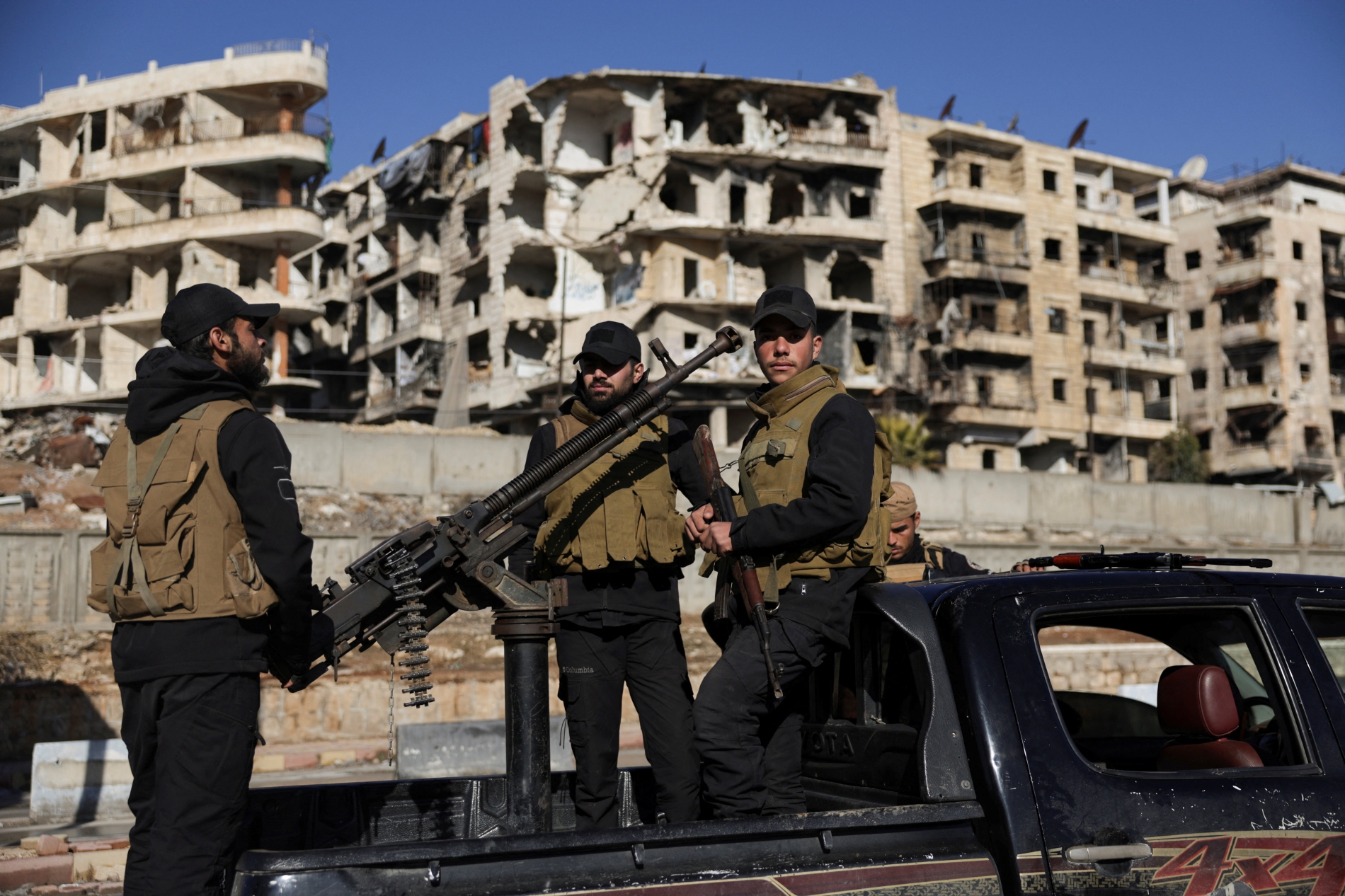
Government forces patrol the Sheikh Maqsoud neighbourhood after taking control of the area, following the collapse of an agreement between the Syrian government and the SDF, in Aleppo, Syria, on 10 January 2026.
On 27 January, as Syrian forces drew closer to Kurdish districts and political pressure in Washington intensified, Trump called Sharaa again, urging stabilisation of the ceasefire and a halt to military operations. Sharaa responded with what he described as "a pleasant surprise," informing Trump that an understanding had been reached with Abdi encompassing a ceasefire, affirmation of Syrian unity, and measures to prevent any resurgence of IS. Trump later characterised the conversation as "excellent."
The exchange injected fresh momentum into negotiations that, over subsequent days, addressed the smallest operational details under American, French, and Turkish supervision. On 30 January, a "comprehensive agreement" was announced between the Syrian government and the SDF, providing for phased integration of military and administrative structures.
The arrangement included the withdrawal of forces from contact lines and the entry of Interior Ministry security units into Al-Hasakah and Qamishli, which had remained under SDF control. It delivered the final blow to Kurdish hopes of preserving its autonomous administrative framework.
The agreement stipulated the formation of a military division composed of three SDF brigades in northeastern Syria, alongside an additional brigade from Ayn al-Arab, known as Kobani, whose symbolic weight among Syrian Kurds remains considerable, to be incorporated into a government division in Aleppo. It further confirmed the integration of the Autonomous Administration's institutions into the Syrian state's structures, with civil employees retained in their posts.
Barrack described the accord as "a historic turning point," adding that by facilitating the phased integration of military, security, and administrative bodies into unified state institutions, while ensuring meaningful participation for SDF representatives in senior positions, the agreement affirmed the principle that Syria's strength derives from embracing its diversity and responding to the legitimate aspirations of all its citizens.
He continued that for the Kurdish people, the implementation of Presidential Decree No. 13, which restored full citizenship to those affected by earlier exclusions, recognised Kurdish as a national language alongside Arabic, enabled its instruction in relevant regions, and enshrined protections against discrimination, constituted a transformative step toward equality and belonging. These measures, he said, addressed longstanding grievances, affirmed the Kurds' rightful place within the Syrian nation, and paved the way for full participation in shaping a secure, prosperous, and inclusive future. For their part, France and the UK welcomed the agreement and affirmed their support for its implementation.
To demonstrate the extent of the shift in the negotiating agenda, Al Majalla shares below the draft integration agreement in full, which it obtained on 4 January.
Ahmed al-Sharaa and Mazloum Abdi during the signing of the agreement to integrate the SDF into state institutions, Damascus, on 10 March 2025.
Draft integration plan
The two parties agreed that the SDF would integrate three full military divisions and two specialised brigades, namely the Women's Brigade and the Counter-Terrorism Brigade, into the Ministry of Defence. These units would henceforth derive their orders, operational authority, salaries, and financial allocations from the ministry. All personnel affiliated with SDF units would submit complete personal data to the Ministry of Defense for security vetting and formal enrollment within the Syrian armed forces.
The implementation framework was structured in the following stages:
On 15 January 2026, the SDF would submit the name of its nominee for the position of Assistant Minister of Defence, accompanied by full personal documentation and a comprehensive curriculum vitae.
On 1 February 2026, the Ministry of Defence, in coordination with the Syrian government, would formally announce its approval of the SDF's nominee following the completion of security vetting procedures.
On 15 January 2026, the SDF would provide the names and full personal details of candidates for the following posts: division commanders, deputy division commanders, and brigade commanders for the three divisions and the two specialised brigades.
By 1 February 2026, the Ministry of Defence would complete the security vetting of all nominated division commanders, their deputies, and brigade commanders. Upon approval, they would be formally incorporated into the ministry's command structure. Official identification cards issued by the Ministry of Defence would be granted to all approved personnel. The SDF would be notified of any nominees who did not receive approval, together with the reasons for such decisions. Appeals procedures would then commence, or alternative nominees would be submitted. In the absence of an official announcement by 1 February regarding the approval of proposed commanders, the nominees would be deemed accepted.
SDF soldiers attend a funeral of a soldier who was killed the previous week in the eastern Deir ez-Zor province, in the northeastern Syrian Kurdish-majority city of Qamishli.
On 1 February 2026, once division and brigade commanders were formally recognised as members of the Ministry of Defence, the relevant divisions and brigades would comply with the directives and standards established by the Minister of Defence. SDF units would raise the official flag of the Syrian Arab Republic.
As of 1 February 2026, SDF units would discontinue any military activity not aligned with the orders of the Minister of Defence. All units and their members would refrain from conducting unauthorised operations, preparations, or military activities, particularly those directed against any component of the Syrian Arab Republic or against Türkiye.
Beginning on 15 January 2026, and again on 1 and 15 February 2026, the SDF would submit a list of 2,000 names, accompanied by full personal data, to the Ministry of Defence for security vetting and formal incorporation into the Syrian armed forces.
Starting on 1 March 2026, the SDF would submit 5,000 names, each with complete documentation, for vetting. From that date forward, 5,000 names would be provided on the 1st and 15th of each month until all members of the divisions and specialised brigades had been processed.
As of 1 March 2026, and on the first day of every subsequent month, the Ministry of Defence would furnish the SDF with a list of individuals approved following a security review, after which official Ministry of Defence identification cards would be issued.
The ministry would retain a 30-day period to vet and confirm the lists submitted two months earlier. Thus, on 1 March 2026, it would issue its determinations regarding all names submitted in January, and on 1 April 2026, it would do the same for those submitted in February.
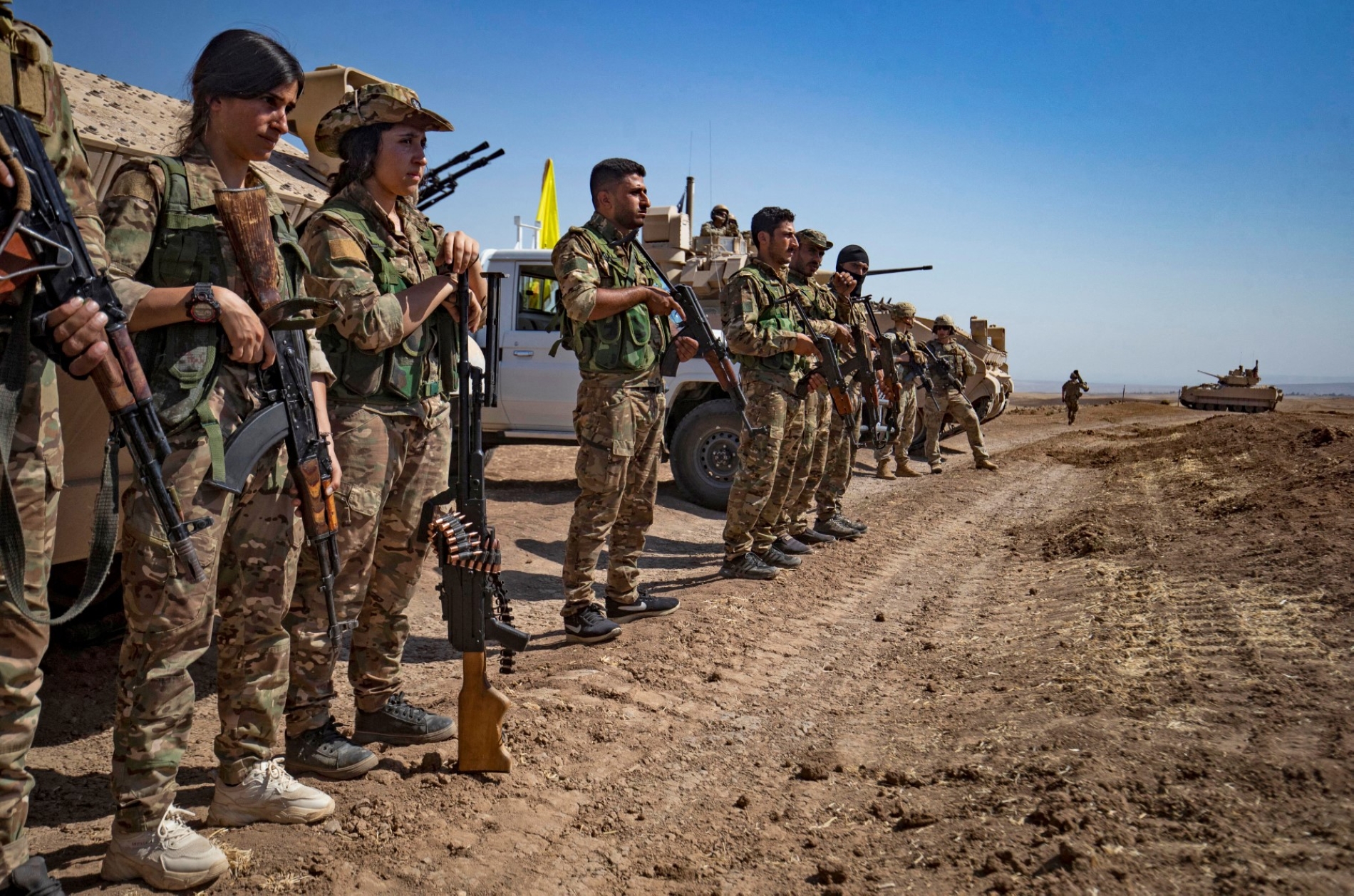
SDF forces participate in a joint military exercise with the US-led Operation Inherent Resolve coalition against the Islamic State (IS) in Syria's northeastern Hasakah province on 7 September 2022.
By 31 July 2026, the vetting of all SDF divisions and brigades would be completed, and all personnel would have received official Ministry of Defence identification cards.
On 1 August 2026, the formal designations and numerical identifiers of SDF divisions and brigades would be amended to conform to the nomenclature and numbering system of the Syrian Arab Army, in accordance with the policies and standards of the Ministry of Defence.
The roadmap also included parallel provisions for the integration of the Border Guard, along with measures to halt tunnel excavation and the construction of earthen fortifications.
Al Majalla also shares excerpts from a document submitted by the SDF proposing amendments to the Constitutional Declaration. Damascus did not formally receive this text, maintaining that any amendment to the Constitutional Declaration requires the formation of a People's Assembly and presidential action.
The principal amendments outlined in the draft include: Explicit reference to the ethnic components of the Syrian people and to the official language of the state. The draft calls for explicit recognition of the components of the Syrian people, with at least one direct reference to the country's ethnic groups. It further proposes that administrative organisation during the transitional phase be grounded in multiple levels of governance or decentralisation as an alternative framework.
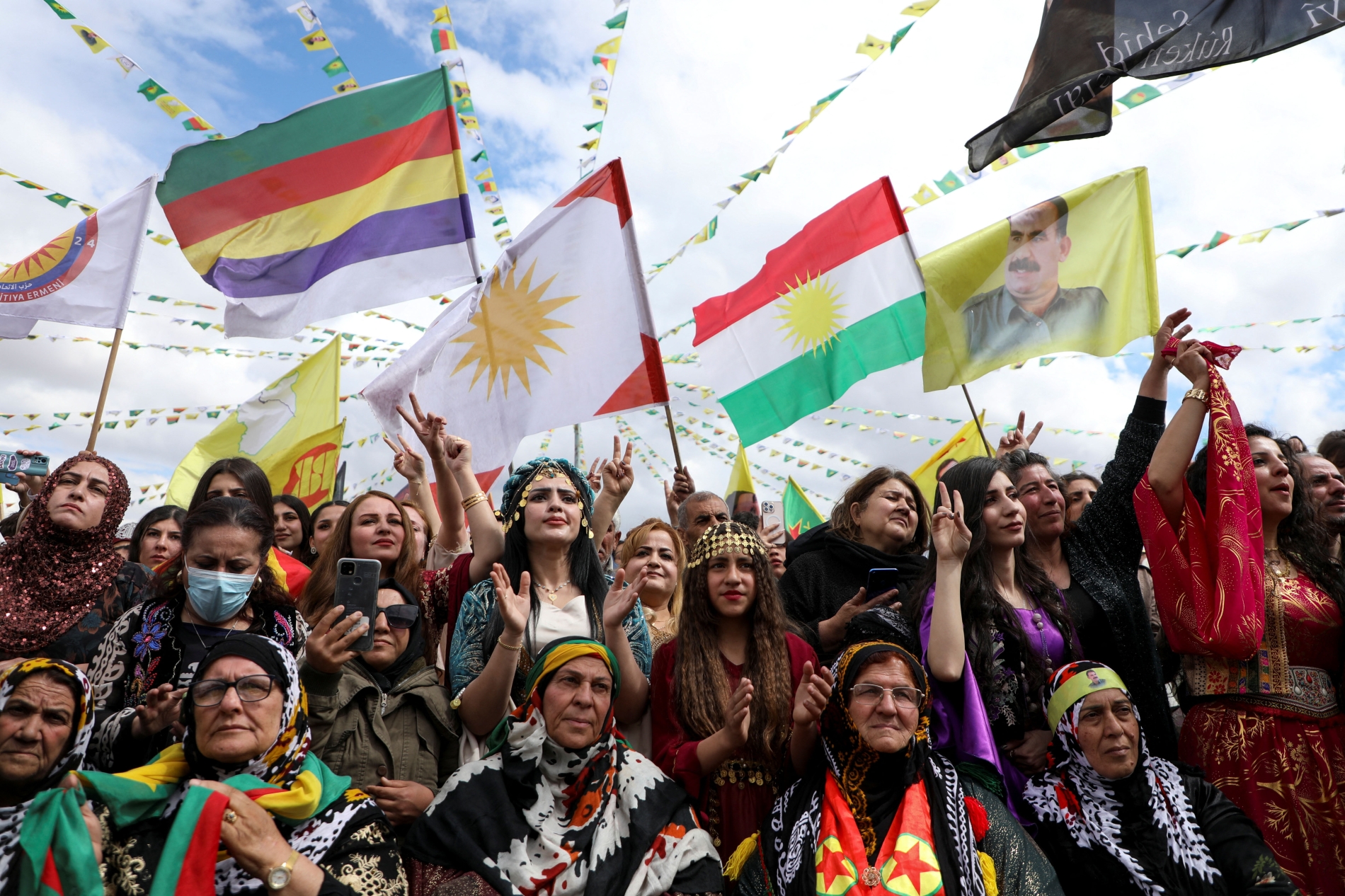
Syrian Kurds celebrate the spring festival of Nowruz in Qamishli, Syria, on 21 March 2025.
A revision of the state's official name is proposed. Arabic would remain the official language of the state, while Kurdish and Syriac would be recognised as official languages within their respective communities alongside Arabic. An alternative formulation envisions Arabic, Kurdish, and Syriac collectively recognised as the state's official languages.
The draft also proposes adding a new article to the chapter on general provisions: "The Kurds are an indigenous people living on their historical land, and the constitution guarantees their social, political, and cultural rights within the unity of the Syrian state."
A parallel formulation reads: "The Syrian people consist of multiple national groups, Arabs, Kurds, Syriacs, Assyrians, and Turkmen, and the constitution guarantees this diversity within the unity of the Syrian state."
Legislative authority would be vested in both the People's Assembly and a Council of Provinces. A new article would define the mandate of the second chamber: "The Council of Provinces ensures the participation of decentralised regions in legislative authority and state administration."
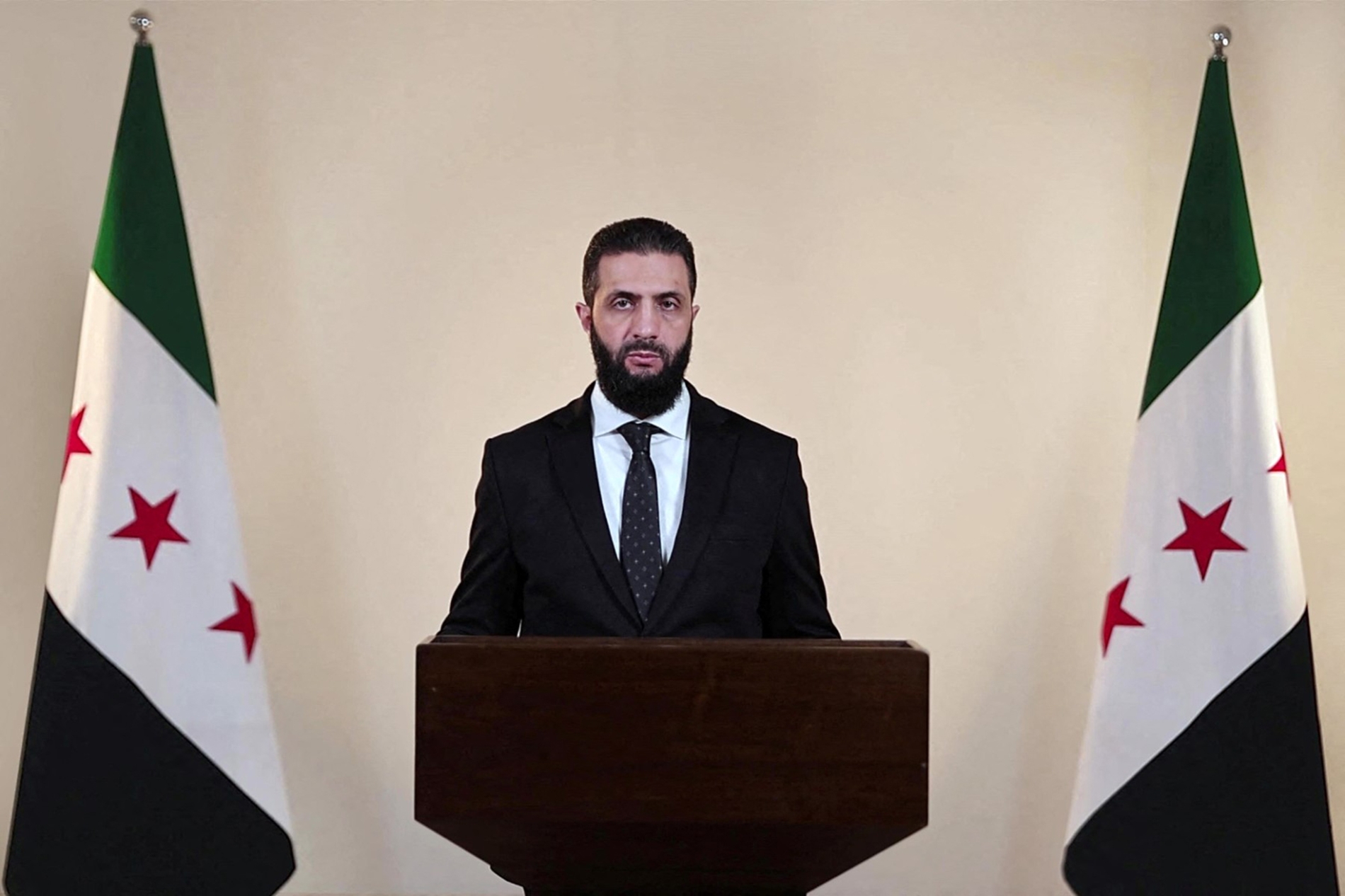
President Ahmed al-Sharaa speaks in Damascus, March 9, 2025.
On 16 January, President Sharaa signed, before the cameras, a decree guaranteeing the rights and particularities of "our Kurdish compatriots," enshrining their protection in law. The first article affirms that "Syrian Kurdish citizens are an essential and integral part of the people."
The decree paved the way for a safe return and full participation in "building a single homeland that accommodates all its children." Addressing Kurdish citizens directly, Sharaa urged them to disregard "narratives of discord," declaring: "Whoever harms you stands as our adversary."
The Ministries of Interior and Education subsequently issued executive measures authorising the teaching of the Kurdish language in schools and granting citizenship to tens of thousands of stateless Kurds. The SDF leadership now seeks to formally incorporate this decree into the Constitutional Declaration through negotiations with Damascus.
The 30 January Agreement does not stand alone. It joins a series of prior accords between Damascus and the SDF, each shaped by prevailing realities on the ground.
Will this agreement translate into sustained implementation and a durable ceasefire, or will it become another arrangement fashioned to gain time?