'Life' in a tent pushes the bounds of Gazan endurance

Those who somehow managed to survive starvation, bombs and disease now face a punishing winter in 'shelters' as battered as Palestinian existence itself

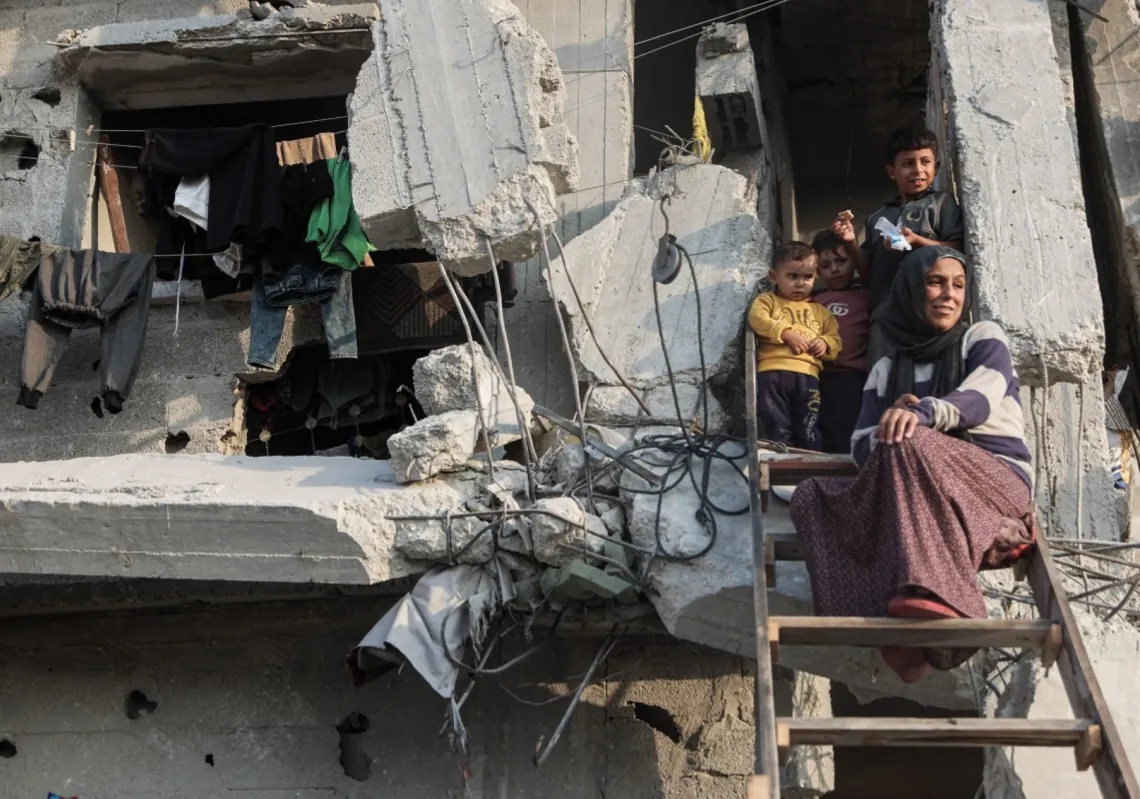
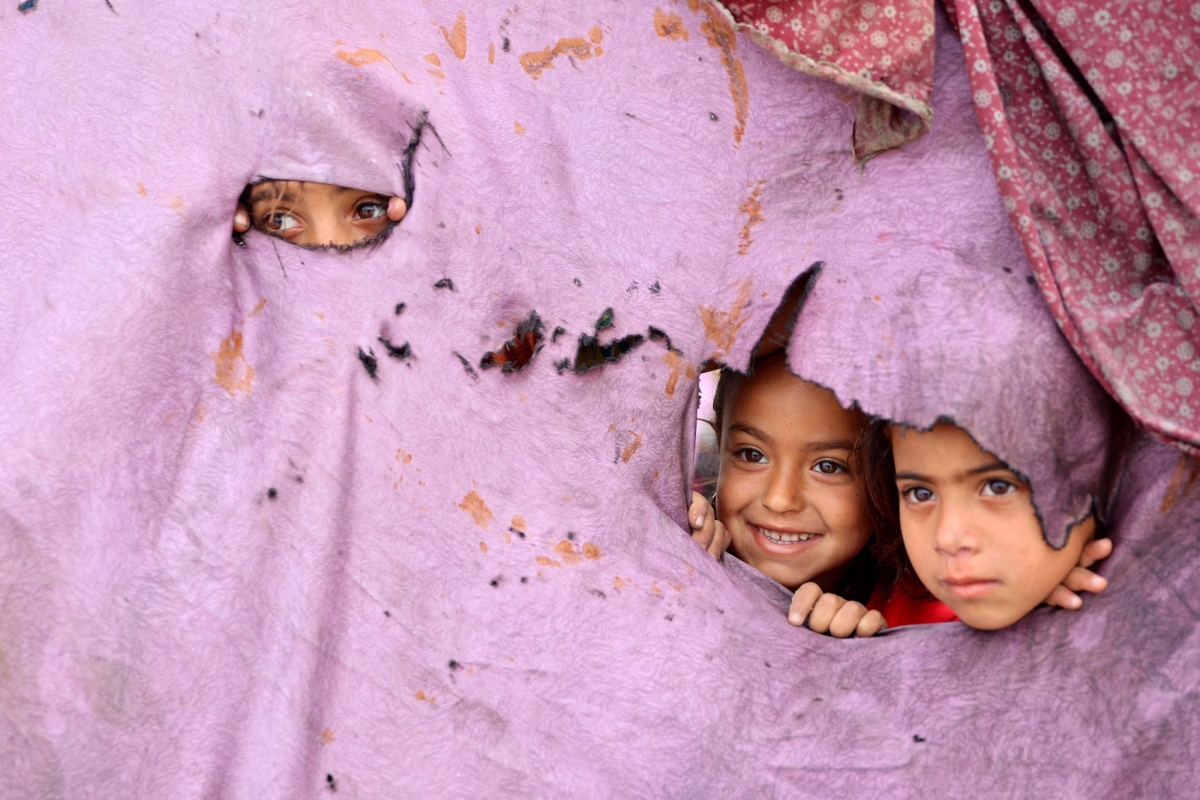
Palestinian children peek out of holes in their tent at a makeshift displacement camp set up amid building rubble in Gaza City on 12 May 2025.
Omar AL-QATTAA / AFP
Palestinian children peek out of holes in their tent at a makeshift displacement camp set up amid building rubble in Gaza City on 12 May 2025.

'Life' in a tent pushes the bounds of Gazan endurance

In Gaza's cruel winter season, the tent loses all symbolic meaning. It is no longer a temporary place to live, nor a framework for adaptation, but a fragile structure pushed to its limits. Rain—and the storms that follow—are not natural events but become invading forces. Cold is not a chilly sensation, but a depleting strain on the body, affecting everything from sleeping to even breathing. Winter takes away the tent's last noble function: helping people survive another day amid genocide, displacement, hunger and illness.

Anyone who looks closely at the tent's particulars—its internal arrangement, the rhythm of its day, the weakness of its materials—understands that it cannot protect from the rain or the cold. But this understanding does little more than attest to what people are forced to endure when the basic conditions of life are withdrawn.

In a tent, light is the only reliable measure of time. As the light changes, the space's function changes. The floor used for sitting during the day becomes, at night, a shared sleeping area without insulation, with no clear boundaries or privacy guarantees.
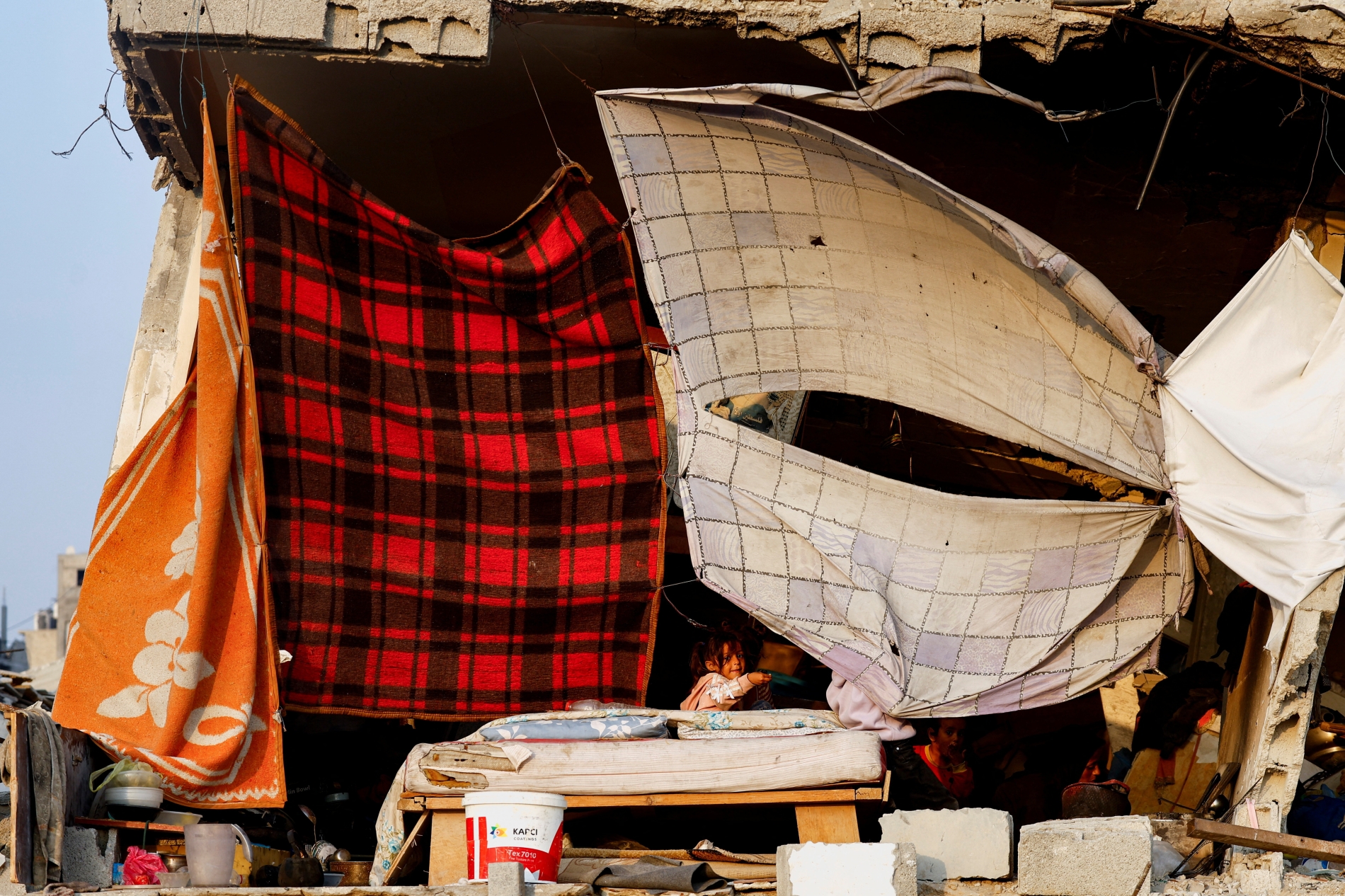
REUTERS/Mahmoud Issa
A Palestinian child looks on from inside a makeshift tent, amid a ceasefire between Israel and Hamas, in Jabalia, northern Gaza Strip, on 6 November 2025.

Life inside the tent does not organise itself by choice but by force. Space is tight, privacy obsolete, and belongings are vulnerable. In the tent, people sleep, cook, store, sit, and at times, experience illness, all in the same space.

Cooking is not separated from living and sleeping. The source of fire, whether a simple stove or an improvised device, is placed where space permits rather than where it is safe. Smells, smoke, and dampness spread in every direction, becoming part of the shared air.
The tent is a structure in a constant state of depletion, forced to carry more than it can bear

Storage inside the tent is a form of defence rather than a means of keeping. The few remaining belongings are stacked at the edges, hung up, or raised off the ground whenever possible in anticipation of rain or leaks. This constant lifting of objects reflects a permanent awareness of fragility. The ground is not stable. The walls are not a barrier. The roof is not a guarantee. Everything is at constant risk of getting wet, being lost, or ruined.

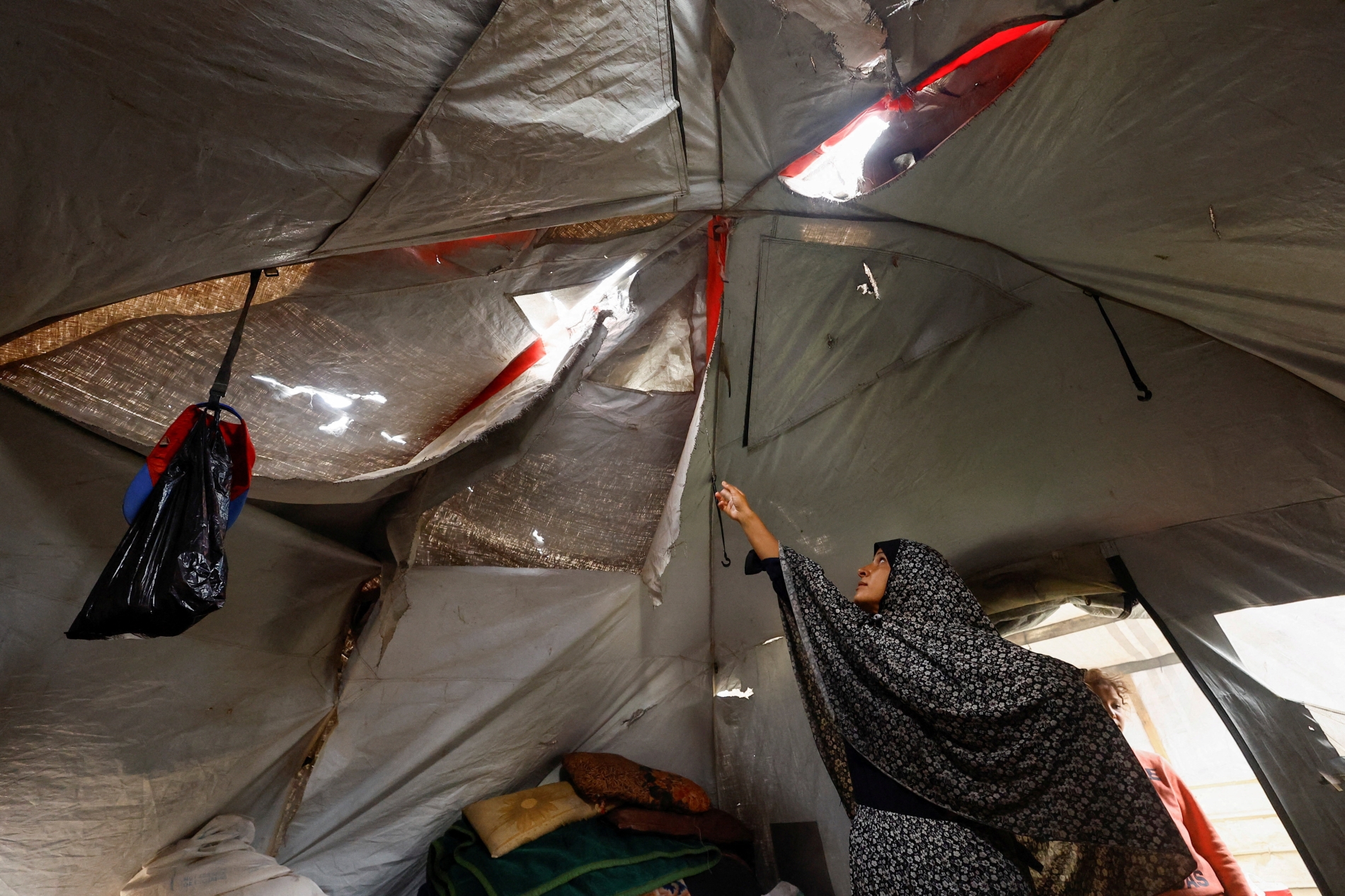
REUTERS/Mahmoud Issa
A displaced Palestinian woman shows her torn tent in Gaza City on 4 November 2025.

Movement inside the tent is limited, yet precisely measured. Routes are not so much drawn as stored in the body: short steps, circling around objects, a constant stoop to avoid collisions. Children learn this miniature geography early through repetition and at times through injury. Here, the body is the only instrument of measurement, and it is also the first to be exhausted.

To live in a tent is to be in a constant state of readiness. Every element inside the tent may be redistributed at any moment: when the wind rises, when water leaks, when night comes, or when an unexpected danger arrives. Life here is managed through a series of small adjustments in a bid to survive another day.

But then winter arrives, and the tent's ability to prolong survival diminishes. Rain doesn't always rush into a tent. Sometimes, it just seeps slowly in. It begins on the ground, along the edges, and at the fastening points. Water is moved from one corner to another, belongings are lifted, fabrics are spread out, and then the cycle begins again. This constant management of water does more to deplete energy than to contain the water.  

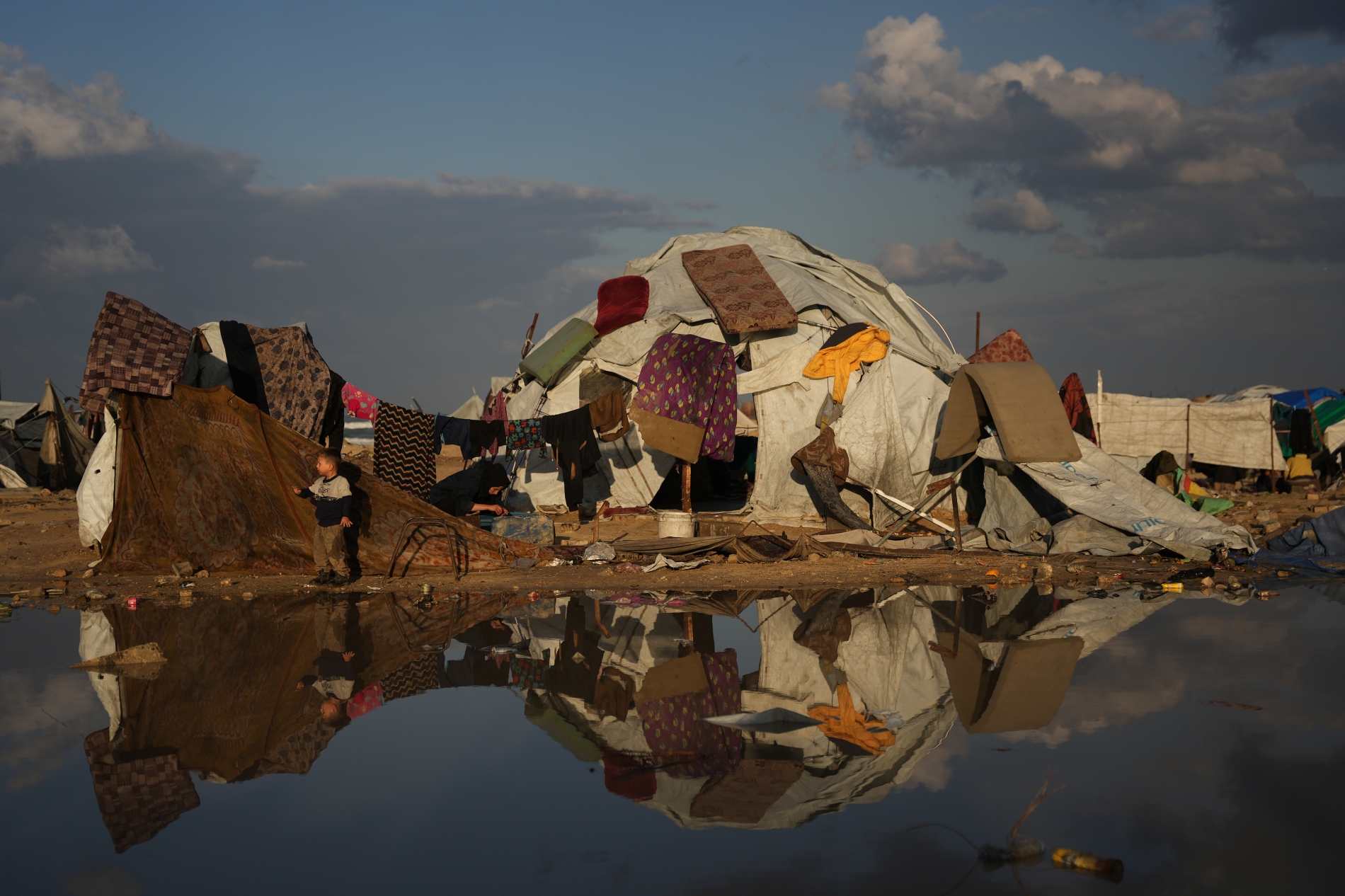
AP / Abdel Kareem Hana
A Palestinian boy stands next to his mother washing clothes as mattresses hang to dry over their tent in a makeshift camp for displaced people set up on the beach in Gaza City on 16 December 2025.

Then, there is the cold. Much like water, it creeps into bedding, joints, and the very act of breathing. There is no reliable indoor warmth and no insulation to combat it. Heating, if one is lucky enough to have a source, could also pose a danger—a flame in a crowded space could cause a fire, or an unstable device could trade warmth for the risk of suffocation. 

The tent is not a housing model, nor an acceptable temporary solution, and certainly not a horizon to trust. It is the direct result of structural absence, abdicated responsibility, and the normalisation of emergency. What appears as organisation, adaptation, or the persistence of life should not be mistaken for success. It is evidence of the pressure exerted when bodies are left to manage their own fragility.

Living in the tent reveals the limits of endurance. Every daily detail—from arranging the floor and tightening the fabric to managing water and cold—is a response to demands that should never have been imposed. In this sense, the tent is a structure in a constant state of depletion, forced to carry more than it can bear.

font change

Related Articles