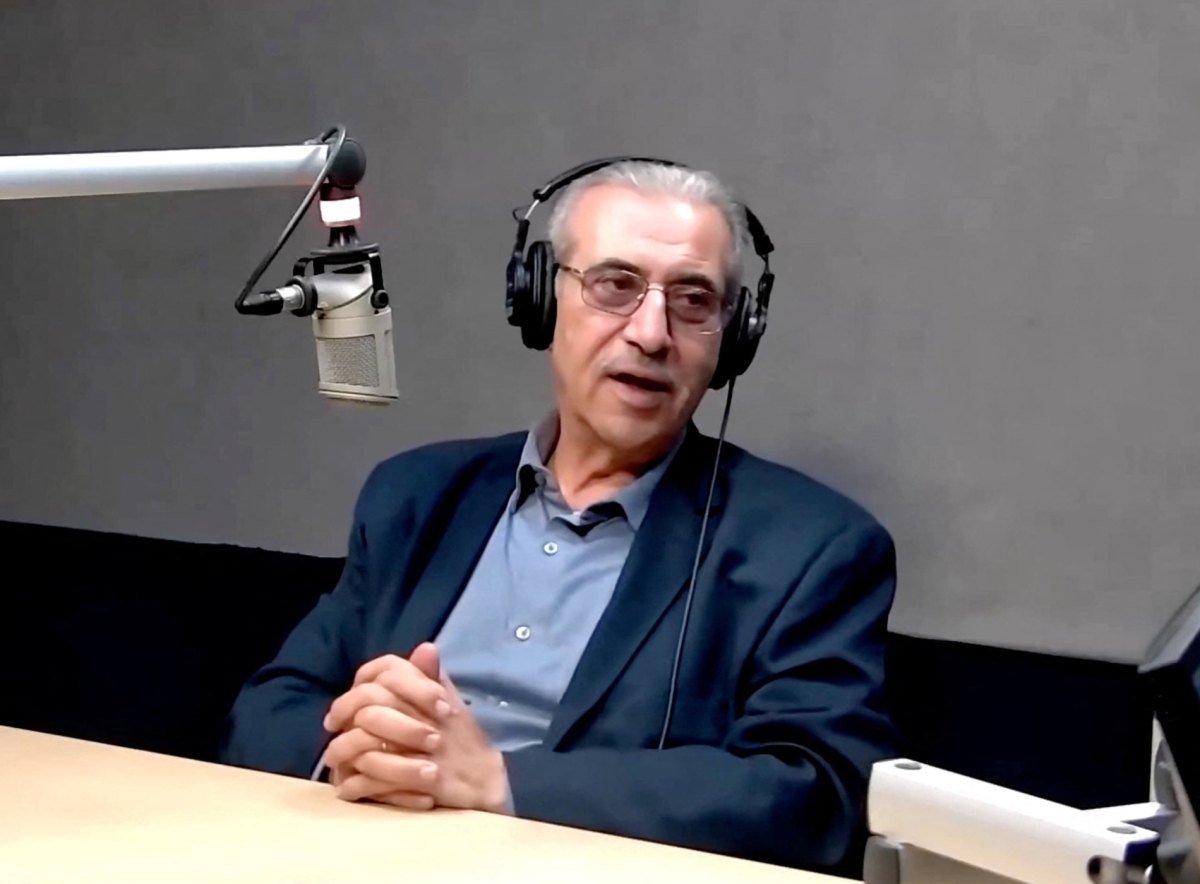
In mid-January, Ali Shaath was appointed the leader of the National Committee for the Administration of Gaza (NCAG). A civil engineer, technocrat, and former government official, he has been tasked with overseeing the restoration of core public services, the rebuilding of civil institutions, and the stabilisation of daily life in Gaza.
His appointment was announced by Egypt, Qatar, and Türkiye, who described his role and the formation of the NCAG as a pivotal step towards improving humanitarian conditions in Gaza. The committee forms part of the framework for implementing the second phase of the US-backed ceasefire plan.
Shaath is a Palestinian technocrat—a figure of administration and development rather than a factional actor, despite his affiliation with Fatah. As head of a highly sensitive civilian and technical body in Gaza, his role will require coordination with donors and international institutions, alongside the management of shattered infrastructure in a deeply complex political and security environment.
With a doctorate in civil engineering from Queen’s University Belfast, he has held senior positions in the ministries of planning and transport, chaired the Palestinian Industrial Estates and Free Zones Authority (PIEFZA), and brings extensive experience in planning, infrastructure, and reconstruction.
Civil engineer
Shaath was born in southern Gaza’s Khan Younis in 1958, earning a bachelor’s degree in civil engineering from Cairo’s Ain Shams University in 1982. He then pursued his postgraduate studies in the UK, completing a master’s degree in 1986 and a doctorate in 1989. Several sources describe his academic trajectory as closely tied to infrastructure planning and urban development.
That academic background carries clear functional and political relevance. Rebuilding Gaza is not a ‘contracting project’. It is the restoration of entire systems—from water and sanitation to infrastructure, schools, and health services—within the constraints of funding, border crossings, governance, and transparency. These are precisely the domains where an engineering and planning background becomes an asset when combined with institutional experience and negotiating skills.
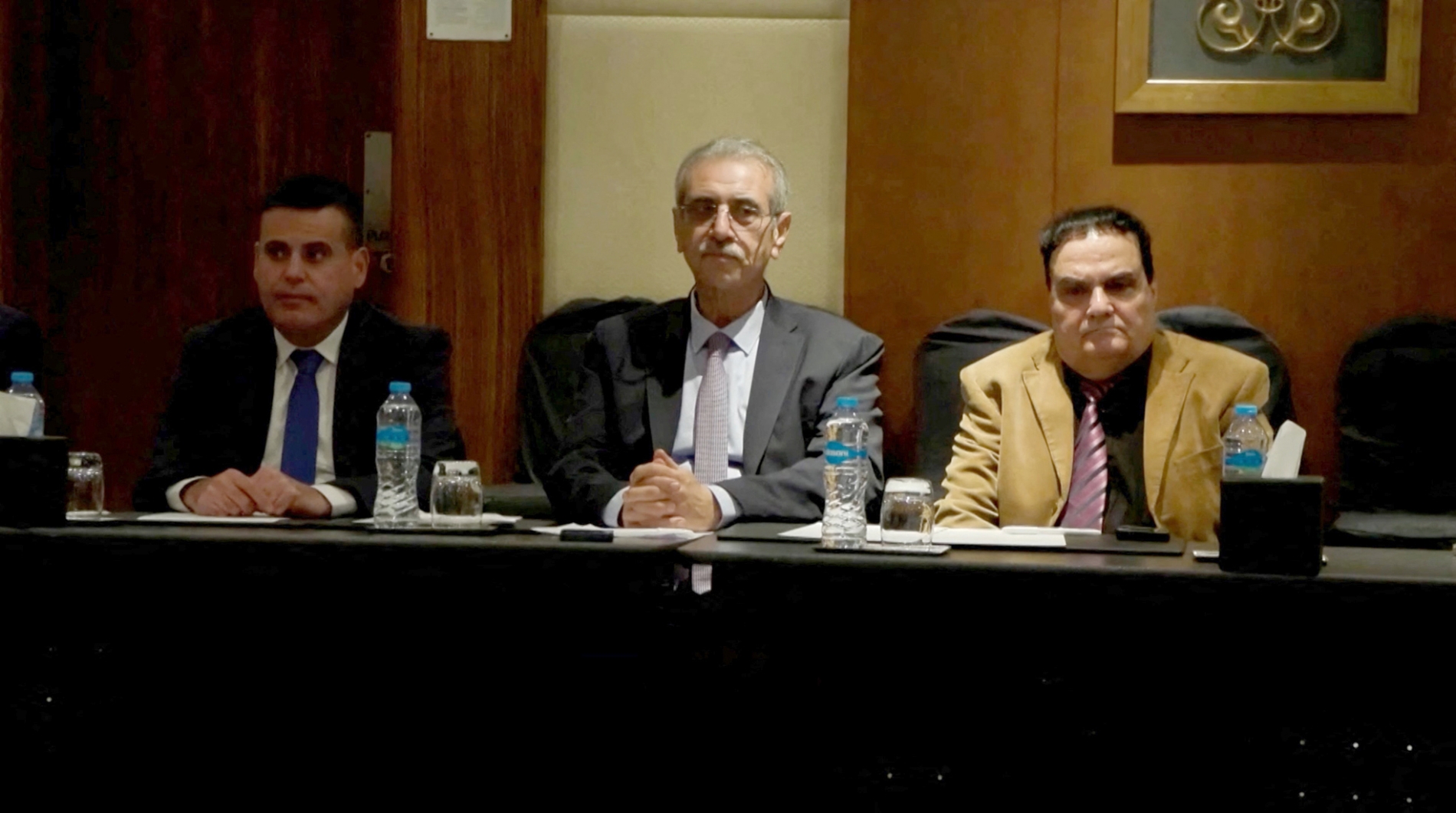
Ali Shaath during a meeting to discuss the reconstruction of Gaza.
Often described as more technocratic than politically driven, Shaath spent much of his career within the Palestinian Authority (PA), with roles spanning planning, international cooperation, and transport. He served as assistant undersecretary at the Ministry of Planning and International Cooperation in 1995, then as undersecretary at the Ministry of Transport, before becoming the chief executive of PIEFZA.
He also participated in Palestinian-Israeli steering and negotiation committees, handling technical files, including the port and other matters related to transitional arrangements, and played a key role in shaping agreements that influenced regional cooperation efforts. He provided advisory input that helped drive investment programmes and projects supporting economic and infrastructure growth.
The Palestine Economic Policy Research Institute (MAS) describes him as an expert in economic development, infrastructure planning, and reconstruction, highlighting his meaningful contributions to MAS research and dialogue forums on Gaza’s reconstruction.
Shaath's transport and infrastructure background gives him insight into supply chains and cross-border economic integration
Shaath's strengths lie in his command of numbers, planning frameworks, and programme design. His experience suggests an understanding of donor priorities, such as results, measurable performance indicators, governance, and transparency—conditions that are no less important than cement and steel.
Postwar Gaza is not just about housing. It is the massive task of restoring the systems of daily life. Roads and logistical corridors, rubble removal, border crossings, and the flow of reconstruction materials all need to be carefully coordinated and managed within a coherent reconstruction strategy. Shaath's transport and infrastructure background gives him insight into supply chains and cross-border economic integration, which are crucial for Gaza, where effective reconstruction depends on border realities with Israel and Egypt, restrictions on dual-use materials, and ongoing technical coordination.
His background in industrial estates and free zones shows a preference for productive recovery and job creation over long-term dependence on aid. In this sense, reconstruction becomes an economic cycle rather than a collection of fragmented projects. International institutions and states involved in Gaza's reconstruction often favour this approach. They prefer administrative counterparts not defined by factional identity to facilitate funding and strengthen financial and administrative transparency.
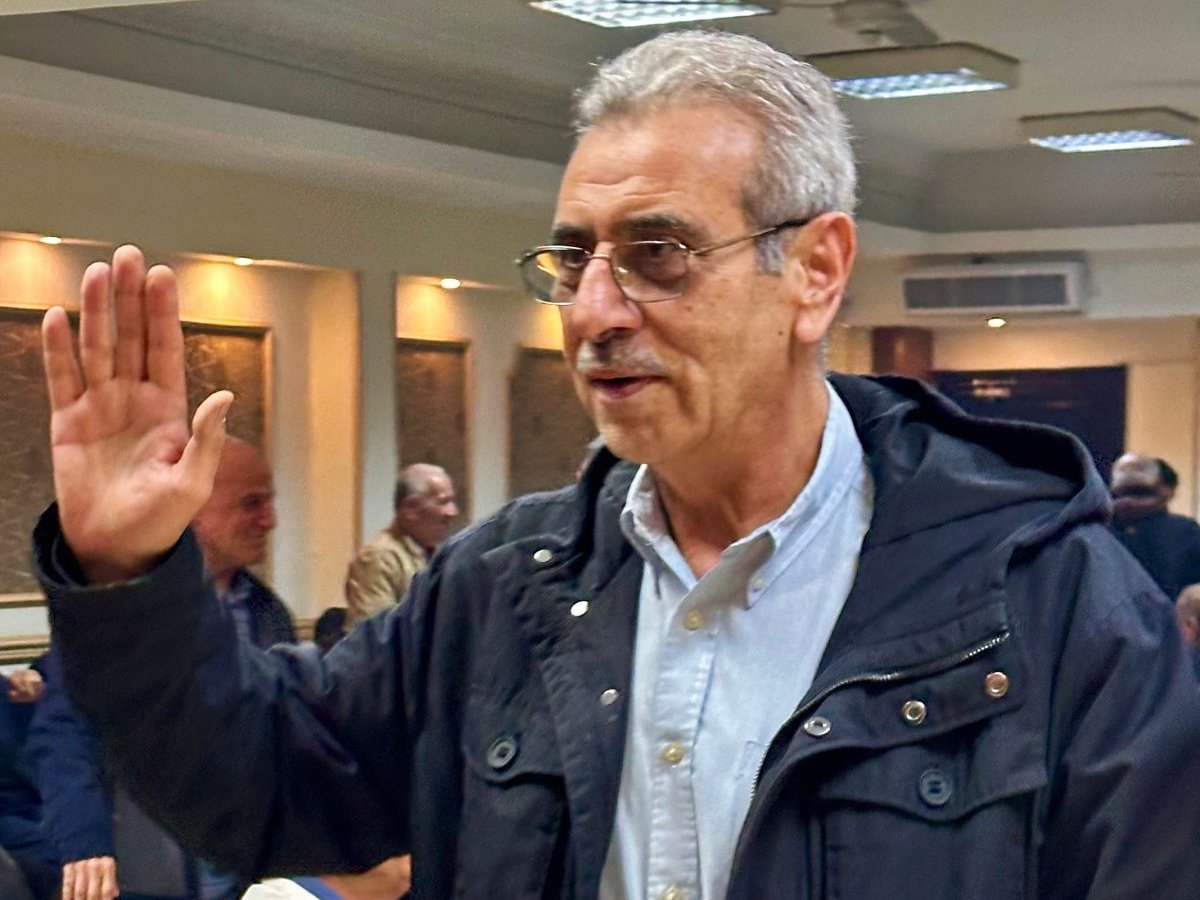
Ali Shaath, head of the Palestinian technocratic committee for managing the Gaza Strip, offers condolences to a Palestinian family in Cairo on 15 January 2026.
The challenges before Shaath
Despite Shaath's academic credentials, practical experience, and a regional and international climate that appears broadly supportive of his mission, formidable obstacles remain. If they are not overcome, his efforts will be derailed.
Gaza's reconstruction is not a 'résumé exercise'. It is a political and logistical minefield. Success will require social, institutional, and factional acceptance, especially from Hamas, which continues to wield significant influence inside Gaza. Without internal legitimacy, the committee risks becoming an entity without the means to act.
The crossings into Gaza and the flow of reconstruction materials present another critical obstacle. Without a steady supply of building materials, energy, and equipment, even the most sophisticated plans cannot move beyond paper.
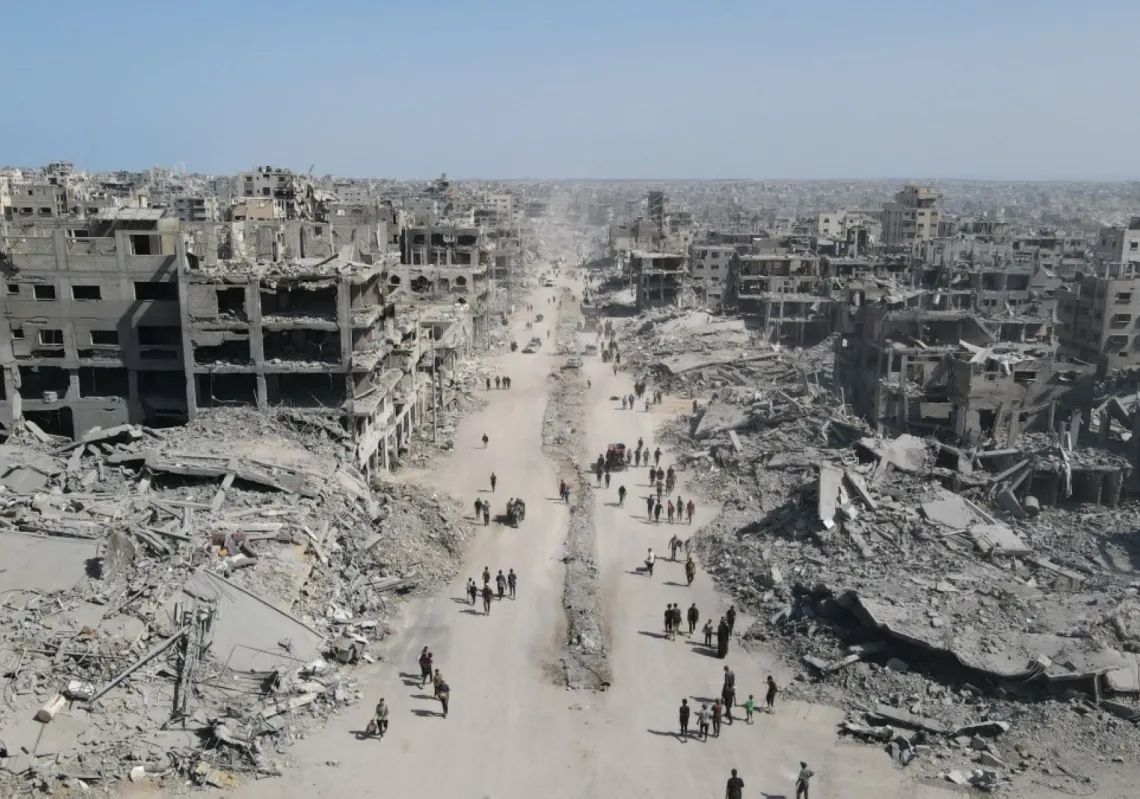
The world will demand transparency and the prevention of duplicate spending—issues that have long been sensitive in post-conflict settings. Clearing an estimated 61 million tonnes of rubble and providing temporary shelter for Palestinians during Gaza's winter months represents an immense technical and humanitarian challenge.
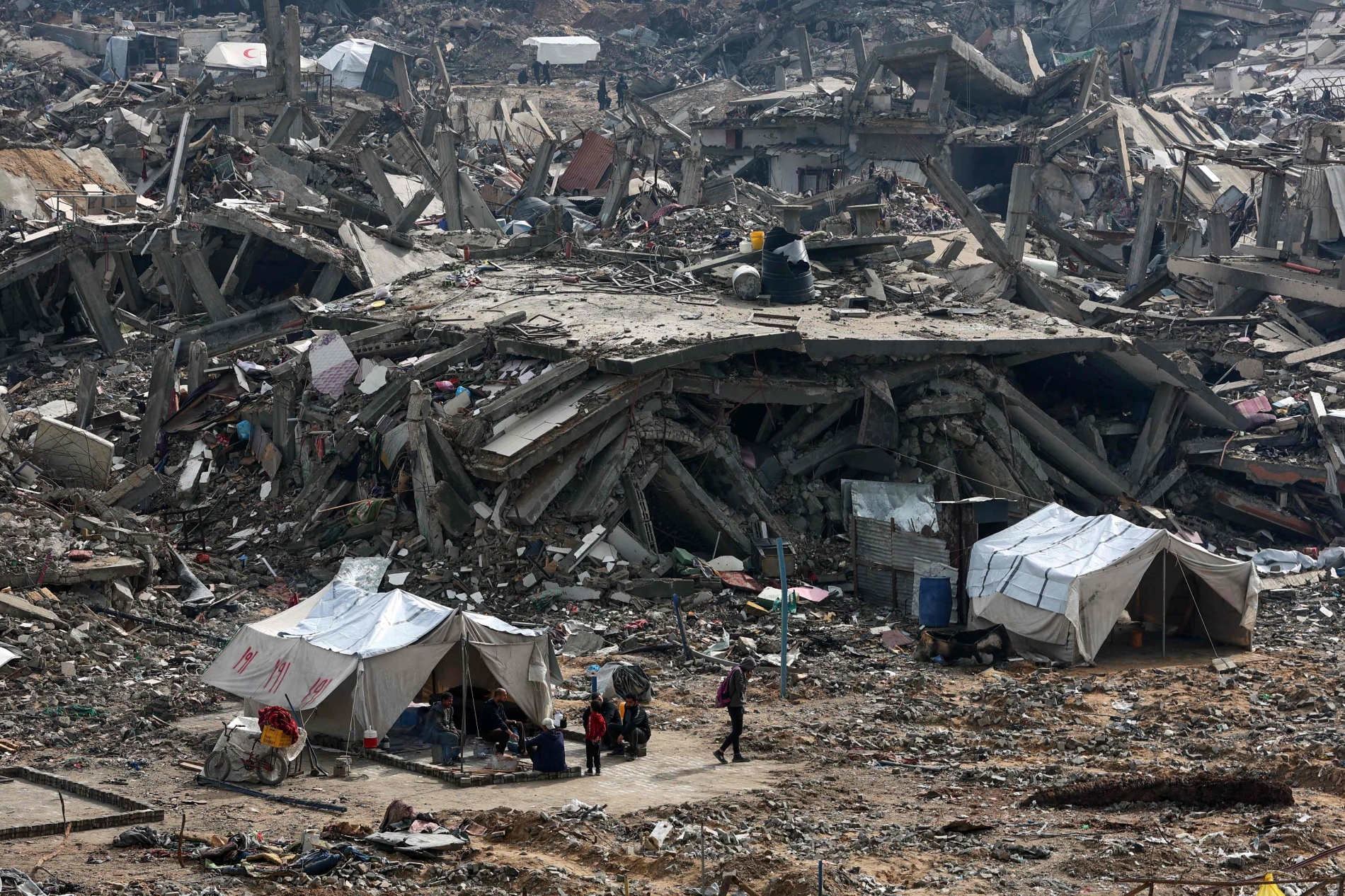
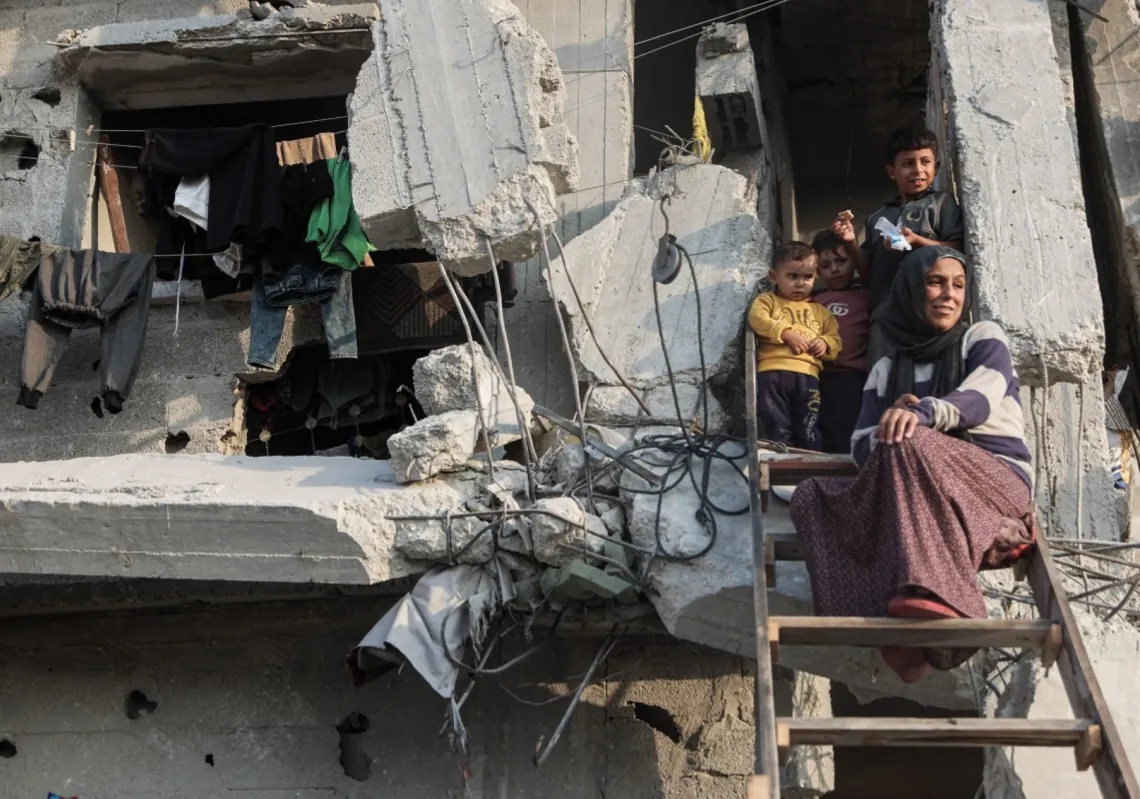
People erect tents amidst the rubble of destroyed buildings as displaced Palestinians return to the northern areas of the Gaza Strip in Jabalia in 2025.
Any delay risks fuelling public anger and exacerbating social frustration, even before reconstruction can begin. Seamless coordination between the reconstruction committee, municipalities, international organisations, and local bodies is equally critical. If not managed professionally and with discipline, the process could descend into bureaucratic paralysis, slowing reconstruction and obstructing relief for a desperate population.
Between power and paralysis
Shaath's technocratic background positions him well to translate reconstruction into governance, though his success will depend on balancing donor trust with domestic legitimacy. His success will be measured by his capacity to navigate political deadlock, resolve supply chain issues, and deliver early, tangible improvements. These improvements should include restored access to services and supplies, which can help to revive the basic elements of life for Palestinians in Gaza after their unmatched suffering.
Ghassan Khatib, a former minister of planning and labour, told Al Majalla that Shaath is well acquainted with Gaza's complexities. His fate, however, will be determined less by his qualifications than by the will of the two actors who control Gaza: Hamas and Israel. The former holds Gaza's security and administrative reins, while the latter controls the crossings and the entry of reconstruction materials.
Khatib questions whether the proposed formula will grant Shaath and the NCAG real authority or reproduce a model reminiscent of Lebanon, where a nominal civilian government exists while real security and military power rests with a single actor—Hezbollah. In Gaza's case, that actor would be Hamas.
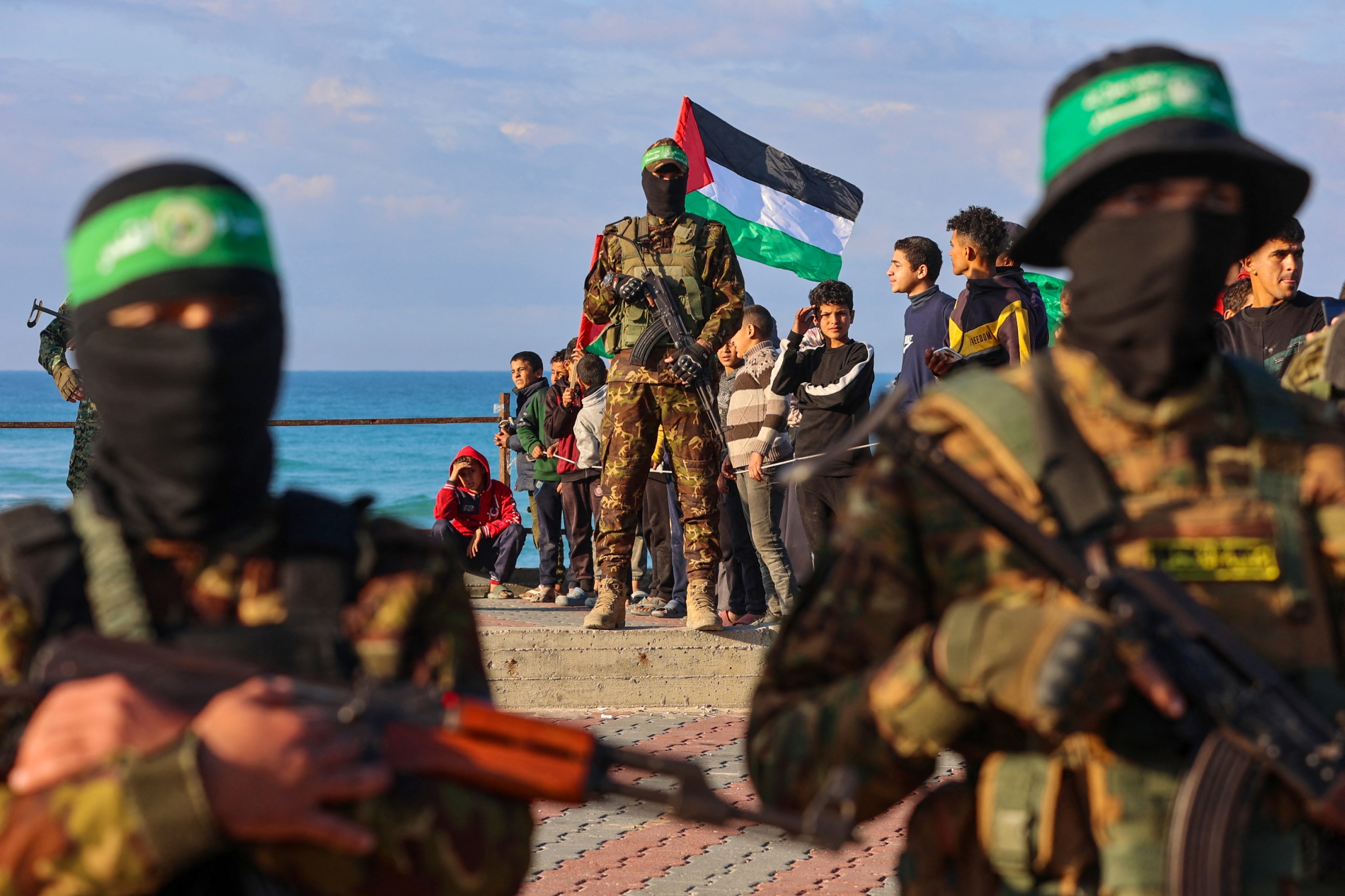
Hamas fighters secure an area before handing over an Israeli-American hostage to a Red Cross team in Gaza City on February 1, 2025, as part of the fourth hostage-prisoner exchange.
According to Khatib, the success of any administration in Gaza will depend on the availability of international funding and on a political and security environment that allows it to function. The PA, he notes, was not involved in Shaath's selection, although it does not oppose his appointment. For the NCAG to succeed, it must be granted freedom of movement and action by both Hamas and Israel, insists Khatib, who says Israel has so far shown little interest in withdrawing from the remainder of the strip, or in creating the conditions required for large-scale reconstruction.
A seven-year roadmap for recovery
In comments to the media following his appointment, Shaath has stated that the committee's central purpose is to secure living conditions that preserve the dignity of Palestinians. He has also estimated that it will take roughly seven years for Gaza to be rebuilt to a state better than it was before the war.
According to Shaath, the reconstruction plan—prepared in cooperation with the World Bank and relevant ministries—rests on three principal phases. The first six months will provide emergency relief, followed by a two-and-a-half-year recovery period focused on repairing infrastructure and vital facilities. The third phase will be a three-year rubble removal programme. Part of the debris will be recycled for environmental and construction purposes.
Water, electricity, and education sit at the top of the committee's priorities. This includes rehabilitating desalination and treatment plants, repairing the power station and the interconnection line with Egypt, and compensating students for two-and-a-half years of lost learning, with the possibility of bringing in teachers from the West Bank.
Shaath confirmed that the committee will operate in coordination with the PA and Arab states, and in accordance with the Palestinian Basic Law. It will not, however, hold political or military powers. Those responsibilities, he said, will remain with the Board of Peace and the international stabilisation force.
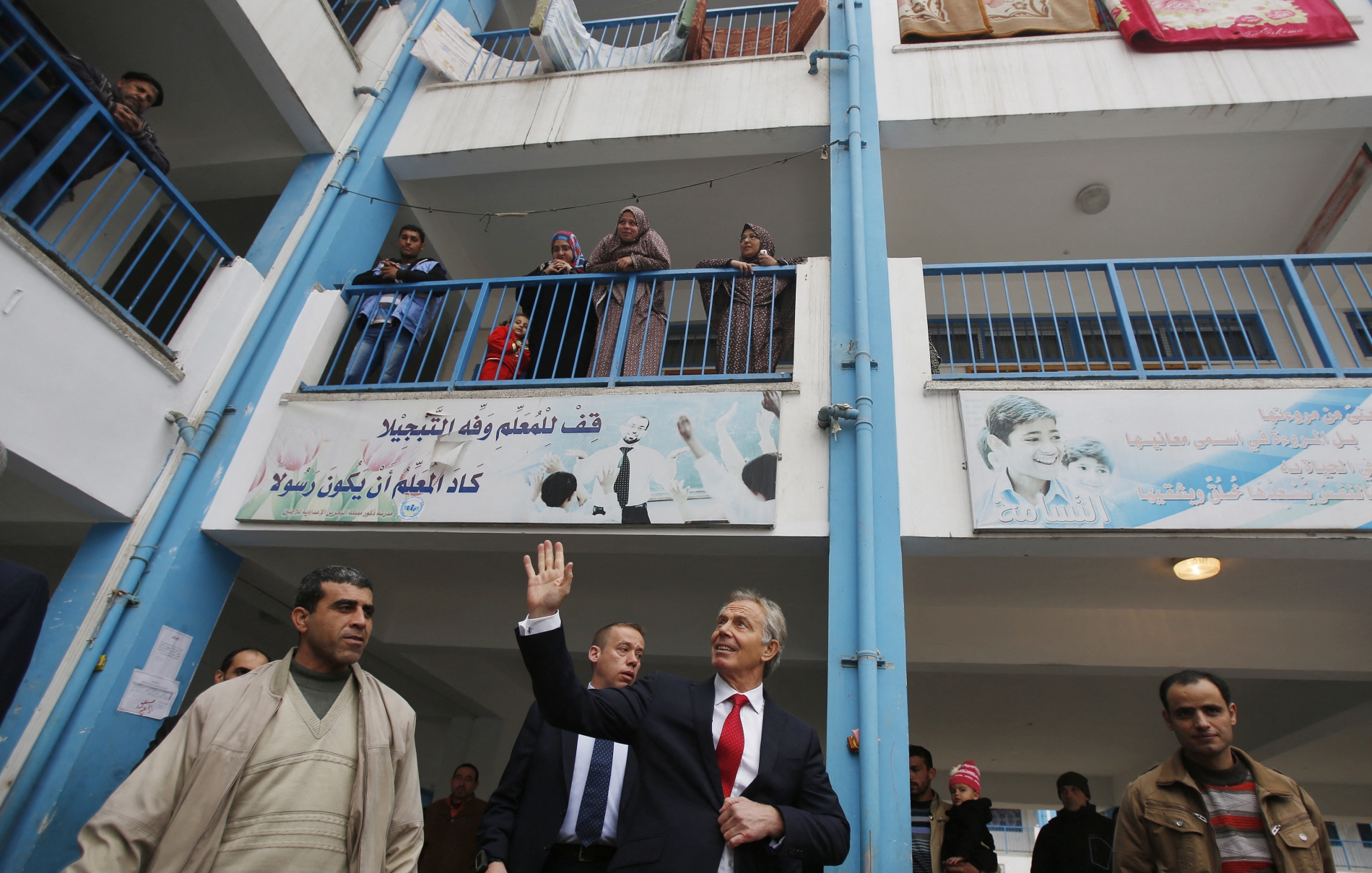
Middle East Quartet envoy Tony Blair (C) waves as he leaves a UN-run school sheltering Palestinians, whose houses were destroyed by Israeli airstrikes during the 2014 war, in Gaza City on 15 February 2015.
On Friday, Trump on Friday tapped Secretary of State Marco Rubio and former British Prime Minister Tony Blair as founding members of the Gaza "board of peace" and also named his special envoy Steve Witkoff, son-in-law Jared Kushner and World Bank President Ajay Banga among those on the seven-member "founding executive board", the White House said in a statement.
As for the technocrat committee's mandate, it will expand gradually as the Israeli army withdraws eastwards under the Gaza peace plan. According to Shaath, its work will be financed through a special World Bank fund supported by Arab and international donations.
Although Palestinians have welcomed the formation of a technocratic committee to administer Gaza, they are well aware that reconstruction ultimately hinges on international decisions. The announcement marks an important step in the ceasefire process that began last October. Yet any substantive change on the ground will require substantial budgets, a police force with broad authority, and an international coalition capable of compelling Israel to cooperate.