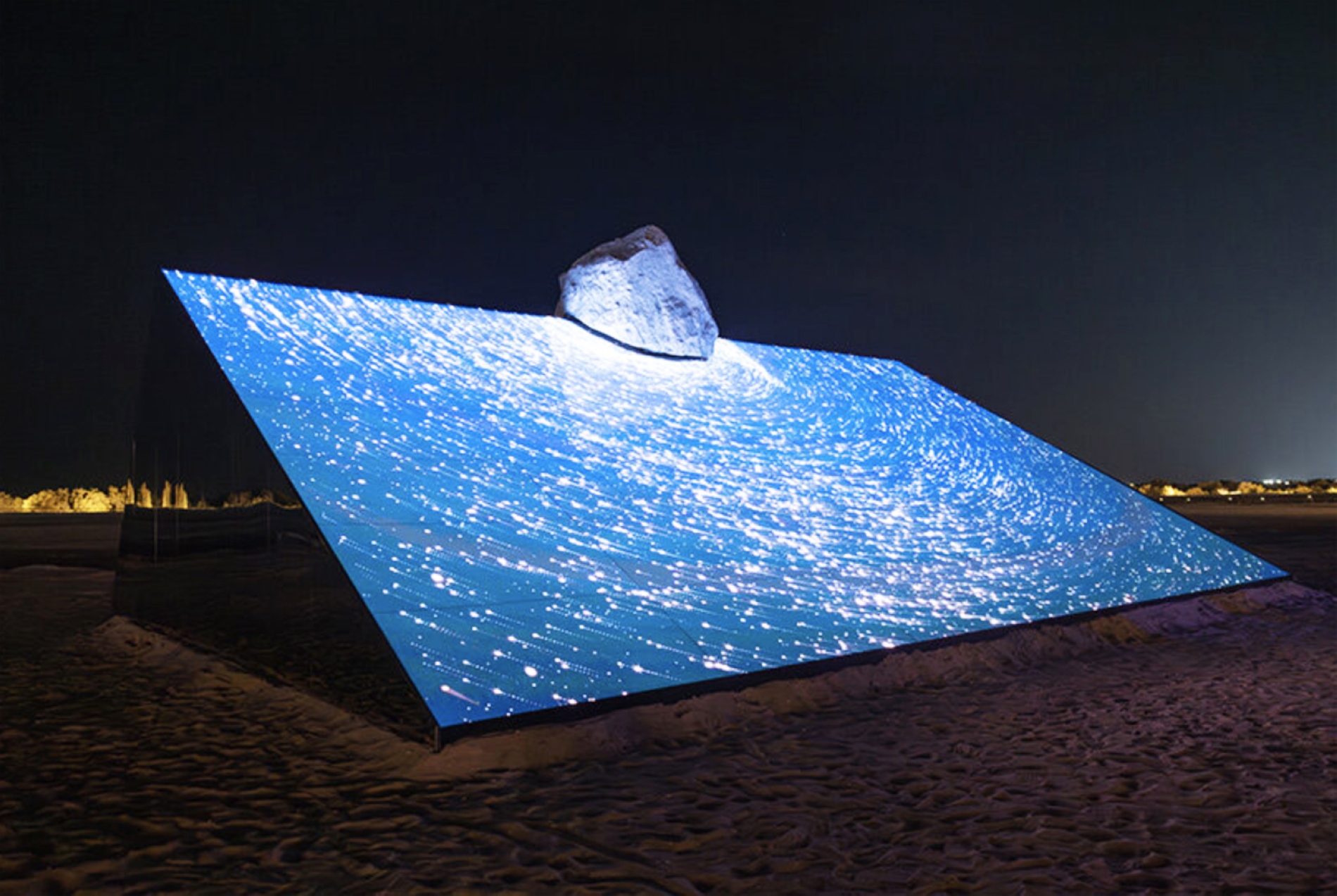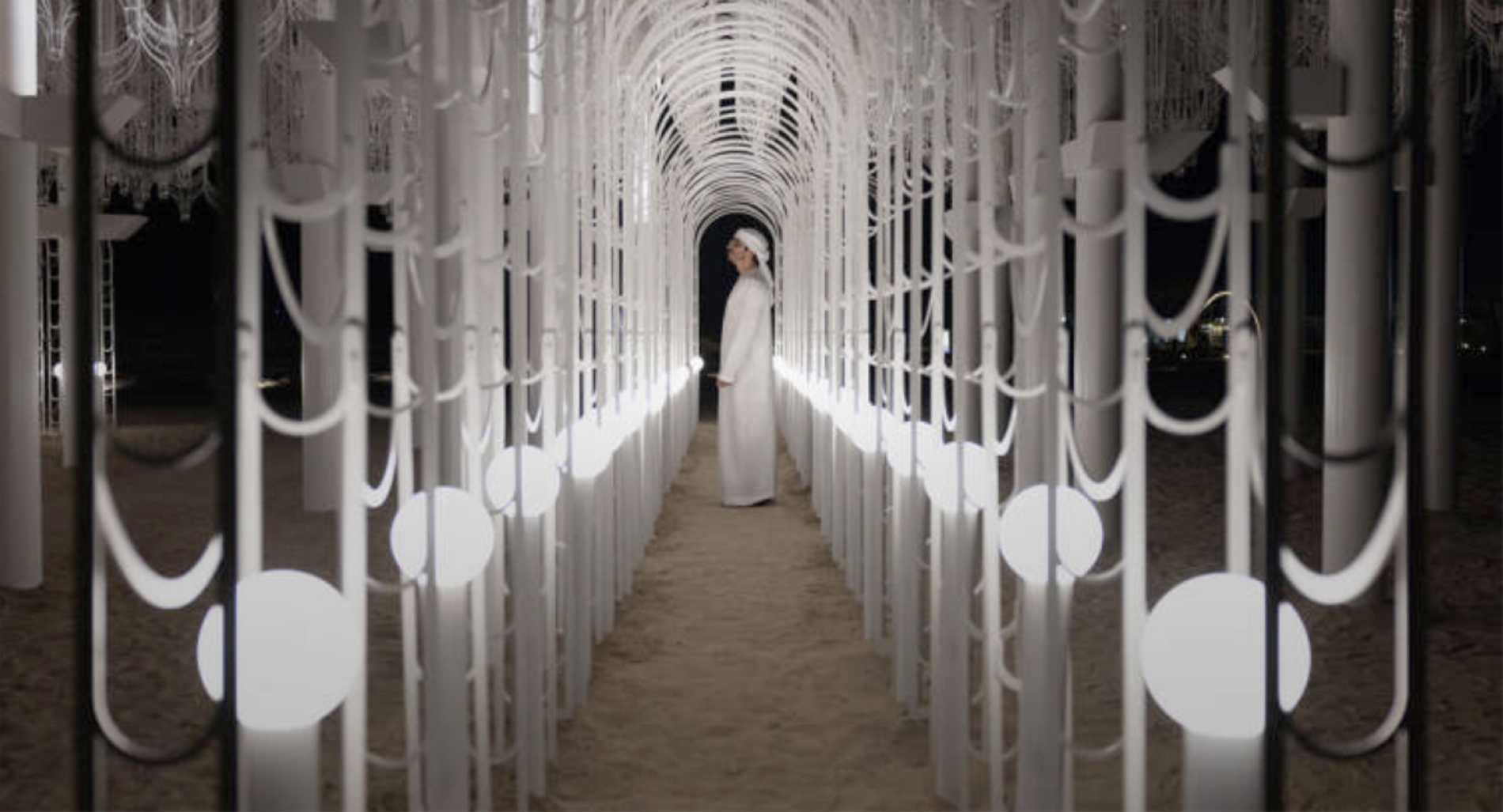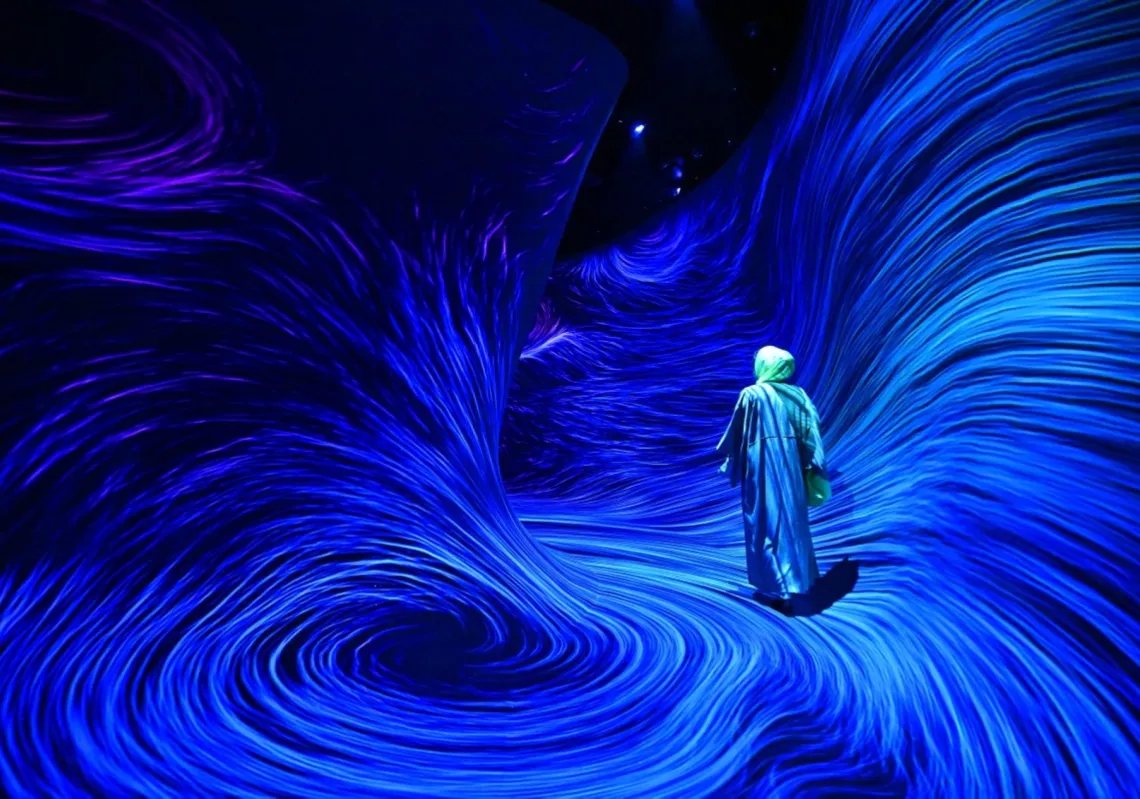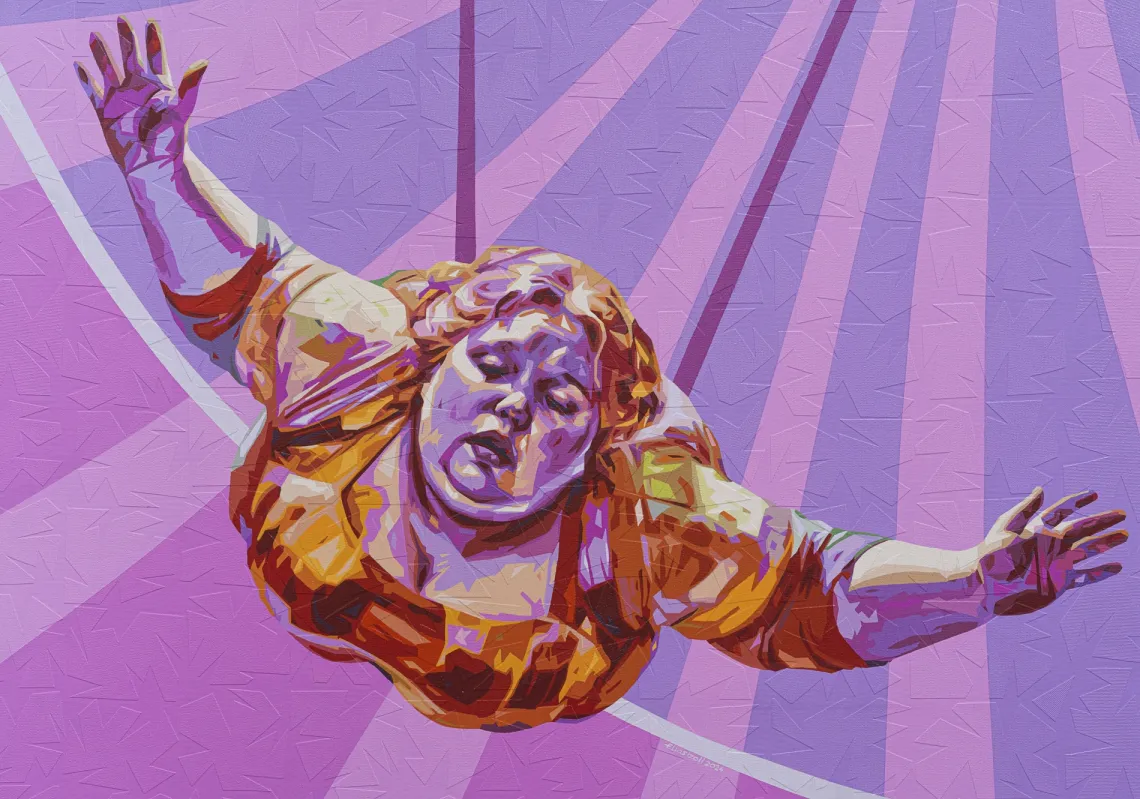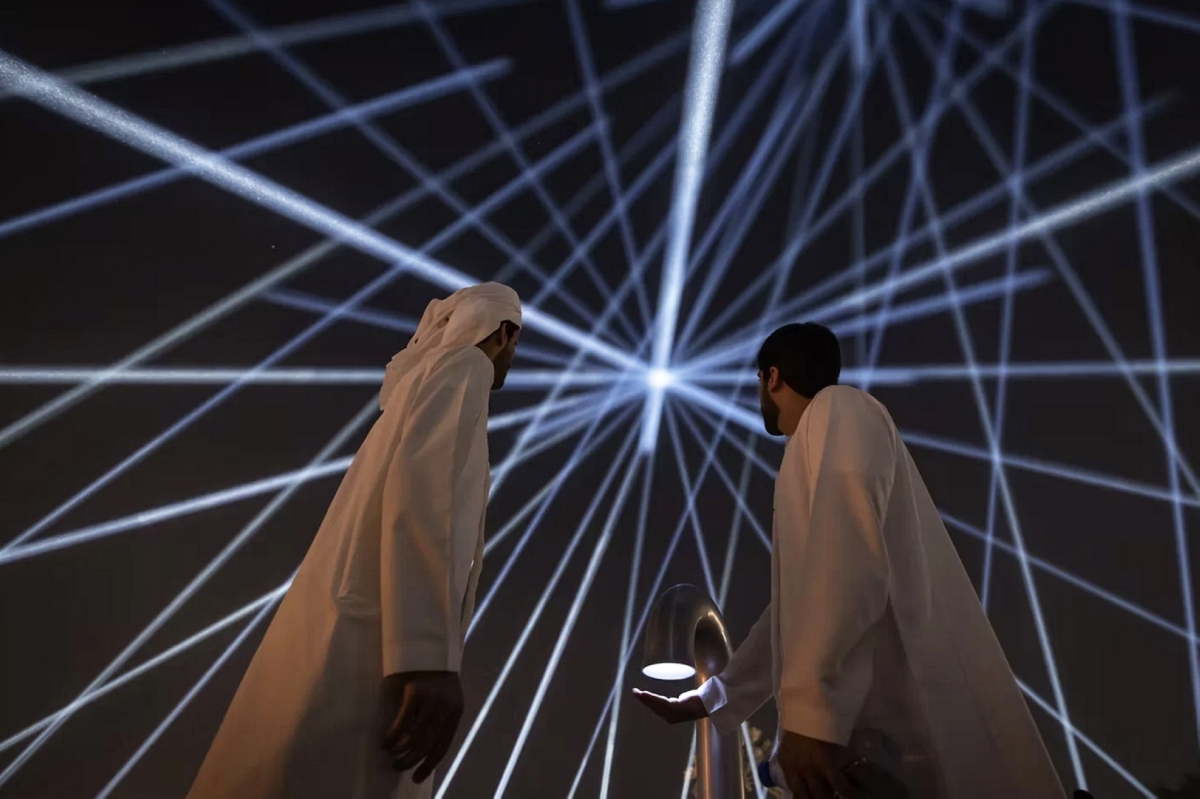

Just as the moon and stars have guided sailors and those journeying through the desert, light has served as a guiding force throughout history. It is from this idea that the second edition of Manar Abu Dhabi, a public art exhibition running until 4 January, is being held under the title Suhail Is Your Guide. Suhail is the second-brightest star in the night sky.
The works on display explore the profound dimensions of light, as stillness and a pure mirror of collective memory. As the exhibition’s supervisor and artistic director, Japanese artist Khai Hori, explains: “In Abu Dhabi, the artworks explore how artists interpret the sea, light, and natural elements, offering distinct visual and sensory experiences.”
According to Hori, Manar Abu Dhabi has the potential to foreground significant natural and cultural environments across the emirate. “Mangroves, oases, heritage sites, and urban environments are not merely backdrops for the exhibition; they are integral to its structure,” he says. “Under the theme Suhail Is Your Guide, we designed the exhibition as an enjoyable journey, in which visitors move through a carefully curated course that connects artworks, architecture, and the natural environment in an integrated reading.”
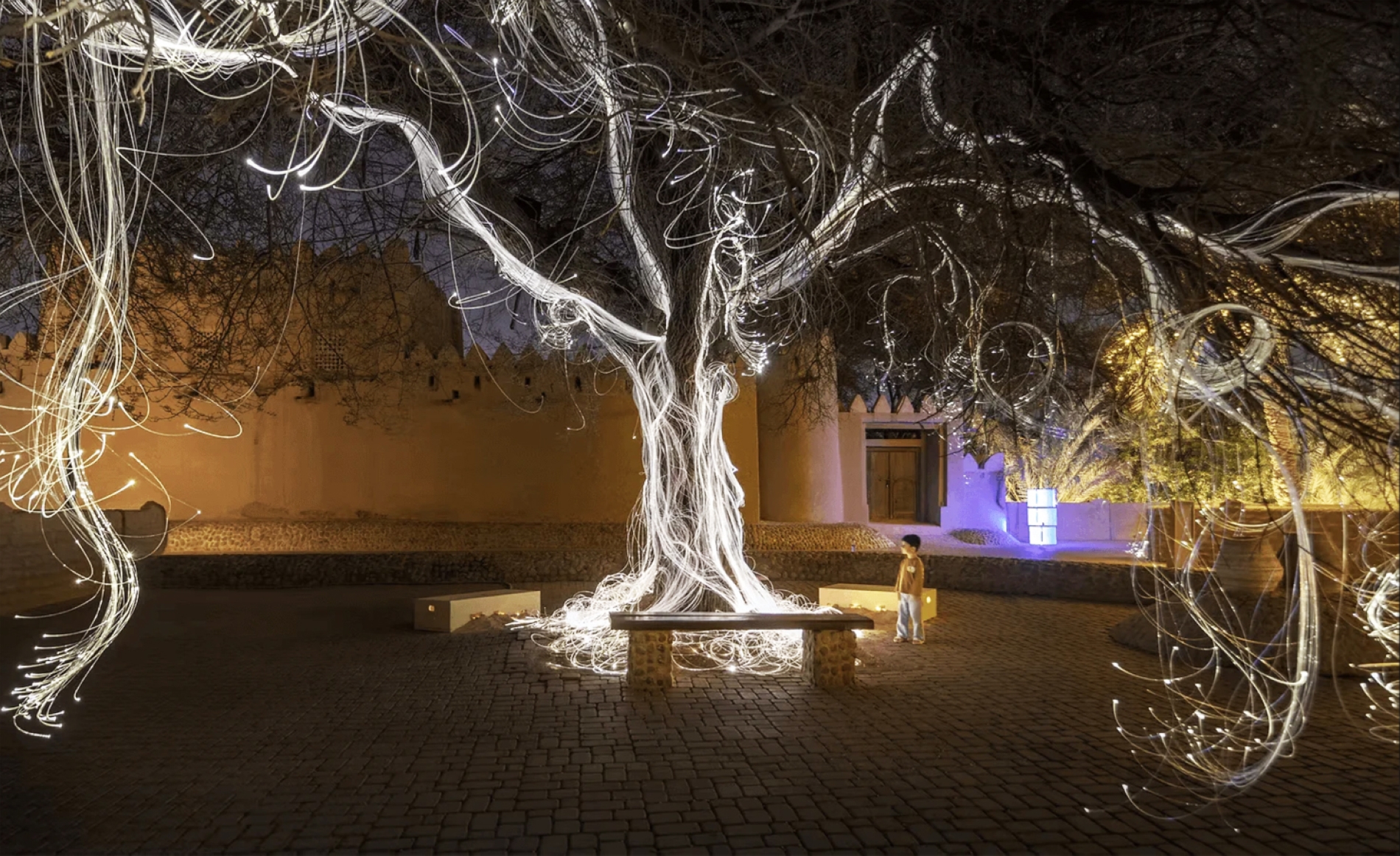
For the first time, Manar Abu Dhabi has taken its art to Al Ain, with works installed in Al Qattara and Al Jimi Oasis. These sites, Hori notes, reflect a rich history and the deep interconnectedness between humans, water, light, and earth. “Some families also allowed us to install works in their backyards, offering the public a rare opportunity to discover artworks and domestic architectures that carry layered memories.”
Light, place, and precision
At the curatorial level, decisions regarding the representation and distribution of works were made with great precision. The team closely examined how Emirati artists interact with their international counterparts, considering location, material, rhythm, and visual proximity. “Principles of balance and non-interference guided us,” explains Hori, “ensuring that the works are respectfully situated within heritage sites and natural environments without harming or dominating them to guarantee their sustainability.”
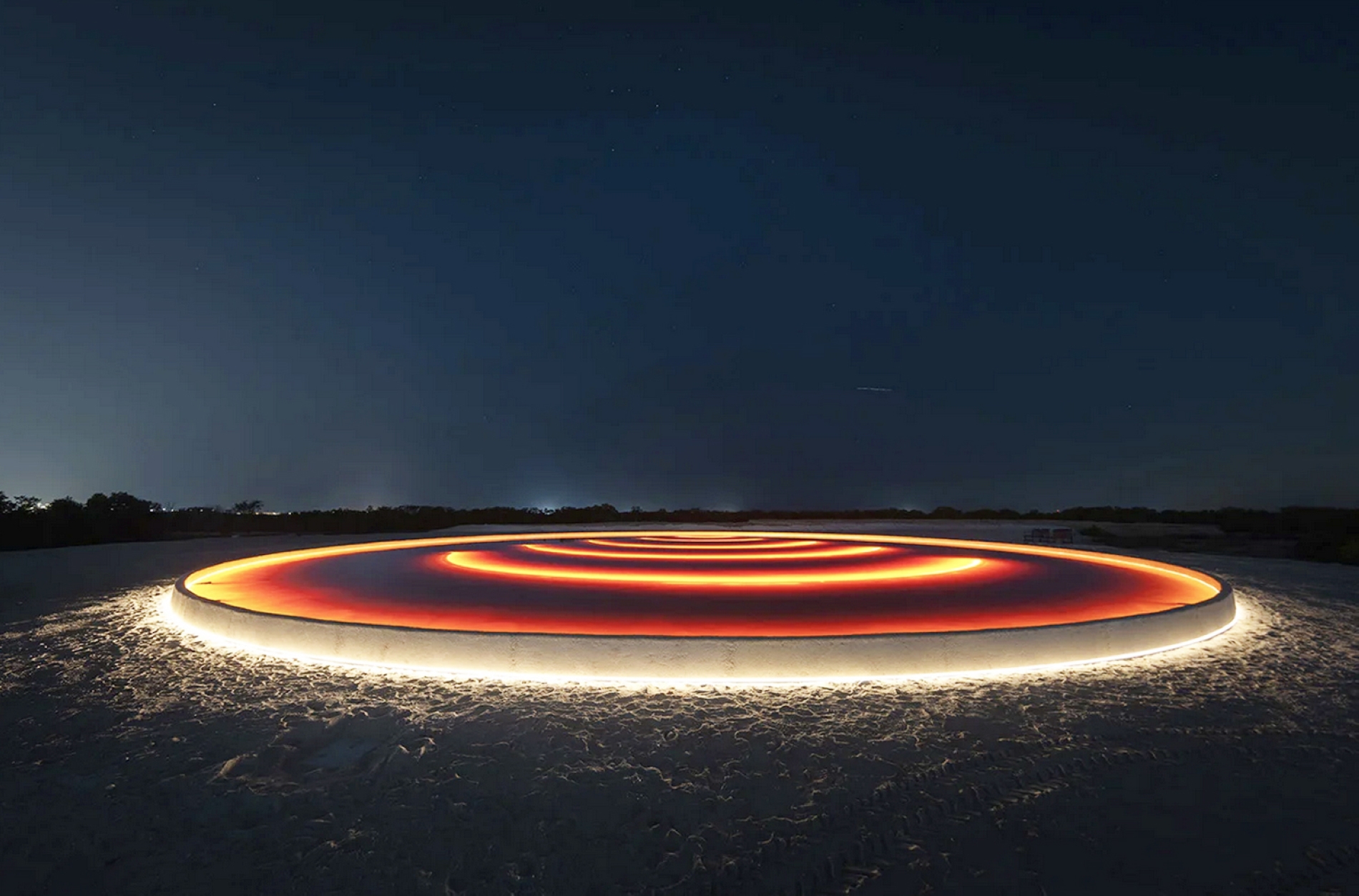
The selection of Jubail Island and Souq Al Mina for site-specific installations reflects the city’s coastal identity and the evolution of its urban fabric. The artworks there explore how artists interpret the sea, light, and natural elements, offering immersive visual and sensory experiences. Some works evolve, such as Shaikha Al Mazrou’s The Contingent Object, in which salt crystals gradually form, intensifying the red hues, particularly under the light of the full moon. Elsewhere, 2,000 drones soar over the mangrove forests for 10 minutes—a nightly spectacle that continues to draw large audiences.
“Light is a universal element that touches the depths of human consciousness,” says Hori, reflecting on the growing prominence of light-based art. “In the UAE in particular, it carries additional cultural and emotional significance. The word ‘light’ recurs in everyday names and expressions, reflecting its connection to identity, direction, and memory. Historically, light guided travellers, and today it continues to shape how people perceive place and presence.”
“Globally, light exhibitions have gained popularity because they are immediate and easy to engage with,” he adds. “However, Manar Abu Dhabi goes further by presenting works outdoors and within inhabited, familiar, and culturally significant environments. This approach allows for an intimate, one-to-one encounter with each artwork, deepening the relationship between art, place, and viewer.”
Lights that invite contemplation
The exhibition brings together 15 artists and collectives from 10 countries, presenting 22 innovative works realised through advances in contemporary science. Software, research-based practices, and interactive systems transform light into experiences of touch, movement, and sound. While the works differ in form and approach, they share light as a central theme. The artists employ a wide range of tools—including suspended lasers, reflective surfaces, and salt fields—articulated through a unified visual language that invites reflection on the most recent developments within this artistic tradition.
Each work is underpinned by a conceptual framework activated through modern technology; none appears without a title or contextual explanation, guiding viewers toward informed engagement and interaction.
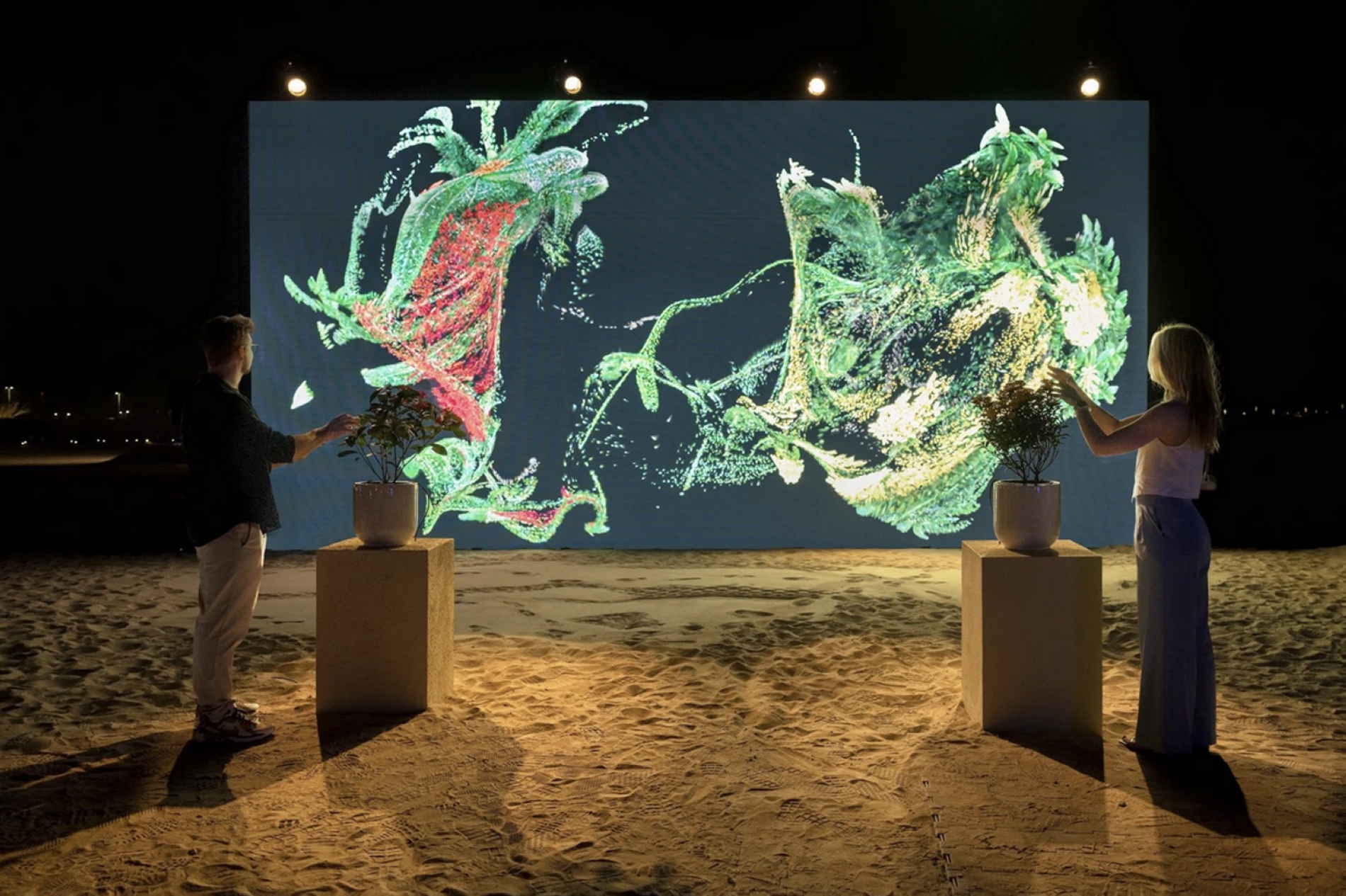
German artist Christian Brinkmann’s Floral Resonance places the visitor at the centre of an interactive audiovisual installation. “The work captures the living relationship between humans and plants,” he explains. “A real plant encounters a light screen, and the plant is equipped with sensors that respond to touch, translating every electrical signal into light, sound, and image in real time. The scene is never repeated twice.”
The plant is not merely an object to be observed, but a partner in the artistic performance, adds Brinkmann. “The visual elements are generated from three-dimensional scans of living plants, preserving the finest details of texture, colour, and branching within a digital space,” he says. “Transformation begins as the leaves ‘breathe’ and the veins appear to transmit light.” Abstract compositions unfold across the screen, drawing their forms and colours from flowers that disperse and dissolve into the digital field. The work invites visitors to experience how technology listens to and responds to nature through the simple act of touch.