Somaliland and the rise of the quasi-state

Somaliland is merely the first signal of a cascading disintegration that, when combined with internal weakness and external interference, could engulf a substantial portion of Africa

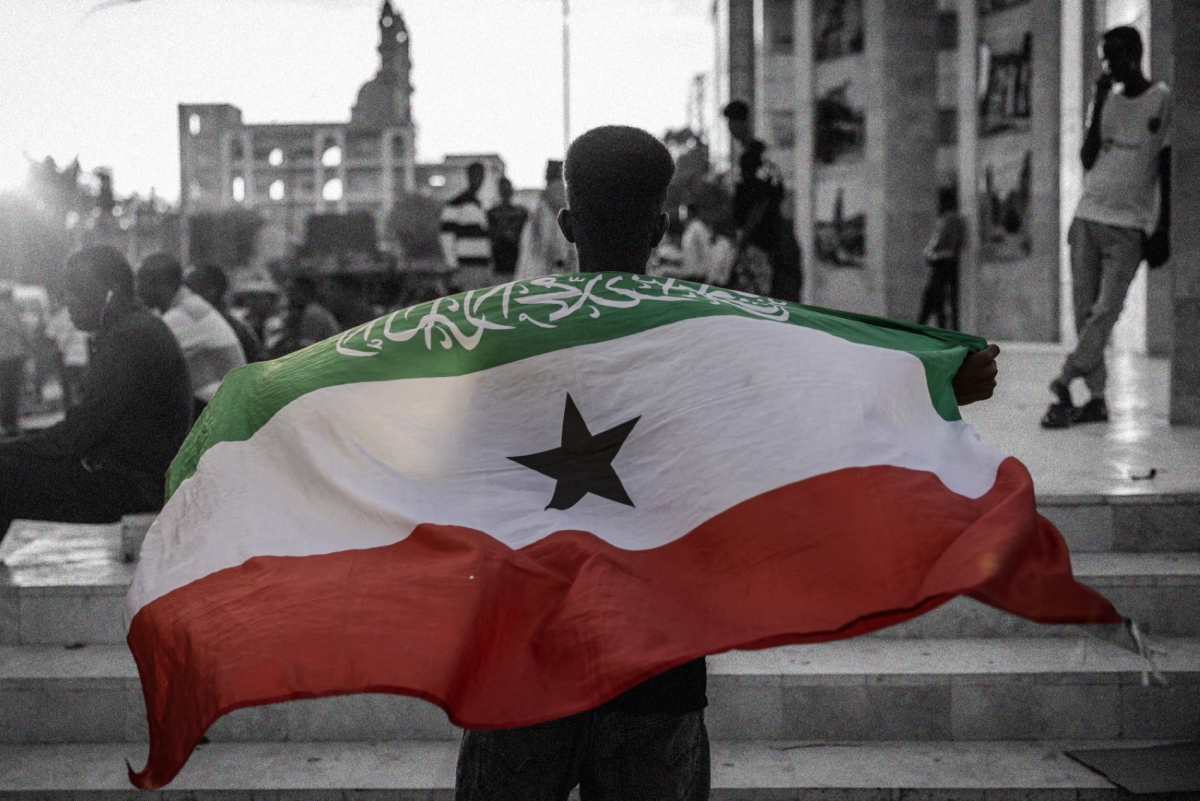
A man holding the flag of Somaliland in front of the Hargeisa War Memorial, on 7 November 2024.
AFP
A man holding the flag of Somaliland in front of the Hargeisa War Memorial, on 7 November 2024.

Somaliland and the rise of the quasi-state

The recent statement by Lord Darroch—the UK’s former ambassador to the US and adviser to the prime minister—calling for recognition of Somaliland’s independence is far from an isolated episode of political exotica or the private opinion of a retired diplomat.

Lord Darroch of Kew is a figure with direct access to the UK political establishment, an authority on security, international stabilisation, and institution-building in conflict zones, and a member of the Chatham House Council on International Relations.

His position is reinforced by the All-Party Parliamentary Group on Somaliland, chaired by former defence secretary Sir Gavin Williamson. In June, the group published a report, ‘Roadmap to Recognition’, which laid out strategic, economic, and moral arguments for Somaliland’s independence.

Across the Atlantic, the issue has also entered the American agenda. A lobby in Capitol Hill, comprising members of Congress and the Somali diaspora, frames recognition of Somaliland as a ‘successful exception’ against the chronic weakness of Somalia’s federal government, and as a geopolitical lever to stabilise the Red Sea and Bab-el-Mandeb. Also in June, Representative Scott Perry introduced H.R. 3992, the Republic of Somaliland Independence Act, which calls for the formal recognition of Somaliland as a separate and independent state.

Meanwhile, think tanks such as the Atlantic Council and the Centre for Strategic and International Studies advocate for a careful, measured approach, stopping short of outright recognition.
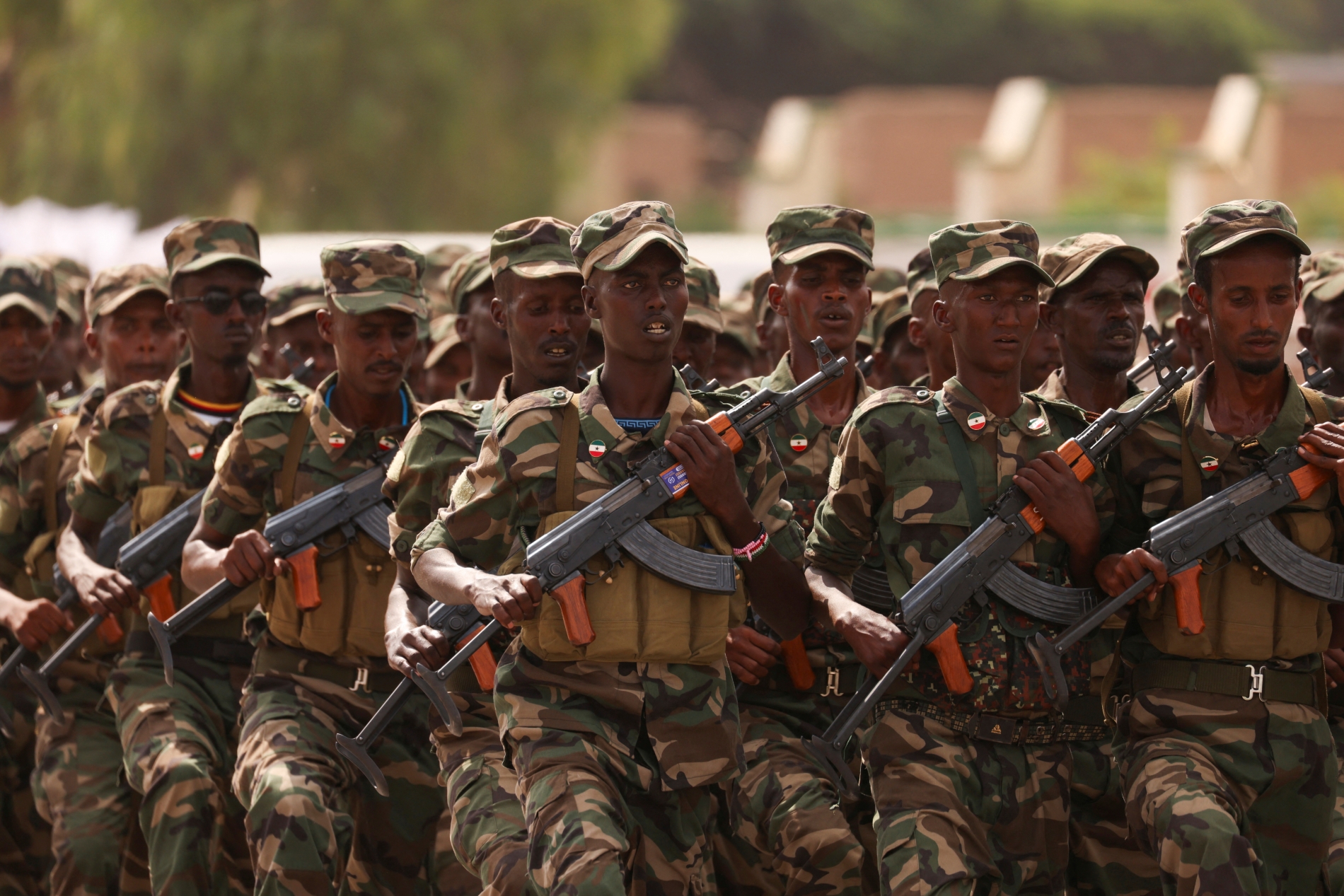
Reuters
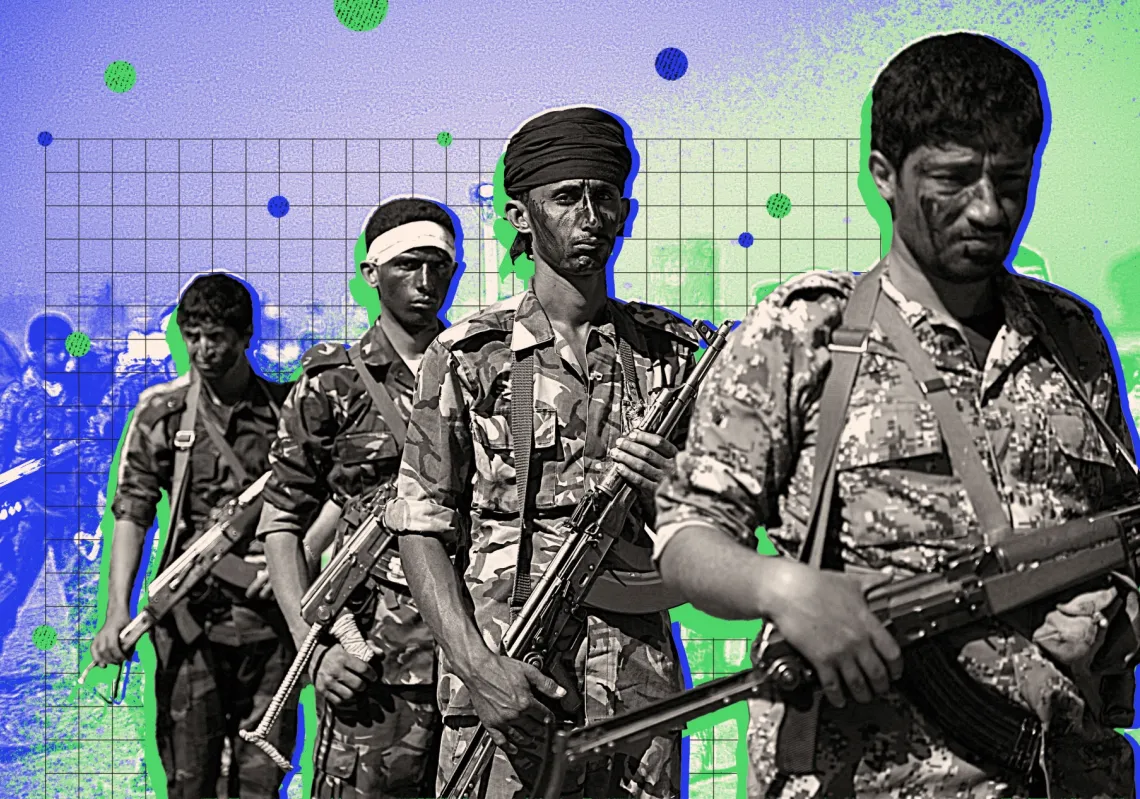
Members of the Somaliland army participate in a military parade to celebrate the 33rd anniversary of their independence in Hargeisa, Somaliland, on 18 May 2024.

A de facto parallel state

Since 1991, Somaliland has sought to exist independently of Somalia. Today, it functions as a de facto parallel state to Mogadishu, maintaining a level of stability rare in the rest of the country and exhibiting a full array of quasi-institutional attributes of statehood.

In 2024, Somaliland held presidential elections that resulted in a peaceful transfer of power. Its parliament, municipal authorities, and judiciary operate independently of Mogadishu, ensuring internal governance. The clan-based balance, which has fractured in southern Somalia, remains predictable and institutionally embedded in Somaliland. The army, police, and security services operate under a unified command, maintaining full territorial control and conducting a sustained campaign against the militant Islamist group Al-Shabaab.

The Berbera port serves as a regional hub, while customs and trade generate independent sources of revenue. A functioning banking system, bolstered by the economic clout of the diaspora, effectively underpins the local economy. Economic and administrative autonomy is reinforced by ministries, interior services, and finance and taxation authorities.

Meanwhile, think tanks and diplomatic circles increasingly discuss the potential collapse of Somalia’s federal government. Mogadishu is routinely criticised for chronic instability, pervasive corruption, over-reliance on foreign donors, and an inability to counter armed non-state actors. Against this backdrop, not only Somaliland but also Puntland and Jubaland emerge as ‘islands of stability’ amid widespread national chaos.

Beneath the veneer of stability in Somaliland, the interests of two distinct geopolitical projects intersect

Intersecting projects

Beneath the veneer of stability in Somaliland, the interests of two distinct geopolitical projects intersect. The UAE, China, and Saudi Arabia employ economic leverage as their primary instrument of influence in the region. The UAE has invested heavily in ports and logistics, with the strategic hub of Berbera port managed by DP World. China pursues a 'grand stability' agenda under its Belt and Road Initiative, channelling funds into infrastructure and energy projects. Saudi Arabia focuses on trade—particularly livestock transit—while also financing humanitarian and social programmes. Despite overlapping economic interests, these powers lack a coordinated strategy. Shared goals do not translate into a unified coalition.

The common logic driving them is straightforward: Mogadishu's weakness, combined with its nominal legitimacy and Somalia's territorial unity, creates favourable conditions for economic expansion. Yet, despite the attractiveness of these investments in Somaliland, formal recognition of its independence could unleash chaotic, costly disruptions, destabilising the market for nationwide infrastructure contracts.

Türkiye, Qatar, and the UK form a more aggressive, ambitious, and purpose-driven bloc, betting on Somaliland's institutional separation and framing it as 'a reality that must be recognised.' Their aim is to create a controlled sphere in the Horn of Africa and the Red Sea by leveraging Somaliland's logistical potential. This emerging coalition gains the capacity to shape regional politics and edge out traditional players, including the US, the UAE, Saudi Arabia, and China.

These states are methodically engineering a mechanism of separation, building Somaliland's national military, administrative, political, and personnel infrastructure through diplomatic channels, armed forces, intelligence agencies, economic levers, and soft power. The UK relies on historical ties, diplomatic support, and influence through the UN and other international institutions. Türkiye exerts influence through infrastructure (ports and airports), a military presence (training and bases), and cultural and economic expansion through humanitarian and religious projects. Qatar contributes through financial injections, infrastructure and humanitarian investments, media and informational influence, and the soft power of a credible negotiating platform to consolidate alliances with Mogadishu's political circles and clans.

This coalition is drawing Ethiopia into its project, for which access to the Red Sea is an existential imperative. The loss of maritime access following Eritrea's independence was a national strategic catastrophe. Somaliland represents the only realistic corridor to the sea, and Ethiopia is prepared to back its recognition in exchange for access to the port of Berbera.

Ethiopia's potential maritime access through recognition of Somaliland deeply alarms Egypt, Somalia's key ally in its rivalry with Addis Ababa. Djibouti is also concerned about the real risk of losing over $1.5bn in revenue from Ethiopian transit trade.

Reuters
The US aircraft carrier USS Enterprise and the guided-missile cruiser USS Vicksburg transit the Bab-el-Mandeb Strait in this photo published on 7 April 2012.

Pragmatic US stance

The US stance in the face of a potential regional cascade of threats is opportunistic and cautiously pragmatic. Washington plays a double game—employing 'strategic ambiguity.' It maintains flexibility, balancing between formal recognition and practical engagement. This is a classic American approach: 'keep the door open, but do not enter yourself.'

This strategy minimises the risk of escalation while allowing Somaliland to serve as a strategic asset if needed, primarily as a lever in competition with China and Türkiye. For the US, control over the Bab-el-Mandeb Strait is far more consequential than the fight against Al-Shabaab.

The possibility of recognising Somaliland is being leveraged by the US as a tool to pressure Mogadishu, while simultaneously maintaining economic and military contacts with Somaliland through de facto channels, bypassing the official government. Any potential conflict among other regional actors would likely weaken them, to Washington's advantage, leaving the final move firmly in the US's hands.

Somaliland recognition could create a dangerous precedent that could legitimise other autonomous entities and accelerate regional fragmentation

Domino effect concerns

Formal recognition of Somaliland in the short term appears highly unlikely for several weighty reasons. Firstly, a desire to avoid direct conflict with Somalia's central government in Mogadishu. Secondly, adverse reactions from the international community, including the UN, the African Union, and regional organisations, over breaches of territorial integrity. And thirdly, concerns about a 'domino effect'—creating a precedent for other quasi-institutional territories across Africa.

Somaliland already functions as a de facto state, with its own military, security forces, administrative structures, and economic apparatus, so formal recognition won't add much. Debates over recognition are opening a Pandora's box, creating a dangerous precedent that could potentially legitimise other autonomous entities and accelerate regional fragmentation. While not a foregone conclusion, the likelihood of systemic change is unmistakably high.

Strategic legitimacy begins to take shape through institutional autonomy and external interest. Actual control over territory, combined with minimal quasi-state 'institutions,' establishes a de facto claim to legitimate statehood. Any territory possessing a quasi-institutional structure and effective control automatically becomes a candidate for international recognition.

Recognising the independence of one region instantly elevates the legitimacy of other autonomous and quasi-state entities elsewhere—a list that could easily expand. Rather than delivering the promised stabilisation of the continent, short-term recognition risks accelerating fragmentation: potential splits in Sudan, the disintegration of eastern Congo, internal divisions in Cameroon, and a fresh wave of territorial conflicts across the Sahel.

Even Ethiopia, which might support Somaliland's independence, grapples with its own internal separatist pressures in the Oromia, Afar, and Tigray regions. The entire Ethiopian federation faces the risk of cascading fragmentation. The logic of external expansion through the separation of another region is fundamentally incompatible with the imperative of maintaining internal state cohesion.

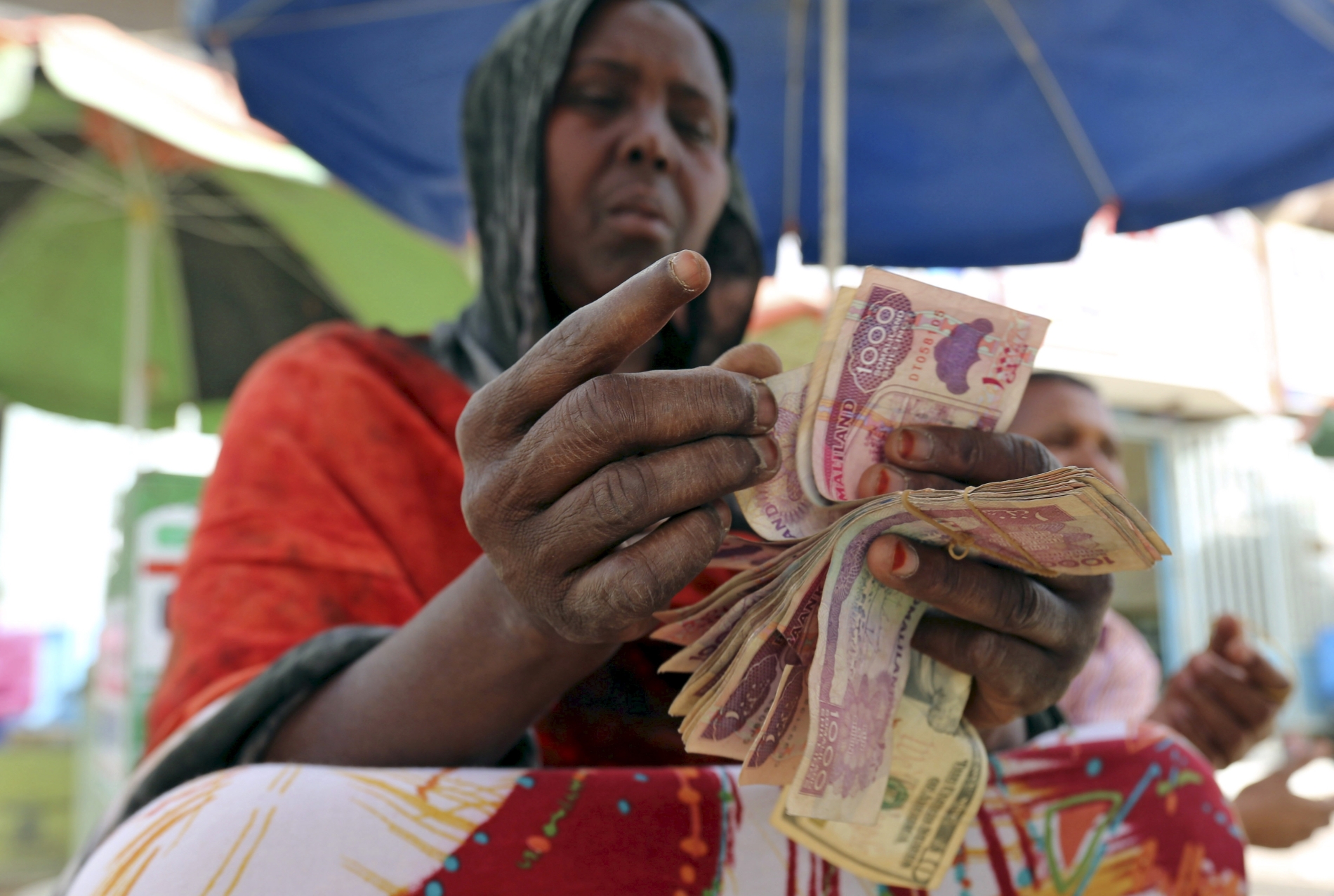
Reuters
A money changer counts local currency notes at a local office in Hargeisa, where $100 is exchanged for 750,000 Somali shillings on 19 May 2015.

Most conflicts in Africa stem from an economic tension between the central authorities and peripheral regions, characterised by the following dynamics: resource rents are concentrated in capitals and controlled by central elites; institutional structures fail to extend to peripheral areas; and populations in the periphery have little to no stake in the distribution of wealth.

In the absence of a trend toward at least partial federalisation—or, at minimum, equitable redistribution of rents—state fragmentation becomes highly likely. For marginalised regions, separatism emerges not as an ideology of sovereignty but as a survival strategy.

'Somalisation,' understood as structural disintegration, is neither a spontaneous collapse nor a natural process, nor a matter of chance. It is the product of internal weakness compounded by external interest. External actors, in reality, exploit these vulnerabilities to fracture weak states and secure manageable partners.

These actors did not create the problem—they merely rode its dynamics. The system does not collapse on its own; it is dismantled through the political engineering of external manipulation of internal fragilities. In effect, this is a partially managed cycle of degradation.

This represents a classic example of realpolitik: external interests in a potential negative outcome increase its likelihood, transforming a contingent scenario into an irreversible process that masquerades as natural evolution.

AFP
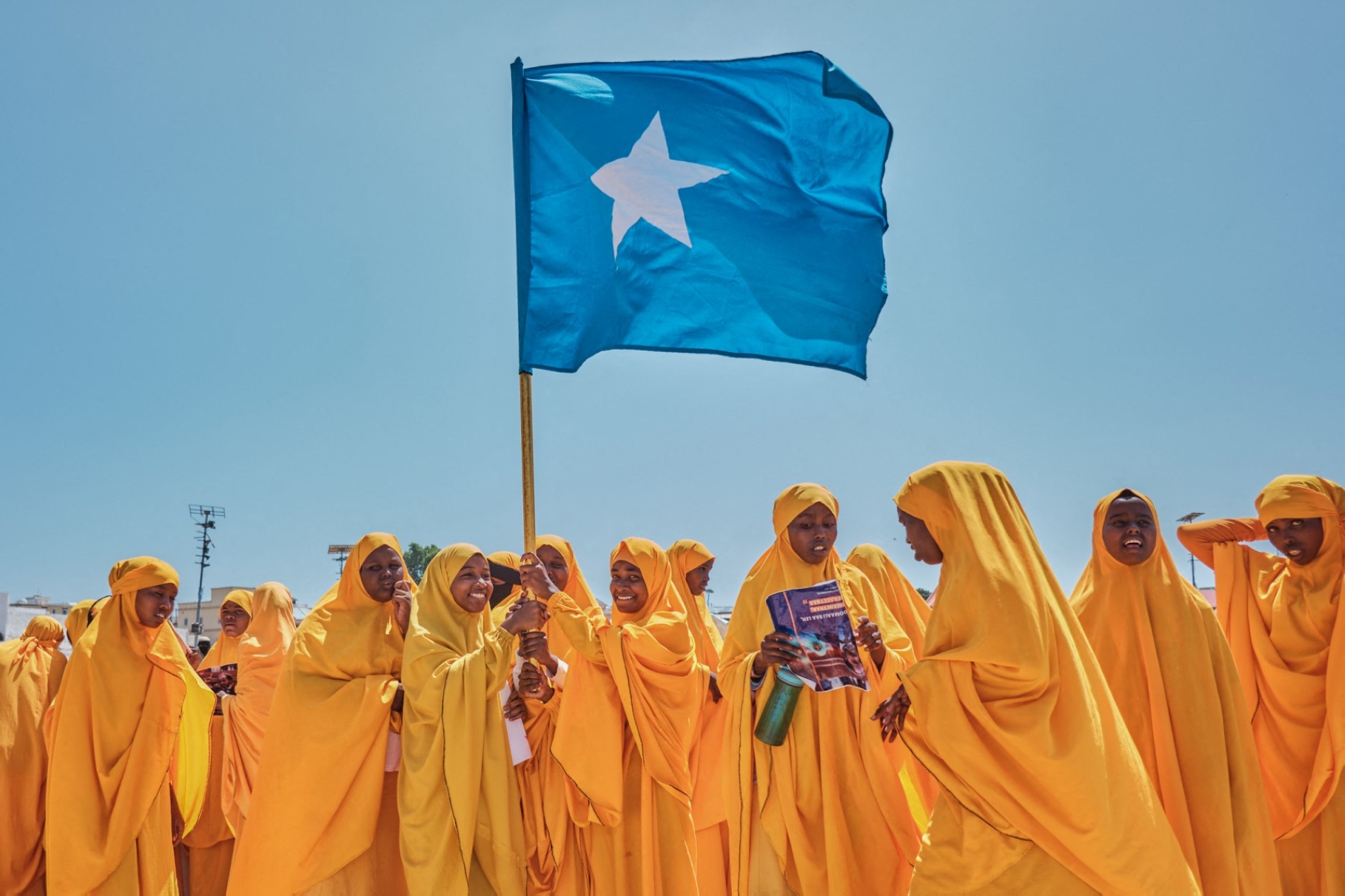
Students wave the Somali flag during a demonstration in support of the Somali government following the port agreement signed between Ethiopia and the breakaway region of Somaliland in Mogadishu on 3 January 2024.

Road to nowhere

The duality of international law—combining contradictory clauses on the inviolability of borders and the right of nations to self-determination—with the lack of effective problem-solving mechanisms reduces the global community and international institutions to the role of passive observers.

Institutional reforms that do not directly intervene in domestic politics, out of fear of violating sovereignty, are technically infeasible. In practice, the international community controls nothing, enforces nothing, and prohibits nothing. Attempts to influence the process are limited to declarative advice and recommendations—ignored by those involved or rendered useless before they can be acted upon.

The legitimisation of quasi-states may appear as the only way out of collapsing central governments—but it is a road to nowhere. This is a highly probable and irreversible dynamic: unresolved internal problems, catalysed by external interests, set in motion an inevitable process of state fragmentation. Once intra-state regional partitioning begins, it rarely creates conditions for subsequent reunification.

Fragmentation is no longer a risk—it is already underway. Somaliland is merely the first signal of a cascading disintegration that, when combined with internal weakness and external interference, could engulf a substantial portion of Africa.

The most likely outcomes include the rise of quasi-states, economic and institutional fragmentation, intensification of local conflicts, impoverishment of populations, and a progressive erosion of central-state sovereignty.

font change