Kamala Harris is new to the presidential election campaign and largely an unknown quantity on foreign policy. Yet there are clues as to how she may approach the region if she wins the White House
An important grouping has grown considerably, recently adding states like Egypt, the UAE, and Iran, while Saudi Arabia has been invited. The group's true nature will determine its course.
The former commander of the US Central Command tells Al Majalla about the changing nature of war, terrorists' use of technology, and the role of the US in the Middle East
Far from the solidity of a unipolar or bipolar world, the region is awash with medium and large powers all vying for their interests, with several unstable states in which to do so. Is there hope?
Non-state actors have risen to political prominence at an alarming rate since the Arab Spring. Combatting these groups is vital to achieving regional security and stability. Our future depends on it.
Obstacles persist in the region amid conflicts, corruption, and uncertainty, but bright spots show how to attract foreign direct investment, including in Morocco and Egypt.
The United States doesn't need more troops or hardware to rebuild trust with its regional partners. It just needs to be more effective, innovative, and consistent with what it already has.
Nobel laureate Mario Vargas Llosa writes a regular column in Asharq Al-Awsat. Peru's great man of letters is more interested in shedding light on the human condition than trending on social media.
China has neither the willingness nor the ability anytime soon to substantially project military power into the Middle East. To continue to meet its ends in the Middle East, Beijing may not need to.
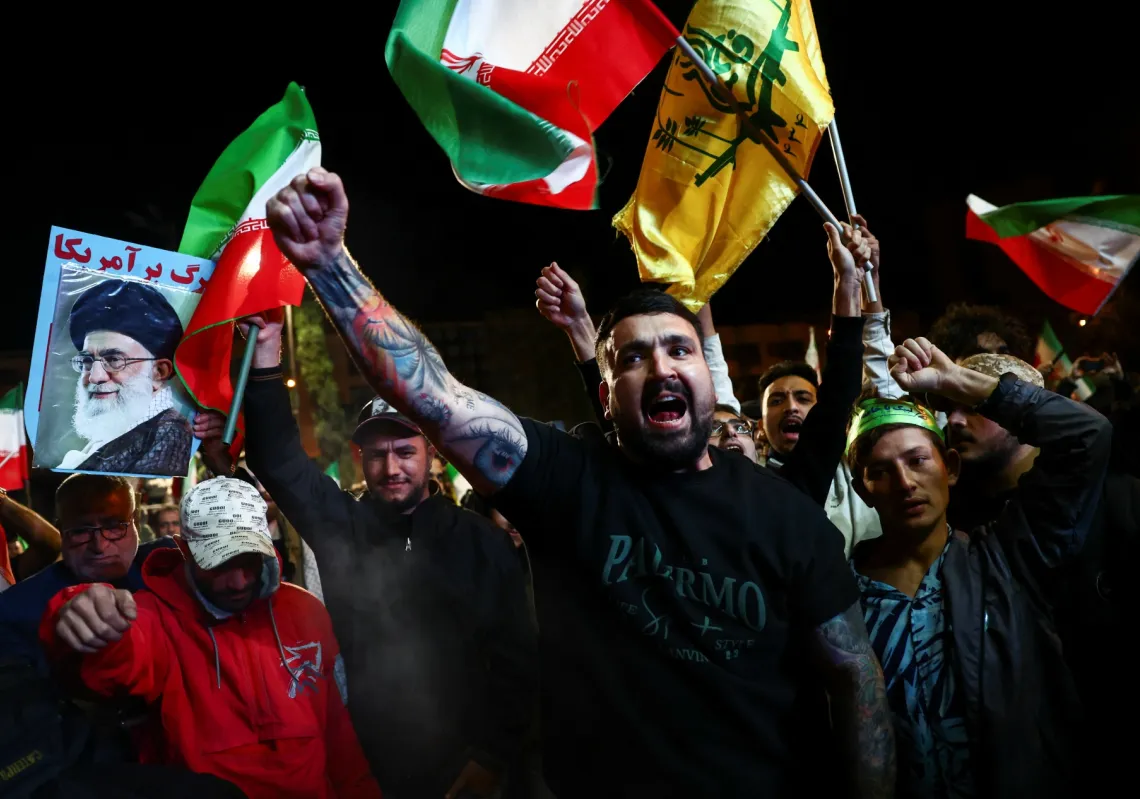
Khamenei has struck a defiant tone amid growing protests against his regime, but a series of regional setbacks, coupled with an emboldened Trump, could finally bring it down
Overcoming Yemen's fragmentation requires more support for the Riyadh-led path—one that rejects secession, all militias and institutionalises the state
If fighting spreads beyond the predominantly Kurdish neighbourhoods of Ashrafieh and Sheikh Maqsoud and beyond Aleppo, there is a real risk that Syria could be dragged into a new civil war
Recently declassified meeting minutes between the two leaders show how Washington was well aware of Moscow's grievances over NATO expansion, but went ahead anyway