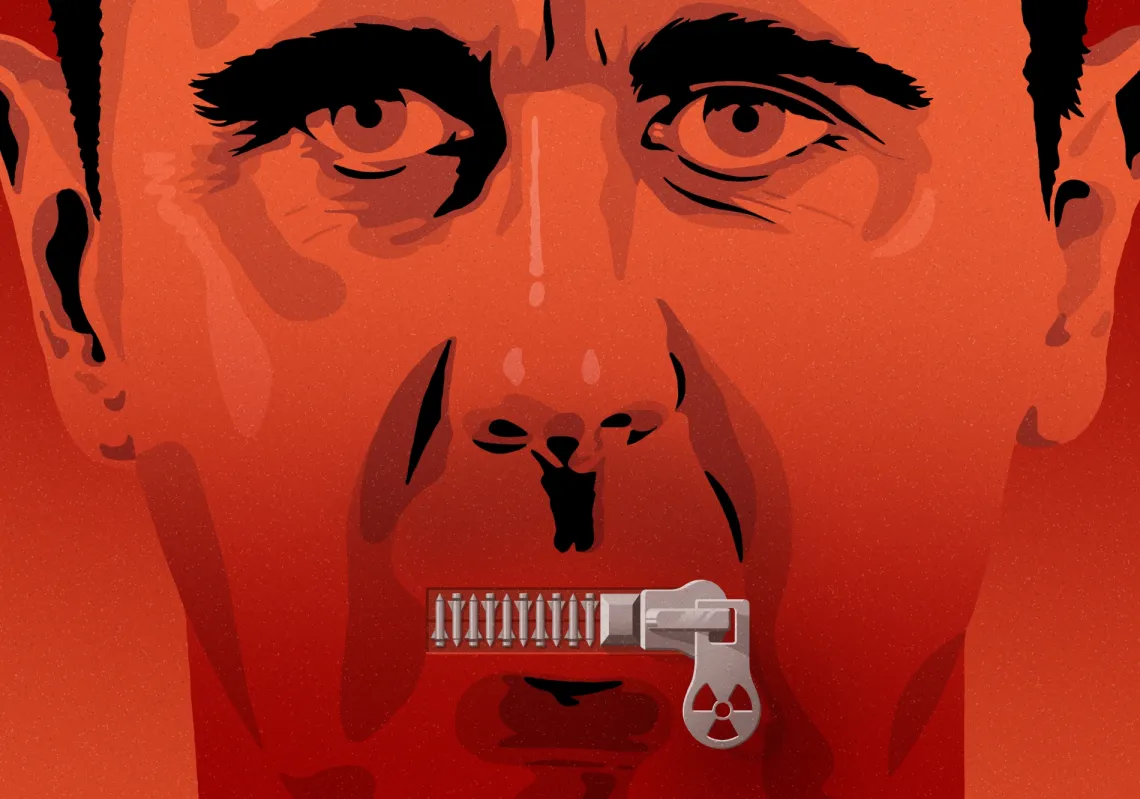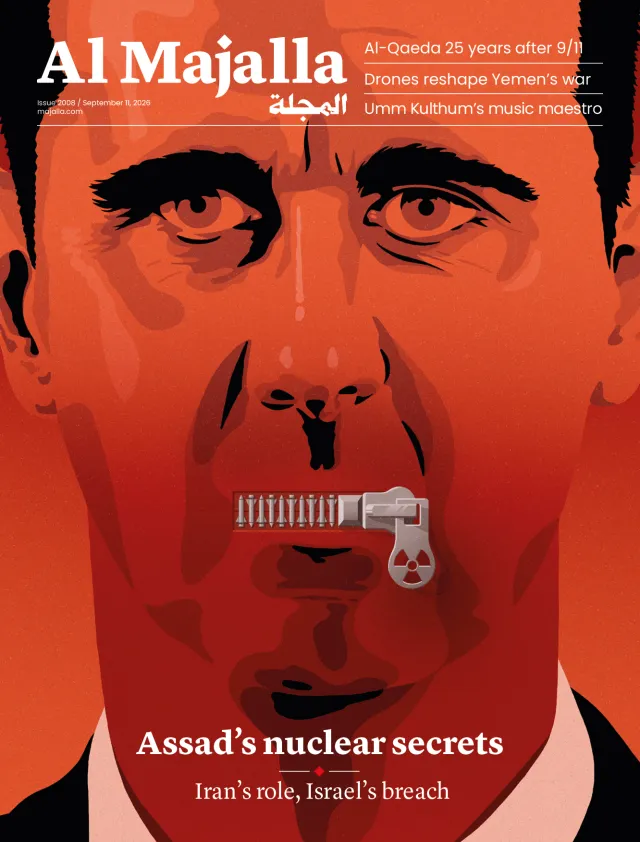


Economic blockades have long served as instruments of coercion, deliberately positioned in the grey zone between diplomacy and war. They have been used throughout history as a pressure tactic to force the enemy to make concessions at the negotiating table. This could be what Trump hopes to achieve by imposing a naval blockade on Iran, which continues to exercise control over what ships can enter and exit the Strait of Hormuz.

Blockading the blockade: Trump tightens his chokehold on Iran is this week’s cover story. In it, we examine the political and economic repercussions of the US naval blockade on Iran and whether such a strategy is sustainable amid Iran’s proven ability to withstand US pressure tactics.

The US-China rivalry over Saudi Arabia

With the print version hot off the press and on its way to readers, we turn to Al Majalla's digital platforms to bring out a series of news and analysis connected to the cover story

Al Majalla - London

Iranian Drones Threaten Europe

Iranian-made Shahed-136 drones attacking Ukrainian cities are the most obvious indicators to date that Iran has become a threat to Ukraine and its European neighbors. According to the Ukrainian…

Suzan Quitaz

What Awaits the Middle East in 2023?

Individually and collectively, the countries of the Middle East and North Africa (MENA) have experienced a slew of concerns in 2022 as the world has shifted under the weight of superpower conflicts…

Dalia Ziada

The United States Scramble for Africa

The United States administration of President Biden is assertively pushing the reset button on its foreign policy in Africa. However, its potential to outpace other regional and international…

Dalia Ziada

Iran’s Cheap Political Propaganda

On Saturday, December 3rd , after struggling to quell the protests, the Iranian authorities announced that they will be reviewing the hijab law, which became obligatory for all women in Iran in April…

Suzan Quitaz