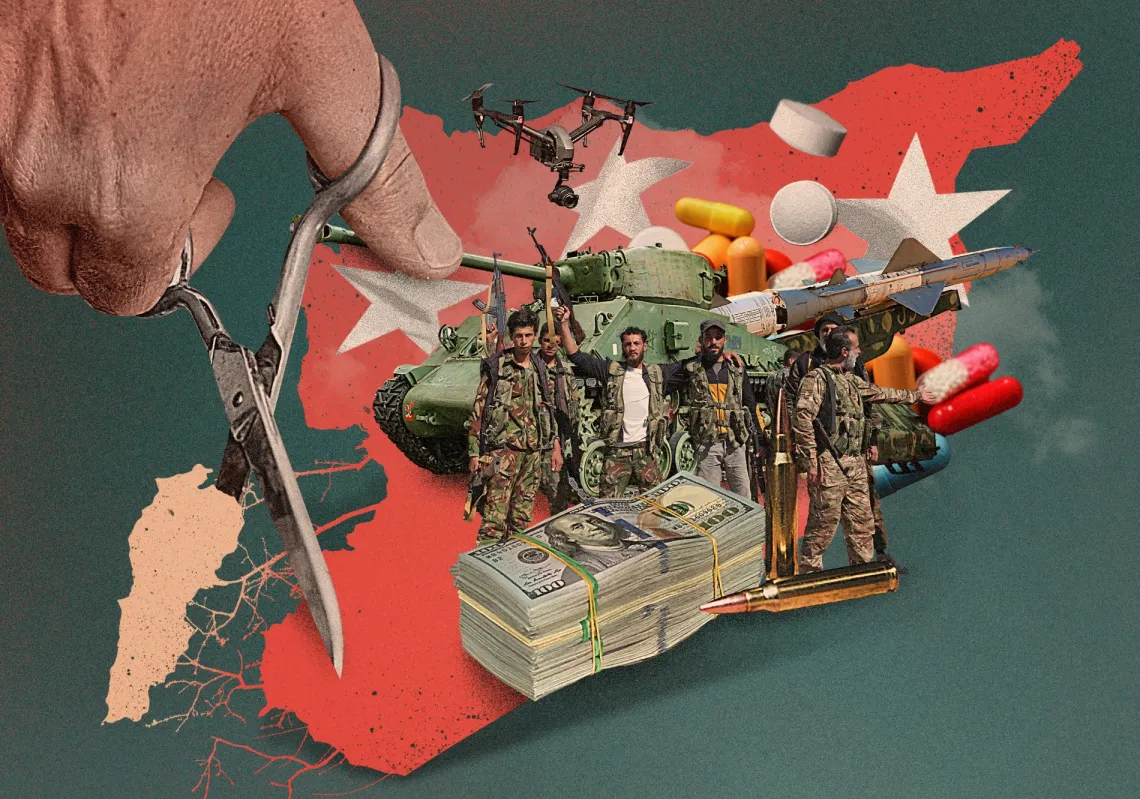
A decisive Syrian military campaign, coupled with diplomatic pressure from Türkiye, the US, and Israel, has forced the SDF into a far-reaching integration deal with Damascus
Since Trump began lifting sanctions in May, no time has been wasted. US investment delegations have been flocking to Damascus, and security cooperation has already started.
The US president hasn't invested enough political capital in the painstaking details of peacemaking. Instead, he has focused on short-term truces he can boast about in his quest for a Nobel prize.
On Monday, the Syrian president shook hands with Trump at the White House. Speaking to Al Majalla, a former State Department official explains why this is a moment she could have never imagined.
In what could be a historic turning point in US-Syria relations, the new government in Damascus will likely join the international coalition against the Islamic State (IS)
Created by then-Sudanese President Omar al-Bashir, the Rapid Support Forces have ripped the country in two. This is what happens when a state gives up its monopoly on the legitimate use of force.
Having lost most of its weaponry, fighters, and supply lines, the group can no longer respond as it once did. It no longer cites the right to resist, nor does it seek to impose a deterrent.
Those who are able to bury their dead are among the lucky. For others, not knowing the fate of their missing loved ones or receiving mutilated corpses impossible to identify adds insult to injury.
In an interview with Al Majalla, the prominent French jurist discusses Israeli and Western duplicity, their violation of international law, and why Israel bears the cost of Gaza's reconstruction
Tehran's elite have few friends, but regional states fear the consequences of a disorderly transition. If Iran's 92 million people turn on one another, it could cause millions to flee abroad.
Going forward, the international community needs to reduce dependence on the US without upsetting the world's largest military and economic power. It will be a shaky tightrope to walk.
Scrapping foreign ownership caps and qualifying criteria will bring in more capital, with markets reacting positively to the latest reforms that build towards a more open country