
All five films by Turkish director Emin Alper have been screened at major international festivals, including Cannes, Venice, and Berlin, and have won awards. Most recently, his latest film Salvation (2026), set in two Turkish villages, won the Grand Jury Prize at the 76th Berlin International Film Festival. Alper was also honoured at the Thessaloniki International Film Festival this month, where all five of his films were screened in his presence.
Alper’s films seem suspended outside the familiar coordinates of time and place. Their settings are often difficult to identify but generally take place in remote, isolated villages somewhere in Türkiye. His characters struggle with isolation or a hunger for power, inhabiting worlds marked by suspicion, mistrust, struggles for influence, and the fragility of coexistence within communities.
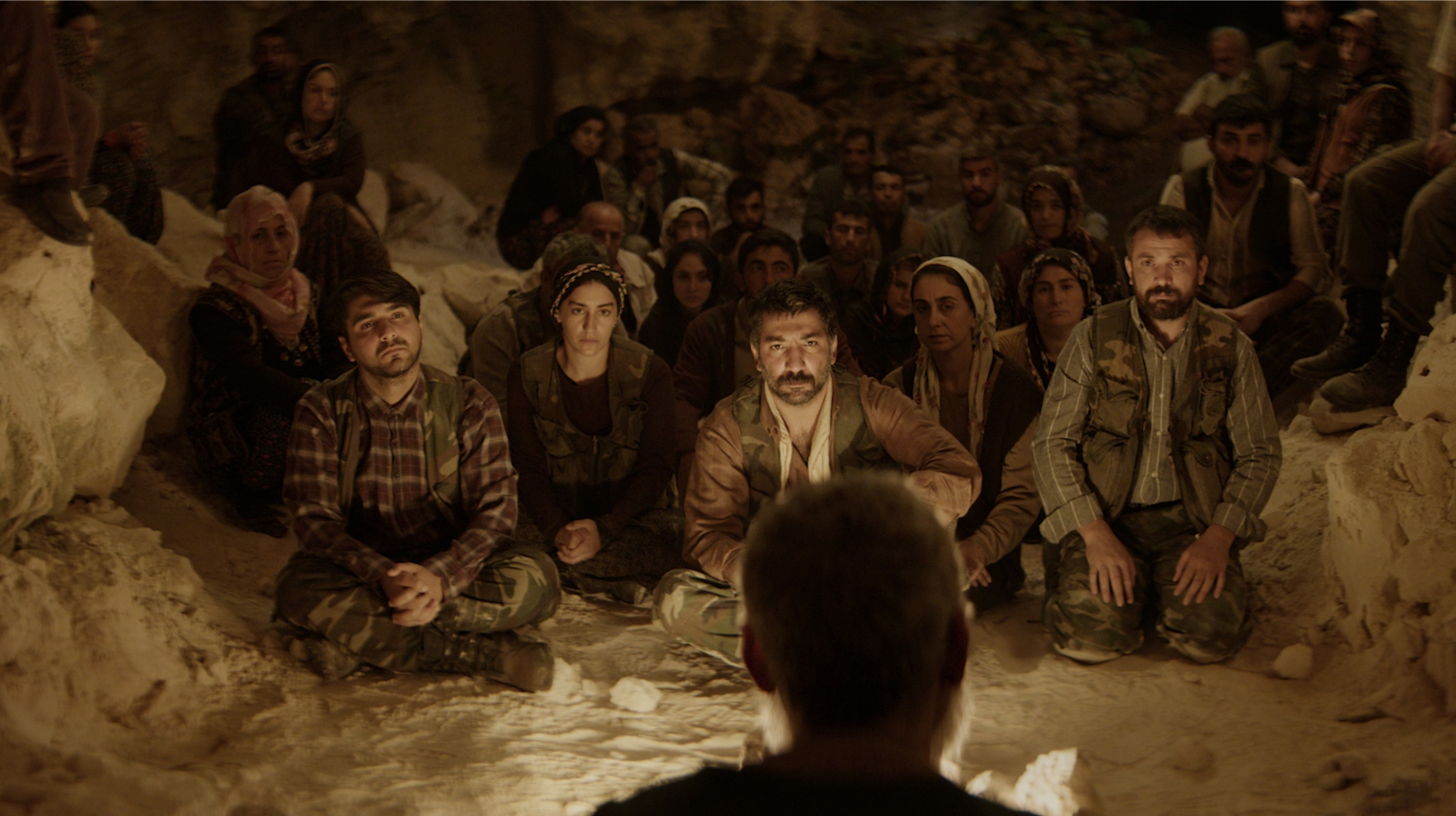
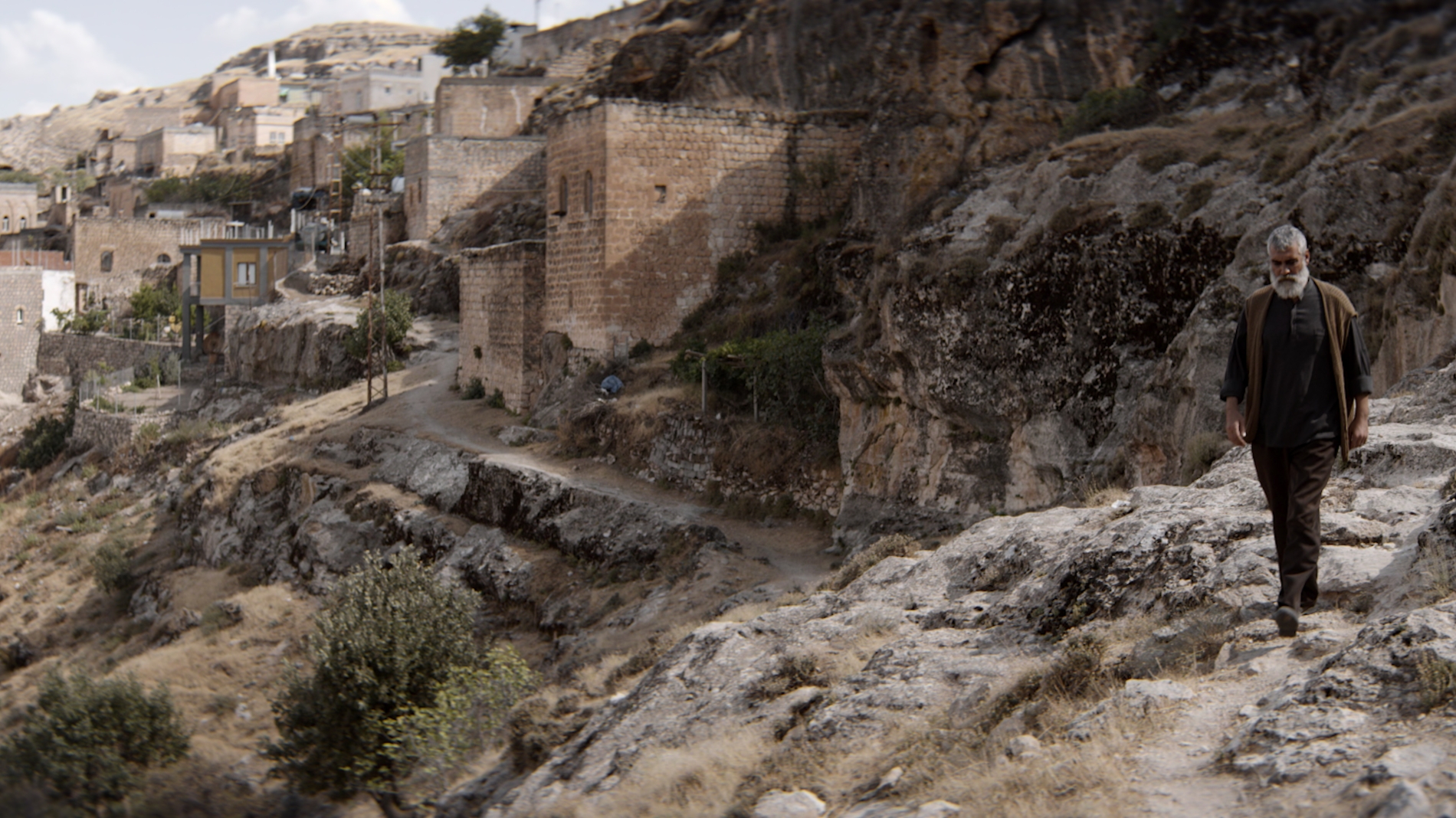
In Salvation, one village is on a mountainside, the other on the plain below. The inhabitants of the latter have been living in exile. When they decide to return to their land, old conflicts with the mountain villagers resurface. Beliefs solidify, suspicions deepen, power struggles intensify, and the fragile coexistence between the two communities is put to the test.
In Burning Days (2022), which screened at Cannes, a determined and uncompromising young prosecutor arrives in a small, remote town in Türkiye, where he clashes with local dignitaries intent on defending their privileges at all costs. A Tale of Three Sisters (2019), which screened at Berlin, follows three sisters who have lost their mother and live with their father in a remote village in central Anatolia. He sends them to the city to work as domestic servants, where they struggle to adjust to their new lives and see their hopes for a better future disappointed.
In Frenzy (2016), winner of the Special Jury Prize at Venice, two marginalised brothers in Istanbul become involved with the authorities in the pursuit of terrorists. They find themselves drawn into a nightmarish spiral of violence and official pressure amid political turmoil and obsessive paranoia. In Beyond the Hill (2012), winner of the European Film Award at the Essonne festival west of Paris, a silent, unseen threat hangs over the lives of farmers at the foot of rocky hills.
Al Majalla spoke to him during the Thessaloniki International Film Festival, held from 5-15 November 2026. Here is the conversation.
Your films frequently portray suspicion and fear of others among isolated communities, with elements of fantasy in these worlds. Where does this preoccupation come from?
I think it probably comes from the political experience I have lived through in my country. From primary school onwards, we are told that we are surrounded by enemies. Turkish nationalism is somewhat paranoid in that sense. This goes back to the experience of the Ottoman Empire. The trauma of losing such a vast empire and seeing it dismembered left a deep psychological wound among the political elite who founded the republic. That trauma was inherited by subsequent generations.
So, we grew up with this paranoia, this constant sense that enemies surround us. It is useful to politicians because it gives them endless opportunities to blame problems on those enemies. They say, ‘We have no problems in Türkiye, no Kurdish problem, no Sunni problem, no problem with the Alevis... all these problems are the work of our enemies’. Politicians cultivate this fear and suspicion, sometimes unconsciously, sometimes deliberately.
When people feel insecure, they generally turn to the state, to an authoritarian state or an authoritarian leader. They expect that leader to save them. I think this obsession with enemies probably comes from my own experience, or rather from the experience of my country. I also find it genuinely fascinating to observe human psychology in such an environment.
What role did you want nightmares and supernatural visions to play in Salvation?
They help reveal the characters’ psychology. Fear, paranoia, and anxiety are all the traits of a neurotic mind. Neurotic characters create this atmosphere, which then breeds neurotic personalities of the kind I believe my country is full of. By that I mean suspicious people who cannot trust others or develop any genuine sense of solidarity with them.
Whatever solidarity exists is always false. People are constantly suspicious of one another. This tense world lends itself particularly well to exploration through dreams, because dreams are full of our fantasies and hidden fears. I am especially interested in self-deception, for example, and dreams offer a way into the psychology of these people.
Of course, there is another layer to this in Salvation. The Sufi Islam practised in the village is also deeply preoccupied with dreams. Religious sheikhs constantly receive divine messages through them, and the community believes that a prophet is coming, as revealed in their dreams. So, in this film, religion adds another dimension to the significance of dreams.

What kind of salvation did you have in mind for the title?
There is no salvation. There is a false salvation, a false prophet... I wanted to address the kind of salvation that certain dangerous leaders promise can be achieved through the elimination of enemies. This is a false promise. Think of Trump, other right-wingers, or Israeli leaders. The message is that if we get rid of the enemy, we will be saved, and paradise will await us, but this promise is not just false; it is extremely dangerous. So, the title is deeply ironic.
Speaking of Israel, you criticised it strongly during your acceptance speech at the recent Berlin Film Festival. Were you criticised for that?
After the screening, only one member of the audience protested, but after the awards ceremony, nothing. Quite the opposite; I was praised.
You blend reality, myth, fantasy, and dreams, giving your films an almost timeless quality, so it can be difficult to identify precisely when the events take place. Is this deliberate?
I make political films, but I do not want to tie them to a particular time or place. If I did, people would generally concentrate on the local context. I want the stories to feel universal, to suggest they could take place at any point in the century or in any country, and I think that impression generally holds true.
Audiences, particularly international ones, feel that the events in my films could happen in their own countries, in different places and circumstances. I believe this helps make the films more universal, which is something I deliberately seek.