Tunnel warfare: a tactic that has stood the test of time

Weapons may have changed dramatically over centuries, but the need to physically conceal oneself from a more advanced enemy hasn't

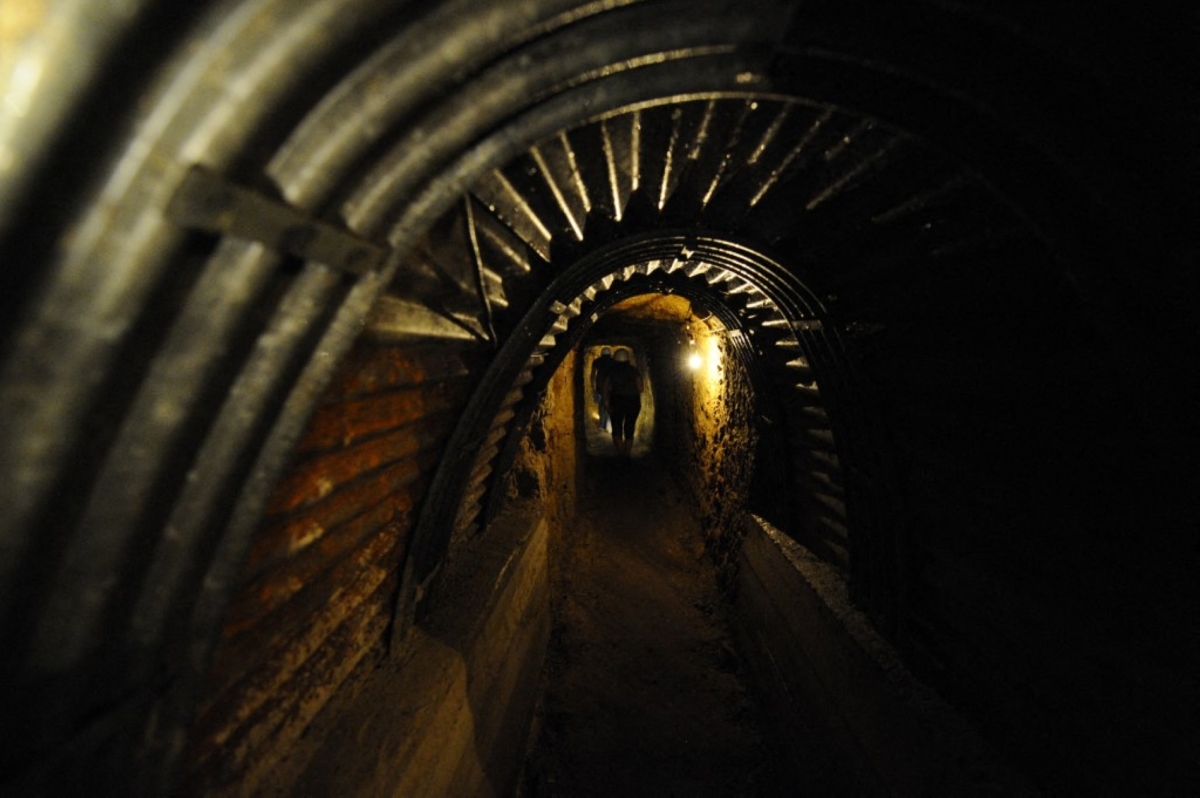
People visit on 23 July 2014 a German underground gallery under the village of Vauquois, eastern France, destroyed during World War I and rebuilt downhill after the war.
JEAN-CHRISTOPHE VERHAEGEN / AFP
People visit on 23 July 2014 a German underground gallery under the village of Vauquois, eastern France, destroyed during World War I and rebuilt downhill after the war.

Tunnel warfare: a tactic that has stood the test of time

War has been a constant across human history. As part of any conflict, new tactics and strategies might emerge or past ones might be refined. The ongoing struggle between Russia and Ukraine is an effective illustration of this, with the extensive use of drone warfare on both sides of the conflict. Such tactics represent both the present and the future, but the war has also devolved into the past, at times, through trench warfare, with Ukrainian troops even resorting to utilising World War I-era wind-up telephones to communicate during the ongoing fighting.

Tunnels are another example of the past remaining relevant to present conflicts. They have received considerable coverage because of their employment by Hamas in Gaza, but historical examples of their use demonstrate that none of this is new as a tactic in war. Case studies of the use of tunnels in war illustrate three main themes around their use: they offer an opportunity to carry out offensives and potentially overcome a stalemate in battle, particularly against an entrenched foe; they provide a strong defensive position in response to attack; they supply the prospect to engage in an asymmetrical struggle, particularly when the odds are heavily skewed against the side resorting to the digging.

World War I is a prime example of using tunnels as a tactic to disrupt an ongoing stalemate against an entrenched enemy through an offensive. Given the bloody and protracted nature of the war, with its trench system and widespread slaughter of soldiers without an appreciable shifting of the front lines, tunnels served as a potential disruptor of the status quo. In a real sense, the employment of tunnels in this conflict mirrored what had been done for centuries with their use under castle walls during protracted sieges.

For the British, tunnelling units were established within the Corps of Royal Engineers. Their creation occurred after the Germans had begun the limited use of tunnels in December 1914, when they detonated explosives beneath a British Indian unit on the Western Front and captured territory as a result.

To staff the over 30 companies of tunnelers, the British Army sought those with experience of tunnel work. Hence, it recruited those who had relevant experience, including coal miners from various parts of Great Britain and others who had been involved in the construction of the London Underground system. By 1916, nearly 25,000 men worked on the British side with tunnels. In the process, they created a system that had tunnels at points along nearly half of the 80-mile length of their side’s front line.

The hidden work involved protection for British troops and the detection of German tunnels, with the discovery of the latter sometimes involving hand-to-hand combat underground. Mainly, though, the tunnels served as an offensive weapon to support attacks. At the start of the famous Battle of the Somme, on 1 July 1916, nineteen bombs were detonated; the largest of the blasts involved 60,000 pounds of explosives, causing rubble to soar thousands of feet into the air while the sound of the massive detonation could be heard as far away as parts of England. The tactic was far from decisive on that day, as the British military suffered nearly 20,000 deaths at the hands of the Germans while gaining little ground.

A more extensive use of underground bombs occurred during an offensive near Ypres in 1917 when over 1,000,000 pounds of explosives across a 10-mile length of the front killed as many as 10,000 German soldiers and allowed substantial British gains. All told, as many as 1500 explosions would be ignited in British tunnels across the brutal conflict that finally ended in 1918.
Richard W. Brooks / AFP
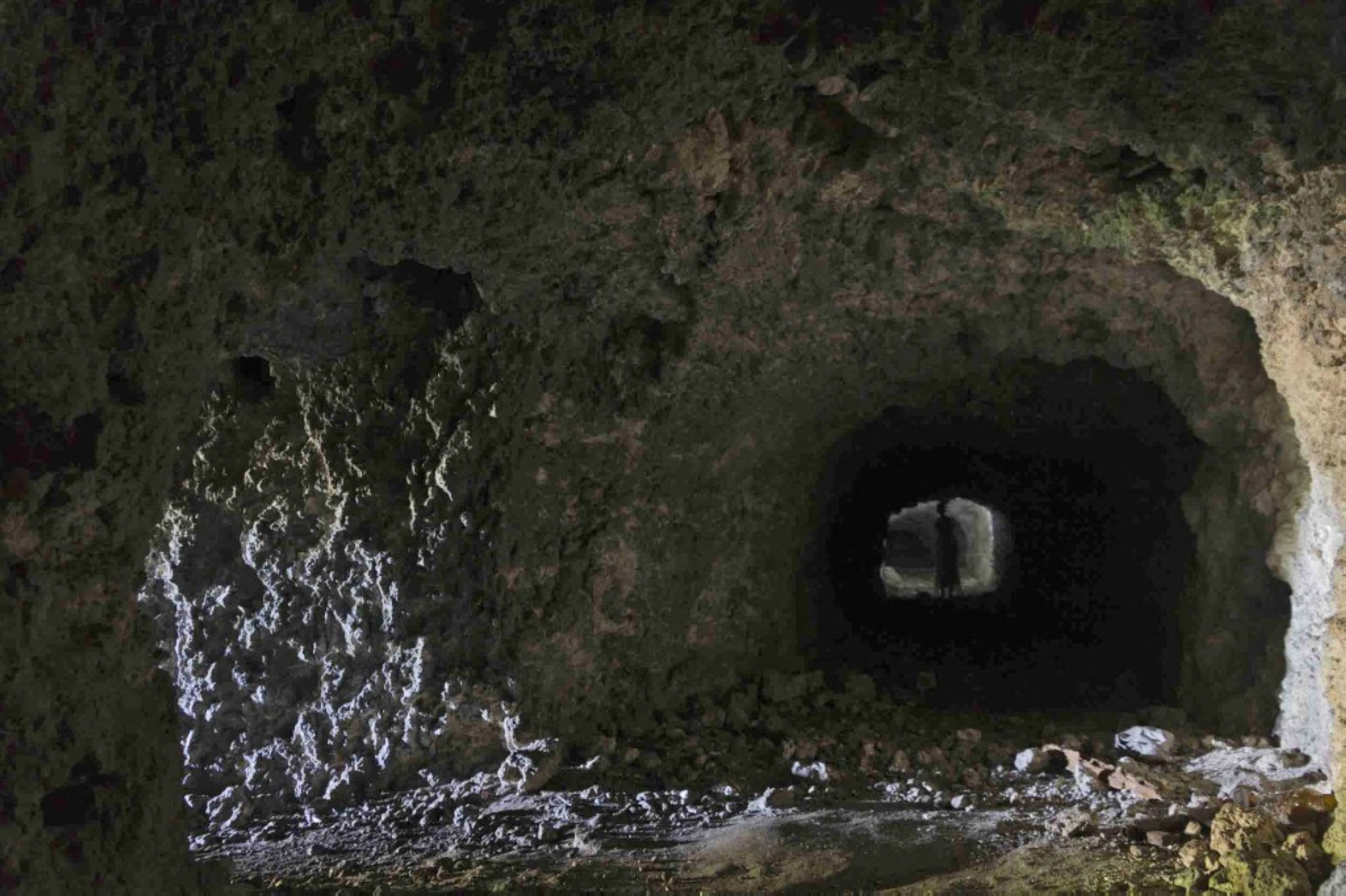
This photo, taken on 31 July 2014, shows the "1,000 Man Cave" on the island of Peleliu, where the Japanese dug a system of low-ceilinged caves that crisscrossed the island's many limestone ridges.

Defensive purpose

Tunnels in war are not always about gaining a tactical advantage against the enemy during an offensive. They can also reflect a defensive stance in a war in which your opponent has a considerable military advantage. Take the case of Japan during World War II. After major victories beginning with the attack on Pearl Harbour in December 1941, Tokyo found itself increasingly on the retreat as the war dragged on.

After repeated seizures of previously controlled islands across the Pacific Ocean at the hands of the Americans through superior naval and airpower resources, and high losses of soldiers, the Japanese military changed tactics on their remaining islands. Instead of engaging invading enemy forces in the open, such as on the beaches when the invaders landed, thus exposing defenders to air attack and shelling from the American navy, the Japanese built complex networks of tunnels to allow troops to traverse the island out of sight while engaging enemy soldiers.
Tunnels have received much coverage because of their use by Hamas in Gaza, but they have been employed all around the world, stretching back centuries

Tokyo's new defensive strategy first emerged in 1944 on the island of Peleliu. Hidden in caves and bunkers in a system connected through tunnels, 12,000 Japanese troops held on for over two months against four times as many American soldiers, inflicting nearly 10,000 US casualties in the process, including over 1,600 dead.

That pattern of relying on tunnels to counter American military advantage would most famously play out during the February to March 1945 battle for the eight-square-mile island of Iwo Jima, a spot 650 miles from the Japanese mainland. Anticipating it would be a target for invasion, the Japanese prepared an extensive network of tunnels around eleven miles in length that connected bunkers, pillboxes, and over 1,000 rooms. Although the United States ultimately conquered the island, the Japanese tunnel strategy led to heavy casualties on both sides across the 36-day battle.

REUTERS/Kham
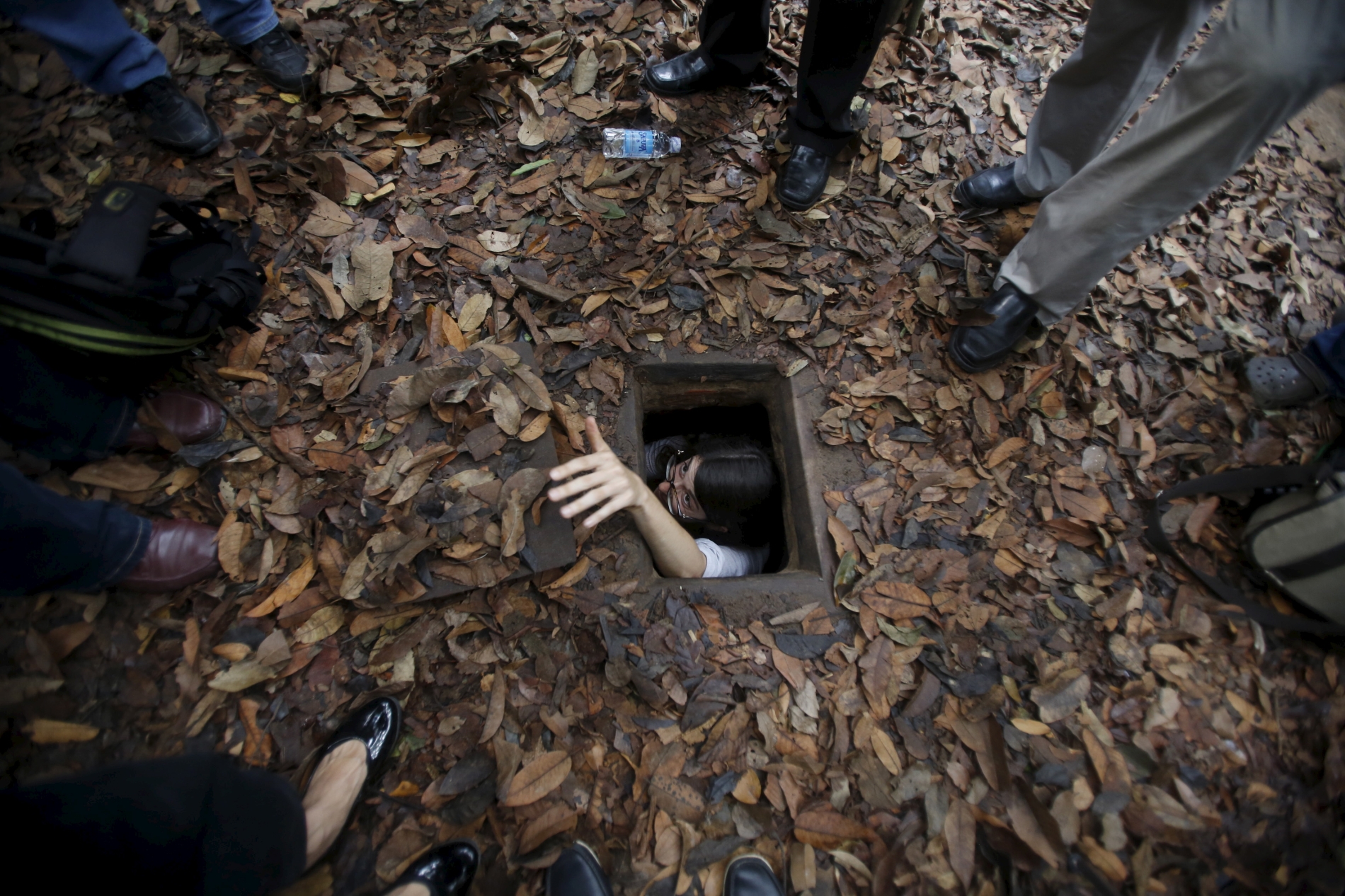
A French journalist tries to disappear into the Cu Chi tunnel network through a hole camouflaged on the jungle floor during a guided tour some 70 km from Ho Chi Minh City (formerly Saigon City), Vietnam, on 28 April 2015.

Asymmetrical warfare

Finally, tunnels were used as a form of asymmetrical warfare, which included both defensive and offensive operations. Often, this tactic arose because of an overwhelming power imbalance, as in the example of the National Liberation Front of South Vietnam, better known as the Viet Cong, and its struggle against the United States in the 1960s.

The Viet Minh first developed underground structures in their efforts against the French in the 1940s and 1950s. For the Viet Cong, the multilevel hidden system, which at its height covered hundreds of miles of passageways, served multiple roles: they offered protection for troops against American warplanes through complexes that might include locations to sleep or even hospitals for the injured; they allowed for supplies, including weapons, and reinforcements to be moved out of sight; they permitted guerrillas to seemingly emerge from nowhere to carry out attacks and then disappear quickly in the aftermath of the assault.

All these factors would play out in the most famous assault of the Vietnam War, the January 1968 Tet Offensive. Specifically, the Viet Cong relied on a major tunnel system, known as Củ Chi, which aided its forces in gaining surreptitious entrance to Saigon, the then capital of the Republic of Vietnam, now known as Ho Chi Minh City. Relying on the element of surprise, Viet Cong struck American and South Vietnamese targets, including the US embassy. Although ultimately the Viet Cong were defeated in the offensive, the shock caused by their attack damaged the morale of American troops in Southeast Asia and the US public back home. To demonstrate the importance of the tunnel system to the ultimate Communist victory, the victors in Hanoi preserved parts of it as a historical artefact. It now serves as a major tourist attraction for foreign visitors.

 Since the conditions that spawned the need for tunnels in the first place look set to continue, such structures deployed in war will continue well into the future.

A constant in a sea of change

Digging extensive holes in the ground as a tactic of war has a lengthy history. Alone, as the examples indicate, tunnels rarely prove decisive. Nevertheless, they are extremely useful for an important reason: weapons may have changed dramatically over centuries, but the need to physically conceal oneself from a more advanced enemy, to allow an element of surprise to overcome an entrenched opponent, or to do both, hasn't. Since the conditions that spawned the need for tunnels in the first place look set to continue, such structures deployed in war will continue well into the future.

font change