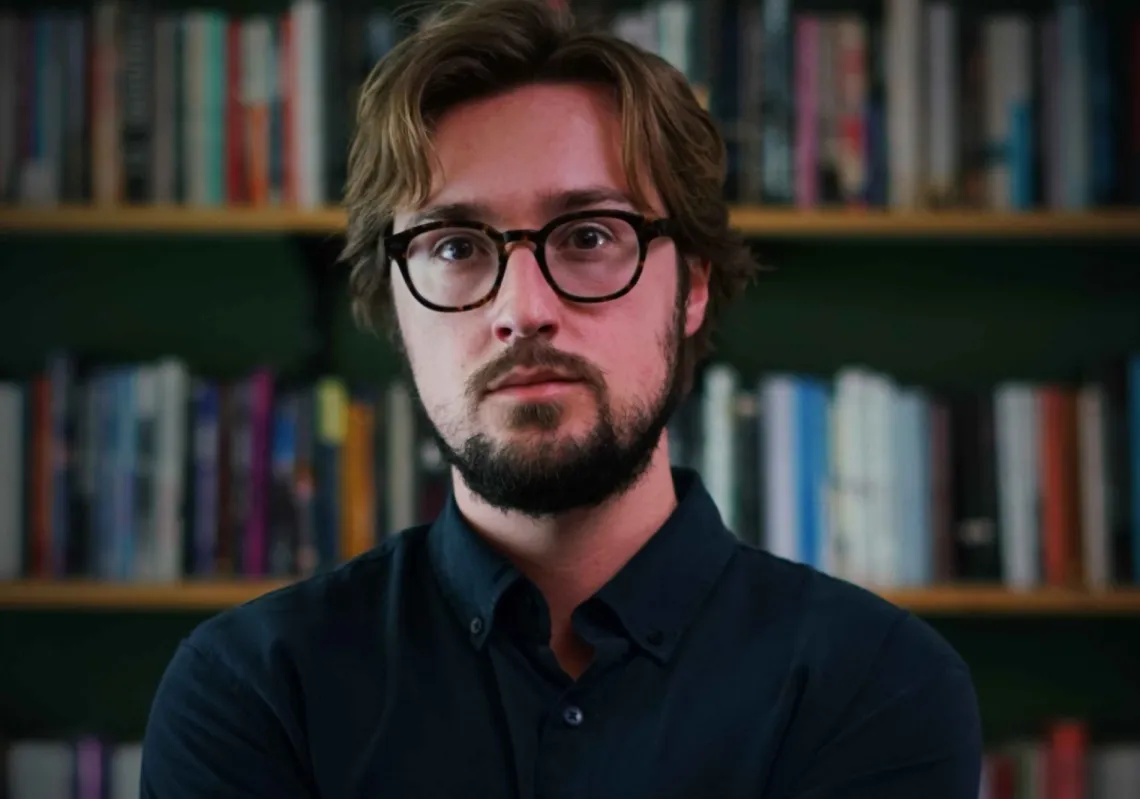


Pierre Mejlak, born in 1982, is one of Malta’s most prominent contemporary literary voices and has also garnered international acclaim—most notably in the genre of the short story. He began publishing novels, short stories, and children's and young adult literature at a young age. Mejlak began his career as a journalist, a BBC correspondent, a newspaper columnist, and a radio producer—earning the Malta Journalism Award twice. At 21, he left his home country and lived in Luxembourg, then Belgium. He currently serves as the Head of Global Media at the International Monetary Fund and resides in the United States.
Among his most notable works are the novel South Winds (2007), which was adapted into a Maltese television series; the short story collection Waiting for You as the Rain Falls (2009), winner of the 2010 Malta National Book Prize; and the collection What the Night Lets You Reveal (2011).
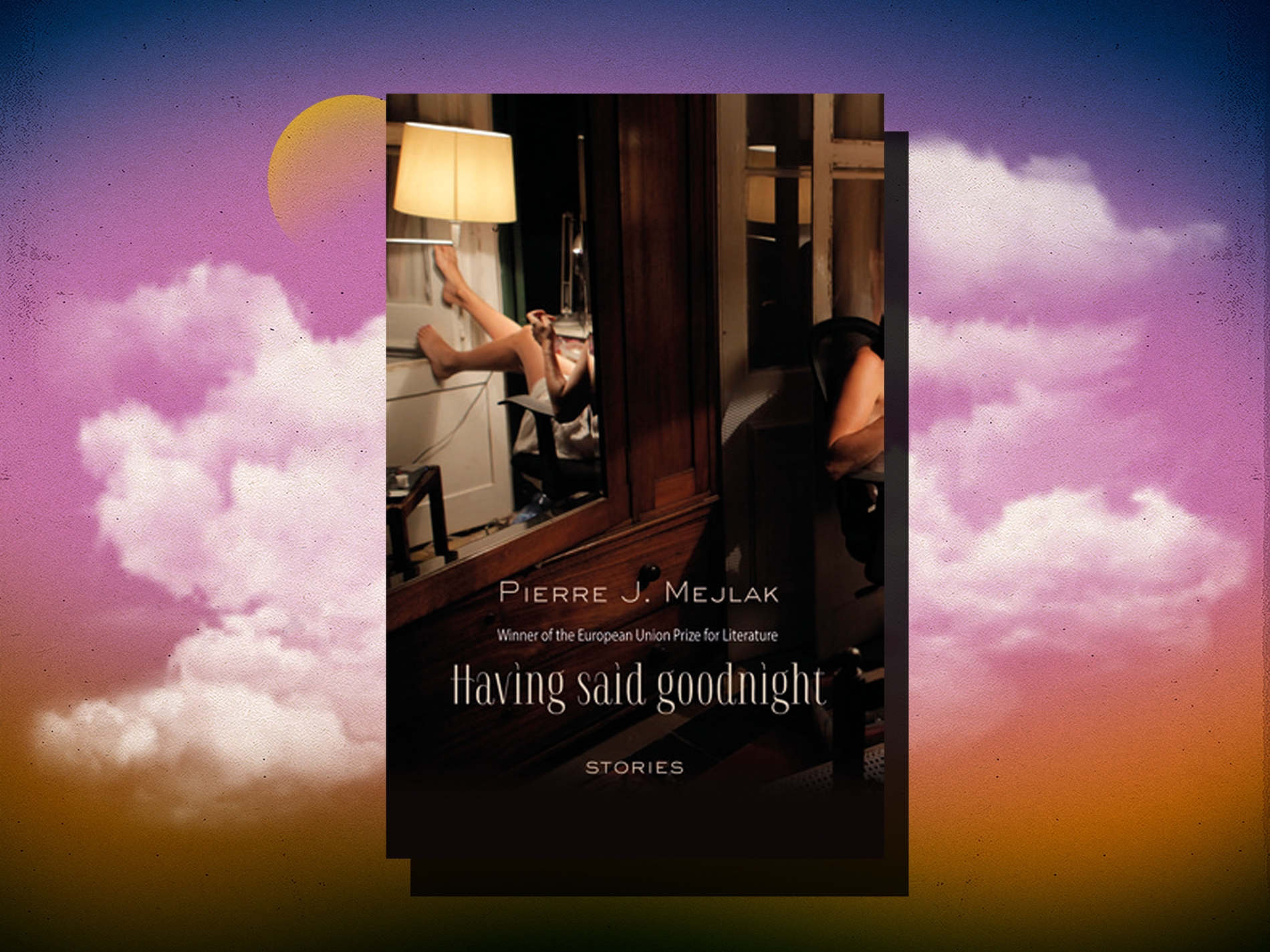
The latter earned him the European Union Prize for Literature in 2014 and the Malta National Book Prize in 2012; it has become the defining work of his literary career and was recently published in Arabic by Hayat Publishing. Al Majalla had the opportunity to interview him. Below is the conversation.
1. Your novel Having Said Goodnight conveys the sense that certain stories require a specific time to be told. How did you choose this title? And what does the night allow your characters to say?
In the original version, the book's title was What the Night Lets You Say. I have always been fascinated by how the night makes certain conversations easier. It could be because many people don't work at night and are perhaps more in their element, or simply more themselves. Or it could be because things are typically quieter at night and people are more focused on the person they are speaking to. Or they have more time.
I am not sure whether your audiences can relate to this, but in my case, I believe the most memorable conversations I have had all happened at night. Many of my stories also take place at night, and some of my favourite characters are nocturnal dwellers, as I used to be when I was younger.
You have said that you write to remember the people, places, and experiences you have lived through. When you write a story from memory, what do you strive to preserve, and what does imagination allow you to reshape?
In my stories, I very often prioritise the story itself. So the memory that might have triggered the inspiration has to be moulded in ways that serve the story. I would never sacrifice a story just to have a particular memory on record.
Also, my stories are not my diary. But when I re-read some of them, they always transport me back to the moment when the inspiration struck. That's such a powerful feeling. This book, for example, is simply a jar full of memories for me, one that I can dip into whenever I feel like it. And I suppose that's one reason I enjoy writing: it lets me revisit moments that might otherwise have faded away.
In I Went to See Her, Pa, a son discovers a hidden side of his father's life through a visit to a woman his father had loved. How did you construct this shift in his perception of his father—from the man he knew within the family to a human being with desires, secrets, and a life he didn't fully know?
The son was no longer a child, and things that we are oblivious to as children gradually become clearer as we grow older. We probably also become a bit more empathetic. We move from a world that is more black and white into one with many more shades of grey, which makes us less judgmental.
In my case, when I became an adult, it quickly dawned on me how short the age gap between my father and me actually was. What seems like an eternity as a child becomes a short stretch of 20 or 30 years. You suddenly realise that your parents were young once, too, and that they had lives, dreams and experiences that existed long before you came along.
4. In At Livia's Bar, a young girl draws imaginary cities and places cemeteries far from the houses so that she, a child who has lost her mother, does not have to see her mother's name on a headstone. How did you decide on this detail? And what can imagination offer in the face of an irreparable loss?
The line between childhood and the rest of life is often drawn by the death of a loved one. Seeing a child in a cemetery, watching a loved one being buried—or, for that matter, a child experiencing the death of a loved one in any other setting—is an extremely powerful moment that will always be etched in that person's memory.
In this case, I am writing about a young girl and her father. I don't explicitly refer to the mother, but the reader might intuit that she has passed away. The girl's empathy toward children living close to a cemetery makes that possibility quite plausible.
When a loved one passes away, it's almost as if your memory database updates itself, re-categorising memories and often bringing back surprising ones that you might have ignored for a while. You also begin a sort of chase, trying not to lose the scent of that person or the sound of their voice, knowing that the day will come when it will no longer be possible to relive them. I think that's one of the most difficult aspects of losing someone: the realisation that even your memories of them are something you have to hold on to.

You write about loss and waiting; have you ever deleted a sentence you loved because the scene had already conveyed what you wanted to say?
Oh yes, very often. A short story must remain short, and the reader is intelligent enough not to need the same point made twice. Just as in a movie, every shot has to contribute to the story; otherwise, it's redundant. The same goes for a sentence in a short story. Sometimes, what you leave out is just as important as what you put in.
You have said that your writing carries something of yourself and of people you have known. How do you handle your responsibility toward the person who inspired a character, especially when the story leads you to reveal something painful or intimate?
When that happens, I do my best to make sure the person doesn't feel uncomfortable seeing a moment they were involved in inspire me to write. Quite the opposite: I would want them to feel that the moment was significant enough to trigger an inspiring flow of ideas.
I also often like to see things from each character's perspective. I find that quite therapeutic, because you realise that if you were in someone else's shoes, you might have done things differently. You begin to understand that people don't always act with the intention of disappointing someone else. They have their own circumstances, motivations and limitations, which we don't always get to see.