Eugene Vodolazkin: technology has advanced, but the human spirit has nothttps://en.majalla.com/node/334165/culture-social-affairs/eugene-vodolazkin-technology-has-advanced-human-spirit-has-not
Eugene Vodolazkin: technology has advanced, but the human spirit has not
The Russian novelist reflects on literature, history, and the illusion of human progress
Roberto Ricciuti/Getty Images
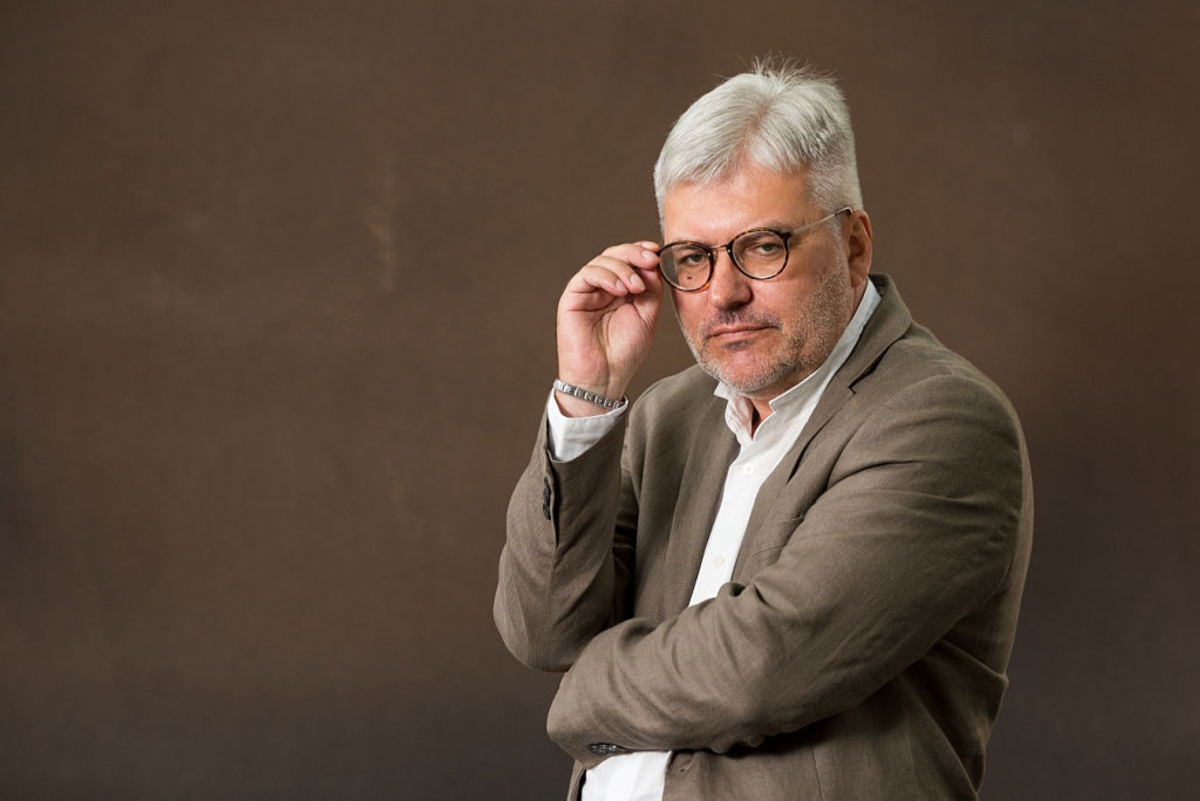
Russian author Eugene Vodolazkin poses for a photo session during the Edinburgh International Book Festival at Charlotte Square Gardens in Edinburgh, Scotland, on 25 August, 2016
Eugene Vodolazkin: technology has advanced, but the human spirit has not
Novelist and academic researcher Eugene Vodolazkin is among the most prominent contemporary Russian literary voices. Drawing on his expertise in medieval Russian literature, history, and folklore, he blends scholarly depth with compelling storytelling.
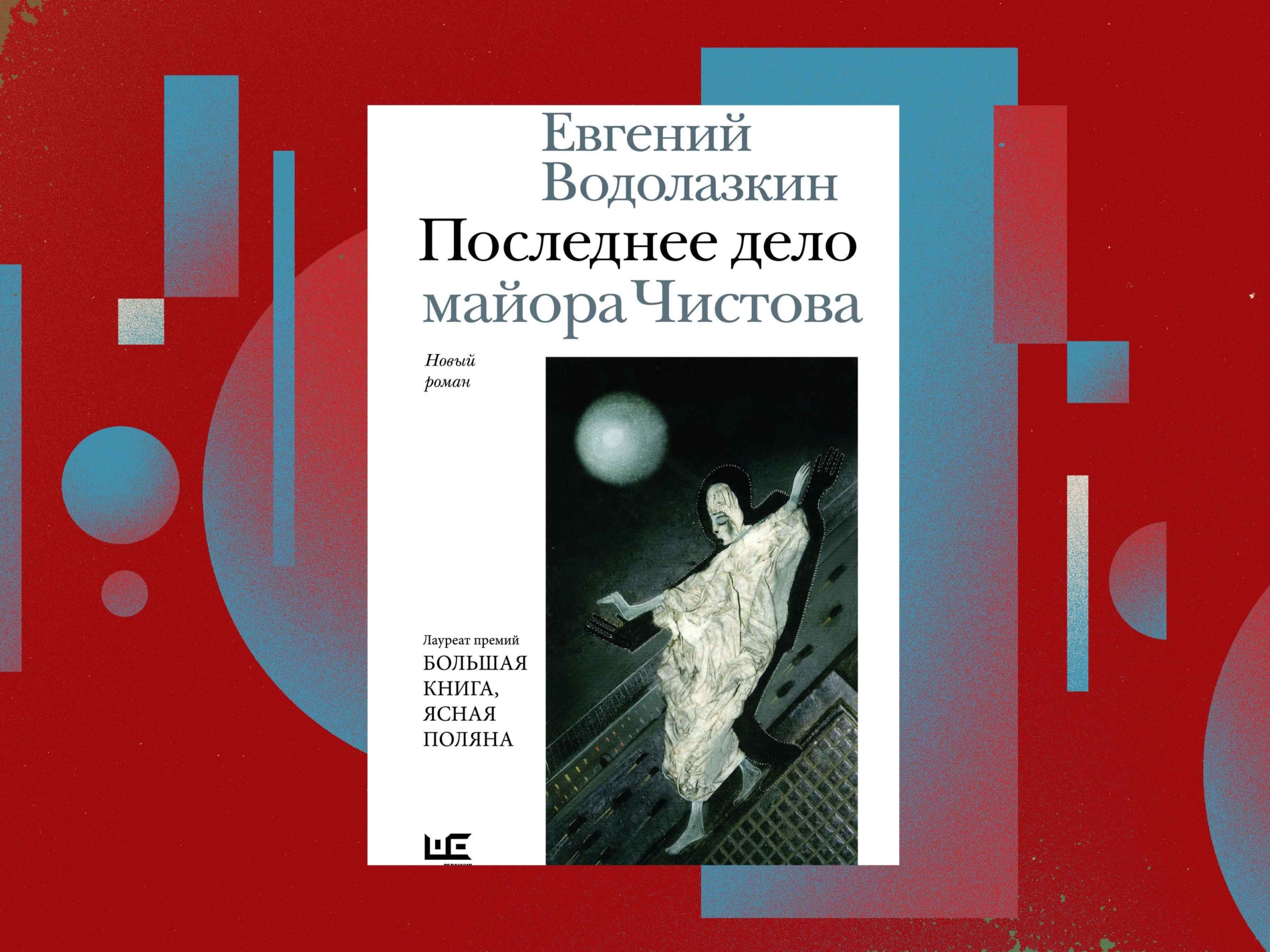
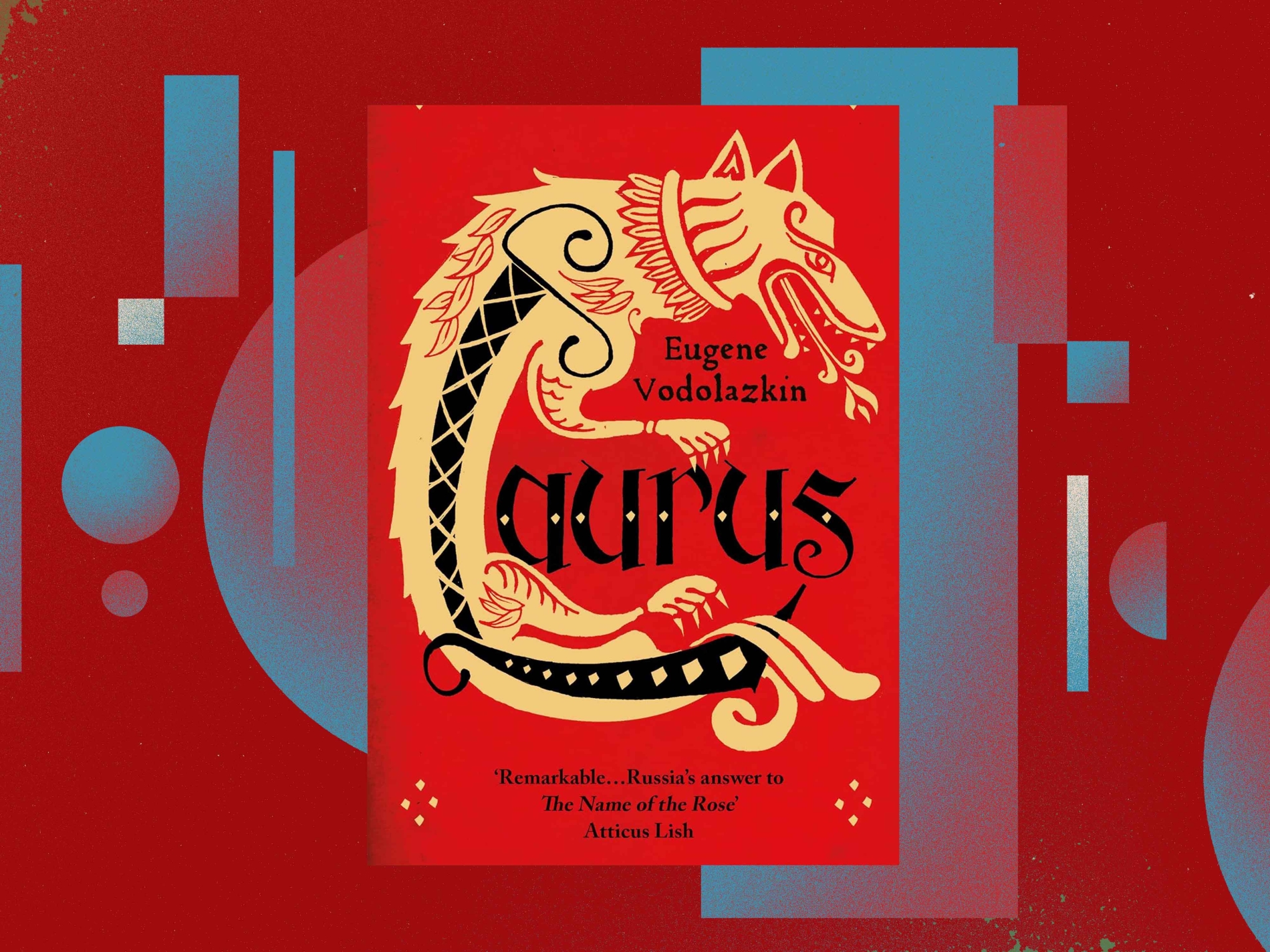
His debut novel, Solovyov and Larionov, a literary detective novel set in Soviet-era Russia, was shortlisted for the Andrei Bely Prize, Russia’s oldest independent literary award. He followed this with Laurus, a historical novel about Arseny, a young 15th-century Russian herbalist and healer. The novel won both Russia’s National Big Book Award and the Yasnaya Polyana Book Award. His latest novel, The Last Case of Major Chistov, was released earlier this year.
Born in 1964, Vodolazkin works at the Institute of Russian Literature (Pushkin House) in Saint Petersburg, where he specialises in the literature, history, and folklore of Old Rus’. His novels have been translated into more than 20 languages, including Arabic, English, French, German, and Italian.
In the following interview with Al Majalla, Vodolazkin reflects on the relationship between literature, history, and collective memory, as well as the cyclical nature of human experience.
You describe history as the “consciousness of peoples” and memory as the “consciousness of the individual”. How can a writer’s personal memory shape—or become part of—a people’s collective understanding of its history?
The collective consciousness of a people is not shaped by the entire population at once; rather, it emerges through the contributions of specific individuals, including writers. In this respect, writers are, in fact, the most influential force—more influential, for instance, than scholars in the humanities. When Tolstoy wrote War and Peace, historians raised dozens of serious objections. Yet our perception of the War of 1812 is still shaped by Tolstoy, while the historians’ corrections have largely faded from memory.
In A History of the Island, characters who live for centuries expose the illusion of progress and show how politics continually rewrites the past. Is history’s circularity also your view of the present?
In this instance, my point of view coincides with that of my characters, though this is not always the case. I recognise progress only in science and technology. When it comes to the human soul, however, there appears to be none. How many times has the world repented for its brutal wars, vowing never to let them happen again? And yet, they continue. History, to be sure, does not move in a closed circle, but rather in a spiral: events repeat themselves, albeit at a different level, under new conditions, and informed by past experience.
History does not move in a closed circle, but rather in a spiral: events repeat themselves, under new conditions, and informed by past experience
Eugene Vodolazkin, Russian novelist
You treat time not as a straight line, but as a spiritual and sensory experience that expands and contracts with human emotion. Do you see recorded history as an illusion, and can creativity restore humanity's 'real time'?
If one compares historical accounts with what actually happened, official history usually ranks last. This is because it is often more closely tied to the political expediencies of the present than to the actual events of the past. Admittedly, we can never establish with absolute precision what really happened, since history does not reach us in its raw form. It is always filtered through the consciousness of those who record it. Works of creative art, by contrast, make no claim to absolute factual accuracy, and therein lies their honesty. Furthermore, genuine works of art capture the spirit of an era, something that is often more significant than even the most detailed historical accounts.
Your fiction often turns on small, sensory details—a place's smell, a musical note, a personal memory—that resist history's great bulldozers. Do you see human salvation in preserving such details from the tyranny of major historical events?
I value historical detail. Every era has its own characteristic scents, sounds, and colours. These details constitute the primary, immediate layer of history—the stage upon which events unfold—yet they are the first thing to be forgotten. Subsequent generations retain little memory of them. As a result, history can appear as though it unfolded in a vacuum, with its leading figures drifting about like cosmonauts in a spacecraft, bumping into and interacting with one another.
Yet it was precisely these details that provided the gravity holding everything in its proper place—a kind of gravity that no history textbook ever mentions. It seems to me that if a person can remember anything after death, it will not be the momentous events of history, but the encounters closest to the heart—conversations on a summer evening or celebrations held at home.
In Chagin, the protagonist can memorise entire texts at a glance yet cannot grasp fiction. Were you suggesting that literature arises not from accumulating information, but from gaps, forgetting, and the space they leave for interpretation and innovation?
Exactly. Moreover, in my new novel, The Last Case of Major Chistov, neurophysiologists attempt to humanise a robot. Instead of feeding it scientific data—or what we might call 'information'—they input 'gaps': the private, personal memories of ordinary people, devoid of any socially significant content. They do not succeed, yet, in essence, they are on the right track. I would argue that these 'gaps' elevate a description to a realm that 'information' alone could never reach. Information is merely the sum of the facts it contains, whereas these 'gaps' serve as a launchpad for something qualitatively different—a domain where thought and feeling are intertwined. If I were to use an analogy, I'd liken information to water boiling in a kettle, and the 'gaps' to the steam rising from it. It is this very steam that, in many ways, shapes a human being.
The Last Case of Major Chistov
The events of Laurus take place in the 15th century, yet the novel contains elements from outside that era—plastic bags beneath melting snow, visions of airplanes and modern cities. Can you tell us more about these anachronisms?
For me, this is a sort of joke. Though, upon closer inspection, it is a rather serious one. The 'oddities' you mention symbolise the connection between the past and the future. There is no wall between them; the boundary can be crossed in either direction. They also symbolise the idea that time does not exist—that there is only eternity, in which everything exists simultaneously.
Interestingly, the appearance of a plastic bottle in a 15th-century forest provoked an unhealthy level of interest. Some people busied themselves researching when plastic was invented, while others assumed I had simply made a mistake. This happened in almost every country where I presented the novel. I even suggested to my publisher that we remove the episode with the bottle—as it was taking up a disproportionate amount of space—but she replied: "No, we're keeping it; it's become a brand now."
In the novel's linguistic fabric, you combine the language of manuscripts and Old Church Slavonic prayers with contemporary everyday speech. What does placing this 'heritage language' alongside modern language add to the contemporary reader's awareness?
This, too, points to the timeless nature of everything that unfolds. One of the mottos of the novel Laurus is "there is no time". In it, I offer a portrait of the Russian language across the entirety of its history. Naturally, one must be extremely cautious with experiments of this kind—it is like walking on a razor's edge. This presents a major challenge for the translator, who must be familiar not only with archaic Russian but also with the archaic forms within their own language.
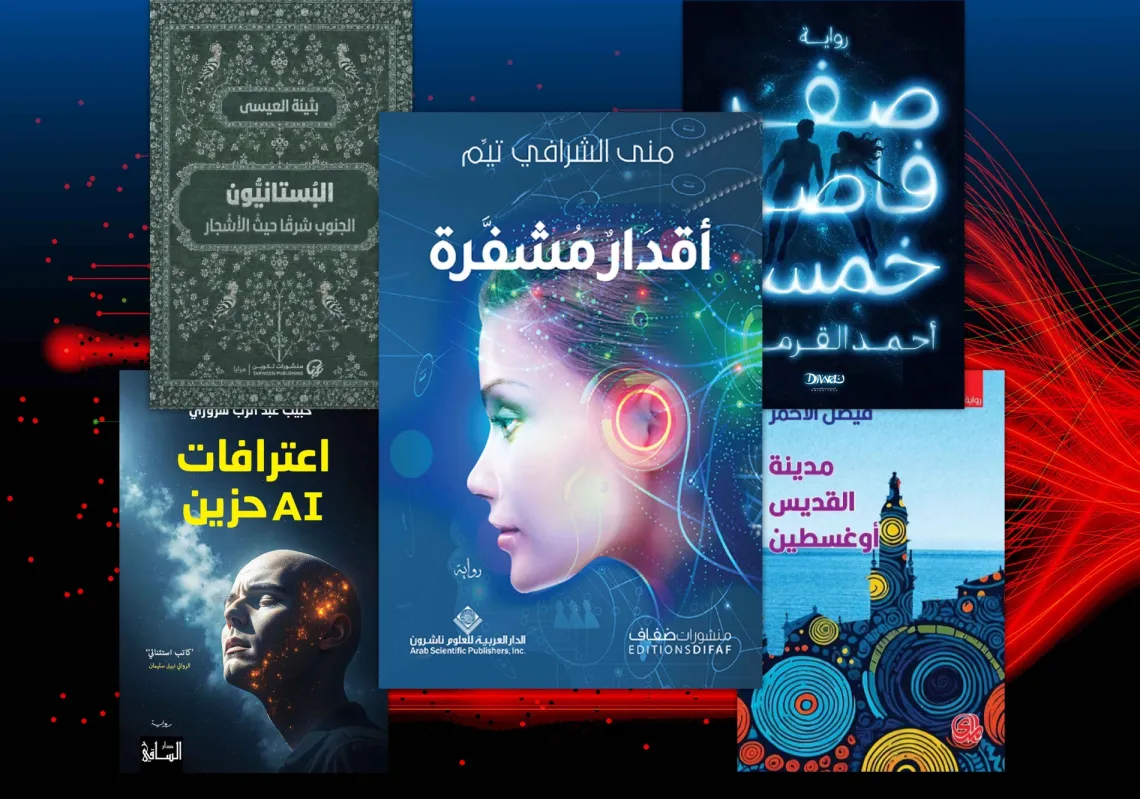
As artificial intelligence rapidly advances in its ability to generate text and construct narrative worlds, can genuine literature withstand this challenge?
I believe that only serious literature is capable of this—and I emphasise the word 'serious', because works of a more trivial nature will eventually be supplanted by machines. Screenwriters, too, must surely feel uneasy these days, as their work borders on a craft—in the best sense of the term. Textbooks on screenwriting have long since mapped out exactly when each plot element should appear. Anything that can be codified is, without a doubt, a machine's natural domain, in which it can outperform anyone, even the most gifted screenwriter.
Yet, we must remember that the machine is secondary to the human being; it can only perfect what a human has first conceived. At its finest, literature acts as a pioneer. A machine can be taught to write 'in the style of Dostoevsky', but it can never 'become' Dostoevsky.
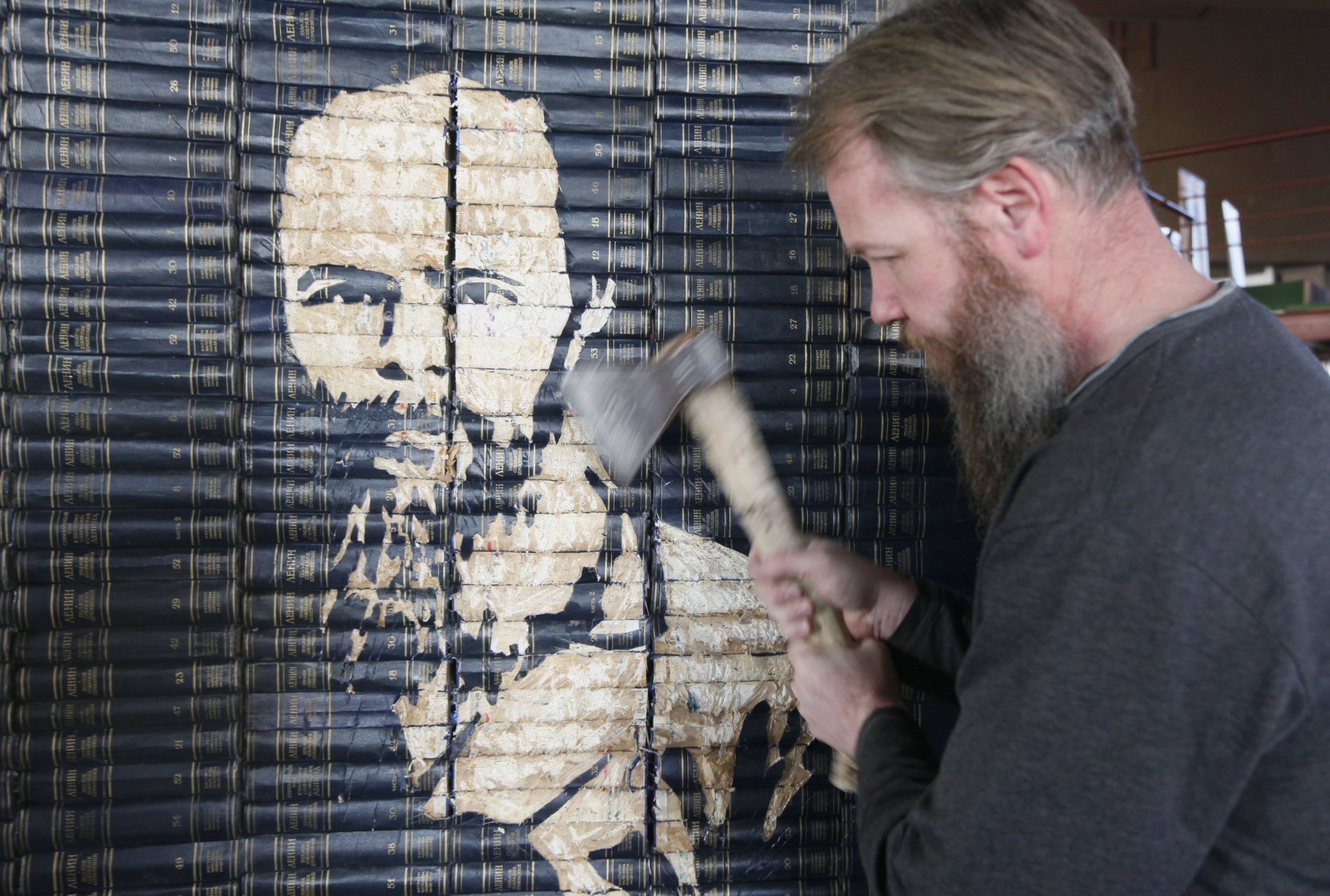
Russian artist Vasily Slonov uses an axe to carve a portrait of writer Fyodor Dostoevsky into the complete collected works of Vladimir Lenin, at the Museum of Modern Art in Krasnoyarsk, Siberia, on 6 November, 2011
What central question do you seek to explore through your novels?
The problem of time—ultimately, everything else boils down to it. When God cast Adam and Eve out of paradise, He confronted them with time, something that had not existed there before. Time is finitude, and finitude is death. By examining the meaning of death, we are, in effect, reflecting on the meaning of life.