
How the Yemeni army can exploit Houthi expansion

The more territory the Iran-backed Yemeni rebel group gains, the more vulnerable it becomes militarily, politically, economically, and socially

Al Majalla

How the Yemeni army can exploit Houthi expansion

The decision to appoint Chief of the General Staff General Fayyad al-Ruwaili to command the coalition’s Joint Forces is of critical strategic importance. It comes on the heels of a Giants Brigades redeployment from the Dhubab to the Bab al-Mandab area and a renewed Houthi advance of another 80 kilometres towards Aden.

The appointment mirrors the dual leadership arrangement used during the coalition’s initial offensive campaigns between 2015 and 2017, reflecting a possible shift toward more integrated military operations. The hope is that this setup will enable more strategic planning, robust resource allocation, operational effectiveness, and faster decision-making, in the face of an expansionist and dynamic Houthi militia.

In parallel, Yemen's government is also restructuring. In addition to a cabinet reshuffle, Yemeni President Dr Rashad al-Alimi appointed Amin al-Ukaymi as governor and military commander in Al-Jawf, and Hussein al-Aji al-Awadhi as governor of Al-Bayda. He also appointed Rashad al-Yousufi to oversee the Taiz military front, succeeding Youssef al-Sharaji, and Majdi Munadil to command the Tur al-Bahah military front.

Taken together, these changes show that Yemeni and coalition leadership recognise the war's evolving dynamics require political mobilisation, professional personnel, and stronger institutions.
SPA
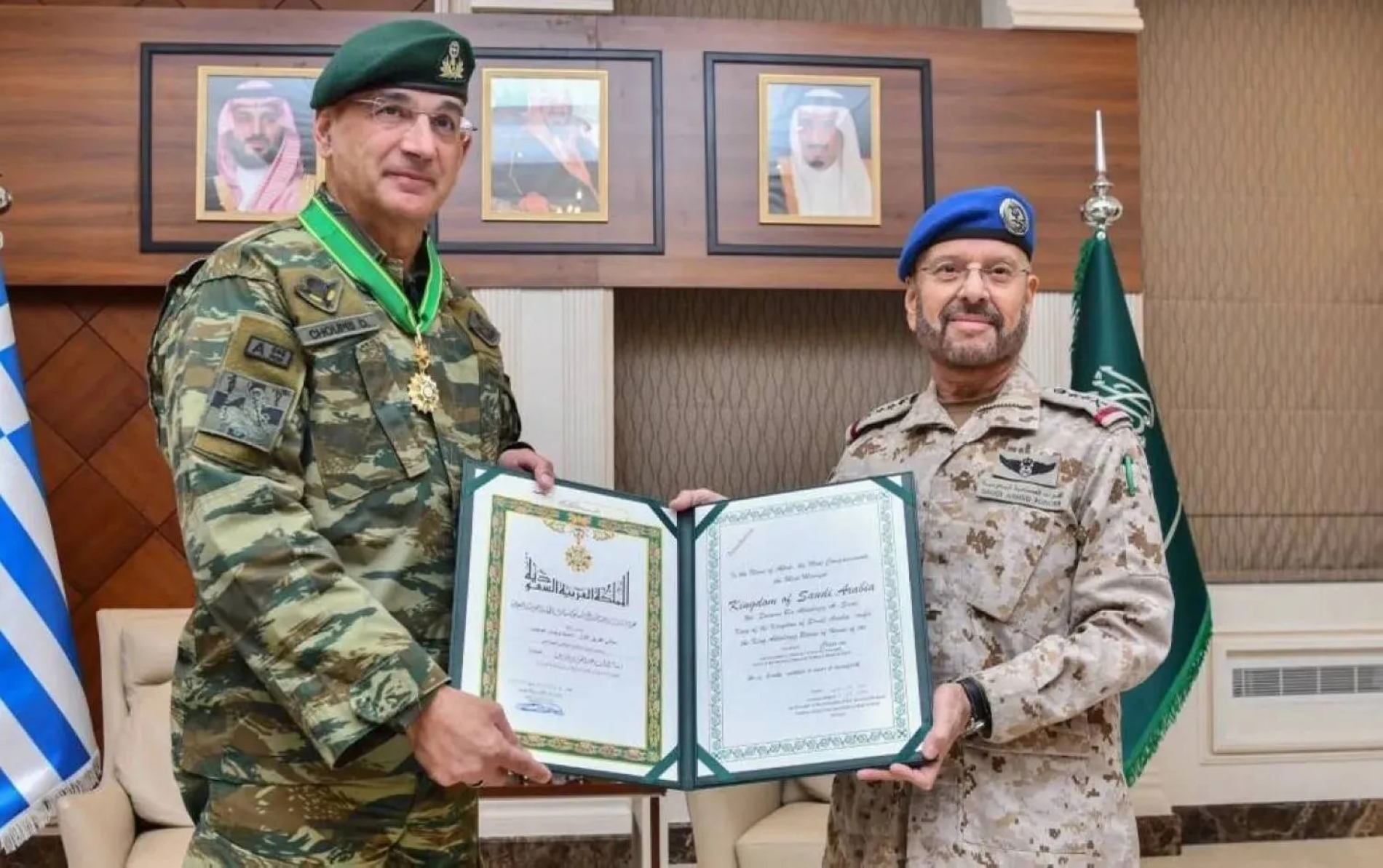
The Chief of the General Staff of the Saudi Armed Forces, General Fayyad Al-Ruwaili, bestows the King Abdulaziz Medal upon the Chief of the Hellenic National Defence General Staff, General Dimitrios Choupis.

The Houthis escalated their operations as the Yemeni Armed Forces, the Supreme Military Committee, and the Joint Forces Command (JFC) had already been undergoing extensive restructuring since January, working to unify fragmented command-and-control structures, personnel systems, resource allocation, and operational readiness. But on 6 August, Houthi missile and drone attacks on government positions in Marib and Hadramout reportedly killed dozens and caused temporary shock. Subsequent strikes hit Mocha, its port and military facilities along the Tihama coast.

Collectively, these attacks disrupted coastal logistics, inflicted heavy losses and spread the Yemeni army's defensive commitments thin across multiple fronts, while the Houthis, with the help of advisers from Iran's Islamic Revolutionary Guard Corps (IRGC), were massing forces and offensive capabilities around Hodeidah, Taiz and the Red Sea coast.

This concentrated assault targeting civilian and military centres of gravity came before the Yemeni army was able to achieve full military readiness. It effectively brought the looming war forward, at a time and place of the Houthis' choosing. It wasn't long before the Yemeni government realised the Houthis were massing forces with the aim of seizing the strategic Bab al-Mandab maritime chokepoint at the mouth of the Red Sea. The sequence and timing of the escalation restricted the Yemeni army's ability to manoeuvre and placed strain on a military structure still recovering and integrating.
The Yemeni army's first priority is to contain Houthi expansion, stabilise the Lahj–Aden front, and prevent the fall of Aden

Government positions along the Tihama coast, under the command of Tareq Saleh, collapsed amid disrupted military communications, command failures, intelligence deception, electronic warfare, fragmented command and control, and severed supply lines.

Mocha fell on 10 September, giving the Houthis the upper hand. A subsequent AP investigation described how advisers from Iran's Islamic Revolutionary Guard Corps supported Houthi operational planning, hybrid and electronic warfare, intelligence operations and the infiltration of the National Resistance's communications. The offensive appears to have successfully exploited weaknesses in the command structure of forces allied with the Yemeni Armed Forces.

On 5 October, the government launched Operation Dawn of Yemen, backed by extensive JFC airpower, to restore territory and reverse Houthi advances. Government-aligned formations recovered positions around Dhubab and Bab al-Mandab, showing they could counterattack, temporarily curb Houthi advances, and reorganise ranks quickly. Six weeks after the counteroffensive began, government-aligned forces announced redeployment on 15 November from Bab al-Mandab Strait and the Dhubab area to reinforce Aden's defences. This was because Houthi advances through Taiz, al-Madharabah, and al-Arah in Lahj toward Khor Omairah credibly threatened to cut the coastal formations (Giants, Tihami Brigades, Nation Shield, and National Resistance Forces) off from their rear. This grip puts critical pressure on Aden's western outskirts and the remaining coastal positions.

Staying put seriously risked encirclement, the destruction or at least capture of sieged units and the seizure of valuable weapons and equipment. So government forces pulled out in order to preserve their units. This difficult decision exposed a profound challenge: even though the campaign was able to recover territory, it couldn't establish the necessary conditions to hold it.

AFP
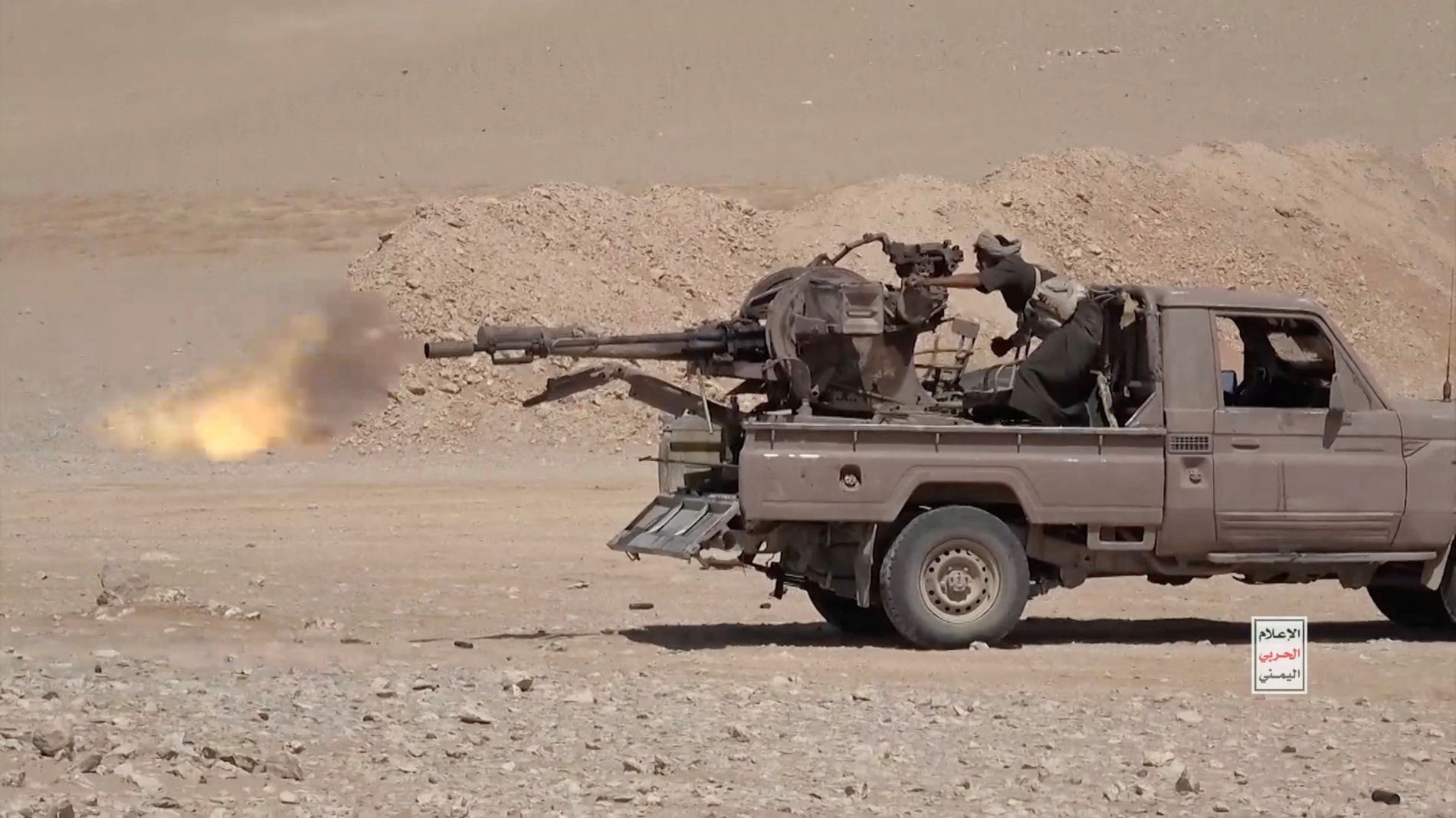
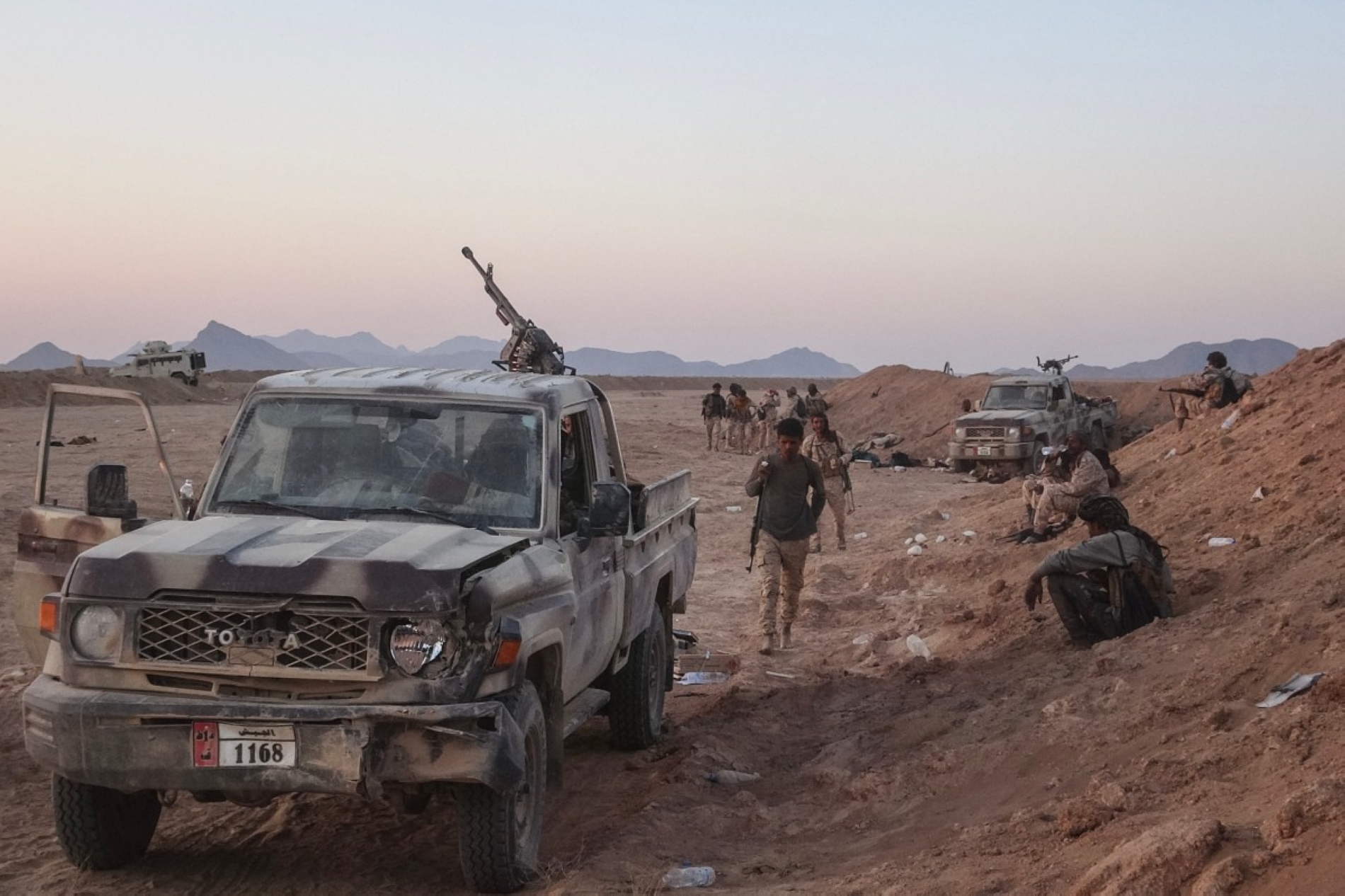
Fighters loyal to Yemeni government forces take up positions during clashes with the Houthis in Al-Jawf Governorate, northwestern Yemen, on 2 November 2026.

Bridging the gap

These challenges show how difficult it is to bridge the gap in the Yemeni army's tactical combat power and campaign effectiveness. Another gap exists between the military resources available to the Yemeni army and aligned forces and the combat power it can deploy, replenish and sustain. Three constraints here undermine combat effectiveness: inadequately integrated capabilities, material and specialist shortfalls in some frontlines (i.e., Taiz, Lahj), and insufficient operational endurance (i.e., Mocha, Dhubab).

Multiple command-and-control (C2) structures at the sub-national level are a key vulnerability. The National Resistance, Giants Brigades, Nation's Shield Forces, Tihami Brigades, Emergency Forces and regional military commands operate through non-homogenous institutional histories, military doctrines (i.e. regional, nationalist, religious), political networks, political economies, and support arrangements.

These differences, alongside persistent southern political demands, have contributed to the entrenchment of parallel chains of command, making C2 integration a challenge. Despite progress, overlapping claims to authority, coupled with social pressures, still complicate effective campaign planning, intelligence-sharing, force mobilisation, resource allocation, and overall execution in practice.

Reinforcements and redeployment of forces from one front to another are possible, but they require credible coordination. Military formations may possess strong combat power but still struggle to leverage it effectively. Drones, air support, rockets, artillery, missiles and ground fire would be more effective if backed up by access to real-time intelligence, reliable military communications, coordinated battle planning and measures to protect civilians.

The Yemeni army's second priority is to lift the siege on Taiz and expand operations in al-Jawf–Marib without overextending forces

Personnel registration, biometric verification, and direct salary harmonisation have begun to address logistical weaknesses in financial control and force preparation; however, they rely on adequate financing, consistent implementation, and overall integration into operational planning.

Material and specialist shortfalls constitute the second constraint. Modern equipment hardly compensates for inadequate adaptation, poor maintenance, or unreliable wartime logistics.

Operations addressing Houthi defensive networks demand adequate serviceable armoured combat vehicles, anti-armour weapons, protected mobility, tactical counter-drone protection, robust electronic warfare, effective covert intelligence penetration, and advanced air and missile defence.

At its core, Saudi Arabia's strategic missile defence addresses distinct territorial threats from those facing Yemeni frontline formations, not to mention strategic overstretch. Robust engineering requires quick improvement: Houthi minefields, fortifications, rugged terrain, and improvised explosive devices demand teams of trained engineers, explosive-hazard capabilities and flexible resourcing to penetrate defensive infrastructure, support offensive campaigns, and secure recovered positions.

Combat endurance is the third limitation. This is linked to strategy, tactical adaptation, ammunition, maintenance, fuel, medical support, reliable pay, and trained alternatives. Yemen's fiscal crisis and blocked oil exports continue to limit its ability to sustain military institutions or pursue military modernisation at scale independently.

Reuters
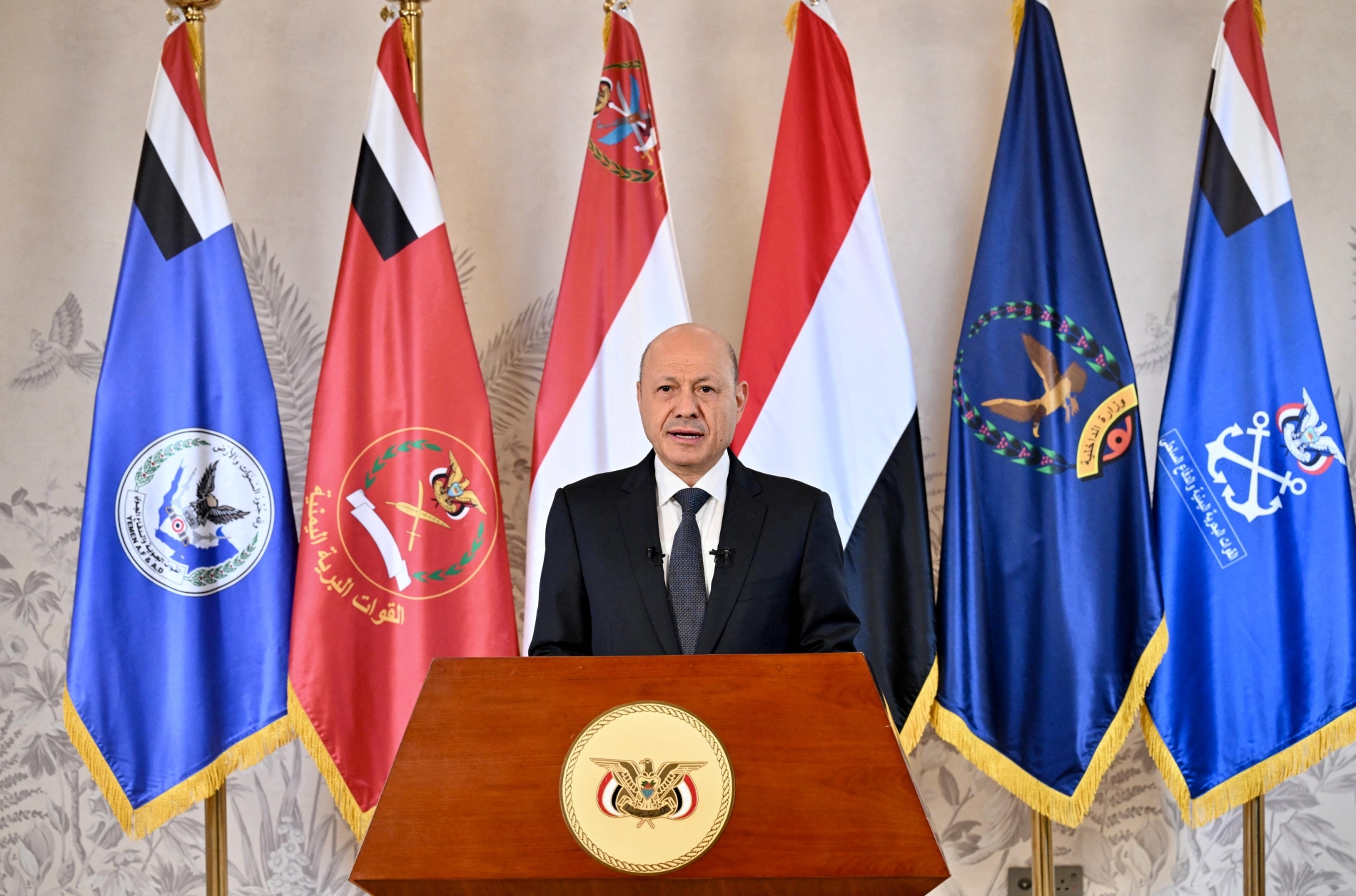
Yemeni President Rashad al-Alimi delivering a televised address from Riyadh, Saudi Arabia, on 4 October 2026.

Urgent opportunity

The recent changes demonstrate institutional continuity, preserve organisational knowledge, and provide an urgent opportunity to streamline Saudi and JFC military planning and coordination. They should lead to better coordination and sustained armament of the Yemeni army.

The harder task, however, lies inside Yemen, where multiple chains of command require immediate harmonisation and better interoperability. Therefore, establishing clear C2 chains is key to improving combat efficiency, transparency, and accountability.

About Al-Ruwaili

Al-Ruwaili rose through squadron, air wing, and King Fahd Air Base commands, then led the Royal Saudi Air Force in 2013 before serving as deputy chief of general staff in 2014. In 2018, he became chief of general staff. His combined experience in air operations, planning, and joint command is well suited to a campaign in which air power remains indispensable but must be reliably paired with sustained performance by Yemeni ground forces, rapid adaptation, and modernisation. His appointment brings strategic oversight and JFC command together.

The Yemeni army's third priority is to seek to restore positions along the Tihama coast and Bab al-Mandab

Al-Ruwaili's September consultations with Turkish and Pakistani counterparts under the Mecca defence pact, coupled with leading Riyadh's delegation to the GCC chiefs of staff meeting in Bahrain, could help expand multi-party training and broader cooperation.

The appointment addresses one of three forms of integration at stake. Saudi-level integration covers strategic planning, resource allocation, and inter-service coordination. Yemeni-level integration, covering C2, accountability, transparency, and interoperability of government-aligned formations, rests on organisational, military, and political decisions that Riyadh cannot make alone.

Profound Saudi–Yemeni integration, or the relationship between JFC oversight and Yemeni operational command, could be built and improved between the two. While centralisation may shorten the implementation timeline between strategic oversight and campaign execution, progress will be seen only if responsibilities are clearly defined and distributed, and decisions are implemented reliably and competently across Yemeni formations.

Reuters
Houthi fighters attacking Yemeni government forces in Al-Jawf Governorate, Yemen, on 15 September 2026.

The pitfalls of expansion

The Houthis have demonstrated considerable expansion and operational adaptability, distributing pressure across fronts, exploiting C2 fragmentation and defensive terrain, and imposing costs through layered, concentrated warfare against the Yemeni army, which possesses significant material resources.

That said, advances do not necessarily constitute control. Army-aligned formations recovered territory around Bab al-Mandab in October, continued to resist Houthi advances around the city of Taiz, and continued campaigns in al-Jawf east of al-Hazm. The battlefield, as it stands, remains one of advances, counterattacks, and withdrawals.

Having said that, Houthi expansion carries four potential burdens. Militarily, new territory requires additional resourcing (i.e., garrisons, logistical arrangements, and personnel rotation). The farther their reach, the costlier consolidation becomes.

Economically, while coastal territory offers strategic leverage and opportunities to extract resources and revenues, it cannot replace the oil and gas of central and eastern Yemen. Therefore, expansion without lucrative revenue-generating energy assets may add more burden than benefit.

AFP
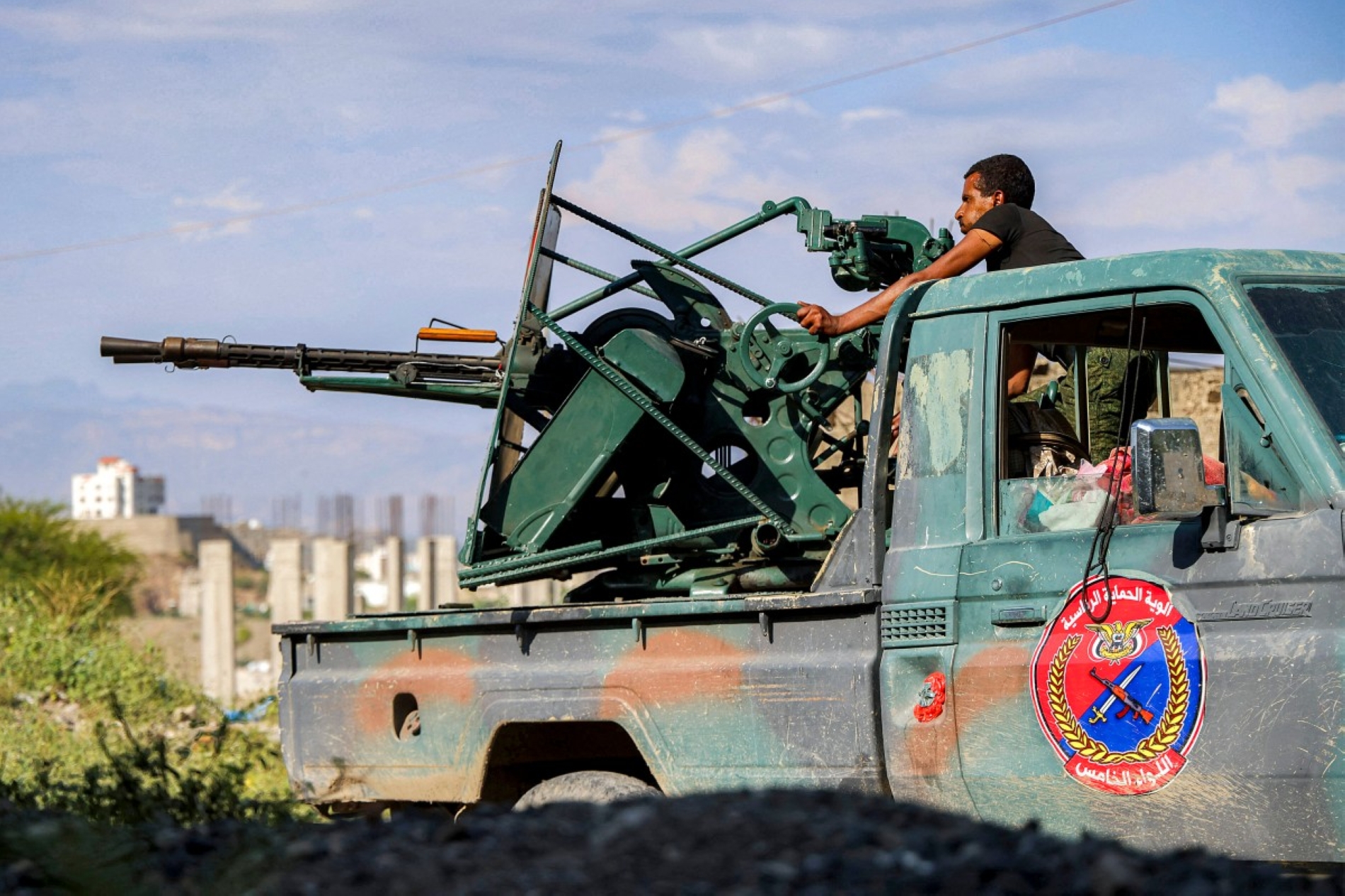
A fighter loyal to the Yemeni government operates a weapon mounted on a pickup truck at a position along the front lines against the Houthis, near Mount al-Maidan in Taiz Governorate, western Yemen, on 26 October 2026.

Politically, expansion exposes the Houthi rebels to local communities whose grievances profoundly differ from those in their strongholds. And socially, the Houthis cannot sustain consolidation where communities do not accept their rule, share their worldview and sect, or show local buy-in. Local resistance and civil unrest are likely to emerge in some areas. Although the Houthis have attempted to court certain southern figures and local constituencies in Taiz, their record of repression, lack of service delivery, failure to pay salaries, and deteriorating security conditions undercut the overtures.

For instance, al-Bayda's history of resistance and coercion shows how difficult it is to extend rule over aggrieved communities. Without public support, territory held by coercion can eventually be lost.

The challenge then becomes one of overextension. By offering a credible alternative, the Yemeni government can exploit this overreach by offering security, services, regular salaries, local representation and accountable administration.

The Joint Forces and the Yemeni army can prioritise their objectives. The first priority is clear: contain Houthi expansion, stabilise the Lahj–Aden front, and prevent the fall of Aden. The second priority is to recover the capacity to lift the siege on Taiz and expand operations in al-Jawf–Marib without overextending forces. The third priority is to seek to restore positions along the Tihama coast and Bab al-Mandab.


font change