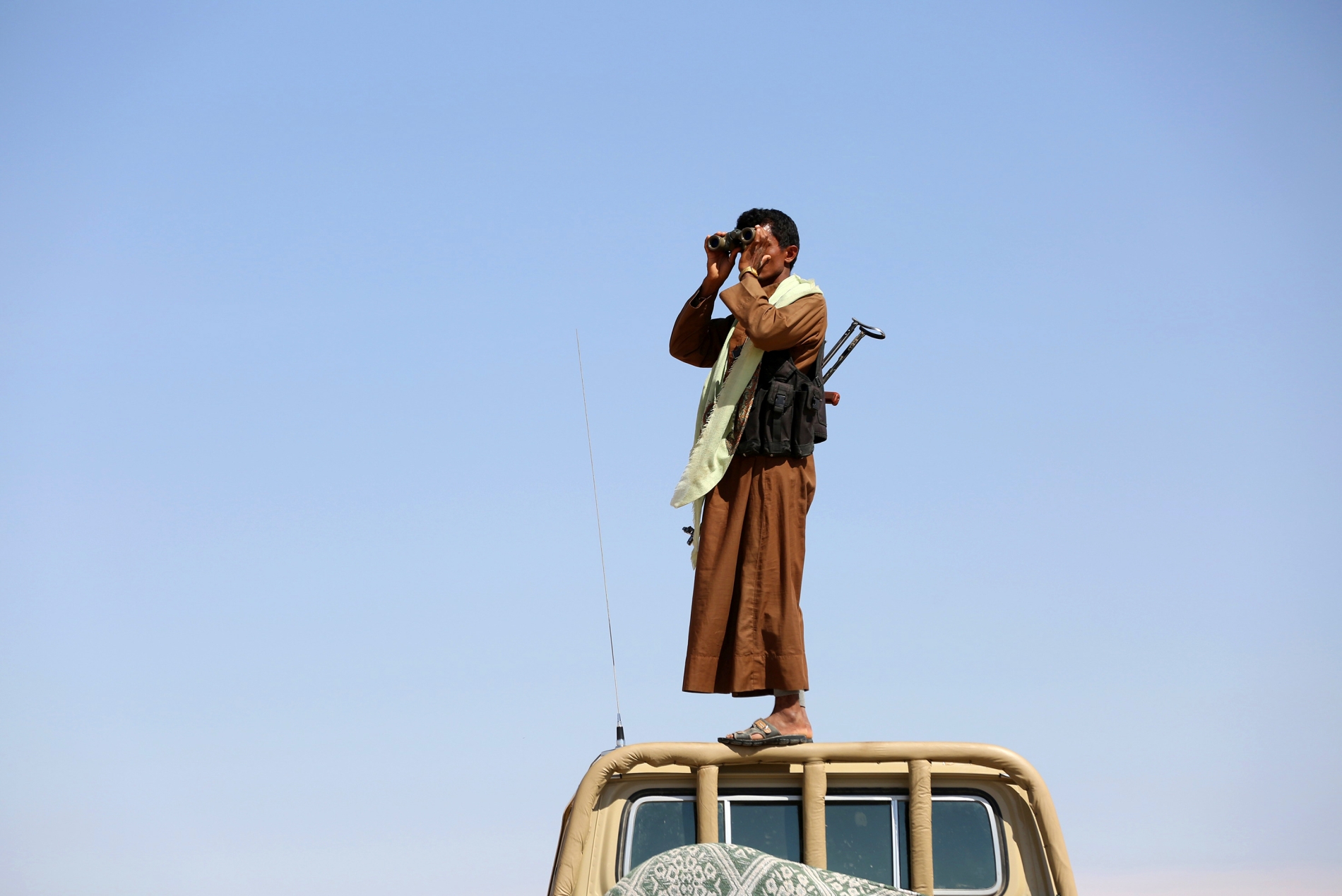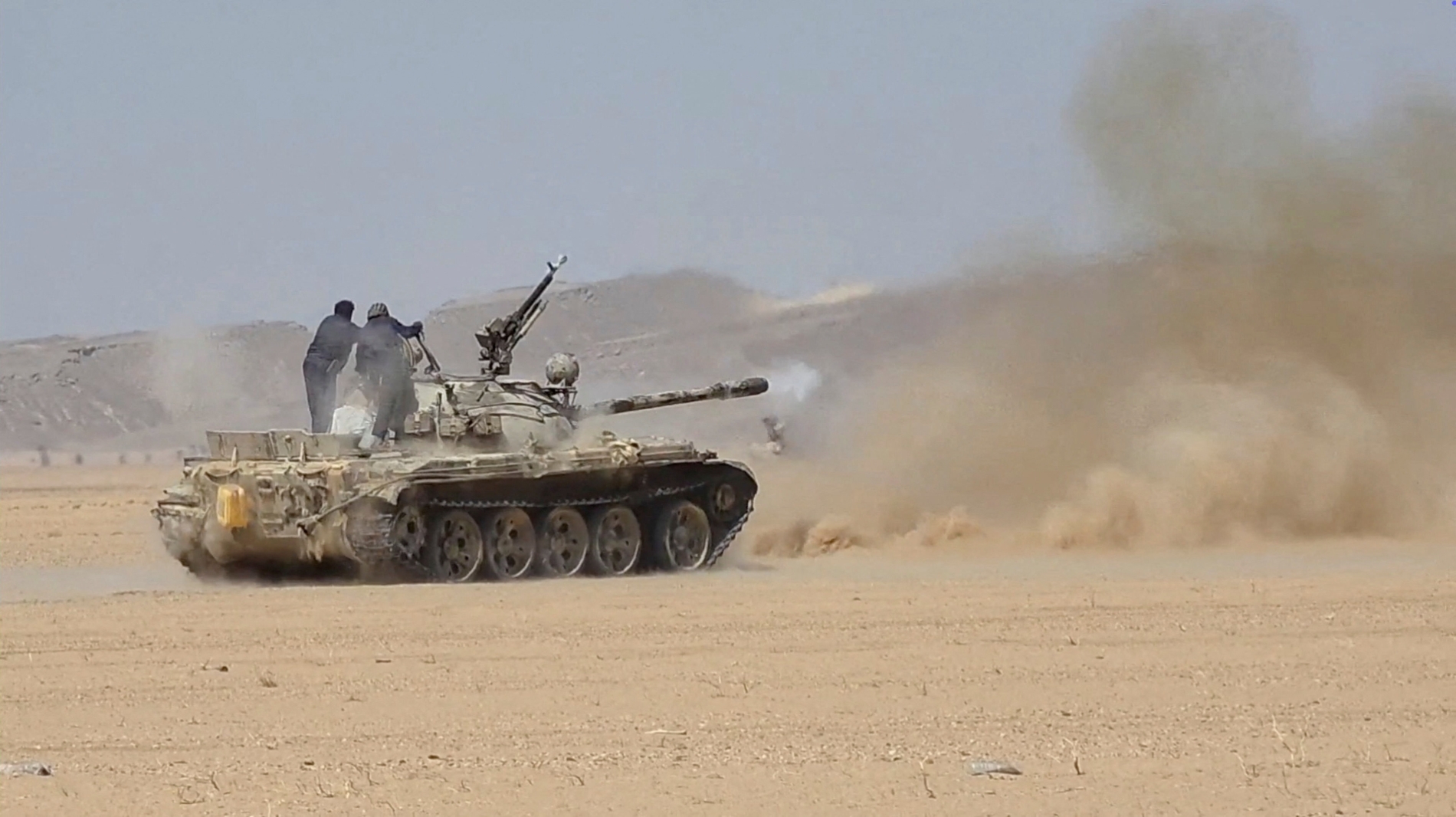

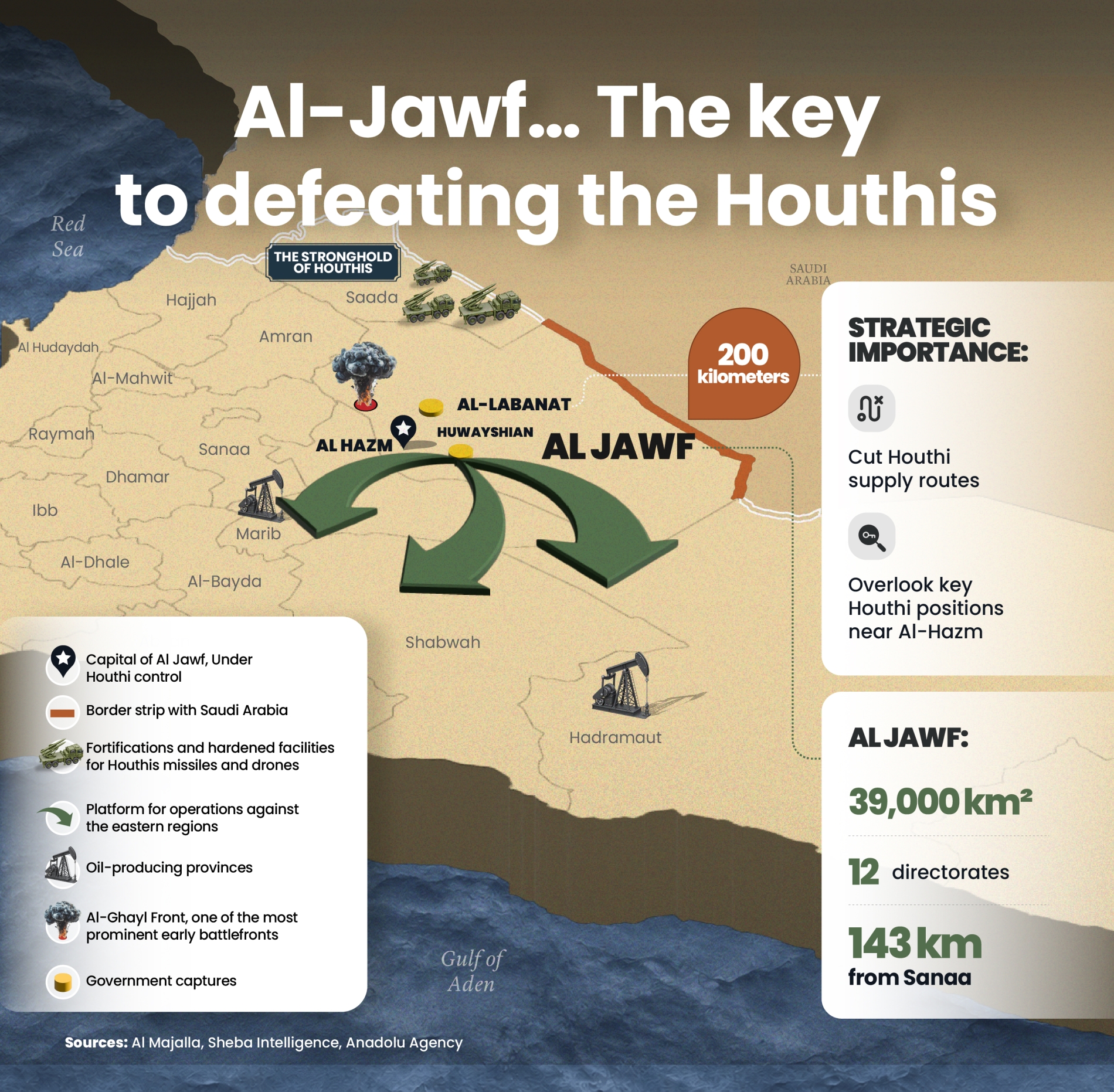
As the Iran-backed Houthis seek to capture the city of Taiz and outflank government forces in and around Bab al-Mandab, the Yemeni army is advancing through heavily fortified and mined Houthi rebel positions in Al-Jawf governorate of northeastern Yemen. After recapturing the Huwashiyan mountain in late October, the Yemeni army's Emergency Forces announced further territorial gains around Al-Duhaydha and Mulayfifah on 3 and 4 November, as part of a broader push to control the commanding heights, supported by heavy Arab Coalition air cover and allied popular tribal resistance.
Controlling these mountains will help the Yemeni army push further toward Bir al-Marazeeq and ultimately al-Hazm, and will be key to assessing the campaign's military effectiveness as fighting extends into open terrain. If Yemeni army forces succeed, it could reshape the military balance and cut Houthi supply lines along the northeastern theatre. But that, of course, depends on several caveats, including whether the Yemeni army can maintain its offensive pace, remain unified, and overcome Houthi fortifications to recapture al-Hazm.
The governorate of Al-Jawf is strategically important as it abuts the government strongholds of Marib and Hadramawt, the Saudi frontier, and Houthi-controlled Sana’a, Amran, and parts of Ma’rib. Its territorial recovery would strengthen the Yemeni army's strategic depth and defence of its positions in Marib, reduce Saudi border security threats, expand the offensive arc in different directions into Al-Mutun, al-Matamah, Khaiwan, Fardat Nihm, and Sirwah fronts, threaten the rebels' defensive lines, and force them to divert resources to defend Sa’ada.
While recapturing al-Hazm would boost the government's overall position, it would not compensate for setbacks along the coast. Still, it would matter because it would send an important message that Houthi territorial control is reversible if an effective army campaign can be waged.
Social capital
Equally significant is Al-Jawf’s social capital. Its tribal networks extend mobilisation capacity, cross-regional ties and networks, and anti-Houthi resistance efforts, which the rebels have attempted to contain through reported coercion, intimidation, inducement, co-optation, and patronage. Earlier tribal mobilisations this year, notably the Rayyan encampment, demonstrate the level of popular resentment towards reported Houthi repression, monopoly of power and wealth, and excessive humiliation of social figures and interference in customary authority.
Therefore, credible military advances, coupled with deepening local discontent, could expand the Yemeni government's anti-rebel coalition, encourage realignments beyond al-Jawf, and rebuild trust between local communities and the state. Any success, however, must quickly prioritise stabilisation, state-building, good governance, a unified chain of command, and support for local development. To this end, converting the social capital into a durable, broad-based popular challenge to Houthi rule is key to reaching Sana’a.
However, tribal politics remain central to understanding local balances and the offensive's prospects. While Houthi expansion in the past encountered communal resistance, including from the Dhu Hussein and Dhu Mohammed branches of the Bakil Confederations’ Dahm tribe, opposition to Houthi rule does not automatically mean unconditional support for the Yemeni government. Tribal leaders, such as al-Ukaimi, retain distinct interests; they may resist both Houthi coercion and government rule if they are not incorporated and given a share of wealth and power. In Al-Jawf, as in several other contexts, alignments and alliances have historically reflected fluid tribal balances and interests, local rivalries, personal grievances or ambitions, and relationships with governing authorities. In wartime, tactics are as important as strategy.