How Syria can assist the fight against the Houthis

From enhancing Saudi Arabia’s border security to transferring lessons from the fall of Assad, Syrian military involvement presents both opportunities and risks

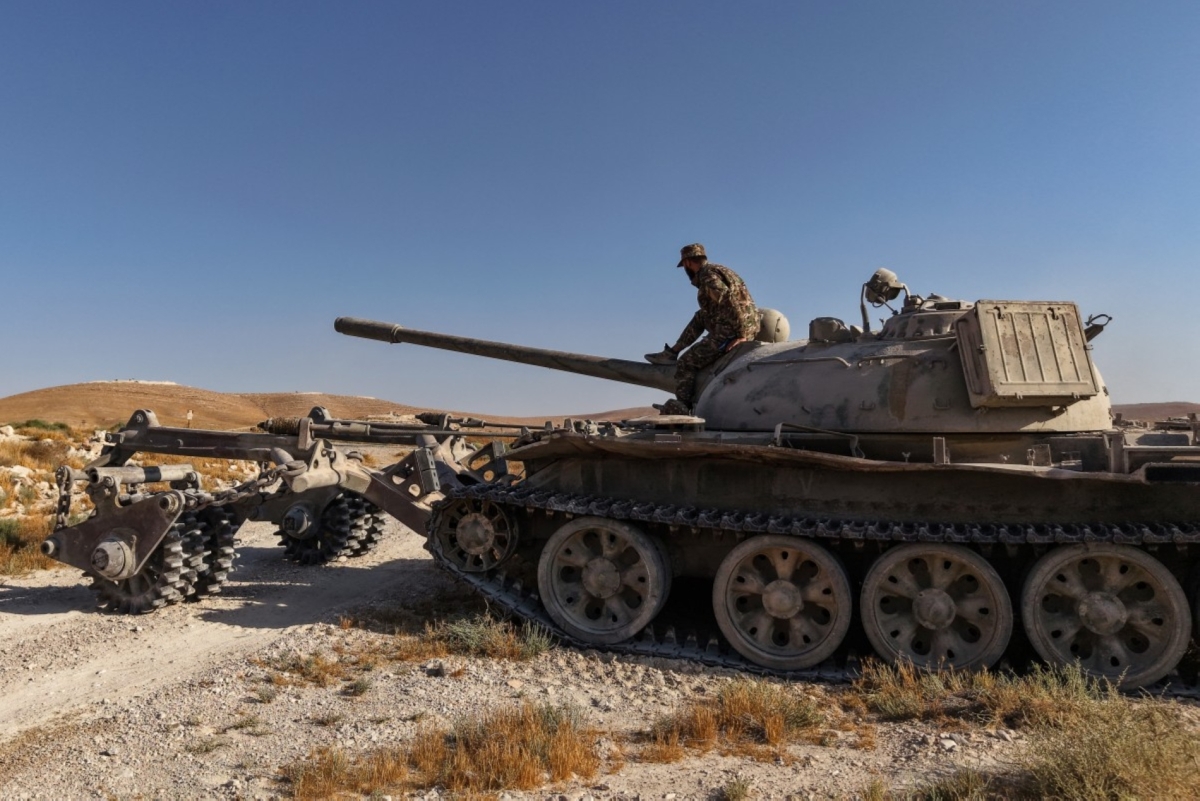
A Syrian army soldier sits on a mine-clearing tank of the Syrian Ministry of Defence's military engineering department during a demining operation in Qarah in the Damascus countryside on 23 August 2026.
BAKR ALKASEM / AFP
A Syrian army soldier sits on a mine-clearing tank of the Syrian Ministry of Defence's military engineering department during a demining operation in Qarah in the Damascus countryside on 23 August 2026.

How Syria can assist the fight against the Houthis

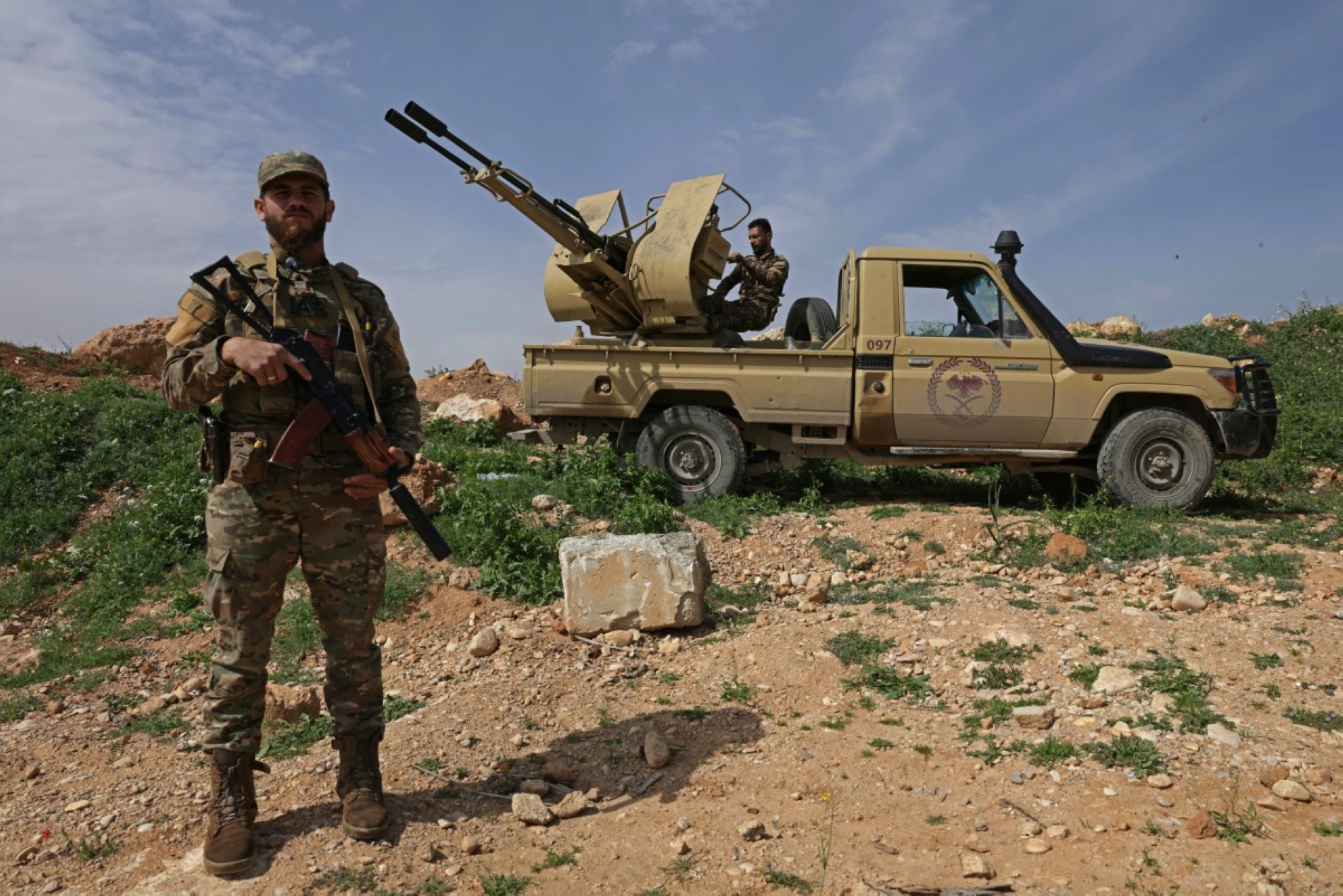
Two years after they defeated the army of President Bashar al-Assad in a lightning advance led from the northwest region of Idlib, Syria’s armed forces may be preparing for another fight roughly 2,400km to the south. If media reports are to be believed, the country’s battle-hardened soldiers have their sights set on the Houthi militia in Yemen to support one of Syria’s top allies, Saudi Arabia.

The details and scale of any Syrian deployment to Saudi Arabia and/or Yemen remain unclear, but it is clear that Damascus and Riyadh are deepening their security and defence cooperation, going well beyond bilateral training. This feels like a natural match, given their shared regional security objectives. On Iran, they are largely on the same page.

On 7 October, Axios was the first to report that Saudi Arabia and Syria were discussing the deployment of Syrian troops to Yemen. On 6 November, Reuters reported that dozens of Syrian military personnel had travelled to Saudi Arabia to advise and train fighters for deployment to Yemen. Two days later, citing officials, Associated Press outlined preparations for an initial deployment of 600 Syrian special forces personnel along the Saudi-Yemen border. Yemeni sources put that figure in the thousands.

Officially, Damascus has denied the claims. On 9 November, Foreign Minister Asaad al-Shaibani dismissed reports of Syrian forces operating in Yemen, saying the defence agreement with Riyadh concerned rebuilding Syria’s army. While Syrian soldiers are reported to be inside Saudi Arabia, a Syrian force fighting in Yemen is thought to be unlikely. Still, it highlights the value that Syria can bring.
AFP
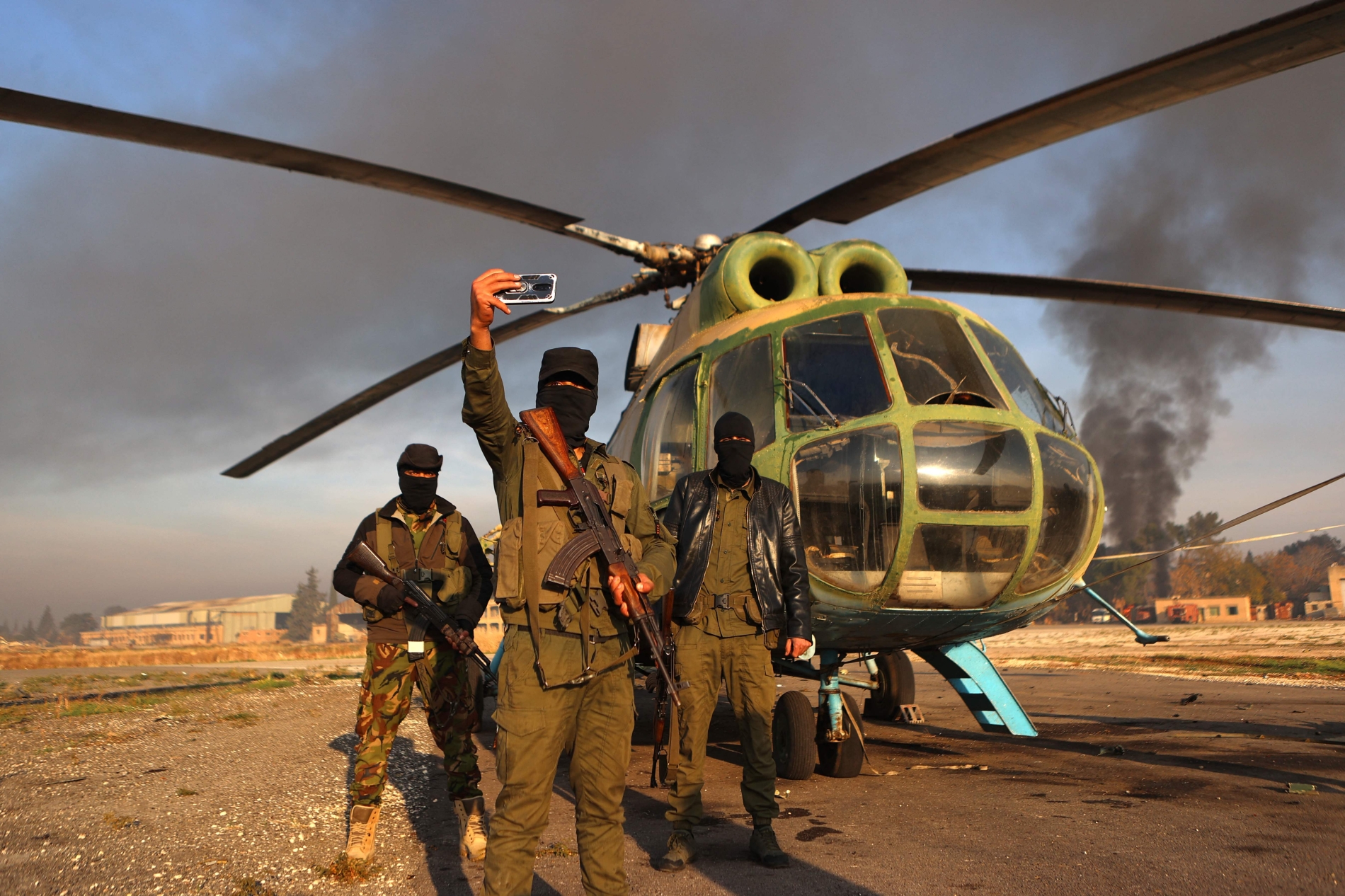
Islamist-led rebels pose for a picture with a Syria army helicopter on the tarmac at the Nayrab military airport in the northern Syrian city of Aleppo on 2 December 2024, after a surprise lightning offensive on 30 November.

Lessons learned

The country’s experience of fighting both Assad’s army and subsequently several armed semi-autonomous groups within Syria means that Damascus is now highly versed in wartime organisational adaptation, including the use of unmanned systems and the coordination of fragmented forces, so it could offer valuable lessons to the Saudis.

Beyond advice, a small Syrian border security mission could free Yemeni government formations to move to the frontline. On 4 November, Syrian President Ahmed al-Sharaa met Saudi Crown Prince Mohammed bin Salman to discuss all this. It resulted in a defence-cooperation agreement, with their joint communiqué addressing threats to freedom of navigation in the Red Sea, Bab al-Mandab Strait, and the Strait of Hormuz.

Syria is keen to help, but its leaders are also pragmatic. Parallel to improving military and security relations, Riyadh is co-sponsoring Syria’s much-needed reconstruction. On the day the two met, the Saudi Fund for Development signed six concessional loan agreements with Syria worth more than $400mn to strengthen Syria’s civilian defence and emergency infrastructure.

The pair are strategically aligned, with mutual interests. The fall of Assad dented Iran’s options and influence in the Middle East, something Damascus and Riyadh would both like to curtail. The Saudis, who have previously relied almost exclusively on the US, also want to diversify their security partners in the region, build greater burden-sharing frameworks, and enhance protection from Houthi attacks. Likewise, Damascus seeks investment, legitimacy, and regional reintegration. In short, they can help each other.
AFP
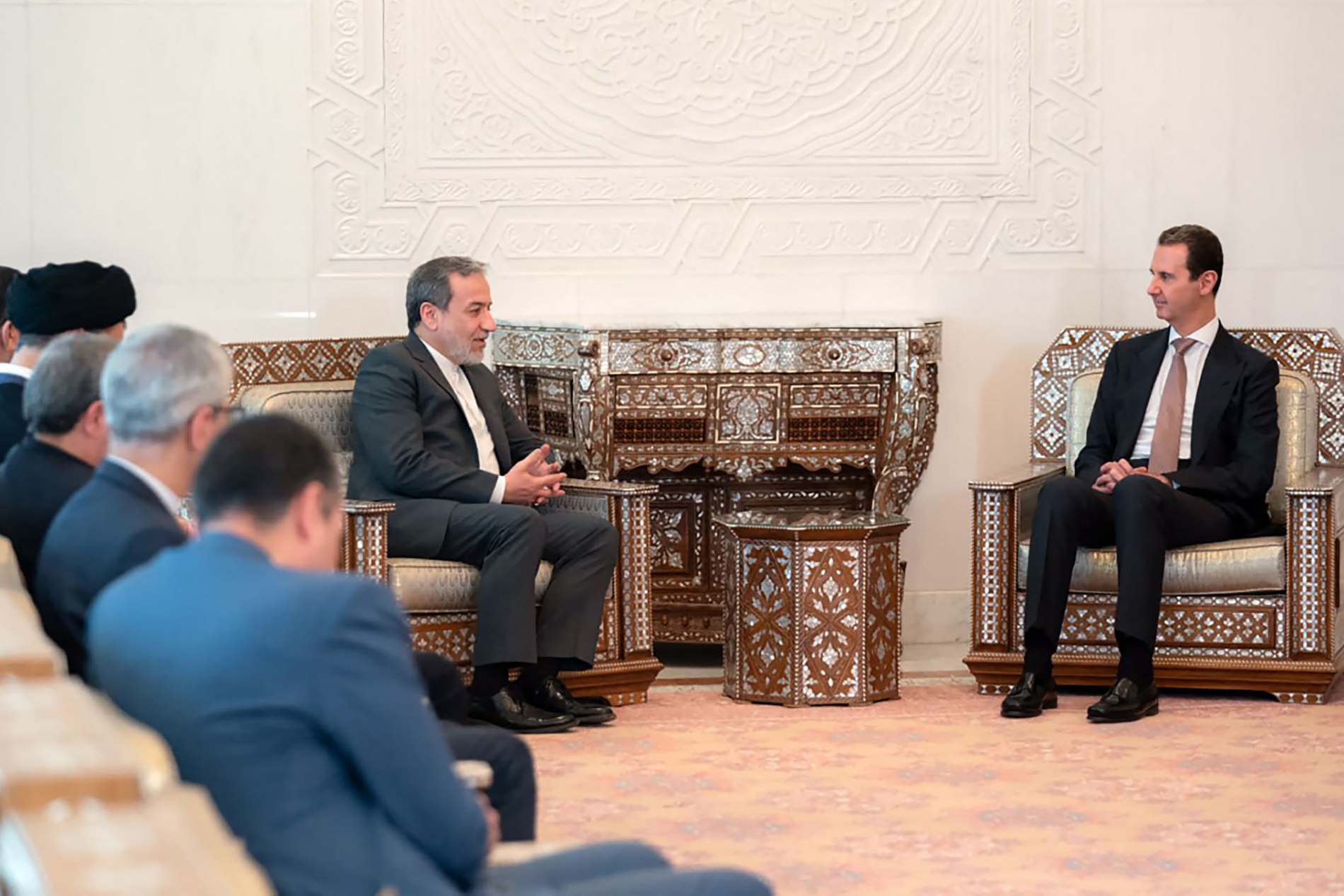
Syria's President Bashar al-Assad (R) meeting with Iranian Foreign Minister Abbas Araghchi in Damascus on 5 October 2024.

Out from the cold

This realignment reverses the past dynamic of Syria-Yemen relations. Under Assad, Iran was a major Syrian ally, and Iran is the Houthis’ main sponsor, so all three were largely on the same page. Assad let the Houthis occupy Yemen’s embassy in 2016, depriving the internationally recognised government (which has Saudi support) of effective representation, but Syria’s new rulers returned the embassy to Yemeni government control in April 2025, ending a decade of estrangement. Senior meetings between the two countries then resumed in New York, Munich, Cairo, Antalya, and elsewhere. When it comes to Syria, Iran and the Houthis are out in the cold.

Before he became the country’s interim president, al-Sharaa led the Idlib-based force that toppled Assad. From 27 November 2024, his Hayat Tahrir al-Sham (HTS) group and allied opposition formations quickly captured the big Syrian cities of Aleppo, Homs, and Hama, before Assad fled Damascus days later, on 8 December. Their victory was well earned; HTS had spent years professionalising and coordinating fragmented factions in preparation.

In December 2024, HTS commander Abu Hassan al-Hamwi told The Guardian that they had done so because they identified an “absence of unified leadership and control over battle”. That vulnerability will sound familiar in Yemen, where the country’s Armed Forces (YAF) are composed of formations with different institutional histories, military doctrines, and territorial constituencies.
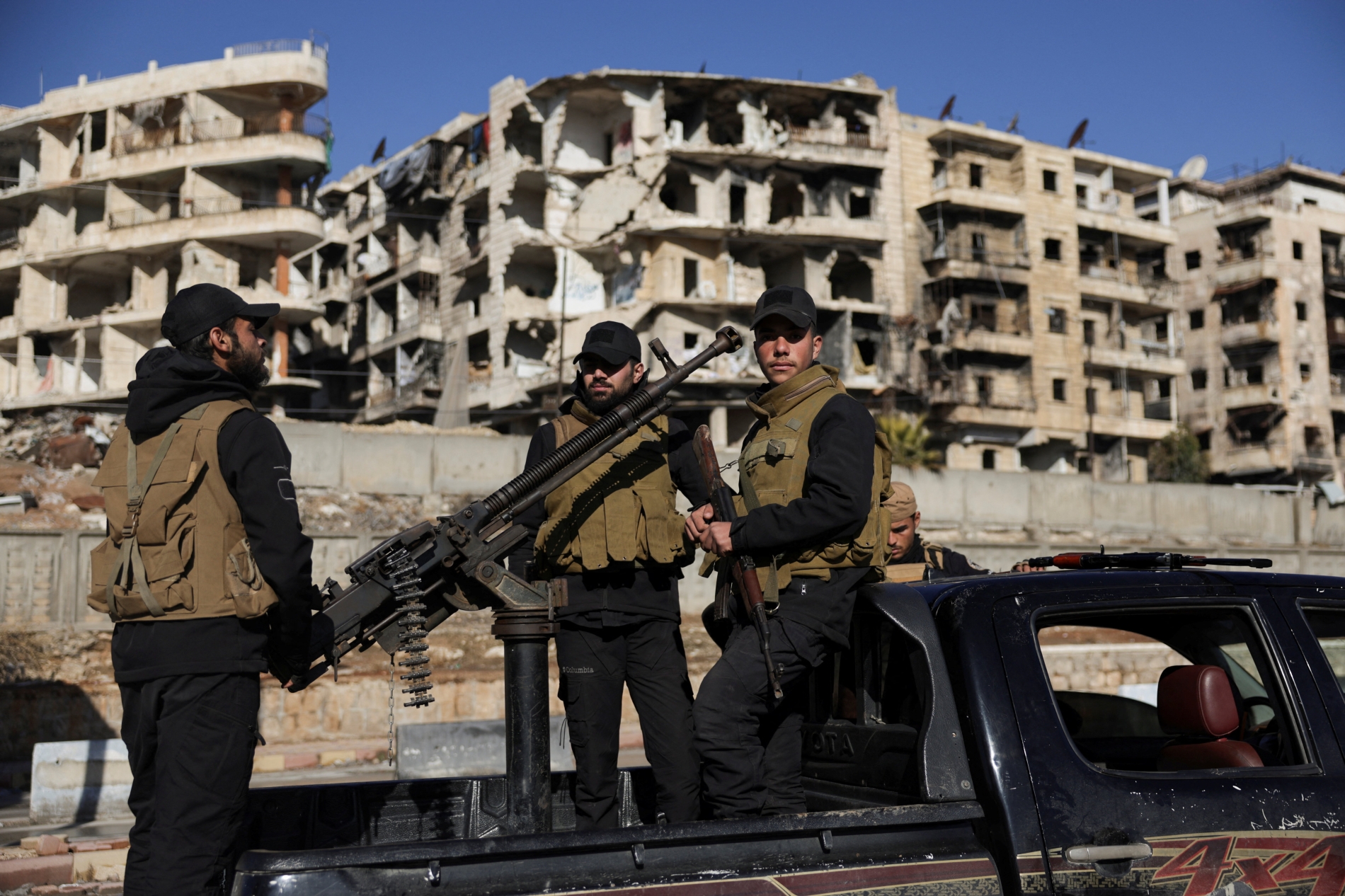
Foreign Minister Asaad al-Shaibani has dismissed reports of Syrian forces operating in Yemen

Necessary ingredients

In Syria, the armed forces had to rapidly integrate conventional and unconventional capabilities. For instance, HTS built a drone arm (associated with its Shahin programme), combining reconnaissance and offensive capabilities with mobile ground formations. The key was adapting inexpensive technology to changing battlefield demands, which the YAF must now translate to its own circumstances.

Another element crucial to success in Syria was operational coordination and exploiting political opportunity. HTS worked with southern opposition groups, but Assad's army's collapse was as much due to timing, its weakened morale, political fragmentation, and the lack of support from Russia, Iran, or Hezbollah. In other words, there were situation-specific circumstances in Syria in late 2024 that contributed to the HTS decision to go, and to their victory. Whether they could repeat the feat against another adversary in other circumstances is unknown.

REUTERS/Khalil Ashawi
Government forces patrol the Sheikh Maqsoud neighbourhood after taking control of the area, following the collapse of an agreement between the Syrian government and the SDF, in Aleppo, Syria, on 10 January 2026.

Syria's armed forces have been active since Assad fled. In January 2026, there was fighting in north-east Syria, as government forces pushed into the semi-autonomous territory once controlled by the Kurdish-led Syrian Democratic Forces. There have also been interventions in the south, in areas dominated by armed Druze groups. Navigating through this complex interplay of diplomacy and military pressure shows the value of readiness, ambition, and a willingness to be bold (but not to overreach).

For Yemen, these are crucial lessons. The Iran-backed Houthis are much more cohesive and motivated than Assad's demoralised army, with extensive experience in hybrid warfare, active Iranian support, and local tribal networks from which to draw recruits and information. Some military analysts think that the greatest value Syria can add at this stage is not to lend troops but to help the YAF rethink how they fight.

Deploying trained fighters abroad would divert manpower from these domestic consolidation efforts; al-Sharaa would struggle to justify any casualties

The YAF to-do list

Around al-Hazm in al-Jawf, advancing YAF formations have met fortified Houthi positions, commanding heights, trenches, and minefields, as drones and artillery concentrate heavy fire. The YAF must therefore assess the Houthis' evolving tactics and adapt its military strategy and tactics respectively, rather than simply assume that further manpower or firepower is needed. Syria's experience shows that commanders must rapidly adapt to changing conditions.

Military engineering and explosive-hazard capabilities must be integrated into operational planning, and conventional military formations must incorporate drones without losing command coherence. Furthermore, mountain warfare and mine clearance will require well-trained YAF units with better armament and associated specialist support if it is to build on the recent progress made in command-and-control consolidation and logistics.

REUTERS/Khaled Abdullah
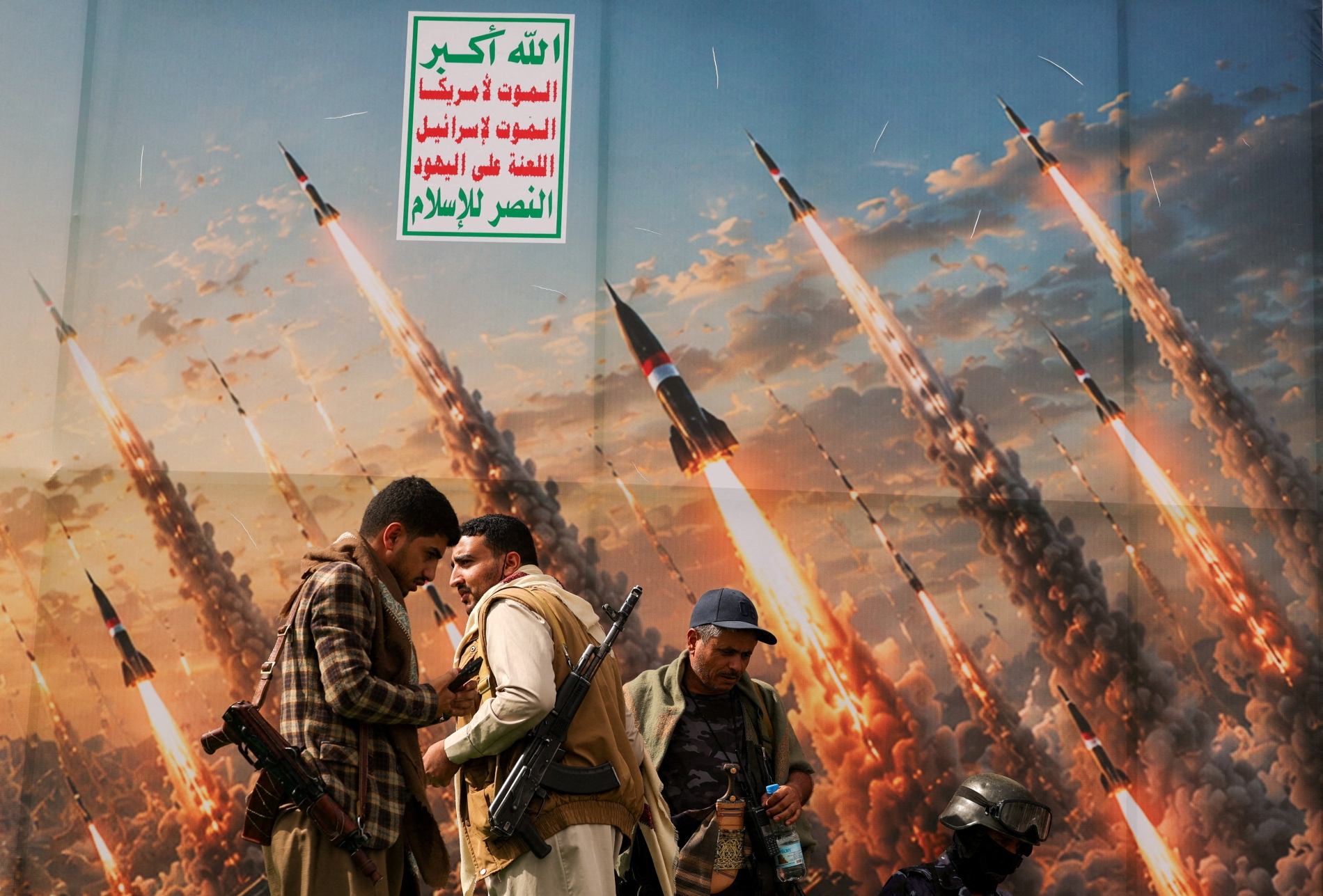
Houthi activists stand on a platform against a banner depicting Houthi missiles amid an escalation campaign against Saudi Arabia, in Sanaa, Yemen, on 31 July 2026.

Still, the Houthis have several advantages, including terrain, weapons, intelligence, and entrenched defences, having spent years preparing for the battles ahead. A small Syrian deployment along Saudi Arabia's southern border with Yemen is unlikely to determine the wider outcome, but it could offer a more immediate contribution than combat troops inside Yemen. By reinforcing specific defensive and support roles, Syrian personnel could free up Saudi and Yemeni formations to advance to the frontline against the Houthis.

There are several precedents for this style of burden-sharing and reallocation. Qatar deployed over 1,000 personnel and armoured vehicles to support Saudi border security in early 2015, weeks after Houthi forces surrounded the presidential palace in Yemen's capital, Sanaa, and seized President Abdrabbuh Mansur Hadi's official residence. Hadi and his cabinet were then forced to resign, and the Houthis dissolved Yemen's parliament shortly after. Pakistan's parliament rejected military participation in the coalition in April 2015, but sent more than 1,000 personnel in 2018 for military training and advisory functions within Saudi territory.

A Syrian mission could follow either approach, depending on the mandate and command arrangements, but even a defensive mission would carry physical risks. Syrian personnel could face Houthi cross-border drone strikes, missiles, or ground incursions. Furthermore, a small Syrian deployment is no substitute for Saudi border defences, nor would any Syrian light-infantry experience address Riyadh's primary vulnerability to long-range missiles and drones.

Interests and risks

For the Saudis, Syrian participation would broaden the coalition, expand burden-sharing, and demonstrate greater regional commitment to Saudi security; for Damascus, it would deepen a strategic relationship necessary to its economic recovery and reintegration. Having joined the coalition against Islamic State, Damascus might see any international anti-Houthi coalition as a chance to show that it can provide security beyond its borders.

Both Damascus and Riyadh have experienced the damage caused by Iran and its proxies, and the Houthi militia is one of Iran's main power-projection tools, with an active footprint in Iraq, Somalia, and beyond. Any anti-Houthi strategy must therefore include a plan to degrade its capabilities, deter it from future adventurism, and reclaim its territorial seizures.

BAKR ALKASEM / AFP
A Syrian army soldier stands guard next to an armoured vehicle positioned along the Syrian–Lebanese border in the rural area of Al Qusayr on 1 April 2026.

Syria has been reconstructing its armed forces, integrating different factions and seeking to impose a standard level of discipline, doctrine, and loyalty to the state, all while facing sporadic communal tensions and unresolved territorial disputes, most notably with Israel to the south. Deploying trained fighters abroad would divert manpower from these domestic consolidation efforts; al-Sharaa would struggle to justify any casualties unless he can convince the public that the battle against the Houthis is essentially part of the battle against Assad and his ally, Iran.

Iran-aligned Iraqi militias could threaten Syrian territory, including from drones, if the Houthis and Iran consider Syrian involvement as part of a wider regional campaign. The scenario may then involve Iran mobilising supporters and sympathisers through sectarian and nationalist narratives, so any Syrian deployment to the Saudi border must be carefully and clearly calibrated as purely defensive, as would any advisory and training support inside Saudi Arabia to transfer combat lessons.

Balancing act

Direct Syrian participation in Yemen is currently considered unlikely, given the political and logistical costs, and the risk of escalation. Some analysts think an important pre-requisite to any successful deployment would be a coherent Yemeni-led ground campaign with realistic objectives and authorisation. Syria's contribution should be measured according to whether it improves border security, frees Yemeni forces for frontline service, strengthens the YAF's capacity to operate more effectively, and supports a sustainable resolution in Yemen.

In late 2024, al-Sharaa's forces showed that discipline, organisation, adaptation, and timing can overturn an entrenched military balance. Yemen poses a different test. The Houthis have built extensive defensive networks and developed capabilities that reach beyond Yemen's borders.

Damascus can pass on the lessons it learned from its recent combat experience without attracting another war. For Riyadh, the strongest outcome is a more capable Yemeni partner and a more defensible Saudi frontier. For Syria and al-Sharaa, it is a partnership that advances its sustainable recovery, hopefully without sacrificing the very stability it so recently restored.

font change

Related Articles