New Ukraine talks: Putin's gamble after Trump's loss

The negotiations in Abu Dhabi are expected to focus on security guarantees for the postwar period, with EU representatives excluded at Russia's insistence

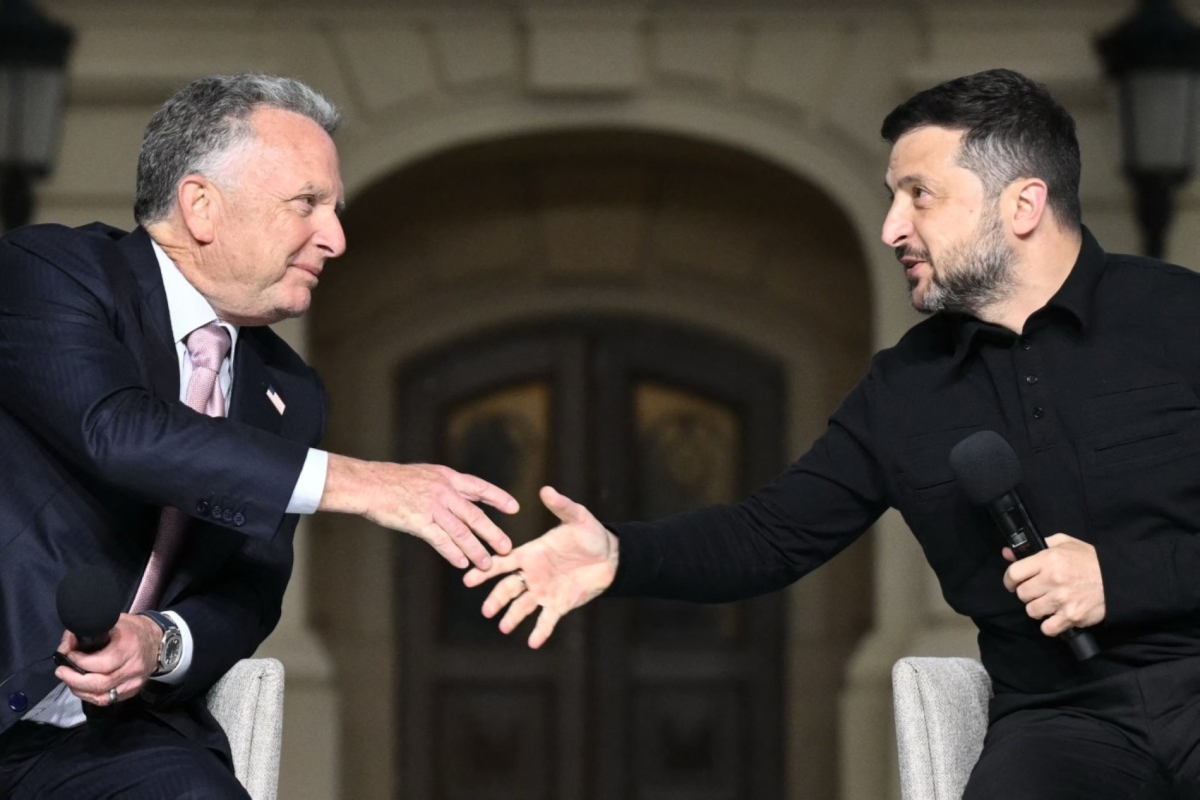
Ukraine's President Volodymyr Zelensky US Special Envoy Steve Witkoff and US President Donald Trump's son-in-law Jared Kushner at a press conference following their talks in Kyiv on 6 September 2026.
GENYA SAVILOV / AFP
Ukraine's President Volodymyr Zelensky US Special Envoy Steve Witkoff and US President Donald Trump's son-in-law Jared Kushner at a press conference following their talks in Kyiv on 6 September 2026.

New Ukraine talks: Putin's gamble after Trump's loss

A new round of trilateral negotiations between Russia, Ukraine, and the United States is set to take place in Abu Dhabi today, 10 November. It is the first such meeting since February in Geneva, after which negotiations were suspended following the outbreak of the US-Israeli war on Iran.

The announcement follows two months of talks involving Steve Witkoff, US President Donald Trump's special envoy, and the president's son-in-law, Jared Kushner, with Russian President Vladimir Putin and Ukrainian President Volodymyr Zelensky.

The presence of Sergei Ryabkov, Russia's deputy foreign minister responsible for arms control and relations with NATO, suggests that Moscow intends to place security guarantees at the centre of the discussions. On Russia's insistence, EU representatives will not be included in the discussions. But with Moscow and Kyiv remaining deeply divided over what guarantees each should receive once the fighting ends, a significant breakthrough remains unlikely.

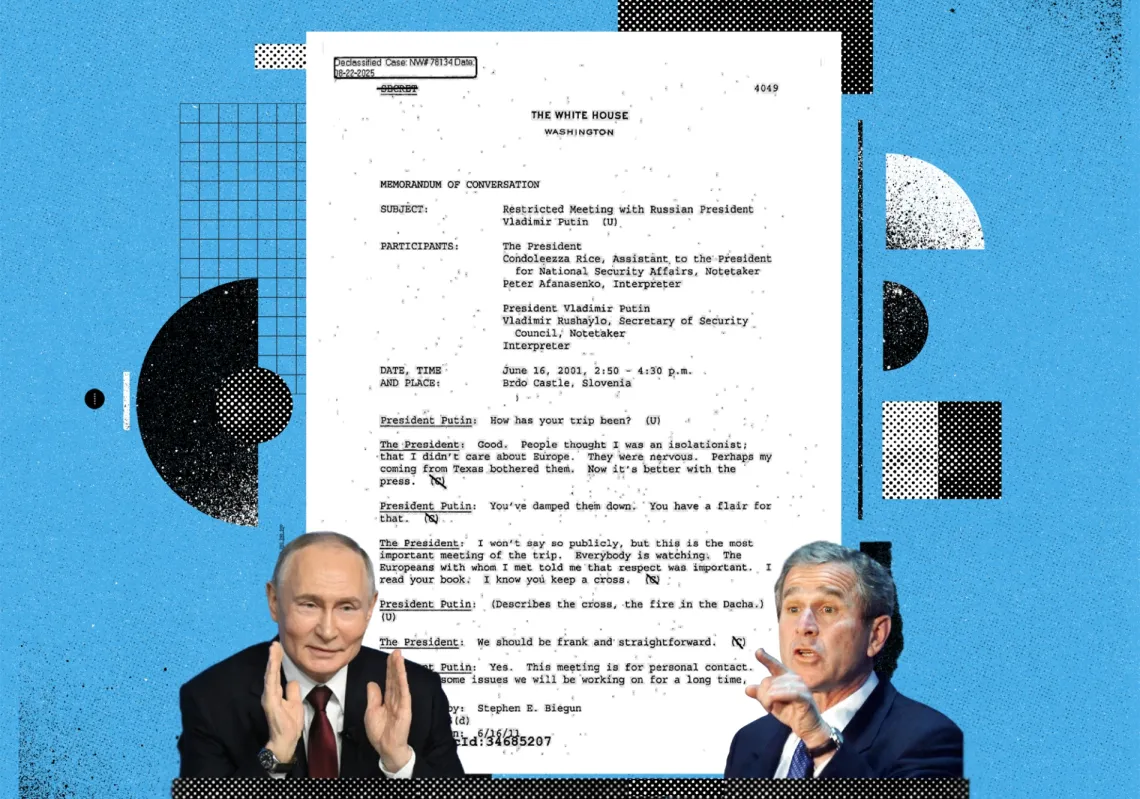
Russia's negotiating delegation will be led by presidential aide Vladimir Medinsky. Ukrainian representatives accuse him of deliberately wasting time during previous rounds of negotiations that he led in Istanbul in the spring of 2022 and again last summer. In mid-December 2021, Ryabkov presented the provisions of two draft security treaties that Russia had submitted to the United States and NATO just weeks before its invasion of Ukraine. He subsequently negotiated their terms with US and European officials.

The proposals demanded that NATO withdraw its forces to their pre-1997 positions, pledge never to admit any former Soviet republic to the alliance, and refrain from deploying troops or weapons on the territory of those republics that could threaten Russian security. But these demands are so complex that resolving them could take many rounds of negotiations.

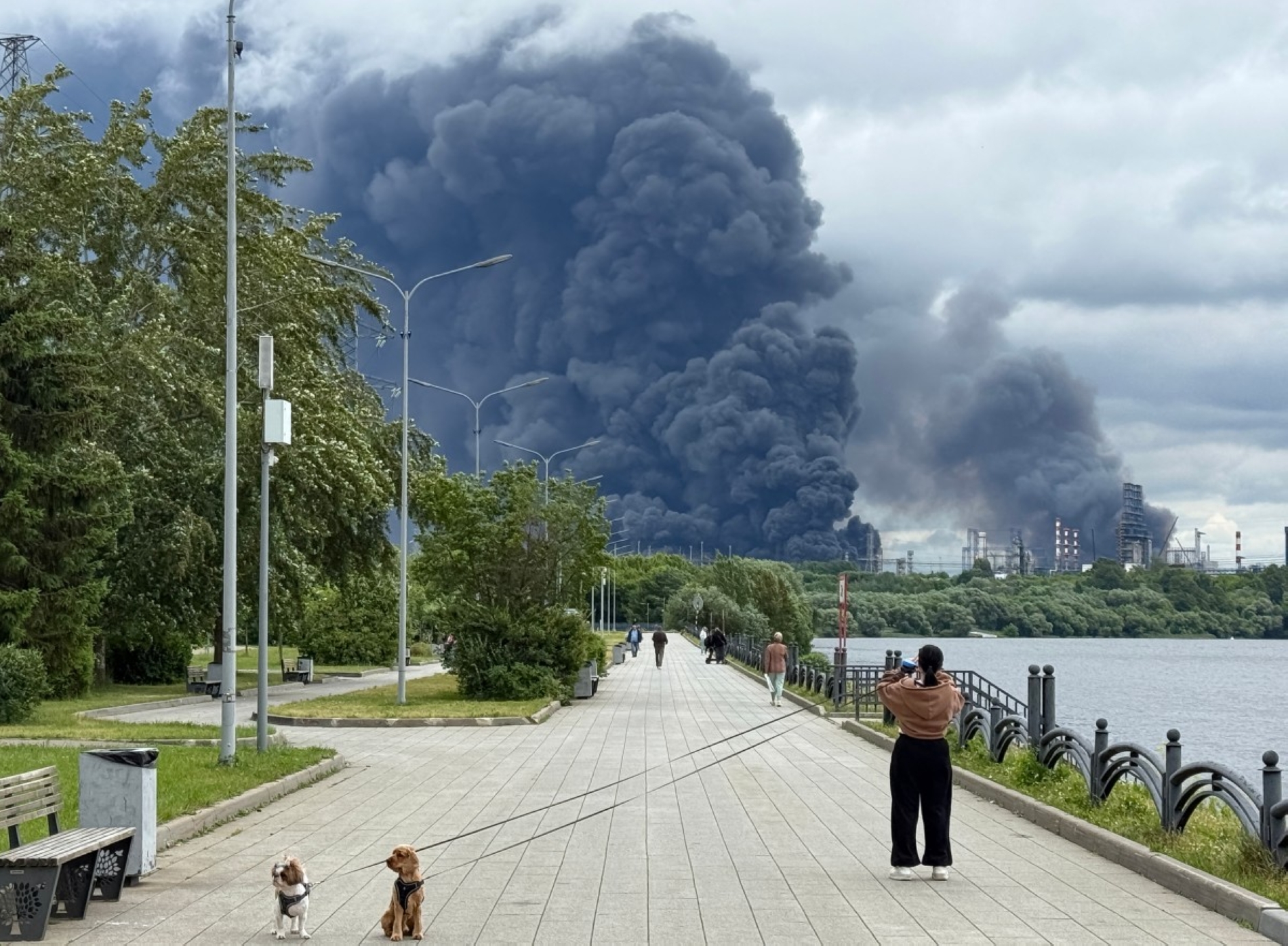
In the run-up to the talks, Russia intensified its attacks on Ukraine's energy infrastructure and blockade of Ukrainian ports on the Black Sea. For its part, Ukraine has also escalated its attacks on Russian oil refineries, defying Trump's repeated appeals to stop.
AFP
People walk in a park as black smoke rises from the area of the Russian oil producer Gazprom Neft's Moscow oil refinery on the south-eastern outskirts of Moscow on 18 June 2026.

Exploiting a window

The negotiations follow the Republicans' resounding defeat in the US midterm elections. Moscow may try to exploit the interim period to force Ukraine to accept its demands or make limited concessions, handing Trump a symbolic diplomatic victory at a time when he is facing a lot of heat at home for waging war on Iran.

In a significant development, a telephone conversation between Finnish President Alexander Stubb and Norwegian Prime Minister Jonas Gahr Støre has revealed a growing inclination among some European countries to also explore negotiations with Russia.

However, Moscow's continued insistence on its prewar demands could leave little room for progress. Foremost among these demands are the withdrawal of NATO forces to their pre-1997 positions and the establishment of a new European security architecture that would preserve Russian spheres of influence across the former Soviet republics, including Ukraine. Such arrangements would effectively give Moscow the power to veto their accession to military alliances.

Statements by Russian officials in recent weeks have reaffirmed Moscow's determination to achieve its war objectives and address what it describes as the conflict's "root causes". Russia continues to demand that Ukraine withdraw from the four regions Moscow annexed in the autumn of 2022, relinquishing their entire territories within the administrative boundaries they held when Ukraine gained independence from the Soviet Union in 1991. Over the past two months, Russian forces have also intensified efforts to establish a buffer zone inside Ukraine's Sumy and Kharkiv regions, along the border with Russia's Kursk and Belgorod regions.
The talks in Abu Dhabi are the first since February in Geneva, after which negotiations were suspended following the outbreak of the US-Israeli war on Iran

What Ukraine wants

For its part, Ukraine says it's willing to accept a ceasefire along the current front lines, but refuses to give up territory that Russian forces have failed to capture. Kyiv has also expressed a readiness to discuss the security guarantees sought by Moscow, provided that any agreement preserves Ukraine's sovereign right to choose its political, economic and military alliances. It also demands firm commitments from its allies to prevent Russia from launching another war, as it did in 2014 and 2022.

Ukraine insists that these guarantees must be credible and fundamentally different from the security assurances it received under the 1994 Budapest Memorandum, when it relinquished its nuclear arsenal in exchange for assurances from Russia, the United States and Britain concerning its sovereignty and territorial integrity.

Paul ELLIS /  AFP
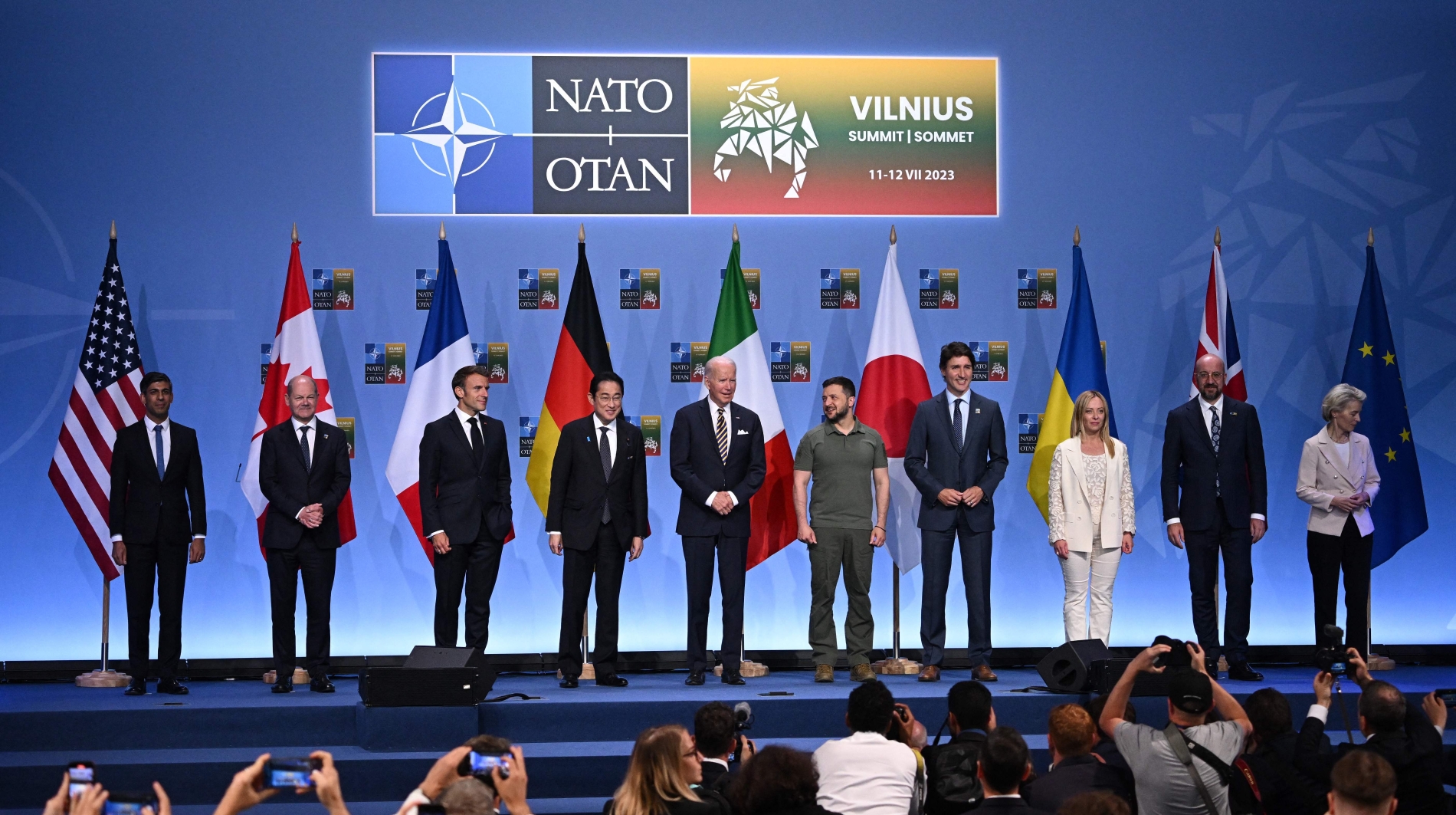
US President Joe Biden and mainly Western leaders agree a Joint Declaration of Support for Ukraine during the NATO Summit in Vilnius on 12 July 2023.

Ukraine is seeking security guarantees comparable to those enshrined in Article 5 of the NATO treaty, which establishes the principle of collective defence. It also insists that the US play a direct role in providing these guarantees alongside forces drawn from Europe's Coalition of the Willing to repel any future aggression by Russia. Ukraine also rejects restrictions on the size or armament of its military, maintaining that a strong army remains the foremost guarantor of its independence and security.

In mid-2024, Putin unveiled documents that he claimed constituted an agreement reached by Russian and Ukrainian negotiators in Istanbul in the spring of 2022. Among the provisions he disclosed were Ukraine's purported agreement to limit the size and armament of its armed forces and its commitment to renounce NATO membership. Other provisions concerned the rights of the Russian minority in eastern Ukraine and the Ukrainian Orthodox Church affiliated with the Moscow Patriarchate.

European anxiety

Seeking to allay European fears that Washington might strike a deal with Moscow at their expense, Kushner met European delegations in Brussels last Thursday. In a post on X following the discussions, Kushner explained that "our objective is to develop practical arrangements that address the security concerns of all parties, reduce the risks of future conflicts and create a more stable and predictable security environment."

European governments fear that the Trump administration may favour Moscow and pressure Kyiv into accepting postwar security arrangements on Russian terms. More troubling for European capitals is the prospect of Putin and Trump striking a deal over the continent's security architecture with scant regard for European interests or demands.

European governments fear the Trump administration may pressure Kyiv into accepting postwar security arrangements on Russian terms

These anxieties have deepened following the partial withdrawal of US forces from Europe and the possibility of further reductions next month. The withdrawals form part of Trump's so-called "Donroe Doctrine", which places renewed emphasis on the Western Hemisphere, echoing the nineteenth-century Monroe Doctrine proclaimed by US President James Monroe.

Europe's resistance to proposals drawn up without its participation was evident in remarks by the European Union's foreign policy chief, Kaja Kallas, during a visit to Warsaw. "We already have a European security architecture in place," she told journalists. "The problem is that Russia continues to violate the treaties on which this architecture rests. NATO posed no threat to Russia in 2021, and it poses no threat today. Putin has no veto over European security."

Kallas concluded: "We cannot determine how or when Ukraine and Russia will reach a peace agreement, but any agreement, if it is to be implemented, will require the European Union to be a party to it."

font change

Related Articles