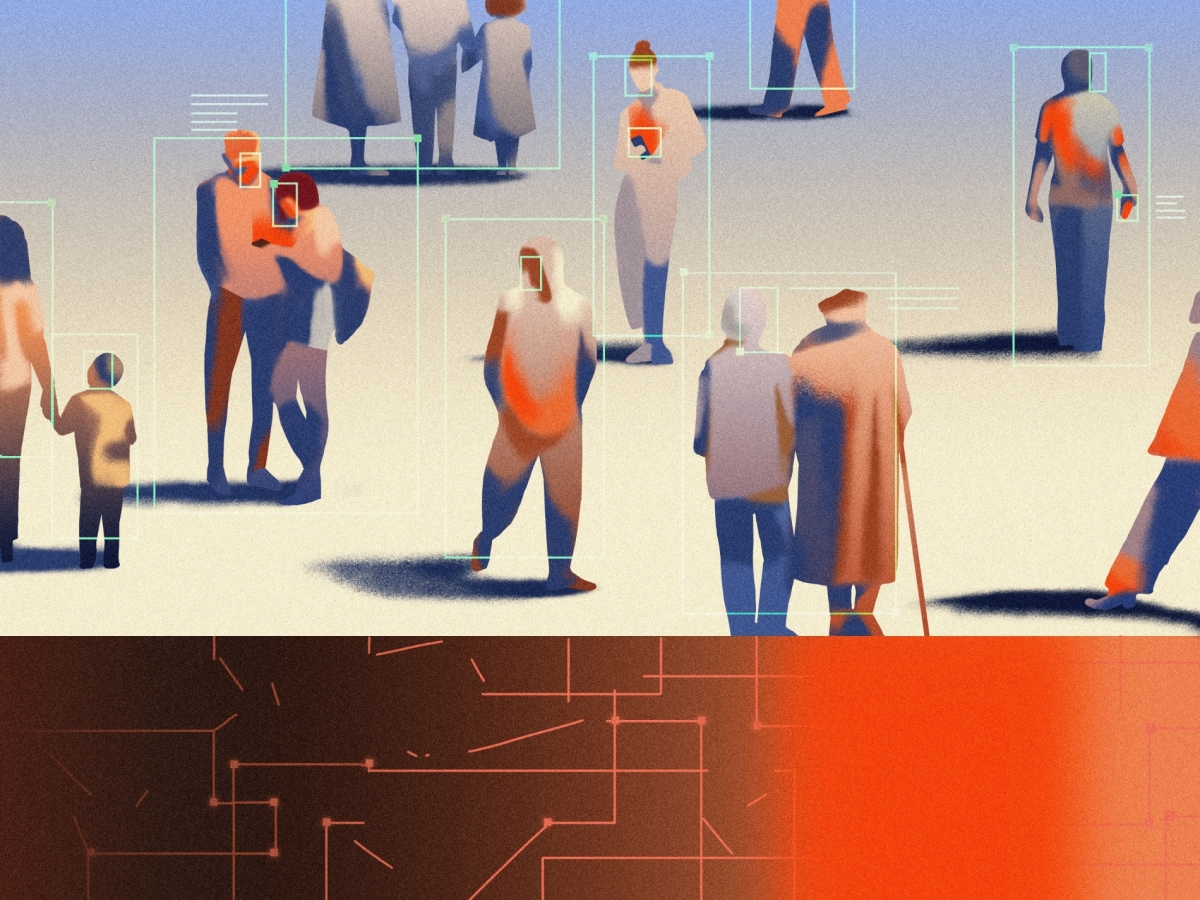
Tech is changing the cat-and-mouse game of protests

Who controls the means of communication and who can use it to their best advantage has been a feature of demonstrations over recent years. The recent French student protests were no different

Olga Aleksandrova

Tech is changing the cat-and-mouse game of protests

Mobile phones are now an essential tool for protests. They are used to spread the word, identify gathering places, exchange information, and document events. Through apps like BeechtChat, protesters can even communicate offline, as was used in the recent French demonstrations. This shows how technology lets people mobilise without clear central leadership.

The state’s response has also changed, from censoring content and suspending accounts to blocking platforms and disconnecting. Central to this are the companies that control services that protesters rely on, whether that be a communication platform or a satellite internet network like Elon Musk’s Starlink.

Before the 24 October 2026 demonstrations in France, people were urged to download the BitChat app to communicate if networks were suspended or access was restricted. The app was one of the most downloaded on the French Apple Store on 22 October. A disruption to the Orange network contributed to the momentum. Although the extent of its use at the demonstrations is unknown, the downloads reflect interest in a communication tool that remains available when normal services are down.

The app began in July 2025 as a pilot project for Jack Dorsey, one of the founders of Twitter. He wanted to explore ways to connect phones to Bluetooth, pass messages between them, and encrypt them. When a person sends a message via WhatsApp or another app, it passes through the internet and the service's servers before it reaches the recipient. BitChat uses Bluetooth to connect nearby phones that run the app.

Users can start communicating without registering their phone number. In this mode, messages are transmitted directly between the devices in the area without the need for a mobile network or a central server. If the recipient is away from the sender, other phones between them can pass the message from one device to another until it reaches them. If users are distributed within a cluster, their devices may help move messages farther than the direct connection between two phones. However, this requires converged devices running the app. If a gap appears between them, the message may be interrupted.

BitChat also allows online communication using a network called Nostr that passes messages through distributed servers. Therefore, the app combines both methods depending on the available connection. The first is local via Bluetooth without the internet; the second reaches users farther away but requires an internet connection, like other messaging services.

REUTERS/Jorge Silva
A pro-China demonstrator films herself as an anti-government protester holds up a sign on her phone during skirmishes between the two opposing groups at Yuen Long station in Hong Kong, China, on 12 September 2019.

Bypassing the problem

Fears of disconnection have prompted protesters to look for similar tools before. During the 2014 Hong Kong protests, participants turned to FireChat, which connected phones to Bluetooth and local Wi-Fi. Five years later, as other protests broke out in the city, interest in BridgeFi increased. This was repeated in Myanmar after the 2021 coup when internet restrictions made communication more difficult. The idea is to retain a means of exchanging messages if networks are unavailable.

Digital tools helped distribute demonstration tasks among different groups. Platforms such as TikTok and Instagram allowed invitations to people outside parties and unions. Messaging apps then provide a space to discuss details and assign roles, while interactive maps aggregate dates and locations, so that participants can follow multiple activities without having to go to a single party that manages them all.

This pattern was already present with the Yellow Vest movement that began in France in November 2018 to protest the increase in fuel taxes (its name comes from the yellow safety vests that drivers are obliged to keep in their cars and were used by participants as a symbol of protest). Facebook groups helped bring them together around common demands, identify gathering places, and exchange information between regions. This use extended to the preparation for the 24 October demonstrations.
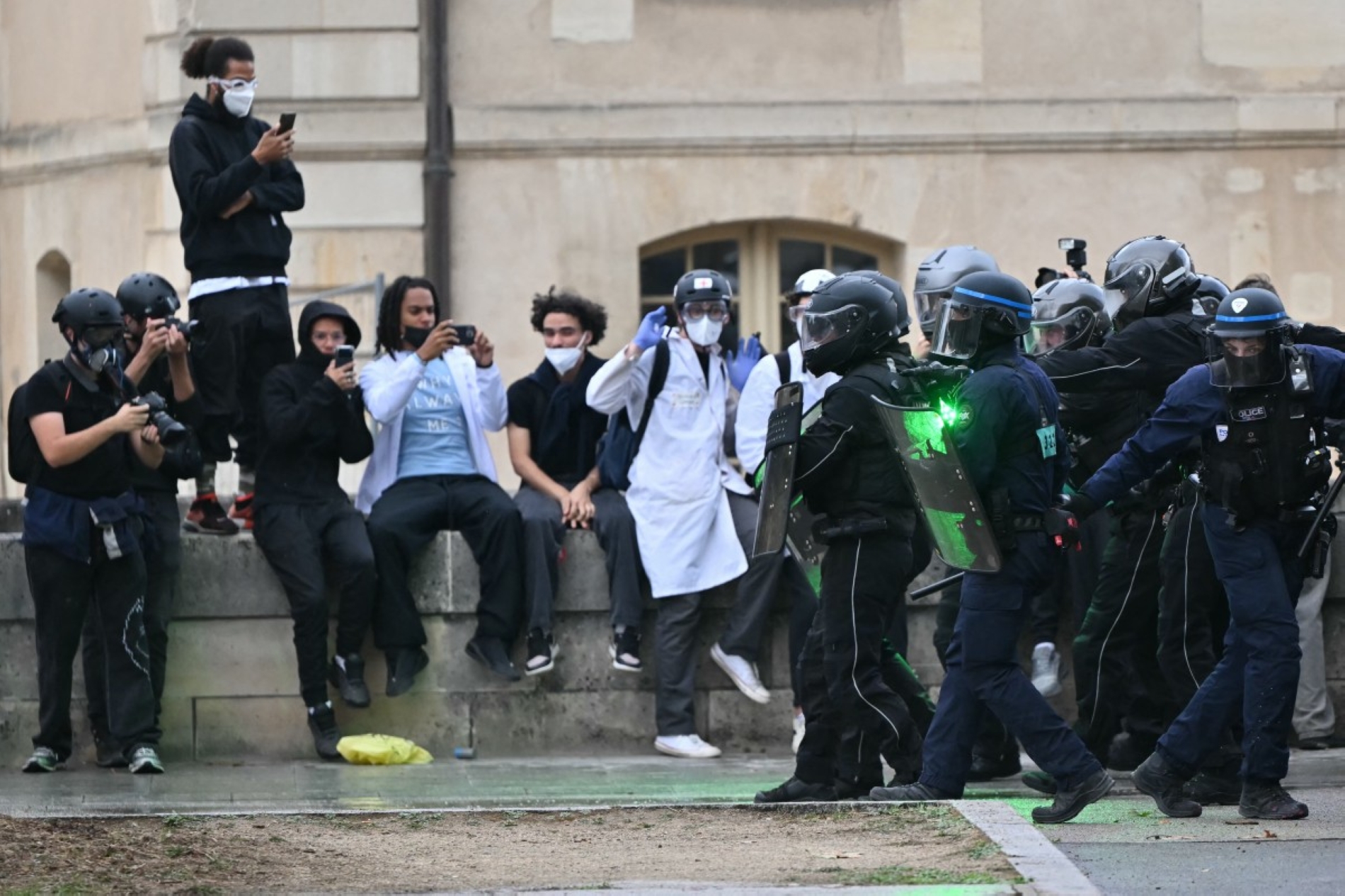

Messaging apps provide a space to discuss details and assign roles, while interactive maps aggregate dates and locations

A plan unfolds

A participatory map linked to the Yellow Vests and other groups with hundreds of announced movements was circulated. The map lets users add the place, timing, type, and description of an activity, grouping groups across many pages within a single interface. Users can see nearby movements, while each group can reach an audience beyond its usual followers. However, the accuracy of this information remains linked to its review and updates, especially when decisions are made to ban certain gatherings.

Messaging apps complement this role by providing more regular communication between those interested in participating. The Telegram channel lets you post a single update to thousands of subscribers at once. Smaller groups enable discussion, task division, and on-the-go updates. In France, invitations spread to public platforms, and some of the coordination moved to Telegram and Signal. Discord was also used to share photos, videos, and logos.

Thus, a person can start by following a public invitation, then join a group that handles the organisational details. This gives local groups greater ability to make their own decisions while keeping track of what is happening elsewhere, but it does not eliminate the influence of organisers. Channel and group managers, and account holders, can identify what is being posted and direct participants' attention to specific information.

LOU BENOIST / AFP
Protesters take pictures with their mobile phones of riot police officers during a demonstration of high-school students in Paris, on 13 October 2026, as part of a nationwide high school mobilisation.

Capturing events

In addition to organising, phones have helped document events and obtain legal support. Street Press, a French investigative media outlet, collaborated with Index, an independent digital investigative group, and the website Violence Polisier, to document incidents of violence by police. They sought a common way to receive videos and testimonies, allowing material filmed by people from different angles to be compared and verified before being sent to the press or prosecutors.

Legal support teams have also provided ways to communicate with lawyers, including the Signal app, but the speed at which content was shared also helped spread misinformation. One example is a clip purportedly showing fireworks being fired at police at a French event, but the footage was in fact filmed during protests in the Georgian capital Tbilisi in December 2024. Still, a post replaying this misleading description garnered six million views, illustrating how a real clip can give a false image of a protest once its location or date is changed.

French authorities have used drones to monitor gatherings from the air. Cameras installed on them allow them to monitor movements, crowds, and unrest, and help police direct their forces. The government has also asked social media platforms to expedite the review of reports, delete content inciting violence and looting, and suspend offending accounts.

One step ahead

The ability of governments to disrupt communication varies depending on the method used. Blocking a platform like Telegram targets a specific service, while internet shutdowns affect many apps and services at once. The network can also be slowed down, making it difficult to download videos and stream live, but the effect is less when participants use tools that exchange messages directly between phones without going through the usual communication networks.

To curb its spread, governments have blocked its download from official stores. In China, Apple removed Telegram from its app store in April 2026 at the request of the internet regulator. In India, authorities asked to disable access to its code repositories on GitHub in July. Apple and Google removed it from their stores in October. But deleting an app from the Store does not mean erasing it from phones on which it is already installed. These can continue to communicate via Bluetooth if the devices are close enough together and the necessary technical conditions are met. Blocking makes it difficult for new users to join, get updates and reinstall, so it remains effective even if it does not stop all connections.

The success of these apps depends on having enough devices connected to each other. The less widespread they are, the less likely they are to form a wide LAN. In France, platform-blocking has faced judicial oversight. The government blocked TikTok in May 2024 during unrest in New Caledonia (a group of islands in the Pacific Ocean located east of Australia that belongs to France but with a special status that gives it broad powers to run its affairs), but in April 2025, the French Council of State ruled that it illegally imposed disproportionate restrictions on rights and freedoms.


Supplied
Musk's satellite-based Starlink system has kept Ukraine connected to the internet since its invasion by Russia

Enter corporations

Control of the connection extends to the companies that manage the infrastructure. Starlink provides internet access via satellites without relying on local mobile networks and landlines, but it remains subject to the operator's decisions on the service's availability and scope. For example, a Reuters investigation revealed that Elon Musk ordered Starlink to be cut off during Ukrainian forces' advance to retake territory from Russia in September 2022. Although different from demonstrations, it shows that bypassing local networks cannot guarantee a connection if the operator decides to restrict it.

The internet has become a tool everyone uses to achieve their goals. Protesters use it to mobilise, coordinate, document, and reach audiences outside their own countries; authorities use it to follow up on calls, gather information and evidence, and request the removal of content that incites violence. Likewise, companies influence the reach and spread of publications and suspend accounts or restrict services. These roles may overlap when the government requests action from a tech company.

Technology does not guarantee freedom of communication, but nor is it a tool owned and controlled by state authorities alone. As such, it both expands individuals' ability to regulate and gives governments more means of surveillance and intervention, while blocking a service may push users to alternatives. Each party's ability to benefit depends on its knowledge, resources, and legal or technical authority. The multiplicity of alternatives makes it difficult to stop communication entirely, but it does not remove the ability of governments and companies to restrict it or influence its content and spread.

font change