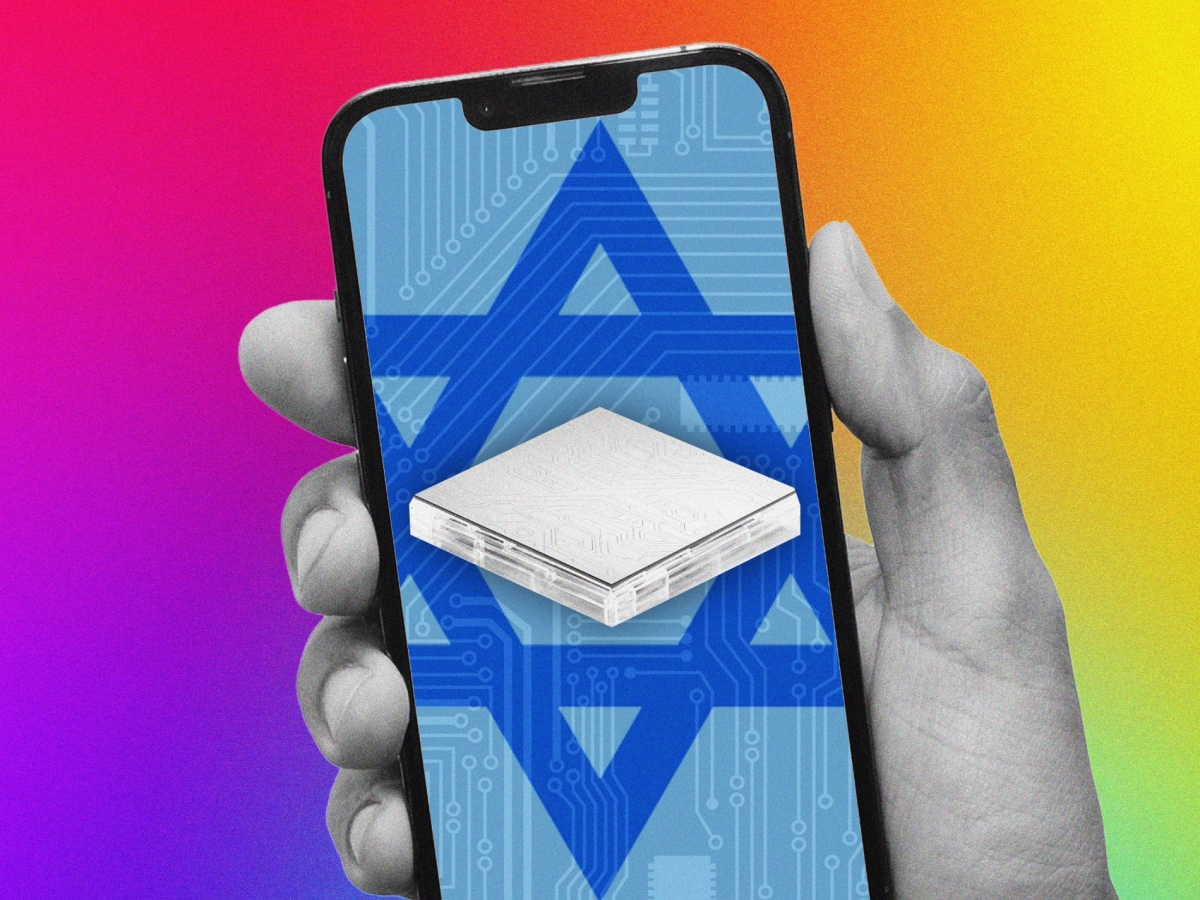

When Israeli Prime Minister Benjamin Netanyahu declared that anyone carrying a smartphone was holding “a piece of Israel” in their hand, the remark initially sounded like a sales pitch for the country’s technology sector. Recent developments surrounding the iPhone 17e, however, have cast his words in a different light. Reports indicate that Apple’s research and development teams in Israel contributed to technologies and components associated with the device’s cellular modem.
While this does not necessarily make the iPhone an Israeli product, it does, however, highlight how Israel has, over several decades, embedded itself in the global technology industry through design, development, and production. Its presence can be traced through chip design, algorithm development, communications technologies, and cybersecurity, as well as the acquisition of Israeli companies whose technologies have been absorbed by global companies such as Apple, Amazon, Nvidia, Intel, and Google.
Israeli presence at critical points in the technology supply chain warrants closer scrutiny. In today’s tech industry, where a device is assembled tells only part of the story. A more important question is who designed its essential components and who owns the expertise and intellectual property behind them.
The iPhone 17e, unveiled by Apple in March, drew attention to the origins of the technology inside modern smartphones. Apple announced that the device would run on the A19 processor and use the C1X, its latest in-house cellular modem. According to the company, the C1X delivers up to twice the speed of the C1 modem used in the iPhone 16e while consuming 30% less power than the modem in the iPhone 16 Pro. Apple did not say where the modem had been developed or which engineering teams contributed to it.
Within days, the Israeli press reported further details. On 10 March, The Jerusalem Post reported that the iPhone 17e featured a chip developed in Israel, linking the C1X modem to Apple’s silicon team in the country.

An over decade-long relationship
Apple’s relationship with Israel dates back more than a decade, beginning with a series of acquisitions that expanded its technological capabilities. In 2012, Apple acquired Anobit to deepen its expertise in flash memory, a core technology for data storage in the iPhone and iPad. A year later, it purchased PrimeSense, a specialist in three-dimensional sensing and machine vision. The deal gave Apple advanced depth and motion-detection capabilities and helped lay the groundwork for its later expansion into facial recognition and more sophisticated sensing technologies.
In 2015, Apple acquired LinX Imaging, which developed miniature multi-lens camera technology. The deal strengthened Apple’s capabilities in computational photography, depth measurement, and camera performance. Two years later, it acquired RealFace, a specialist in AI-based facial recognition, as biometric authentication became an increasingly important part of the iPhone experience.
Apple’s research and development presence in Israel is not exceptional in itself. The company operates globally, with engineering teams and development centres worldwide. What makes the Israeli case significant is the concentration of expertise, particularly in fields central to modern devices: silicon, communications, sensing, and imaging. That concentration raises another question: why has Israel become such an attractive environment for this kind of research and development?
The figures provide part of the answer. Research and development expenditure in Israel has reached approximately 6.8% of GDP, compared with around 2.7% across the Organisation for Economic Cooperation and Development. That is higher than South Korea, where the figure stands at roughly 5.1% of GDP.
Israel’s appeal to foreign companies is also reflected in the number of international research and development centres operating in the country. Specialist reports counted 434 such centres belonging to multinational companies in Israel in 2024. These centres were said to employ roughly one-third of the country’s technology workforce and to account for close to 40% of total research and development expenditure. By 2026, more than 500 multinational companies were operating in Israel, including Apple, Microsoft, Intel, Nvidia, Amazon, and Meta.

The significance lies not only in the number of centres. Israel’s technology sector employed around 400,000 people in 2025, equivalent to approximately 11.4% of the total workforce, while contributing 18.3% of GDP. Technology exports reached around $85bn, representing 58% of Israel’s total exports. Israeli tech companies also raised approximately $15.6bn in private funding during the year.
Another thing that sets Israel's technology ecosystem apart from many other research and development hubs is the technical expertise some workers acquire during military and intelligence service. The Israeli army's Unit 8200 specialises in signals intelligence, data analysis, and cyber operations, and stands out in particular. Many veterans of such units move into technology and cybersecurity after completing their service, creating a pool of specialists in communications, networks, encryption, and data analysis.
National security implications
Israel's dominating presence in major US technology companies carries national security implications. As Israeli companies and research and development centres embed themselves into the ecosystems of Apple, Nvidia, Google, and Microsoft, they gain a stake in the technologies that increasingly shape contemporary balances of power, including AI, semiconductors, cloud computing, and cybersecurity.
This relationship also creates mutual dependence. US companies draw on Israeli engineering expertise, while Israel becomes more deeply woven into the technological infrastructure of the US, making it more difficult to bypass in certain sensitive sectors. This interdependence has grown as advanced technology has become one of the principal measures of state power and a country’s capacity to exert influence within the international system.
A clear example is what happened with Nvidia. After acquiring the Israeli company Mellanox for approximately $7bn in 2020, Nvidia expanded its presence in Israel to around 5,000 employees and later began planning a new campus capable of accommodating thousands more. Mellanox’s high-speed networking and interconnect technologies have since become integral to Nvidia’s infrastructure, including the systems that underpin AI data centres. Expertise based in Israel is thus directly connected to one of the most consequential companies in the global AI race.
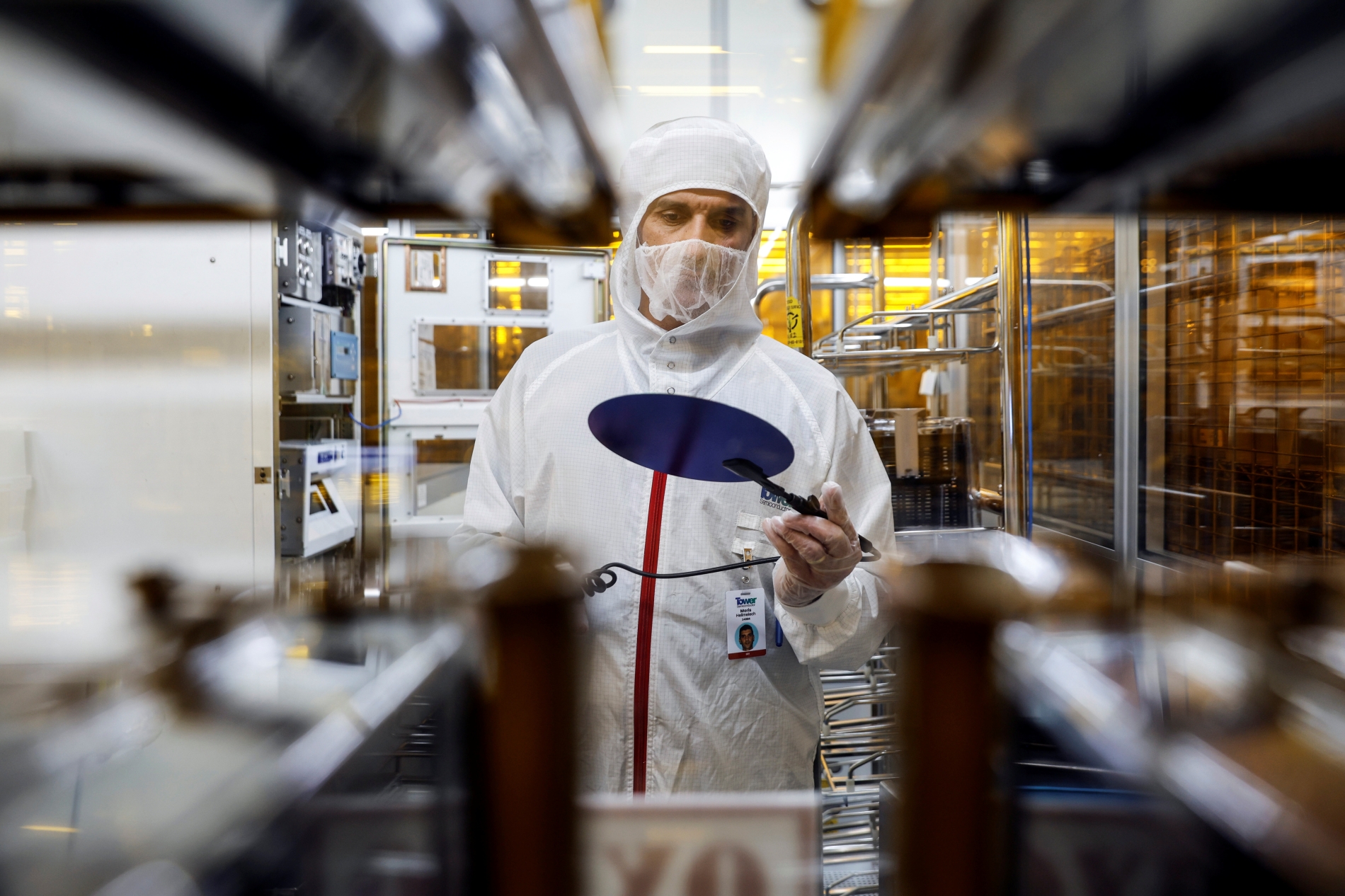
A similar pattern has emerged in cybersecurity. In 2025, Alphabet, Google’s parent company, acquired the Israeli cloud-security company Wiz for $32bn, while Palo Alto Networks announced a $25bn deal to acquire CyberArk.
Data cited by Reuters described such acquisitions as part of an effort by multinational companies to secure critical innovation and turn Israeli firms into research and development engines for future generations of their products. Integration of this kind gives Israel a technological importance far greater than the size of its economy might suggest, as its companies become embedded in systems used to protect corporate and government data and cloud infrastructure around the world.
The military significance is most apparent in the movement of technology between the civilian sector and the defence establishment. Following 7 October 2023, the Israeli Ministry of Defence said that by the end of 2024 it had awarded orders and contracts worth 782 million shekels to 101 start-ups and small companies.