Trump's tariffs are changing the global trade ecosystem

Trade routes and composition have changed, but not the overall flow, with ASEAN countries playing a bigger role

Eduardo Ramon

Trump's tariffs are changing the global trade ecosystem

American tariffs have gone beyond their traditional role of raising import costs and protecting domestic industries. As their scope widens and their terms change week-to-week, companies are reconsidering where they source goods, organise supply chains, establish production facilities, and seek alternative markets. So far, the main effect has been a redistribution of trade among markets, manufacturing centres, and commercial routes, with little evidence of a wholesale contraction in global commerce.

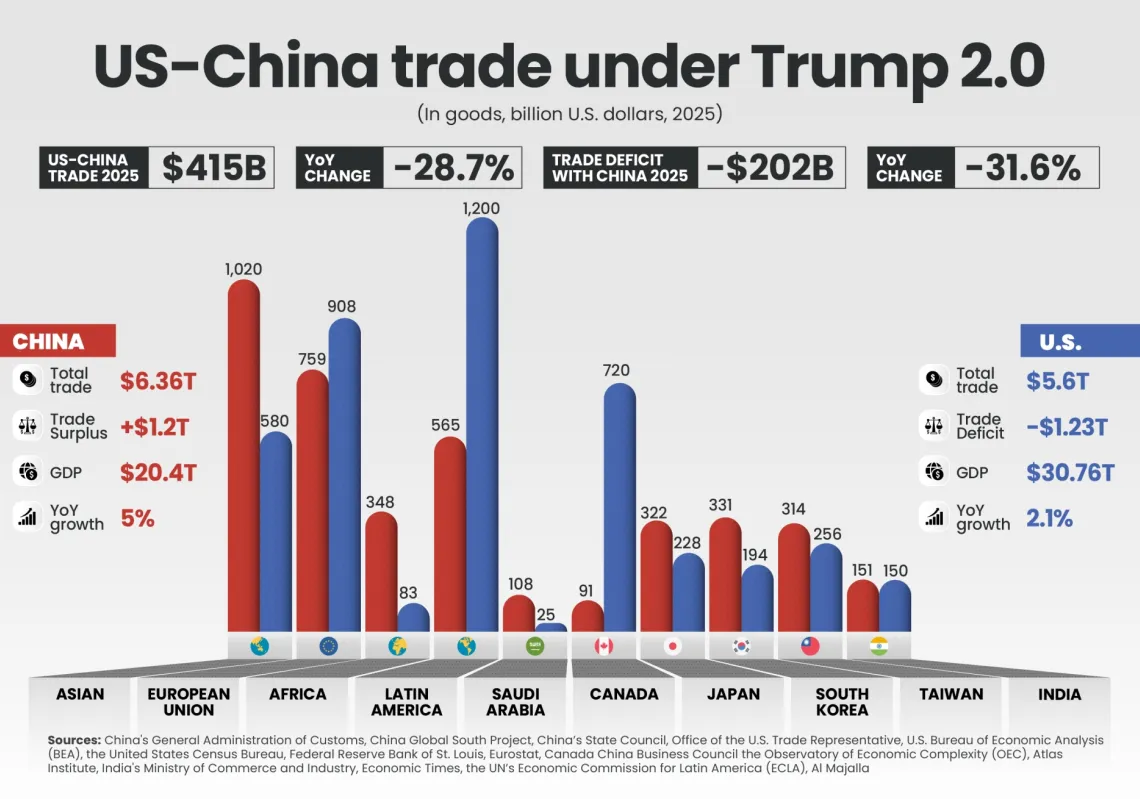
Trade data from the US, Canada, Europe, Asia, and the Gulf reveal a changing pattern of US imports, a reassessment of trade relations between Washington and its traditional allies, and the growing importance of economies capable of offering alternative manufacturing bases, transport routes, and markets. One of the clearest indications of the changing geography of American trade lies in the origins of its imports.

An analysis by the McKinsey Global Institute from January to May 2026, compared with the same period a year earlier, found that China’s share of total US imports had fallen by 2.7 percentage points, but the share of the Association of South-East Asian Nations (ASEAN) rose by 4.6 percentage points, and that of the rest of the Asia-Pacific region rose by 3.7 percentage points. Europe’s share declined by 8.1 percentage points, largely reflecting the waning effects of a surge in advance imports during 2025, particularly of chemicals, pharmaceuticals, and gold. The decline also extended to other categories, including cars.

These figures require careful interpretation. The shift in American imports cannot be explained simply as a transfer of trade from China to elsewhere. McKinsey says a product’s country of origin might not reveal where its value was created. Some Asian economies have become intermediate links in production chains that continue to draw on Chinese components and materials alongside inputs from elsewhere.

Broader trend

The broader trend is nevertheless clear: the US is diversifying its sources of imports without necessarily bringing manufacturing back to American soil. More recent US figures also suggest that tariffs have yet to produce a sustained decline in imports. In August 2026, American goods imports rose by 5.5% to $336.1bn, pushing the goods trade deficit up by 11.5% to $132.6bn. Goods continue to enter the American market despite higher tariffs, although rising import values are not the same as an increase in the actual volume of goods purchased.

Tariffs appear to be changing the routes and composition of trade more readily than reducing its overall flow. As a result, ASEAN has assumed greater importance. A study published by the International Monetary Fund (IMF) in June 2026 called Trade and Investment in ASEAN in a Fragmented World found that several member states had increased exports of products targeted by US tariffs in 2018-19. Vietnam also attracted significantly more foreign direct investment (FDI) into the affected sectors.
Reuters
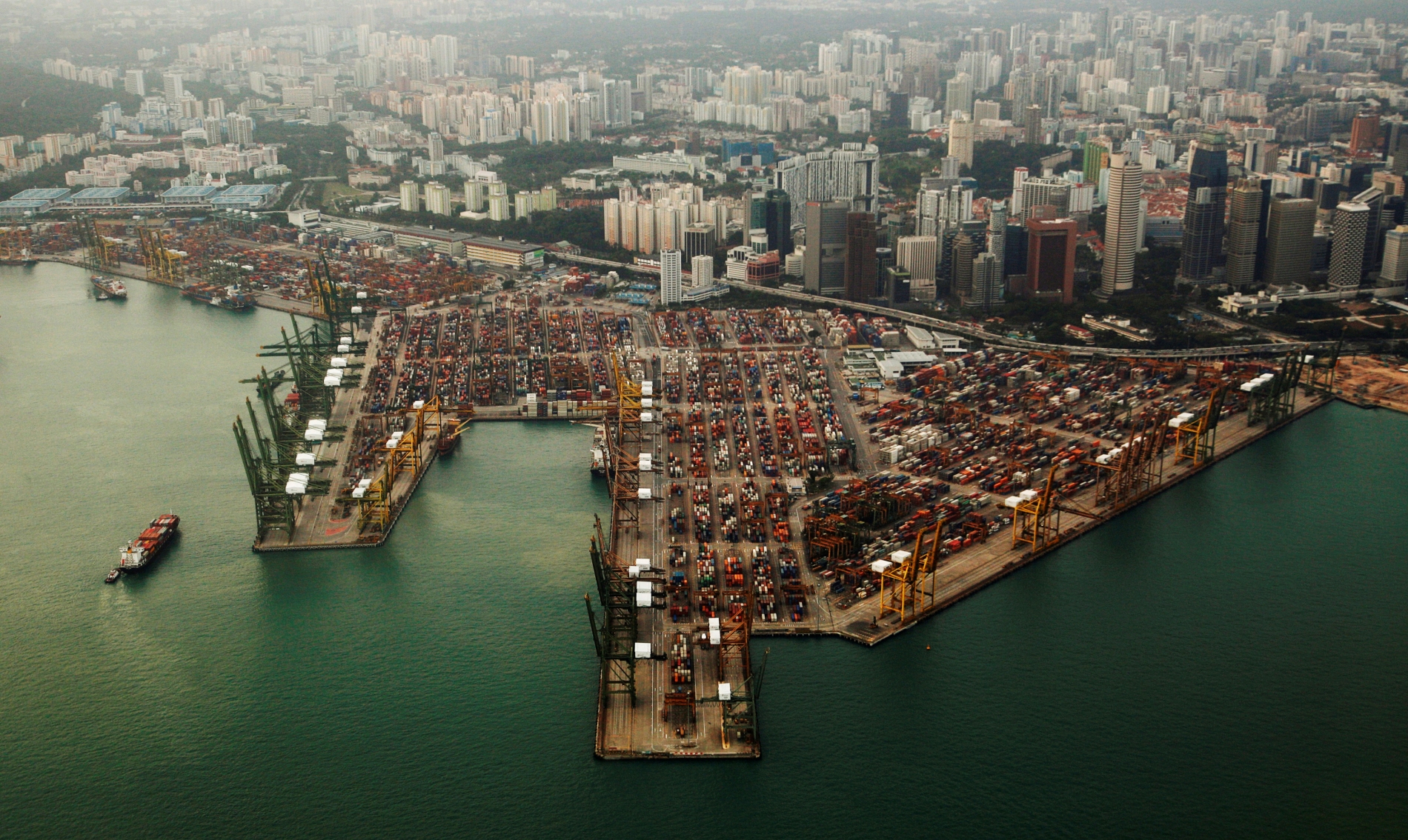
An aerial view of shipping containers stacked at the Port of Singapore, on 14 February 2012.

By 2023, ASEAN accounted for more than 20% of American imports of electrical goods, while China’s share fell from more than 40% five years earlier. According to the IMF, the change extends beyond the diversion of trade through third countries; data show an increase in domestically generated value added across ASEAN economies, alongside their continuing reliance on Chinese inputs.

South-East Asia is playing a bigger role in manufacturing within global supply chains. Although tariffs have reduced some direct American imports from China, the US economy remains closely connected to Asia’s manufacturing networks. Parts of those networks have responded by redistributing production and sourcing activities across the region. The difference between economic decoupling and supply chain diversification is important: decoupling seeks to reduce economic ties themselves, whereas diversification aims to limit dependence on any single source.
Although tariffs have reduced some direct American imports from China, the US economy remains closely connected to Asia's manufacturing networks

Asia in flux

ASEAN illustrates this distinction. The IMF study found that several of its states were now 'connector economies' linking China and the US. Their exports to the American market have expanded alongside rising imports from China. In some cases, China's role has shifted from supplying finished goods directly to US buyers to providing the components and materials used to manufacture products elsewhere in Asia. This means ASEAN is developing beyond its role as a hub for re-exports.

The same study indicates that the region's contribution to global value added has increased, with a growing share of the value embodied in its exports generated through domestic production, even as imports of Chinese components continue to rise. More recent trends identified by the McKinsey Global Institute support this picture. ASEAN is expanding its trade with both the US and China, strengthening its position within global manufacturing networks, particularly in electronics and AI-related products.

China, meanwhile, is deepening its commercial ties across Asia. Intermediate goods are assuming a more prominent place in its exports, strengthening its position as a supplier of the components and materials on which its neighbours rely for manufacturing. Import statistics alone therefore offer an incomplete picture of the changing balance of industrial influence. China's share of direct imports into the US may be declining, yet Chinese companies are still needed at the earlier stages of Asian supply chains.

Sean Kilpatrick/Pool via REUTERS
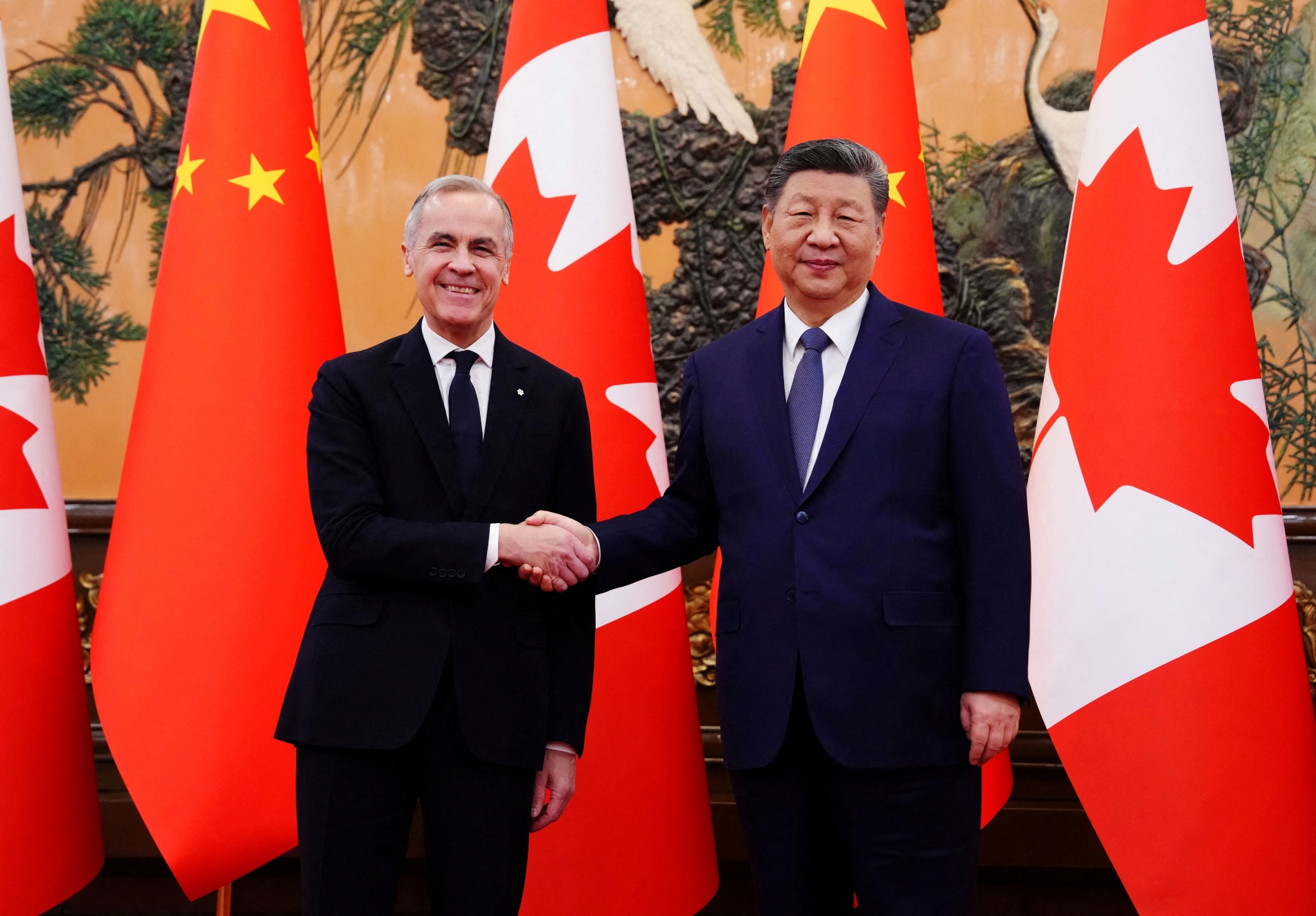
Canadian Prime Minister Mark Carney shakes hands with President of China Xi Jinping at the Great Hall of the People in Beijing, China, on Friday, 16 January 2026.

Allies' eyes wander

The changes extend well beyond Asia. Tariffs and uncertainty surrounding trade policy mean traditional US allies are broadening their commercial options and reconsidering their reliance on established markets. In Canada, there have been considerable fluctuations in export destinations. In July 2026, Canadian goods exports to the US fell by 6.6%, while shipments to other countries rose by 7.4%, bringing their share of total exports to 33.7%. That trend partially reversed in August, showing how the uneven pace of market diversification risks misinterpreting a single month's figures (the American market is still Canada's largest export destination by far).

Uncertainty over trade policy can turn market diversification from a long-term ambition into a commercial necessity. In 2025, the US share of Canada's total exports fell from 75.9% to 71.7%, while the number of Canadian firms exporting outside the US increased by 1.8%, according to figures published by Statistics Canada earlier this year.

Europe is moving in a similar direction, although its priorities differ. For the European Union, supply chain resilience and diversification are at the heart of its economic security agenda, knowing that dependence on a handful of suppliers or countries leaves EU businesses vulnerable to disruption and rising costs. On 18 September 2026, the European Commission convened a dedicated dialogue to identify critical dependencies and explore ways to strengthen diversification and resilience.

The EU is also broadening its trade relationships beyond the US, including with South-East Asian countries, through existing free trade agreements and new negotiations. Its approach combines wider access to markets with more diversified sources of supply. The effects of American tariffs thus extend beyond fluctuations in bilateral trade figures to the distribution of commercial risks across the global economy.

ANDREW CABALLERO-REYNOLDS / AFP
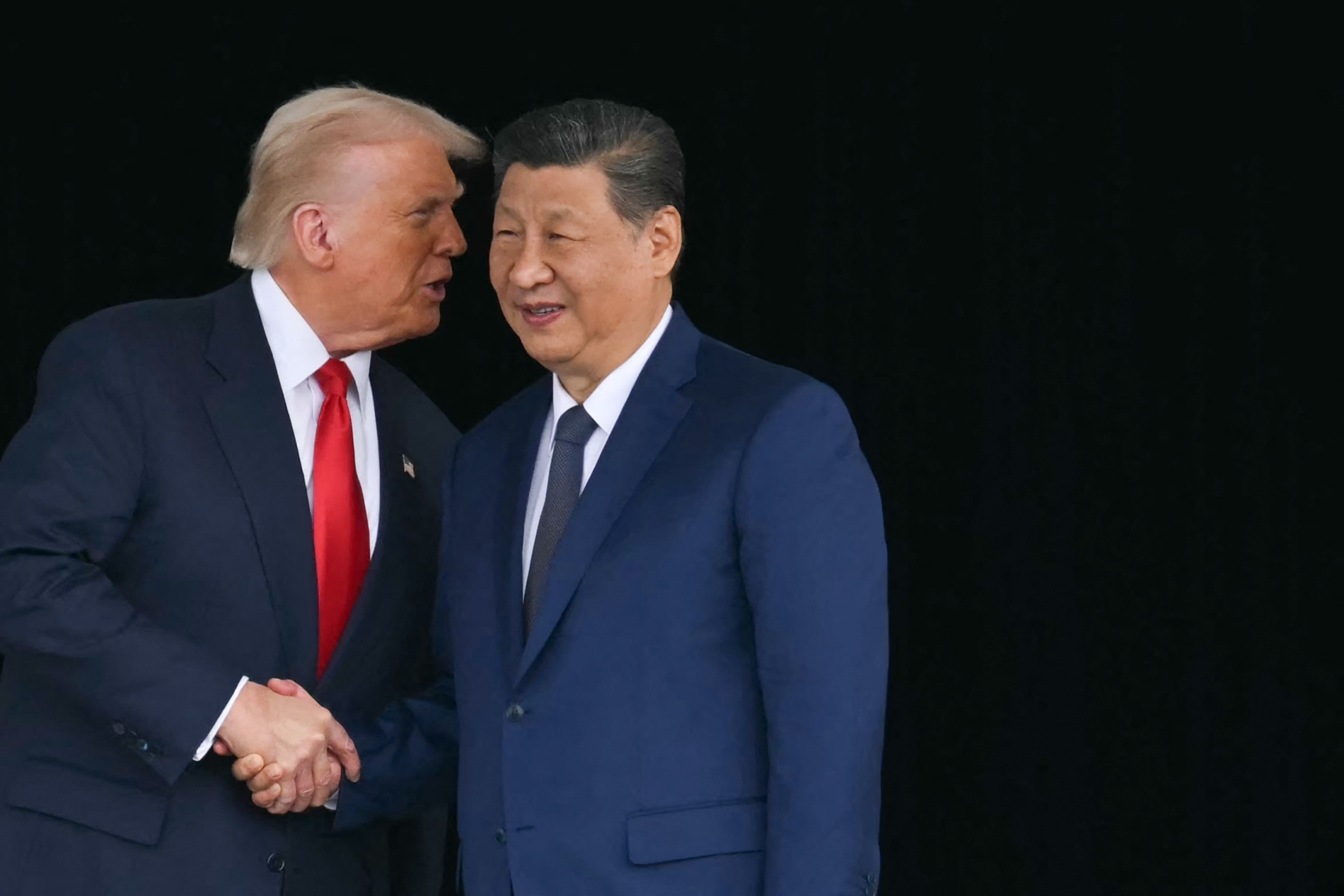
US President Donald Trump (L) and China's President Xi Jinping shake hands as they leave after their talks at the Gimhae Air Base, located next to the Gimhae International Airport in Busan on 30 October 2025.

30-for-30 framework

The relationship between the US and China presents a striking paradox. Despite maintaining trade restrictions in strategically sensitive sectors, Washington and Beijing have preserved important commercial ties. In May, they agreed to establish two trade and investment councils to oversee exchanges in non-sensitive goods and provide a government framework for discussing bilateral investment issues. This reflects a willingness to manage trade in areas where mutual interests endure, while maintaining restrictions rooted in national security concerns.

On 27 September, details emerged of their '30-for-30' framework. This proposes preferential tariff treatment for non-sensitive goods worth $30bn in each direction, covering some $60bn in bilateral trade (the proposed reductions are yet to enter into force, as implementation remains subject to legal procedures in both countries). The US list includes Chinese consumer products such as toys, small household appliances, children's goods, and decorative items. China's list covers US agricultural products, seafood, and medical devices. Most of these products could return to most-favoured-nation tariff rates once the necessary domestic procedures are in-place.

Financial markets reacted quickly and positively to the 30-for-30 framework. Shares in US retail, consumer goods, and household appliance companies were up. For firms that have spent years contending with steep tariffs on a wide range of consumer products, it offers a temporary reprieve, restoring some lost profit margins while easing costs for consumers. A similarly favourable response from US agricultural and food businesses underscored the continuing importance of the Chinese market to their exports.

The US and China are seeking to preserve trade in less contentious goods while maintaining restrictions in areas of strategic competition

The market reaction suggests that companies on both sides of the Pacific have little appetite for a complete trade rupture. They would much rather have greater predictability in the cost of trading non-strategic goods. The response also suggests that shielding consumer trade from geopolitical rivalry has become a commercial necessity, driven by market conditions as much as by political considerations.

Establishing boundaries

The framework is still far from a final agreement on tariff reductions (it is officially described as a set of recommendations for preferential tariff treatment). The parties still need to decide implementation arrangements, timetables, and final tariff rates. The US-China trade truce has therefore been extended until 10 January 2027, allowing more time for negotiations on issues such as agriculture and investment, but American coal will now be included within the tariff reduction framework, and China is expected to import up to 10 million metric tonnes of US coal annually from 2027-28.

Washington and Beijing are trying to establish boundaries around their economic rivalry. By excluding sensitive sectors from the framework, they are seeking to preserve trade in less contentious goods while maintaining restrictions in areas of strategic competition. Economic interdependence nevertheless remains a reality for both states. If current trends persist, tariffs' most consequential legacy may lie in the trade they redirect, not the volume of commerce they restrict.

Tariffs can change a product's country of origin, shipping route, place of assembly, and the destination of certain investments far more quickly than they can transform the underlying industrial landscape. They may encourage a US company to source components from Vietnam instead of China, prompt Canada to invest in Pacific ports and export facilities, or lead Europe to seek alternative suppliers, but underlying economic relationships remain firmly embedded in global production networks.

font change