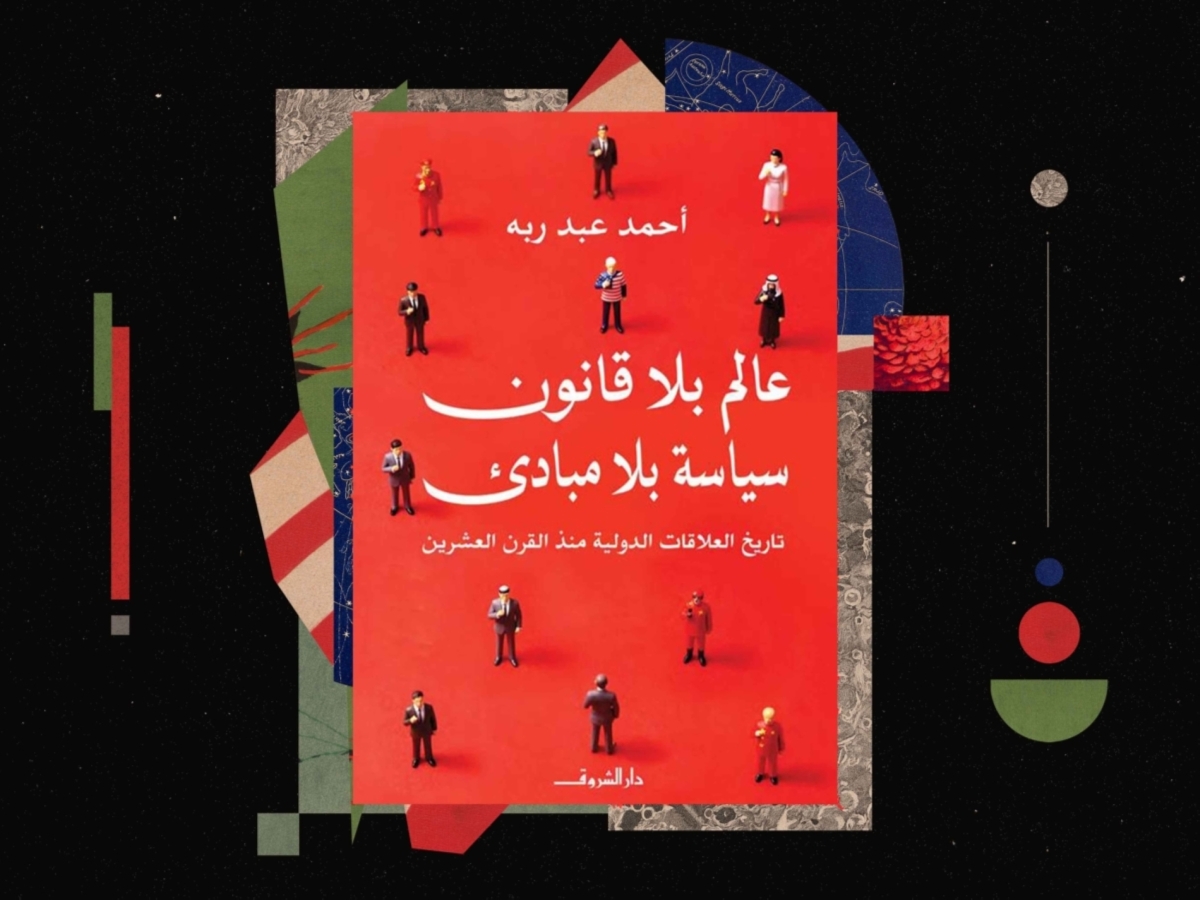

Given the war in Gaza, where 74,000 Palestinians have been killed in less than three years, and where thousands more lie buried under the rubble, is international law still capable of addressing contemporary crises? That is one of the main questions posed by Ahmed Abdel Rabou from the University of Denver in his new book A World Without Law, Politics Without Principles.
The book opens in May 2024, when Israel’s ambassador to the United Nations stood before the General Assembly and tore up the UN Charter in protest against a resolution supporting Palestine’s admission as a full member. Across 272 pages, he traces the history of international relations through five major periods, from European dominance and the two world wars to the UN, the Cold War, and most recently, what he calls the new ‘International Disorder’.
The author begins by examining the principal schools of thought in international relations before adopting the realist perspective as his framework for interpreting history. This regards the international system as anarchic and international law as a selective instrument through which powerful states subjugate others. Rules applied to Israel, for example, do not necessarily apply to Palestine. Restrictions imposed on Iran may bypass North Korea.
Abdel Rabou traces the intellectual origins of modern internationalism to the late 18th century, when the German philosopher Immanuel Kant advocated the establishment of an international body dedicated to peace and stability in his 1795 treatise Perpetual Peace: A Philosophical Sketch. Two decades later, the Congress of Vienna in 1815 was an early attempt to put that vision into practice. Convened after the defeat of Napoleon Bonaparte, it brought together Austria, Britain, Russia, and Prussia, and helped lay the foundations of the modern international order.
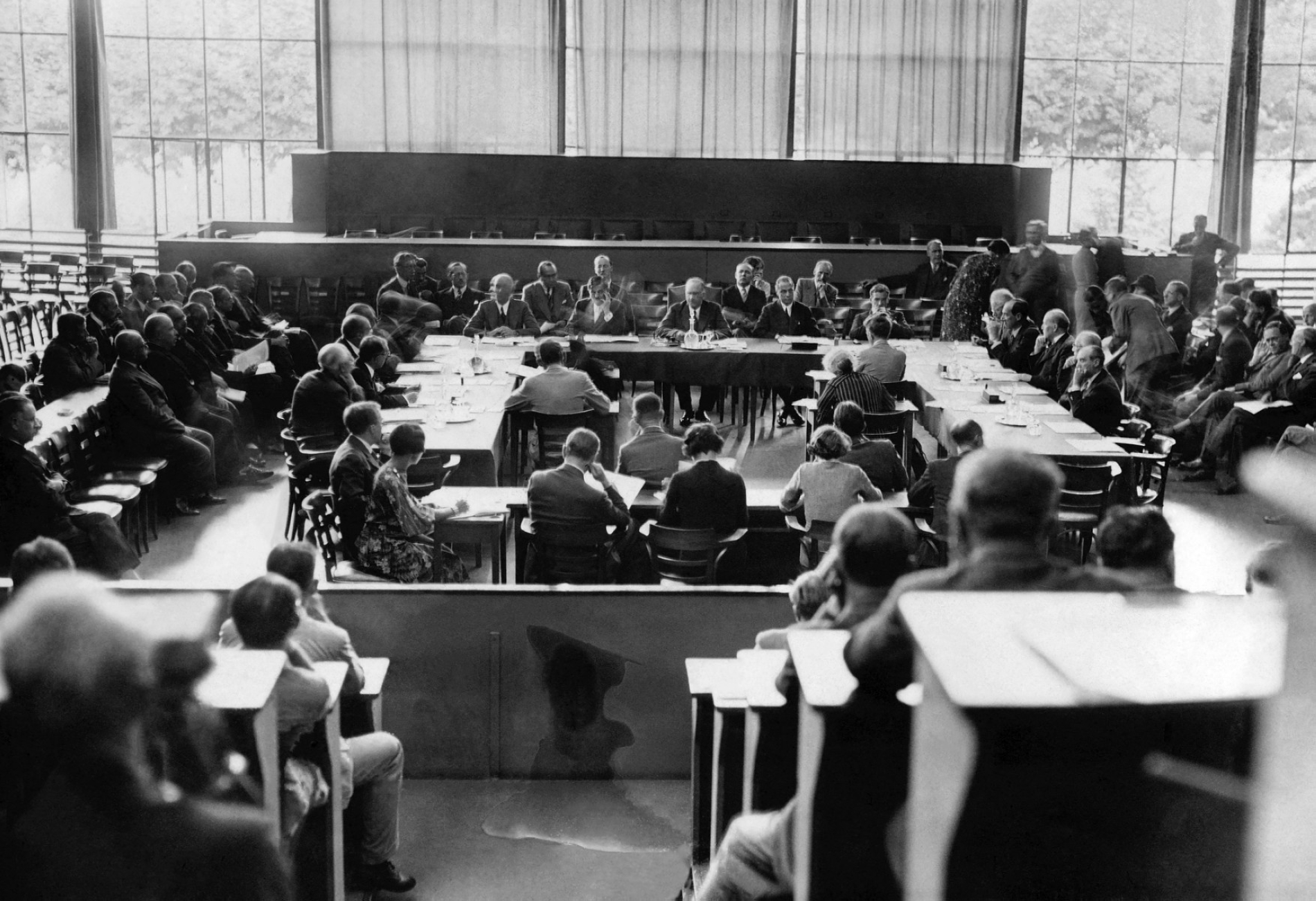
The author describes the early 20th century as the “age of international organisations”. It was largely in response to world wars that brought destruction and bloodshed on an unprecedented scale, killing millions. The first major experiment was the establishment of the League of Nations in Geneva in 1920, shortly after the First World War (1914-18), which left more than 20 million people dead or wounded. The League comprised the Permanent Secretariat, the Assembly, the Council, and the Permanent Court of International Justice, which dealt with dozens of international disputes from 1922-46.
The book portrays the court as having limited authority, emphasising the advisory character of its work and its weak enforcement mechanisms. It presents these shortcomings as contributing to the eventual failure of the League of Nations, whose inability to preserve peace became evident at the outbreak of the Second World War (1939-45).
The United Nations is born
From similarly turbulent circumstances emerged the United Nations, established to safeguard international peace and security after the Second World War. Formally inaugurated in October 1945 with 51 founding member states, it established its headquarters in New York. Abdel Rabou identifies its structure, with the five-member Security Council and its veto power.
Permanent membership was assigned to the victorious powers of the Second World War, an arrangement that remains ongoing. The author argues that, despite the UN’s role in resolving conflicts, it is mainly a forum for diplomatic exchange and expressing political positions. Its capacity to settle disputes or enforce international law is constrained whenever doing so conflicts with the interests of the powerful.
The discussion extends to the International Court of Justice (ICJ) and the International Criminal Court (ICC). The former adjudicates disputes between states; the latter prosecutes those accused of international crimes such as genocide. Abdel Rabou also examines what he regards as the unequal application of international law in cases involving human rights violations, citing the treatment of Uyghur Muslims in China, Rohingya Muslims in Myanmar, Palestinians in Gaza, and African populations caught up in civil wars.
He also offers a provocative reading of historical events, particularly the abolition of the Ottoman Caliphate by Mustafa Kemal Atatürk in 1924. Abdel Rabou rejects portrayals of Atatürk as a conspirator against the Caliphate or Islamic rule, arguing that such accusations have been perpetuated by unfair or misleading historical accounts. For him, the Ottoman sultans were not known for religious governance guided by Islamic law.
They generally preferred the title ‘Sultan’ to ‘Caliph ’, which, in his account, was not formally invoked until Sultan Abdul Hamid used it during his unequal struggle with Britain and France. The title served as a political instrument to consolidate his authority and maintain control over the empire’s non-Turkish populations. The exile of Abdulmejid II, the last Ottoman caliph, to France nevertheless marked a historic break. For the first time in Islamic history, Muslims found themselves without a caliph to oversee their spiritual and political affairs.
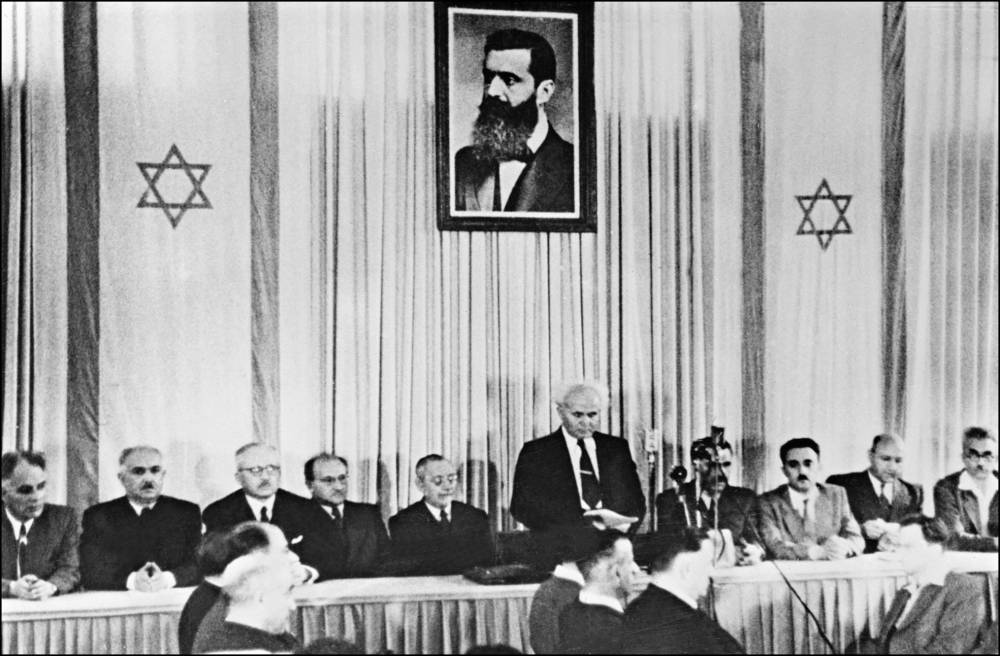
The book also examines the rise of modern nationalism, particularly among the Axis powers (Nazi Germany, fascist Italy, and Japan). Abdel Rabou explores how nationalist fervour, racist ideology, and notions of racial purity helped shape totalitarian regimes and fuelled policies of persecution and genocide that culminated in the Holocaust. He traces the debate over the status and integration of Jews in Europe to a political project aimed at establishing a national Jewish homeland.
Religious influence
Abdel Rabou argues that religion continued to influence the formation of the modern nation-state. Beyond the Jewish experience, movements drew on Christianity even after the decline of Europe’s religious empires. Similar efforts emerged in the Islamic world following the collapse of the Ottoman Caliphate. He describes Judaism as an ‘ethno-religious faith,’ distinguishing it from the universalist traditions of Islam and Christianity.
In his account, Judaism incorporates a belief in the distinctiveness of Jewish ethnicity from that of other peoples. This, he argues, contributed to the emergence of Zionism in the late 19th century under Theodor Herzl, who argued for a national homeland for Jews in Palestine. There followed waves of Jewish migration from Eastern Europe to Palestine. In 1917, Britain issued the Balfour Declaration, pledging support for the establishment of a Jewish national home in historic Palestine. The book links the declaration to a second Arab revolt against Britain (which ultimately failed because of the disparity in military strength).