Gaza art exhibit reinterprets the meaning of home

From meaning to memory, artists who endured the war have used their work to reflect how their understanding of ‘home’ has been changed by the devastation

Gaza art exhibit reinterprets the meaning of home

During the genocidal war in Gaza, people’s relationship with ‘home’ became bound up with memory and with the details and everyday moments associated with it. A place that had once seemed permanent became vulnerable to change and disappearance. Remembered fragments became traces of another life.

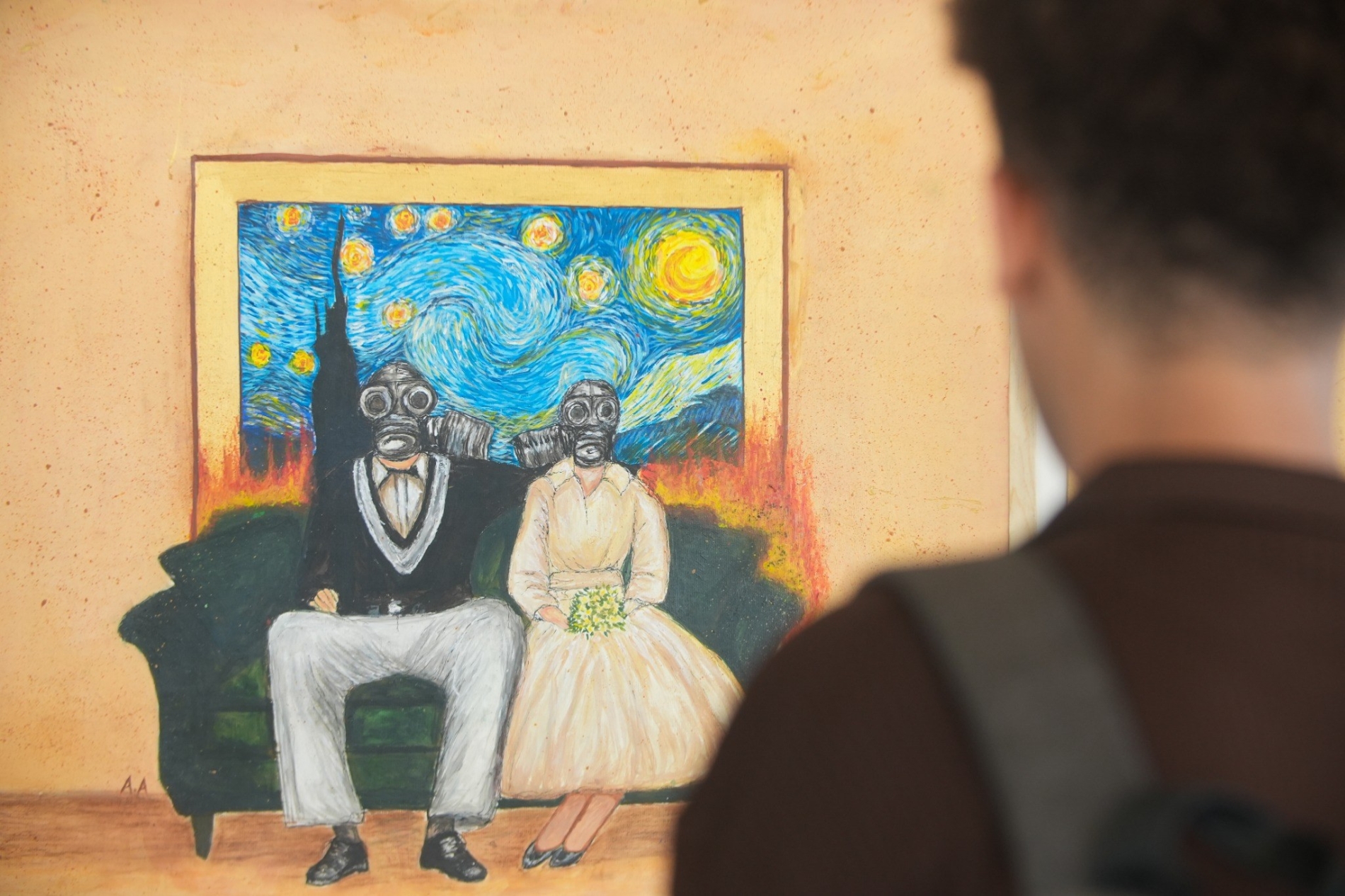
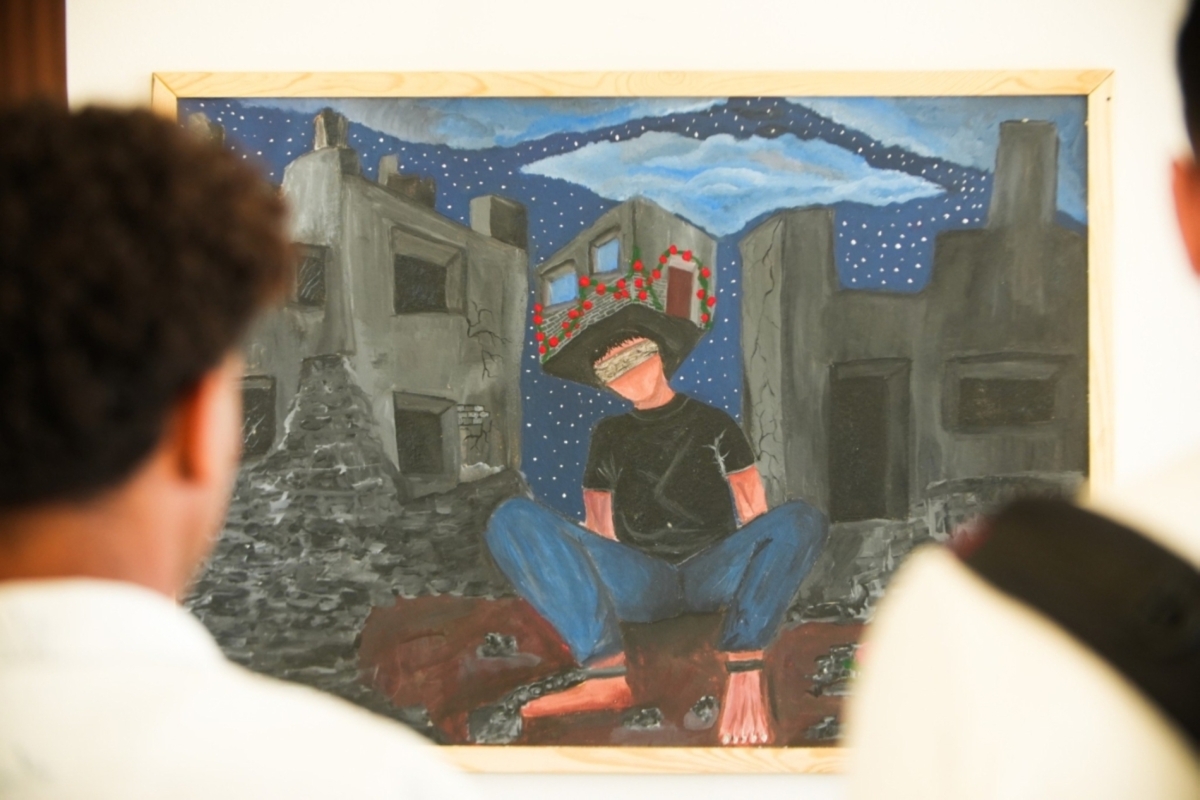
At an exhibition titled Home Archive, young artists from Gaza explore this relationship through works that treat home as a human experience that extends beyond walls and physical space. Television sets, seashells, the sea, and family conversations all become visual expressions of place and memory, revealing how people’s relationship with their surroundings has changed.

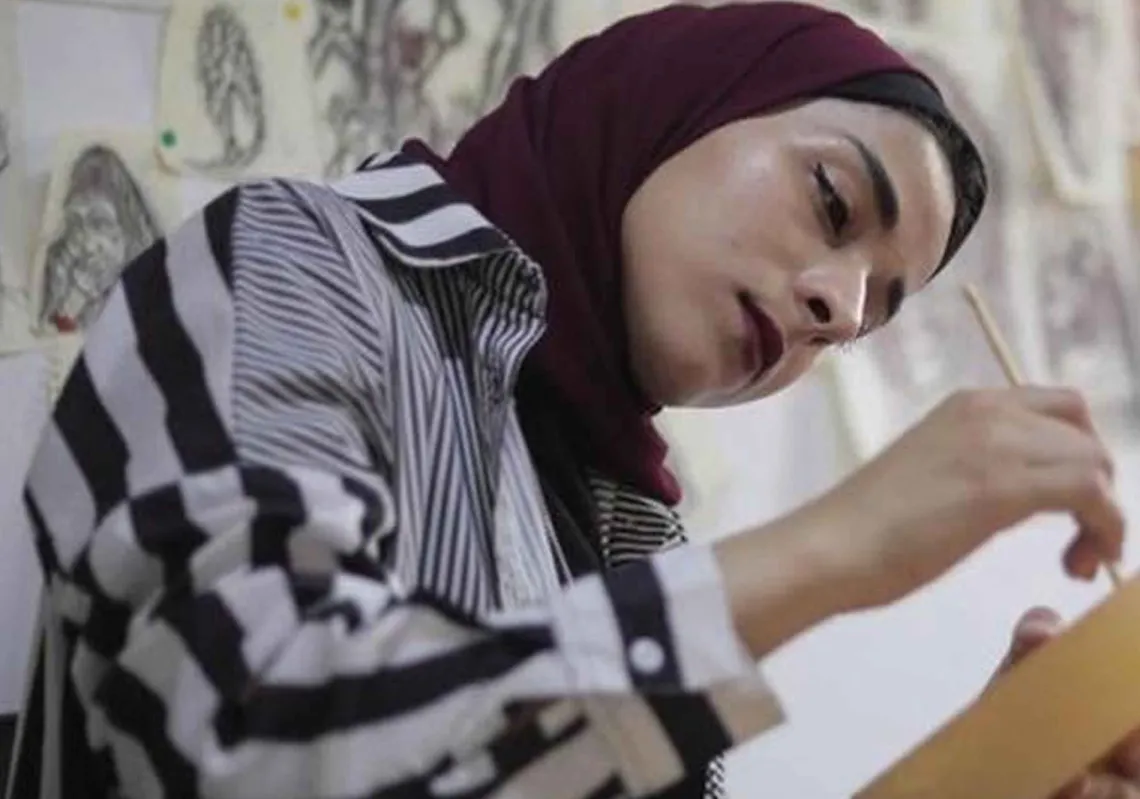
Rather than attempting to recreate home as it once was, the project explores what remains of it in memory after that relationship has been altered. Ibrahim Muhanna, 20, talks about Frameless, the art collective he co-founded with Hassan al Zaanin and Hadeel Halasa, which sparked the idea. He says Frameless emerged “out of a desire to create a different kind of space, where no one is expected to present a single image of the artist or of the place where they live”. For Muhanna, human experience cannot be confined to a single image, and emotions cannot be contained within boundaries.

Art, therefore, should be able to express the many dimensions of the same experience. His approach reflects the uneasy way Gazan artists are seen. He does not deny the war’s impact on his life and work, but he does not want it to become the only lens through which Gazans are understood. “Alongside the bombardment, displacement and loss, there are family, friends, places, objects, memories and everyday life,” he says.

A house and a home

The art collective offers a space for experimentation and organises workshops for children exploring identity, safety, bewilderment, home, and the bond between people and place. Home Archive, a one-day exhibition held in Gaza in September 2026, grew out of this work. Muhanna distinguishes between a house (the place that meets our everyday needs, where we eat, sleep, and live) and a home, which encompasses something broader: the family, memories, familiar corners, conversations, laughter, and everything else that gives a place meaning.

“Everywhere, I feel that something has been lost,” he says. “Even in places that are still there. The place remains, as does the road, but the feelings associated with it have changed, so the artistic experience has changed, too.” War has changed not only the place, but the person looking at it. For Ibrahim, home became a question. What makes a place a home? What happens when things remain, but our relationship with them changes?
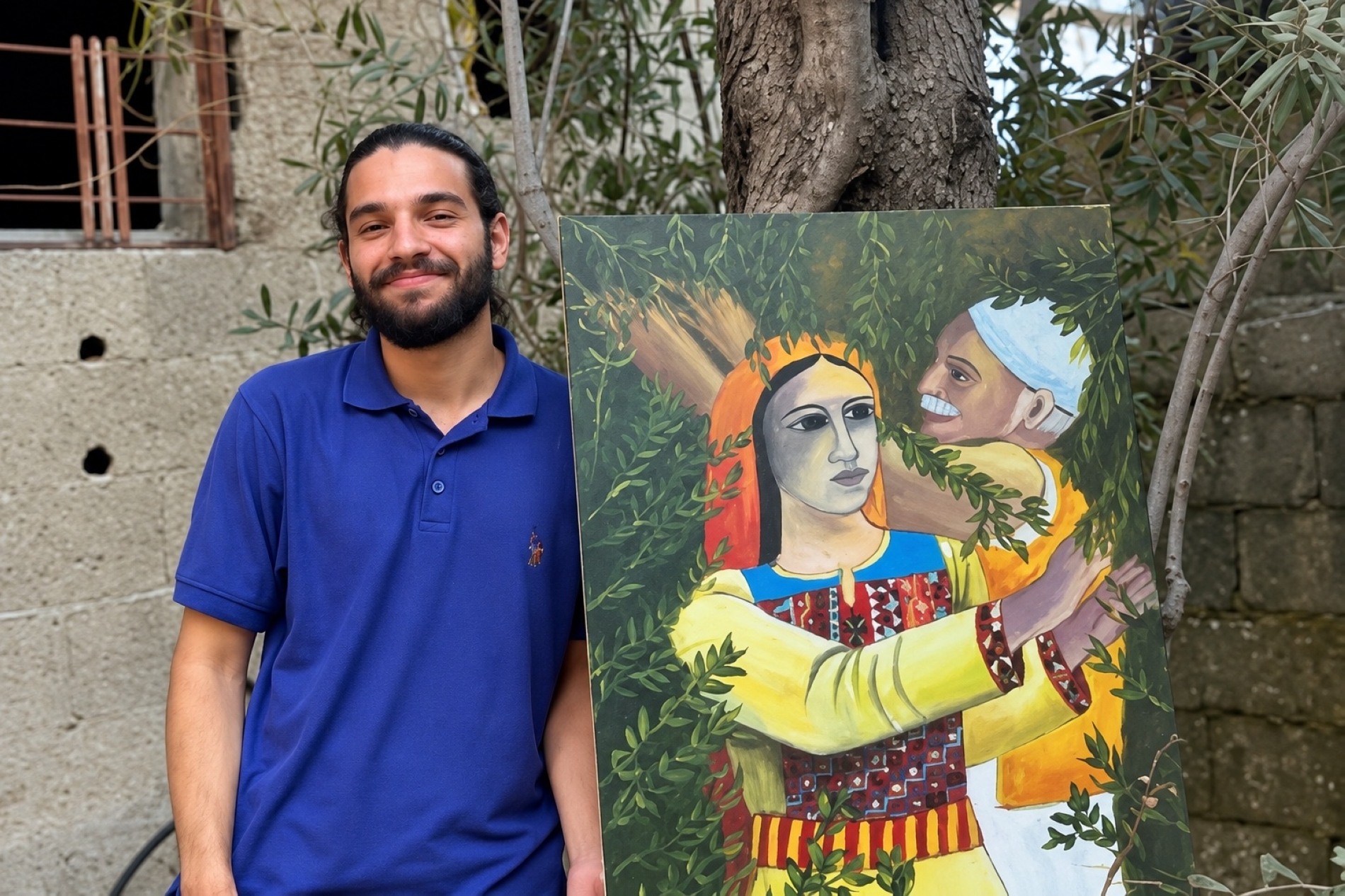
Ibrahim Muhanna

For Muhanna, art is an important element of identity. “I don’t know who I am without it,” he says. He sees it as a means of self-expression and inner dialogue. Drawn to solitude, he found a world of his own in drawing. After he lost a close friend and fellow artist, war changed that relationship.

“That night, I felt that art had been killed inside me,” he says. He stopped drawing, but eventually returned, partly as a way of holding on to something of his friend. Had changed his art profoundly, however. Rockets, soldiers, tanks, and the sounds of war became entangled with his memories and altered his relationship with colour. His paintings grew darker. Colours once associated with happiness now evoked painful memories.
For Muhanna, a home encompasses the family, memories, familiar corners, conversations, laughter, and everything else that gives a place meaning

Art in unlikely forms

During his second displacement, Muhanna was preparing to leave northern Gaza when he learnt that the building where his family lived had been hit. They lived on the seventh floor. During the bombing, they would move down to the fourth floor, believing it to be safer, but this time, the fourth-floor apartment was struck. His family only survived because they had been delayed in going downstairs.

Muhanna could not express the experience through art, he says. He had reached the limits of what art can contain. Not everything can be turned into an image. Yet it can be shown in different ways. "Art may emerge in a form I had never imagined," he says. "That is the idea behind Home Archive." He believes the war drew him out of individual practice and into collective work, wanting to create a space where other artists who had also lived through the war could express their experiences. "I became more sociable, more willing to share my ideas," he says.

Home Archives
A painting by Hadeel al-Susi

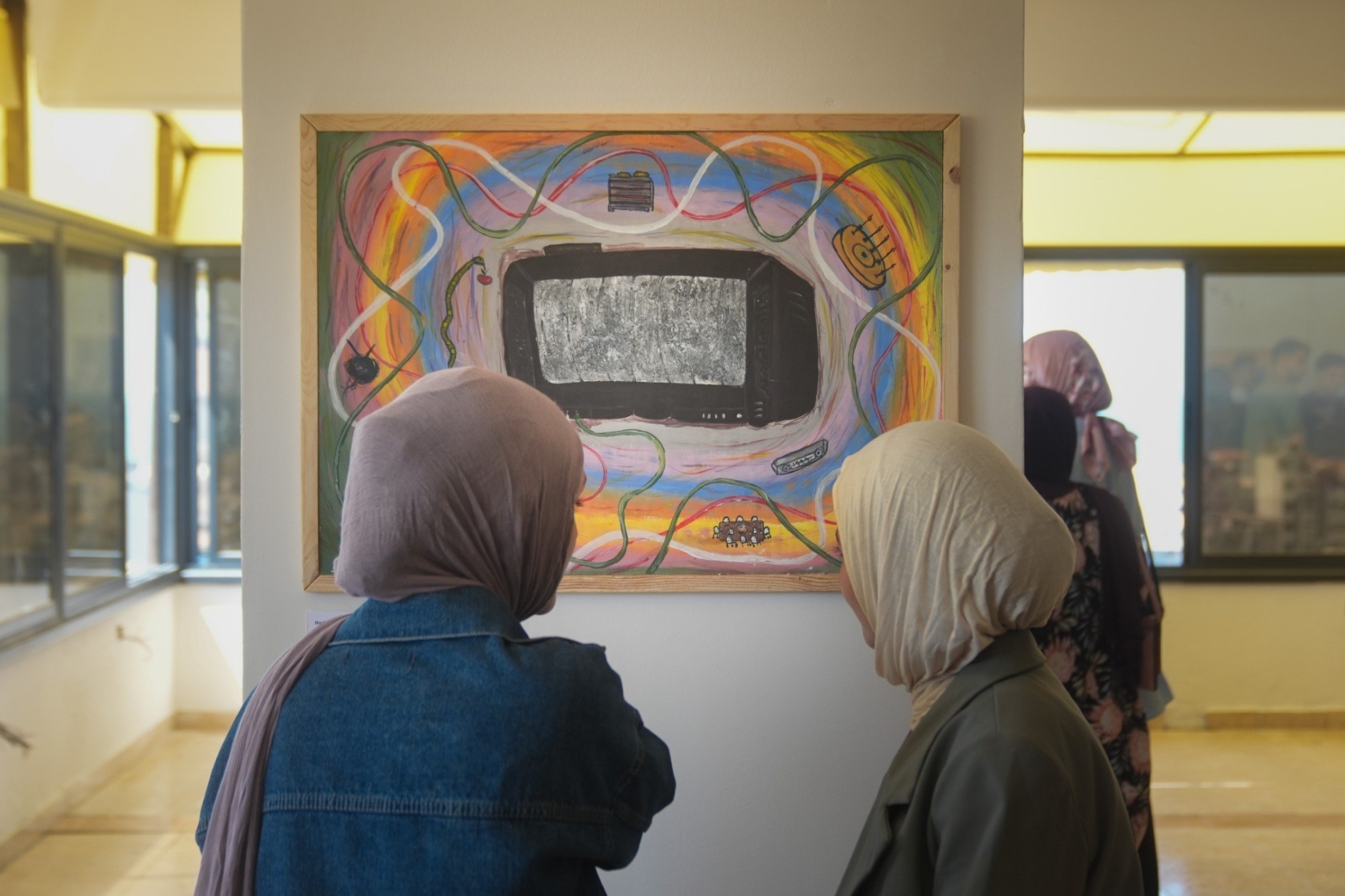
Hadeel al-Susi, 20, also took part in Home Archive. When she thought of home, the first image that came to mind was not a room or wall, but the television. For al-Susi, the TV was more than just a household object; it was where the family gathered. Over time, it came to embody the warmth of shared moments. "I didn't realise the value of them at the time, but being away from home made me see everyday details differently. Small things can hold the memory of an entire place, of an entire life."

In her painting, the TV sits at the centre of the composition, its screen filled with a flickering grey image. Around it, interlacing lines, shifting colours, and familiar household objects evoke the movement of memory and the atmosphere of home. "The lines reflect the way memories move and overlap, while the colours convey different emotions and moments," she says. "The television becomes both a window onto family life and a witness to it."

Al-Susi says she was not trying to recreate the home as it had been, but to give it "a new form in memory" by painting the feeling of home that remained with her. "Perhaps the home has changed, or perhaps our relationship with it has changed, but art gave me a space in which to preserve it as I still remember and feel it."

Home Archives
A painting by Sundus Murad

A link to the sea

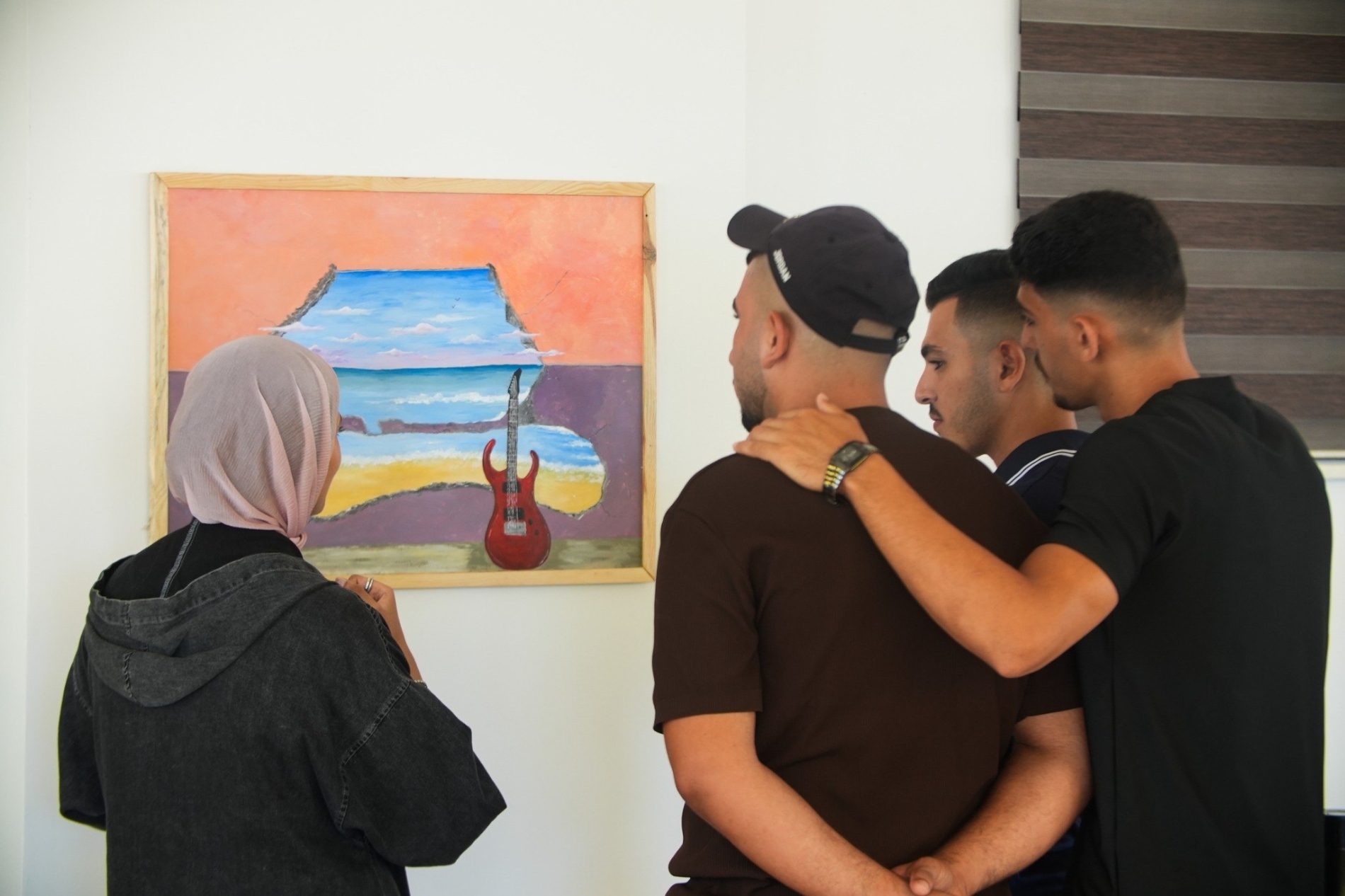
Sundus Murad, 20, came to the exhibition with a different understanding of home. For her, it had always extended to the sea, a place she turned to for refuge and one she experienced as a world in its own right. In that sense, the sea was a home without walls. When she was displaced a second time, from northern Gaza to the south, she felt cut off from the place she knew and unable to carry any part of it with her, but she could take the seashells she gathered along the way.

"I wanted to create a sense of stability within myself," she says. In displacement, the shells became a way of holding onto something of the place she had left behind. In her painting, a seashell opens into a world of its own, with elements of art, music, and nature. The shell becomes a kind of home, intimate and tangible, through which the girl can reconnect with herself. Objects "may lose the spirit they once had when their surroundings change," Murad says.

Rather than depict the sea as it is, she chose to paint what it meant to her, giving visible form to a world that had until then remained private. For her and the others, the war since October 2023 also changed what art meant. Muhanna says it altered the way he saw the world, turning small, personal details into experiences he could share. Yet he also describes art as the most difficult profession to pursue in wartime, since it demands contemplation, whereas war destroys everything it touches.

A painting by Ahmed Ashour

Al-Susi says the war has scorched parts of her inner world. "It is not easy to watch our memories burn before our eyes, or to lose the details that make us who we are." Of what art has come to mean to her during the war, she says it is "about remaining human". At the same time, Murad says the war changed the way she looked at objects, turning them into visual symbols.

"I began to look at each thing on its own, to examine it and reconsider its place in my life. Small details became subjects in themselves, and art became the language through which I could express what I remembered and what I was living through. The war has confronted us with images that have changed the way we understand the world. I began searching for myself amid all the destruction around me." Muhanna wonders if art exists "because the world is full of the terrible details that wars create."

Home Archive offered different perspectives on how Gazans experience memory and war. Each artist expressed that distinctly, yet all were connected by the shared reality of war and by the changes it brought to their sense of place, memory, and self. Through their work, they interpreted what surrounded them in deeply personal, visual terms, turning lived experience into an inner narrative, so home became a language that took on different forms and meanings from one work to another.

font change