Will Israel rethink Lebanon?

Its current gratuitously destructive approach will neither eliminate Hezbollah militarily nor empower Lebanese leaders politically to pursue cooperation and peace

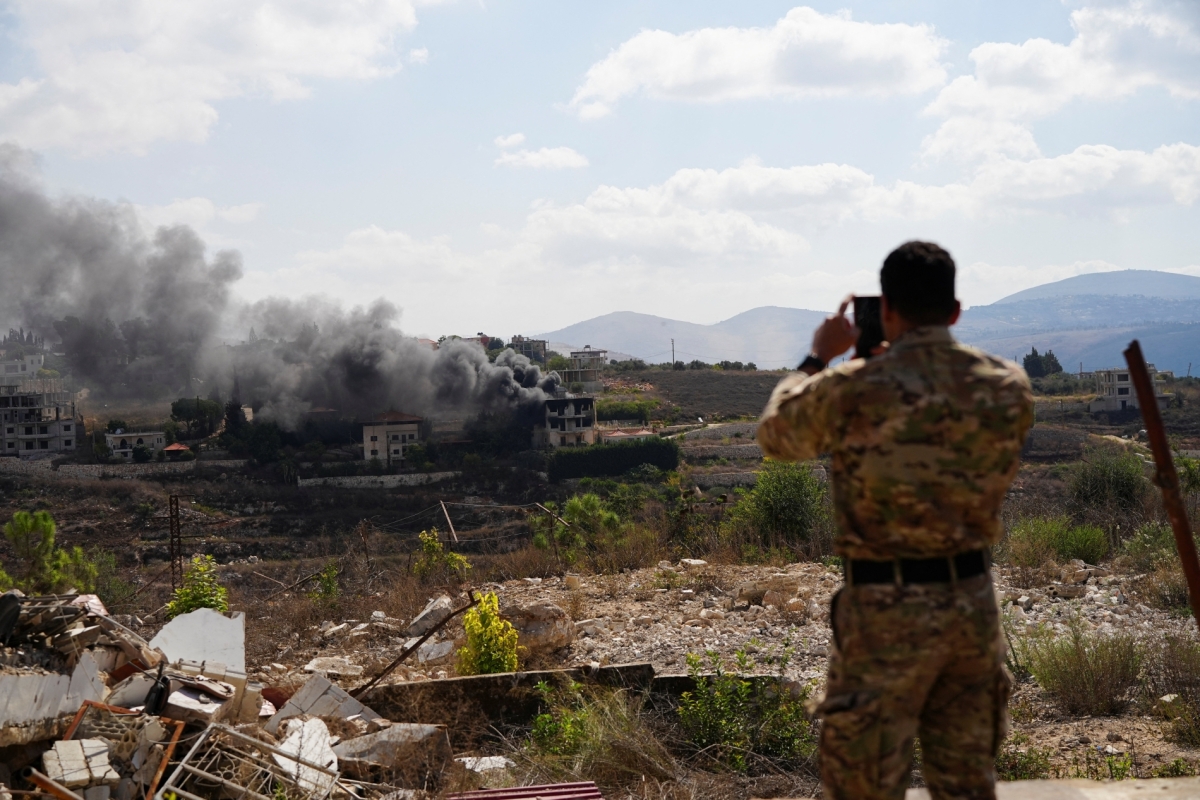
A Lebanese soldier films a house in south Lebanon destroyed by Israel on 22 September 2026.
Reuters
A Lebanese soldier films a house in south Lebanon destroyed by Israel on 22 September 2026.

Will Israel rethink Lebanon?

On 27 October, Israeli voters will try to select a new government. Some of the most interested observers of Israel’s election live right next door: Lebanon’s political leaders and their constituents, many of whom hope to see an Israeli government truly willing to explore bilateral, cooperative, and constructive approaches to reconciling Israeli security with Lebanese sovereignty. None of them sees the current Israeli government as at all interested in cooperation or reconciliation.

Despite American attempts to secure a ceasefire and a diplomatic framework conducive to operational cooperation, violence continues, and the parties are talking past each other. Direct talks facilitated by the U.S. have been repeatedly postponed. With Washington facing a long list of challenges ranging from artificial intelligence to Iran, it doesn’t seem to have the bandwidth to seriously address the Israel-Lebanon issue.

For its part, Beirut is offering the prospect of a bilateral security agreement with Israel—one that would end 78 years of official hostilities and resemble the practical, effective, military security cooperation that characterised the Israel-Lebanon armistice from 1949 to 1967. It supports a US-devised “pilot zone” procedure aimed at enabling Israeli forces to leave Lebanon, permit Israeli and Lebanese residents along the Blue Line to live without fear of cross-border violence, and perhaps—assuming a favourable regional context—set the stage for formal peace talks.

For its part, Israel is waging a unilateral military campaign against Hezbollah that neither expects nor requires any official Lebanese cooperation. It is laying waste to some 66 occupied villages in southern Lebanon, barring Lebanese civilians from returning to their homes within its buffer zone, and promising continued occupation until Hezbollah is disarmed in all of Lebanon. Israeli finance minister Bezalel Smotrich even called on Israel to annex Lebanese territory.

Few Israelis—and certainly not their current government—have any faith at all in the ability of Lebanon’s government or army to prevent Hezbollah from posing executable security threats, whether cross-border operations into northern Israel or rockets and missiles launched from various parts of Lebanon. In a post-October 7, 2023, era that may last decades, few Israelis are inclined to rely on anything other than unilateral military measures to neutralise hostile non-state actors. This inclination is magnified by the current electoral contest, as Prime Minister Benjamin Netanyahu seeks to convince Israelis that he alone can protect them from multiple regional threats.
Reuters
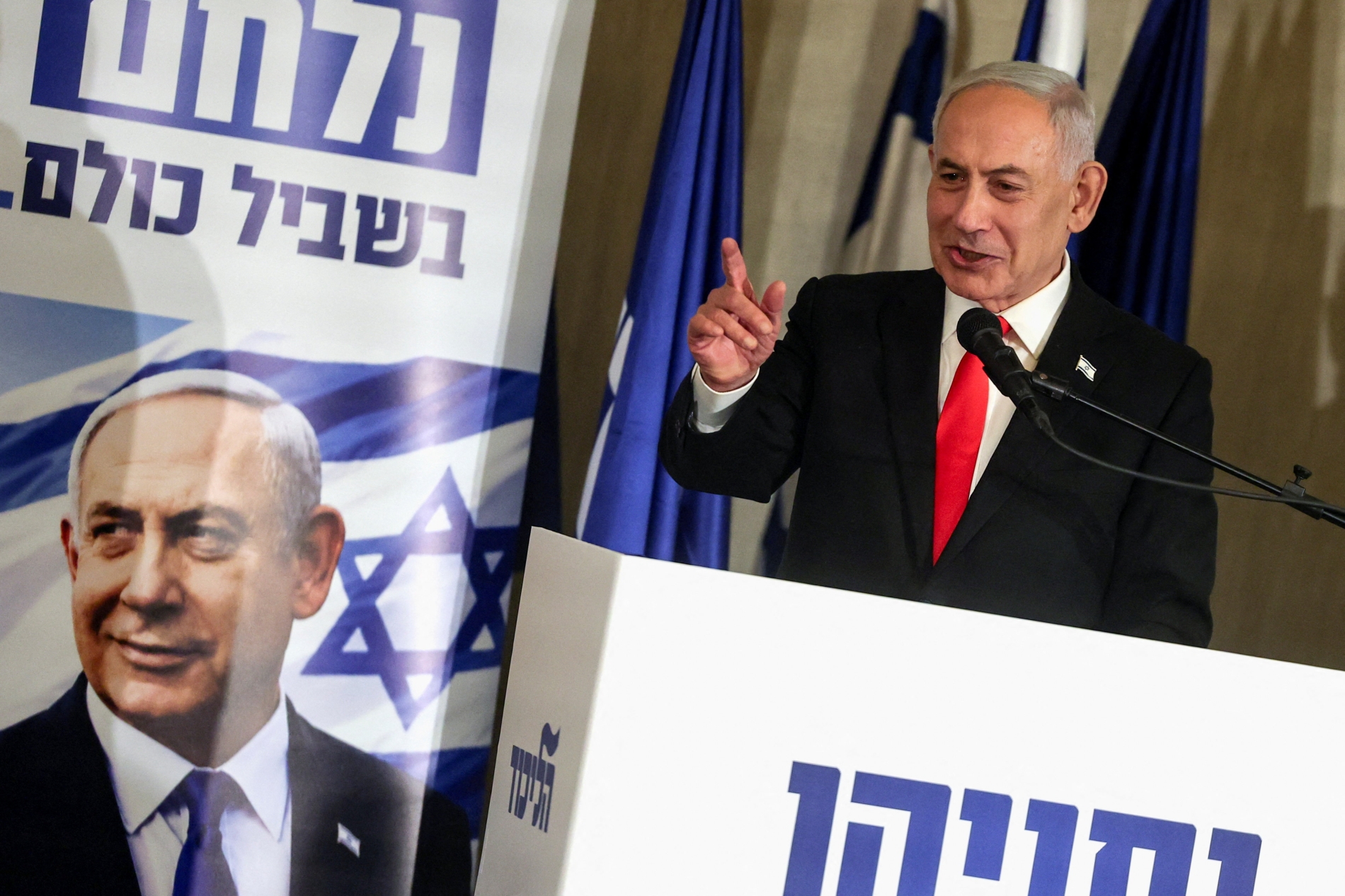
Israeli Prime Minister Benjamin Netanyahu makes a statement to members of the press in Jerusalem on 8 September 2026.

Few Lebanese—and certainly not the current government—have any appetite for unleashing Lebanon’s army militarily against Hezbollah. Yes, Lebanon’s current leaders sincerely want to establish state monopolies on weapons of war and war-and-peace decisions.

They do so for the most believable reason: without such monopolies, few external investors will see Lebanon as safe, and Lebanon’s economic recovery will be deferred indefinitely. But given decades of Iran’s partial suzerainty in Lebanon—exercised through Hezbollah’s leadership cadre and a compliantly corrupt Lebanese political class—Lebanon struggles to emerge as a fully self-governing entity.

Despite the beatings Hezbollah has absorbed at the hands of the Israeli army, the organisation retains considerable military capabilities. And thanks to decades of Hezbollah’s unchallenged political supremacy, Lebanon remains stuck with too many officials owing their positions to an Iran-led non-state actor.

Israel should stop the destruction of civilian property and adopt Israeli army rules of engagement designed to minimise civilian casualties

Question of arms

Hezbollah opening fire on northern Israel the day after Hamas's October 7 attack on Israel made it and its Lebanese supporters vulnerable to Israel's armed response. In Lebanon, critics of Hezbollah see the group's arms as a magnet for Israeli attacks, resulting not only in Hezbollah military losses, but also in civilian deaths, injuries, terror, displacement, and massive destruction of private property and public infrastructure.

On the other hand, many Lebanese Shiites—even if they do not enthusiastically support Hezbollah—still see the group's weapons as a form of protection.  Although virtually all Lebanese, including Lebanese Shiites, earnestly want an end to armed conflict with Israel, the fact remains that within Lebanon's sectarian political context, the organisation has, over the years, empowered a community largely populated by the politically and economically dispossessed—a community traditionally ignored by Lebanon's political elite and Lebanese governments. President Joseph Aoun has pledged that the Lebanese government will replace Hezbollah as a protector and a provider of social services, but this will take time. And it will take resources that do not currently exist. But above all, it will take belief on the part of most Lebanese Shiites, Lebanon's largest sectarian group, that a Lebanese state can indeed emerge—one that is willing and able to meet their needs.

REUTERS/Mohamed Azakir
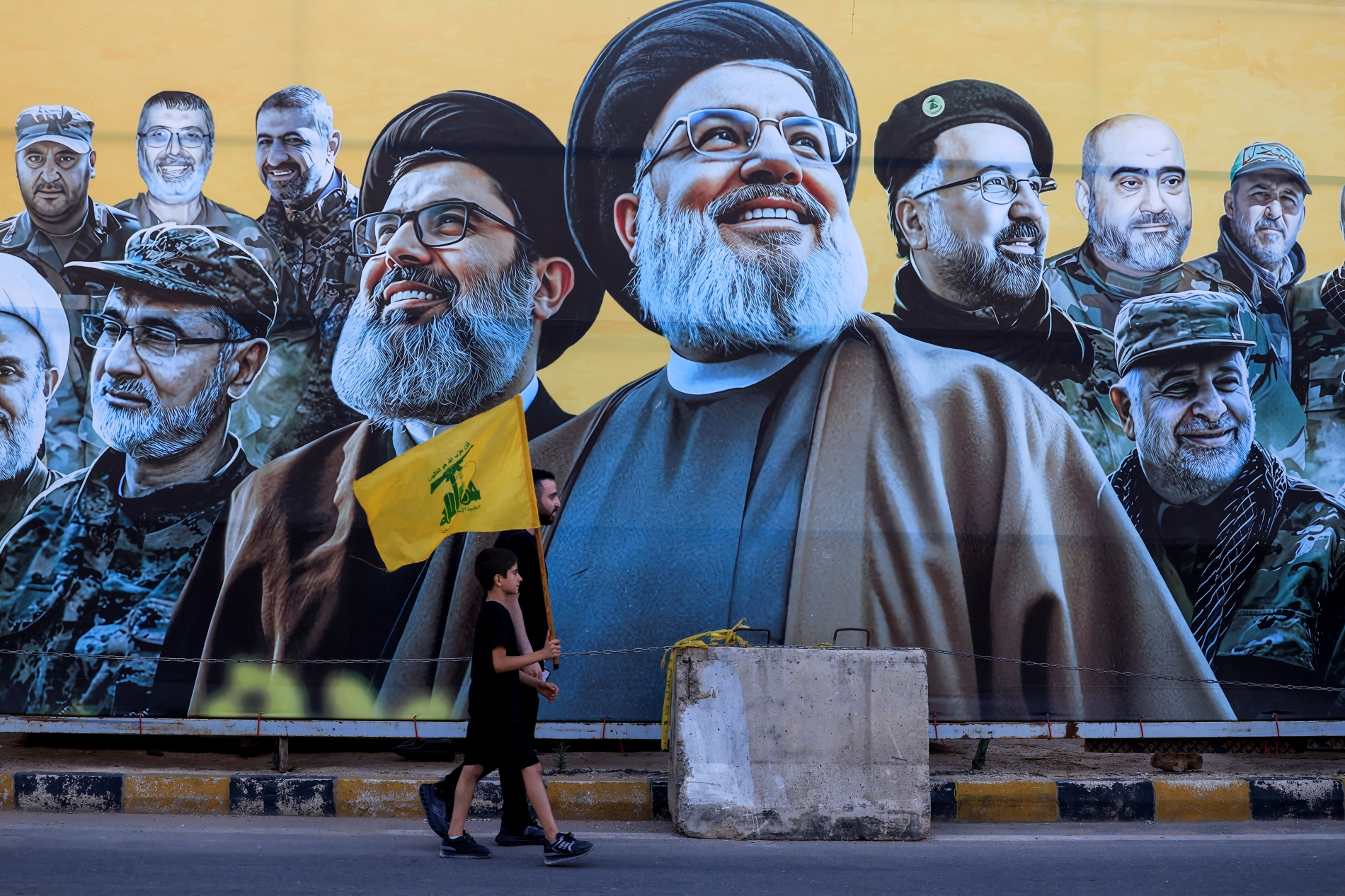
A man walks with a boy past a mural in Beirut depicting former Hezbollah leader Hassan Nasrallah and other senior figures, on the day Hezbollah chief Naim Qassem delivers a televised speech on 17 June 2026.

Incompatible timelines

Israel and Lebanon therefore have political-military timelines that appear incompatible. Israel—certainly the current government and perhaps its successor—is determined to neutralise Hezbollah militarily now. The fact that doing so completely would require a "boots on the ground" occupation far beyond southern Lebanon has yet to push Israel's government to seriously consider diplomatic options.

For its part, Lebanon's current leaders understand that untangling decades of Iran's influence in the country—through Hezbollah—could take decades and would require the Lebanese government to win over the loyalty and support of those Lebanese Shiites who still view an armed Hezbollah as crucial to their own personal safety and security.

While it is my view that Hezbollah, acting at the behest of Iran, has brought untold suffering down upon the heads of its constituents, I think it would be smarter for Israel to conduct operations aimed at seeking the cooperation of any Lebanese—cooperation that will be essential for eventual peace—instead of its current gratuitously destructive approach that risks the permanent alienation of Lebanon's largest sectarian community. Israel's current approach will neither eliminate Hezbollah militarily nor empower Lebanese leaders politically to credibly pursue cooperation and peace. To this end, I propose the following alternatives.

REUTERS/Aziz Taher
Children gesture from a vehicle as displaced people make their way to return to their homes after a 10-day ceasefire between Lebanon and Israel went into effect, near Tyre, Lebanon, on 17 April 2026.

Alternative paths

1. Continue to emphasise both in future talks and publicly that Israel has no territorial designs on Lebanon, that it does not see Israeli army occupation of a Lebanese buffer zone as permanent, and is prepared to permit Lebanese civilians to return to their homes under conditions compatible with the security of Israelis. 

2. Stop the destruction of civilian property and adopt Israeli army rules of engagement designed to minimise civilian casualties.

3. Give the Lebanese government the space and credibility it needs to successfully compete politically with Hezbollah. Focus on southern Lebanon and the security of the Blue Line. Link the withdrawal of Israeli army ground forces from Lebanon not to the total disarmament of Hezbollah, but to conditions in southern Lebanon guaranteeing the security of northern Israelis. Indeed, practical security coordination between the Israeli and Lebanese armies is essential now to ensure that Hezbollah does not reestablish itself in the south. 

Israel should give the Lebanese government the space and credibility it needs to successfully compete politically with Hezbollah

4. The United Nations Interim Force in Lebanon is currently preparing for a complete withdrawal from southern Lebanon, as its long-standing mandate is officially scheduled to terminate on 31 December 2026. In that event, Israel should support the deployment to southern Lebanon of military units from countries willing to support the Lebanese army with assets that can address humanitarian needs and the initial phases of reconstruction: engineers, military medical, transportation, quartermaster, signal, military police, etc. These units can also play a key role in verifying the absence of armed Hezbollah elements in "pilot zones" transferred by the Israeli army to the Lebanese army.

In conclusion, for Lebanon to win its competition with Hezbollah and end Iran's intervention in its internal affairs, resources will be needed. If Lebanese Shiites can see Saudi Arabia and others providing funding and oversight for projects aimed at supplanting Hezbollah's statelet in favour of a genuine Lebanese state, and if they see other Lebanese as supportive of such assistance, some of the sectarian poison crippling Lebanese statehood will have been drained. Indeed, such assistance—along with a continuing American role in facilitating direct talks and strengthening the Lebanese army—can help the next Israeli government think constructively about how best to reconcile its security with Lebanon's sovereignty. It may well come to the correct conclusion: one is unachievable without the other.

font change