Why Saudi Arabia is diversifying its AI partners

Riyadh wants to prevent any bottlenecks or dependence, so it is strengthening its negotiating position and diversifying its network of collaborations

Al Majalla

Why Saudi Arabia is diversifying its AI partners

During Saudi Crown Prince Mohammed bin Salman’s visit to France in August, artificial intelligence (AI) emerged as one of the most revealing areas of bilateral cooperation, indicating how Riyadh intends to position itself within the new technology economy.

The most significant announcement was a strategic partnership between Saudi AI company HUMAIN and France’s Mistral AI. The agreement covers infrastructure development, the localisation of advanced models, the creation of powerful Arabic-language models, and applications in cybersecurity and voice technologies. Mistral said the deal could reach hundreds of millions of euros and that it will also explore the use of HUMAIN’s data centres to meet its growing computing needs in the Gulf.

The importance of the agreement extends beyond its financial value or any individual projects; it forms part of a broader Saudi strategy to distribute the different components of its AI ecosystem among several partners, rather than depend just on one country or company. It still depends on the US for the most sensitive parts of the chain, such as advanced chips, cloud computing, and infrastructure, but Riyadh can diversify its partners in model development, software, applications, and local deployment. Mistral therefore represents an additional layer within a multi-vector AI ecosystem that Saudi Arabia hopes will avoid any bottlenecks.
REUTERS
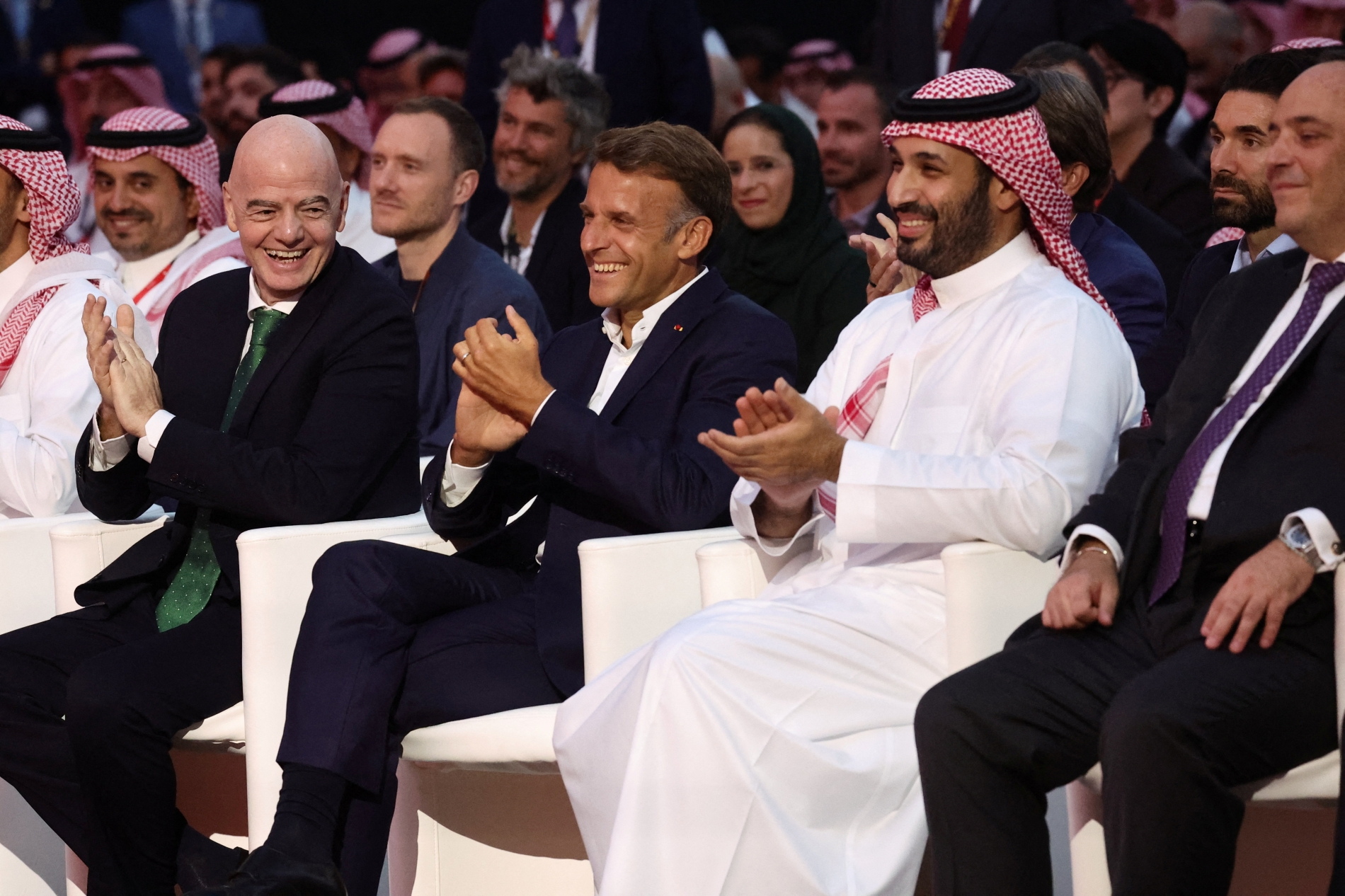
Saudi Crown Prince Mohammed bin Salman, French President Emmanuel Macron, and FIFA President Gianni Infantino attend the closing ceremony of the Esports World Cup at the Grand Palais in Paris, France.

Access and ownership

Building a Saudi AI industry for the coming decades means that reliable access to technology matters almost as much as ownership of the technology itself. Advanced chips, large models, and giant datacentres are no longer just commodities governed solely by price and demand, but by national security considerations, export controls, and political alliances. A long-term project that depends on a single country becomes tied to regulatory and political decisions taken abroad. Investment plans take years, whereas sudden policy changes can be completed in days.

The United States provided a clear example of this risk last year, when the outgoing Biden administration announced a new framework governing the exports of advanced chips and AI technologies. It would have imposed ceilings and restrictions on countries’ access to advanced US computing capacity. Just days before they were due to take effect, the new Trump administration scrapped them. Still, it showed Riyadh how quickly the rules governing access to technology can change.

Saudi Arabia is not moving away from the United States. In May 2025, HUMAIN signed big deals with Nvidia, AMD, and Amazon Web Services to expand computing capacity and datacentres in the kingdom, while the Saudi-US tech partnership broadened in November to include semiconductors, infrastructure, applications, and investment. The Saudis need American technology; the Americans need the Saudi market, energy, land, capital, and geographic positioning, all of which make it possible to build data centres serving the region and beyond.

Operational data-centre capacity in Saudi Arabia rose from around 68 megawatts in 2021 to nearly 467 megawatts in the first quarter of 2026. That gives Riyadh a stronger hand in negotiations. Saudi Arabia is no longer simply a buyer of large language models or cloud services; it can offer computing infrastructure, energy, financing, and access to a large regional market. In return, it wants knowledge transfer, localisation, and better access terms for technology.
Reuters
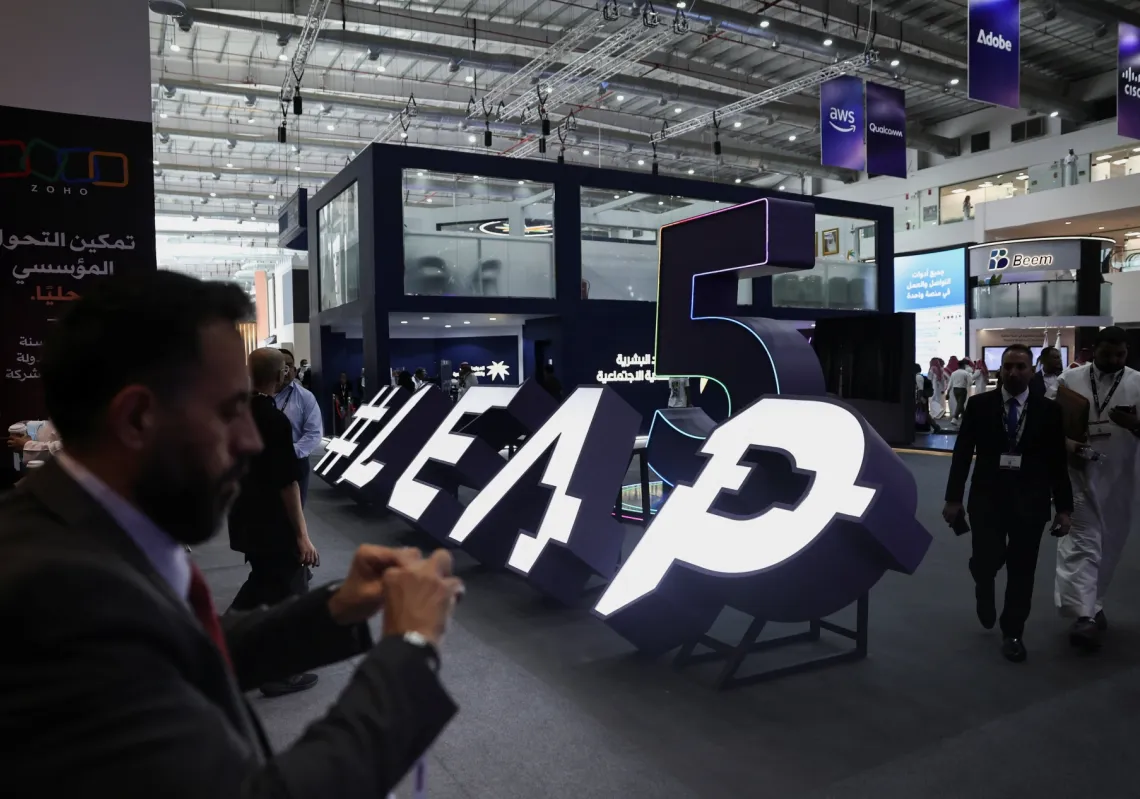
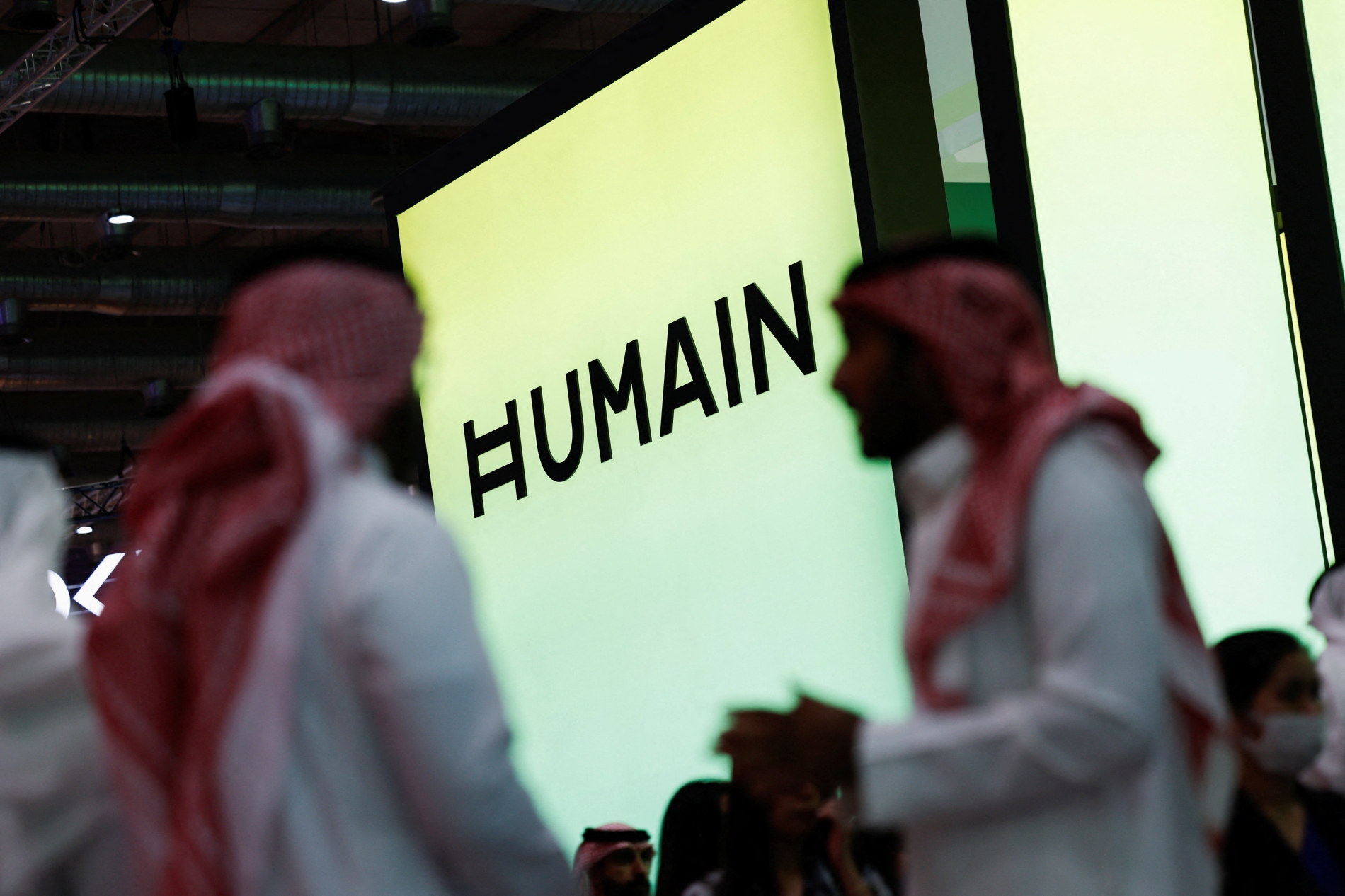
HUMAIN, a Saudi company specialising in artificial intelligence, on display at the opening ceremony of the "LEAP" technology event in Riyadh, Saudi Arabia, on 31 August 2026.

Customisable models

Mistral’s importance to HUMAIN lies in what it brings beyond investment in chips and data centres. Possessing thousands of graphics processing units (GPUs) does not automatically provide models capable of understanding the needs of the Gulf or working effectively with Saudi Arabia’s internal data. This is where Mistral’s tools are valuable: they help clients build and customise models using their own institutional knowledge.

One example is the Forge platform, which enables models to be trained or adapted using internal data, policies, procedures, and knowledge bases, rather than relying entirely on a general-purpose model trained primarily on large volumes of publicly available information. This capability matters especially in sectors such as energy, banking, telecoms, and government, where requirements differ markedly from those of general consumer AI.

Localisation goes far beyond improving a model’s performance in Arabic. It means building systems that understand local and institutional knowledge and operate within the rules that govern it, rather than sending everything to general external services.
Mistral's expansion in Saudi Arabia may appear to come at the expense of American companies, yet the AI industry is built in interconnected layers

Mistral offers Saudi Arabia the ability to run its models on infrastructure selected by the customer, including local data centres. This becomes increasingly important as AI becomes routinely used across government and businesses.

In October 2025, HUMAIN announced the deployment of its HUMAIN One product across several government entities. In May 2026, it partnered with Accenture to expand AI use across institutions and move from pilot projects to systems integrated directly into daily operations, decision-making, and service delivery. Where data are stored, who controls the model, and how it is updated and operated are issues that are now far more important than simple comparisons of benchmark scores.

A government or banking model needs more than intelligence alone; it must operate within clearly defined security and regulatory requirements, while allowing the institution to retain greater control over its data and technical infrastructure. Mistral's value to HUMAIN therefore lies in its ability to combine advanced models, local deployment, and enterprise customisation. Together, these elements create sovereignty in AI.

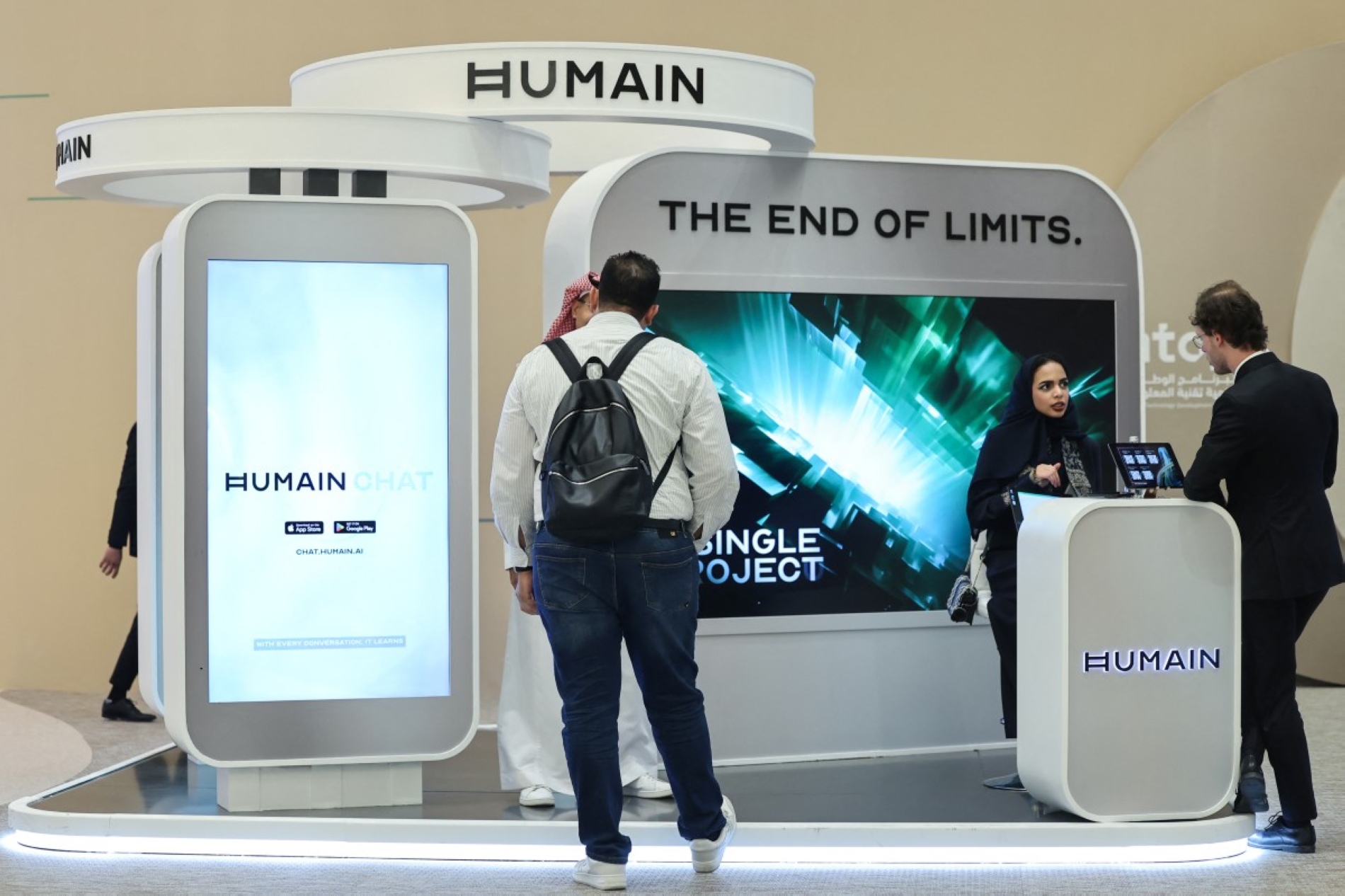
Saudi AI company Humain during the Future Investment Initiative (FII) conference in Riyadh on 29 October 2025.

Symbiotic relationship

Mistral and Saudi Arabia need one another. Competing with the biggest US tech firms takes more than strong models; it demands immense computing power, energy, and capital. These resources are available to firms such as OpenAI, Google, and Anthropic through their partnerships with cloud providers and chip manufacturers. For a smaller European company, access to large-scale computing infrastructure, long-term financing, and major government and commercial markets can keep it competitive.

The HUMAIN-Mistral agreement reflects this need. The French company will explore the use of Saudi data centres to meet part of its growing computing requirements in the Gulf. HUMAIN also gives Mistral direct access to the Saudi and Gulf markets, particularly government entities and major companies that a European firm operating alone may struggle to reach as quickly. This creates a clear exchange of advantages: Mistral provides models and expertise in customisation and local deployment, while HUMAIN brings computing capacity, energy, capital, and market access.

Mistral's expansion in Saudi Arabia may appear to come at the expense of American companies, yet the AI industry is built in interconnected layers. A Saudi institution may use a French model running in datacentres powered by Nvidia or AMD chips and other American technologies. An American company may therefore lose business at the model layer, while American firms gain in computing or infrastructure. Demand for Mistral's models may also increase demand for chips, datacentres, and cloud services.

The US is the principal source of advanced chips, cloud infrastructure, and computing power, while France can provide models, customisation, and local deployment

The American calculation extends beyond any single company to Saudi Arabia's place in the global technology landscape. From Washington's perspective, Riyadh's cooperation with a French company differs markedly from a shift towards Chinese firms in areas of sensitive technology. France is a Western ally, while Mistral operates within a European tech ecosystem that itself depends on US supply chains. The alternative would have been an expansion of Chinese influence within Saudi Arabia's digital infrastructure.

Rather than replacing an American technology alliance with a French one, Saudi Arabia is instead distributing its requirements among several partners, each supplying a different part of the chain. The US remains the principal source of advanced chips, computing power, and cloud infrastructure, while France can provide models, customisation, and local deployment. In this way, Riyadh reduces the risk that disruption involving one supplier could jeopardise the entire project, whilst gaining greater leverage to negotiate better terms and broader knowledge transfer.

font change