The new AI divide and Saudi Arabia’s balancing act

As the US and China build rival AI ecosystems, Gulf states are being drawn into a technological divide that may become increasingly difficult to navigate

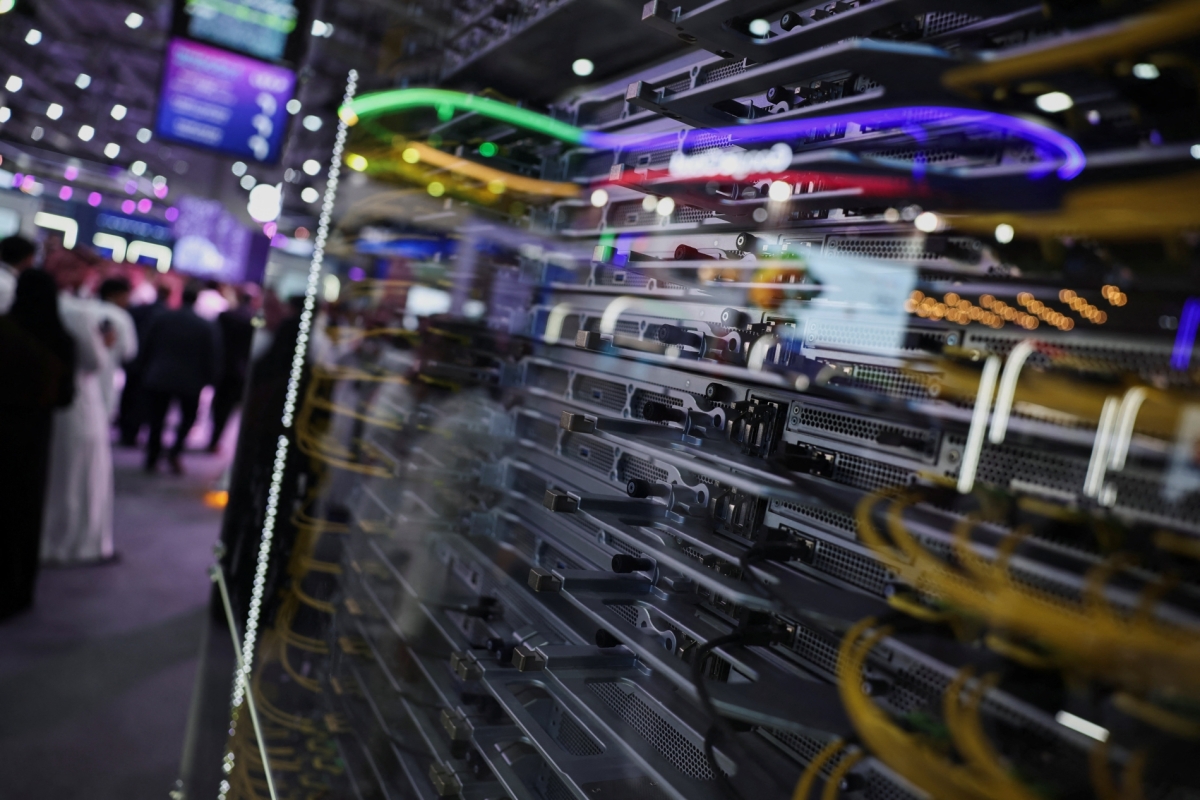
A smart AI Server on display at the HUMAIN stall during the opening ceremony of technology event LEAP in Riyadh, Saudi Arabia, on 31 August, 2026
REUTERS/Hamad I Mohammed
A smart AI Server on display at the HUMAIN stall during the opening ceremony of technology event LEAP in Riyadh, Saudi Arabia, on 31 August, 2026

The new AI divide and Saudi Arabia’s balancing act

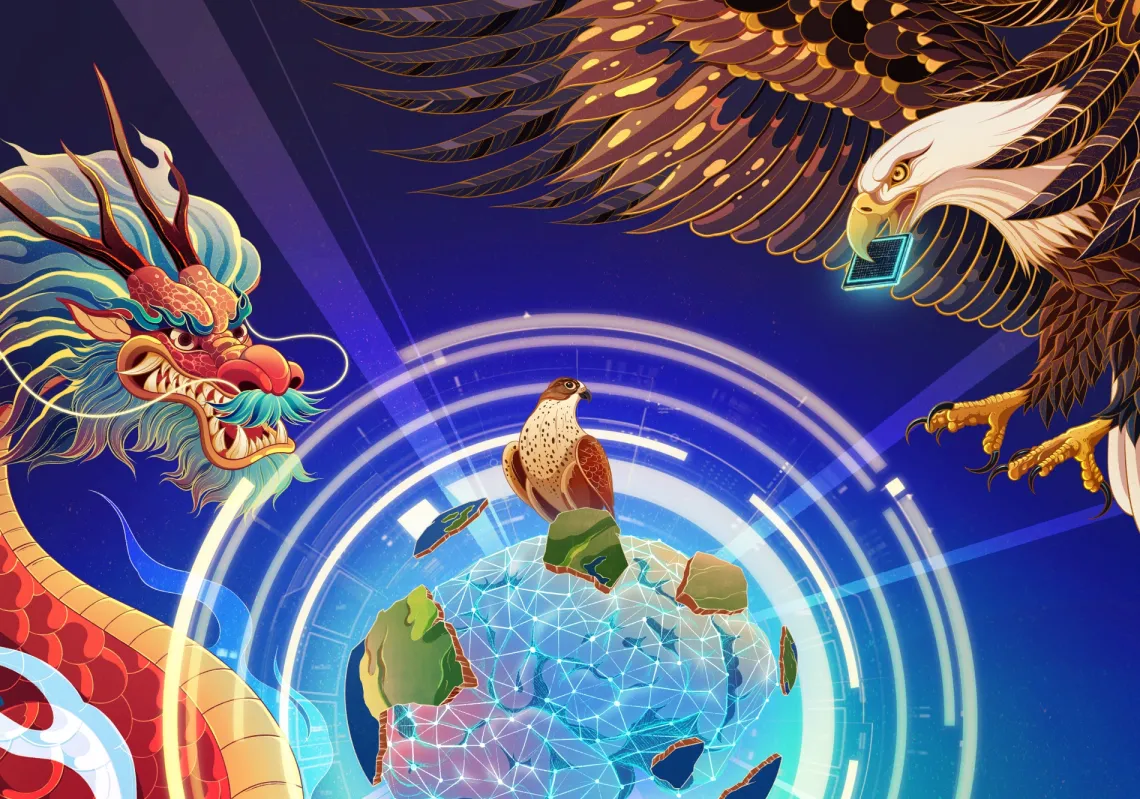
Artificial intelligence is redrawing the geopolitical map into competing technological spheres of influence. President Donald Trump’s administration is pressing partner countries to choose between American and Chinese technological ecosystems. The rivalry between Washington and Beijing now extends far beyond the race to develop the most powerful model. At stake is which side can build the larger international network around its chips, data centres, companies, and technological standards.

The US administration is considering asking countries that participate in both the American Pax Silica initiative and the China-led Global Organisation for AI Cooperation to choose between them. Pax Silica has 24 partners, while the Chinese framework has 29 founding states. But the balance of power depends on more than numbers. It also depends on economic weight, semiconductor capacity, computing power, manufacturing base, mineral resources, and each camp’s ability to set technological standards.

Artificial intelligence has become too complex an industry for any single country to command alone. Its supply chain stretches from critical minerals and semiconductor manufacturing equipment to chips, energy, data centres, cloud computing, models, and applications. Washington is therefore seeking to bring countries that control different parts of that supply chain into a trusted network. Beijing, meanwhile, is building a rival ecosystem grounded in its industrial strength, digital infrastructure, open-weight models, and expanding ties with emerging economies.

In the Gulf, the effects of this polarisation are already becoming visible. The UAE is aligning firmly with the US ecosystem, while Oman has joined the China-led framework. Saudi Arabia remains outside both camps, maintaining technological ties with the US, China, and Europe simultaneously. The question is whether Riyadh can continue to occupy this middle ground if access to the most advanced US technology becomes increasingly conditional on alignment with a clearly defined camp.

Two camps

Washington launched Pax Silica in December 2025 to build a network of trusted countries around the supply chains for artificial intelligence, semiconductors, and critical minerals. Seven months later, on 16 July, Beijing launched the Global Organisation for AI Cooperation. Among those within Pax Silica are Japan, South Korea, India, the UK, Australia, and the European Union, as well as the UAE and Qatar. The China-led organisation includes Russia, Brazil, Indonesia, Pakistan, South Africa, and Algeria.

The boundaries between the two camps have not been entirely closed. Kazakhstan joined Pax Silica and later also became a founding member of the China-led organisation, making it the clearest example of a country attempting to benefit from both systems at once. This kind of overlap is precisely what Washington has begun trying to prevent by pressing partners to choose one side.
REUTERS/Max A. Cherney
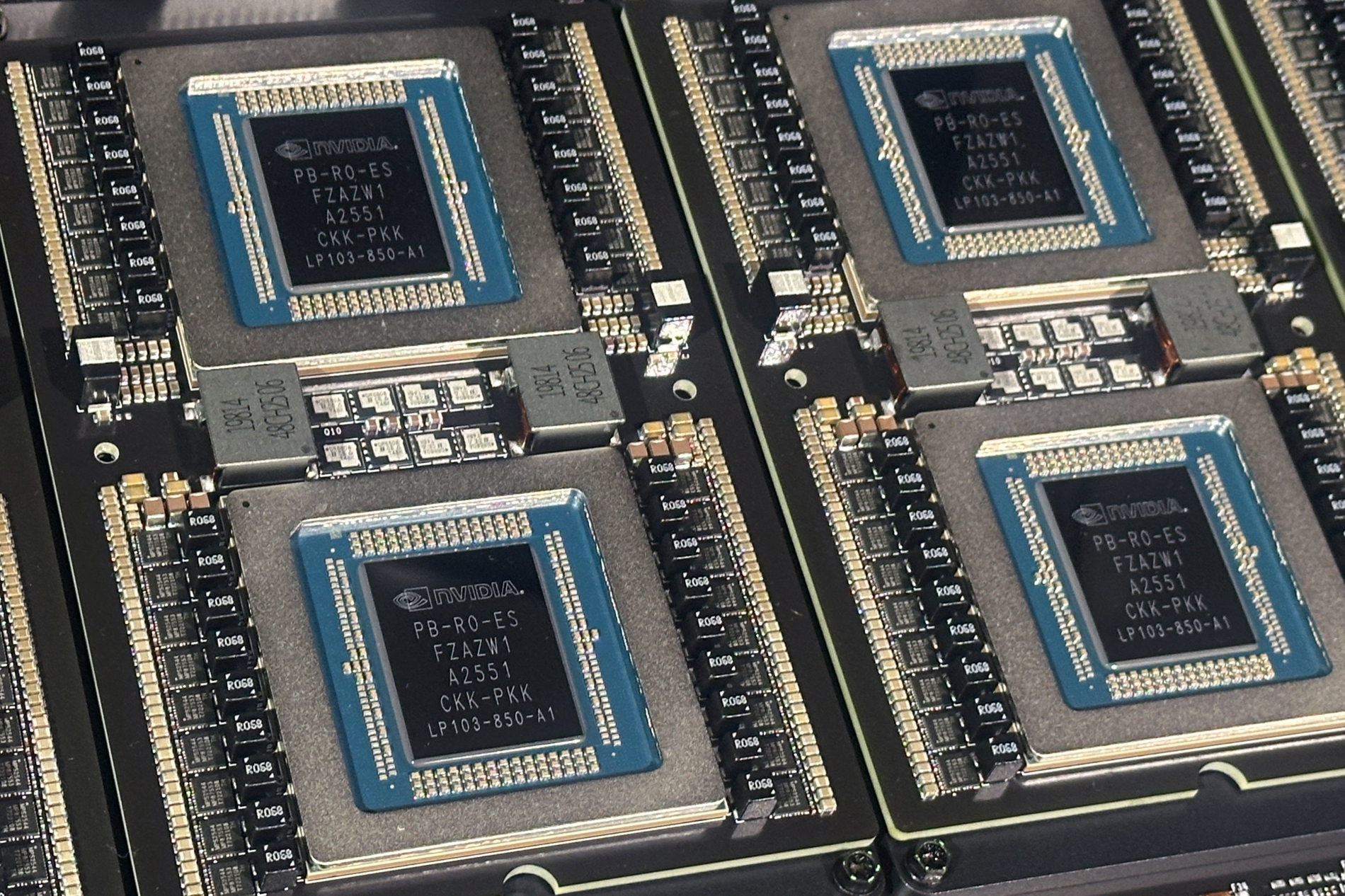
Nvidia’s Groq 3 chip on display at the company’s GTC conference in San Jose, California, on 17 March, 2026

The key distinction between the two camps lies in the technological power each possesses. The US retains its greatest advantage at the most critical chokepoints in the AI industry. American companies such as Nvidia dominate the market for chips used to train and run advanced models, while Microsoft, Amazon, and Google control a large share of global cloud infrastructure. The US ecosystem also includes OpenAI, Anthropic, Google, and xAI, the companies behind some of the world’s most advanced models, supported by levels of capital and investment that China finds difficult to match.

China has built its strength in other parts of the industry. Open-weight models have become one of its key competitive advantages. Models such as DeepSeek and Alibaba’s Qwen allow companies and governments to run powerful systems locally and adapt them to their own requirements without relying entirely on the closed services of US companies. Their lower cost has also made them attractive to countries and businesses unable to afford sustained access to the most advanced US models.

Beijing is also seeking to turn its strength in open models into large-scale commercial applications. In January, Alibaba expanded its Qwen app to allow users to order food, book travel, and make payments from within the conversation, after the app rapidly surpassed 100 million monthly active users. In April, DeepSeek introduced a new version designed to work more effectively with Huawei's Ascend chips, bringing Chinese models closer to Chinese computing infrastructure and reducing dependence on Nvidia.
The US and China are offering their partners different propositions, reflective of their different philosophies

China's strength extends well beyond models. Its enormous industrial base gives it considerable capacity to translate artificial intelligence into practical applications in factories, robotics, and services. This year, Chinese robots have become more widely used in pharmacies and logistics, while AI companies such as MiniMax recorded strong revenue growth, benefiting from demand for cheaper, more customisable models. Huawei, Tencent, and Alibaba also maintain a substantial presence in telecommunications, cloud computing, and digital infrastructure.

Washington and Beijing are therefore offering their partners very different propositions. The US offers access to the most advanced chips, vast cloud infrastructure, leading models, and deep pools of capital. China can offer open models, lower-cost infrastructure, greater scope for localisation and modification, and an industrial base capable of rapidly translating artificial intelligence into commercial and industrial applications.

The two camps also reflect different philosophies. Pax Silica is built around the idea of a trusted network of countries through which sensitive technology can circulate while reducing the risk of it reaching China. Beijing presents its organisation as a broader framework for cooperation, capacity-building, and technological sovereignty, particularly for emerging economies that do not want to depend entirely on the US ecosystem.

REUTERS/Kevin Wurm
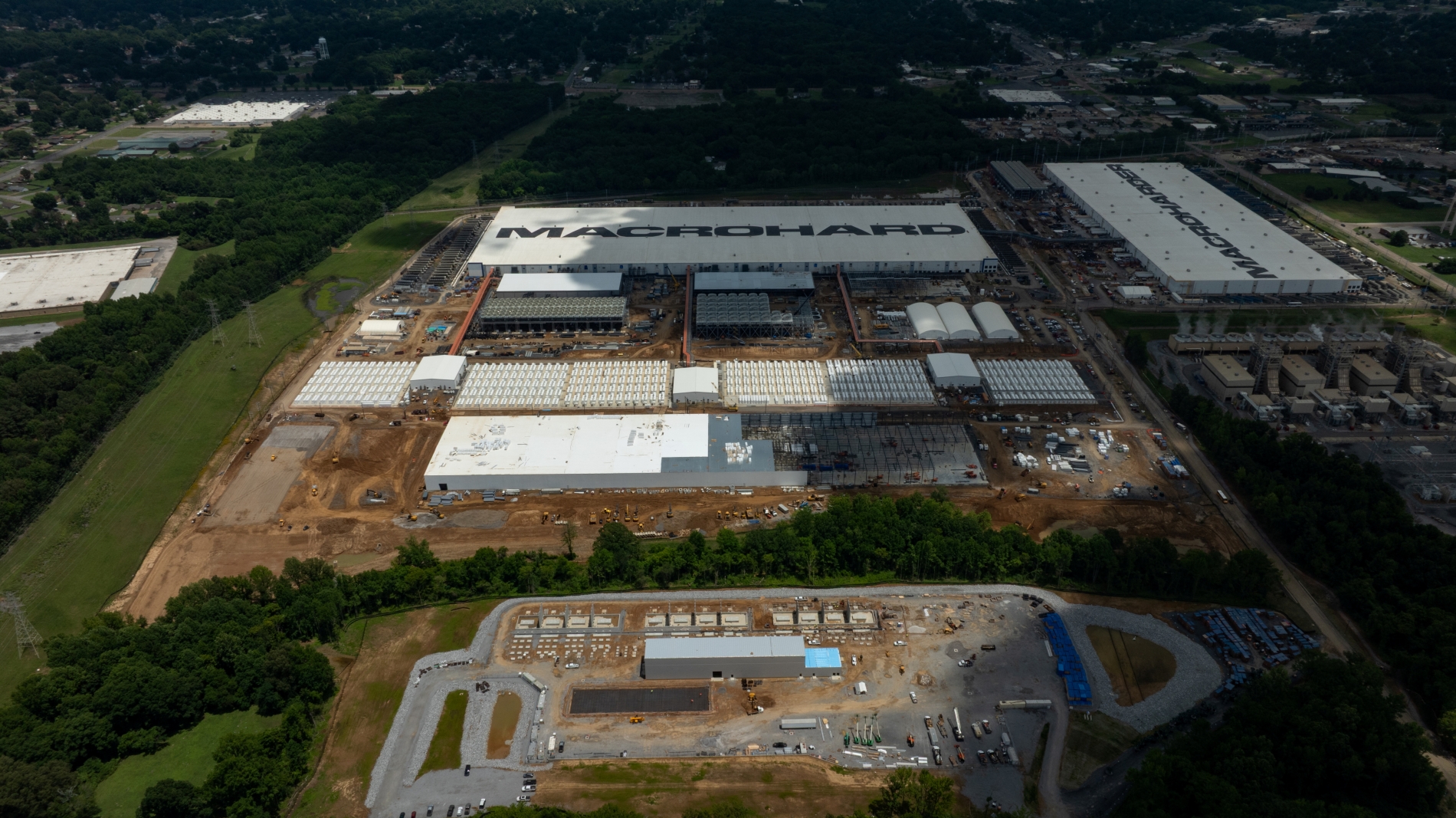
A drone view of xAI's Colossus 2 'Macrohard' data centre in Southaven, Mississippi, on 30 May, 2026

Complex supply chains

Supremacy in artificial intelligence no longer depends simply on possessing a powerful model or a major technology company. It depends on controlling—or securing access to—the wider ecosystem that supports them. No single country, including the US and China, possesses every element, making alliances integral to the competition. 

These alliances offer four principal advantages: greater supply chain security, by spreading different parts of the industry across countries with complementary resources and capabilities; protection of sensitive technology and the restriction of rivals' access to advanced chips and computing power; market expansion for domestic companies; and the ability to shape standards governing technological security, export controls, and the exchange of data.

The US has pursued this strategy with particular clarity in critical minerals. Before launching Pax Silica, Washington and its allies established the Minerals Security Partnership to reduce dependence on China for materials including lithium, cobalt, nickel, graphite, and rare earth elements. The two networks overlap considerably. Many Minerals Security Partnership members, including Australia, Canada, Finland, India, Japan, South Korea, Norway, Sweden, and the UK, also belong to Pax Silica. This allows Washington to connect raw materials with the semiconductor, computing, and AI supply chains within a broader strategic network.

China's dominance of rare earth processing gives it considerable leverage. It accounts for around 90% of such processing, covering materials essential to manufacturing chips, advanced magnets, electric motors, data centres, and defence systems.

Beijing has already used export restrictions on some of these minerals as leverage in its economic confrontation with Washington. The US objective therefore extends well beyond securing access to the most advanced chips and models to reducing China's capacity to disrupt the supply chains on which they depend. Beijing, meanwhile, can draw on its dominance of mining and processing to pressure the US and attract countries that depend on Chinese materials, investment, and industrial infrastructure.

FAYEZ NURELDINE / AFP
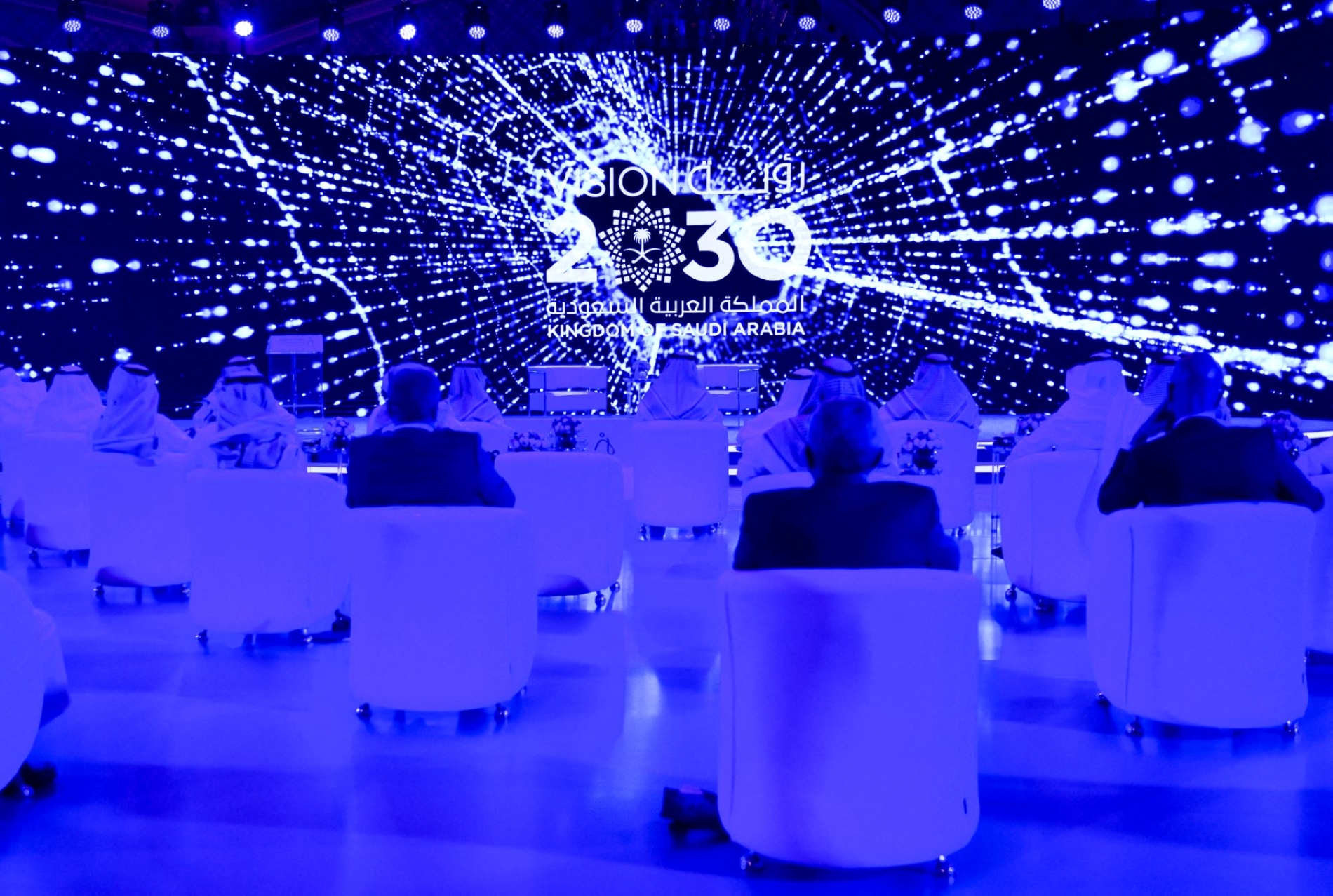
Guests attend the Global AI 2020 (Artificial Intelligence) Summit in the Saudi capital, Riyadh, on 21 October 2020.

Hedging strategy

The Gulf shows that the emerging divide in artificial intelligence will not produce a uniform regional alignment. Saudi Arabia's decision to remain outside both frameworks, despite being the Gulf's largest economy and pursuing one of the region's most ambitious AI programmes, reflects more than hesitation. 

Riyadh is seeking to preserve as much freedom of manoeuvre as possible before the cost of choosing becomes greater. The US remains difficult to replace in advanced chips, computing power, and access to the companies capable of building AI infrastructure at the largest scale. China matters in different ways, through manufacturing, telecommunications, digital infrastructure, investment, and a commercial market that Saudi Arabia has little interest in sacrificing.

China also gives Riyadh additional negotiating leverage. The more diversified Saudi Arabia's technological relationships remain, the stronger its position when seeking better terms from Washington on localisation, knowledge transfer, investment commitments, and, most importantly, access to advanced chips. Full integration into one ecosystem could provide access to more sophisticated technology, but at the cost of greater strategic flexibility. 

Saudi Arabia's key challenge is not which side it chooses but where it chooses to draw the line between them

Saudi strategy therefore reaches beyond balancing the US and China. Riyadh is also expanding cooperation with France and Europe to diversify its partnerships and avoid dependence on any single supplier over a project expected to unfold over decades. This approach is consistent with remarks by Communications and Information Technology Minister Abdullah Alswaha, who has said that the country aims to become a hub connecting the AI ecosystems of East and West.

This strategy, however, would face a much greater test if US pressure hardened into a more restrictive policy. The issue would not necessarily be whether Saudi Arabia would have to sever its wider economic relationship with China. The more consequential question would be whether Riyadh is prepared to exclude Chinese companies and technology from the most sensitive parts of its infrastructure in return for access to the most advanced American technology.

Riyadh's key challenge is not which side it chooses, but where it draws the line between them. It may seek to preserve a Chinese role in trade, manufacturing, and parts of its digital infrastructure while giving the US priority in advanced chips, computing, and the most sensitive layers of its technological architecture. The success of that model will go a long way towards determining whether the Gulf can preserve its technological and strategic diversification, or whether the AI race will ultimately impose clearer limits on how far such hedging can extend.

font change